
SOCAR, Azerbaijan’s state oil company, has signed a 10-year contract with Germany’s state energy company SEFE (Securing Energy for Europe) for the supply of natural gas, Azernews reports. Under the agreement, SOCAR will deliver natural gas volumes to SEFE in Europe, with annual supplies gradually increasing to…
Day: June 10, 2025
Tamar Taliashvili, a former Georgian Dream lawmaker who has served as Georgia’s permanent representative to the Council of Europe, has been named as Georgia’s next ambassador to the United States.
Taliashvili is set to succeed Davit Zalkaliani, who quit his post in December 2024, immediately after the U.S. suspended its strategic partnership with Georgia. The ambassadorial post has remained vacant for the past seven months.
Georgian Dream Prime Minister Irakli Kobakhidze has issued a relevant decree that the GD-elected president, Mikheil Kavelashvili, will sign. Tamar Taliashvili will assume her role on July 10.
Tamar Taliashvili, a lawyer, has served as Georgia’s permanent representative to the Council of Europe since 2022. She has also held the position of vice president of the CoE’s Congress of Local and Regional Authorities since 2018. From 2020 to 2022, she was a member of the Georgian Parliament from the ruling Georgian Dream party. She also served as a member of the Tbilisi City Council (Sakrebulo), a local self-government body, from 2014 to 2020.
In 2021, Taliashvili briefly hosted the Georgian Dream Podcast, inviting senior GD officials to discuss ongoing developments in the English language.
The appointment comes at the lowest point in U.S.-Georgian relations, triggered by Georgian Dream’s anti-Western and anti-democratic turn. MEGOBARI Act, which foresees sanctioning Georgian Dream officials for human rights abuses related to the country’s anti-Western shift, passed the U.S. House of Representatives on May 6 and is to be reviewed by the Senate.
Over the past months, the United States has sanctioned several top GD officials, including the party’s founder and honorary chairman, Bidzina Ivanishvili. U.S. Ambassador Robin Dunnigan requested a meeting with Bidzina Ivanishvili to convey the Trump administration’s message, but he declined, citing “personal complexes” stemming from sanctions imposed on him.
Despite the Georgian Dream government’s initial hopes that Donald Trump’s return to the White House would lead to an improvement in bilateral relations, the recent open letter from the GD prime minister to President Trump demonstrated frustration with the absence of such progress. Citing “shared values,” GD government officials have expressed hopes of starting anew with a “specific roadmap.” GD officials have cited the ruling party’s “deep state” conspiracy theory to explain current dynamics in U.S.-Georgian relations.
In May, Secretary of State Marco Rubio said U.S.-Georgia relations are “currently under review,” while referencing the Georgian Dream as an “anti-American government” in response to a question from Congressman Joe Wilson.
Announcing the news of Taliashvili’s appointment on June 10, pro-government Rustavi 2 channel said the Trump administration granted Taliashvili agreement the very day the U.S. Ambassador to Georgia Robin Dunnigan announced her retirement.
Also Read:
- 06/05/2025 – MEGOBARI Act Passes House of Representatives
- 04/03/2025 – GD’s Foreign Minister Meets with US Ambassador Dunnigan
Islamophobia in Azerbaijan
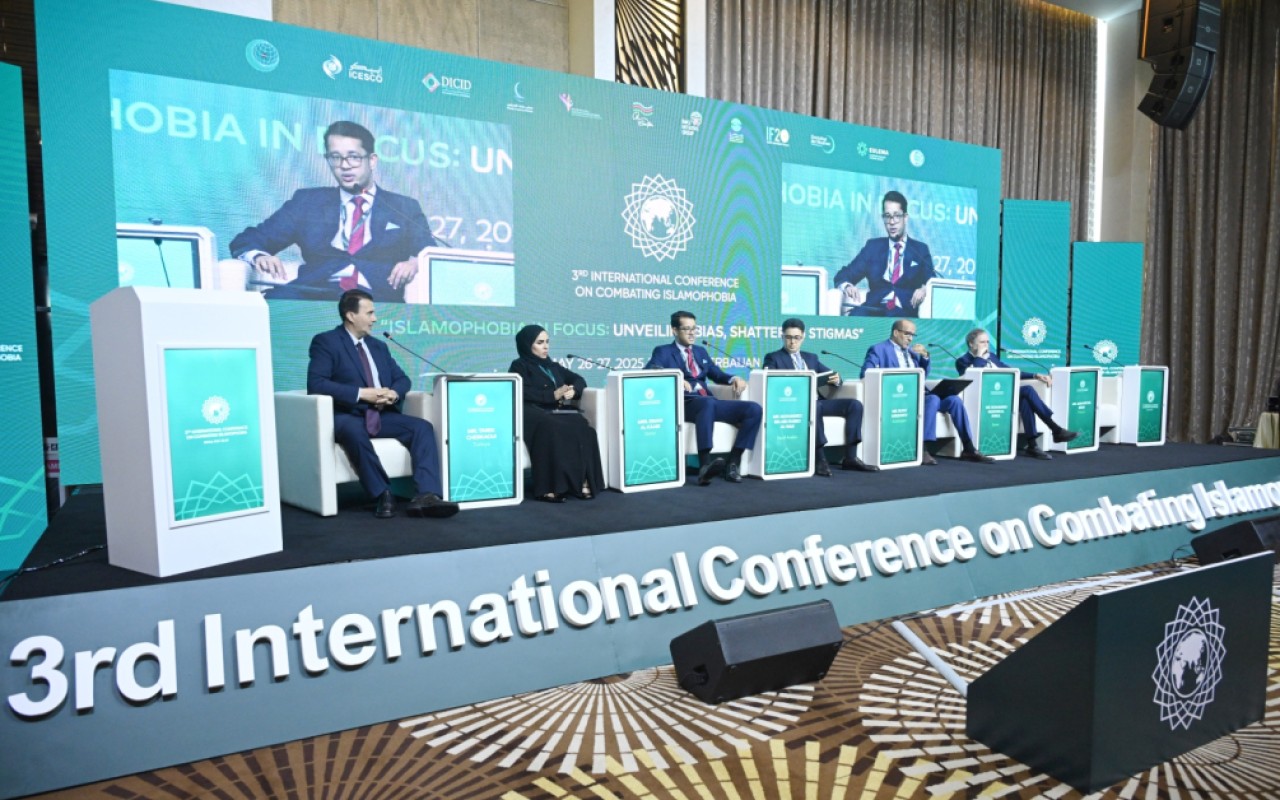
Although the international conference held in Baku sought to highlight Azerbaijan’s active role in combating Islamophobia globally, the country’s internal situation and statements by religious activist Alemdar Bunyatov reveal ongoing systemic pressure and repression against the Shia community.
The international conference, titled “Islamophobia in Focus: Exposing Bias, Demolishing Stigmas”, held in Baku in May this year, presented Azerbaijan as a global leader in the fight against Islamophobia. The participation of representatives from international organisations such as the UN, OIC, UNESCO, and IF20 helped frame the country as a model of religious tolerance.
However, at the same time, a Shia activist from Azerbaijan who has been granted asylum in Europe claims that Azerbaijani authorities are pursuing Islamophobic and sectarian policies against their own citizens.
According to blogger Alemdar Bunyatov, a representative of the Muslim Unity Movement in Europe, the state of religious freedom and the treatment of the Shia community in Azerbaijan is deeply contradictory.
According to human rights organisations, a significant proportion of political prisoners in Azerbaijan are religious activists. For example, in 2018, out of 150 political prisoners, 100 had been arrested for religious reasons. In subsequent years, this number has only grown — currently, 67 members of the Muslim Unity Movement are behind bars. The total number of individuals imprisoned for their beliefs is now nearing 300.
Most are accused of drug possession, illegal religious propaganda, or extremism. However, activists and human rights defenders view these charges as politically motivated and aimed specifically at the Shia community. The events in Nardaran in 2015 and the incidents in the city of Ganja in 2018 marked turning points in the state’s relationship with religious citizens, triggering a wave of mass arrests.
Serdar Babayev, Taleh Bagirov, and dozens of other activists have received lengthy prison sentences solely for their religious speeches and Shia beliefs. In the Talysh region, particularly in Masalli, nine Shia believers have been imprisoned for these reasons since 2012.
“We oppose Allahshukur Pashazade and the court mullahs surrounding him”

Alemdar Bunyatov claims that Islamophobia in Azerbaijan is not a Western import but a domestic political phenomenon. According to him, while Christian and Jewish religious communities are provided with favourable conditions, the Shi’a community faces both the non-recognition of religious holidays and ideological persecution:
“The authorities are indifferent to the Shi’a community, which observes Ramadan and Qurban according to its own calendar. We follow the teachings of mujtahids such as Sistani and Khamenei, but we are forced to submit to the official mufti, Allahshukur Pashazade.”
Bunyatov regards this treatment as “an infringement on freedom of religion and a form of systematic Islamophobia.”He claims that around 300 religious activists in Azerbaijan are currently imprisoned for these reasons.
His criticism targets not only the religious system, but also the political structures tied to it. He argues that the Caucasus Muslim Board does not represent the will of the Shi’a community but acts on behalf of political power:
“We oppose Allahshukur Pashazade and the court mullahs surrounding him. They praise the oppressor, stay silent in the face of injustice, and expect us to do the same. But our understanding of Shi’ism teaches us to resist evil.”
Bunyatov stresses that Shi’a activists’ discontent goes beyond religion — it is also a struggle for political freedom and democratic governance. In his view, the reaction of the Shi’a community should not be interpreted as “radicalism”, but rather as a protest against injustice.
- “Islam does not have a significant influence on society in Azerbaijan. What does this mean?” Study
- Day of Ashura in Azerbaijan: for the first time in three years without restrictions – Photo report
- “Believers are accused of drug trafficking left and right, and isolated from society”
Stigmatisation and accusations of Iranian ties
Alemdar Bunyatov also criticises the fact that Shi’a activists in Azerbaijan are often accused of being “Iranian agents”:
“We have never engaged in Iranian propaganda. It’s just that our religious leaders are based there. The mujtahid we follow could just as well be in Pakistan. This is our faith, and it serves no country.”
According to him, such accusations aim both to discredit the Shi’a community in the public eye and to silence it. This is another manifestation of Islamophobia, albeit in a political and ideological form.
Hollow nature of official conference
Alemdar Bunyatov poses a pointed question:
“If the Azerbaijani government’s policy is itself Islamophobic, how sincere can such international conferences really be?”
This question highlights not only domestic policy but also the stark contrast between Azerbaijan’s international image and the domestic reality — between “propaganda and fact.”
In conclusion
Bunyatov’s statements serve as a reminder of a key issue: freedom of religion in Azerbaijan must be upheld not only on paper but in practice. If the country seeks to be a global leader in the fight against Islamophobia, it must first end the repression within — especially targeting the Shi’a community — and acknowledge religious pluralism.
Because Islamophobia does not exist only in the West; it can also appear in the state’s ideological policy towards its own citizens. Until religious diversity is recognised as a part of the democratic system, such contradictions will remain unresolved.