
Rovshan Najaf, President of the State Oil Company of the Republic of Azerbaijan (SOCAR), addressed the International Scientific-Practical Conference on “Environmental Aspects of Innovative Technologies in Hydrocarbon Field Development,” held in Ashgabat, the capital of Turkmenistan, Azernews reports.
Day: June 6, 2025
Cellphone service in Azerbaijan
In June 2025, a new tariff policy announced by Azercell (Azerbaijan’s leading mobile operator) sparked widespread public discontent. Under the new rules, set to take effect on 1 July, the validity period of mobile numbers will be sharply reduced depending on the amount of credit topped up.
Previously, topping up by 1 manat ($0.59) kept the number active for 5 days; under the new policy, it will be valid for just 1 day. A campaign launched on social media with the hashtag #BoycottAzercell reflects users’ view that the change is speculative and socially unjust.
Expert: “No additional services or technological advantages are being offered”
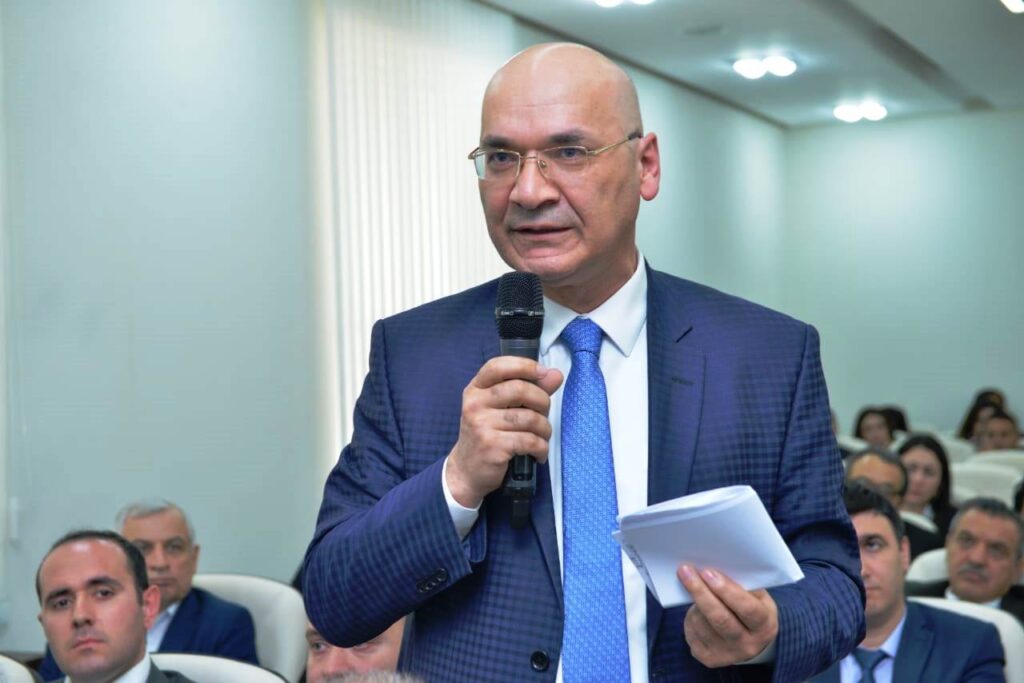
ICT expert Osman Gündüz stated that Azercell has finally acknowledged the core of the new policy. Regardless of whether a subscriber is on a tariff plan or not, the principle of “1 manat – 1 day” now applies to everyone.
If a user tops up with less than the full cost of a tariff package, the credited amount only grants access to services for the corresponding number of days. If the full tariff amount is not paid, the number switches to a call-receiving-only mode and operates one-way for 90 days.
“Previously, topping up by 1 manat gave 5 days of activity, and 5 manats provided a full 30-day service. This change forces customers to pay more without offering any additional services or technological benefits,” he noted.
He added that the new system will hit low-income and socially vulnerable groups the hardest.
“Under the old system, low-income users could talk for longer, but now the same amount of money only gets them one day of activity. This creates serious difficulties for those living in the regions, with limited internet access and no stable job or income.”
- Opinion: “State control and distance learning ban hinder university growth in Azerbaijan”
- New social media ad rules in Azerbaijan risk ‘demoralising proactive individuals,’ expert warns
- Azerbaijan: $3.5 million stolen from bank cards, expert calls for reforms
28-day packages branded as ‘monthly’: “deception and revenue strategy”
Azercell is applying a similar approach to its internet tariffs. Osman Gündüz notes that packages marketed as “monthly” are in fact valid for only 28 days.
“This means users are charged 13 times a year. As a result, the company earns additional income from millions of subscribers. In European countries, such a system is used only for short-term tourists, whereas Azercell applies this model to regular users.”
Gündüz stresses that the relevant authorities — first and foremost the Agency for Antimonopoly Control and Consumer Market Supervision — must seriously investigate the issue and take steps to protect public interests. The company’s state ownership makes this responsibility even greater. Principles of digital equality, transparency, and social justice are being undermined.
Meanwhile, in other regional countries — such as Turkey, Georgia, and Kazakhstan — mobile operators are focusing on the rollout of 5G technologies, the development of AI-based services, and digital innovation.
“In Azerbaijan, however, Azercell is focused on making users pay more for existing services. This goes against both market competition and the country’s technological progress,” the expert concludes.
Alternative proposals and final appeals
Experts and users are calling on Azercell to develop a consumer-focused, transparent, and ethical tariff policy. They argue that state authorities must oversee this process, that the term “monthly” should be clearly defined in legislation, and that regulation must serve the interests of citizens. Privatising the company is also being considered as one possible solution.
Osman Gündüz asserts that Azercell’s new tariff policy is not merely a commercial decision, but a test of public trust.
The “1 manat – 1 day” principle, misleading “monthly” packages of 28 days, and the lack of innovation are fuelling user dissatisfaction. If the policy remains unchanged, Azercell’s long-term reputation and market share may be at risk. Users expect the company to demonstrate social responsibility, transparency, and fairness.