U.S. President Donald Trump has agreed to postpone a threatened 50% tariff on European Union imports until July 9, following a phone call with European Commission President Ursula von der Leyen. The decision, announced on Sunday, May 25, temporarily defuses escalating trade tensions between the two economic giants, giving negotiators additional time to avert a potential transatlantic trade war.
The tariff threat emerged on Friday, May 23, when Trump expressed frustration over stalled trade talks, declaring on Truth Social that the EU had been “very difficult to deal with” and that negotiations were “going nowhere.” He warned that a 50% tariff on all EU goods would take effect June 1, a move that Bloomberg Economics estimated could disrupt $321 billion in U.S.-EU trade and shave 0.6% off U.S. GDP. The announcement roiled global markets, with stock indices dipping and the U.S. dollar weakening against the euro.
Von der Leyen, in a Sunday call described by both leaders as “very nice,” urged Trump to extend the deadline to allow for “serious negotiations.
As the July 9 deadline looms, both sides face a critical window to bridge divides. Failure to reach an agreement could trigger retaliatory tariffs, disrupt supply chains, and raise prices for consumers on both sides of the Atlantic. For now, Von der Leyen’s diplomatic outreach has bought time, but the path to a lasting deal remains fraught.
At a plenary session of the Azerbaijani Milli Majlis, amendments to the Law on Advertising were adopted. The new rules introduce a number of legal and financial requirements for bloggers and influencers engaged in advertising on social media — in other words, digital opinion leaders.
The law has already been approved. From now on, individuals who post advertisements on social media are required to clearly label promotional content as such, provide accurate and transparent information about goods and services, be registered taxpayers (holding a taxpayer identification number), and submit relevant documents for products that require licensing.
Provisions of the Law
Under the new amendments, advertising of products that require a licence or certificate is only permitted if the appropriate documentation is available. If the advertising medium (such as a platform or format) does not allow for full disclosure of this information, links or short codes must be provided to access further details. In addition:
Consumers must be clearly informed that the content is sponsored;
The information must be presented in a clear and comprehensible manner;
The dissemination of misleading or inaccurate information is prohibited.
Риски: творчество, свобода и инициативность молодежи
Osman Gunduz | photo: Wikimedia
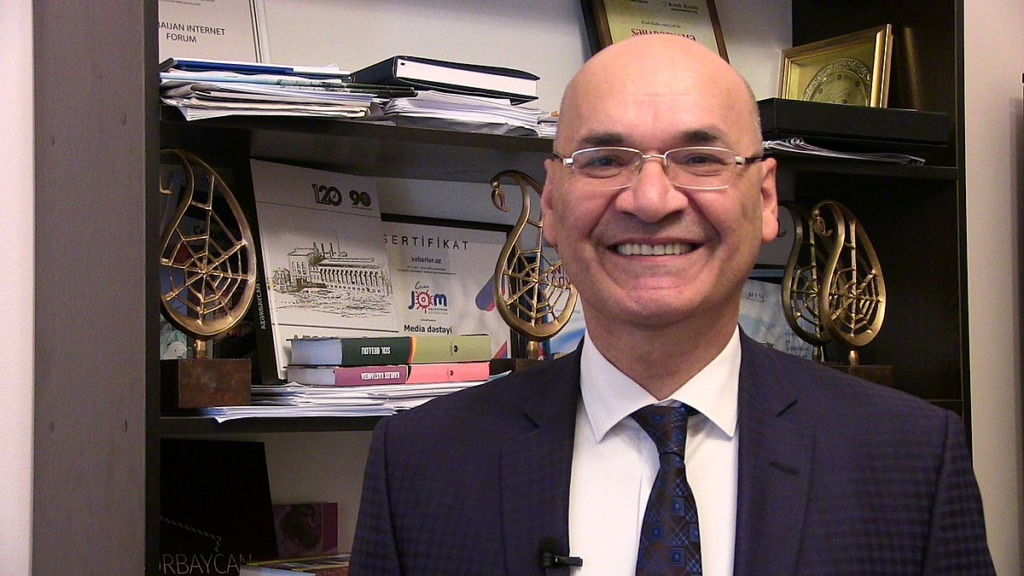
According to Osman Gunduz, president of the Azerbaijani Internet Forum and an ICT expert, if the law is enforced in a rigid and centralised manner, it could harm the work of young bloggers and creators of original content.
The expert commented on these risks as follows:
“Social media thrives on diversity and alternative voices. If priority is given only to commercial, filtered content, it will damage the spirit of the platform itself.”
At the same time, he emphasises that public oversight and civic participation must play a key role in implementing the law. However, if such oversight turns into a breeding ground for hatred and a culture of harassment, it could stifle creativity.
New Era: transparency or controlled censorship?
Osman Gunduz believes that the changes were long overdue to bring professionalism and transparency to the social media advertising market:
“In this market, alongside responsible bloggers operating with a taxpayer identification number, there were also those who failed to pay taxes, abused trust, and promoted products they hadn’t used themselves. The new rules are important to eliminate such irresponsibility.”
The expert notes that these changes are likely to improve tax culture, content quality, and consumer trust. However, he also highlights certain concerns:
“If the law is not implemented with balance, it could become a deterrent for aspiring bloggers and harm the diversity of social media.”
10-million-manat market
Osman Gunduz says the volume of the social media advertising market in Azerbaijan is around 10 million manats (approx. $6 million). This sum previously went to traditional television, but in recent years, platforms like Instagram, YouTube and TikTok have claimed a growing share of the market.
There are only a few bloggers whose monthly income exceeds 50,000 manats (approx. $30,000). Most earn between 50 and 500 manats (approx. $30–300) per post. During major campaigns, this figure can reach 10,000–15,000 manats ($6,000–9,000). The new law will ensure these revenues are officially recorded and taxed.
On May 26, President of the Republic of Azerbaijan Ilham Aliyev inspected the ongoing construction of the Mughanli-Ismayilli-Gabala section of the Baku-Shamakhi-Mughanli-Ismayilli-Gabala highway.