
Day: April 10, 2025
Anthony Weinerhttps://t.co/8eJdXvz0IO
News Review #NewsAndTimes #NT #TNT #News #Times #World #USA #POTUS #DOJ #FBI #CIA #DIA #DOD #ODNI #Trump #TrumpNews #TRUMPISTAN #Israel #Mossad #Netanyahu #Ukraine #NewAbwehr #OSINT #Putin #Russia #GRU #Путин #Россия #SouthCaucasus… pic.twitter.com/KOi8L9tm7E— Michael Novakhov (@mikenov) April 10, 2025
 |
Michael_Novakhov shared this story . |
FIRST ON FOX: Former Democratic Rep. Anthony Weiner received surprising donations to his campaign for City Council of New York City from ex-wife Huma Abedin and her sister, Heba Abedin, despite his ex-wife saying in 2021 that Weiner’s sex scandals “almost killed her.”
Huma Abedin donated $175 to Weiner’s campaign March 13, and her sister, Heba Abedin, donated $150 Dec. 29, 2024, a Fox News Digital review of New York City campaign finance reports revealed.
Weiner launched his latest campaign for NYC City Council, a position he held from 1992 to 1998 before controversy derailed his political career, in December 2024. Weiner was elected to represent New York’s 9th Congressional District in 1998 and resigned in 2011 after he posted a photo of himself in his underwear on social media.
The incident was followed by years of sexual scandals, and Weiner was charged with transferring obscene material to a minor in May 2017 after sexting a 15-year-old girl. He was sentenced to 21 months in prison.
Former Democratic Rep. Anthony Weiner, right, received donations to his campaign for City Council of New York City from ex-wife Huma Abedin and her sister, Heba Abedin, according to campaign finance reports. (Getty)
Huma Abedin, the longtime Hillary Clinton aide, told CBS “Sunday Morning” in 2021 that anger over her husband’s sex scandals almost killed her.
ANTHONY WEINER SPOTTED DINING WITH ESTRANGED WIFE HUMA ABEDIN
“I can’t live in that space anymore. I tried that. It almost killed me,” Abedin told Norah O’Donnell.
Abedin said she filed for divorce on the same day Weiner pleaded guilty and was sentenced to prison. The former couple, who co-parent their son, were spotted in 2023 attending the Inner Circle charity show at Ziegfeld Theater in Midtown Manhattan.
President Joe Biden, right, presents the Presidential Medal of Freedom, the nation’s highest civilian honor, to Alex Soros on behalf of his father, George Soros, in the East Room of the White House Jan. 4, 2025, in Washington. (AP Photo/Manuel Balce Ceneta)
By July 2024, Abedin announced on social media she was engaged to Alex Soros, chairman of Open Society Foundations and son of billionaire megadonor George Soros. They are expected to get married this summer.

After resigning from Congress in 2011, Weiner continued sexting under the pseudonym “Carlos Danger.” The main recipient, Sydney Leathers, who was 22 at the time, claimed the former lawmaker referred to himself as “an argumentative, perpetually horny middle-aged man.”
Anthony Weiner, a former Democratic congressman, leaves federal court in New York Sept. 25, 2017, after being sentenced to 21 months for sexting with a 15-year-old girl. (Timothy A. Clary/AFP via Getty Images)
Weiner attempted his first political comeback in 2013 with a mayoral run, but his reputation was damaged by new revelations of explicit photos Weiner had sent under the pseudonym. Weiner was caught in another sexting scandal in 2016, which led to his indictment. In one image Weiner sent, he was lying in bed with his young son.
More claims surfaced that year that Weiner had sexted a 15-year-old girl in North Carolina, and his laptop was seized. Investigators found emails relevant to Clinton’s classified documents scandal that dominated the 2016 election.
Weiner later checked himself into rehab for sex addiction. In 2017, his federal indictment ruined another bid for mayor. He was released in 2019 and was ordered to register as a sex offender.
CLICK HERE TO GET THE FOX NEWS APP
Abedin and Weiner did not respond to Fox News Digital’s request for comment by the deadline of this article.
Fox News Digital’s Michael Dorgan and Charles Creitz contributed to this report.
Deirdre Heavey is a politics writer for Fox News Digital.
Categories
#Schumer x.com/mikenov/status…
https://t.co/MLElwhI39P
News Review #NewsAndTimes #NT #TNT #News #Times #World #USA #POTUS #DOJ #FBI #CIA #DIA #DOD #ODNI #Trump #TrumpNews #TRUMPISTAN #Israel #Mossad #Netanyahu #Ukraine #NewAbwehr #OSINT #Putin #Russia #GRU #Путин #Россия #SouthCaucasus #Bloggers #Opinions
-…— Michael Novakhov (@mikenov) April 10, 2025
Disgraced ex-Congressman Weiner receives donation from unexpected New Yorker | Fox News https://t.co/e3QjXUc1yO pic.twitter.com/HhCnShfuY2
— Michael Novakhov (@mikenov) April 10, 2025
Disgraced ex-Congressman Weiner receives campaign donation from unexpected New Yorker in new race https://t.co/e3QjXUc1yO
— Michael Novakhov (@mikenov) April 10, 2025
My grandmother, Annig Abroyan, was born in AfyonKaraHisar sometime around 1900. She didn’t know the exact date—or even the year—and would say that those things weren’t important where she came from. The elderly Armenians in Syracuse, New York, during the 1960s and ‘70s were not forthcoming about what had happened to them in “the old country.” I grew up knowing nothing of the Genocide or what they had survived.
It wasn’t until I was a young adult that I began to learn about what my grandparents had endured. My grandmother lost her entire family—except for one brother, who she found in 1970 (a story for another time). She survived because she was attending nursing school in Smyrna and escaped to England a year before the city was burned to the ground. There’s so much to her story, and the more I learned—long after she had passed—the more my heart ached for her.

My first trip to Turkey was in 2004, on a “Footsteps of Paul” tour led by my pastor. I was very excited to go. My Armenian friends and family, however, were not so excited for me. My elderly uncle said, “No! They will kill you!” I patiently explained that it wasn’t like that anymore, and that I was going as a pilgrim, not as an Armenian. Little did I realize that Armenian DNA is not so easily dismissed. Though I am half Armenian, I always say that Armenian DNA always rises to the top.
The uneasiness began as soon as we left the Istanbul airport. Our guide had Armenian eyes, and as we drove to our hotel, I could see traces of Armenian design and architecture everywhere. Late that night, I was awakened by a loud commotion in the streets. I bolted upright in my bed, my brain screaming, “The Turks are coming!” I assessed how secure I’d be from the third-floor balcony. As I sat there—terrified beyond reason—the noise faded, and my heart slowly calmed.

The next morning I asked our guide about the noise. He explained that a wedding had spilled into the street, and the guests had banged pots in celebration. At breakfast, I ate a roll that brought tears to my eyes. It had a flavor I hadn’t tasted since my grandmother’s cooking—black sesame seeds! As we traveled through Turkey, even the dust itself spoke to my feet and my soul. I felt called to this strange, yet somehow familiar land.
By 2024, I made five more trips to Turkey with a group that engages in prayer and friendship, mostly in Muslim-majority countries. Whenever we venture off the tourist path, we’re greeted by literally everyone we encounter—with welcoming smiles, food, invitations and authentic happiness. I usually divulge my Armenian roots, which often sparks stories of Armenian friends or, more discreetly, confessions of Armenian ancestry, whispered into my ear. Many, especially in the cities, know the truth. A Turkish woman once got on her knees, took my hand and asked for forgiveness for any part her family might have played in the Genocide.

In May 2024, our group of four traveled to AfyonKaraHisar (the locals run the words together). Like much of Turkey, the scenery is magnificent, and I understood why our ancestors wanted to stay in spite of so much persecution. The name of the province, “Afyon,” means opium—I guess that’s what this region was once famous for. “Kara Hisar” means Black Fortress, which sits atop a rocky mountain above the city. Probably originally Armenian, the fortress has been modified a lot over the years.
I was pleasantly surprised to see the restoration of Ottoman-era homes. The city is quite charming, unlike so many places in Turkey where everything is left to deteriorate. This was the neighborhood where my grandmother lived.

Thanks to Google Maps, we were able to find the locations of three Armenian churches. The first church we set out for was the Protestant church, which would have been the one my grandmother attended. All that’s left is a gate, which opens into what once was possibly a lobby area. Crumbling walls disappear into newer structures.


A locked door leads to an area that is now under a school. We prayed there, and I left a small cross in a spot where it wouldn’t be found. Behind the church, we found a pile of material that had been gutted from the church, including a baptistery—possibly the very one my grandmother was baptized in.
I can’t tell you the depth of mixed emotions—walking through the ruins of my grandmother’s church—holding joy, sorrow and everything in between in my spirit.
Next, we visited the Armenian Orthodox church. The front wall was still there, with a locked side door. I found an Armenian inscription and cross. The church is proudly labeled for the benefit of non-existent tourists.


We found an unlocked side door, leading to a crumbling staircase, an area overgrown with grapevines, a small ruined house and a broken wine press—perhaps once used for communion wine. Pushing through the overgrowth, we stepped into what would have been the sanctuary.

I spotted a corner of a carpet sticking out of a pile of dirt. I pulled it out and unfolded a clean, beautiful piece that I desperately wanted to bring home, but I left it. I didn’t know if the carpet was discarded or sacred, and I had no room in my luggage.

Coming back through the area of the wine press, we felt the need to share communion. I felt so privileged to be there and wondered when communion had last been celebrated in that sanctuary. As we concluded our little service, an angry man burst in. He yelled at us for trespassing on “his” property and asked if we had stolen anything. Our leader, who speaks Turkish pretty well (but Google Translate is a godsend), explained that I was Armenian and wanted to see the church, and asked if we could pray for him.

Totally disarmed after realizing that we weren’t there to steal any of his rubble (I was very glad I had not picked up that carpet!) he softened.
He explained that this was “his” property, which had been “gifted” to his family long ago. I tried not to imagine what his grandfather may have done to receive an Armenian church as a “gift.”

He informed us that we were standing in the church garden—and we were very moved to realize that we had taken communion there. After praying for him, we asked about a place to do some shopping. He offered to walk us there. Along the way, he pointed out homes where Armenians still lived. I regret that I didn’t knock on those doors to see if anyone would be willing to talk to me.


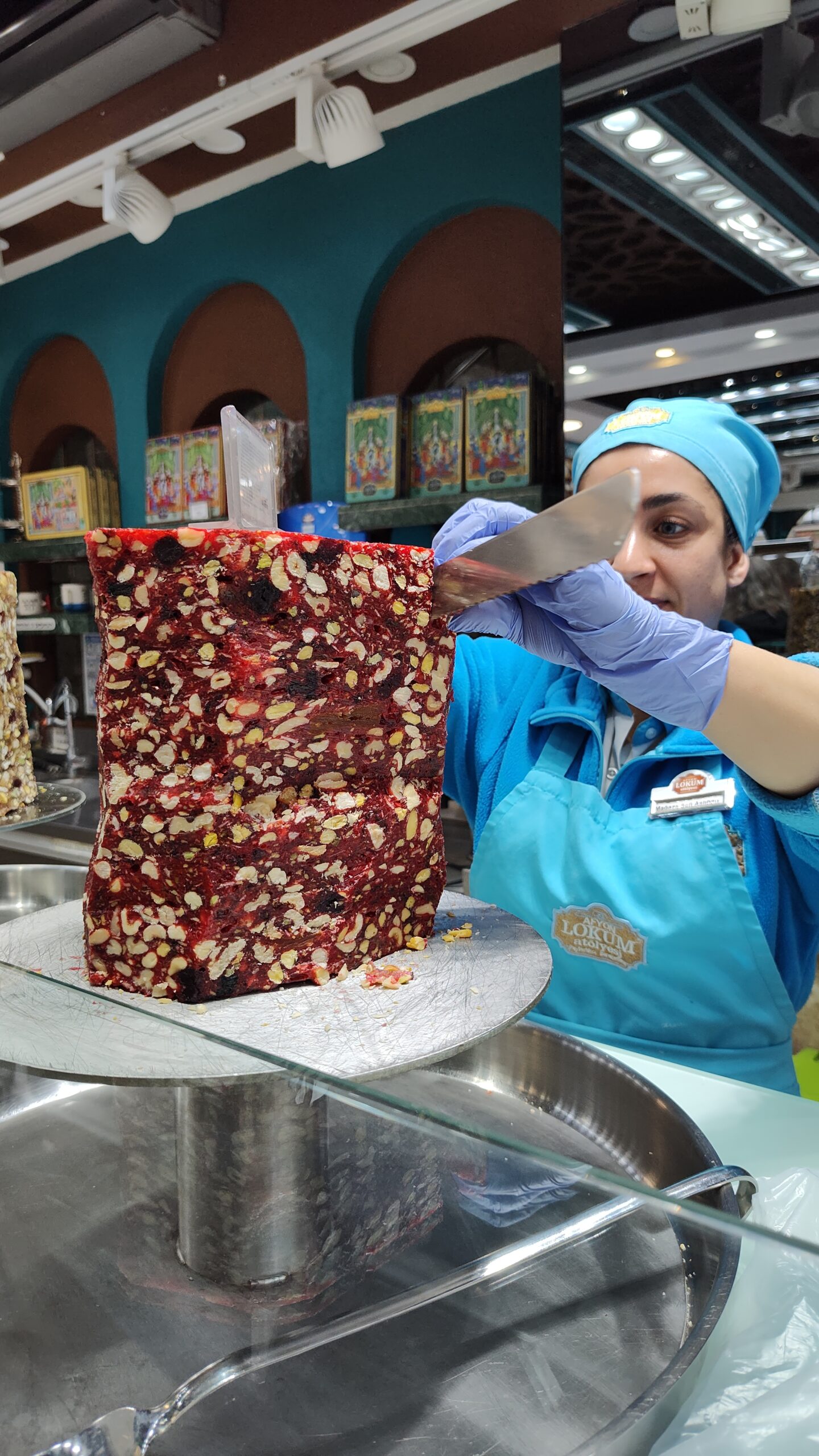
Continuing along the cobblestone streets, our new friend took us to a “bedesten,” or covered market, where he knew someone to give us good prices. We bought some beautiful scarves, and as is the custom, were served çay and lingered for conversation. After shopping, we said goodbye to our “guide,” who really did not want us to go. He even offered lodging at his home, which happens frequently when we talk to Turks.


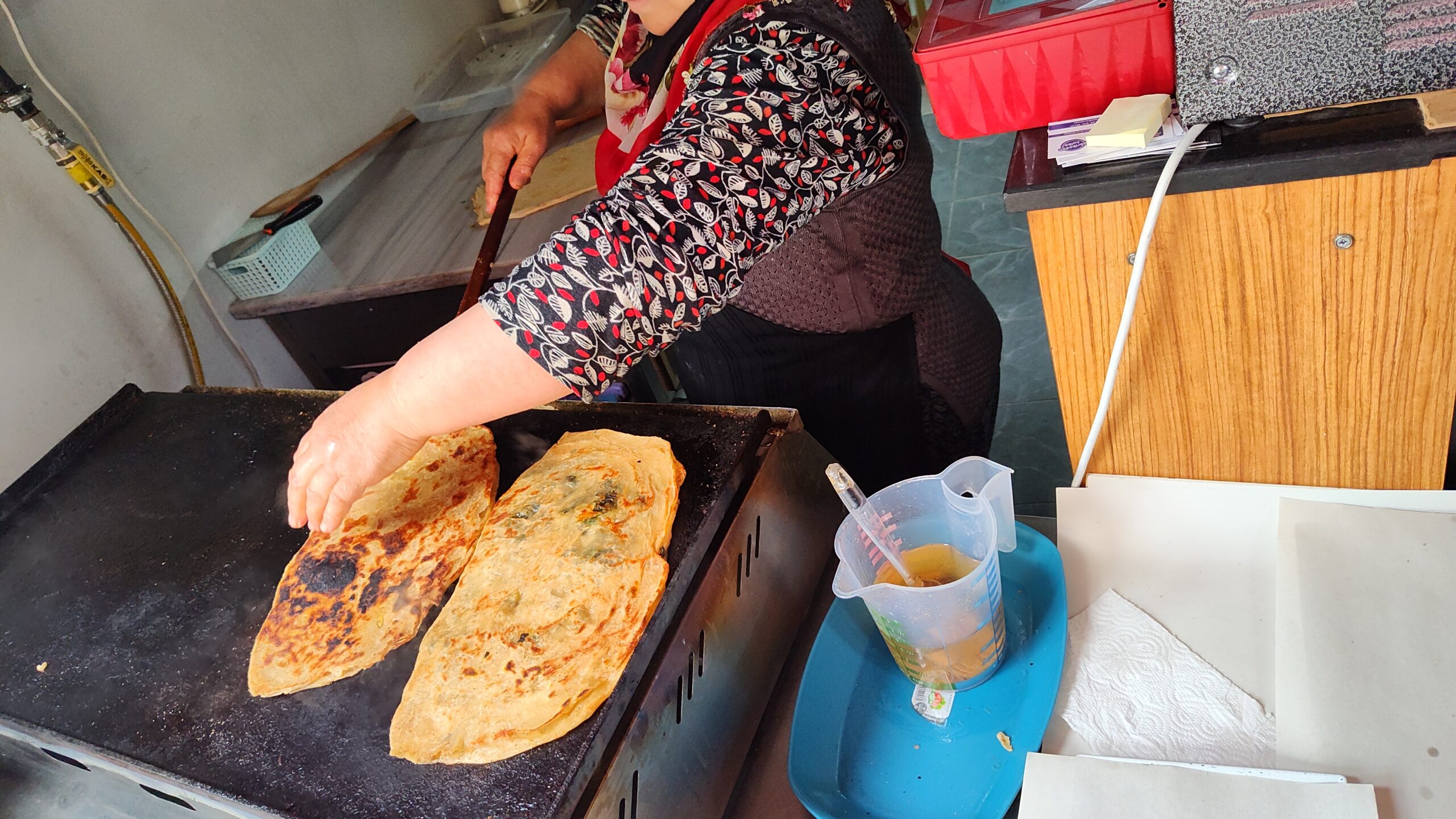
For lunch, we ate at a little gözleme cafe–gözleme is like soft lavash bread, filled with your choice of ingredients. The proprietors, an elderly couple, were curious and had many questions for us. We told them that I’m Armenian, and this was my grandmother’s hometown. The woman was visibly moved by my story. I asked if their family had lived here for generations. Our cook answered yes, and I said that our grandparents could have played together as children.

As we hugged goodbye, she had tears in her eyes. We were so caught up in the moment that we forgot to pay! They did not mention it as we went out the door. Thankfully, our leader realized it later and returned to settle the bill.

After lunch, we found the remaining Armenian church, listed as Catholic on Google Maps. We were very sad to see that there is absolutely nothing left of this church. A school now occupies the ground. We prayed over the site—that it might someday be a church again.

We spent the remainder of the day walking the streets and conversing with curious and friendly locals. I collected a few pebbles and broken tiles to bring a piece of my grandmother’s hometown home.
Author information

The post Tracing my grandmother’s footsteps in AfyonKaraHisar appeared first on The Armenian Weekly.