Categories
South Caucasus News

MEPs call for immediate action against Georgian Dream in European Parliament debate


MEPs call for action against Georgian Dream

MEPs call for action against Georgian Dream

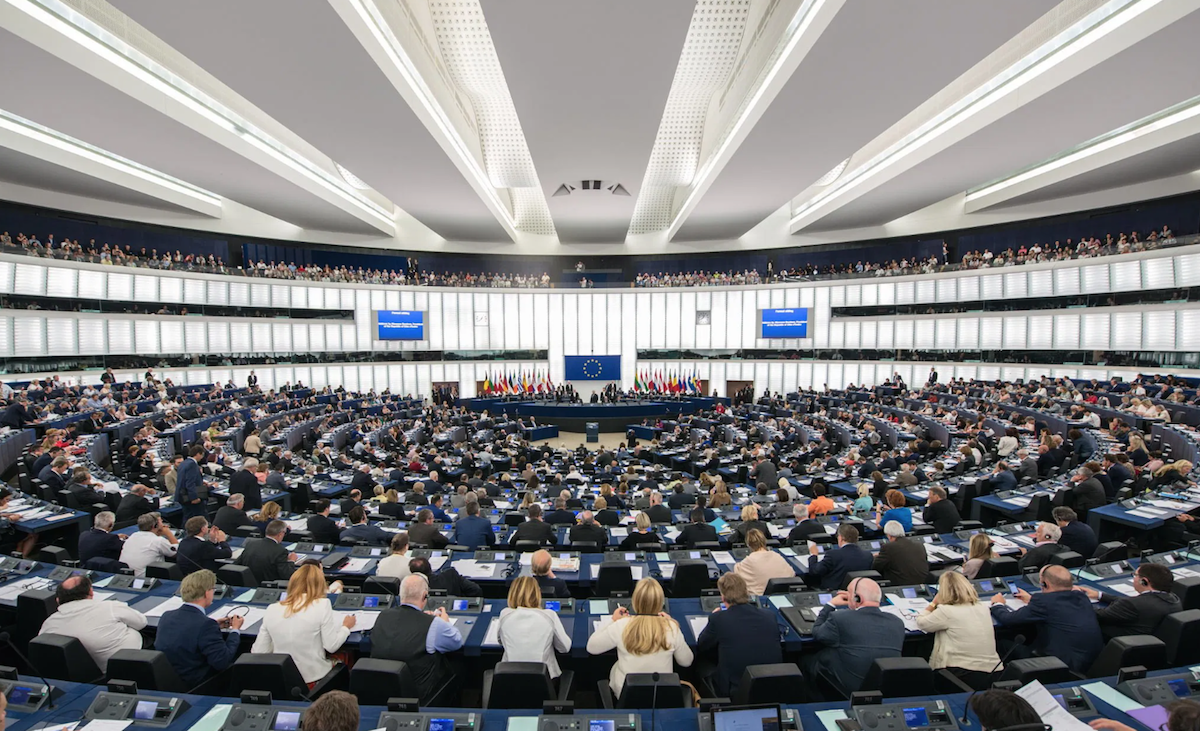
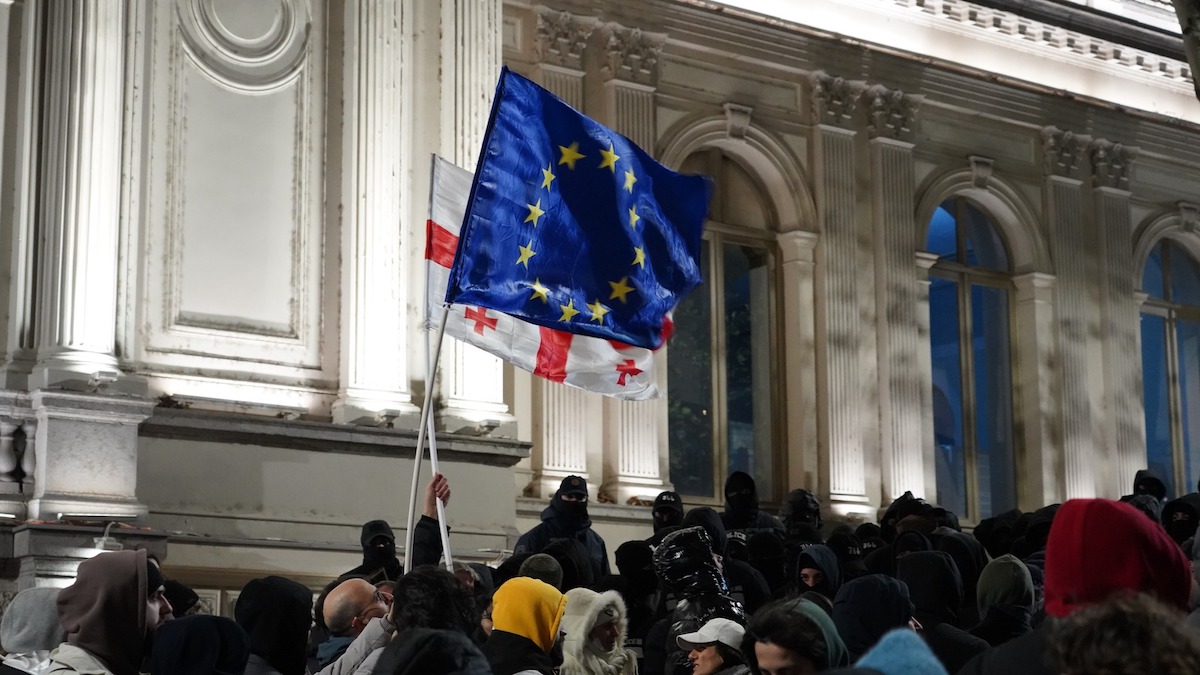
On December 17, during a European Parliament debate, hearings were held on the ongoing protests in Georgia, with some MEPs calling for strong measures against the Georgian Dream ruling party.

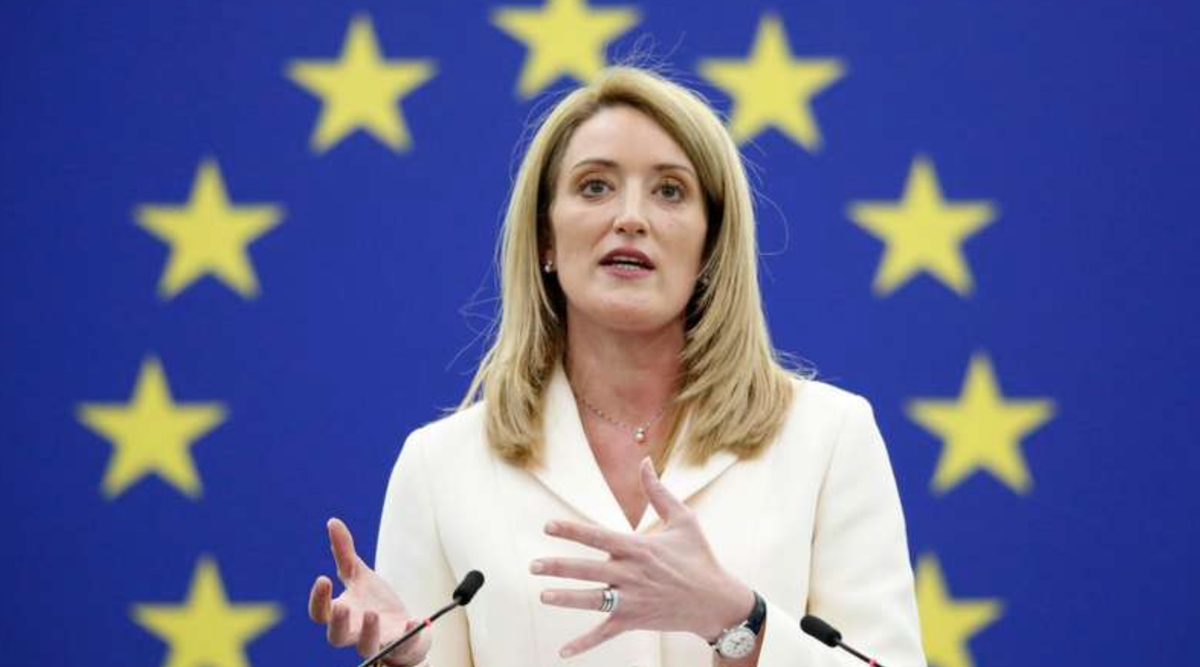
The Vice President of the European Commission for Democracy and Demography, Dubravka Šuica, addressed the session, discussing the protests in Georgia that followed Prime Minister Irakli Kobakhidze‘s statement suspending the country’s EU accession process until 2028. According to Šuica, this move marks a clear departure from the policies of previous Georgian governments and the aspirations of the majority of the Georgian people.

“This is also the first instance where a country granted candidate status openly rejects its European path,” Šuica emphasized.

Eurosceptic and pro-Russian MEPs from the Georgian Dream allied groups took a different stance.

For example, Thierry Marian, a French representative from the right-wing party, stated that the European Union simply does not accept the will of the people in Georgia and Romania.

Meanwhile, Italian pro-Russian MEP Danilo Della Valle called on the European Parliament to acknowledge that Georgians are voting differently from what EU High Representative for Foreign Affairs and Security Policy, Kaja Kallas, and European Commission President Ursula von der Leyen would prefer.

MEP’s statements

Комментарии депутатов Европарламента
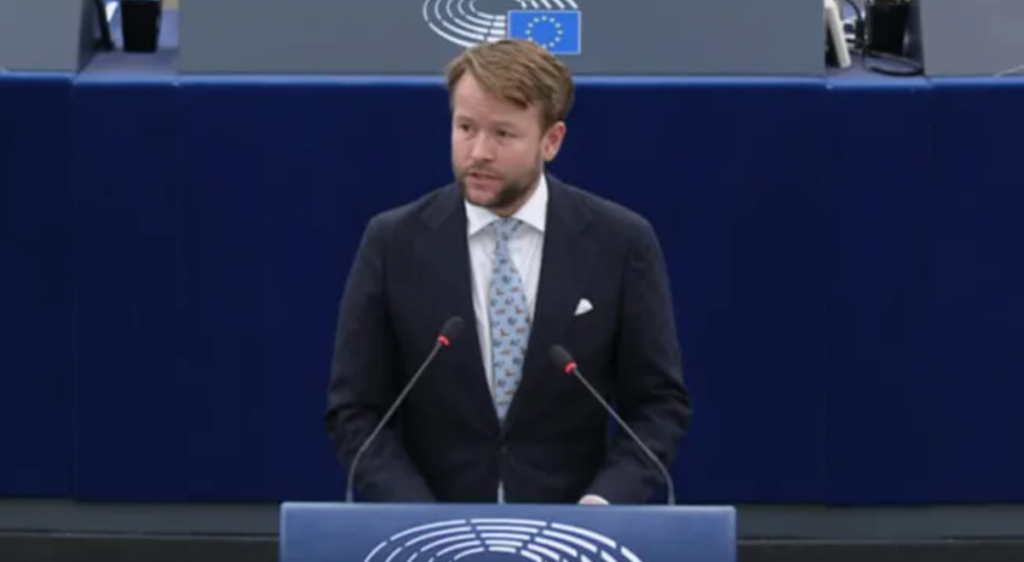
Reinier van Lanschot

Reinier van Lanschot, a Member of the European Parliament from the Netherlands, said: “‘Georgian Dream’ has turned into a ‘Russian nightmare,’ with its leaders stealing people’s votes, stealing their hope, and blocking their path to the European Union. They are illegitimate and unconstitutional, but the masks have been removed and their true face revealed. A face all too familiar to the Georgian people—the face of Russian oppression.

Seven percent of Georgia’s population takes to the streets every day in protest. I’ve attended these rallies, where people are demanding new elections. A year ago, Georgia earned its EU candidate status not because of its government, but because of its people. And this people expects action from us today. So how can we help them? Impose sanctions on the leaders of ‘Georgian Dream,’ who only care about their own wealth. Fund independent media and democracy defenders, and support Salome Zourabichvili—the people’s president and legitimate leader.”
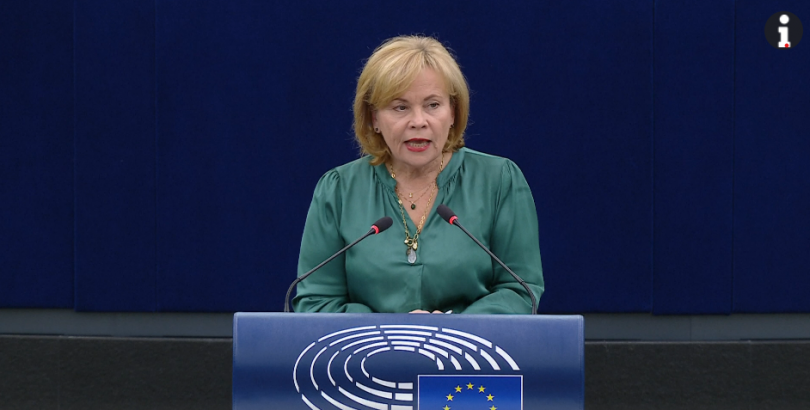
Rasa Juknevičienė

Rasa Juknevičienė, a Member of the European Parliament from Lithuania, said: “Is there hope?”—this is the question most often asked in Lithuania about Georgia. Yes, there is hope! Last week, when I was in Tbilisi, I saw many people with EU flags. Not only in Tbilisi but across Georgia, including in small villages.

Around 500 people have been arrested, hundreds beaten, including journalists, but more and more people are joining the protests. Georgia is becoming a clear example of how Russia’s influence can turn a democratic system into an authoritarian regime without war.

But Georgia is a candidate country, and EU institutions cannot stand by. My group’s position is clear: the parliamentary elections were stolen, and we see no other way to help Georgia but through new elections.

Zourabichvili is the only legitimate president, elected by the people. We call on EU member states to impose sanctions on those responsible for election fraud and violence against peaceful protesters. We urge heads of state and ministers to immediately travel to Tbilisi with a European and Georgian mission.”

I call on the EU not to allow Putin and his proxies to win the fight against freedom and democracy on the European continent.
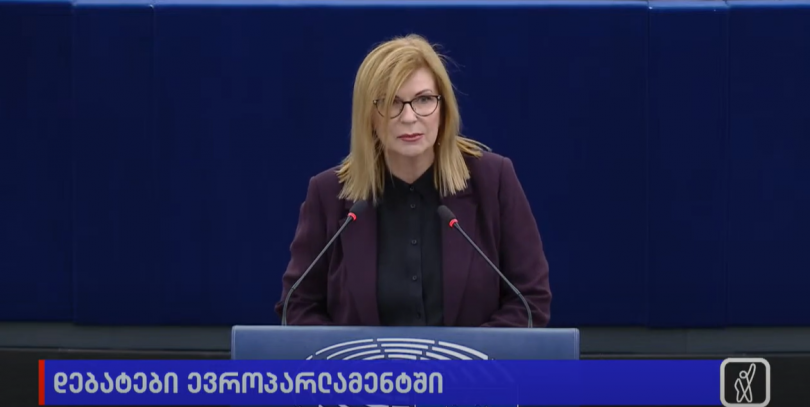
Malgorzata Gosiewska

Malgorzata Gosiewska, Member of the European Parliament from Poland: “Thousands of Georgians have been taking to the streets for weeks, fighting against the policies of ‘Georgian Dream.’ They are fighting against a pro-Russian party that, openly, is leading the country toward Russia. Arrests, violence, the freezing of relations with the European Union – this is the government’s response to Georgian society. The slogan of the protests is ‘Wake up, Georgia!’ I would say the same – wake up Europe and stand with the protesters.”
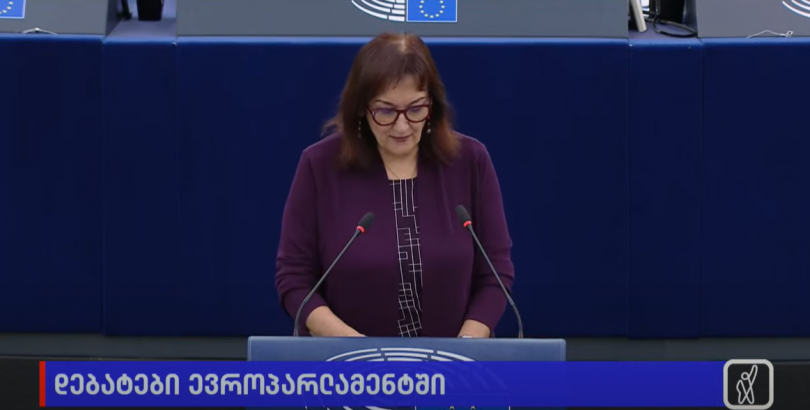
Dubravka Šuica

Dubravka Šuica, Vice President of the European Parliament, Croatia: Nearly three weeks have passed, and the Georgian people have been protesting across the country to defend their democratic and European future.

The situation in Georgia is worsening: over the past two weeks, more than 450 people have been detained. Around 300 people have been subjected to violence and mistreatment, with many requiring urgent medical attention. Law enforcement has pressed administrative charges against over 400 people, while approximately 30 individuals face criminal prosecution, yet no police officers or members of informal violent groups have been held accountable for abuse of power.

These events are not isolated incidents but are part of a broader picture of democratic regression in Georgia. Prior to the parliamentary elections on October 26, there were significant violations that contradicted European norms and values. In June, we responded with several measures, including the reduction of political contacts and the suspension of aid: 30 million euros from the European Peace Fund and 121 million euros in direct aid to the government were frozen.

Georgia’s success process has essentially been halted. The authorities have not changed their course. Honorable members of parliament, it is time for decisive and united action from the European Union. This is what the Georgian people expect from us. Those responsible for the violence must be held accountable, the authorities must immediately stop the repression, release the unlawfully detained protesters, and resume the integration process.
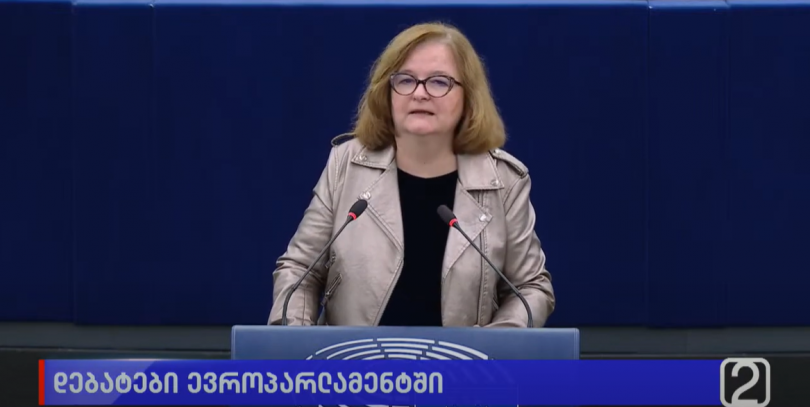
Натали Луазо

Nathalie Loiseau, Member of the European Parliament from France:

Dear colleagues, have we become deaf and no longer hear what the protesters in Georgia have been saying for so many days? I will tell you, I met with them – the elections were stolen, as was their future and freedom – their dreams. “Georgian Dream” keeps repeating that Georgia is Europe, not Russia. However, we see repression against peaceful protesters, beatings of journalists, and arrests of opposition figures.

We see dark clouds gathering over the country, and can we really not help them and stop the “Dream”? Madam Zourabichvili is fighting for her country’s democratic future. Georgia’s place is in the family of European democracies, and Salome Zourabichvili will speak about this in the plenary. We must prove that they are not relying on us in vain.
Categories
South Caucasus News

Azerbaijan and Qatar strengthen environmental cooperation, says Minister


It is important to develop and further strengthen cooperation between Azerbaijan and Qatar in the field of environmental protection.

Categories
South Caucasus News

ICESCO to hold conference dedicated to Turkmen poet Makhdumgulu Faragi


A conference dedicated to the 300th anniversary of the great Turkmen poet Makhdumgulu Faragi will be held at the headquarters of the Islamic World Educational, Scientific and Cultural Organization (ICESCO) in Rabat on December 18, Azernews reports.

Categories
South Caucasus News

European Council report: ‘Georgia must return to the path of the European Union’


EU Council urges Georgia's return to European path

European Council urges Georgia’s return to European path

The European Council has published a report on EU expansion, stating that the EU is ready to support the Georgian people on their European path, while once again expressing concern about the course taken by the Georgian government.

The report also mentions the October 26 parliamentary elections and the “serious concern” regarding the preliminary findings of the OSCE/ODIHR, which point to flaws in the elections and the fact that they were held in a tense and highly polarized environment. The Council “strongly urges” an investigation into the election violations.

In its report, the Council expresses concern over the recent decision by the Georgian government to suspend the country’s EU accession process until 2028 and strongly condemns the violence against peaceful demonstrators, journalists, and opposition politicians.

The report also mentions the visa liberalization between the EU and Georgia and includes a call for Georgia to immediately meet the liberalization criteria.

Key takeaways from report

  • In light of recent European Council conclusions, the Council reaffirms the Union’s readiness to support the Georgian people on their European path. At the same time, it reiterates the EU’s serious concern regarding the course of action taken by the Georgian government, including the adoption of the law on transparency of foreign influence, as well as other legislation which runs counter to the values and principles upon which the EU is founded and which represent backsliding on the steps set out in the Commission’s recommendation for candidate status.
  • The Council regrets the Georgian government’s recent decision to suspend the country’s EU accession process until 2028.
  • The Council strongly condemns the violence against peaceful protesters, media representatives and politicians. The Georgian authorities must respect the right to freedom of assembly and of expression, and refrain from using force. All acts of violence must be investigated and those responsible held accountable.
  • The Council calls on the Georgian authorities to urgently revert to the EU path and adopt democratic, comprehensive and sustainable reforms, in line with the core principles of European integration. The Council underlines the importance of reverting to the implementation of the nine steps set in the 2023 Enlargement communication of the Commission.
  • The Council is deeply concerned about the backsliding in the areas of democracy, rule of law and fundamental rights. Georgia needs to guarantee the full respect for fundamental rights, including the freedom of expression and assembly, and the freedom, independence and pluralism of the media, as well as the rights of LGBTI persons.

European Council urges Georgia’s return to European path


Categories
South Caucasus News

Secretary General of CoE Visit to Georgia


On December 18 the Secretary General of the Council of Europe, Alain Berset began his official visit to Georgia. Noting that the mission “takes place in a political and social context marked by strong tensions, extreme polarisation of the political debate and acts of violence in recent weeks” the CoE press release about the visit says that it aims “to ensure the conditions for continued co-operation between the Council of Europe and Georgia, in full compliance with the Organisation’s values and principles.” The GD has used the fact of the visit to assert the legitimacy of its government following the disputed parliamentary elections.

The press release issued prior to the visit says that “in the current tense and worrying context, the Council of Europe calls on all parties to avoid any escalation of tensions.” The Council of Europe further “urges the authorities to refrain from the disproportionate use of force and to respect fundamental freedoms, in particular freedom of expression and assembly.”

The press release also notes that Secretary General “welcomes yesterday’s release of Nika Gvaramia and Aleko Elisashvili, whom he plans to meet with other opposition and civil society members.” The official press release makes no mention of other meetings.

However, the ruling Georgian Dream has used the visit to claim the legitimacy of its rule following the disputed Parliamentary elections of October 26, announcing Berset’s visit with GD PM Irakli Kobakhidze. The party’s executive secretary Mamuka Mdinaradze said on the morning of December 18: “The questioning of legitimacy [of the GD government] that has been going on cannot continue because the Secretary General of the Council of Europe is meeting with the Prime Minister of Georgia and other officials. As we know, there will also be a meeting with the elected president. Maybe the ex-president too, I don’t know… In any case, this is where the question of legitimacy ends”.

The Secretary General is accompanied by the Director General for Human Rights and the Rule of Law, and the Director General for Democracy and Human Dignity.

More to Follow…


Categories
South Caucasus News

A Journalist’s Public Appeal: Aliyev Wants to Destroy the Media That Investigates Him


Sevinj Vagifgizi dedicated her award to all journalists fighting against corruption.

On December 10, Sevinj Vagifgizi, the editor-in-chief of “Abzas Media,” who is currently in prison, was declared the “Global Anti-Corruption Champion.” In light of this achievement, she addressed the public in a heartfelt appeal.

The journalist expressed her gratitude to those who deemed her deserving of the award, as well as to everyone who remains loyal to democratic principles:
“I would like to thank everyone who remains loyal to democratic principles for deeming me worthy of this prestigious award.”

As part of “Abzas Media,” Sevinj Vagifgizi and her team have uncovered a wide range of corruption. They exposed the criminal activities of the family members of the country’s leader, Ilham Aliyev, and how the officials appointed by him misused state funds. Reflecting on the situation, she said, “Unfortunately, instead of opening criminal cases against these officials based on these facts, state agencies accused the journalists who uncovered these crimes of ‘dirty money’ and imprisoned them.”

According to Vagifgizi, after Ilham Aliyev took control of the judiciary and the legislative bodies, he has now shifted his focus to eliminating independent media. “However, I believe that everyone who remains loyal to democratic principles will not allow the destruction of the country’s only breathing entity, the free media. This award is an achievement of all journalists who have uncovered corruption crimes.”

The Global Anti-Corruption Champions Award, established in the U.S. in 2021, is designed to recognize individuals who have taken extraordinary steps in the fight against corruption. It also aims to demonstrate solidarity with these heroic partners.

Along with Sevinj Vagifgizi, nine other individuals were honored with this prestigious award.

Sevinj Vagifgizi was arrested on November 21, 2023, as part of the “Abzas Media Case.” She, along with five other imprisoned staff members of the media organization, has been accused of smuggling.

The journalists have denied the charges, asserting that their arrests are directly linked to their investigations into corruption.

The post A Journalist’s Public Appeal: Aliyev Wants to Destroy the Media That Investigates Him appeared first on MEYDAN.TV.


Categories
South Caucasus News

President: Rules of game defined by results of World War II no longer work


“We and Türkiye annually conduct more than 10 joint exercises – half in Azerbaijan and half in Türkiye. In fact, we have achieved a high degree of operability of military operations. Of course, this is an important factor for stability in the Caucasus.”

Categories
South Caucasus News

The Strasbourg Court held Russia fully responsible for property rights violations in Abkhazia during the 1990s


Strasbourg court, Russia, and lost property in Abkhazia

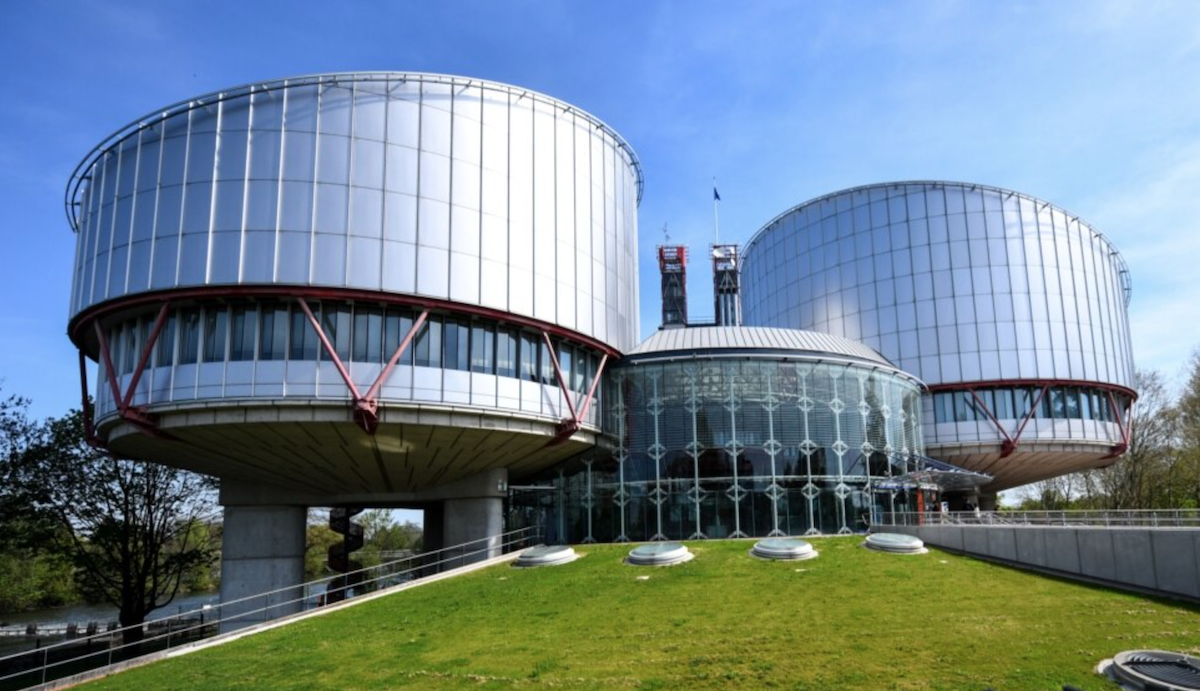
The European Court of Human Rights has concluded its examination of six lawsuits regarding property rights violations in Abkhazia, holding Russia fully responsible in all cases.

The case, Taganova and Others v. Georgia and Russia, concerns real estate that applicants were forced to abandon or could not access following the outbreak of hostilities in the early 1990s.

Russia is ordered to pay each claimant between €25,000 and €35,000.

Details of the case and court decision:

The European Court of Human Rights was petitioned by two Russian citizens – Galina Taganova and Tariel Esartia, and four Georgian citizens: Ketevan Mekhuzla, Ksenia Sanaia, Suliko Dvali, and Marina Gogua.

Their years of birth range from 1914 to 1960. Several applicants are registered as internally displaced persons in Georgia.

The Court reiterated that Abkhazia was territory over which Russia had de facto control. It found in particular that the applicants had had homes in Abkhazia. However, they had not had effective domestic remedies available to them either in Georgia or in Russia to secure access to those properties.

Owing to Russia’s control over the territory and its lack of efforts to secure property rights, in particular for Georgian citizens, it found Russia alone responsible for the continuing violations related to property in this case,” the statement reads.

The Court decided that it had jurisdiction to deal with the case, as the facts giving rise to the alleged violations of the Convention had taken place before 16 September 2022, the date on which Russia ceased to be a party to the European Convention.


Thirty years after the ceasefire agreement of 1994, displaced people, including the applicants, were still not able to return to the region. This amounted to an interference with the peaceful enjoyment of their possessions. They had been objectively unable to return to their properties, certainly not safely, as was clear from the conclusions in particular of a number of international sources.

The Court held that Georgia had made sufficient efforts to re-establish State control over the territory, mentioning in particular the 2008 Law on Occupied Territories, which had voided all real-estate transactions carried out in contravention of Georgian law and reiterated property rights in the occupied territories.

Conversely, the Russian Government – which exercised effective control over Abkhazia – did not justify the interference with the applicants’ property rights. They should have taken steps to protect those rights, such as providing an easily accessible and flexible legal mechanism. They had failed to do so,” the statement reads.

According to the court’s decision, Russia is required to pay the following compensation to the claimants for material and non-material damages:

  • Tariel Esartia: €25,000
  • Ketevan Mekhuzla, Ksenia Sanaia, Suliko Dvali, and Marina Gogua: €35,000 each

The court also ordered the Russian Center for Human Rights to pay €18,000 in legal costs for all the claims combined.


Categories
South Caucasus News

Azerbaijan’s Aliyev mocks France’s Macron, threatens Armenia – Armenia News


Azerbaijan’s Aliyev mocks France’s Macron, threatens Armenia  Armenia News

Categories
South Caucasus News

edvin_kornelius: When asked a week ago members of CAUCASUS AND CENTRAL ASIA NETWORK LinkedIn Group which #SouthCaucasus country has the best chance of joining the #EU🇪🇺 by 2035, just over 1/3 (36%) voted for #Azerbaijan🇦🇿, another 1/3 (34%) said none of the three countries had a chance, 24% https://t.co/EtvBdywmbp