
‘They Stole Your Vote,’ Georgian President Says, As Tens Of Thousands Rally To Protest Elections Radio Free Europe / Radio Liberty
Day: October 28, 2024
‘They Stole Your Vote,’ Georgian President Says, As Tens Of Thousands Rally To Protest Elections Radio Free Europe / Radio Liberty
‘They Stole Your Vote,’ Georgian President Says, As Tens Of Thousands Rally To Protest Elections Radio Free Europe / Radio Liberty
Elections in Georgia
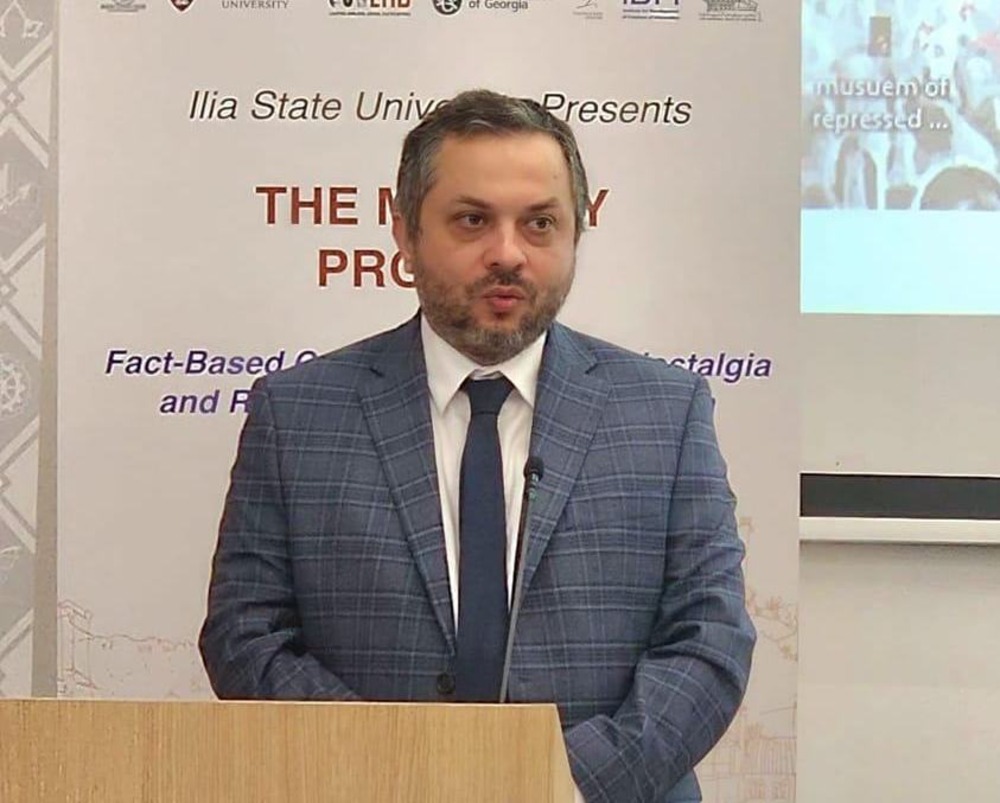
Beka Kobakhidze, historian
In the lead-up to the elections in Georgia, I predicted that the government could mobilize a maximum of 900,000 votes—what I considered the upper limit, their most optimistic scenario. This assessment was based on an analysis of elections from 2018 to 2021 and recent events in Georgia.
My friends told me that 900,000 was a substantial figure for the government. I appeared overly pessimistic, believing that the four opposition parties could collectively secure a million votes, which would lead to victory. However, given the recent developments and the pro-Russian platform, I never entertained the possibility that the government would receive a million votes or more, or that they could somehow legitimize it.
There is a fair amount of criticism directed at the opposition parties, some of which is valid: laziness, lack of creativity, discord, and living under illusions. Yet, few consider the problem from the perspective of opposition leaders: with 3,100 polling stations, each requires at least one capable and committed party member; maintaining party organizations and offices across 73 districts for four years is a daunting task. The “Georgian Dream” actively seeks individuals to fill positions, offering them money and security for their families. In contrast, anyone who collaborates with the opposition often has to work without pay, leaving their family unemployed and vulnerable to harassment. The further we move into the periphery, the more challenging this situation becomes. Thus, it is easy to criticize the opposition, but much harder to address the challenges they face. It is surprising that some parties, despite financial constraints preventing them from opening offices, still manage to surpass the electoral threshold, more so than the low election results.
- The Eurasian Georgia? – Political Scientist Gia Nodia
- Pressure, intimidation, unequal opportunities: International missions evaluate elections in Georgia
- Ballot stuffing, ejecting observers, voter control – What election day was like in Georgia
In short, the people who attend funerals and weddings in villages are disconnected from both parties and NGOs. This is the reality. However, it is not a new reality, and we should not seek the root of the defeat there. This is important to remember when we critique the parties.
As for the reasons for the electoral defeat, there are two: fraud and Georgian voters. Both aspects deserve attention.
1. Fraud. I have worked with observation organizations for nine years, six of which were with the European Union and three with the OSCE. I have many friends who are currently observing the elections in Georgia. When an observer signs a contract, it states that they have no right to make public comments. Therefore, they cannot speak about it personally. However, they have submitted individual reports from the polling stations. Without going into detail, it can be said that the statements made today at the OSCE conference, in a “yes, but maybe” tone, do not reflect the individual reports that observers sent from specific stations, which indicated widespread violations.
There were carousel voting, relocation of ballot boxes and machines, intimidation, bribery, and more.
This is part of the political struggle within the OSCE, allowing Georgia’s allies to fully demonstrate the extent of the falsifications. This is currently the main front for the parties. If we are presented with the “Tagliavini conclusions” [the findings of the Tagliavini Commission regarding the August 2008 Georgia-South Ossetia conflict], then a parliamentary boycott and calls for protests will only marginalize the opposition. One defeat will compound another, and nihilism will breed further nihilism, making it a very advantageous game for Georgian Dream. Therefore, no lists should be annulled unless there is a clear and definitive negative official conclusion.
2. Georgian Voters. Many people say that there were almost no supporters of Georgian Dream around them, leading them to wonder who then cast their votes for the party. However, I have heard from many: “I would vote for the opposition, but I fear war. Will there really be no war?” It must be acknowledged that the opposition attempted to frame the election as a referendum on Europe versus Russia. In contrast, Georgian Dream largely succeeded in reframing the issue to “war or peace,” portraying themselves as the champions of peace while casting the opposition as proponents of war. I don’t want this to sound like “I told you so,” but I did argue that we needed to show people a path to coexistence with Russia. Political parties failed to do this, and unfortunately, the fear of war dominated this election.
The fear of war and negative sentiment have also been exacerbated by the situation on the front in Ukraine, which is not going well. To put it mildly, Ukraine is not exuding victory (just like our opposition); meanwhile, the West provides military aid “a spoonful at a time,” measuring to the kilometer where Ukraine can strike Russia and where it cannot. People see this, and it has an effect.
Moreover, we have experienced double-digit economic growth in 2022, 2023, and 2024. In such times, even in democratic countries, this provides the government with a significant advantage. In our case, Georgian Dream has more money to distribute to the populace, for bribery, or even for enhancing its own image.
Georgian Dream has effectively limited the social base of protest, while we have failed to convey to the public the threats to the state, the people, and society if Georgian Dream were to prevail. This is not easy to explain when a significant portion of the population is mentally in a medieval state, compounded by a Soviet legacy that fosters a master-servant mentality.
I have always said it’s fortunate that we don’t have oil and gas; otherwise, we would be facing a stable autocracy. National wealth can only be effectively utilized by a society with civic consciousness, as seen in countries like Norway. We are far from that; we are much closer to the Middle East. Now, with Russia’s assistance, economic growth is beginning, and the government is using increased resources against democracy, much like autocratic regimes use gas and oil.
Consequently, people voted for peace, the status quo, and guaranteed sums of 300 or 500 lari (approximately $110 to $180). On one side of today’s “egg” stood the “chick” of tomorrow, a choice that many simply feared to make.
Additionally, Georgian Dream has become much more streamlined, with almost everyone signing off on everything, from Bidzina to the ordinary coordinator at the polling station. They have achieved a most capable mobilization, and what was impossible for an average party member just a few years ago has now become possible.
Yes, Georgian Dream added around 250,000 votes through carousel voting, intimidation, and bribery. However, for the sake of objectivity, it is worth noting that the four opposition parties received only 780,000 votes. This result, alongside the fraud and intimidation, must also be viewed through the lens of the fear of war.
So, on one side are the allegations of fraud, and on the other are the objective factors that ultimately contributed to the 1.12 million votes in their favor.
Our calculations, including my own, were based on analyses of elections conducted prior to the war in Ukraine. Now, it appears that we are in a new reality.
Elections in Georgia
What should we do now?
If a clear negative conclusion is drawn by the OSCE/ODIHR, then a parliamentary boycott and street protests would be fully justified.
However, for political reasons, it is more likely that the conclusion will read: “Yes, but perhaps, although ultimately…” In this case, both the boycott and the protests would lead to marginalization and nihilism. This has already happened twice in my memory, both during Mikheil Saakashvili’s tenure and now under Georgian Dream.
Elections in Georgia
What should we do?
Georgia is a very small country, and it is almost entirely dependent on its neighbors. As long as this environment exists, Bidzina will always be able to pull the same trick. It will be difficult for us to change power on a national level.
We must face the truth and break out of this self-destructive cycle. Without a proper and realistic diagnosis, more harm will inevitably follow.
At this stage, while the surrounding environment remains unchanged, we must strive to preserve our right to exist freely in this country, so that the most talented and free-minded individuals do not emigrate. Against such a backdrop of overwhelming disappointment, this is the greatest threat. For us, the worst-case scenario is Russia and Belarus; the best-case scenario is Turkey and Hungary.
As is known, in that scenario, the opposition in Hungary controls the municipality of Budapest, while in Turkey, it governs all major cities. In Georgia, local elections will take place in a year. The opposition should not shut down its electoral headquarters but rather analyze its mistakes, as we need to win in the major cities. Local victories in these cities is possible, though not guaranteed. Achieving this requires hard work, and it is a realistic goal. If we succeed, Georgia will not face “Belarusification.”
We must ensure the survival of free media, the NGO sector, and universities. Each will face individual threats, and all must be protected. We will be much stronger if we have major cities on our side.
People will simply leave the parties if they are not allowed into parliament, are not employed in municipalities, do not have offices opened, and are not paid salaries. Without manpower, we cannot win elections.
We do not need a simulated campaign, where leaders visit regions and meet with thirty activists; we need interactions with people at funerals and weddings to see the world through their eyes.
Party offices must not close. On the contrary, their resources should be strengthened, and work toward winning the next local elections must begin now.
It is crucial to develop and clearly articulate a policy regarding Russia. A goal must be defined for which people will fight, so that they will retain hope and not leave the country. This hope and goal is victory in the major cities next year.
Conspiracy theories are unnecessary; we have seen how elections have been falsified. Therefore, by next year, we must be prepared to fight using these methods. Tbilisi, Batumi, Kutaisi, and Rustavi must be “won”—the number of observers at polling stations in these cities should be doubled to prevent carousel voting and make it harder to use force.
If we do not win next year, it will likely be a definitive defeat, and we will be treated as those who have lost a war. Yes, we will be viewed as enemies and will be wanted out of this country. Therefore, our struggle to remain in Georgia is a bloodless war.
Elections in Georgia
On October 28 EU Ministers made a joint statement on the Parliamentary elections in Georgia in which they express deep concern about the current situation in Georgia and demand an impartial inquiry of complaints regarding the violations..
Noting that international observers reported violations during the election campaign as well as on election day, the Ministers “condemn all violation of international norms for free and fair elections.” They state that they share the observers’ concerns and “demand an impartial inquiry of complaints and remedy of the violations established. “
The Ministers state: “We stand in this difficult time at the side of Georgians” and note that “It is important that protests and in particular government reaction to them remain peaceful.”
EU Ministers stress that “the violations of electoral integrity are incompatible with the standards expected from a candidate to the European Union. They are a betrayal of the Georgian people’s legitimate European aspiration.”
They emphasize that “upholding the rule of law and free and fair elections is integral to any progress on Georgia’s EU path.”
The Ministers also criticize Prime Minister Orban’s premature visit to Georgia and stress: “He does not speak on behalf of the EU.”
The statement is signed by: Martin DVOŘÁK, Minister for European Affairs, Czechia, Marie BJERRE, Minister for European Affairs, Denmark, Anna LÜHRMANN, Minister of State for Europe and Climate, Germany, Margus TSAHKNA, Minister for Foreign Affairs, Estonia, Joakim STRAND, Minister for European Affairs and Ownership Steering, Finland, Benjamin HADDAD, Minister Delegate for European Affairs, France, Jennifer Carroll MACNEILL, Minister of State for EU Affairs, Ireland, Gabrielius LANDSBERGIS, Minister for Foreign Affairs, Lithuania, Caspar VELDKAMP, Minister of Foreign Affairs, Netherlands, Xavier BETTEL, Minister for Foreign Affairs, Foreign Trade, Development Cooperation and Humanitarian Affairs, Luxembourg, Adam SZŁAPKA, Minister for the European Union, Poland
Inês DOMINGOS, State Secretary for European Affairs, Portugal, Jessica ROSENCRANTZ, Minister for EU Affairs, Sweden
Also Read:
- 28/10/2024 – International Reactions to Results of the Parliamentary Elections in Georgia
- 28/10/2024 – Georgian Opposition, Observers Collect Evidence to Reveal Alleged Vote Fraud Scheme
- 28/10/2024 – Observer Mission Talks of Main Scheme of Large-Scale Election Fraud, Seeks Annulment of Results from 189 Polling Stations