
In the tense run-up to October 26 parliamentary elections in Georgia, supporters of the ruling Georgian Dream party and the pro-Western opposition have been taking to the streets of Tbilisi to rally for what the opposition has called a choice between the West and Russia.
Day: October 23, 2024
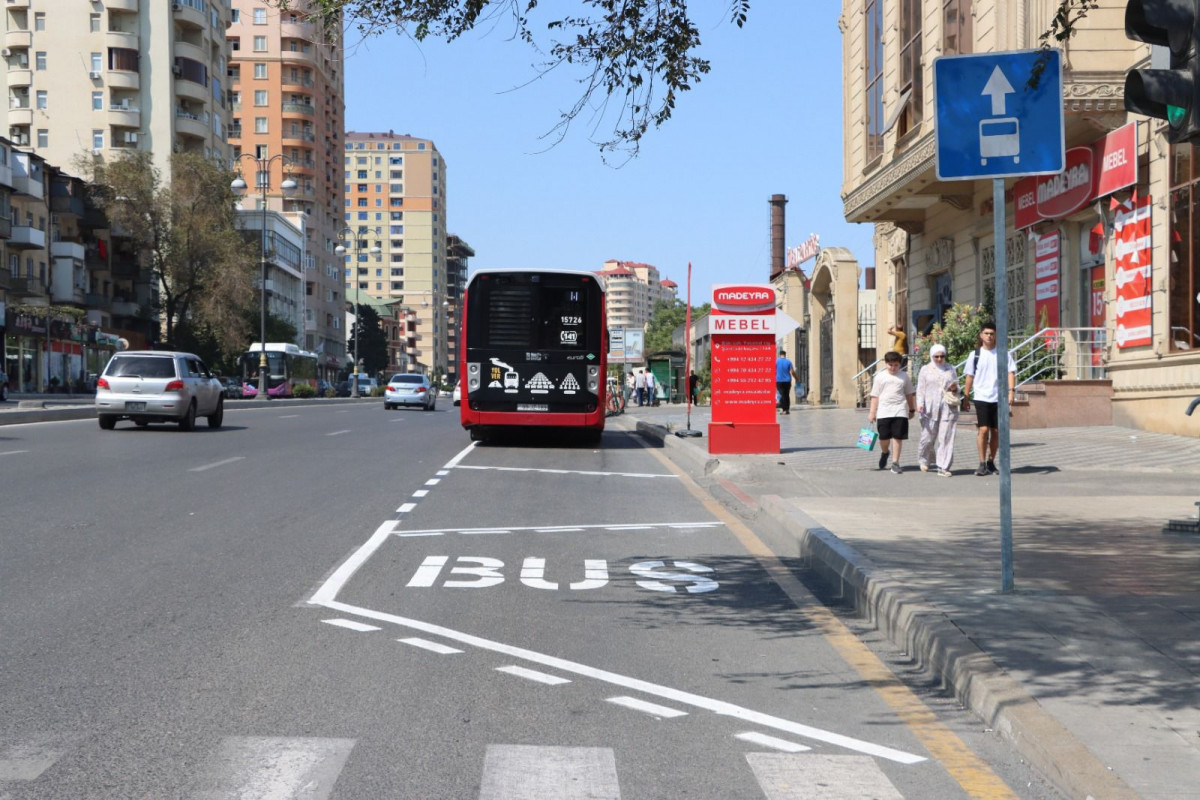
Bus Lanes in Baku
Recently, there has been increasing congestion on public transport in Azerbaijan‘s capital. Photos and videos frequently appear in the media and on social networks showing crowds at Baku Metro stations and bus stops, as well as overcrowded buses. Meanwhile, the Azerbaijan Ground Transport Agency (AYNA) tirelessly claims to be improving public transport operations and establishing lanes for bus routes. So why hasn’t the life of citizens using public transport become easier?
- A Russian online store, Wildberry, which has come under sanctions, begins sales in Georgia
- Armenian Parliament ratified border delimitation regulations as Baku’s intentions remain unclear
- Heavy rains paralyze life in Baku and regions of Azerbaijan
Chairman of the “Republican Alternative” Party, economist Natig Jafarli, points out several reasons why the designated bus lanes do not optimize urban mobility:
“Cities around the world have dedicated roads for public transport; this is normal, as public transport should have priority,” said Jafarli, listing the reasons this system does not function effectively in Baku:
- First, recently, the number of illogically laid out bus routes has increased in Baku. Why is this illogical? I’ll explain: public transport roads are effective when they are continuous, allowing buses to avoid traffic jams. In Baku, there are virtually no uninterrupted bus lanes. Often, public transport roads are damaged, forcing cars to occupy the entire road where there is no bus lane. As a result, after traveling 500-800 meters on their lane, buses find themselves back in traffic, rendering these lanes ineffective.
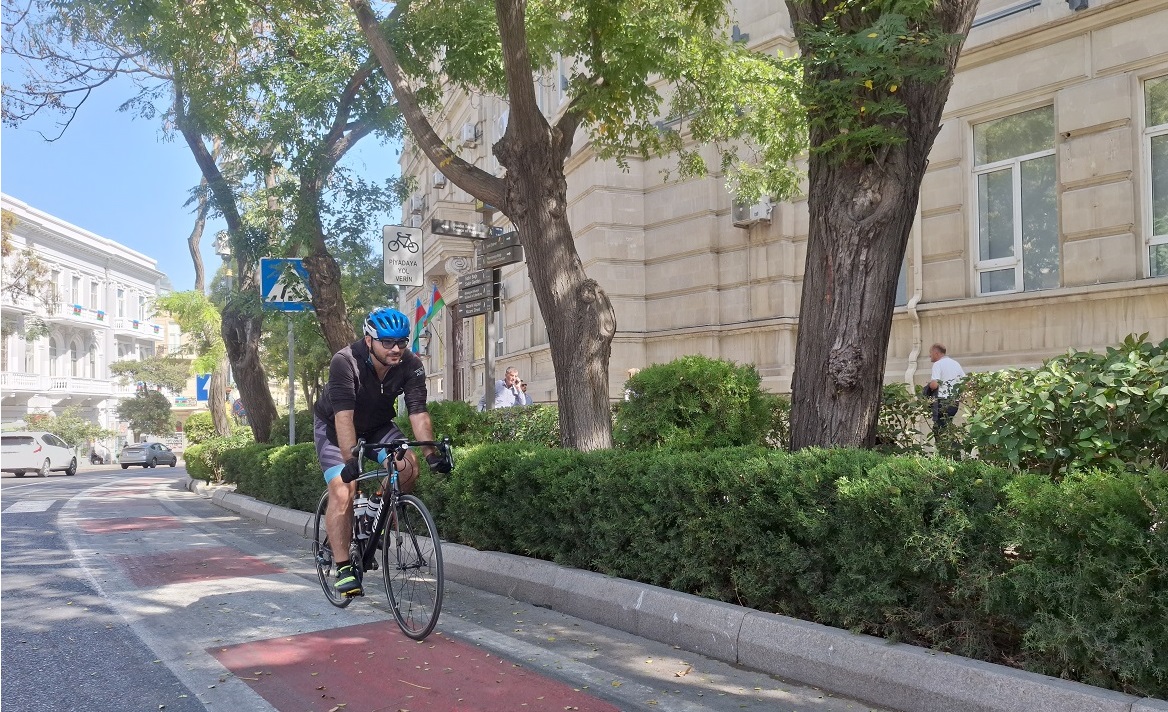
- Second, public transport itself is overloaded. Buses and the metro are overcrowded, intervals between services are long, and there is no incentive for passengers. There is no transition to hourly, daily, monthly, or yearly tickets. The fare is based on a fixed price for a single trip. However, if a system for daily, weekly, monthly, and yearly tickets were implemented, those using public transport 5-6 times a day could purchase long-term and, importantly, cheaper tickets, making transport usage more economical. For instance, if a single trip costs 50 qepik, a daily ticket would make one trip cost 45 qepik, a weekly ticket 40, a monthly ticket 30, and an annual ticket 20. Moreover, the same pass should work for both the metro and buses.
- Third, illogical bus lanes have led to the bankruptcy of small and medium-sized enterprises located along the roadsides. Cars cannot stop next to stores to make purchases. Their turnover has dropped by 60-70%. In recent days, I have received complaints from 40-45 store owners and small entrepreneurs about this issue. Has anyone considered this? Small and medium businesses are already struggling to contribute to the budget and economy of the country. Businesses, which are already in a difficult position for various reasons, now suffer from the impact of bus lanes.
- Fourth, fines. Blocking public transport is punishable by a fine of 100 manats (about $58). If the lanes were laid out logically, I would agree with this, but there are streets and roads where one inadvertently crosses these lanes and immediately receives a fine. The logic of fines should be to cultivate good habits, not to empty the pockets of citizens. Even a fine of 30 manats (about $17) is a heavy burden for 95% of drivers. The large fine was probably intended for the wealthy (officials) and their families. Yet, we see vehicles with government plates driving in bus lanes almost every day. They either find a way to evade these fines, or for them, 100 manats is not significant. If these 5% of wealthy drivers, who are the reason for the high fines, are not affected, what about the other 95% of drivers?
In conclusion, Natig Jafarli touched upon the marking “COP29” that has appeared on some roads, the significance of which many do not understand.
“There is also the question of the markings ‘COP-29’ on certain lanes; what does it mean? Is there a fine for entering this lane, and if so, how much? What will happen to these lanes after the COP-29 event concludes?” asks the economist.


The new election campaign video from the ruling party of Georgia, published on Facebook, closely mirrors the script of a Kremlin propaganda video made before the 2018 Russian presidential elections.
The video was originally posted by Tbilisi Mayor Kakha Kaladze.
Georgian video:
Russian video:
Both videos feature a dialogue between a husband and wife, with the husband expressing reluctance to go to the polls. However, the speaker of the Georgian Parliament, Shalva Papuashvili, claims that this is merely a coincidence and not a copy.
“Then you could say that family and marriage are also Russian phenomena. It’s just ridiculous,” Papuashvili told reporters.
According to the speaker, he is pleased that the clip has caught the public’s attention and that many are sharing it on social media, as these people will know “what evil they might be supporting.”
In this context, “evil” refers to the former government of Georgia, meaning the current opposition.

https://t.co/DS4Drcf04n
As #Georgia approaches its most consequential #parliamentary #elections, the stakes go higher. The coming few days could reshape not only the country’s future but also the delicate #geopolitical balance across the #SouthCaucasus#Tbilisi #GeorgianDream #EU…— AzerNews (@AzerNewsAz) October 23, 2024
As Georgia approaches its most consequential parliamentary elections, the stakes go higher. What happens in the coming few days could reshape not only the country’s future but also the delicate geopolitical balance across the South Caucasus. Western capitals are watching closely, deploying familiar strategies reminiscent of past color revolutions, while regional powers brace for potential unrest and shifts in power. It’s of course not that surprising to say that the situation in the country has always been one of the hot topics in the European Union.