
Day: October 21, 2024
Elections in Georgia
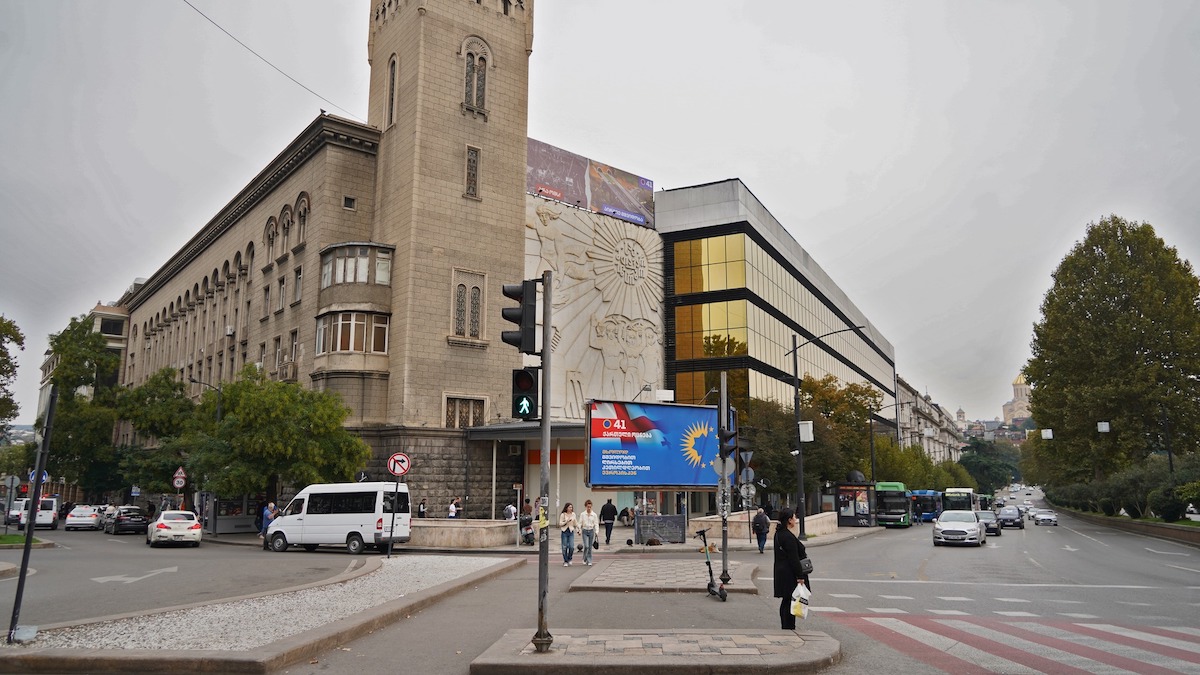
Georgian parliamentary elections are set for October 26th.
Representatives will be chosen exclusively through a proportional system, and seats will be allocated to parties that surpass the five percent threshold.
This article provides an overview of the main contenders in the electoral race. These are the parties and coalitions expected to clear the barrier, according to various polls.
The parties are listed in order of their electoral numbers.
Number 4: Coalition for Change
At the core of the coalition is the party “Akhali,” founded by Nika Gvaramia, former CEO of the opposition television channel “Mtavari Arkhi,” and Nika Melia, former chairman of the opposition party “United National Movement.”
In the lead-up to the elections, the party formed the “Coalition for Change,” which includes several other opposition parties, such as Elene Khoshtaria’s “Droa” and Zurab Japaridze’s “Girchi – More Freedom,” as well as individual politicians and public figures.
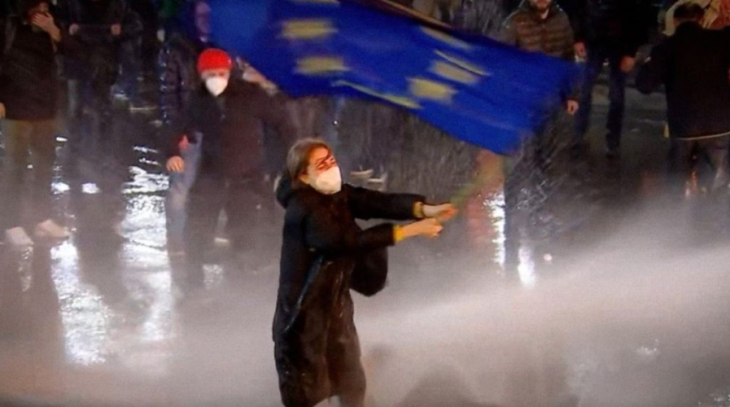
The coalition will consist of former leaders of the “National Movement” and younger politicians. Notably, the top candidate on the coalition’s list is not a politician but a civil servant, Nana Malashkhia. She gained public attention in March 2023 for waving an EU flag while being sprayed with water during a protest. Malashkhia has become something of a symbol of pro-Western demonstrations in Georgia.
In its election platform, the coalition promises voters systemic changes and a “great reset.” Their primary goal is to join the European Union.
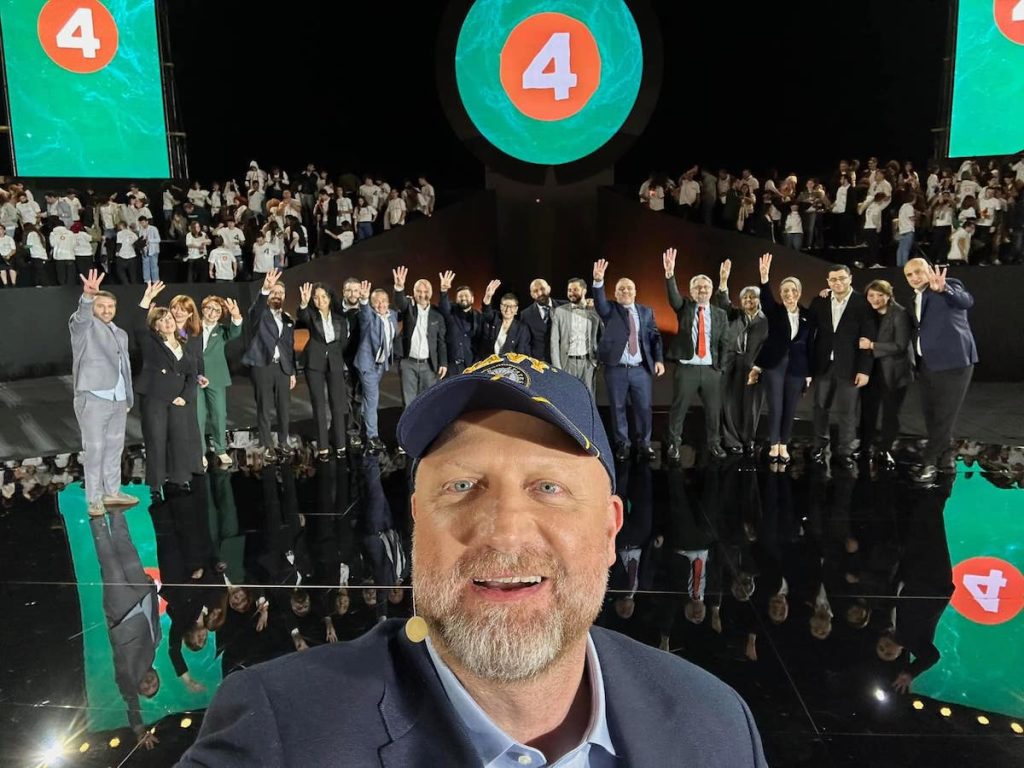
Program: Titled “Plan 4-4-4,” their program outlines their intent to present key initiatives for change in four areas just four days after forming a coalition government, if victorious. These areas include revitalizing the euro-integration process, initiating democratic reforms (such as repealing the “foreign agents” law), reducing taxes, and significantly increasing the education budget. This plan proposes a yearly allocation of 5,000 lari (about $1,840) per child, student, or pupil for educational purposes, alongside reforms at all educational levels and the establishment of a “Knowledge Fund.”
Political Platform: The party positions itself as a pro-European, center-right coalition.
Polling: According to a poll conducted by Edison Research between September 17 and 29, the Coalition for Change has a rating of 13 percent.
A separate survey by GORBI for the ruling party, Georgian Dream, shows the coalition’s rating at 10.3 percent.
The Coalition for Change has signed the “Georgian Charter,” initiated by President Salome Zourabichvili, and supports the creation of a technical transitional administration. The coalition has also pledged to back the prime ministerial candidate put forth by the president.
Number 5: National Movement
The National Movement is the most popular opposition party in Georgia, founded and led by former president Mikheil Saakashvili, who is currently imprisoned.
The party came to power in Georgia in 2003 following the Rose Revolution and governed for nine years. In the 2012 elections, the National Movement lost to Bidzina Ivanishvili’s Georgian Dream, subsequently transitioning into the opposition.
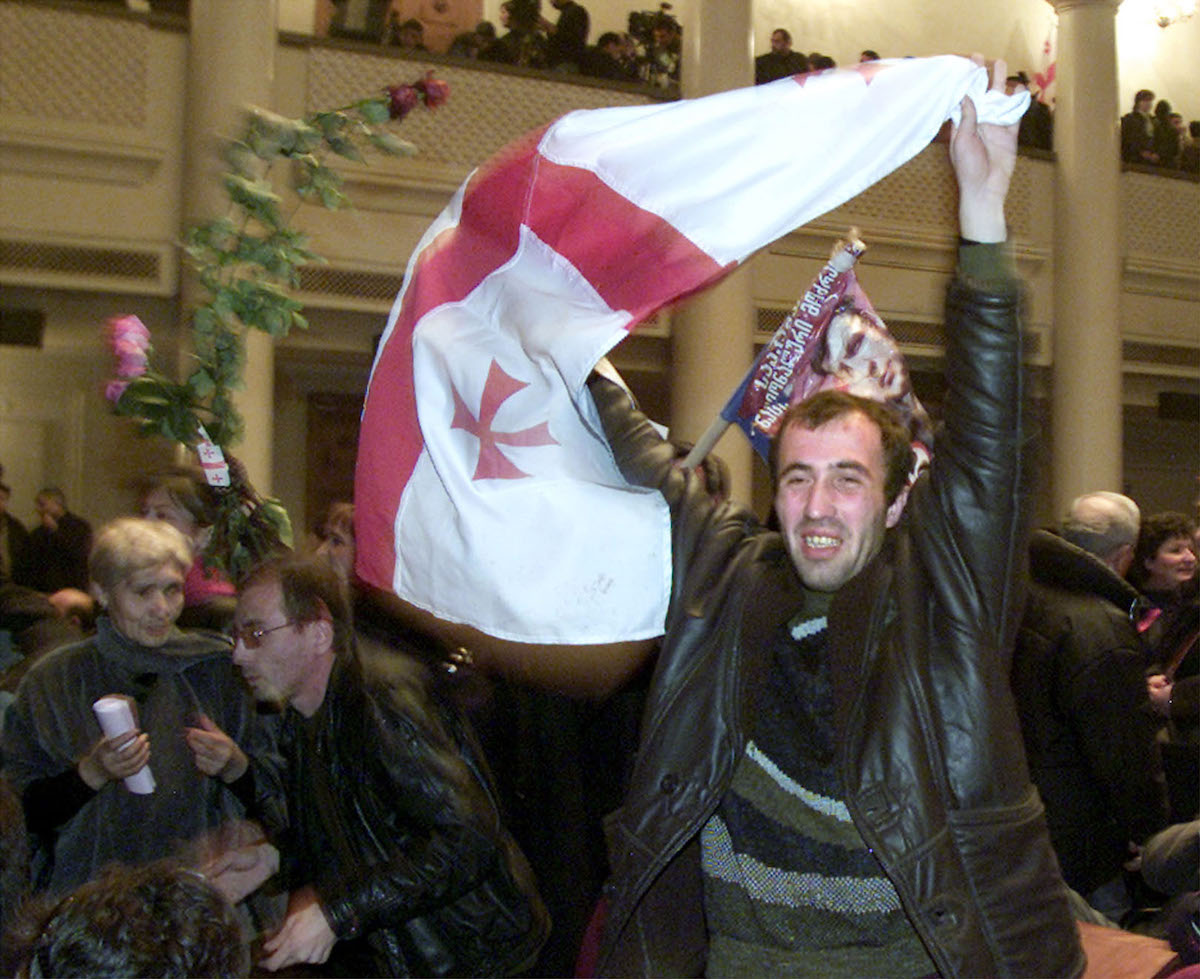
In the current election, the party has registered under a new name: “Unity – National Movement.” This coalition includes the parties “Strategy Agmashenebeli” and “European Georgia,” along with individual politicians who previously represented various parties.
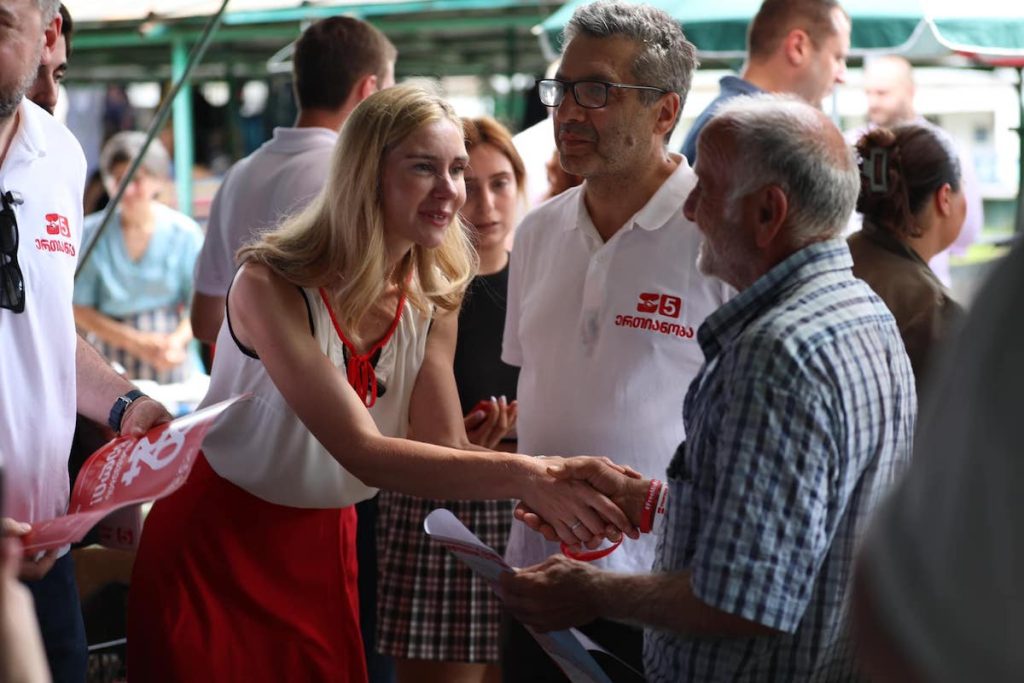
Mikheil Saakashvili’s Role: From 2001 to 2015, Mikheil Saakashvili served as the chairman of the National Movement. In the years that followed, the party changed leadership multiple times, with many leaders and rank-and-file members leaving. Currently, the party is led by Tina Bokuchava. However, Saakashvili remains the face and decision-maker of the party, despite being imprisoned for the past four years. Now he is housed in Vivamed Medical Center due to health issues. Supporters and some international partners consider him a political prisoner.
Political Platform: The key points of the National Movement’s platform are printed on leaflets resembling European Union passports. Five main priorities include EU membership, increasing income, protecting pensioners, promoting strong families, and dismantling the “price mafia.”
Polling: The party has a rating of 19 percent according to a survey by Edison Research, and 13.6 percent according to GORBI.
Number 9: Coalition “Strong Georgia”
This multi-party electoral coalition has formed around the party “Lelo.”
The coalition includes “Lelo,” led by Mamuka Khazaradze; “For the People”, headed by Ana Dolidze; “Citizens,” led by Aleko Elisashvili; and “Freedom Square,” led by Levan Tsutsiridze. The coalition has also gained the support of Georgia’s fourth president, Giorgi Margvelashvili, who, although not on the party list, emphasizes his desire to participate in the process rather than pursue parliamentary office.
The coalition’s electoral list is headed by its chairman, Mamuka Khazaradze.
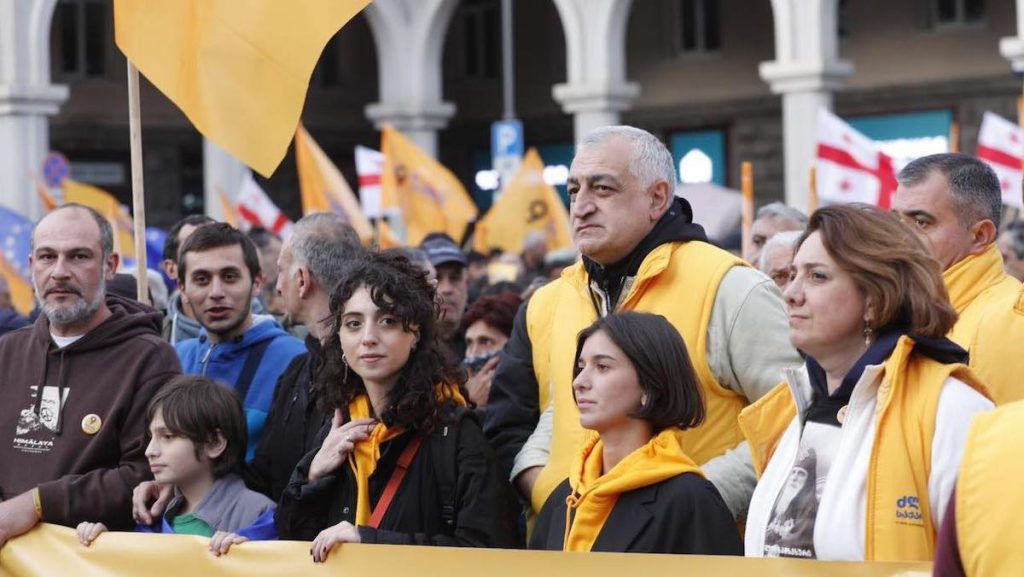
Businessman and head of Georgia’s largest bank, TBC, Mamuka Khazaradze and his business partner Badri Japaridze entered politics in 2019 after the government created difficulties for their bank and halted their project to build the strategically important Anaklia deep-water port.
This marks the second parliamentary election for “Lelo.” In the 2020 elections, it surpassed the required threshold and entered parliament.
Criminal charges have been filed against Mamuka Khazaradze and Badri Japaridze, and in 2022, a court found them guilty of group fraud. They characterize the charges as political persecution.
Ahead of the 2024 elections, President Salome Zourabichvili proposed creating a larger electoral coalition by uniting “Strong Georgia” with the “Gakharia – For Georgia” party. However, despite the president’s efforts and several rounds of negotiations, the alliance did not materialize.
Political Platform: Pro-European, center-right party.
Program: The coalition has named its election platform “The Path of Ilya” in honor of the renowned Georgian writer and public figure Ilya Chavchavadze. The program includes nine points, such as creating 200,000 jobs and providing pensions of 1,000 lari (approximately $368).
Many of the promises directly address Russia and Russian citizens in Georgia—restricting their ability to purchase land, barring Russian companies from participating in government tenders, and prohibiting the sale or entry of vehicles with Russian plates into Georgian territory. The coalition also plans to ban direct flights from Georgia to Russia, as well as Russian television channels and funds. Additionally, an “occupation fee” for Russian businesses is proposed.
Polling: The coalition stands at 12 percent according to Edison Research and 4.5 percent according to GORBI.
Number 25: The Party “For Georgia”
Giorgi Gakharia is a former ally of Bidzina Ivanishvili and served as Georgia’s Prime Minister from 2019 to 2021. In the 2020 parliamentary elections, Gakharia was the top candidate on the Georgian Dream list.
The darkest chapter of Giorgi Gakharia’s political career came with the dispersal of a protest on June 20, 2019, during which more than 200 demonstrators and journalists were injured, and two people lost an eye. At that time, Gakharia served as the Minister of Internal Affairs. In 2021, he resigned as Prime Minister and transitioned to opposition.
Gakharia’s team primarily consists of politicians who have left the Georgian Dream party at various times.
This will be the party’s second election; it also participated in the 2021 local elections, where it finished third with 9.41 percent of the vote.
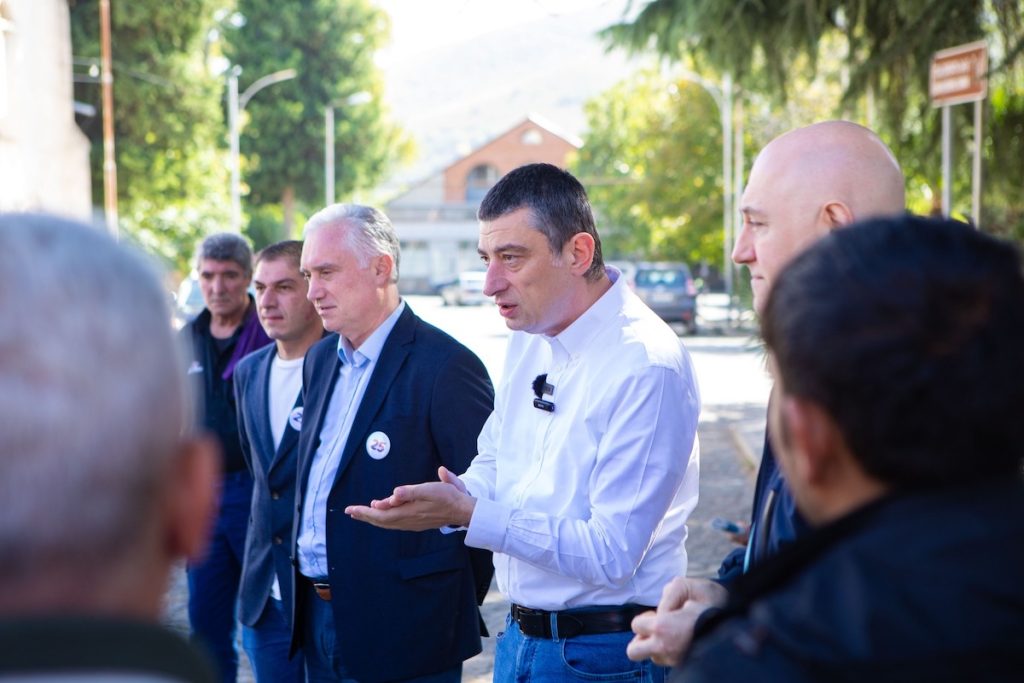
“For Georgia” distances itself from the rest of the opposition, positioning itself both as a pro-European force and a counter to both the Georgian Dream and the former ruling party, the National Movement.
Political Platform: Center-left party.
Program: The party’s election platform is titled “Manifesto for a Dignified Life.” It promises to strengthen democracy, promote European prosperity—including salary and pension increases, job creation, de-occupation support for displaced persons, expanding women’s rights, and combating corruption.
Polling: The party holds an 11 percent rating according to Edison Research.
Giorgi Gakharia has also signed the presidential Charter, although he does not support the idea of holding repeat elections.
Given Gakharia’s past association with Bidzina Ivanishvili, journalists frequently ask whether he intends to form a coalition with Georgian Dream in the next parliament. The former Prime Minister categorically rules out such a possibility but also has no plans to align with the National Movement.
Number 41: Georgian Dream
The party Georgian Dream – Democratic Georgia was founded in April 2012 by Georgia’s wealthiest man, billionaire businessman Bidzina Ivanishvili.
Just months later, on October 1, 2012, it won the parliamentary elections and has been in power in Georgia for 12 years.
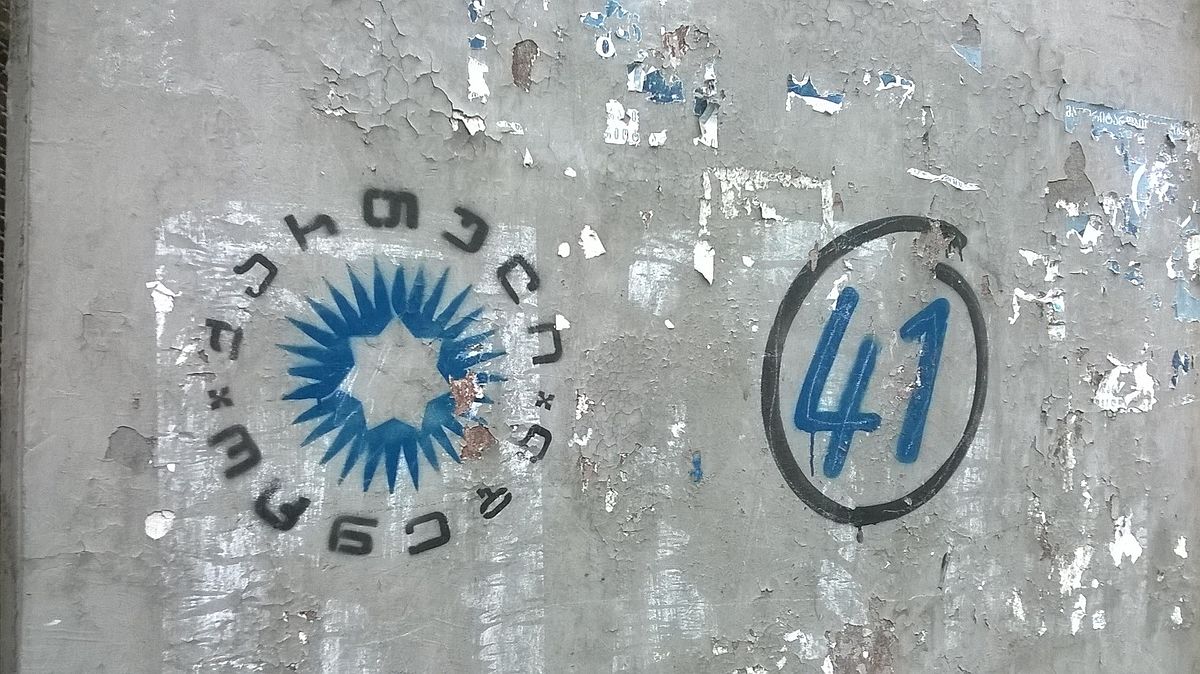
As a result, Georgian Dream has become the longest-serving party in the history of the country’s independence. All previous governments in Georgia were elected for only two terms, while Georgian Dream is now vying to secure a fourth term.
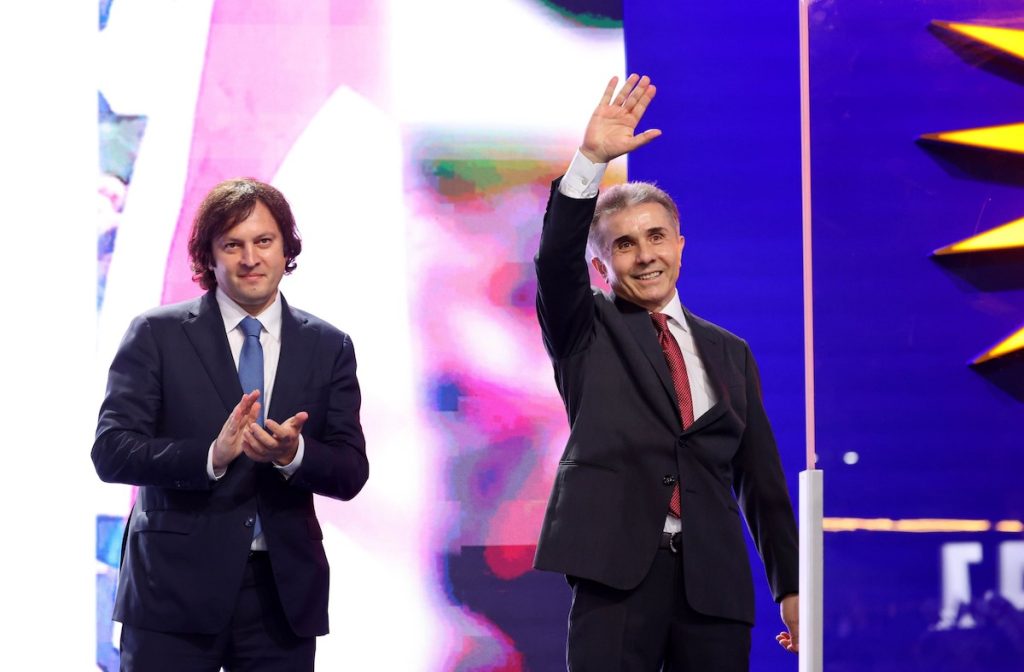
Bidzina Ivanishvili served as Georgia’s Prime Minister from 2012 to 2013, after which he voluntarily stepped down. At the time, he announced his intention to leave politics entirely and vowed not to interfere in the country’s governance. However, since then, Ivanishvili has made two comebacks to politics for various reasons.
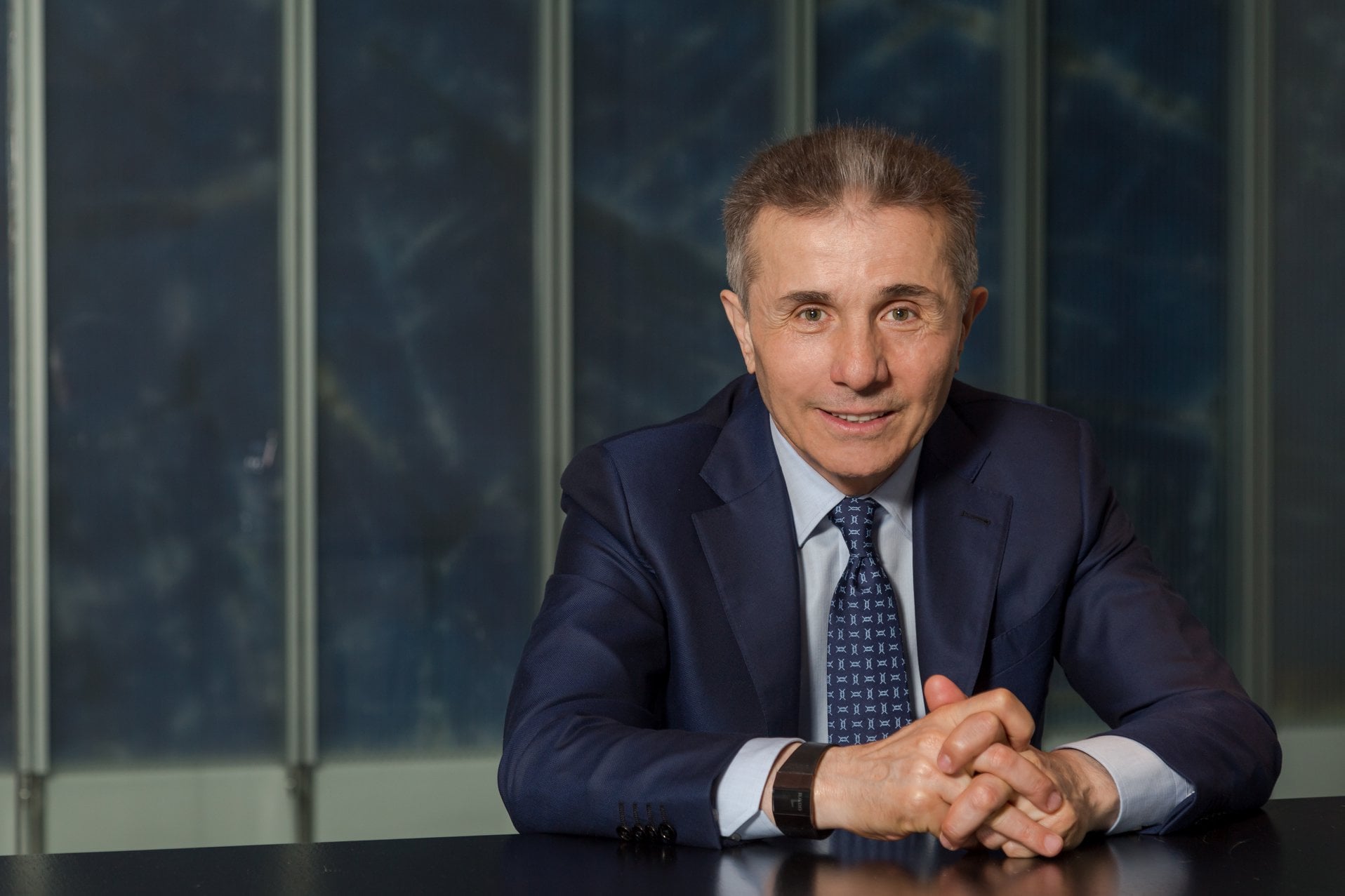
Even when he was not in a high office, there was no doubt that Ivanishvili remained the country’s sole, albeit informal, ruler. It was his will that determined the appointment of prime ministers and guided all significant decisions.
For the third time, Bidzina Ivanishvili returned as honorary chairman just months before the 2024 elections and actively participated in the election campaign.
Ivanishvili attends major events for the Georgian Dream party across the regions. Special security measures are implemented during these events—streets are closed in major cities, law enforcement personnel are mobilized, and Ivanishvili addresses the public from a specially designed glass-enclosed structure. Officials from the State Security Service explain this heightened security by stating that there were threats against Ivanishvili, although no details have been provided.
When Georgian Dream came to power, many believed the wealthy oligarch would pursue a pro-Russian agenda. However, following the onset of the war in Ukraine, the pro-Russian narrative from Georgian Dream has become increasingly pronounced.
For over two years, representatives of the Dream government have made radical and aggressive statements towards ambassadors from Western countries, claiming that the West is attempting to drag Georgia into war and interfere in its internal affairs, including elections.
In 2023, Georgia was granted candidate status for EU membership, yet this rhetoric did not cease; instead, it intensified. In May 2024, the government passed a law on “foreign agents,” designating hundreds of local media outlets and NGOs as organizations “serving the interests of foreign powers.”
International partners have openly stated that Georgian Dream has deviated from its Euro-Atlantic course, effectively halting Georgia’s euro-integration processes.
Program: The election campaign of Georgian Dream is entirely based on a populist, anti-liberal, and pro-Russian narrative. Statements frequently arise asserting that the West is promoting LGBTQ propaganda and attempting to undermine Georgian traditions.
In one of his campaign speeches, Ivanishvili referred to “violent attempts to impose pseudo-values on the population that are contrary to family, nationality, faith, and the sovereignty of Georgia.”
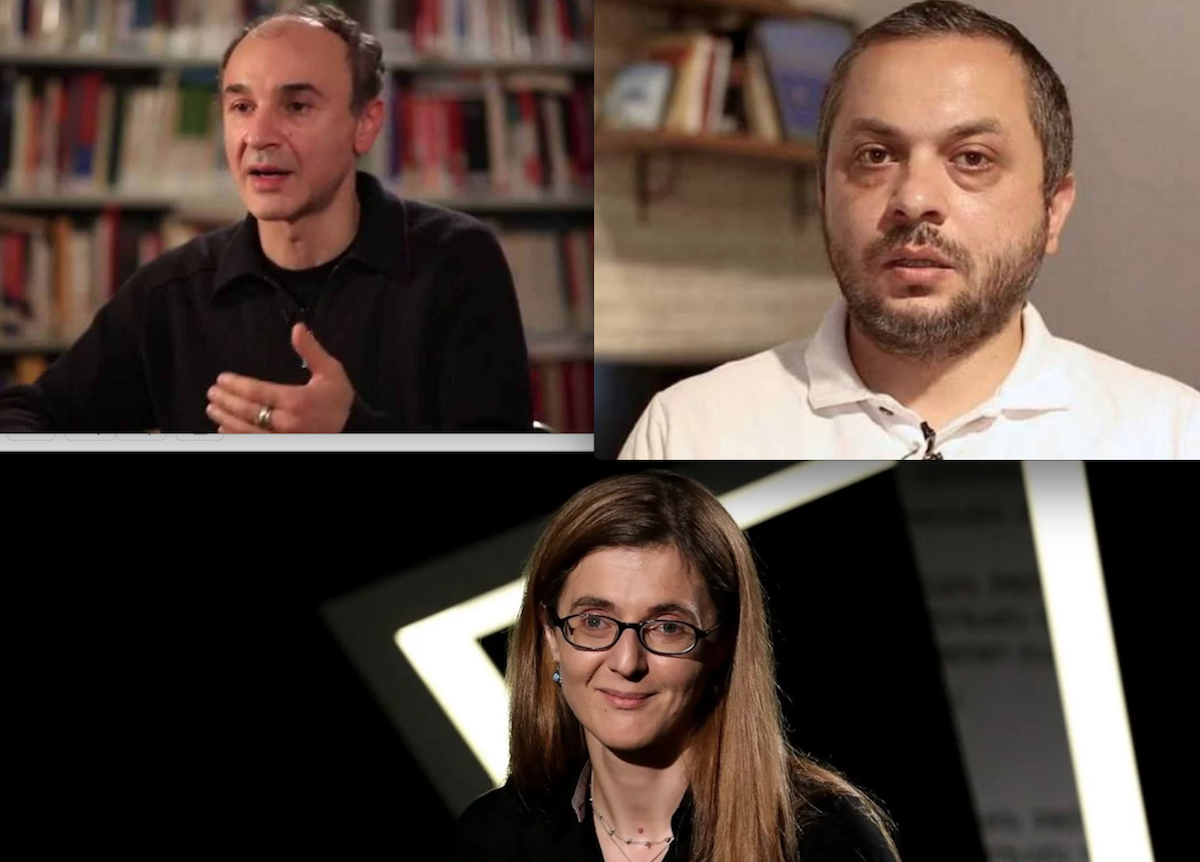
Government officials are actively trying to instill fear of war among the population. In other words, Georgian Dream is convincing voters that if they choose the opposition, Georgia will be drawn into conflict.
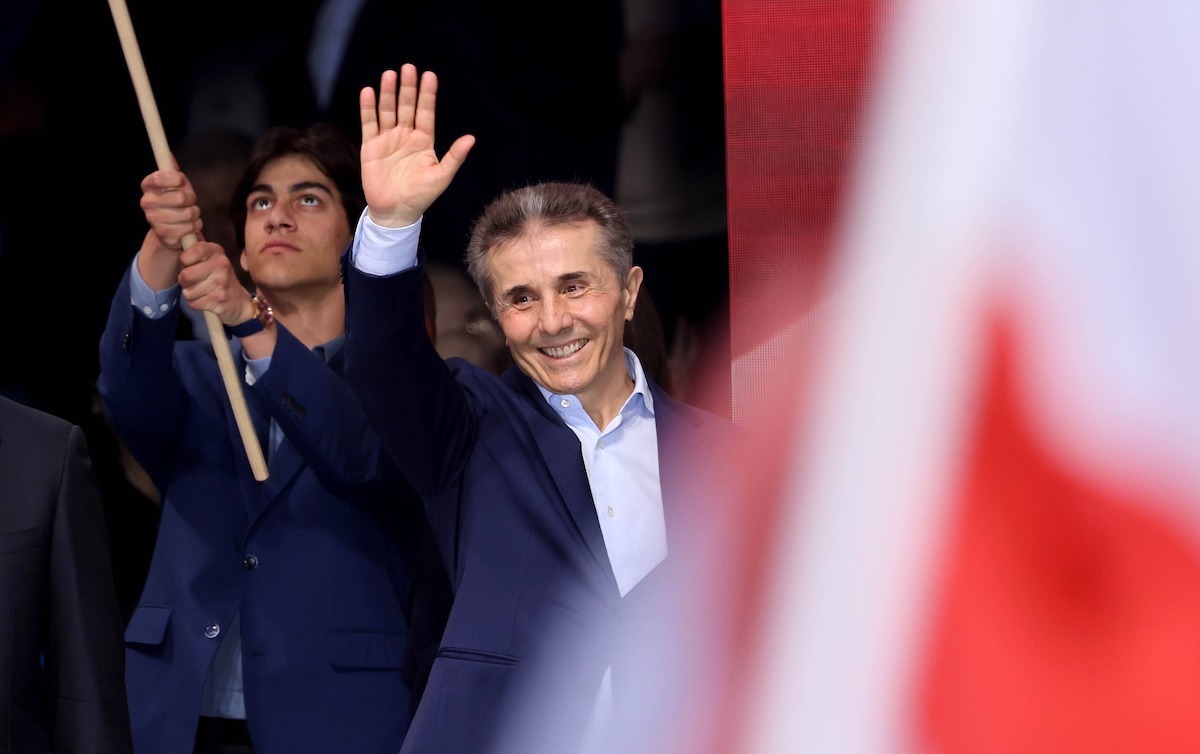
This theme is also reflected in Georgian Dream’s campaign banners, which juxtapose the war-torn Ukraine with peaceful Georgia.
Among the party’s promises is the restoration of territorial integrity. More details can be found here.
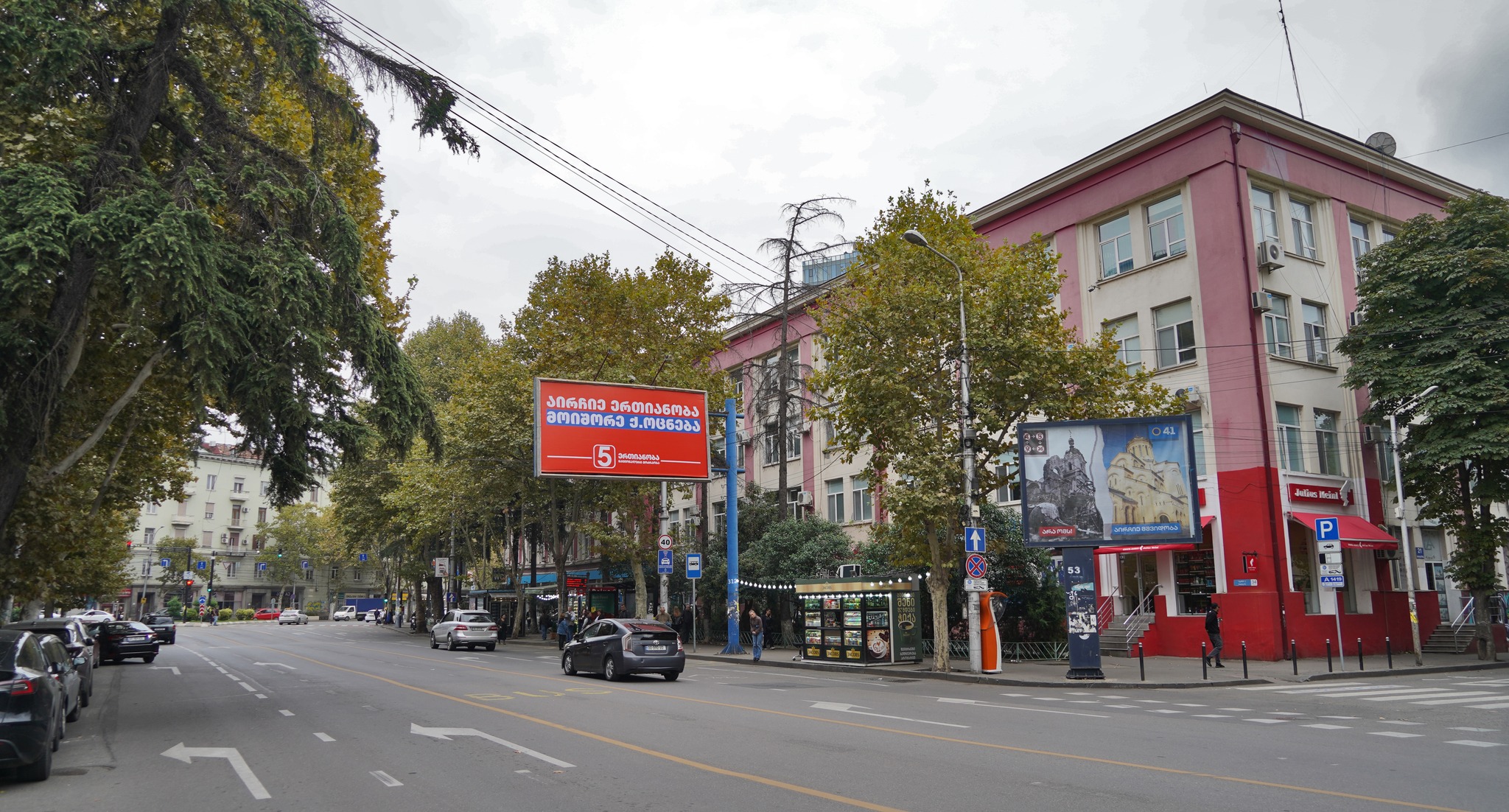
Another central and traditional promise of “Georgian Dream” is the dissolution of its main political opponent, the “National Movement,” and declaring it unconstitutional.
Ivanishvili’s populist pledges include amending the constitution to reflect the special role of the Orthodox Church, essentially proclaiming Orthodoxy as the state religion.
Regarding social and economic commitments, Georgian Dream promises that by 2028, the country’s economy will grow to at least 130 billion lari (approximately $47 billion). Infrastructure projects and salary increases for public sector employees are also announced.
Political Platform: A center-left coalition that has recently shifted sharply to the right.
Polling: 33 percent according to Edison Research, and 59.5 percent according to GORBI.
The Role of President Salome Zourabichvili and the Georgian Charter
President Salome Zourabichvili plays a significant role in the current political process in Georgia.
From being a nominal figure created by the government, Zourabichvili has managed to establish herself as an independent and principled player, standing guard over Georgia’s Euro-Atlantic future at a critical time for the country.
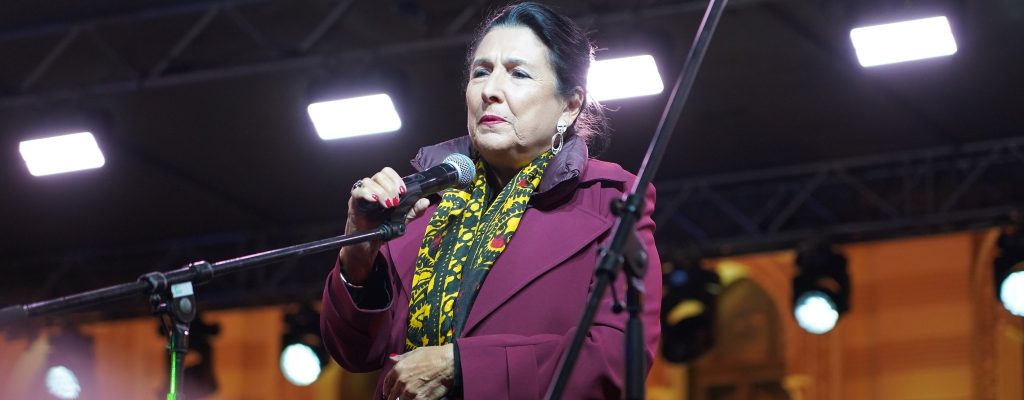
Today, Zourabichvili is a vocal critic of Georgian Dream and its leader, actively assisting the pro-European opposition in strategizing for the elections and winning this battle.
She has made several attempts to broaden the opposition wing by uniting various parties; however, many of her key initiatives in this direction ultimately failed.
Nevertheless, the presidential palace has become the main venue for the opposition to convene for consultations and idea exchanges.
The most significant agreement reached by opposition parties at Zourabichvili’s initiative is the “Georgian Charter.”
The aim of this document is to unite the pro-European opposition under one symbolic umbrella as a counterbalance to the pro-Russian government in the parliamentary elections on October 26.
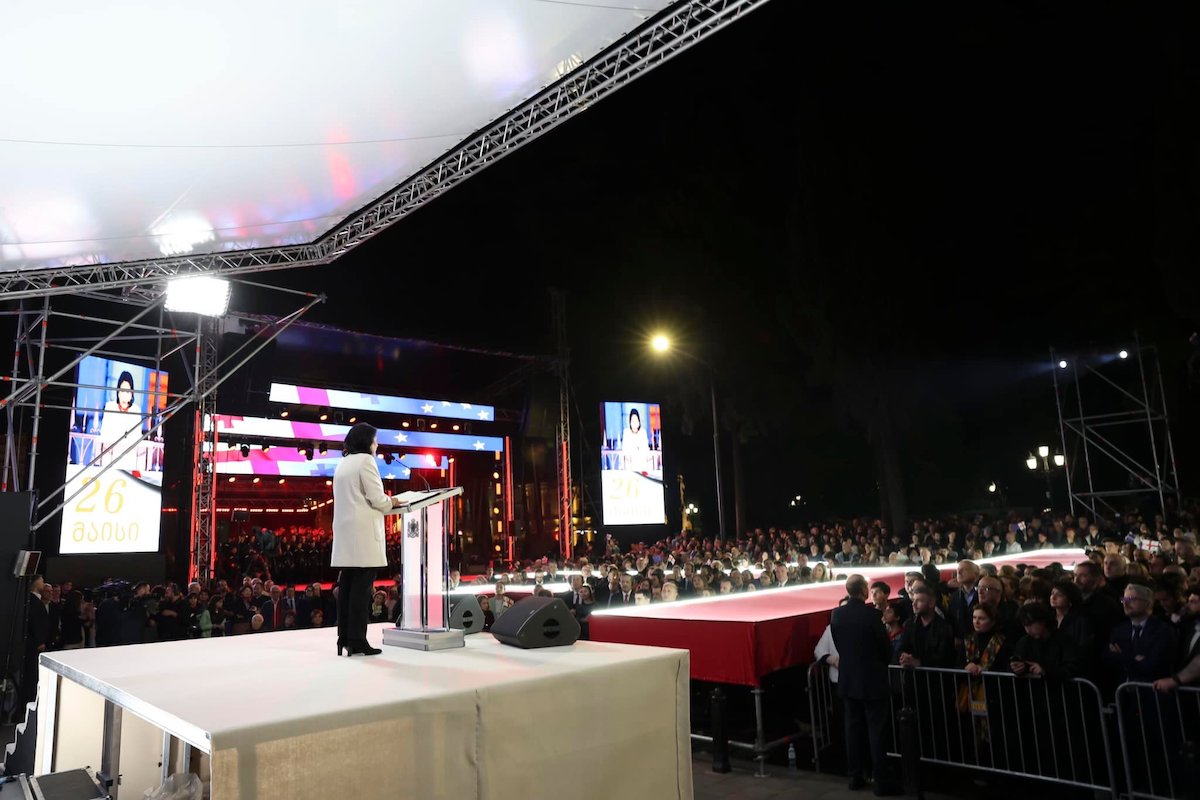
The plan of action for the pro-European opposition to avoid a crisis and steer the country back onto a European path is as follows: establish a temporary government that will operate for several months and implement key reforms to bring the country closer to Europe, after which new parliamentary elections will be held.
According to the charter’s provisions, the future government will be composed not of political party representatives but of professionals recognized by society for their work.
The charter has been signed by all four major opposition groups.
Elections in Georgia
In a rare TV appearance, Bidzina Ivanishvili, Honorary Chair of the ruling Georgian Dream party, spoke with journalist Magda Anikashvili, who asked the interviewee convenient questions with a ready-made subtext and echoed the interviewee. The almost 1.5 hour pre-recorded interview, aired on the pro-government Imedi TV channel just 5 days before the elections, and is seen as an attempt for the GD honorary chair to speak directly to GD voters and mobilize them.
Disclaimers
Ivanishvili began with an assessment of the pre-election atmosphere. “I can emphasize that this is a special environment. I would not say that it is particularly tense,” he said, citing the OSCE/ODIHR assessment, which he called “quite positive.”
“The statements [from the West] contain blackmail,” Ivanishvili continued, accusing the unknown Global War Party of coordinating them. However, he said, “it [these statements] did not work” because, he claimed, society had become angry. As for the U.S. sanctions, he said the same thing: “It had counter-effect for the very simple reason that it was blackmail based on non-objective information.” As for possible personal sanctions against him, he said he did not expect any further steps from the West.
He then accused the authorities and bureaucrats, representing Georgia’s international partners (whom he did not name) of trying to create a “regretful reality.” He said these people are coordinating with the Georgian opposition.
Although, he added, “The second day [of the election] is not decisive; every day […] until the war is not over […] will be very tense,” adding, “We must be careful.”
Several times throughout the interview, Ivanishvili denounced the “pseudo-liberal ideology”, saying that its aim is to mislead people and convince them in “virtual reality.” Ivanishvili said: “These statements that we hear come from this context: as if Georgia is authoritarian, as if there is a democratic backsliding in Georgia, as if Georgia is far from Europe,” Ivanishvili said. Instead, he claimed, “Now there is a real democracy in Georgia,” which he said even Europe is lacking.
Risks that Georgia faces
In yet another anti-Western propaganda tone, Ivanishvili recalled 2008 NATO’s Bucharest Summit and blamed NATO’s “real managers,” who are “not member states”, for denying Georgia and Ukraine membership in the Alliance. The reason, according to him was that they knew, and allegedly planned, the “opening of the second front” already back then.
Ivanishvili went on to discuss the war in Ukraine, stressing that NATO is not directly involved in the war against Russia and only helps with weapons and money. He said dragging Georgai into war was already planned in 2008 and this was the reason that Georgia was not accepted into NATO. “Against this background, [Mikheil] Saakashvili gave us a good rehearsal and dragged us into the first war in 2008,” he said, adding, “Then they wanted to open the second front in Georgia [against Russia] in the war in Ukraine.”
Ivanishvili even linked the resignation of former PM Giorgi Gakharia to the “second front” narrative, noting that the resignation coincided with the start of the war in Ukraine and was done “in order to tear down the Georgian Dream government and let those forces come to power that would immediately drag Georgia into war.” He added: “These attempts continue today […] this is the main attempt of which the society must be vigilant.”
In addition, Ivanishvili also mentioned the tensions in the Middle East, reminding society that this region is also close to Georgia: “We have to be careful not to take a wrong step, otherwise we may get an irreversible disaster,” he said.
“De Facto” Sanctions
Commenting to U.S. Ambassador Dunnigan statement, who had said Ivanishvili was prioritizing his financial interests over those of the state, Ivanishvili refuted and went into describing his view of why and how he is being “de facto” sanctioned.
He claimed that two weeks into the war in Ukraine, his foreign assets were frozen, including works of art and helicopters, which he said he couldn’t get from Germany for several months. Whatever he “saved from the robbery” he transferred to a bank in Switzerland, he said. He then spoke at length, about his money problems with the Swiss bank Credit Swiss, describing the legal process and complaining that he has not had access to his money for a year and a half. He said his protracted legal battles and restricted access to his money coincided with critical statements against him from the West.
He said that he was refusing to meet with the U.S. side due to “personal complexes.” He added that he believed it would be “counterproductive” to meet with the U.S. Ambassador or make political decisions while his access to funds was restricted. Mentioning “the complex” multiple times, he said: “I was not against the meeting as such. [However] I would not be able to make any decision productively, because I would have a complex that I am doing this for the money that is artificially blocked. If the artificial sanctions were be lifted, then I would be relieved of this complex.” He added: “I have a complex that I make any decision so that they give me back my money and not for the well-being of my country.”
Resetting Relations
“I think the cause and the problem behind everything is the war,” Ivanishvili said when asked how he sees a reset of Georgia’s relations with its partners. The war, he said, “intensified all kinds of relations and in some cases turned them upside down.” He said I hope the war will be over this year and this will take care of the of relations with partners.
Ivanishvili announced that “now as the problem went away”, meaning his financial troubles, he plans to meet with the U.S. Ambassador after the elections, which he communicated to Amb. Dunnigan. He said the reaction from the Ambassador was “very healthy” and he hopes to meet with her after the elections. He expressed hope that relations would return to normal after the war in Ukraine ends. He noted that the US will also soon have elections, adding that “America was always a priority for us.” He noted that for the reset to happen, Georgia would need “reciprocal steps” from the US, while also cautioning against the “euphoria.”
GD’s Plans: Banning the Opposition
Asked why the banning of the UNM came on the GD’s agenda only now, twelve years after it came to power, Ivanishvili said the reason was the ongoing trial in the Hague and “lack of resources.”
Recalling the first years of GD in power, he also said there were expectations of co-habitation, and that nobody would be arrested and prosecuted. Ivanishvili also said that GD was “eclectic” at the time, alleging this was one of the obstacles in taking a harsher stance towards the UNM.
Ivanishvili added that since then Georgian Dream team got “more experienced” and “more aggressive, in a good way” toward the opposition, including as a result of processes surrounding the ongoing war in Ukraine.
Describing these processes, he claimed that one of the high officials of a country he did not name suggested to former Prime Minister Irakli Garibashvili to go to war against Russia. According to Ivanishvili an official told the then PM Garibashvili: “You are three to four million, just in three days, they would not kill you all. You can have with partisan movement, go in the forests and we would help you.”
He reiterated that the “collective UNM” acts “slavishly” to the forces that are preparing Georgia for war. He added that two opposition forces, namely Lelo and Gakharia’s For Georgia, are well aware of the UNM’s goals, and that is why these two are particularly dangerous forces. “If we do not get rid of these forces in the country… you see have seen what ‘s been happening during twelve years: the continuous revolutionary situation,” Ivanishvili lamented, saying that Georgia is facing “unprecedented” interference in the elections from the West.
“The [GD] team is committed. We are not attacking anyone. We want to keep this country so that it is suitable for living for us and our children,” Ivanishvili said, adding, “We are aggressively defending ourselves as we see what a formidable forces is fighting us from abroad.”
“Those who are enemies of the people and enemies the country must be banned,” Ivanishvili said when asked why this plan is seen by others as the GD’s anti-democratic intention to ban the opposition as a whole. He added there are many examples of this happening around the world.
“The [mere] winning of the elections is not decisive, that is why I say that we need a constitutional majority to ban them and get rid of them,” he said, threatening viewers with the dangerous consequences of the UNM having even the slightest germ of power.
He said that GD is a “patriotic” and “transparent” force. He then said: “If there is something or someone positive, he/she quickly becomes a member of GD… There won’t be another such force from outside GD, because everyone who is positive and loves the country will find a place in us. Then there is another force that gets huge inexhaustible energy from outside to somehow get back the power and run the country according to the wishes from outside”.
He then added, “Once this force is removed, there will be many opponents to GD. I’m waiting for that day, it will be the happiest day for me. We must give people the opportunity to choose between good and better. These are not elections… the evil power is coming, it’s energy never ends, because a huge power supports it from abroad”. He reiterated that GD needs the constitutional majority and legitimacy to get rid of the opponents and said that GD plans to hold another Nuremberg trial for them.
LGBT Propaganda
Ivanishvili once again hit the opposition, this time for not participating in the legislative process by boycotting the parliamentary work on the adopting of the anti-LGBT law, which the GD presents as aimed at protecting family values and minors.
Ivanishvili took credit for passing the anti-discrimination law and flattered the LGBT community, saying they were “normal people,” but adding that LGBT “propaganda” is not acceptable.
Ivanishvili said that “orgies in the streets”, which may sound normal to others, begin with granting sexual minorities the right to take to the streets.
He said the idea of LGBT propaganda is that “a person should not know who they are” and that they are easily controlled.
He also equated the problem of pedophiles with LGBT people, condemned gender reassignment surgery, and spelled out many other homophobic narratives against the LGBT.
Apology for War
Justifying his earlier broach of apologizing for the 2008 war, which prompted controversy in the society, Ivanishvili said the reason for the opposition’s outrage was its attempt to cover up its misdeeds. Noting that “apologizing is necessary for reconciliation” he claimed that the opposition was twisting his words as if Ivanishvili wanted to apologize to Russia. He further blamed the opposition for fulfilling the orders from outside, saying the opposition does not want the reconciliation.
Opposition Campaign and Election Aftermath
Ivanishvili said that the opposition “looks miserable” and claimed that its representatives “cannot even approach people” recalling that opposition did not address demonstrators from the stage during the October 20 rally. He said that the opposition has no electoral program and is only busy with GD-bashing and criticizing.
Ivanishvili criticized the opposition for framing the election as a choice between their European path and the GD’s Russian one. He accused the opposition of forgetting their homeland and focusing elsewhere. “They don’t love the country, they are people without a homeland,” Ivanishvili said.
Civil Society
“I didn’t know the meaning of the word stigmatization, Kobakhidze explained it to me,” said Ivanishvili, commenting on the Russian-style Foreign Agents law, which the civil society has claimed stigmatizes it.
Ivanishvili questioned the goals of CSOs’ work, saying that if they are doing great work for the country, they should be proud and not resist transparency. He criticized the youth who call the law a “Russian law” saying it is the fault of “pseudo-liberal” ideology, which does not teach youth the analytical thinking.
He also claimed that Georgian law is not based on Russian legislation, but on that of the European Union.
October 26 Elections
“In 2012 I was more active […] but I think today [election] is more important,” Ivanishvili said at the end of the hour-and-a-half interview, adding that he was younger too and recalling sentimentally his first rallies before October 2012, when he forced UNM out of office.
“We no longer have time to walk on a razor’s edge,” he said, insisting on the need to outlaw the UNM.
He concluded with an appeal to citizens to rush to the ballot boxes and vote for 41, the Georgian Dream, promising that in the future they will have a “real” opposition to choose between “good” and “better,” something he said Georgians unfortunately do not have the luxury of now.
Also Read:
European Parliament to assess political situation in Azerbaijan Public Radio of Armenia – Official Web site