Categories
South Caucasus News

How “Georgian Dream” is leveraging territorial integrity in its election campaign


Georgian Dream on Territorial Integrity
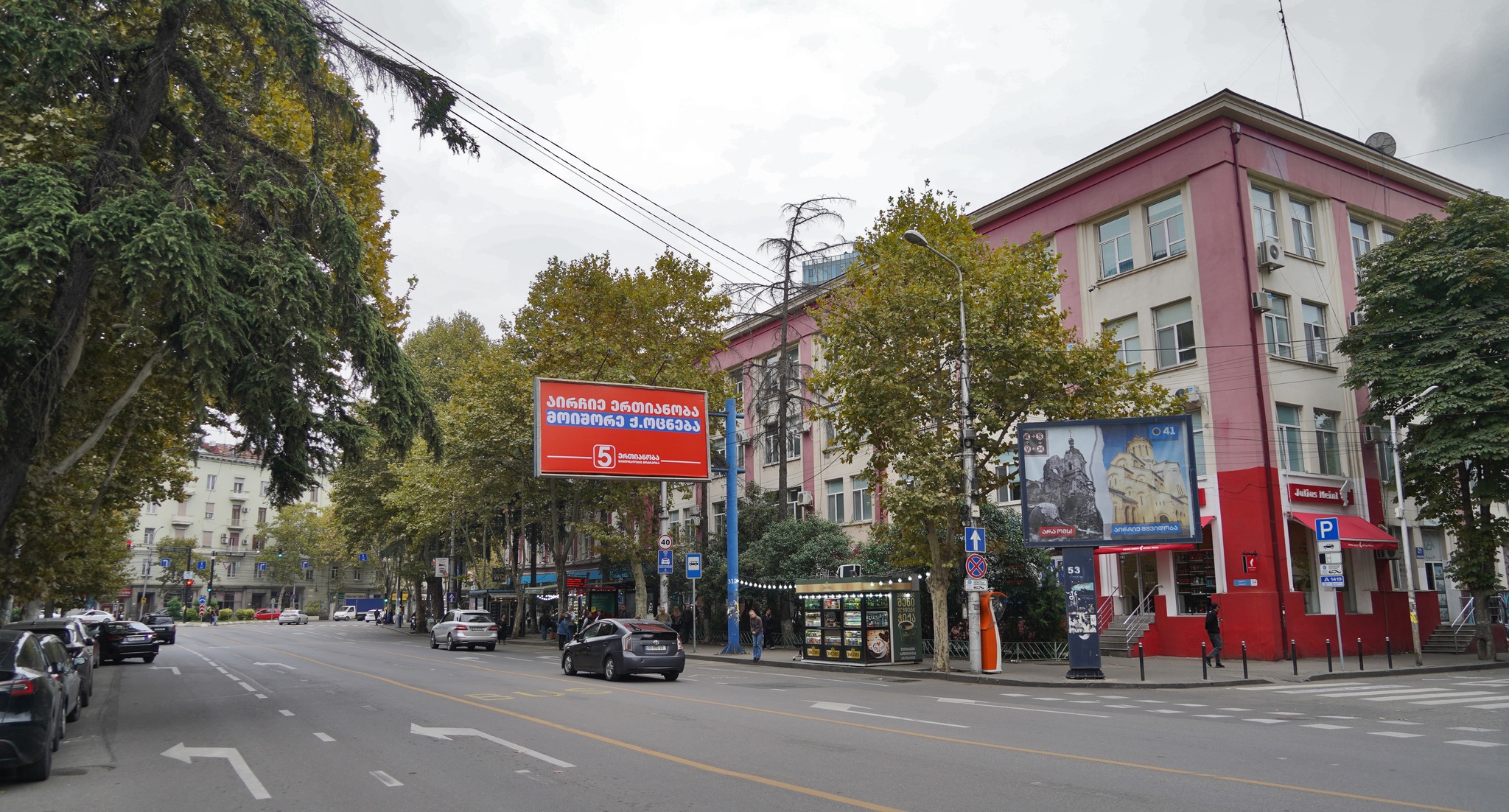
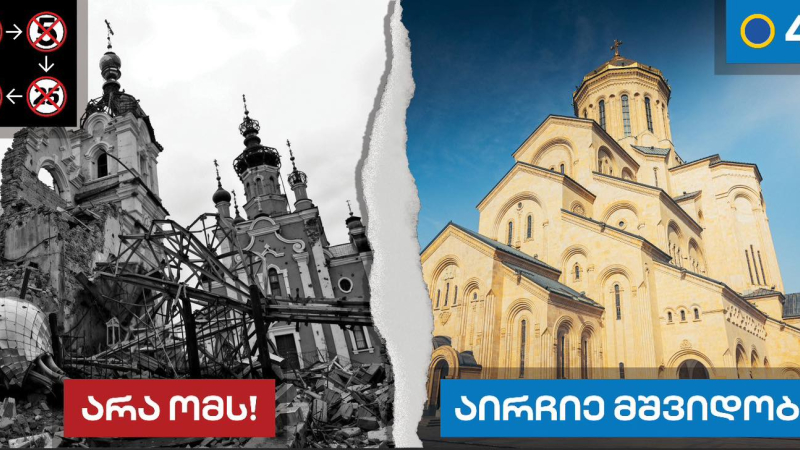
Campaign signs from "Georgian Dream" and the United National Movement
Campaign signs from “Georgian Dream” and the United National Movement

As Georgia prepares for parliamentary elections on October 26, the ruling party, “Georgian Dream,” has declared that restoring the country’s territorial integrity will be its top priority.

In the party’s political rhetoric, promises have emerged to resolve conflicts peacefully and to condemn Mikheil Saakashvili’s party for allegedly provoking the August 2008 war. This marks the first time in 12 years of governance that the party has placed the issue of territorial integrity at the center of its election campaign.
What has changed over the years? Can closer ties with Russia truly help Georgia regain control of its lost territory?

_________________________________________

“Georgian Dream’s” Election Promises

“One of our most important national tasks is to live in a united Georgia. Events in our region are evolving rapidly. In this context, the groundwork for restoring the country’s territorial integrity peacefully could be laid at any moment… To [seize this chance], we [Georgian Dream] need to secure a constitutional majority in the new parliament.” These remarks were made by former Prime Minister Bidzina Ivanishvili, the wealthiest and most influential figure in the country, who has ruled Georgia for the past 12 years.
In another campaign speech, Ivanishvili labeled the Georgian side as the instigator of the August war and suggested offering an apology to the Ossetian people:

“Right after the elections on October 26, when those responsible for the war are held accountable, and when all those guilty of destroying the Georgian-Ossetian brotherhood and coexistence face the strictest legal consequences, we will certainly find the strength to apologize for what the treacherous ‘National Movement’ did in 2008 by igniting flames among our Ossetian brothers and sisters,” Bidzina Ivanishvili stated during a meeting with voters in the city of Gori, near the occupied Tskhinvali region, on September 14.

Amid Georgia’s significant rapprochement with Russia in recent years, such statements have been interpreted by many as a signal that Moscow is willing to assist Tbilisi in restoring relations with the breakaway regions—an argument that clearly benefits “Georgian Dream.”

Parliamentary Elections in Georgia

On October 26, 2024, Georgia will hold parliamentary elections that will be crucial for the country’s political and geopolitical trajectory. Voters will face a choice between the pro-Russian “Georgian Dream” and the pro-Western opposition.

According to polls, the ruling party’s approval rating is at a historically low level—only 32%. To secure a constitutional majority in parliament, “Georgian Dream” needs to garner over 60% of the votes, which seems unlikely.

Experts note that these elections will determine not only the domestic political situation in Georgia but also its international relations. If “Georgian Dream” remains in power, the country’s European integration process may be frozen, as relations between Tbilisi and Western countries have noticeably cooled due to the Georgian authorities’ actions aimed at strengthening ties with Moscow.

Why has the issue of territorial integrity become so important?
Georgian Dream on Territorial Integrity
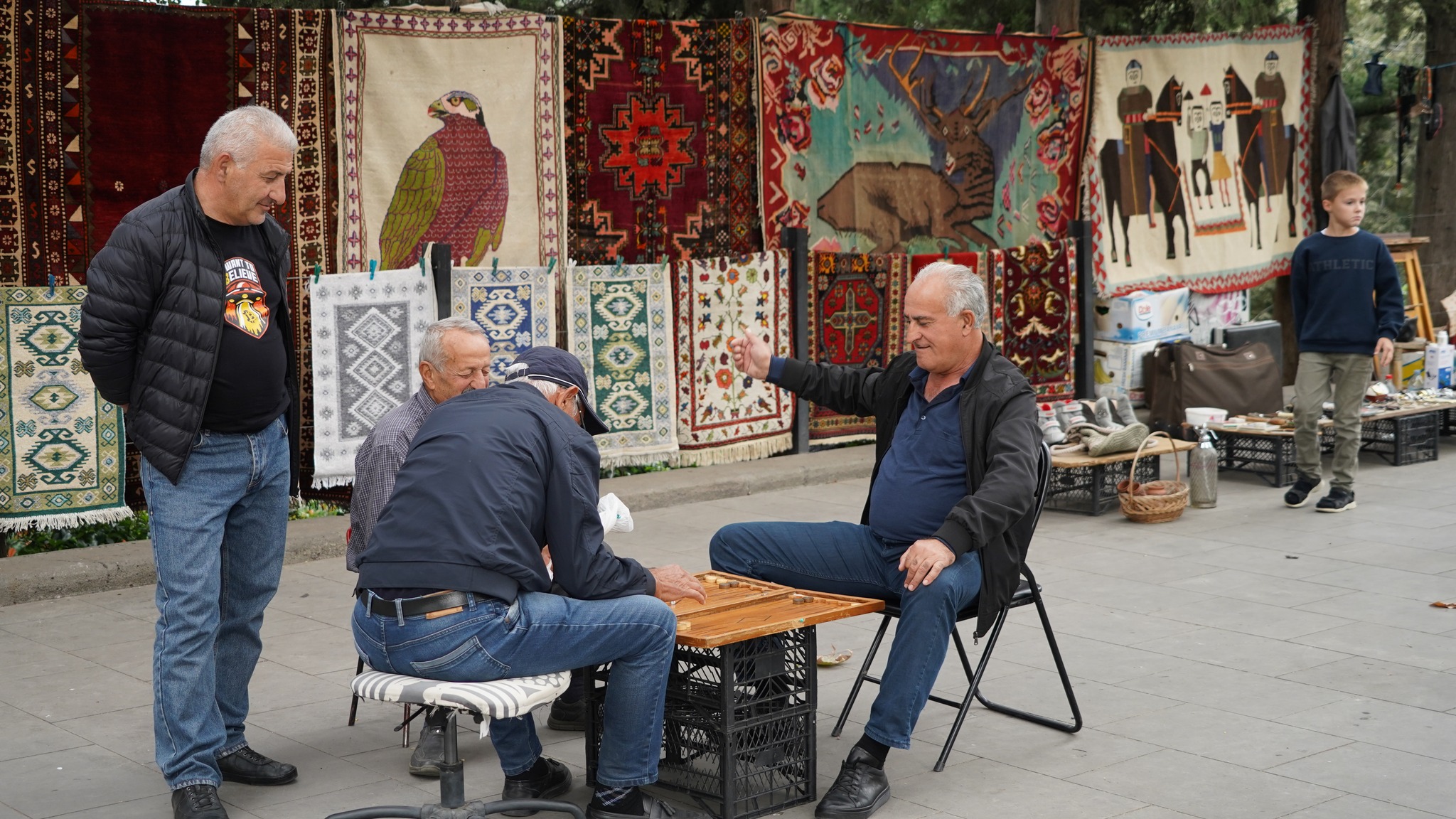
Tbilisi. Merchants on Dry Bridge playing backgammon. Photo: David Pipia/JAMnews. 2024

Restoring territorial integrity has always been an important theme for Georgian society. According to sociological surveys conducted by the International Republican Institute (IRI) in 2023, it remains one of the key issues. However, until recently, this topic had not been at the forefront of the ruling party’s political agenda.

Experts believe that “Georgian Dream” is actively using the issue of territorial integrity in its campaign to divert attention from other pressing matters—such as economic challenges, high unemployment, and rising poverty.

“If we look at the political landscape of modern Georgia, we see that every government facing problems and nearing its lowest popularity levels tries to incorporate the theme of territorial integrity into its election rhetoric. This is not a new ‘trick’ in Georgian politics,” says Vano Abramashvili, an expert who has spent many years studying conflicts.
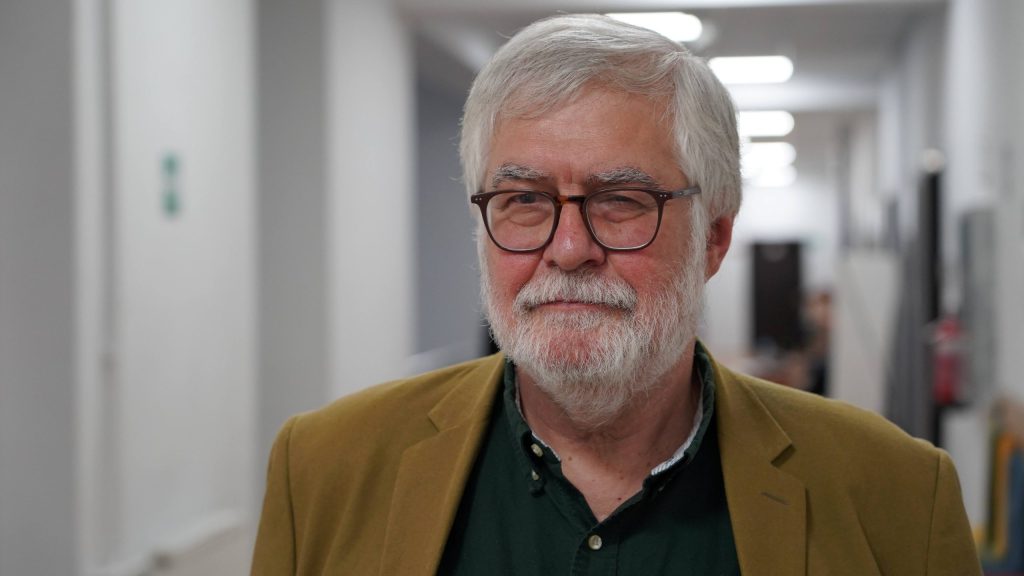
Political Scientist Ghia Nodia Photo: David Pipia/JAMnews

Political scientist Ghia Nodia also asserts that no real changes have occurred that would increase the chances of resolving the conflict.

The elections are approaching, and this issue is being brought back to the forefront,” he notes.

Closer ties with Russia and their impact on territorial issues
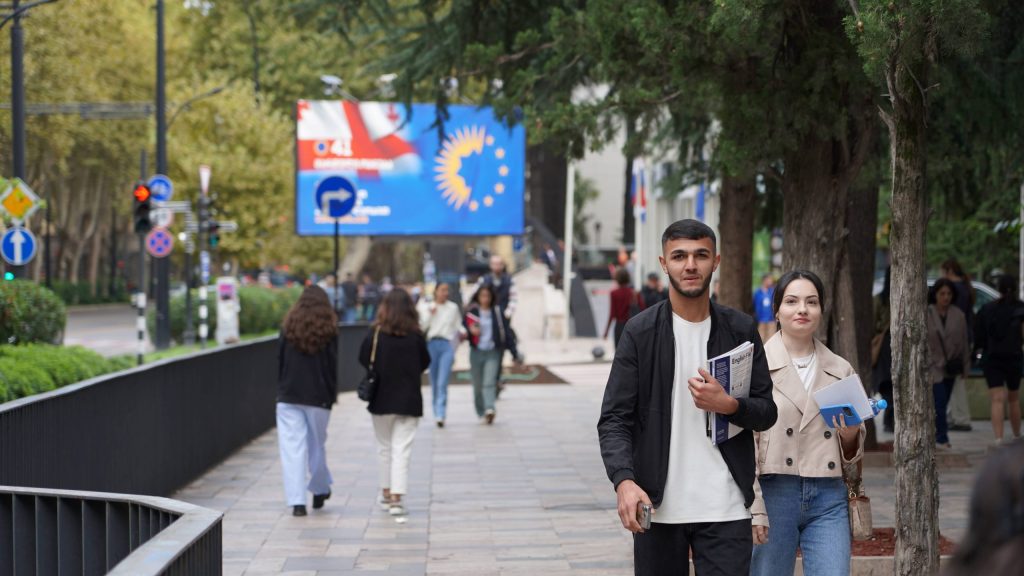
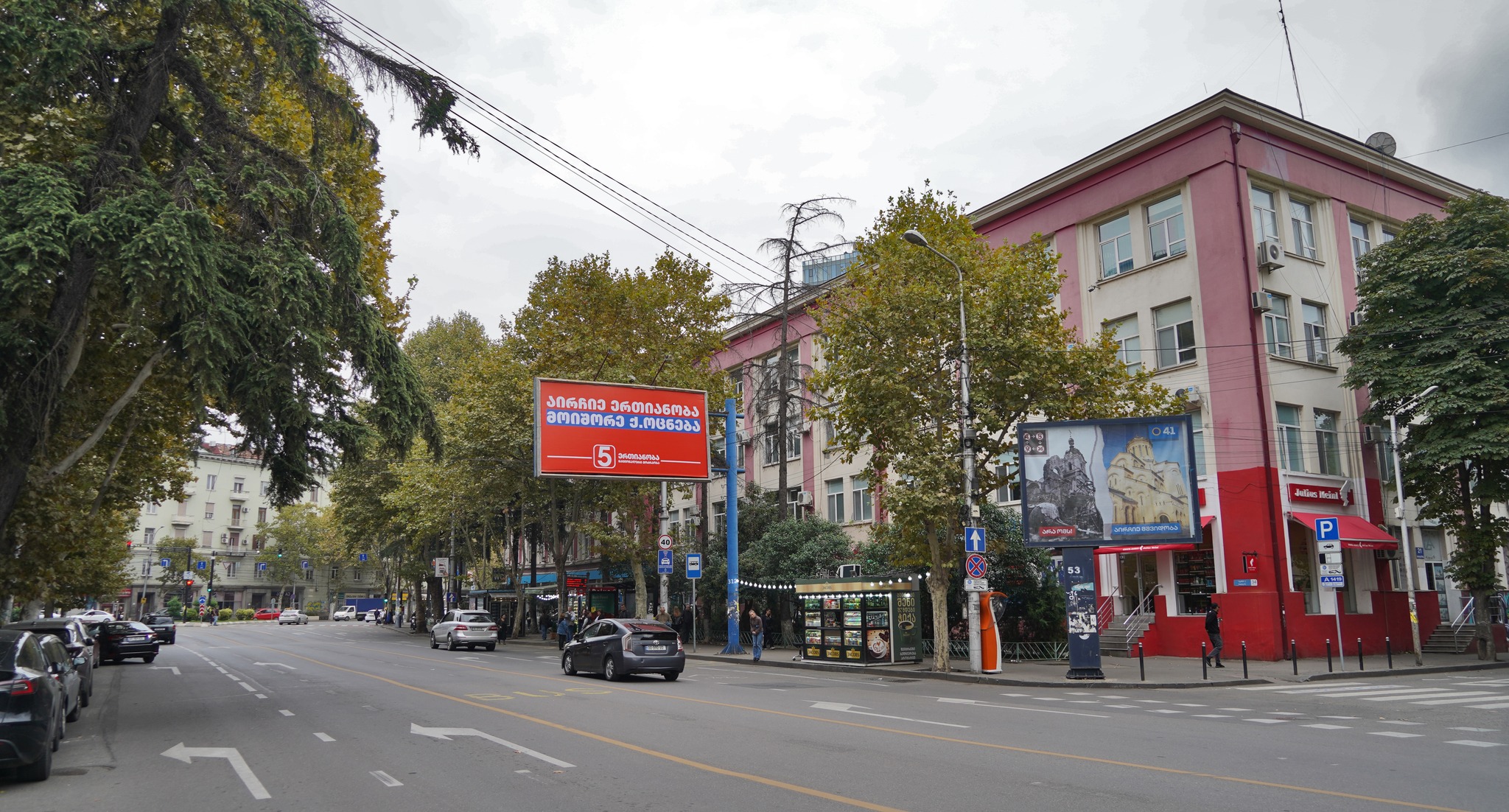
Georgian Dream on Territorial Integrity . Tbilisi. In the background, there is a campaign sign for "Georgian Dream," Georgia's ruling party. Photo: David Pipia/JAMnews
Tbilisi. In the background, there is a campaign sign for “Georgian Dream,” Georgia’s ruling party. Photo: David Pipia/JAMnews

Since coming to power, many have viewed “Georgian Dream” as pro-Russian, but the war in Ukraine has made this fact clear even to skeptics.

Georgia did not join the sanctions imposed against Russia following the outbreak of the war in Ukraine. Furthermore, Tbilisi criticized Kyiv and President Volodymyr Zelensky for allegedly failing to prevent the conflict. The rhetoric of “Georgian Dream” leaders toward Western ambassadors and leaders has become overtly harsh.

The pro-Russian narrative has deepened further during the election campaign.

Members of the Georgian government, including Prime Minister Irakli Kobakhidze and informal leader Bidzina Ivanishvili, have not once referred to Russia and Putin as occupiers in their numerous campaign speeches.

For instance, just recently, while addressing the UN about occupied territories, Kobakhidze also failed to mention Russia.

This position has sparked serious outrage within Georgia, especially among those advocating for European integration. According to polls, around 80% of the population supports Georgia’s accession to the European Union and NATO.

Experts note that the government must navigate between pro-Western rhetoric and actions aimed at strengthening ties with Moscow. For example, “Georgian Dream” has adorned its campaign banners with European Union flags.
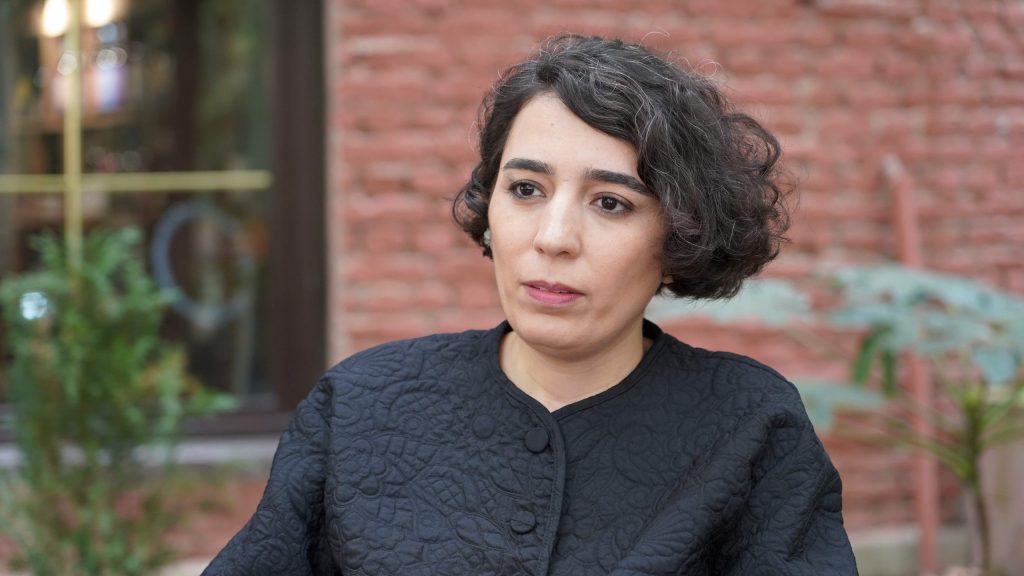
Georgian Dream on Territorial Integrity.Tamta Mikeladze, laywer and director of the Social Justice Center. Photo: David Pipia/JAMnews
Tamta Mikeladze, laywer and director of the Social Justice Center. Photo: David Pipia/JAMnews

Lawyer and director of the Social Justice Center, Tamta Mikeladze, believes that the emphasis on the issue of territorial integrity serves as a facade behind which the government seeks to obscure changes in the country’s foreign policy.

Previously, rapprochement with Russia was justified by economic interests, but that is no longer sufficient, according to the expert:

“’Georgian Dream’ must demonstrate not only the economic but also the political advantages of closer ties with Russia. The topic of territorial integrity is being used as an argument in that regard.”

Abkhazia and South Ossetia

Abkhazia and South Ossetia are two regions of Georgia that were occupied by Russia following military conflicts in the early 1990s. As a result of these conflicts, more than 300,000 people were forced to leave their homes, many of whom still cannot return.

Both regions have proclaimed their independence, but it is recognized only by Russia and four other countries within its sphere of influence. The international community continues to regard these territories as part of Georgia, but Tbilisi effectively does not control them.

How is Moscow responding?

Russian authorities have made it clear that they do not intend to support the return of Abkhazia and South Ossetia to Tbilisi’s control. Konstantin Zatulin, a representative of Russia’s State Duma, stated that “the train has long left,” suggesting that the issue of restoring Georgia’s territorial integrity is no longer relevant.
Similar themes were present in the statement by Russian Foreign Minister Sergey Lavrov. Speaking from the UN podium, Lavrov made it clear that any negotiations between Georgia and Abkhazia and South Ossetia must be conducted only with their consent, and that Russia would not pressure these republics.

“The current leadership of Georgia is simply assessing the past fairly. They said, ‘We want reconciliation, historical reconciliation.’ In what form this reconciliation might occur depends on those countries themselves: Abkhazia and South Ossetia. They are neighbors of Georgia, and certain contacts between them are inevitable… If the parties are interested, we are ready to help,” Lavrov stated on September 28 at the UN in response to journalists’ questions.

Reactions in Abkhazia and South Ossetia

Public responses from Abkhazia and South Ossetia have primarily focused on Ivanishvili’s initiative to apologize to the Ossetian people.

Officials from Tskhinvali and Sukhum noted that any steps toward reconciliation would only be possible on the condition that Georgia recognizes their independence. However, they emphasized that the political status of these republics is not open for discussion.
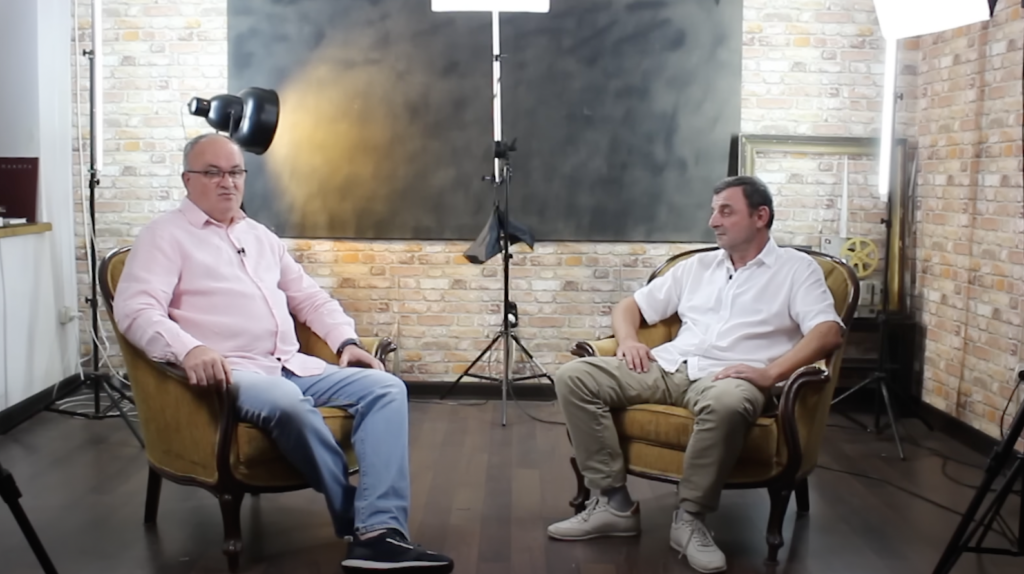
A representative from the “Presidential Administration” of the occupied Tskhinvali region, Yuri Vazagov, stated that they expect “not only verbal apologies from the Georgians but also practical steps, including within the framework of the Geneva discussions, where the main issue remains the achievement of a legal agreement that mandates security guarantees.”

“Although this statement does not directly concern the Republic of Abkhazia, we want to note that such a statement, if backed by real steps toward reconciliation based on a reassessment of past mistakes and apologies to the peoples of South Ossetia and Abkhazia, a rejection of political and economic pressure, and the signing of a peace treaty, could mark the beginning of a process leading to peaceful coexistence and good neighborly relations,” the Abkhaz Foreign Ministry said in a statement on September 16.

Former Abkhaz Foreign Minister Sergey Shamba stated that “if Georgia apologizes for its actions, then Abkhazia will welcome this first step toward reconciliation,” but he quickly emphasized that “the political status of the republic is not open for discussion.”

Reactions from Refugees

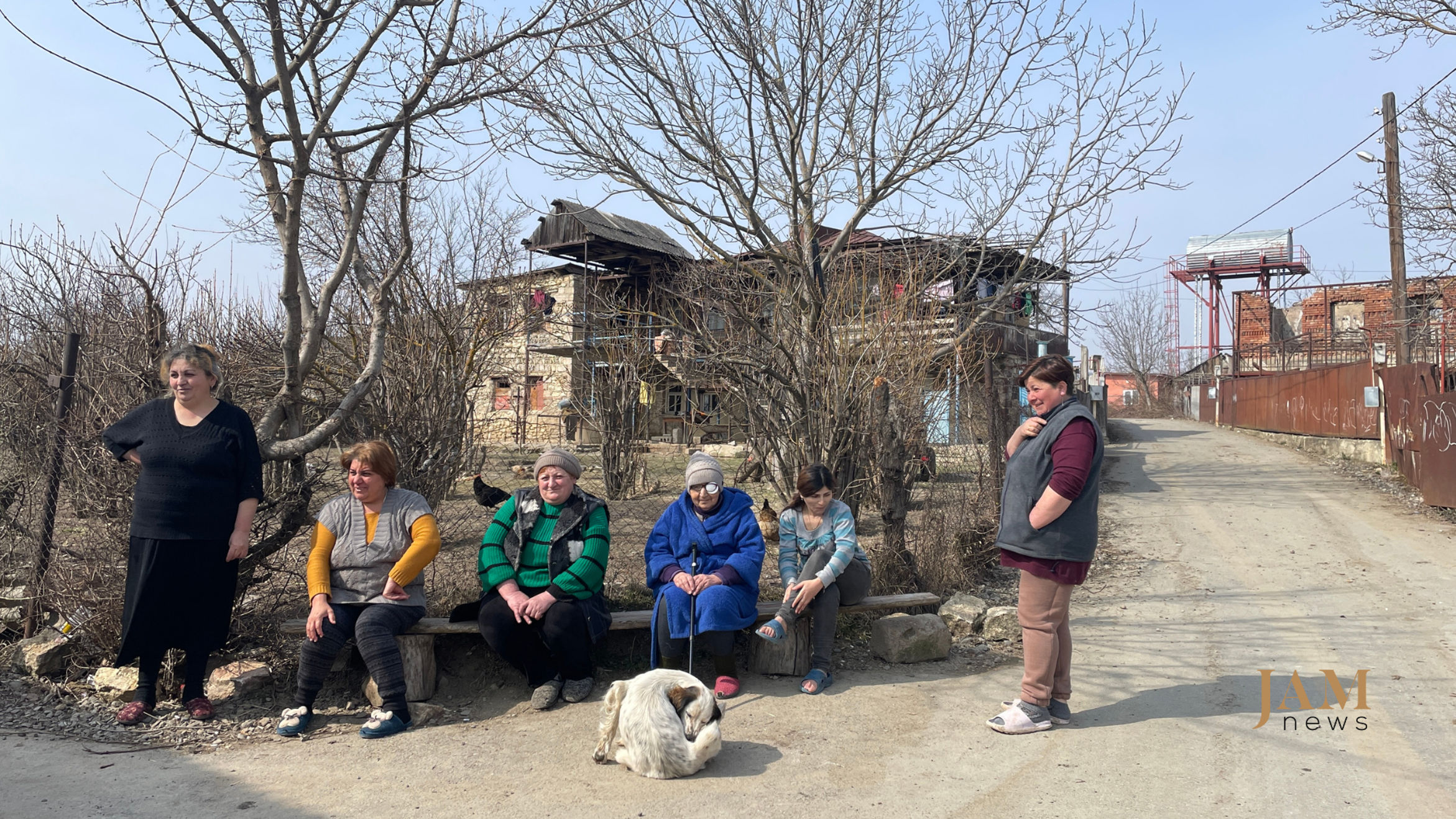
Dali Mikiya, a refugee from Abkhazia, believes that the government has done very little over the past 30 years to facilitate the return of displaced persons to their homes and to assist those affected by the war. She notes that “Georgian Dream” has made particularly little progress in this regard:

They had more opportunities to do something because they inherited a more or less normal country. Yet 30,000 people still lack housing. They will have to wait another 30 years; many won’t even survive to see it. Elderly refugees have passed away without ever returning to their homes.

Dali Mikiya is actively involved in refugee issues and is well aware of their sentiments.

The government should apologize not to the Abkhaz or Ossetians, but to us, for the fact that we have lived in hell for 30 years, having lost our own homes.

Vano Abramashvili, conflictologist. Photo: David Pipia/JAMnews

Vano Abramashvili notes that refugees have long disappeared from the Georgian political agenda—their voices are unheard, and their needs are rarely discussed. The political class does not see them:

They have turned into people akin to economic migrants, simply waiting for housing and compensation, and once they receive it, they will no longer be considered refugees. The conditions in which they live, who tries to control their voices and manipulate them—no one is discussing this,” Abramashvili explains.

Discrediting the Opposition

Experts believe that one of the goals of emphasizing territorial integrity is to discredit the main opponent—the United National Movement led by Mikheil Saakashvili.

Ivanishvili has repeatedly asserted that Saakashvili is responsible for the outbreak of the August 2008 war. This narrative helps “Georgian Dream” create an image of an enemy, which has been the foundation of its political strategy in recent years.
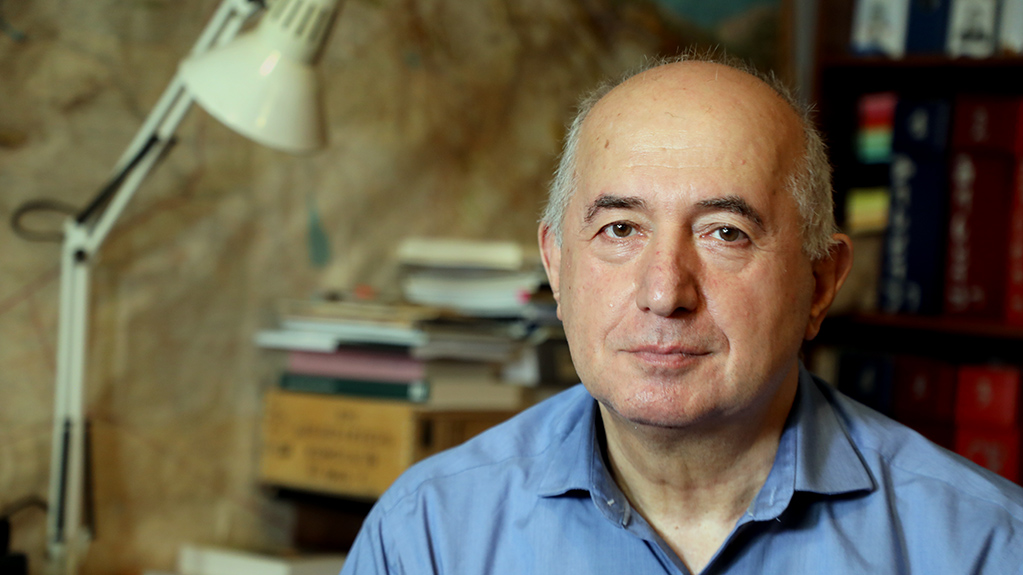
Pata Zakareishvili, conflictologist. Photo: taken from internet

Political scientist Paata Zakareishvili recalls a similar campaign in 2020 when “Georgian Dream” accused the National Movement of ceding several hectares of Georgian territory to Azerbaijan in the David Gareji region, home to an ancient Georgian monastery complex.

In 2020, a month before the parliamentary elections, two innocent people—cartographers who were members of the State Commission for Border Definition with Azerbaijan—were arrested. A large-scale propaganda campaign unfolded on state channels, aimed at tapping into patriotic sentiments.

The slogan “David Gareji is Georgia” was prominently featured on government channels, sparking a wave of patriotic fervor. Social media users who fell for this “bait” even began framing their Facebook profile pictures with this phrase.

Zakareishvili believes that “Georgian Dream” has decided to employ a similar strategy—playing on patriotic sentiments—this time around.

They are doing the same thing now,” Zakareishvili states. “They need a topic that will divert attention from poverty, unemployment, the war in Ukraine, and many other pressing issues. It should be a topic that resonates with a significant portion of society. That’s it. They know they won’t secure a constitutional majority, and they don’t need one. What’s important for them is to mobilize as many of their voters as possible for the elections.

The Future of Georgia’s Territorial Integrity
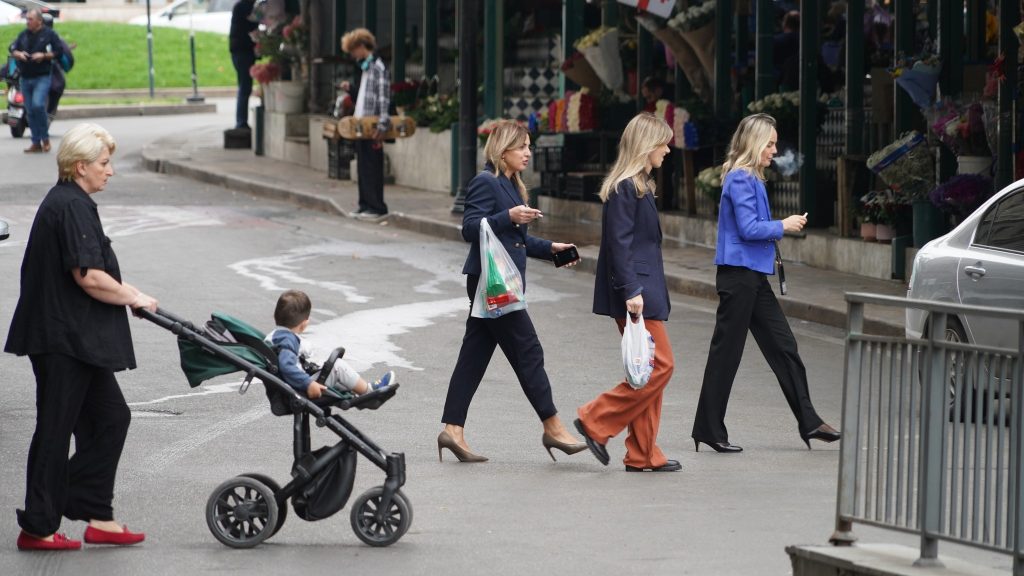
 Georgian Dream on Territorial Integrity
Tbilisi, Rustaveli Prospect. Photo: David Pipia/JAMnews, 2024

Neither Ivanishvili nor any other party leader has clarified how they intend to address this issue.

In discussing conflict resolution, Georgian Dream asserts that it needs to secure a constitutional majority in the upcoming parliamentary elections to do so.

Conversations about the need for constitutional changes have sparked speculation regarding a proposed confederation of Abkhazia and South Ossetia.

The Constitution of Georgia states that its territory is indivisible. The status of the Autonomous Republic of Abkhazia is outlined, while South Ossetia is not mentioned at all. The authorities need to clarify what they plan to do. The only thing they could change is to replace the period where it states the territory is indivisible with a comma and add that there are exceptional cases, such as the principle of a confederation,” says Paata Zakareishvili.

Experts believe that if Georgian Dream is indeed considering a confederation, it would have to recognize the independence of Abkhazia and South Ossetia, a difficult proposition.

A confederation is a union of two or more states that maintain their sovereignty and remain subjects of international law.

Neither the voters of Georgian Dream nor the party itself are prepared to discuss this or to make such a compromise [recognizing the independence of Abkhazia and South Ossetia],” says Tamta Mikheladze.

Due to public outrage, Georgian Dream has had to clarify that there is no idea of confederation:

No recognition or similar anti-national issues are under discussion! It is impossible to agree to a confederation, which would also imply recognizing the independence of the occupied territories!” stated Mamuka Mdinaradze, one of the leaders of Georgian Dream, on October 6.

Constitutional support is the very last step in resolving the conflict, says Vano Abramashvili. It is necessary only after agreements have been reached with the Abkhaz and Ossetians regarding the desired state structure, and after Russian military forces have left these territories:

But no progress has been made in this direction over the past 12 years. On the contrary, we face an entirely opposite situation—Russia’s aggressive actions and pressure on the de facto authorities of Abkhazia and the Tskhinvali region are increasing. Russia is trying to deepen its presence in these areas. Thus, all the talk from Georgian Dream about returning territories and the need for constitutional changes is simply a significant political, pre-election lie.

Experts are convinced that there is nothing behind this promise—no plan, no negotiations.

According to experts, the promise to restore the country’s territorial integrity will not yield political dividends for Georgian Dream:

This conversation is so unfounded that I highly doubt it will have a significant impact on anyone. Perhaps there will be some naive people who believe it, but they will be few,” says Gia Nodia.

In a few weeks, Georgian Dream itself will forget what it promised,” Vano Abramashvili insists.

Georgian Dream on Territorial Integrity

*With support from Medianet


Categories
South Caucasus News

Jafar Jabbarli Award recognises outstanding talents


A presentation of the Jafar Jabbarli Award has been presented to the Central Scientific Library of the National Academy of Sciences with financial support from the Agency for State Support to Non-Governmental Organizations of the Republic of Azerbaijan, Azernews reports.

Categories
South Caucasus News

EU Amb. Talks Decisive Elections, GD’s Anti-EU Propaganda, EU-Georgian Relations


On October 18, EU Ambassador to Georgia Paweł Herczyński stressed the importance of holding the upcoming elections in Georgia in a free and fair environment and called on all Georgians to go to the polls, make their choice and remember that they are the ones who decide the future of their country. He also spoke about EU-Georgia relations, the stalled EU integration process, and noted the accelerated anti-EU propaganda spread by the ruling party, which he now sees as a kind of competition between GD members to see who will insult the EU more.

The Ambassador addressed the conclusions of the European Council meeting and underlined the key messages of the document: the EU’s support for Georgia’s goal of EU integration and the current “deplorable” state of EU-Georgian relations, for which “the blame is put on the Georgian authorities who have deliberately over the last several months through actions, statements, legislations” distanced Georgia from EU.

Noting that the elections will be held in a week he stressed that it will be up to Georgians to decide on what future they want for themselves and their children. “Each and every one of you will have a chance to decide if you want Georgia to proceed and become a member of the European Union or not… On our side, we are ready to welcome you. We are ready for Georgia to become a member of the European Union, but this needs to happen based on rules and principles that apply to all of us, the current 27 EU member states, and all countries that want to join. And these rules are very clear – freedom, democracy, rule of law, human rights. These rules are enshrined in European Union treaties and they are non-negotiable,” emphasized the Ambassador.

Amb. Herczyński noted that “elections is a festival of democracy,” and that EU “insists” for elections to be free and fair, for every party to have the opportunity to present its program and compete with each other in a transparent and inclusive environment, for every citizen to have a right of casting his/her vote secretly. “I sincerely hope that people will go out, will vote, that the turnout will be historic high because these elections are essential for Georgia’s future. Please go and vote. This is your right. This is your duty, and this is your choice. You have the power to decide the future of your country, for yourself, and for your children,” he said. “Your vote matters,” emphasized the Ambassador, addressing Georgians.

He also noted that the EU will monitor the elections closely, waiting for the OSCE/ODIHR report and press conference that will be held on the next day and will share the assessment of the elections process, as well as waiting for the opinions of other observers, both local and international. “I can only repeat, it is absolutely essential that elections in Georgia are conducted up to the highest international and European standards, and I sincerely hope that this will be the case.”

Furthermore, the Ambassador stressed that whatever Georgians decide European Union will respect underlining that “this is the biggest difference between European Union and Soviet Union” [allegedly responding to Tbilisi Mayor and GD Secretary General, Kakha Kaladze’s comment made on October 14, when he equated EU to the USSR]. He also added that although the choice will be respected, if Georgia turns into a one-party state with no opposition parties, CSOs, free media, or protection of human rights, Georgia will never become an EU member state, and the EU will have to take additional responsive steps, such as stopping the visa-free regime and/or sanctions.

Regarding EU-Georgia relations and the EU integration process, he reiterated the European Council’s decision made in June this year to stop the accession process as a result of GD’s deliberate actions and decisions. “So, the problem is not in Brussels. The problem is not in Washington. The problem and the solution is not in Kyiv. The problem and the solution are here in Georgia,” he emphasized.

He recalled that in the enlargement report Georgia received when it was granted the candidate country status in November 2023, one of the key demands was to stop anti-Western, anti-EU propaganda. “Unfortunately, throughout last year, those anti-Western, anti-European disinformation has not stopped. On the contrary, I have to share with you as I’m here living in Tbilisi and I’m listening to all your reports, I have an impression that over last several months, we have a competition. We have a contest among the highest officials of Georgian government and Georgian ruling party who would undermine, who would question who’d insult the European Union. This is clearly unacceptable,” stressed the Ambassador.

He emphasized that the EU is a truly successful peaceful project and that the EU made the “difficult” and “brave” decision to open the door for Georgia and share the “peace, stability, development, and prosperity,” “but this can happen only under certain conditions. And, unfortunately, last year has been wasted. Instead of Georgia getting closer to the European Union, the distance has grown even wider… We sincerely hope that after the elections, whoever wins the elections will restart the work towards joining the European Union.”

The Ambassador also discussed what Georgia would lose if it continues on the path it is on now, saying that the government has already lost $121,000,000 in EU aid, adding that if the trajectory of the government does not change “Georgia will lose more and more.” To highlight the benefits of accession, he gave the example of his country – Poland, saying that 20 years ago, before joining the EU, Poland had only 50 km of highways, which now spans 5,000 km, “and this goes for every single sphere of life. Membership in the European Union is the guarantee of peace, stability, development, and prosperity, but the choice is yours,” he concluded.

Herczyński made the comments while speaking to journalists after the event organized by Deutsche Welle Akademie in cooperation with Center for Media, Information and Social Research and Caucasus Open Space. During the event, experts discussed media freedom, media independence, resistance to disinformation, and media literacy in general.

Also Read:


Categories
South Caucasus News

STC discloses unemployment rate in Azerbaijan


Azerbaijan’s unemployment rate fell slightly from 5.4% to 5.3% by the end of September 2024, Azernews reports, citing the State Statistics Committee.

Categories
South Caucasus News

Friday Wrap-up: Anar Mammadli’s health, justice system ranking and rules on violations of human rights


This week saw the health of activist Anar Mammadli deteriorating in prison, Azerbaijan ranking low in the European justice system, and new rulings for compensation in cases concerning violations of human rights.

Anar Mammadli’s health deteriorates in custody

Anar Mammadli, human rights defender and head of the Election Monitoring and Democracy Studies Center (SMDT), has reportedly experienced a severe decline in his health while detained in the Baku Pre-trial Detention Center. His lawyer, Elchin Sadigov, who recently visited him, expressed grave concerns about Mammadli’s deteriorating condition, citing untreated bronchitis and suffocating conditions in a poorly ventilated cell. Despite multiple requests for medical examination and treatment, authorities have not responded, leading Sadigov to consider applying for house arrest on health grounds.

Mammadli was arrested on April 29 in Baku, and his and his father’s residences were searched subsequently. He faces charges under Article 206.3.2 of the Criminal Code (organized smuggling), which he denies. He attributes his arrest to his work in election monitoring and human rights advocacy. The initial detention period set was three months and 28 days, which has since been extended.

This case adds to a troubling pattern in the country, where approximately 20 journalists and activists, including notable figures from AbzasMedia and Toplum TV, have been jailed under similar charges in the past 11 months. All have denied the charges, claiming they are being targeted for their anti-corruption efforts and human rights work. The lack of response from the Ministry of Justice’s Medical Administration and the Penitentiary Service to inquiries about Mammadli’s health situation further highlights concerns about the treatment of detainees in Azerbaijan.

Azerbaijan’s justice system: low spending, few lawyers

In a recent report by the European Commission for the Efficiency of Justice (CEPEJ), Azerbaijan ranks low in the European justice system, with significant disparities in legal expenditures and resources compared to other European countries. The report, which assesses justice systems up to 2022, reveals that Azerbaijan spends only 17.7 euros per capita on justice, markedly below the European average of 85.4 euros. This places Azerbaijan among the lowest spenders, alongside countries like Georgia and Turkey.

The report highlights that while Azerbaijan’s justice budget has increased across all categories since 2020, it still only constitutes 0.24% of its GDP, again below the European average. Notably, Azerbaijan has seen a substantial 104% increase in the prosecutor’s office budget, one of the highest in Europe, where the average increase was 12%. This reflects a broader trend of rising legal expenditures across Europe, particularly in legal aid, which has also seen increases in Azerbaijan due to a rise in post-COVID-19 complaints.

Despite these increases, Azerbaijan still has one of the lowest ratios of lawyers and judges per capita in Europe, with only 23 lawyers and 5.4 judges per 100,000 people, significantly under the European averages of 180 lawyers and 22 judges. The report also points out gender disparities, with only 20% of Azerbaijani judges being female, the lowest percentage in the Council of Europe region.

Azerbaijan faces multiple ECHR rulings on human rights

The European Court of Human Rights (ECHR) has once again ruled against Azerbaijan, ordering the country to pay compensation in several cases concerning violations of human rights. Among the cases, the ECHR found Azerbaijan responsible for the violation of freedom of expression in the case of journalist Natiq Adilov, who was denied access to financial documents from Baku State University by the Ministry of Finance. The court awarded Adilov 1,500 euros for legal costs and expenses.

In another significant ruling, the ECHR addressed the case of Zöhrab Ismaylov, whose home was demolished by the State Oil Company of Azerbaijan Republic (SOCAR) despite his legal resistance and timely payments for utilities. The ECHR dismissed İsmayılov’s complaints, declaring them inadmissible.

The court also dealt with the case of Simuzar Babayeva, whose brother died in prison under suspicious circumstances. The ECHR ruled that Azerbaijan violated the right to life and prohibition of torture, awarding Babayeva 35,000 euros for moral damages and 1,500 euros for costs.

Additionally, the ECHR provided a three-month period for parties to reach a settlement in the case of Rauf Rzayev and others, who were affected by the construction of new park complexes in Baku. The plaintiffs had their properties demolished and sought compensation for the violation of their property rights.

The post Friday Wrap-up: Anar Mammadli’s health, justice system ranking and rules on violations of human rights appeared first on MEYDAN.TV.


Categories
South Caucasus News

Azerbaijan’s non-oil sector attracts record-breaking foreign investments in 2023


Over the past five years (2019-2023), Azerbaijan has attracted a staggering $6.2 billion in FDI into its non-oil industries, the Azerbaijan Export and Investment Promotion Agency (AZPROMO) told Report.


Categories
South Caucasus News

Azerbaijan, Italy strengthen military co-op through staff talks


In line with the 2024 bilateral cooperation plan signed between the Ministry of Defense of Azerbaijan and the General Staff of Italy, staff talks were held in Baku to enhance military ties between the two countries, Azernews reports.

Categories
South Caucasus News

Georgian PM: 150 organisations have registered under Law on Transparency of Foreign Influence – Agenda.ge


Georgian PM: 150 organisations have registered under Law on Transparency of Foreign Influence  Agenda.ge

Categories
South Caucasus News

More Ministerial Candidates Considered By Pashinian’s Party – Ազատություն Ռադիոկայան


More Ministerial Candidates Considered By Pashinian’s Party  Ազատություն Ռադիոկայան

Categories
South Caucasus News

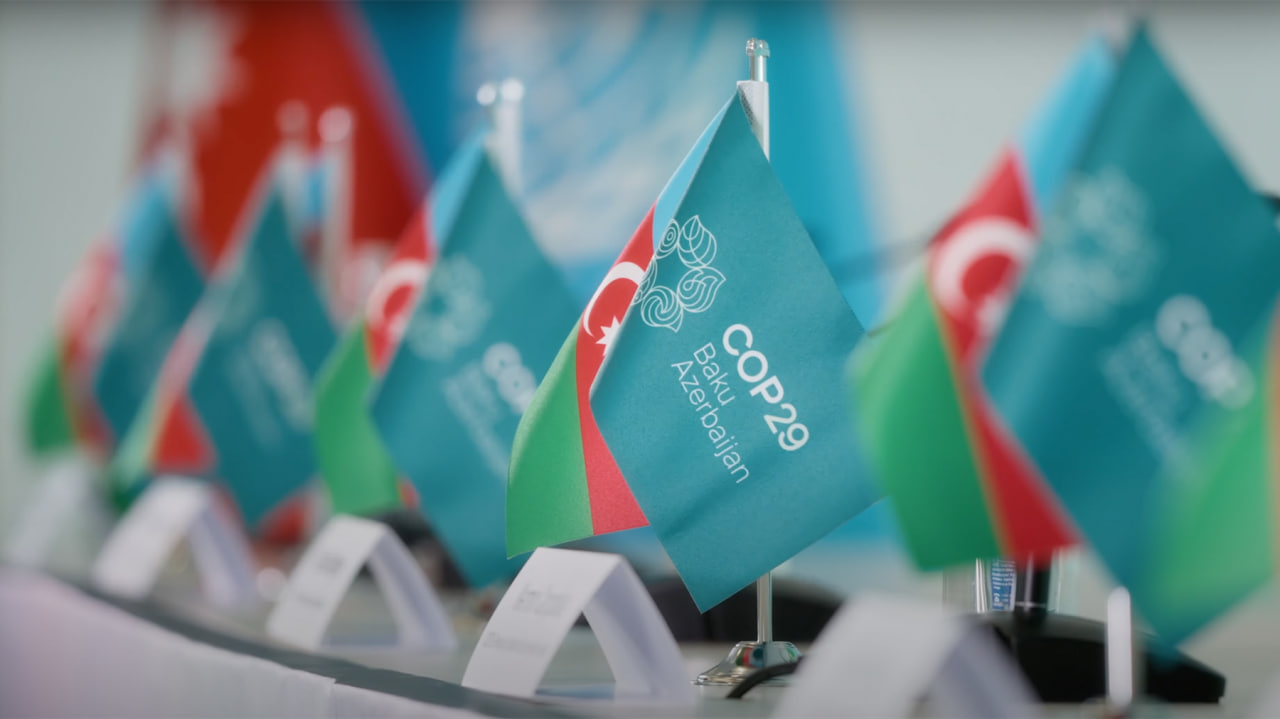
Over 28,000 people have registered to participate in COP29 in Azerbaijan


COP29 will be held in Azerbaijan

COP29 will be held in Azerbaijan

As of the morning of October 18, more than 28,000 participants have registered to attend the COP29 conference, which will be held in Azerbaijan.

This was announced by Nermin Jarjalova, a member of the COP29 organizing committee, chair of the board of the Azerbaijan COP29 Operating Company, and CEO of operations.


According to Jarjalova, approximately 2,700 of the registered participants are media representatives, while the rest include representatives from NGOs, various international observer organizations, and other guests.

Orkhan Mahmudlu, head of the transportation department of the COP29 Operating Company, stated that alternative routes have been established due to a number of restrictions on the streets and roads where convoys with heads of state and government will travel during COP29.

He noted that during the Leaders’ Summit on November 11, 12, and 13, traffic regulations will be implemented on various roads from the airport to the city center and from the city center to the Olympic Stadium.

Mahmudlu mentioned that the roads subject to regulation include the Airport Highway, Heydar Aliyev Avenue, Neftchilar Avenue, and the streets of Yusif Safarov, Niyazi, Istiglaliyyat, Lermontov, Mikail Huseynov, Khagani Rustamov, Teymur Elchin, and Mehdi Huseyn.

He also reported that during COP29, guests, including accredited local residents, will have free access to public transportation. “It will be enough to present an accreditation card. This includes buses, the metro, and rail transport,” he said.

The 29th session of the Conference of the Parties to the UN Framework Convention on Climate Change (COP29) will take place from November 11 to 22 in the capital of Azerbaijan, Baku.

At the last conference held in Dubai, about 200 heads of state and government and more than 100,000 people participated. Official information about the number of participants for the event in Baku has not yet been announced, but local media reports, based on unofficial sources, suggest that there will be 80,000 participants.

Follow us Twitter | Facebook | Instagram