Gilavar Photo Club has launches photo exhibitions in Prague to honor the victims of landmines in Azerbaijan, Azernews reports.
Day: October 17, 2024

On October 17, the Council of Europe’s Congress of Local and Regional Authorities adopted a declaration “The situation in Georgia” with 76 votes in favor, 10 against and 6 abstentions.
The declaration expresses deep concern about Georgia’s democratic backsliding and the weakening of human rights in the country, mentioning the anti-democratic Foreign Agents Law and anti-LGBTI legislation.
The Congress reiterates its call on the Georgian government to repeal this “anti-human rights legislation” and to refrain from further polarizing society, threatening political pluralism, infringing on human rights or undermining democracy. “Georgia should return to the path of democratic consolidation and recommit to democratic principles and respect for human rights,” the declaration says.
In addition, the Congress reiterates the need for effective protection of human rights and fundamental freedoms, including non-discrimination and freedom of assembly.
Highlighting the risk of Georgia’s deviation from democratic norms and standards, exacerbated by attacks and intimidation against the opponents, and bearing in mind the forthcoming October parliamentary as well as the local elections scheduled for 2025, the declaration stresses that “it is all the more important to create conditions that enable all citizens, without discrimination, to participate meaningfully in society and contribute fully, peacefully and equally to the political life of the country at all levels of government.”
It also underlines its commitment to a constructive political dialogue with the Georgian authorities notably in the framework of a high-level visit to Georgia, after the formation of the government following the parliamentary elections.
“The Congress will continue to support the critical efforts of Georgian authorities at all levels of government, in collaboration with civil society, to safeguard human rights, uphold the rule of law, and promote democracy at the level closest to the citizens,” the declaration adds.
The statement concludes by saying that the Georgian government must fulfill the obligations and commitments, which it reaffirmed in the Council of Europe’s Reykjavik Declaration, and that it can be held accountable by the CoE’s statutory bodies if it fails to meet these commitments.
Also Read:
BBC on Georgia
In light of the current political situation in Georgia and the upcoming parliamentary elections, the BBC publishes an article titled “A decisive moment for the citizens of Georgia – their European future is at stake.” The media examines the ongoing processes in Georgia, including the consequences of Russian aggression in Ukraine, as depicted on billboards by the “Georgian Dream,” the “Russian law” , and statements from the Prime Minister of Georgia and representatives of the ruling “Georgian Dream” regarding the banning of opposition parties in the country.
What does the BBC say?
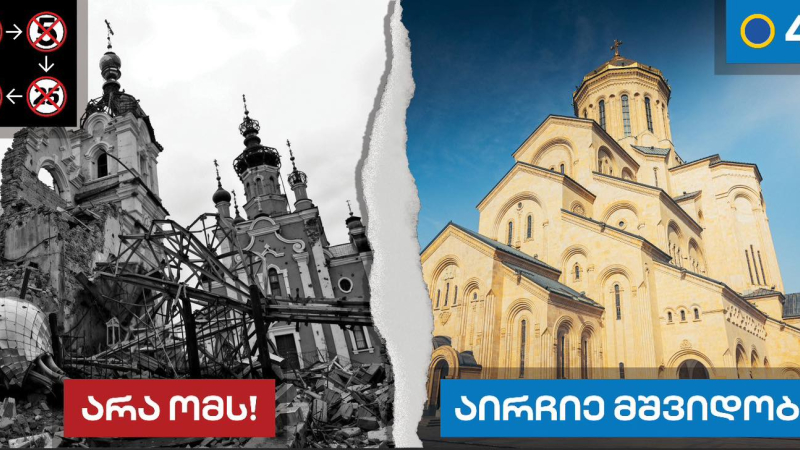
“Choose peace, not war” — this is the main message of the “Georgian Dream,” the party that has been in power in Georgia for the past 12 years.
Ahead of the decisive election on October 26, Russia’s war against Ukraine plays a significant role in the ruling party’s election campaign.
Billboards depict bombed Ukrainian churches, pools, burned buses, and school classrooms, contrasted with photographs of peaceful life in Georgia.
The implication is that the opposition could drag Georgia into a war similar to Ukraine’s, while the “Georgian Dream” promises peace.
This is a powerful message for a country of 3.7 million people that borders Russia and experienced a brief but destructive conflict with its neighbor in 2008.
According to the opposition, which is represented in the upcoming elections by several pro-Western coalitions, the real threat lies in the loss of Georgian democracy and the only chance for joining the European Union.
Georgia was granted candidate status for European Union membership in December 2023, but the EU suspended the integration process due to heightened anti-Western rhetoric from the ruling party, “Georgian Dream,” and a controversial “foreign influence” law passed in June 2024.
This law, which brought tens of thousands of young Georgian protesters to the streets in the spring, requires media and civil society organizations funded from abroad to register as operating in the interests of a foreign state. Demonstrators viewed this law as a threat to democracy and the country’s European future.
Critics argue that the law is inspired by Russian legislation, which is used to suppress dissent.

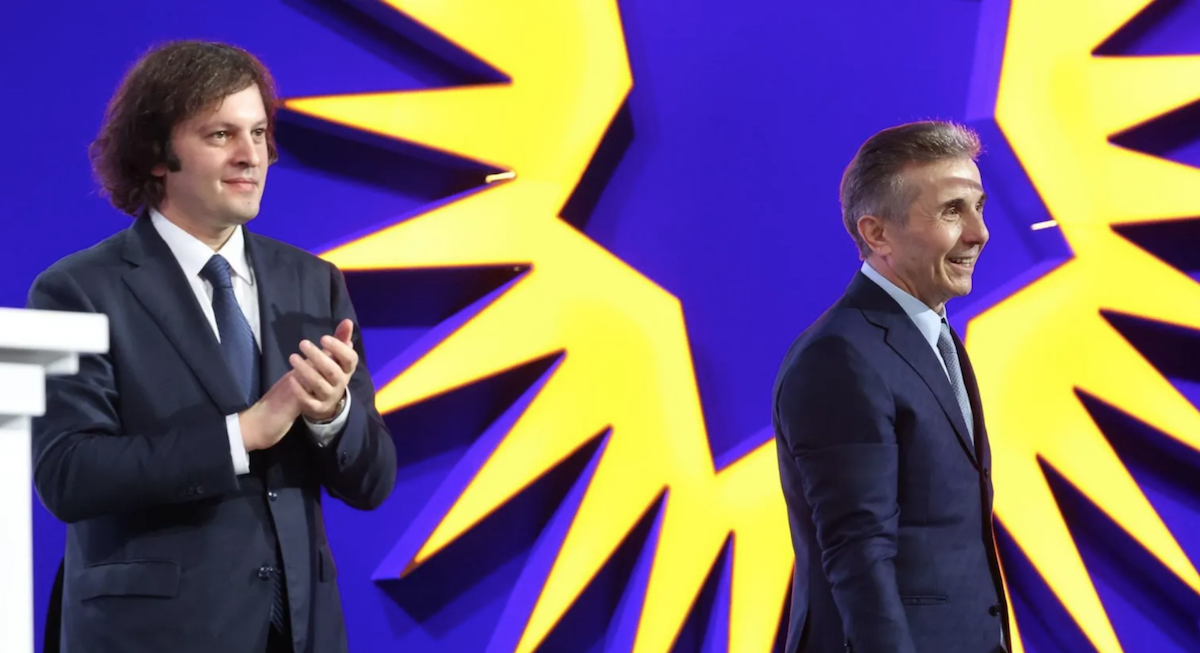
The most influential person in Georgia, billionaire Bidzina Ivanishvili, has promised to ban opposition movements in the event of a victory for the “Georgian Dream” party. He is the founder of the ruling party and currently serves as its honorary chairman.
He unites all opposition groups under the name of Georgia’s largest opposition party, referring to them collectively as the “United National Movement.”
“Today, the collective ‘National Movement,’ supported from abroad, is trying to come to power through unrest, dragging the country into war and chaos,” Ivanishvili told his supporters in Batumi on October 10. “This must be put to an end once and for all. That is why it is necessary for the ruling party to secure a constitutional majority in the elections on October 26.”

The threat of war and other “threats” hold a significant place in pro-government media.
Among them is the idea that Europe wants to make Georgian men gay or that the army of “foreign agents” from the country’s active civil society and free media is part of a conspiracy by the “global war party” aimed at provoking a revolution.
The opposition hopes that the upcoming vote next week will lead to the establishment of Georgia’s first coalition government and put an end to what they call the “one-party rule” of the “Georgian Dream.”
However, the “Georgian Dream,” led by Bidzina Ivanishvili, is confident that it will achieve a decisive victory.
“We have reached a historic peak of support, mainly due to two factors. The first is ensuring peace in our country despite challenges. The second is rapid economic growth over the past three to four years,” said Prime Minister Irakli Kobakhidze on October 7 during the presentation of the party’s election program.
However, critics point to the increasing number of Georgians leaving to work abroad. According to official statistics, 243,000 people emigrated in 2023.
“If the economy is working so well, then why are Georgians leaving the country?” questions Zviad Adzinbaia, a senior researcher at the Fletcher School of Law and Diplomacy at Tufts University.
The opposition complains that the authorities did not organize a sufficient number of polling stations outside of Georgia.
The Central Election Commission announced last month that it would open 60 polling stations in 42 countries.
The European Union, the United States, and the United Kingdom have expressed their views on the direction in which the “Georgian Dream” is leading the country—specifically, a rollback of democracy and rhetoric that serves only the interests of Russia.
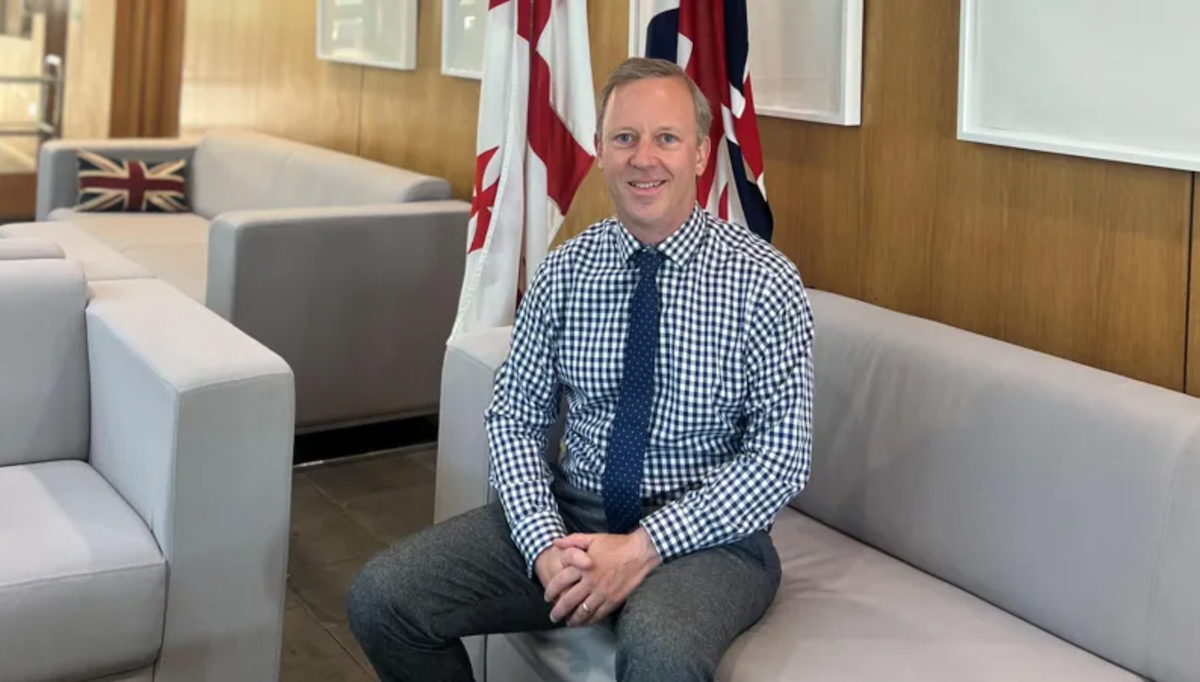
On Tuesday, October 15, the UK froze its annual security dialogue with Georgia, and the British ambassador to Georgia expressed concern about the declining level of democracy and the anti-Western rhetoric from the Georgian government.
The Kremlin claims that it does not interfere in Georgia’s internal affairs and states that the West is resorting to “brazen attempts” to pressure the government.
However, outside of the major cities, many Georgians are not particularly concerned with geopolitics.
For several months, 66-year-old Tamaz Nefaridze and other residents of Shukruti have been protesting outside Parliament, stating that their village, located on a hill above Chiatura, is being destroyed by an extensive network of underground mines.
They blame the mining company and the government for their troubles.
“I have lost all hope. I don’t think I will participate in these elections; I no longer believe in all of this,” he says.