
https://t.co/5acLfquarf
Operation Trump – By the New Abwehr #NewsAndTimes #NT #TNT #News #Times#World #USA #POTUS #DOJ #FBI #CIA #DIA #ODNI#Trump #TrumpNews#Israel #Mossad #Netanyahu#Ukraine #NewAbwehr #OSINT#Putin #Russia #GRU #Путин, #Россия #SouthCaucasus #Bloggers
The…— Michael Novakhov (@mikenov) October 16, 2024
Day: October 16, 2024
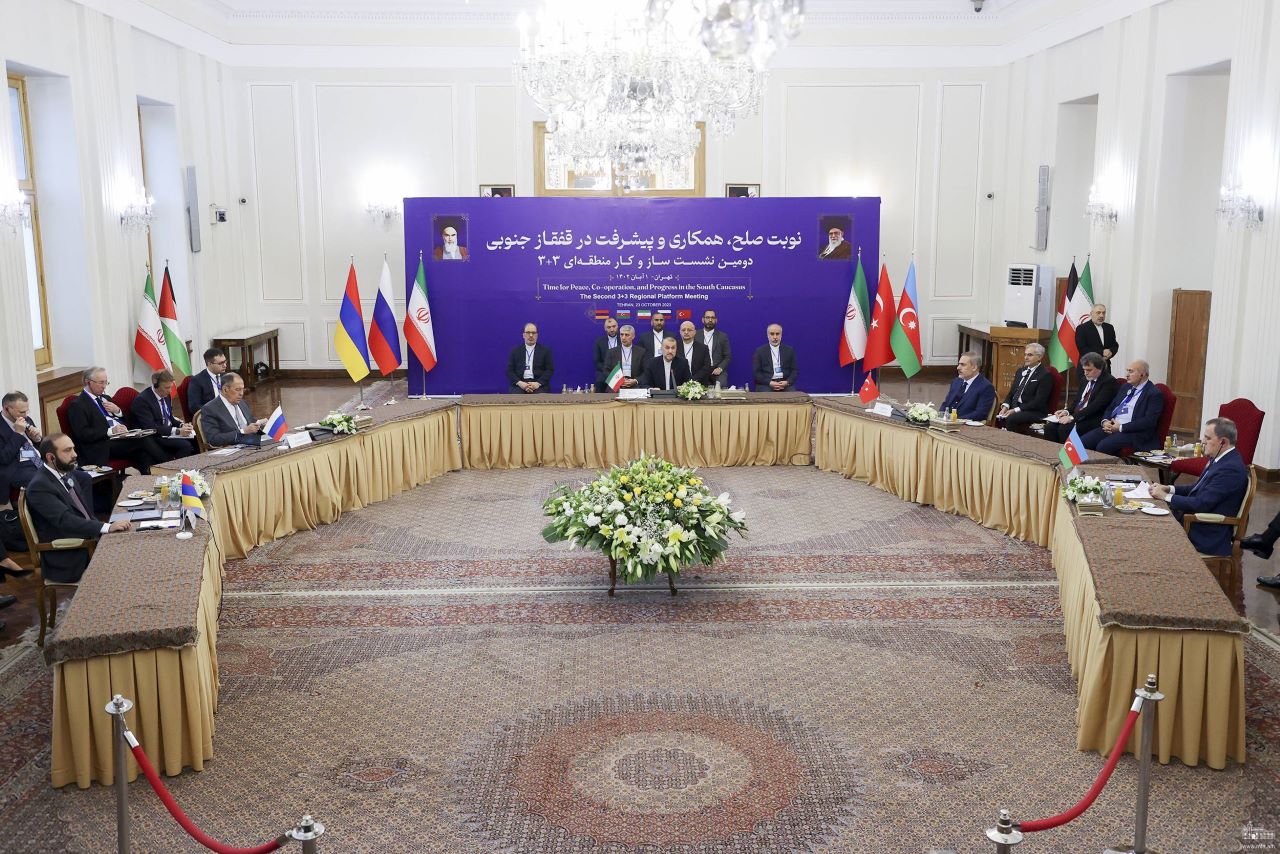
“3+3” meeting in Istanbul
On October 18, Istanbul will host another meeting in the “3+3” format, with Armenia’s Foreign Minister Ararat Mirzoyan expected to participate. The agenda details have not yet been disclosed.
Following the 2020 Karabakh war, Turkey proposed a new format for addressing regional issues, known as “3+3.” This format includes Turkey, Iran, and Russia on one side, and Armenia, Azerbaijan, and Georgia on the other. However, Georgia has consistently refused to participate in a format that includes Russia, despite recent impressions that the Georgian government may be aligning more closely with Moscow. Nevertheless, the format continues to be referred to as “3+3” rather than “3+2.”
Since joining the format, the official stance of Yerevan has been that Armenia agreed to participate under the condition that topics already being discussed in other formats would not be brought into this one.
Political analyst Robert Ghevondyan told JAMnews that Yerevan has not shifted its position. According to him, the Armenian authorities, as before, have no intention of discussing key issues within this platform, such as the unblocking of regional communications, the settlement of Armenian-Azerbaijani relations, border delimitation and demarcation agreements, potential enclave exchanges, or other significant matters.
“In general, Armenia is content with this platform remaining largely declarative in nature. Otherwise, there could be a situation where Armenia might face pressure to transfer critical issues to this forum – issues that require the involvement of multiple actors for a resolution. In such a case, decisions would likely be made at the expense of Armenia’s interests,” the political analyst stated.
- ‘3 + 3’ or ‘3 + 2’։ New format for solving problems in South Caucasus
- Economic ties between Georgia and Russia are growing, but Georgia will not participate in 3 + 3 format
- Georgia will not participate in 3+3 meeting in Tehran
Declarative statements from previous meetings
Turkey was the first to announce the creation of the “3+3” format. However, Armenian experts remind us that as early as the 2020 Karabakh war, Iran had already emphasized that regional conflicts should be resolved within the region itself. By late October of that same year, a special representative of the Iranian president had visited the capitals of the regional countries.
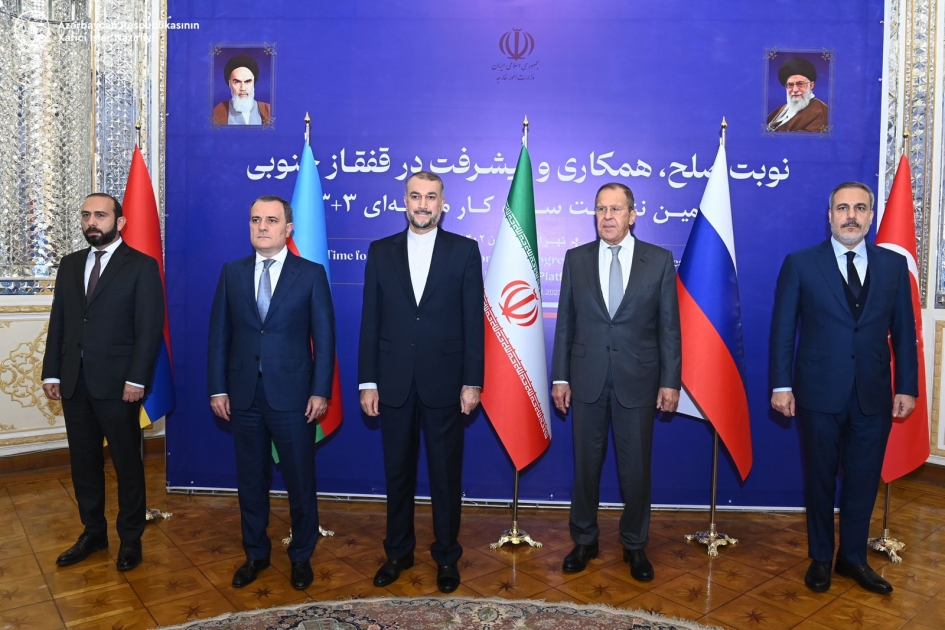
The first session of the “3+3” platform took place on December 10, 2021, in Moscow, involving deputy foreign ministers. On October 23, 2023, the second meeting was held in Tehran, this time with foreign ministers in attendance.
Following the meeting, Yerevan issued a joint statement consisting of nine points. The statement underscored the importance of the platform for “constructive dialogue and fostering mutually beneficial cooperation among the countries of the region.” It also noted that the participants viewed economic cooperation as having a positive impact on building mutual trust, improving the welfare of the people, and enhancing regional stability.
“Consultations within the ‘3+3’ regional platform will not evolve into a forum for discussing conflicts. This platform will mainly focus on joint economic activities,” Armenia’s Foreign Minister Ararat Mirzoyan stated in Tehran.
Commentary
Expert at the Center for Security Policy Studies, political scientist Robert Ghevondyan, believes that the upcoming meeting is just another routine gathering, not tied to any significant events. However, he doesn’t rule out the possibility that Russia, Turkey, Iran, and perhaps Azerbaijan, may feel the need or desire to adjust their approaches ahead of the U.S. presidential elections and exchange views on regional issues.
“This agenda largely bypasses Armenia’s interests. Though, if we consider it in a broader context, to some extent, it touches on Armenia’s interests as well. It’s a positive that Armenia will be present, even if only in an observer role,” he said.
According to Ghevondyan, the only expectation Armenia should have from this format is to ensure that the other participants do not “use Armenia’s participation against itself.” For Yerevan, it’s essential that no decision is made to exclude “other actors” from resolving regional issues.
“The participants of the meeting must not be able to interpret our participation as a limitation on Armenia’s interests. For instance, they shouldn’t frame the situation in such a way that since Armenia is already included in this format, there’s no need to address these issues in Brussels, Washington, or Paris.”
He predicts that the situation in this regard will remain unchanged, affirming that for Yerevan, issues concerning the regulation of relations with Azerbaijan and Turkey are outside this format. And given that other formats already exist for discussing those matters, addressing them within this platform is “not very beneficial for Armenia.”
According to the political scientist, “significant, important issues” cannot currently be discussed or resolved within the “3+3” format.
“In the future, if different ruling elites emerge in Russia, Turkey, and Azerbaijan, perhaps this format will gain more importance for Armenia,” he explained.
At this point, Robert Ghevondyan believes that this format holds no tangible benefit for Yerevan. He notes that Armenia’s participation may be “justified by the fact that the country doesn’t intend to worsen relations with the other participating states.”
The political scientist doesn’t rule out that after the meeting in Istanbul, another declarative statement will be issued:
“The statements made after these meetings are so general, with provisions that don’t require any concrete decisions. This leads to the conclusion that these meetings are held just for the sake of meeting. Of course, we may hear statements at the level of ceremonial toasts once again. Armenia can join in, as there’s no harm in participating in a round of toasts.”
Follow us – Twitter | Facebook | Instagram
“3+3” meeting in Istanbul


Categories
China’s foreign trade grew
Cotton Farming in Azerbaijan
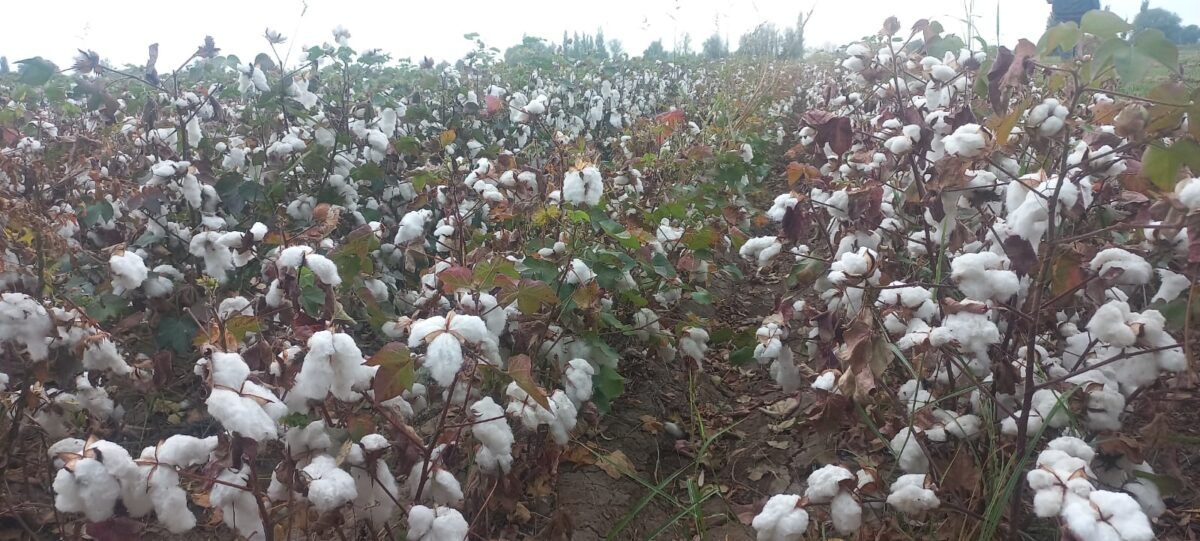
Farmers engaged in cotton production in Azerbaijan say they are drowning in problems. They report that despite millions of dollars spent on cotton farming as part of the non-oil sector over the past seven years, revenues do not cover expenses.
According to the “State Program for the Development of Cotton Farming in the Republic of Azerbaijan for 2017-2022,” approved in 2017, raw cotton production was supposed to reach 500,000 tons per year.
- Fake videos and audio recordings are planned to be distributed in Georgia before the elections – SSG
- Increase in serious crimes in Armenia, but also more cases solved: five-year statistics
- What impact do Azerbaijan’s closed land borders have on the lives of ordinary people?
However, statistical data tells a different story. In 2022, 322,000 tons of product were harvested from 104,000 hectares of land across the country, falling short by 178,000 tons. Despite a reduction in planted areas by 36,000 hectares in 2020 compared to 2017, production reportedly increased by 72 percent.
Farmers say they cannot achieve high yields year after year due to issues with soil fertility, climate, quality seeds, and pesticides. Shahmurad Imanov, who has been growing cotton for seven years, told Meydan TV that this year he is cultivating 10 hectares of rented land in the Saatli district.
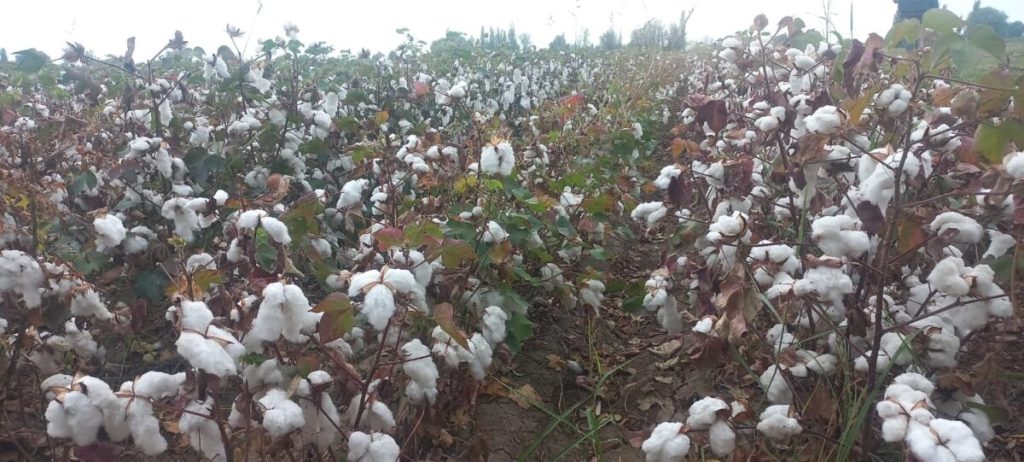
According to him, due to high costs, farmers are forced to sign contracts with factories:
“Yields vary each year. At best, we collect 4-5 tons per hectare. Usually, it’s 3-3.5 tons. There are too many pests. Efforts using broad-spectrum pesticides are also ineffective. Half of our expenses go on low-quality pesticides. We are endlessly battling pests. We even rent land, which costs between 400-500 manats (about $235-295) per hectare.”
The farmer adds that he can hardly find land for rent, as companies have taken over fertile land:
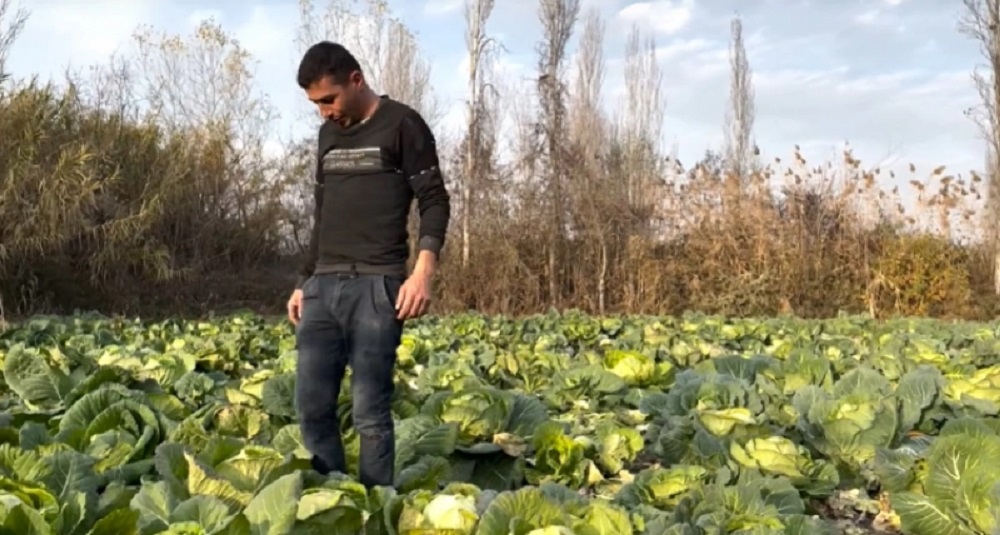
“We pay 100 manats (about $59) annually for irrigation. Seeds, pesticides, and fertilizers are expensive. A bag of fertilizer costs 30 manats (about $17), and a kilogram of seeds is 5.50 manats (about $3.2). Machinery is completely unaffordable. From planting to harvest, farmers incur numerous expenses they cannot cover themselves. Under contracts with factories, we bear all the costs, and expenses are calculated and paid during harvest. I will spend 20,000 manats (about $11,700) on ten hectares. For every ton harvested, 120 kilograms are accounted for moisture. If in the end, we have 35-40 tons of crop, then half or more may go to repay the debt to the enterprise.”
“An Increase of 5 Manats in Subsidy Is Insignificant Against Rising Costs”
The farmer mentions that rising costs year after year put him in a difficult position as they exceed revenues. Although fuel prices have increased over the past two years, the amount of subsidies has not changed.
The government provides a subsidy of 19 giyapiks (about $0.11) per kilogram of cotton, which amounts to 190 manats (about $110) per ton. Currently, the price for one ton of first-grade cotton is 800 manats, second-grade is 780 manats, third-grade is 740 manats, and fourth-grade is 700 manats.
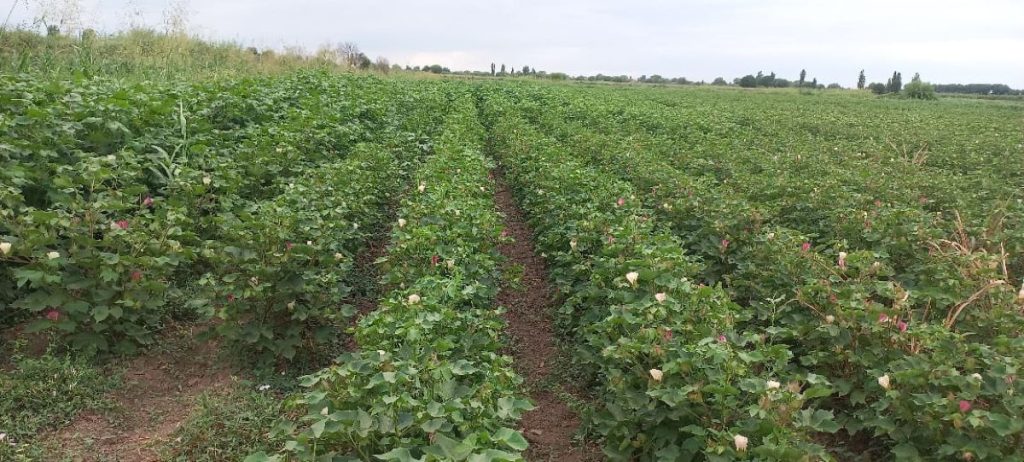
Next year, the Ministry of Agriculture plans to increase subsidies to 210 manats per ton for regions equipped with modern irrigation systems and 195 manats for others. However, this increase does not significantly affect the incomes of most farmers, as a large portion of fields lack modern irrigation systems.
“Fuel prices have skyrocketed. Harvesting costs 200 manats per hectare. This year they charged 70 manats for plowing a plot, whereas last year the same plot was plowed for 50 manats. Costs are rising, but subsidies and purchase prices for products are not,” says Shahmurad Imanov.
“Factories Are Overwhelmed Because They Cannot Sell Their Products”
According to farmers, some of them are forced to stop growing cotton due to rising costs. Gachay Aliyev, who has been planting cotton in the Shilyan village of the Kurdamir district for many years, is one of those who has ceased this work this year. He states that not only are costs high, but the purchase price of cotton on the world market is low, causing factories to be overwhelmed with cotton.
“The last time I harvested was last year. The income barely covered the cost of bread.”
“Equipment Exceeds Norms, Millions of Dollars Spent…”
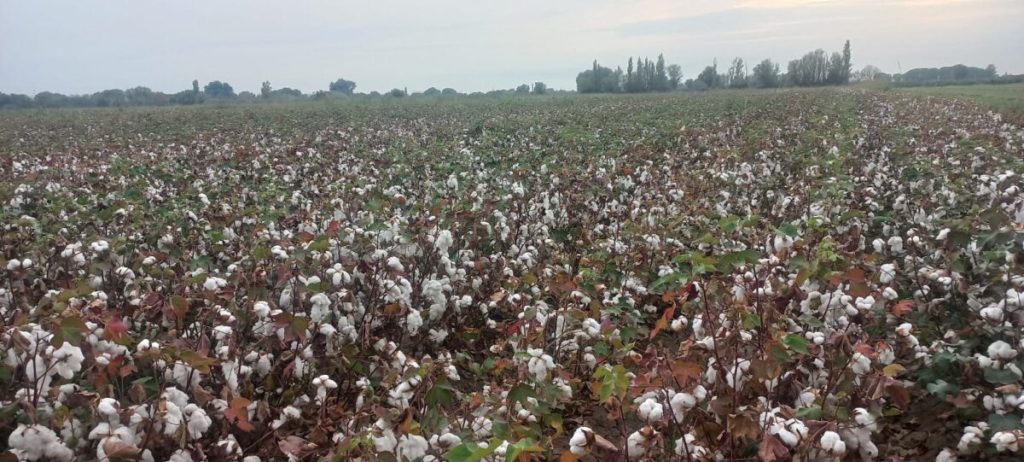
This year, cotton was sown on 103,000 hectares across 24 regions of Azerbaijan.
Last year, 276,000 tons of cotton were harvested from 93,722 hectares of land, with similar productivity expected this year. Amid farmers’ problems, experts believe that the funds allocated from the state budget for cotton farming equipment exceed normal levels. Over the past two years, 300 million manats (about $180 million) have been allocated as preferential loans for cotton farming equipment.
Overall expenditures exceed one billion manats. According to two-year-old statistics, there are 512 cotton harvesters in the country, which is far above the norm.
350 cotton harvesters and 1,050 tractor trailers would suffice for 100,000 hectares of cotton in the country. Annual revenues from raw cotton, cotton fiber, and yarn do not exceed 200 million manats. Currently, the price of one kilogram of cotton on the world market is $1.63, which is half of what it was two years ago.
“Cotton Farming Is Unprofitable from a Macroeconomic Perspective”
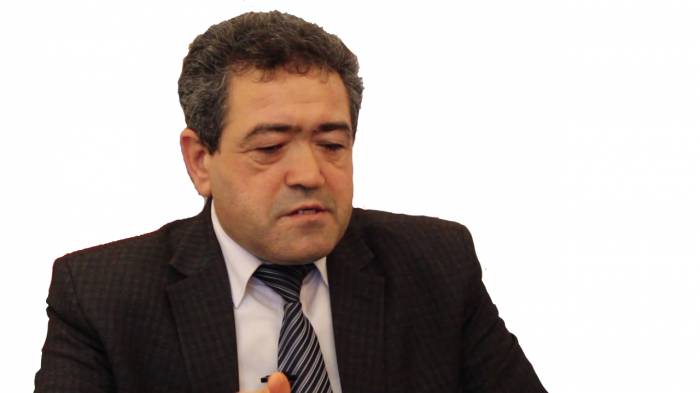
Agricultural expert Akif Nasirli states that cotton farming is not an agricultural crop suitable for the country’s climate. He claims that the income from cotton cultivation, which is very labor-intensive and costly, is several times lower than the country’s import needs for agricultural products.
Nasirli also points out that livestock farming is being sacrificed for cotton farming: “Cotton farming is also unprofitable from a macroeconomic perspective. The strategy is incorrect. Pastures have been taken away from livestock farmers and sacrificed for cotton fields. This affects the entire country. Meat and dairy products are becoming more expensive. Production has decreased, and we have to rely on imports. Instead of growing cotton, attention should be focused on increasing the feed base, developing livestock farming, expanding pasture lands, and cultivating food wheat. Urgent measures are needed to reduce import dependency.”
