
During her visit to Morocco, Leyla Aliyeva, the vice-president of the Heydar Aliyev Foundation, met with Ghizlane Benjelloun, the vice-president of the National Observatory on Children’s Rights (ONDE), Azernews reports citing Azertag.
Day: October 15, 2024
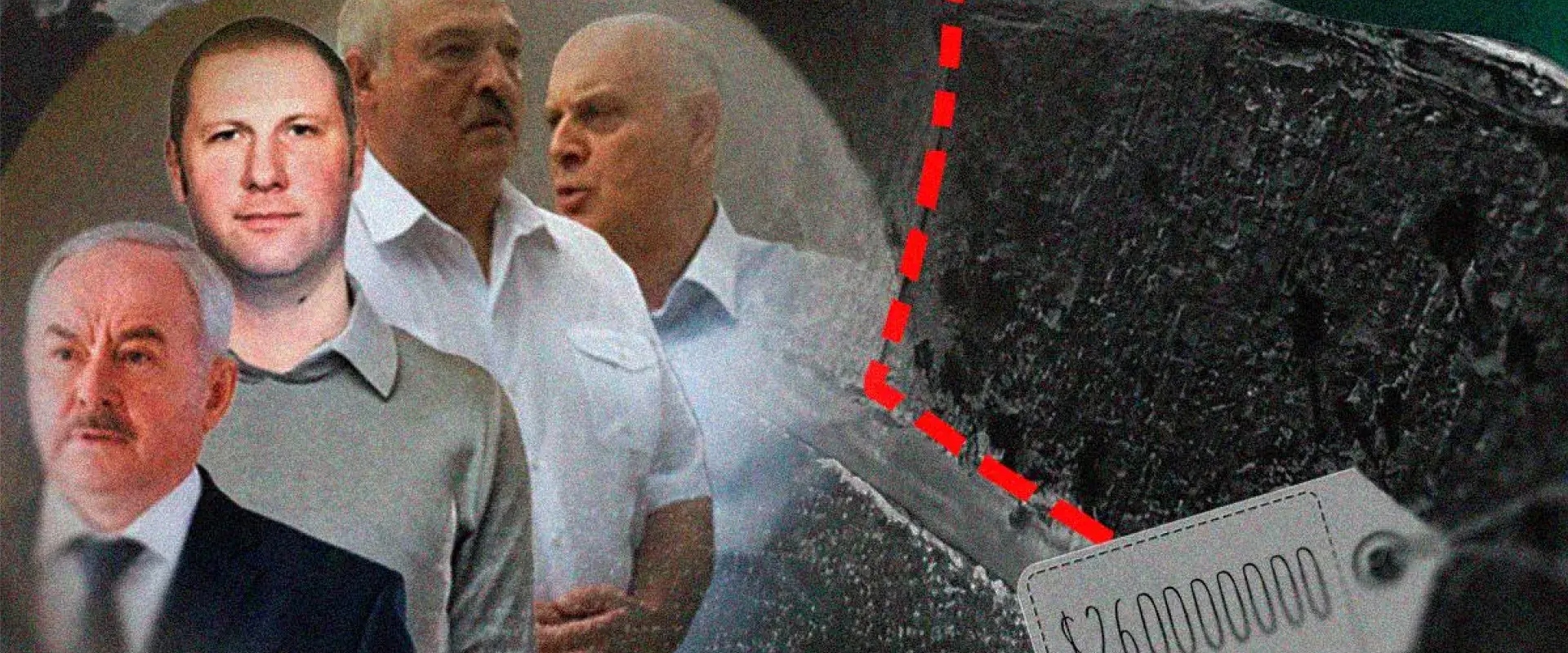
Lukashenko’s property in Abkhazia
Lukashenko acquired a piece of land on the Black Sea coast, Belarusian outlet EuroRadio reports. He received it in September 2022, just a day after visiting Russian-occupied Abkhazia.
Investigators from the Belarusian Investigative Center found that 20 hectares for a “large investment project” in the village of Kyndygh are owned by the Abkhazia-registered company “Zhemchuzhina 2010.” This company is 90-percent owned by Lukashenko’s former bodyguard Alexander Romanovsky. The other 10 percent is owned by Abkhaz citizen Dato Kvitsinia.
Kvitsinia admitted that he is a front for the paperwork.
“I’m not really in the loop… The documents are in my name, but I don’t even know what they’re doing there,” said the co-owner of “Zhemchuzhina 2010,” adding that he was paid for his nominal involvement: “I got paid for travel and my services, but it wasn’t a significant amount.”
Romanovsky has long been associated with businesses linked to Viktor Sheiman, Lukashenko’s “household manager.”
The exact value of the land is unclear, but nearby plots are selling for $320,000 per hectare, suggesting Lukashenko’s parcel could be worth around $6.5 million.

Lukashenko’s property in Abkhazia
On October 11, the U.N. Human Rights Council adopted a resolution on “Cooperation with Georgia,” calling for immediate, unrestricted access to occupied Abkhazia and Tskhinvali regions for international human rights monitors. It also requested the U.N. High Commissioner for Human Rights to deliver updates on the resolution’s progress at future sessions and to continue providing technical assistance through the Office of the High Commissioner in Tbilisi. The resolution passed with 24 votes in favor, three against, and 20 abstentions.
The Human Rights Council reaffirmed its “commitment to the sovereignty, independence, and territorial integrity of Georgia within its internationally recognized borders” and welcomed the cooperation of the Georgian Government with the UN High Commissioner’s office.
The resolution condemned the “ongoing illegal military presence of the Russian Federation” in Georgia’s occupied territories, and the attempts to “legitimize its military presence, including through the organization of illegal so-called elections by the authorities exercising effective control therein, the signing of so-called treaties and the creation of so-called joint socioeconomic spaces between the Russian Federation and [occupied] Abkhazia.”
The resolution also condemned land seizures, including in the Gagra district of Abkhazia, the transfer to Russia of the Sokhumi airport and the Bichvinta resort, as well as statements about the intention to hold a so-called referendum in the Tskhinvali region on joining the Russian Federation.
The U.N. Human Rights Council’s expressed “serious concern” over the continued installation of barbed wire fences and artificial barriers along the occupation line, which has a “negative impact on the already poor socioeconomic conditions of the conflict-affected population, their freedom of movement…” The Council highlighted serious human rights violations, including discrimination against ethnic Georgians, torture, kidnappings, illegal detentions, and restrictions on access to education and medical evacuations. It also condemned the demolition of displaced persons’ homes and the erasure of Georgian cultural heritage in these regions.
In addition, the resolution expressed “deep concern” over the killing of Tamaz Ginturi and Temur Karbaia by Russian forces, as well as over the lack of accountability for the killings of ethnic Georgians in the occupied regions, contributing to ongoing impunity. The Council also noted that internally displaced persons and refugees are still unable to return to their homes in these regions safely and with dignity. Additionally, it warned that human rights abuses in these regions pose a risk of further displacement.
Finally, the U.N. Human Rights Council voiced “serious concern” over the repeated denial of access for international and regional monitors, including U.N. human rights mechanisms, to the occupied regions. It also expressed concern about restrictions placed on international organizations and the hindering of confidence-building efforts in these regions. The Council emphasized the importance of periodic reports from the U.N. High Commissioner for an impartial assessment of the human rights situation in both areas.
The resolution:
- Demands that immediate and unimpeded access be given to the Office of the United Nations High Commissioner for Human Rights and other international and regional human rights mechanisms to Abkhazia, Georgia, and the Tskhinvali region/South Ossetia, Georgia;
- Requests the United Nations High Commissioner for Human Rights to present to the Human Rights Council, in accordance with its resolution 5/1 of 18 June 2007, an oral update on the follow-up to the present resolution at its fifty-eighth session and to present a report on developments relating to and the implementation of the present resolution at its fifty-ninth session;
- Requests the High Commissioner to continue to provide technical assistance through the Office of the High Commissioner in Tbilisi.
Also Read:
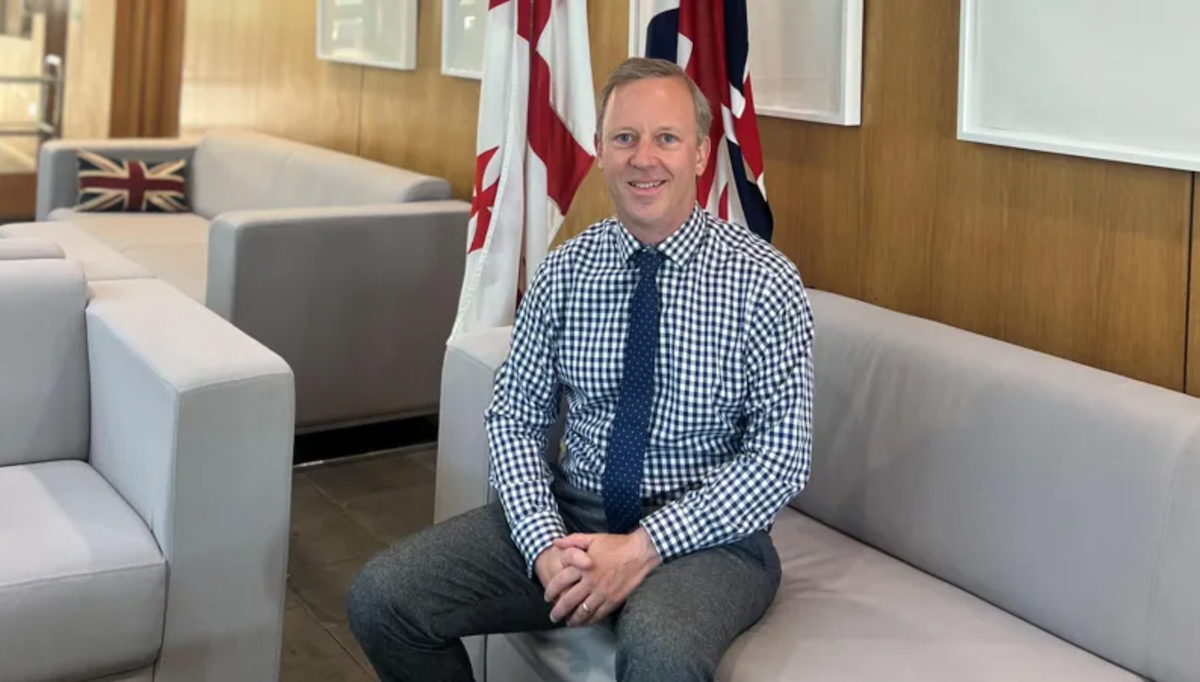
Britain Freezes the Wardrop Dialogue
The British Ambassador to Georgia, Gareth Ward, told Interpressnews that due to the actions of the ruling “Georgian Dream” party, the decision has been made to freeze the strategic Wardrop Dialogue for the first time in 10 years. This dialogue is conducted annually at the ministerial level between the Kingdom and Georgia. Additionally, the British side has canceled planned high-level negotiations in the defense sector and suspended the cybersecurity program.
The Wardrop Strategic Dialogue is the main platform for interaction between Georgia and the United Kingdom, covering virtually all areas of cooperation: political dialogue, foreign policy issues, defense and security, trade and economic relations, education and culture, as well as people-to-people contacts.
Since 2014, delegations from the two countries have discussed progress in their relations and annually reviewed areas for future cooperation.
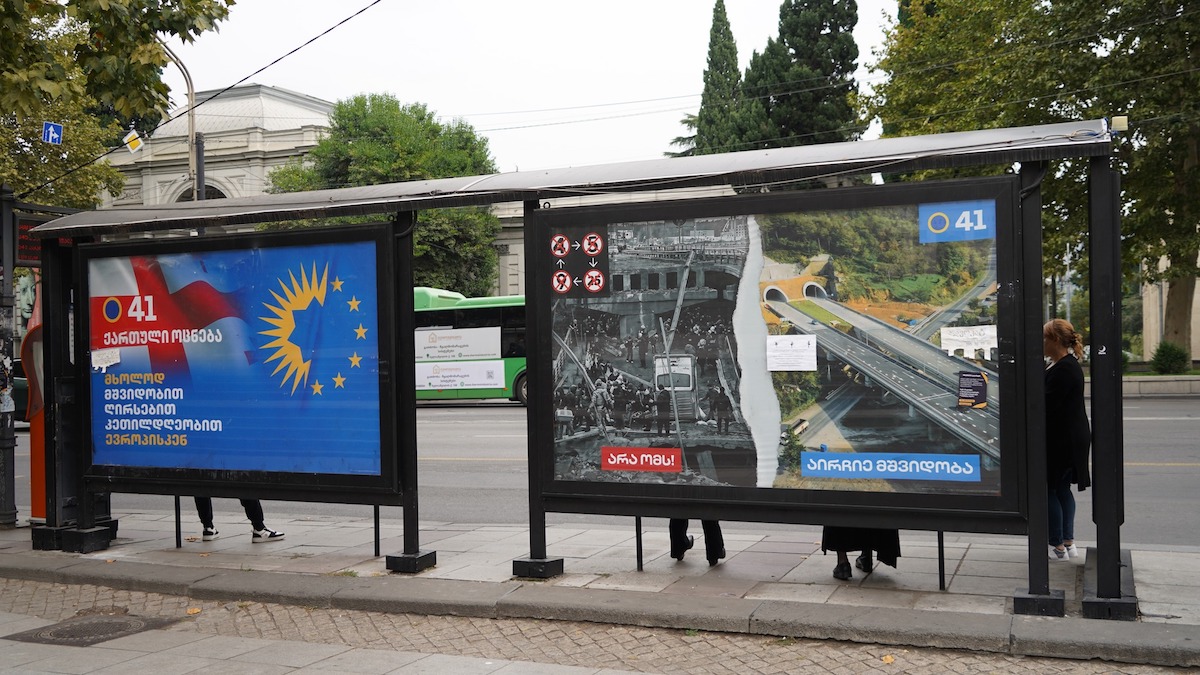
As the ambassador noted in an interview, the actions of the Georgian government this year have worsened relations with Western partners:
“We were concerned when the parliament passed a law restricting the activities of civil society, despite significant resistance from the public and a commitment not to return this law to the agenda.
We were disappointed when the leaders of ‘Georgian Dream’ began promoting conspiracy theories and suggesting that Western partners were undermining Georgia. We were shocked when ‘Georgian Dream’ included a promise to ban opposition parties in its electoral program.
For these reasons, for the first time in 10 years, we, the British side, decided to freeze the annual high-level ‘Wardrop Dialogue’ between ministers. This has happened for the first time since the establishment of this dialogue format. We also canceled planned high-level negotiations between defense staffs and suspended a new cybersecurity program. After the elections, regardless of who will be in government, we hope to see clear evidence of a return to the Euro-Atlantic path to restore trust and return to a close partnership.”
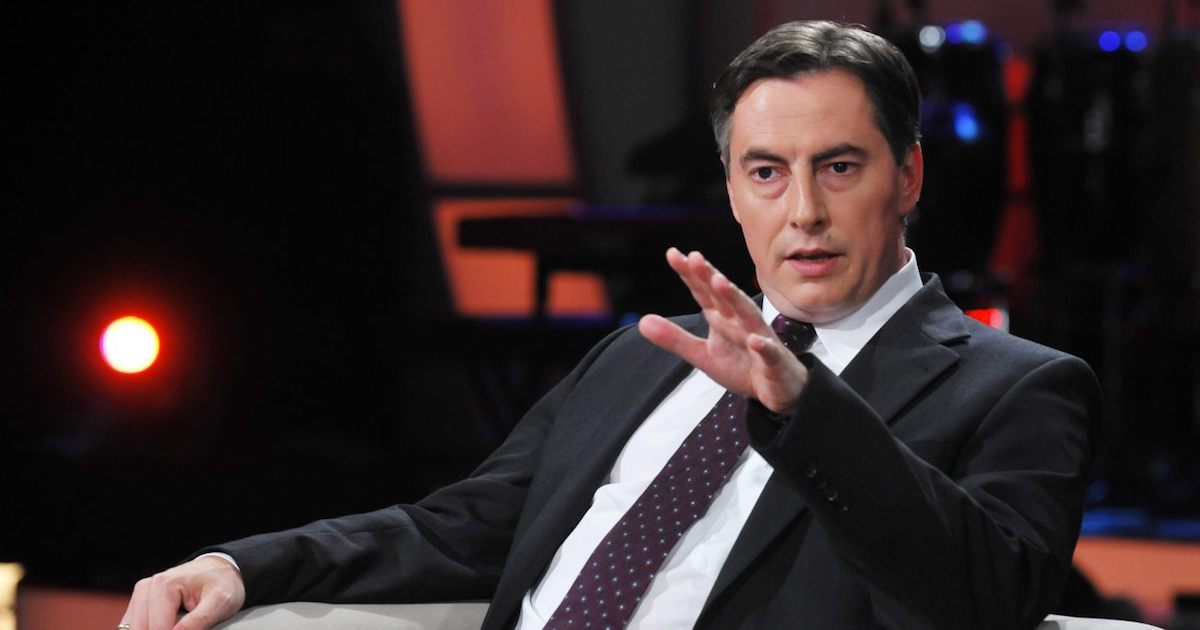
On October 14, Reuters published an article stating that European Union leaders intend to warn Georgia ahead of the elections that the actions of its government are jeopardizing the country’s path to EU integration.
According to the draft final document, the bloc reaffirms its readiness to support “the Georgian people on their European path,” but also expresses “serious concern” regarding the actions of the Georgian government.
Notably, on October 14, a meeting of EU foreign ministers took place. Following the meeting, EU High Representative Josep Borrell held a press conference where he stated, among other things, that the situation in Georgia looks much worse compared to Moldova.

