
Apple researchers have found that large language models such as ChatGPT are not capable of logical thinking and are easily confused if you add unimportant details to the task at hand, Azernews reports.
Day: October 14, 2024


Tskaltubo is a place of lost pride and lots of brides. Take a trip there on any sunny Saturday to see the beautiful ruins of what was once a popular western Georgian spa resort, and you may have to wait a while till you enter the remains of abandoned sanatoriums: wedding crews from nearby places flock to the desolate town and queue up for their photo shoots, with professional photographers knowing just the right spots to make it look like the old grandeur never went anywhere. But outside the pictures, the truth of the contrast is undeniable: who would choose for their big day, when a couple celebrates their future together, a place that offers nothing but ruins, a sense of loss, and a memory of broken promises?
Yet if there’s one energy in the city that a Georgian couple might crave, it’s probably an unwavering commitment to holding on to old, crumbling things, even if they’ve long outlived their purpose. And the couples may not be alone in that craving: as the Georgian election campaign enters its final weeks, Georgian politicians are once again struggling to offer voters political and economic visions that are fresh, convincing, and relatable enough to move the country’s citizens out of its comfort zone of resignation.
Here is Nini and the Dispatch to tell the story of the lost glory of a small town that best represents Georgia’s painful struggle to crawl out of the past and risk change.
Tskaltubo is less than half an hour’s drive from Kutaisi, a central western Georgian city with its own struggles to regain past significance. But unlike Kutaisi, Tskaltubo is not a place to stop for business or a coffee break on a longer trip, but rather something that should attract visitors for its own sake. The town is rich in mineral springs carbonated with radon, a radioactive gas believed to work wonders for various ailments. This quality pushed the Soviet authorities to build a large spa resort there, with 22 sanatoriums and nine bathhouses, all unique and remarkable pieces of architecture. The resort boomed during the Soviet years, welcoming health tourists from all over the bloc who rushed to expose their bodies to the healing powers of its magical waters.
Then, the Soviet Union ended, and so did the boom. The tourists disappeared, but there were new arrivals: thousands displaced by the conflict in Abkhazia in the early 1990s were settled on the sanatorium grounds, and it took generations for the state to provide adequate housing for all of them. The resettlement was carried over from one election campaign to the next and – like so much else – with a superficial ticking of boxes: those who moved to new homes complained that their interests had been ignored, leading them only to relive the bitter experience of losing their former habitat and community. In recent years, some displaced families still remained there, hiding among the ruins, perhaps with a self-denial that stems from the memory of initial displacement when they were viewed as a burden by communities that were supposed to welcome them.
Remains of the day
The coexistence of a larger IDP community with the remnants of a once-glorious spa town turned Tskaltubo into a kind of limbo of indecision between the past and the future. The damaged buildings in Stalinist Empire style stood disheveled, taking on a new eerie beauty as wild green plants grew in and around the facilities, giving the town its current post-apocalyptic feel. This wild beauty attracted new kinds of tourists interested in the Soviet past, confused younger Georgians who didn’t know what to make of the same past, and depressed the locals, who, tired of looking at those bare walls, began to emigrate en masse to make a living abroad. The ruins remained still beautiful and seemingly solid – at least solid enough to survive both the Midas touch of reformer ex-president Mikheil Saakashvili and the savior complex of Bidzina Ivanishvili, Georgia’s billionaire ruler.
It’s not that they haven’t tried. In 2012, Saakashvili, who already had the revival of some other historical sites on his resume, kept promising to turn Tskaltubo into “the biggest resort in the former Soviet territory and Eastern Europe.” But months later, Saakashvili’s party lost power, and the man who took over didn’t grow the same appetite until 2019. In 2019, Ivanishvili promised to take matters into his own hands and buy and renovate all the sanatoriums and baths himself, vowing to launch new infrastructure projects along the way, inviting Georgian businesses to share the arch-angelic burden. But when three years passed and nothing happened, it was the government’s turn to take over: in 2022, the Ministry of Economy announced a new project – “Tskaltubo’s New Life” – and put part of these facilities up for sale to investors.
Tskaltubo and other misdevelopments
It’s 2024, another heated election campaign is running its course, and the state has only managed to sell part of the sanatorium buildings. That’s it. The closest Tskaltubo has come to innovation in recent years was in 2022 when actor and comedian Jim Carrey bought the photo from one of the sanatoriums as his first NFT – that digital asset that lost its hype before the world had time to figure out what it was exactly. The celebrity, excited about his new purchase, said at the time that the photo captured “nature’s exquisite and relentless reinvention.” And the closest Tskaltubo came to an electoral mention this year was when an elderly supporter of the ruling Georgian Dream party tragically died there during a verbal altercation with a member of the opposition United National Movement party, leading Georgian Dream leaders to blame the opposition.

Tskaltubo’s revival is far from the only stillborn project of recent decades. On Saturday, October 12, a small rally was held in front of the now-abandoned UNM-era parliament building in nearby Kutaisi, where activists said they had tried to search with Diogenesque “lanterns” for the finished development projects promised by the government – and could find none.
But based on what Georgians have seen and experienced with the development models of the past few decades, they may face a tough dilemma about what to fear more: the government that breaks its promises or the one that keeps them.
Stuck in the middle (corridor)?
As crucial elections approach, Georgians are excitedly served the stale menu of “hubs,” “corridors,” and “investments.” They are on everyone’s table, from the campaign programs of the ruling party to the speeches of mercurial opposition leaders, from incumbent government leaders to jack-in-the-box ex-officials popping up during a campaign. It seems that all they are offering is to revive the economy by exploiting the transit potential of the Middle Corridor and ensure rapid growth that will propel the country up the international economic rankings – especially those that are hardest to feel in individual pockets.
Yet, wisened by two undemocratic rules behind them, Georgian voters will be increasingly hard to charm with such promises. With memories of visionary leaders taking such ambitions too far—and too far from the people—it won’t be easy to relate to big development models individually.
Some may claustrophobically dread suffocation in the same corridor where distant politicians see opportunity. Others may fear that the obsession with international connectivity comes at the risk of local disconnection. But what is the alternative? What is the model that isn’t just a superficial, ill-considered projection of leaders’ egos, or that doesn’t come at the expense of democracy, or that leaves room for individuals alongside the giant infrastructure projects, long undersea cables, and various international rankings?
For the correct answers, one must perhaps wait a little: maybe someday—like with those wild plants inside Tskaltubo’s beautiful ruins that fascinated the famous comedian so much—some bigger grassroots reinvention will also take place in politics.


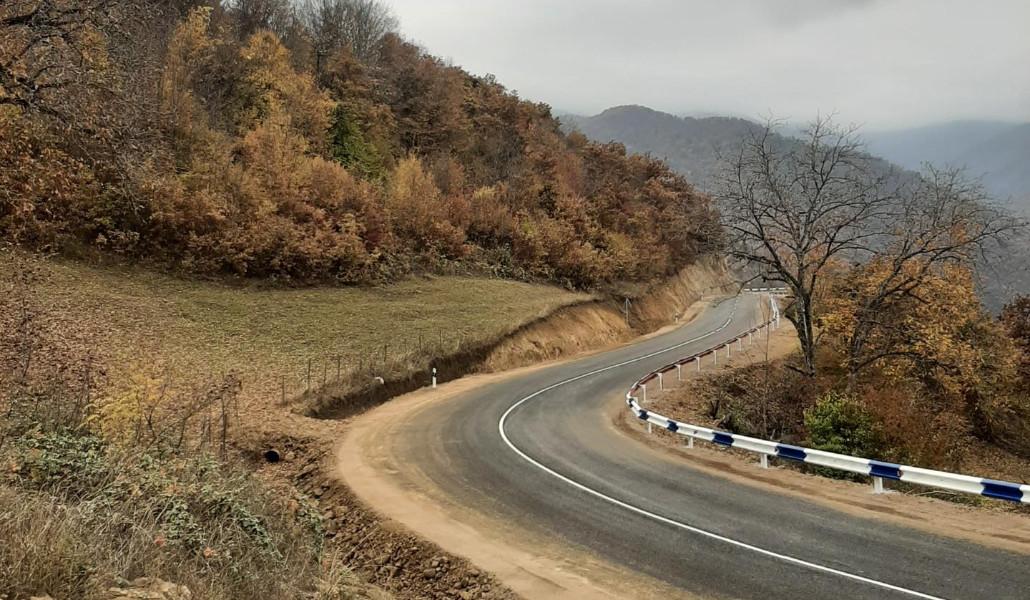
“Dialogue” between Yerevan and Baku
“The Republic of Armenia organizes the movement of cargo, vehicles, and persons through its territory and guarantees their security. The provisions of the Statement [November 9, 2020 statement ended the Karabakh war] are very clear in this regard. It is clear that the Republic of Armenia should do that within its jurisdiction and sovereignty,” stated Ani Badalyan, spokesperson of the Armenian Ministry of Foreign Affairs, in an interview with “Armenpress” this morning. This was her response to the statement from the spokesperson of Azerbaijan’s Foreign Ministry, Aykhan Hajizade, who accused Yerevan of “disregarding its commitments.”
The issue at hand is that Azerbaijan is demanding a “corridor” – a route connecting it to Nakhchivan that would not be controlled by Armenia. Russia, meanwhile, insists that it should be the one to control the road.
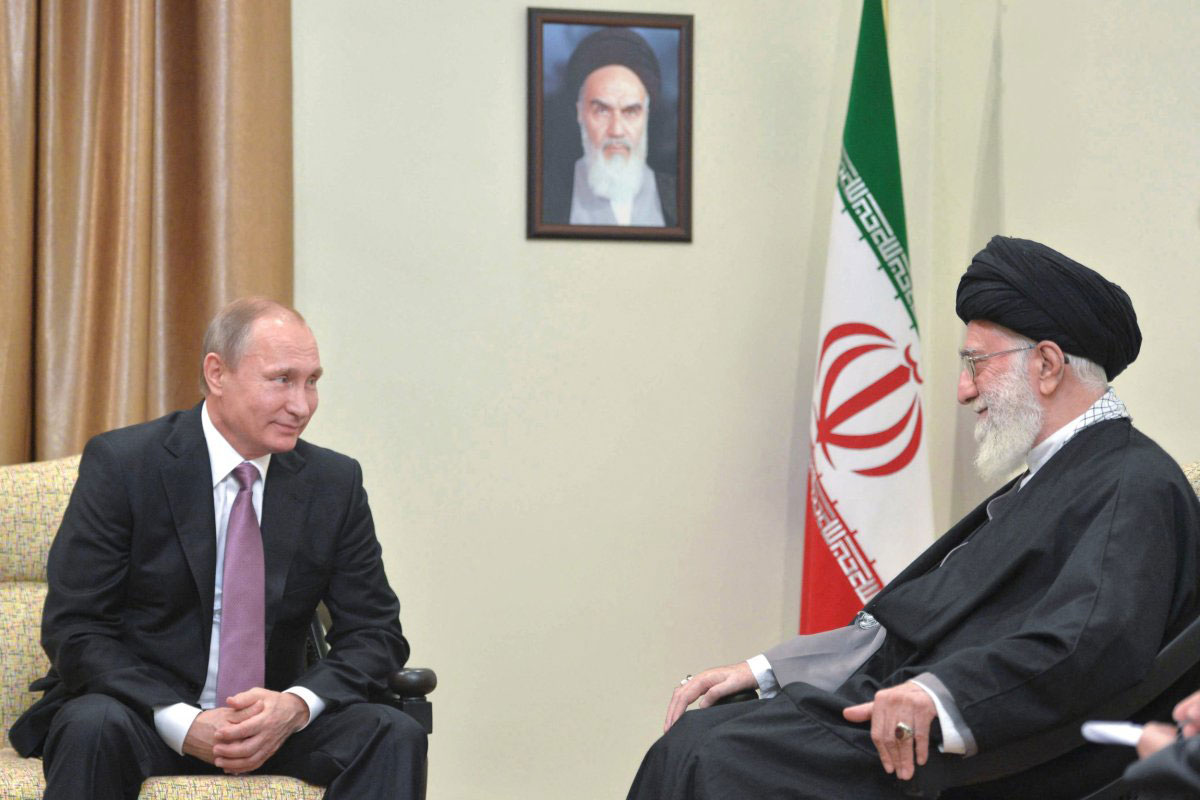
The text of point 9 of the statement reads: “All economic and transport links in the region will be unblocked. The Republic of Armenia will ensure the transport connection between the western regions of the Republic of Azerbaijan and the Nakhchivan Autonomous Republic for the purpose of facilitating the unhindered movement of citizens, vehicles, and goods in both directions. The control of transport communication will be carried out by the Russian FSB Border Service.”
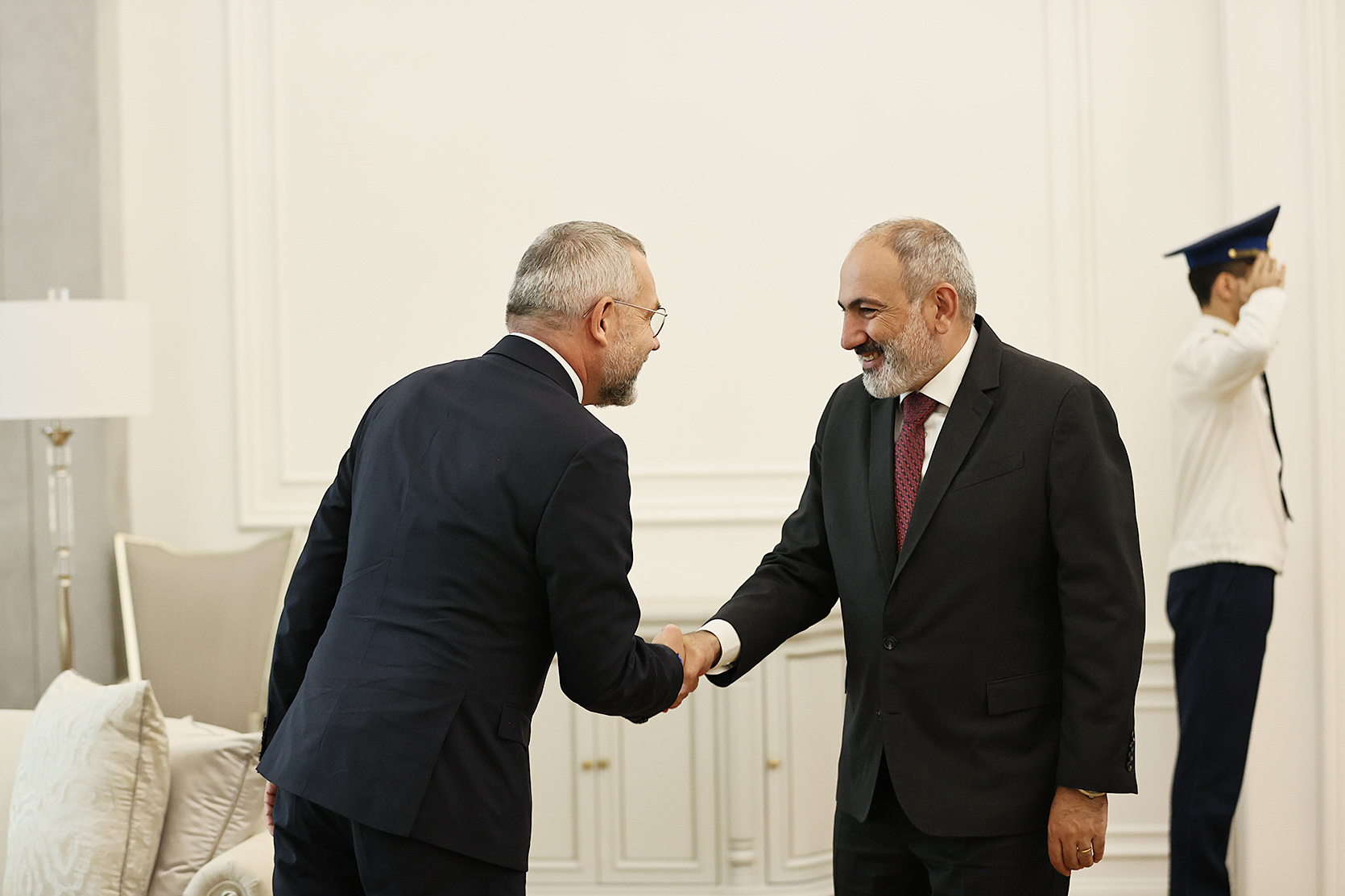
This issue was touched upon on Saturday by Armenian Prime Minister Nikol Pashinyan. During the “Crossroads of Peace: uniting security and democracy” conference, he reiterated that Armenia is ready to unblock communications while maintaining control over its sovereign territories. He emphasized that the statement clearly mentions that Armenia will ensure safe communication via its own roads. The prime minister once again stated that Russia could oversee the process without being physically present on-site. Regarding the views of the Azerbaijani authorities, he described “Baku’s focus” on just one point of the document as “unacceptable.”
More details on Pashinyan’s remarks, as well as the “dialogue” through statements made by representatives of the foreign ministries of Armenia and Azerbaijan.
- “Baku wants Yerevan to acknowledge its hegemony” – Armenian political analyst
- Regional transportation routes: How Georgia’s transit role is changing in light of new realities
- Why did Baku and Moscow recall the trilateral statement with Yerevan? Opinion
“The physical presence of the Border Guard Service bodies of the RF, is not foreseen”
Commenting on the issue of unblocking regional communications, Foreign Ministry spokesperson Ani Badalyan recalled the Armenian government’s initiative, the “Crossroads of Peace” project. She announced that it “outlines the roadmap for fulfilling the obligations undertaken by the Republic of Armenia.”
According to her, within the framework of this project, Armenia has presented its proposals to the Azerbaijani side:
“Being interested in unblocking all transport and economic infrastructures of the region, as envisaged by the Trilateral Statement, we have already proposed and reaffirm our proposal to Azerbaijan to begin the process without further delay.”
Regarding the interpretation of the trilateral document, Ani Badalyan suggested focusing on the facts and clarified what is specifically meant in the text.
She emphasized that the same document mentions the presence of Russian peacekeepers in Nagorno-Karabakh and their control over the 5-kilometer-wide Lachin corridor, but added: “But today, neither the Lachin corridor nor the Russian peacekeepers are present.”
She then spoke about other provisions of the document, specifically the one regarding the return of internally displaced persons and refugees to the territory of Nagorno-Karabakh and its surrounding regions under the supervision of the United Nations High Commissioner for Refugees (UNHCR):
“But Azerbaijan claims that there is no territory of Nagorno-Karabakh, there is no Nagorno-Karabakh, which, in fact, means renouncing this obligation under the Trilateral Statement. To date, no Armenian refugee or internally displaced person has returned to Nagorno-Karabakh or its surrounding regions.”
Badalyan also mentioned that Armenians are still being held in Baku’s prisons, despite the trilateral statement stipulating the exchange of prisoners of war, hostages, and other detained persons:
“Azerbaijan insists that they are not prisoners of war. If they are not prisoners of war, it means that they are hostages or other detained persons: the formulation of the Trilateral Statement applies to all persons held in captivity.”
She concluded her interview by addressing the issue of missing persons, which is frequently raised by Azerbaijan. Badalyan noted that about 1,000 Armenians are also missing as a result of the two Karabakh wars and assured: “We are ready to cooperate on this matter as well.”
“Armenia’s obligations are clearly outlined in point 9”
The clarifications from the Armenian Foreign Ministry spokesperson were in response to the statements made by her Azerbaijani counterpart, Ayhan Hajizadeh. Hajizadeh, in turn, was commenting on the remarks made by Armenian Prime Minister Nikol Pashinyan during the Yerevan forum. He declared that Pashinyan’s statements on the unblocking of communications were an attempt to distort reality:
“Point 9 of the trilateral statement clearly outlines Armenia’s obligations regarding the opening of communications and the form in which control over transport connections will be organized.”
In conclusion, he called on the Armenian authorities to “abandon baseless claims” and “statements that distort reality.”
Here’s the English translation of the latest text you shared:
Pashinyan: “It’s about unblocking all roads, not just one”
The ruling “Civil Contract” party and the Konrad Adenauer Foundation co-organized the “Crossroads of the Peace: uniting security and democracy” conference. During his speech, Armenia’s Prime Minister addressed the issue of unblocking regional communications. He focused in detail on Armenia’s obligations outlined in the November 2020 statement:
“Azerbaijan often tries to create the impression that Point 9 of the trilateral statement concerns only the connection between Azerbaijan’s western regions and Nakhchivan. This is not the case.”
According to Pashinyan, this is merely a subheading of Point 9, which actually addresses the unblocking of all economic and transport communications in the region. Therefore, he believes it is “illogical and impossible” to discuss communication issues separately. The comprehensive concept of unblocking is presented in Armenia’s government project “Crossroads of Peace”.
He stated that Armenia will guarantee the security of the road connecting Azerbaijan to Nakhchivan through its territory, while Russia can only monitor and control how effectively Armenia fulfills its obligations.
“No part of the trilateral statement of November 9th mentions any limitations on the sovereign rights of the Republic of Armenia. There is no mention of any other country controlling any square meter of Armenia’s territory. This does not exist, nor can it exist.”
In Pashinyan’s assessment, the narratives coming from Baku suggest that Azerbaijan wants to use Armenia’s roads while keeping Armenia itself in a blockade:
“This formulation seems absurd, but it reveals our analysis of Azerbaijani narratives. Such an illogical approach is unacceptable to the Armenian side.”
Follow us – Twitter | Facebook | Instagram
“Dialogue” between Yerevan and Baku