
Day: October 12, 2024
https://t.co/CM0O9cOksv
–#NewsAndTimes #NT #TNT #News #Times#World #USA #POTUS #DOJ #FBI #CIA #DIA #ODNI#Trump #TrumpNews#Israel #Mossad #Netanyahu#Ukraine #NewAbwehr #OSINT#Putin #Russia #GRU #Путин, #Россия #SouthCaucasus #Bloggers
The News And Times Review…— Michael Novakhov (@mikenov) October 12, 2024
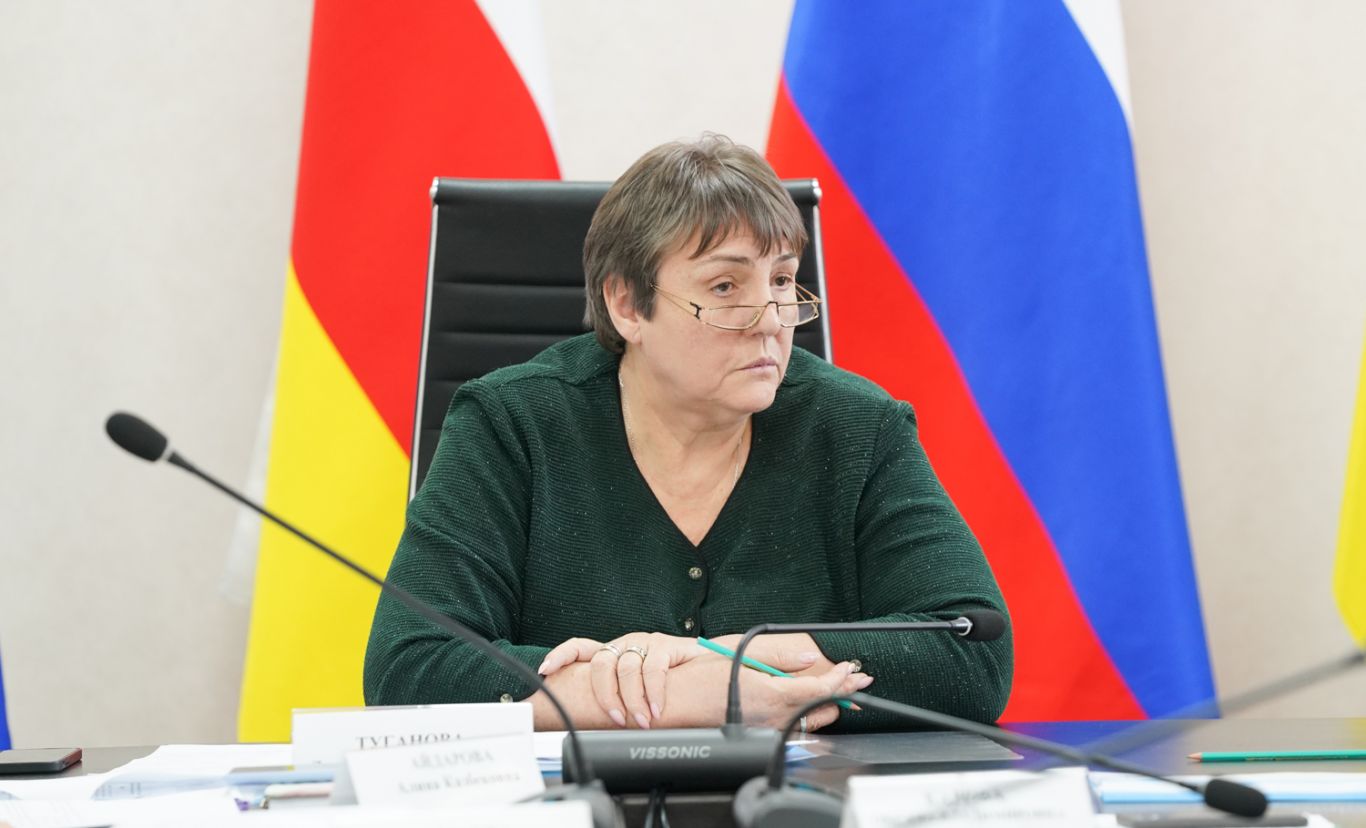
Ossetian official hides in Georgia
A major corruption scandal is unfolding in North Ossetia, Russian Federation: Larisa Tuganova, advisor to the head of the republic on social policy, has been arrested in absentia for two months on suspicion of embezzling 35 million rubles (around $357,000). She is reportedly hiding in Georgia.
According to the Interior Ministry, Tuganova is the organizer of a fraud scheme involving her former subordinates, officials from the Ministry of Labor and Social Development.
- In South Ossetia, a former police officer accused of high-profile murder escaped from court to fight in Ukraine
- Closed Georgian-Russian meeting took place in Vladikavkaz. How did the Ossetians react?
The criminal investigation against Larisa Tuganova began after the September arrests of Social Policy Minister Alina Aidarova and two other ministry employees.
Investigators claim that Aidarova lobbied for a private company that secured all contracts and government tenders worth 35 million rubles. Tuganova is also implicated in the scheme. She reportedly learned of Aidarova’s arrest while vacationing in Turkey and chose not to return to Russia. According to Ossetian media, she is now hiding in Georgia:
“Tuganova found out about Aidarova’s detention while in Turkey. Realizing the consequences, she decided not to return to Russia and is currently in Tbilisi.”
Larisa Tuganova led the Ministry of Labor and Social Policy in North Ossetia for 11 years, from 2004 to 2015, preceding Alina Aidarova. In 2015, she was removed from her position but returned to government in 2021 as Deputy Prime Minister under the new regional head, Sergey Menyaylo, overseeing social policy.
She held this role until December 2023, when she was dismissed but immediately appointed as the head advisor on social policy to the republic’s leader.
The official reason for her removal was not disclosed. However, some speculate it was related to her son:
“Tuganova was removed from her role as Deputy Prime Minister because her son left Russia after the start of the special military operation and sought political asylum in Canada.”
A law enforcement officer told JAMnews that Tuganova’s appointment as a state advisor came as a surprise to many:
“Menyaylo brought Tuganova back into government without considering her controversial reputation. The Ministry of Labor and Social Development was shaken by corruption scandals both during her leadership and after she handed over power to her protégé, Aidarova. It’s no surprise the investigative authorities got involved.”
He added that the prosecutor’s office now seems to be seriously targeting Sergey Menyaylo’s inner circle. The arrests of the state advisor and minister have dealt a significant blow to his reputation.

Amid the growing scandal, journalists linked to Tuganova tried to defend her, publishing a post claiming that “after learning she was wanted, Larisa Tuganova informed the investigators of her location and promised to appear for questioning upon her return.”
Meanwhile, other Telegram channels began exposing the connections between certain local journalists and Tuganova, recalling how these journalists praised Menyaylo’s controversial decision to reinstate the disgraced official. They argued that the praise was motivated by personal benefits the journalists received from Tuganova.
Notably, Larisa Tuganova is a long-standing figure in North Ossetia’s bureaucratic apparatus, having begun her public service career in the 1990s.
Terms, place names, opinions and publication ideas do not necessarily coincide with those of JAMnews or its individual employees. JAMnews reserves the right to remove comments on posts that are deemed offensive, threatening, violent or otherwise ethically unacceptable.
The OSCE/ODIHR Election Observation Mission (EOM) issued its interim report on October 11, assessing the election environment and related developments in the run-up to October 26 parliamentary elections. According to the report “the elections take place in the context of entrenched political polarization, continued political tension, opposition distrust in state institutions and concerns about protection of the right to association and expression.”
The report notes the “highly polarized” rhetoric of the campaign messaging, with some ODIHR EOM interlocutors raising concerns “related to intimidation tactics allegedly directed against their campaign activities, as well as voters, by ruling party supporters and sate authorities.”
The report also notes that “the ruling party has framed the elections as a choice between peace and war, while most opposition parties present the elections as a referendum on country’s geopolitical position.”
While many of the ODIHR EOM interlocutors expressed trust in the election administration’s technical and organizational capacities, says the report, “some interlocutors raised concerns that the simplified decision-making process of the CEC, the removal of the opposition-appointed deputy chairperson and the new appointment method of its members, could negatively impact the impartiality of the election administration.”
The report notes that since the since the last parliamentary elections, the Election Code has been amended over 20 times. And while the 2022 and 2023 amendments followed public discussions and addressed several previous ODIHR recommendations (although failing to provide the comprehensive reform) the 2024 changes were adopted without sufficient public consultation or consensus, and raised concerns about their impact. The report notes also that several ODIHR recommendations remain outstanding, “including those related to impartiality of election administration, misuse of administrative resources, campaign and campaign finance, media-related campaign regulations, and strengthening the framework for electoral dispute resolution.”
Among other issues, the report mentions concerns by some stakeholders about the capacity of the Precint Eleciton Commissions (PECs) to manage the increased number of registered voters per polling station, which has doubled since the last elections. Another related concern is “the need for further transparent auditing of the technology, and voter education to address misconceptions that the devices may be used to breach vote secrecy.”
Another issue mentioned in the report is the voters’ list. Most ODIHR EOM interlocutors did not raise significant concerns about the inclusiveness of the voter lists, the report says, but “some noted inaccuracies mainly stemming from the potential presence of deceased voters and citizens de facto residing abroad on the list.”
According to the report, the election administration and the courts have so far received some 120 complaints, mainly concerning the appointment of lower-level members of the election commission, the misuse of administrative resources and violations of campaign rules. Most of the complaints were dismissed after being examined on their substance. The report notes that “several ODIHR EOM interlocutors noted a low level of trust in the ability of law-enforcement, the election administration and the judiciary to effectively and impartially examine and adjudicate politically sensitive matters.”
Regarding the observer organizations, the report states that as of October 10, the CEC had accredited 68 civil observer organizations with 2,602 observers and 51 international observer groups with 512 observers. It is noted that several CSOs have started long-term observation activities, and “many noted a more difficult working environment due to their public stigmatization following the adoption of the Law on Transparency of Foreign Influence.”
The report notes that the women’s representation in elected positions remains low, noting in particular the 2024 amendments that abolished the mandatory gender quota.
Also Read:
- 09/10/2024 – October Elections: Odds, Context, Past Trends
- 08/10/2024 – President Announces Coordination Platform to Monitor Elections, Calls for Voter Mobilization
- 12/09/2024 – OSCE/ODIHR Launches Election Observation Mission
- 08/08/2024 – “Omi Ginda?!” – Ruling Party Campaign Dares Georgians to “Vote for War”