
Day: October 9, 2024
The Israeli-Azerbaijani Alliance Is a Blueprint for War-Driven Diplomacy #Israel #Azerbaijan #SouthCaucasus #MiddleEast https://t.co/2r5G3R4bDN
— Yeghia Tashjian /يغيا/ Եղիա Թաշճեան 🇱🇧🇦🇲 (@yeghig) October 9, 2024
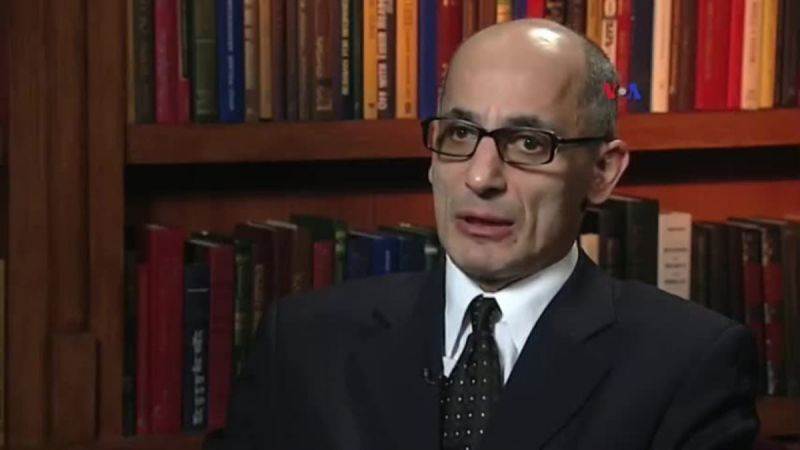
Commentary by Political Observer Ramiz Yunus
Azerbaijani political observer Ramiz Yunus, residing in the USA, provided commentary for azpolitika.info on the outcomes of the 79th session of the UN General Assembly and the processes impacting our region.
- How could the South Caucasus change after the U.S. presidential and CoE chair elections? Baku’s perspective
- Op-ed: “Russia wouldn’t view withdrawal from the Armenia-Iran border crossing as a red line”
- The Constitutional Court of Georgia has accepted the lawsuits against the “foreign agents” law but has not suspended it
According to Yunus, the latest UN session took place against the backdrop of ongoing Russian aggression against Ukraine and the Middle Eastern conflict that erupted on October 7 of last year in the Gaza Strip between Israel and Hamas. As a result, many themes echoed those of the previous—78th—session.
“More Equal Among Equals”
“Similar calls for peace and discussions about the urgent need for reforms in the UN and its Security Council were voiced in both sessions. Yet, as we can see, no changes have occurred since then, and frankly, none are expected. The reasons for this can be found in the UN Charter itself. Specifically, it pertains to the special rights of the five permanent members of the UN Security Council— the USA, China, Russia, the UK, and France—who consider themselves more equal among equals. These states have historically utilized their veto power in their own interests at times when they violated international law. Therefore, until these nations are stripped of their veto power, there is little point in discussing any reforms in the Security Council or the UN as a whole.”
“Georgia’s Policies Displease the West”
In his commentary on recent developments concerning the South Caucasus countries, the political observer particularly noted the meeting between the President of Turkey and the Prime Minister of Armenia, which took place on the sidelines of the UN General Assembly: “Armenia is trying to gain support from Turkey, considering potential pressure from foreign actors, primarily Russia, in the event of signing a peace treaty with Azerbaijan. I have no doubt that the normalization of relations between Ankara and Yerevan wholly depends on the prospects of signing a peace treaty between Azerbaijan and Armenia. It can be assumed that these realities were communicated to Nikol Pashinyan during the meeting in New York.”
Ramiz Yunus also touched upon the relationship between the West and Georgia, which has noticeably weakened in recent months: “The policies of the current US administration and its European partners toward Georgia are quite synchronized and aimed against the current authorities in Tbilisi. Much depends on the results of the parliamentary elections in Georgia scheduled for the end of October. Official Tbilisi, seeking to distance itself from both the West and Russia while simultaneously moving closer to Turkey and Azerbaijan, is not favored by the US and its European partners. Georgia remembers well the betrayal by the US and European countries following Russia’s aggression in August 2008. After that aggression, the West not only failed to punish Russia but also agreed to a treaty that aligned with the Kremlin’s interests. I see this as the main reason for the polarization in Georgian society.”
“What Should Azerbaijan Do?”
The expert analyzed possible scenarios for the official Baku in light of the escalating conflict in the Middle East. A direct confrontation between Israel and Iran, Azerbaijan’s southern neighbor, appears to be a likely scenario. “Azerbaijan shares borders with both Russia and Iran, which are currently engaged in direct military conflicts. Russia is at war with Ukraine, and the ongoing battles in the Middle East daily increase the risk of a direct confrontation between Iran and Israel. I hope that most citizens of Azerbaijan today understand even better the necessity of closing land borders. While this was done during the COVID-19 pandemic, there is now a ‘political pandemic’ reigning in our region, and we must be prepared for it. It is essential to safeguard internal stability in Azerbaijan and soberly assess the real risks,” noted Ramiz Yunus.
The Eastern Partnership Civil Society Forum (EaP CSF) conducted a survey of 53 civil society organizations in Georgia from July 30 to September 2 to assess the impact of the Foreign Agents Law on the Georgian civil society sector. The law’s consequences have already impacted 70% of surveyed CSOs in various ways, the survey found.
This impact, the survey found, was reflected in organizations and their staff being subjected to online threats and harassment, increased scrutiny by authorities, increased administrative burdens, negative media reports against them, and offline threats and harassment, including verbal and physical threats, the display of posters, and phone calls directed at them or their relatives.
The Foreign Agents Law requires organizations that receive more than 20 percent of their funding from foreign sources to register as foreign agents, officially defined as “organizations pursuing the interests of a foreign power.” From the outset, many organizations said they would not register. The deadline for registration passed in early September, and it’s a matter of time before the Justice Ministry fines organizations for not registering, but “forcibly” registers them anyway. Since the documents of the registered organizations are checked and published first, and only then the Ministry of Justice will start to fine the others that did not comply with the law, there is a hope that this will not be realized before the elections.
Noting that the evasion of registration or submission of an incomplete declaration can lead to recurrent fines up to 25,000 GEL (the equivalent of 8,500 EUR) the document concludes that the “status carries a discriminatory and stigmatizing effect and may lead to self-censorship.” The survey also notes that the law has been widely criticized “for triggering restrictions on the work of activists and independent voices within civil society organizations and curtailing civil society’s ability to hold those in power accountable.”
However, the survey found that most respondents would not consider registering as such foreign agents in a special registry, even if the ruling party remains in power after the October elections.
With organizations facing heavy fines, the survey also found that 75 percent of respondents called for financial support, including funding to cover fees associated with non-compliance. In addition, 62 percent expressed the need for more legal support, including pro bono legal assistance from local lawyers, and 57 percent for advocacy support, including policy dialogue with EU and international stakeholders.
“Heavy reliance on international funding makes CSOs highly vulnerable to the foreign agent law,” the survey notes.
Overall, of the 53 respondents, almost all (94 percent) confirmed that they receive more than 20 percent of their funding from international donors and therefore feel that the Foreign Agents Law will have a “strong impact” on them “due to its overarching stigmatizing effect, disproportionate sanctioning enforcement mechanism, and burdensome administrative and monitoring reporting requirements.”
Also Read:
The city is a real charm with rounded wooden balconies, red roofs and the picturesque view of the Alazani Valley that is sure to impress you. In general, there is a feeling that you are in a time of knights roaming the town.“#ReisenInGeorgien
— Notes from Georgia/South Caucasus (Hälbig, Ralph) (@SouthCaucasus) October 9, 2024
#Sighnaghi in Kakheti.
Ezz Gaber: „One of the smallest cities in Southeast Georgia is a popular destination in Kakheti for getaways to nature and vineyards for a weekend or just a two-day trip. 1/2 pic.twitter.com/obc8uNvKP4— Notes from Georgia/South Caucasus (Hälbig, Ralph) (@SouthCaucasus) October 9, 2024
Last week, the U.S. Embassy made an unusually bold move: it began posting social media cards refuting the government’s anti-American propaganda and alerting citizens about the consequences of its anti-democratic moves. The pro-Western bubble, long calling for sanctions against oligarch Bidzina Ivanishvili, cheered the demise of diplomatic niceties. But the government’s media mouthpiece, already clamoring against what they see as “foreign interference in the elections,” pounced on the embassy’s campaign to twist it into fresh anti-American propaganda.
In this Talk On Air, Gigi guides you through POSTV, the government’s propaganda machine.
But before we switch to POSTV, few things you must know about its co-founder and frontman, Shalva Ramishvili (and forget everything you know about journalistic ethics). An odious TV face accused of sexual harassment by several women, a pro-Russian “peace advocate,” and the propaganda mastermind behind the ruling party’s anti-Western narratives (or so he likes to think) – Ramishvili is possibly running a troll factory, too…The list goes on, but most tragically, this is a man whose own son publicly confessed, being ashamed of. Yet, Shalva took it in a stride as his two yes-boy sidekicks, Bacho Odisharia and Guri Sultanishvili, nodded him onwards.
Ramishvili was not always perceived as a villain: he was once one of the faces (or, rather, voices) in a Radio 105 humoristic collective, pumping out droll and politically astute jungles in the early 2000s that are partially credited with hastening the end of Shevardnadze-era corrupt stagnation. But public notoriety did not agree with Ramishvili – at odds with the new government after 2003, he was caught red-handed blackmailing an MP with a compromising story in 2005. Many think it was a sting operation, but whatever it is worth, Ramishvili never denied he extorted and took the money. He served the jail term, and things went downhill from there, ethics-wise. Career-wise, his hack business flourished, with POSTV considered one of the best (that is, worst) tabloid broadcasters in GD service.
Card 1
For Bidzina Ivanishvili, October 1 – the day the Georgian Dream came to power – symbolizes Georgia’s independence. But 12 years ago, few expected him to put personal wealth ahead of state interests, and even fewer expected the U.S. Embassy to say so publicly. But on this anniversary, which we no longer wish to celebrate, it did just that.

POSTV anchors, on the verge of apoplexy, fantasized about 12 more years of Georgian Dream rule but offered little response to the U.S. Embassy. “Come on, people! You control everything when you want to,” Shalva Ramishvili wailed, suggesting that even European media, not to mention courts in Bermuda or Swiss banks, are controlled by the U.S.
In the following days, Ramishvili rectified that Ivanishvili may have won his court cases but still hadn’t gotten his money back and blamed the U.S. “Is it really inconceivable to anyone that Swiss banks are under the heel of the U.S. and the U.S. dollar?!” riffed POSTV patron to Ivanishvili’s tired Global War Party tune.
Card 2
In the 2020 elections, ISFED, a key election observer, discovered—and later corrected—a statistical formula mistake made by the external consultant in parallel vote tabulation. The GD, which somehow got the whiff of the error before ISFED went public — claimed the U.S.-backed NGO engineered that mistake and covered it up, aiming to foster the “revolution.” The U.S. Embassy rectified that story in its second card, asking a very logical question.

Shalva Ramishvili channeled a sneer for the POSTV viewers. He portrayed the U.S. Embassy as a sore loser and a crybaby, interpreting their card loosely as (with a dollop of vulgarity): “Why don’t you stop nagging us and breaking our b*alls for that little mistake! It’s been four years already!” Then, shifting the register to the thug-life “principles” (“ponyatiya” in Russian, something that Mr. Putin loves to refer to) he continued, “It’s the deed that counts, not the percentages,” meaning that the U.S. has slipped up in its relations with Godfather Ivanishvili and has to pay the price. Oh, how the chorus of Bacho and Guri laughed…
Card 3
On the third day, the Embassy ramped up the game by saying GD’s isolationist stance hurts Geortgian people..

Ramishvili’s comeback? “Iran will show them how countries can develop (in isolation),” followed by the rave about America’s global woes, abandoning allies and isolating countries that, in the end, still manage to develop. “I can’t say any more, f*ck it,” concluded the anchor, but a wink is as good as a nudge to a POSTV aficionado; Ramishvili knows more about Ivanishivli’s cunning plans that he can let transpire.
The rest of the week, Shalva and his two yes-men, Bacho and Guri, briefly mocked the U.S. Embassy while continuing their usual attacks on the opposition and America’s failures.
Card 4
The central premise of the GD is to ban the collective UNM, i.e., all opposition parties. The latest card from the embassy last week simply said: “Democracies do not ban the opposition.”

Since it was Friday night and the embassy’s social media manager was about to clock out for the weekend, Shalva took control of his show, Conservatoire. “The U.S. Embassy helping the opposition with cards is just another level of masturbation,” he said cryptically.
Of course, POSTV couldn’t resist some anti-Ukrainian commentary. “Don’t they have Zelensky, the cool democrat who banned everything oppositional?!” Shalva sneered, adding that Moldova’s Maia Sandu did the same, banning opposition and critical media. (Obviously, not bothering to explain that the banned parties there were pro-Russian stooges).
With a sleight of hand, he dismissed the embassy’s posts as “laughable and crazy.” He insisted they wouldn’t have any impact apart from proving that the U.S. is deeply involved in the election campaign on the opposition’s side.
Nika Kobuladze, who POSTV presents as an “analyst,” chimed in, painting the U.S. as a serial moralist. “On U.S. orders, there have been dozens and hundreds of military coups in South America, banning not just opposition parties but anyone with a different opinion,” he thundered, adding that Georgia should be grateful (to Ivanishvili?) that it has to only deal with harmless social media cards. Shalva couldn’t resist bringing up Ukraine’s Maidan protests, blaming the U.S. for orchestrating it.
The third host (where are the guests, by the way?), Nukri Shoshiashvili, billed as a historian, boldly declared that “the opposition is not conducting the pre-election campaign” and that “it is the U.S. Embassy that is doing it instead.” In a bizarre twist, he reached back to the Thirty Years’ War (1618-1648) to somehow blame the chaos in Ukraine and the Middle East on U.S. interference in the 21st century. With an equally startling – but predictable – leap to ancient Rome, he warned of America’s imminent decline, which he claimed was already evidenced by the latest Hollywood dramas around Sean Diddy. No, we can’t draw you causal links there. Three-dimensional space won’t do it justice.
Next up was Otar Chulukhadze, a “philosopher” who – as befits his title – took the absurdity even further. Quoting Marxist theory, he declared Hollywood a “superstructure” that manifests America’s rotting from within. While at it, he threw in some conspirational whataboutism: “They’re the ones killing the presidential candidate and blocking their Twitter account,” with what right are they lecturing Georgia on democracy?
Shalva, ever the opportunist, seized the moment to sprinkle in some holier-than-thou glitter, reminding his faithful viewers that arrogance (a mortal sin in Christianity) defines the U.S. character, ergo – their Hollywood dramas.
And finally, lawyer Zaza Maridashvili planted the shocker of the U.S. being “the first government that declares transgenders being the soul of our country.” We honestly could not get the reference, but he was possibly referring to the words of the Democratic presidential candidate. The lawyer posited that obviously, “the relationship of any self-respecting Georgian government with them (the U.S.) is unimaginable.” After launching into the tirade of how Japan is occupied by the U.S., the good barrister concluded, “It’s the country that punishes people with the death penalty. They shoot presidents and teach us democracy.” Deplorable, truly.
A new week has begun and still no new cards from the US Embassy. Maybe their social media presence will go back to posting job openings for gardeners and painters. Better yet, some people are teetering on the edge of insanity with all these poisonous conspiracies.