The issue of introducing environmental taxes is on the agenda in Azerbaijan, but it requires a comprehensive approach
 The South Caucasus News - SouthCaucasusNews.com
#Russian FSB Director Alexander Bortnikov stated that the West aims to deploy a #NATO “peacekeeping” contingent in the #SouthCaucasus, allegedly to mediate #Armenia–#Azerbaijan relations. He accused the #EU‘s observer mission in Armenia of conducting intelligence for NATO. pic.twitter.com/OOZPlbQ0dL
— Armenia Sputnik (@ArmeniaSputnik) October 4, 2024
The head of the de-facto delegation of the occupied Tskhinvali region to the IPRM, Yegor Kochiev, confirmed that two Georgian citizens illegally detained on September 16 had been remanded pre-trial detention for two months and face up to five years in prison under Article 322 (3) of the Criminal Code of the Russian Federation for attempting to remove a sign marking the so-called “border” of the occupied region.
Sergo Merabishvili and Iason Gengiuri got drunk and tried to remove the sign placed on the occupation line in the vicinity of the village Mejvriskhevi in the Gori municipality, while video taping themselves. They were illegally detained on the spot by the occupying forces. Earlier, there were reports in the Tskhinvali region that they had been released to the Georgian side, but the local news channel on Telegram reported that they are currently in pre-trial detention.
Also Read:
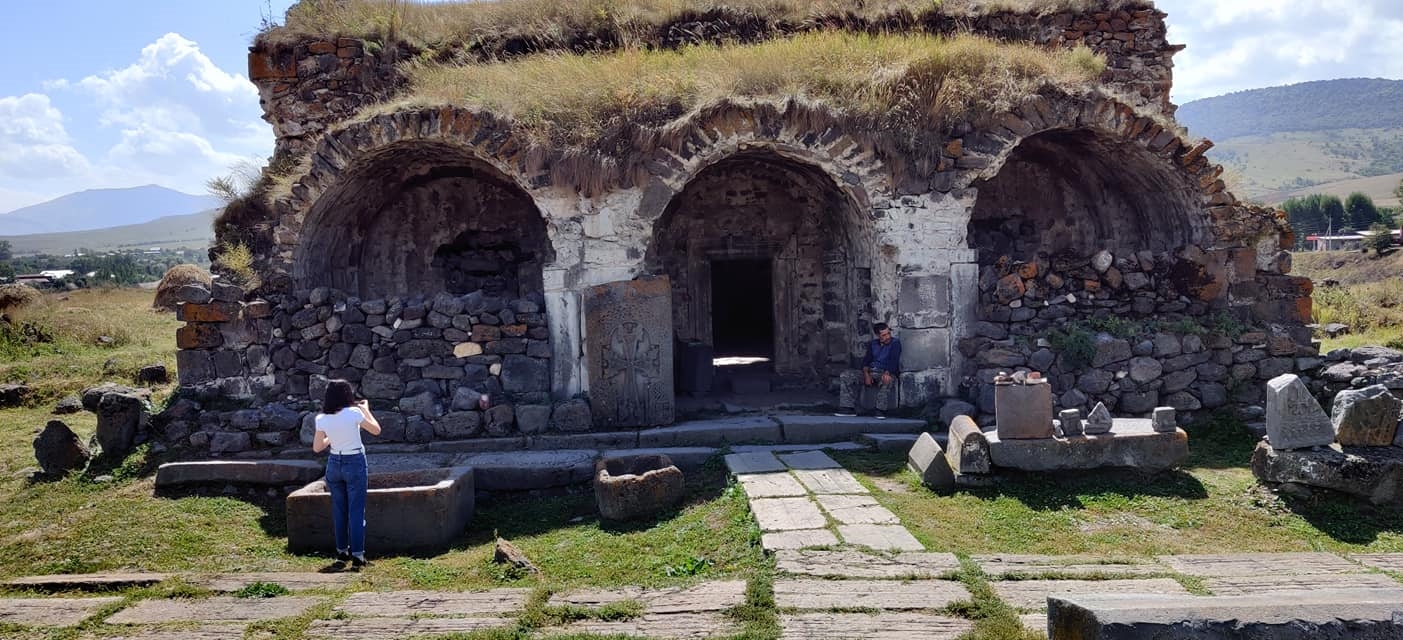
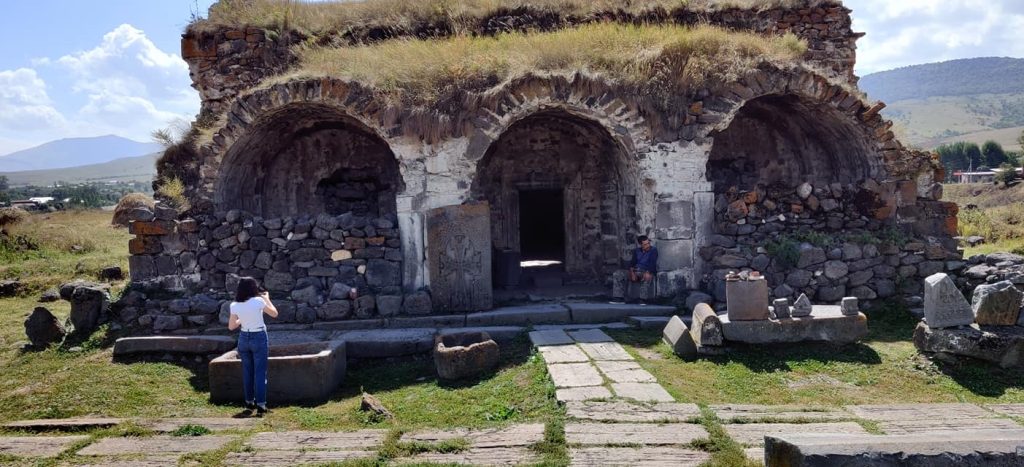
Fewer tourists in Armenia
Tourism has been declared a priority area for economic development by the Armenian government. Over the past two years, significant sums have been allocated from the state budget for the development of this sector. In 2023, the government invested 1 billion drams ($2.6 million) in tourism, and in the current year, the investment amounts to 1.5 billion drams ($3.9 million). It is important to note that until 2023, state support for the tourism sector averaged up to 200 million drams per year ($520,000 at current exchange rates).
The majority of this year’s allocated funds – 1.1 billion drams ($2.9 million) – are designated for grant programs, while 400 million drams are earmarked for hosting international events.
However, despite the substantial investments in tourism from the state treasury over the past two years, a decline is evident. This year, significantly fewer tourists have arrived in Armenia than expected.
What explains this situation, what solutions are being considered by the Tourism Committee, and what suggestions do experts have?
According to official data, the number of tourists visiting Armenia fell by 6.1% in the first six months of 2024. Last year, during the same period, 1,007,000 people entered the country, whereas this year, the figure dropped to 946,000.
At the same time, the number of people wishing to vacation outside of Armenia increased by 9.4%. Last year, there were 644,646 outbound travelers, while this year, that number rose to 705,105.
“There is currently no data to show the impact of the investments from the state budget. To be fair, such marketing expenses rarely yield short-term results. Measuring their effect requires patience. It takes time for the snowball effect to kick in and for movement to become noticeable.
However, no matter how much you promote a product, if the price-quality ratio is skewed – and, unfortunately, that is the case for us – the likelihood of selling that product will only decrease,” said Yasha Solomonian, chair of the Armenian Association of Professional Guides.
The decline in tourist flows to Armenia is attributed to several factors:
“Additionally, Armenia’s borders are still marked with red lines on the official websites of many countries that are target markets for us. This suggests to tourists that Armenia is not entirely safe. This situation negatively impacts tourism, as it complicates the process of obtaining medical insurance for those wishing to travel to Armenia from these countries. When a competent authority marks a country in red, insurance companies become cautious and do not provide coverage,” explained Mekhak Apresyan, chair of the Armenian Federation of Tourism.
In response to our written inquiry, the Tourism Committee provided the following information:
“To achieve this goal, the committee:
Experts have also noted positive shifts in the committee’s work.
“The committee has done significant work. There has been a more polished presence at exhibitions, the organization of familiarization visits for journalists from various countries to Armenia, and the hosting of international events. The efforts are evident. However, there is always room to consider how to spend allocated funds more effectively. We suggest discussing this matter with us. Perhaps we can find more efficient solutions,” said Mekhak Apresyan, head of the Armenian Federation of Tourism.
The question of where and how to spend a vacation is actively discussed on social platforms throughout the year. However, when it comes to domestic tourism, everyone invariably complains about the high prices of tourism services within Armenia. This factor often drives locals to seek vacations in other countries.
Tatev Ananyan, along with her husband and two small children, spent the first weekend of September at a high-end resort in the Aragatsotn province, not far from Yerevan. For a two-day stay, she paid 100,000 drams ($260). The price included room reservation, breakfast, and access to the hotel’s playroom and swimming pool at no additional charge.
She mentioned that the amount paid constitutes a quarter of her family’s monthly income. However, she and her husband chose this option because they couldn’t travel abroad with two young children.
At the same time, Tatev was very pleased with the service. She believes that with more flexible and affordable pricing options, both she and her acquaintances would use local tourism companies more often.
“Unfortunately, Armenia has no sea, which is an extremely important component for many people. Considering this, local resorts need to offer other attractive factors to clients.”
The family of Gohar Simonyan recently returned from a vacation in the Georgian town of Kobuleti. She stated that they chose Georgia because it was the most affordable seaside destination. A week-long vacation for her, her husband, and their daughter cost approximately 300,000 drams ($780).
“We booked a room with very modest amenities in a guesthouse near the sea. The most important factor for us was being close to the sea,” she explains.
She does not hide the fact that she initially wanted to go to Cyprus or Egypt, but those options required significantly higher expenses:
“For a week’s stay in Egypt, we would have to pay between 600,000 and 900,000 drams ($1,560–2,300), and in Cyprus, over 1 million drams ($2,600). So, this year we opted for a more budget-friendly option.”
“Today, the Tourism Committee, which is under the Ministry of Economy, is moving in one direction, while the Ministry of Finance is going in another, and so on. Each agency plans reforms within its own sphere. But how beneficial are their steps for overall economic development? The activities of all agencies should be coordinated. The right hand should know what the left hand is doing. Only in this case can we expect efficiency.”
He explains that these “reforms” significantly raise prices for tourism services and increase the financial and tax burden on companies:
“The further we go, the more these will lead to increased prices for tourism products. We need to reassess the tax changes affecting tourism. While these changes might be beneficial for one sector, they create major problems for tourism. A more flexible tax policy should be developed that takes into account the unique characteristics of the sector, rather than applying a one-size-fits-all approach.
Tourism is an export sector. Therefore, the strengthening of the dram impacts the cost of exported goods. Considering this factor, steps should have been taken from the moment the dram began to strengthen. The burden on the private sector should have been alleviated, and inflation should have been managed. However, I still do not see these steps being taken by the government.”
The essence of the bill is to establish a zero VAT rate on the sale of packages offered by local tour operators. The committee is confident that this project will significantly reduce the cost of tourism packages within the country.
They have developed and already submitted to the Prime Minister’s office a project for a Tourism Development Strategy for the next five years. Without going into detail, they assure that by 2029, it is possible to expect up to 3 million tourists.
Follow us – Twitter | Facebook | Instagram
Fewer tourists in Armenia