Iran will support any settlement that satisfies Lebanon and includes a complete ceasefire in the Gaza Strip, said Abbas Araghchi, the Minister of Foreign Affairs of Iran, Report informs via TASS.
 The South Caucasus News - SouthCaucasusNews.com
Countries with anti-Azerbaijani policy should leave #SouthCaucasus alone: #Aliyevhttps://t.co/0EopMfOp63
— Lurer (@Lurer11) October 4, 2024
https://t.co/SpMgrBDJcE
–#NewsAndTimes #NT #TNT #News #Times#World #USA #POTUS #DOJ #FBI #CIA #DIA #ODNI#Trump #TrumpNews#Israel #Mossad #Netanyahu#Ukraine #NewAbwehr #OSINT#Putin #Russia #GRU #Путин, #Россия #SouthCaucasus #Bloggers
The News And Times Review…— Michael Novakhov (@mikenov) October 4, 2024
Relations between Azerbaijan and PACE
Relations between the Parliamentary Assembly and official Baku continue to deteriorate. Statements from certain Assembly members and responses from the Azerbaijani Foreign Ministry are following in quick succession.
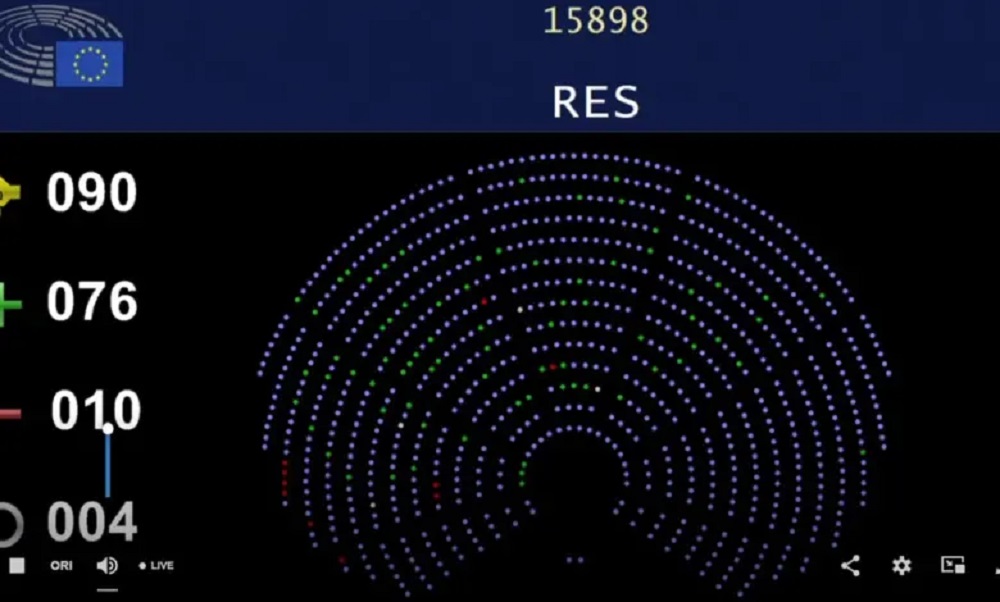
The Azerbaijani edition of JAMnews asked political commentator Haji Namazov about the possible paths for reconciling the positions of the parties in this verbal conflict, which has already led to the withdrawal of the Azerbaijani delegation from PACE and the declaration of 76 MEPs as “persona non grata” in Azerbaijan.
“The latest statements made in the Parliamentary Assembly of the Council of Europe once again demonstrate that Europe still does not understand the realities of Azerbaijan and does not even try to delve into the problem. German MP Schwabe and some others, like a broken record, keep repeating the same points, which does not help the process of bringing Baku closer to European structures.
It should be understood that Azerbaijan is a self-sufficient state and, for the most part, does not depend on Europe. Yes, European countries are the largest buyers of this Caucasian country’s energy resources, but they have no other choice. Following the unprecedented sanctions imposed on Russia, Europe has struggled to address its energy security, and Azerbaijan has been its crucial ally in this regard. In addition to oil and gas, Baku also intends to export electricity alongside Georgia. In other words, the South Caucasus is of interest to European countries due to the potential delivery of “green energy.”
As for Azerbaijan, it needs Europe only to a certain extent. And as we can see, the method of blackmail does not work with Baku on fundamental issues.
I have noted several times in our discussions that PACE behaves unfairly toward Azerbaijan. The surge of anti-Azerbaijani sentiments in the Assembly coincided with the time when our country restored its territorial integrity and expelled the Armenian armed forces from its territory. By the way, we did not hear a single call for sanctions against Armenia, whose forces were located in a neighboring country.
Furthermore, the arguments made by MEPs regarding the presence of political prisoners in Azerbaijan do not withstand scrutiny, as they serve merely as a “supporting tool” in their rhetoric. Political prisoners have existed before, yet PACE only began to recall them after Baku arrested war criminals responsible for the deaths of hundreds of civilians in Karabakh and the surrounding regions of Azerbaijan. Interestingly, the detained terrorists do not deny their involvement in mass killings. The facts are undeniable.
It is quite telling that European parliamentarians mention detained separatists alongside arrested journalists and other political prisoners.
Yes, President Aliyev personally stated in Italy that more than seventy PACE deputies have been declared ‘persona non grata’ in Azerbaijan. They express outrage at this decision by official Baku. One might ask, why do they want to visit Azerbaijan?
MEPs are, it should be understood, intelligent individuals who have some understanding of life. However, they need to recognize that before accusing an entire country of wrongdoing, they should listen to it, delve into the problem, and study it thoroughly.
The more PACE escalates its relations with Azerbaijan, refusing to engage in dialogue with Baku, the more it will push this South Caucasian country away. It is worth heeding the opinions of deputies from Serbia and Turkey, who are calling for dialogue. Otherwise, European parliamentarians will find themselves having to listen to what they are saying, as this will no longer be of interest to anyone in Baku.”
Statements of head of FSB of #Russian Federation regarding goals of West in #SouthCaucasus described as lies and manipulation in #EUhttps://t.co/yWiJeZ32P7
— Lurer (@Lurer11) October 4, 2024
The Minister of Internal Affairs Vakhtang Gomelauri issued a decree signed on September 30 and published on October 4, establishing territorial groups composed of police officers tasked with “detecting and preventing violations during the pre-election period and on election day.” The groups will be based within local police departments. According to the decree, the of the MIA aim is to ensure that the parliamentary elections in Georgia are conducted in a “free, safe, and peaceful environment.”
“In order to facilitate the conduct of elections in a safe and free environment, the relevant groups were instructed to ensure the adoption of appropriate measures in the operational area, [and] if necessary, to implement preventive policing measures in accordance with the Law of Georgia On Police,” reads the MIA press release.
The decree shall be in force from the date of its publication on the website, including the date on which the Central Electoral Commission issues its protocol summarizing the final results of the elections. The territorial groups must be created before October 18. According to the decree, the members of the territorial group will be:
At the same time, all police units within the Ministry, except for state sub-departmental institutions, will be placed under the operational control of the territorial group. The decree also notes that the Head of the territorial group must develop a plan of measures to ensure public order in order to fulfill the tasks specified in the decree, in case of need.
The document states, that territorial groups will be responsible for ensuring “a safe and free election environment” by planning and organizing police actions to identify potential threats and assess risks. Notably, they will also secure the transport of election materials, including ballots, at the request of the precinct election commission and ensure timely and effective responses to any violations, in line with Georgian law.
Prior to the elections, territorial groups will also be responsible for ensuring that the canvassing campaign takes place in a “peaceful and free environment” and will respond accordingly if there is a “reasonable doubt” that “violence or other violation of public safety and order is expected.”
According to the decree, a territorial group will come to the precincts in case there is a report of any type of violation of the criminal law, or the threat to public safety and order. Such types of reports will be checked for trustworthiness and correctness of the information, unless they are made by the Chair of the precinct. The necessary police units will also be sent to the area. In all cases, the officers must be wearing the appropriate uniforms.
The person who is accused of causing the misconduct will be barred from participating in the elections if his/her presence at the precincts blocks the voting process; the individuals tries to invade the polling station; the individual creates conflict provoking the violation of the law. At the same time, patrols in the vicinity of the precinct will be intensified if there will be mass gatherings or mass movements of people without conflict that may look suspicious or raise doubts about future violence in the area.
“A police officer (representative of the police) is obliged to observe the principle of political neutrality in the performance of his duties. The actions of a police officer (representative of the police force) may not be directed directly or indirectly against or in support of any political party,” concludes the decree.
Also Read: