Categories
South Caucasus News

Oil prices rose last week


Last week, the average price of Azeri Light crude oil based on CIF contracts increased by $1.84 (2.08 percent) compared to the previous week and amounted to $ 90.17 per barrel. The maximum price for this period reached $91.32 per barrel, and the minimum price was $88.65 per barrel.

Last…


Categories
South Caucasus News

NPR News: 07-07-2024 10PM EDT


NPR News: 07-07-2024 10PM EDT

Learn more about sponsor message choices: podcastchoices.com/adchoices

NPR Privacy Policy


Categories
Audio Review - South Caucasus News

Samsung workers’ union in South Korea kicks off three-day strike


SEOUL, South Korea — A workers’ union at Samsung Electronics in South Korea is set to stage a three-day strike from Monday and has warned it could take further action against the country’s most powerful conglomerate at a later date.

The National Samsung Electronics Union (NSEU), whose roughly 28,000 members make up over a fifth of the firm’s workforce in South Korea, is demanding the company improve its performance-based bonus system and give workers an extra day of annual leave.

It is not immediately clear how many workers will join the strike, but the union’s poll found about 8,100 members saying they would do so as of Monday morning.

Lee Hyun-kuk, a senior union leader, said in a YouTube broadcast last week that another round of strikes could occur once the three-day stoppage is over if the workers’ demands are not heard.

The union plans to hold a rally on Monday morning near Samsung’s headquarters in Hwaseong, south of Seoul.

Analysts, however, say the strike is unlikely to have a major impact on chip output as most production at the world’s biggest memory chipmaker is automated.

Last month, the union staged a walkout by using annual leave, its first such industrial action, but the company at the time said there was no impact on production or business activity.

Though it will have little impact on output, the labor movement shows decreased staff loyalty at one of the world’s top chipmakers and smartphone manufacturers, analysts say, adding another problem for Samsung as it navigates cutthroat competition in chips used for artificial intelligence applications.

Samsung estimated on Friday a more than 15-fold rise in its second-quarter operating profit, as rebounding semiconductor prices driven by the AI boom lifted earnings from a low base a year ago, but its share price performance has been lagging behind South Korean chip rival SK Hynix.


Categories
South Caucasus News

Samsung workers’ union in South Korea kicks off three-day strike


SEOUL, South Korea — A workers’ union at Samsung Electronics in South Korea is set to stage a three-day strike from Monday and has warned it could take further action against the country’s most powerful conglomerate at a later date.

The National Samsung Electronics Union (NSEU), whose roughly 28,000 members make up over a fifth of the firm’s workforce in South Korea, is demanding the company improve its performance-based bonus system and give workers an extra day of annual leave.

It is not immediately clear how many workers will join the strike, but the union’s poll found about 8,100 members saying they would do so as of Monday morning.

Lee Hyun-kuk, a senior union leader, said in a YouTube broadcast last week that another round of strikes could occur once the three-day stoppage is over if the workers’ demands are not heard.

The union plans to hold a rally on Monday morning near Samsung’s headquarters in Hwaseong, south of Seoul.

Analysts, however, say the strike is unlikely to have a major impact on chip output as most production at the world’s biggest memory chipmaker is automated.

Last month, the union staged a walkout by using annual leave, its first such industrial action, but the company at the time said there was no impact on production or business activity.

Though it will have little impact on output, the labor movement shows decreased staff loyalty at one of the world’s top chipmakers and smartphone manufacturers, analysts say, adding another problem for Samsung as it navigates cutthroat competition in chips used for artificial intelligence applications.

Samsung estimated on Friday a more than 15-fold rise in its second-quarter operating profit, as rebounding semiconductor prices driven by the AI boom lifted earnings from a low base a year ago, but its share price performance has been lagging behind South Korean chip rival SK Hynix.


Categories
South Caucasus News

Azerbaijan’s SBS and SSS conducted operation in Caspian Sea, 5 people were detained, 1 person went missing-VIDEO – APA


Azerbaijan’s SBS and SSS conducted operation in Caspian Sea, 5 people were detained, 1 person went missing-VIDEO  APA

Categories
South Caucasus News

Has Joe Biden Chopped Down The Cherry Tree? – OpEd


Has Joe Biden Chopped Down The Cherry Tree? – OpEd

By Peter Isackson

When I was a child in elementary school, during one of our rare, random forays into history, we learned an amusing story about our first president. One day during his youth, George Washington ventured out into the family’s orchard, hatchet in hand, and chopped down his father’s favorite cherry tree. Not many of us at Castle Heights Elementary School in Los Angeles, California had cherry trees. The idea that Washington’s father might not only have a cherry orchard but also a favorite tree seemed absurd to me. But the whole point of teaching history in early school years is to prepare children to accept a world in which what adults think and do is often absurd.

For us, young George did something none of us would have dared to do: engage in an act of unprovoked aggression against our father. In such cases, we would expect some grave punishment. Instead, when his father managed to assess the damage, he summoned his son and asked, “Who did this?” George famously replied: “I cannot tell a lie.”

I had to wait until adulthood to learn the story was apocryphal,inventedby a certain Pastor Mason Locke Weems not long after Washington’s death. A century and a half later, our teacher made sure we all understand that great presidents don’t lie and neither should we. The other lesson only became clear to me much later: that fiction presented as history would be a permanent feature of our way of life.

I can only speculate that current US President Joe Biden may have had a similar experience at school and that he too learned the legend was invented, according toSnopes, because “Weems was motivated by profit, and knew readers would be curious about Washington’s private virtues, including his relationship with his father.” The story seems to have left a trace in Biden’s memory. Following the debacle of last week’s debate against former President Donald Trump, a confirmed liar, Biden humbly defended himself with the followingargument:

“Folks, I don’t walk as easy as I used to. I don’t speak as smoothly as I used to. I don’t debate as well as I used to. But I know what I do know: I know how to tell the truth.”

Today’sWeekly Devil’s Dictionarydefinition:

Tell the truth:

In the great American tradition as practiced by preachers and presidents, the act of explaining things in a way that sounds so inspiring the public is likely to believe they are factual, even if they are not.

Contextual note

What Biden really meant was that the number of lies he tells cannot compare to Trump’s, who has made outrageous lying part of his brand. By contrast, Biden has cultivated the science of telling lies that appear on the surface to be true, despite scores of documented cases of Biden flagrantly bending the truth. That includesappropriatinga British politician’s biographical narrative in 1988. More recently, who can forget the 40beheaded babieshe claimed to have seen proof of following the Hamas revolt on October 7, 2023?

The Democratic Party is in a dither about retaining a faltering Biden as their presidential candidate. But it’s not just the party stressing. The Biden family itself appears divided, asThe New York Timesexplains. “One of the strongest voices imploring Mr. Biden to resist pressure to drop out was his son Hunter Biden, whom the president has long leaned on for advice.”

Hunter Biden is the author of a book titled,Beautiful Things. It recounts, apparently truthfully and sincerely, the endless series of wrong decisions he tends to make. Why would someone as honest and truthful as Joe look to Hunter for advice? As CNNexplained,Beautiful Thingsis full of “ugly truths.” An obsession with truth seems to run in the family. George Washington himself would be proud.

When Pontius Pilate responded to his prisoner’s claim to “bear witness unto the truth” (John 18:37), he asked Jesus the most basic epistemological question: “What is truth?” While Biden himself believes that he knows “how to tell the truth,” he hasn’t revealed with any clarity how he accesses it. George W Bush onceclaimedto get it directly from God the Father, like Jesus himself. The Biden administration appears obsessed with accusing anyone who publicly challenges official doctrine on foreign policy or Covid mandates of spreading “disinformation.” We must therefore assume that Biden has sources of truth not available to the rest of us. At least we now know that Hunter is one of them.

Historical note

By the time I was old enough to determine that Weems’s story of the cherry tree was creative fiction, I had already read most of the works of psychologist Sigmund Freud. Thinking back to my early intuition that the tale might have been too absurd to be true, it occurred to me that the tale may conceive a deeper lesson than simply to follow Washington’s example and avoid telling lies.

It occurred to me that Weems may have eerily anticipated the insights of the founder of psychoanalysis. Perhaps in the depths of his unconscious, and therefore unbeknownst to himself, the pastor was articulating an authentically “true” interpretation of the significance of the legend he himself created. After exploring that intuition, this is what I discovered.

The father’s “favorite cherry tree” is not just a tree but a stand-in for George’s father’s phallus. The future president, even at the age of six, unconsciously assaulted his father’s genitals, the source of his own creation. Chopping down the cherry tree correlates perfectly with the Freudiantheoryof the male child’s wish to castrate his father.

But Weems’s account doesn’t actually use the verb, “to chop.” According to Weems, young George “unluckily tried the edge of his hatchet on the body of a beautiful young English cherry-tree, which he barked so terribly, that I don’t believe the tree ever got the better of it.” For Weems, George effectively rendered the tree incapable of producing fruit, which is the whole point of castration.

But our symbolic reading becomes more complex. He “tried the edge of his hatchet on the body of a beautiful” object suggests that the tree, which for one moment is the father’s phallus, is also the “body” that the father uses to bear fruit — in other words, his wife, George’s mother. What Weems describes is the boy’s attempt to commit Oedipal incest with his mother. The fact that it was specifically a cherry tree adds more credibility to this interpretation.

Weems reports that George was six years old at the time of the castration. Freud claims that age marks the culmination of thephallic stageof development, which lasts from the ages of three to six. The oral and anal stage precede the phallic stage, which is followed by latency, in which sexual feelings are repressed.

To my knowledge, Freud never tried to analyze this legend. I believe the good doctor, had he been aware of it, would find it as intriguing as the plot of Shakespeare’s Hamlet, which Freud analyzed similarly. And just as Hamlet is a story with both a political and psychoanalytical dimension, the cherry tree story fits perfectly with Washington’s future political vocation.

George’s symbolic aggression against his father’s phallus perfectly prefigures his successful military campaign against a father-figure, the English king, whose name also happens to be George: George III. The symbolism is complete.

Freud was right when he said “a cigar is sometimes a cigar,” which can also be taken to mean that a cherry tree is sometimes the father’s phallus. Washington’s historical vocation consisted of unseating and replacing the symbolic father, the king of England. And of course, all Americans remember Washington as “the father of his country.”

Joe Biden undoubtedly thinks of himself as something more than just the father of Hunter Biden, even if he puts all his trust in his son’s wisdom. Just as his son put all his trust in his father’s name (and title as vice president) to get his cushyjobon the board of Burisma Holdings’s directors in Ukraine.

Some people will claim that everything above is disinformation. But I think not only Freud, but even Pontius Pilate might have accepted this as truth.

*[In the age of Oscar Wilde and Mark Twain, another American wit, the journalist Ambrose Bierce produced a series of satirical definitions of commonly used terms, throwing light on their hidden meanings in real discourse. Bierce eventually collected and published them as a book, The Devil’s Dictionary, in 1911. We have shamelessly appropriated his title in the interest of continuing his wholesome pedagogical effort to enlighten generations of readers of the news. Read more ofFair Observer Devil’s Dictionary.]

The views expressed in this article are the author’s own and do not necessarily reflect Fair Observer’s editorial policy.

  • About the author: Peter Isackson is Fair Observer’s chief strategy officer . He is an author and media producer who has worked on ground-breaking projects focused on innovative learning technology. For more than 30 years, Peter has dedicated himself to innovative publishing, coaching, consulting and learning management. As a publisher, he has developed collaborative methods and revolutionary software tools based on non-linear logic for soft skills training. He has authored, produced and published numerous multimedia and e-learning products and partnered with major organizations such as the BBC, Heinemann and Macmillan. 
  • Source: This article was published by Fair Observer

Categories
South Caucasus News

Biden Is On The Ropes, And Harris Isn’t Even In The Ring – OpEd


Biden Is On The Ropes, And Harris Isn’t Even In The Ring – OpEd

President Joe Biden and Vice President Kamala Harris meet with leaders of the Divine 9, historically Black sororities and fraternities, Friday, May 17, 2024, in the Oval Office. (Official White House Photo by Adam Schultz)

By Sarah Cowgill

It started with the most disastrous presidential debate in modern political history. A slow and steady drumbeat swelled into a cacophony of percussion from voters, media outlets, and even some Democrat lawmakers that President Joe Biden needed to step away for the good of the order. But whose order? The GOP would be delighted to run its presumptive nominee against the elder statesman. The president is on a damage control tour, and heartlanders wonder what would best reset the nation to respect, prosperity, and responsibility – golf handicaps, it seems, are not part of the criteria.

The bizarre performance prompted the wildest of theories and shone a light of truth on what White House Press Secretary Karine Jean-Pierre used as constant cover: Cheap fakes. Those “cheap fakes” have delivered a hefty bill to the Democratic Party just over a hundred days away from Election Day 2024.

Mr. Biden and his wife, Dr. Jill, are determined to negotiate that bill down to nothing and stay in the race. Sure, the president had a bad night – but Trump told 28 lies in 90 minutes, they argue. So out they go on the campaign trail in search of the softball events and interviews – and nothing late enough in the evening to interfere with Biden’s bedtime. But can it even be done?

Roxanna Alejandro has her doubts. “America is in trouble. Big trouble,” wrote the gal from Eagle Pass, Texas. “As a nation, we are dancing on a perilous precipice, teetering on the verge of destruction. America is losing her soul. And it’s only a matter of time before the bottom drops out, and we find ourselves in a free fallfrom which there may be no recovery.”

ABC Friendly Fire

In an attempt to put out the fires, the president sat down for a talk with ABC’s George Stephanopoulos. Even with softball questions scattered about, Joe wasn’t on the rebound. Rather, he tended to repeat himself and pivot back to Trump’s alleged fibs, saying he had been distracted by Trump’s yelling. Cindy Mangus Smith in Salem, Ohio, smelled a rat: “I think it was a set-up to get him out.”

But Biden embraced his former boss, BarackObama’s, support, repeating the claim: “I just had a bad night.” He assured the American public: “I don’t think anybody’s more qualified to be president or win this race but me.” Michelle Gordon of Ville Platte, LA, wrote: “My cats are more qualified.”

“He was already declared too incompetent to stand trial in the classified documents case,” reminded Debbie Aree in Indianapolis. “But somehow, he is competent to be President of the USA? Come on, man.”

A Proffered Farewell Address

President George Washington said in his farewell address after deciding not to seek a third: “Every day the increasing weight of years admonishes me more and more that the shade of retirement is as necessary to me as it will be welcome.” Washington feared that Americans would view the presidency as a lifetime appointment if he died in office. Allegedly, Washington was still sharp as a tack when the letter was published.

One very prominent DC newspaper took a different tack in urging the president not to seek re-election. Its editorial board took the liberty of writing Biden’s farewell address – much like Alexander Hamilton was rumored to do for George, with a strong Founding Father vibe:

“My season of service is nearing its close. This was a hard truth to face. But it is the natural course of things — as evident as the progression from spring to summer, from fall to winter. This is why I have decided to withdraw from the campaign for president of the United States. At this moment, the nation needs something I cannot provide: a leader with the energy to run a vigorous campaign and then to work for America, at all hours, for the next four years.”

In Houston, Ron Johnstone would rather have the media stop telling Americans what to think and how to perceive Joe Biden’s health problems: “Let us true Americans just vote.”

There are few things more satisfying in life than the phrase, “I told you so.” Heartlanders ask today, “Now what?”

Biden-Harris or Clean Slate?

At this point in the presidential battle, Joe Biden can make or break his number two,Kamala. But is she anywhere near ready?

The Daily Showreleased adamning video(parody) poking fun at the word salads the vice president manages to serve up. C’mon, man, that’s not helpful when the media turns on number two.

In Fayetteville, NC, Christopher Andrade made clear sense: “Even with her already well-reported baggage, the main reason it can’t be Harris is because she can’t answer the question of when she knew Biden was slipping. Ignorance makes her look bad as a leader, and answering it honestly begs the question of why she didn’t show courage and step up for the safety of the Nation.”

  • About the author: National Columnist at LibertyNation.com.  Sarah has been a writer in the political and corporate worlds for over 30 years. As a sought-after speech writer, her clients included CEOs, U.S. Senators, Congressmen, Governors, and even a Vice President. She’s worked as Contributing Editor at Scottsdale Life, a news reporter for the Journal and Courier, and a guest opinion political writer for numerous publications nationwide. A born storyteller, Sarah has published two full-length mystery novels. She is currently finishing a quirky, sarcastic third installment in her “To Die For” series, with proceeds going to Easy Street Animal Shelter.
  • Source: This article was published by Liberty Nation

Categories
South Caucasus News

Without Peace In Ethiopia, Transitional Justice Will Be Difficult – Analysis


Without Peace In Ethiopia, Transitional Justice Will Be Difficult – Analysis

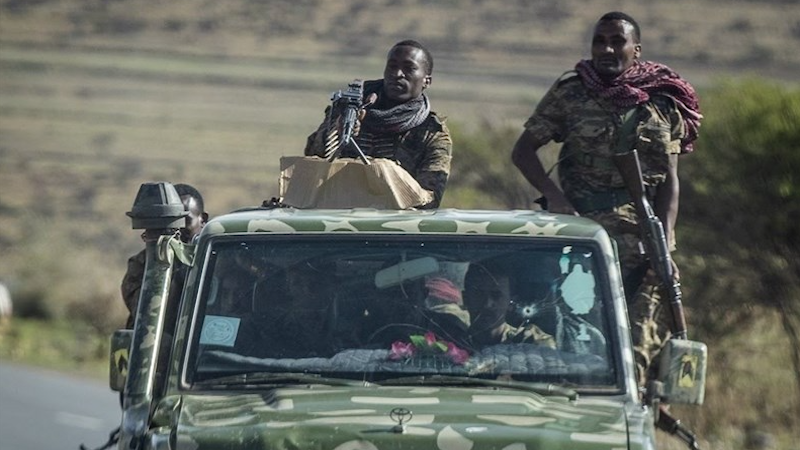
Soldiers in Ethiopia’s Tigray region. Photo Credit: Tasnim News Agency

A comprehensive cessation of hostilities is necessary for the country to reap the benefits of effective transitional justice.

By Tadesse Simie Metekia, Tessema Simachew Belay, and Wubeshet Kumelachew Tiruneh

Last month, Ethiopia’s Ministry of Justiceannouncedthe completion of the roadmap for implementing the Transitional Justice Policy adopted in April. The roadmap is expected to outline activities that provide for criminal accountability, reparations, truth-seeking and institutional reform, and their sequencing.

The policy was drafted after a series of consultations and surveysbetween January 2003 and April 2024 that took place amid ongoing armed conflicts. While the Tigray war ended in late 2022, battles continued in Oromia and fresh clashes broke out in Amhara (see chart). Although the official position is to implement transitional justice while hostilities are ongoing, is that possible?

Source: Data from ACLED 2024, figure by Patrick Vinck

In discussions and workshops on Ethiopia’s process, experts and officials have said drafting policy on transitional justice amid armed conflict is not unusual, and is indeed prudent. One could argue that delaying policy design until peace has been achieved is not always feasible. Also, according to the During Conflict JusticeDataset, 76% of countries studied since 1946 have established some form of justice during war.

Nevertheless, designing such policy amid conflict differs vastly from attempting to implement it under the same or worsening conditions. Although Ethiopia’s Working Group of Experts has cautioned on the difficulty of application in this context, the Transitional Justice Policy doesn’t highlight the need for a peace process. This contrasts with the African Union’s (AU) policy, which says peace processes should be integral to transitional justice efforts.

Peace can enable the implementation of transitional justice in many contexts. In Ethiopia, it can ensure the meaningful participation and public buy-in needed to increase the process’ compliance with international standards.

One of the primary goals of Ethiopia’s policy is to end the cycle of violence through institutional reform. However, without first ending ongoing conflicts and addressing the structural issues that led to the fighting, it might be impossible to guarantee the non-recurrence of violations. Simply reforming institutions won’t ensure a future governed by the rule of law.

Pursuing accountability during violence is not only tricky in practice but may fail to deter further atrocities

The policy also calls for special judicial, investigative and prosecutorial mechanisms to establish criminal accountability. However, pursuing accountability during violence is not only tricky in practice, but may fail to deter further atrocities. The International Criminal Tribunal for the Former Yugoslavia was established during the conflict. Some of the worst atrocities, including the Srebrenica genocide, occurred while it was operational.

Achieving peace can urge militants to participate in the transitional justice process. In several countries, such processes have included armed groups, former fightersand liberationmovements. Ending conflict could also make Ethiopia’s currently inaccessible and ungoverned spaces available for dialogue, truth-seeking and accountability.

Peace can bring political parties to the transitional justice table. Some parties in Ethiopia walked out of sessions in 2023,citingthe need to cease hostilities before discussing transitional justice. Others continued questioning the Transitional Justice Policy’s legitimacy, including during validation workshops on the draft policy. Without peace, political parties and their jointcouncilwon’t be stakeholders in the implementation process.

Furthermore, achieving peace would help change the views of civil society organisations, who are sceptical of Ethiopia’s transitional justice efforts due to the ongoing hostilities. They could engage more actively in the civic space, contributing to more comprehensive and effective implementation.

Ending conflict could make Ethiopia’s inaccessible spaces available for dialogue, truth-seeking and accountability

Peace could also facilitate the involvement of the over three million-strong Ethiopian diaspora. They haven’t participated in national consultations or surveys on transitional justice due to logistical challenges and aperceptionthat some were war-mongering online. As victims, perpetrators, witnesses and experts, the diaspora could play a critical partin the roll-out phase.

Youth are key players in armed conflicts, non-violent protests and peacebuilding, but are often excluded from transitional justice processes. Peace could enable their voices to be heard and bring them into proceedings. Similarly, ensuring the participation of victims trapped in conflict zones and providing them with mental health and psychosocialsupportis vital. This would be easier to facilitate in a context of peace.

The international community, particularly the United States and European Union, hasurgedEthiopia to implement transitional justice as part of its commitment under the 2022 Cessation of Hostilities Agreement, which it helped broker. External actors have also facilitated recent preliminary peacetalksbetween Ethiopia’s government and the Oromo Liberation Army. Continuing and expanding these efforts in collaboration with regional actors such as the Intergovernmental Authority on Development and AU Commission is crucial.

Ethiopia’s government could leverage its transitional justice efforts to show a genuine commitment to peace. Armed groups in Oromia and Amhara must also engage sincerely in talks. Despite their length and potential frustrations, peace negotiations should adopt a conflict-sensitive approach that includes all parties.

Since the 1991 London peace talks between the Dergue and liberation movements from Eritrea, Oromia and Tigray, selective and largely bilateral negotiations and incomplete peace efforts have led to recurring conflicts. The post-1991 partisan andmismanagedtransition led by the Tigray People’s Liberation Front (TPLF) brought another era of violence and repression.

Delaying peace in Ethiopia will undermine the timely implementation and effectiveness of transitional justice

The Ethiopia-Eritrea accord, which earned Prime Minister Abiy Ahmed Ali a Nobel Peace Prize in 2019, is cited as one of thereasonsfor the Tigray war, as the TPLF felt marginalised and antagonised. Some say the current Amhara conflicts may havestemmedfrom the selective nature of the Cessation of Hostilities Agreement.

Peace processes in Ethiopia should integrate transitional justice requirements to ensure peace and justice coexist. However, talks sometimes become avenues for negotiating amnesties, creating impunity clauses that hinder transitional justice.

Rather, as exemplified in the Cessation of Hostilities Agreement and highlighted in the AU’s transitional justice policy, peace agreements should include provisions for addressing crimes through transitional justice frameworks. This can be achieved by incorporating criminal accountability, institutional reform, truth-seeking and reparations early in the negotiations.

A well-crafted peace agreement could also reduce tensions between disarmament, demobilisation and reintegration programmes and transitional justice efforts.

The need for peace in Ethiopia is paramount and urgent. Delaying it will undermine the timely implementation and effectiveness of transitional justice.

About the authors:

Source: This article was published by ISS Today


Categories
South Caucasus News

Military Industrial Complex In The Age Of AI – Analysis


Military Industrial Complex In The Age Of AI – Analysis

artificial intelligence cyborg

By Varya Srivastava

Eisenhower first used the term ‘military-industrial complex’ in the 1960s to describe the mutually symbiotic relationship between the defence technology manufacturers and the government that emerged in the context of an aggressive American foreign policy and the volatile geopolitics of the 20th century. This was built on unfair market conditions that favoured a few private players and strong state control that operated in a black box with limited accountability and oversight. 

Since then a lot has changed.

Narratives of unipolar Western hegemony and the ‘end of history’ have given way to a multipolar reality. Our social contract with our own states (i.e. national governments) is changing with the rise of Big Tech companies. The nature of war and our battlefields is expanding from ‘hot’ physical conflicts to ‘cold’ invisible technological attacks and existential risks. This point of inflection is altering our understanding of security and power, and providing us with a unique opportunity to rethink our views on the military-industrial complex in the age of Artificial Intelligence (AI).

Defence and innovation

Our earliest impressions of AI come from either science fiction books or decryption technology built during World War II. While science fiction serves more as an inspiration rather than tangible action; the work on decryption technology forms the basis on which our modern AI systems exist. The early suspects for driving innovation in this decryption technology have been Alan Turning, Marvin Minsky, and John McCathy—Minsky served in the US Navy, McCathy served in the US Army, and Turning had most of his research regulated by the British government and defence.

Here defence and security have been understood in terms of hard-power and combat preparedness. The ‘enemy’ is understood as another antagonistic community, country, or ideology. Violence is seen as a means to retain power and neutralise the ‘enemy’. ForEisenhower, often this ‘enemy’ was manufactured by the political elite to make sure that a few private players could continue making profit and in turn support the political elite in retaining power. This self-serving relationship was the military-industrial complex.

For most early innovators and technologists, the government in general and the military in particular have been their first funder. They have been providers of the sandbox in which new technology was imagined. They have incentivised the creation of technologies that made sure citizens of one country could be protected at the cost of human life from another ‘enemy’ country, community, or identity. Even as of 2021, governments across the world spend (on average)2.6 percent of their GDP on research and innovation. However, they are slowly being replaced as the primary funder of innovation.

A gradual combination of commercialisation and democratisation is creating a new ecosystem in which technological innovation is being privatised. This has helped improve quality and span of life across the world, and facilitated improved access to basic necessities like food, shelter and education. Today, on average, more frontier technological innovation comes from private players than from defence laboratories. Most governments are often left to play catch-up on new advancements in the role of regulators. The creation and distribution of the COVID-19 vaccines is an important example of this.

Rethinking ‘defence’

This change in the balance of power between governments and private players for innovation provides us with an important opportunity to rethink ‘defence’.

What if, instead of looking at ‘defence’ through the narrow scope of protecting one country’s interest and citizens against some political conception of an ‘enemy’, we understand ‘defence’ as providing dignity and security to all human beings against challenges of automation, climate change, ageing (and diseases), and governance. Most humans today don’t face threats from missiles and bombs. They are instead grappling with—heatwaves, pandemics, new forms of cancer, economic insecurity, and access to political participation, amongst others.

As of today, most private technology players think of innovation with a primary goal of profits. This tends to put them at odds with the interests of individuals and governments for whom the technology is built. In a way, this leads to the same challenges the military-industrial complex had—concentration of power and exploitation of individuals. Ultimately, the military-industrial complex is a market structure as well.

By rethinking ‘defence’ (and defence expenditure), we can build new market incentive structures that are designed to protect human dignity and security.

This is not to say that conflict and militaries will disappear. If the Russia-Ukraine war and Israel-Palestine war have shown us anything, it is that despite all our progress, wars are still a reality. However, if our private markets and players are successful in adopting this new definition of ‘defence’, it will provide deterrence and an alternative to the traditional notions of war.


  • About the author: Varya Srivastava is the VP of Product and Govt. Affairs at Network Capital. 
  • Source: This article was published by the Observer Research Foundation

Categories
South Caucasus News

Albania Triumphs Over Hoxha’s Tyranny – OpEd


Albania Triumphs Over Hoxha’s Tyranny – OpEd

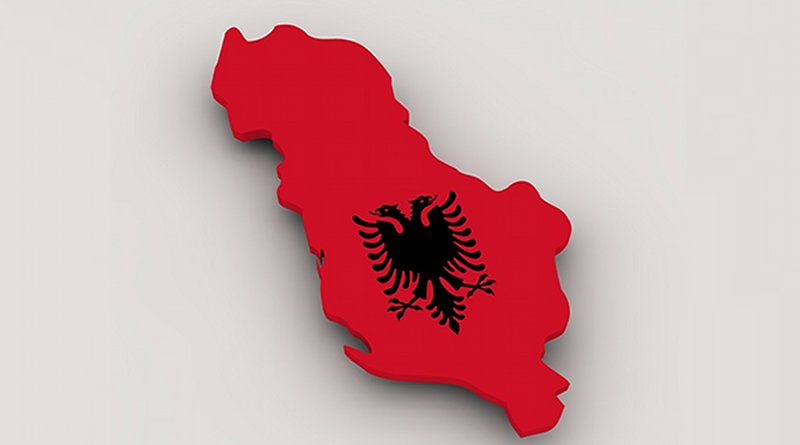
albania flag map

This year a popular US travel company organized an unusual trip to hike in the Albanian Alps, which are locally known by the forbidding name:The Accursed Mountains.These limestone mountains rise steeply from the lowlands, and the views from the alpine valleys are spectacular. It does not seem appropriate that this inherent beauty is in any way accursed.But the word aptly describes Albania’s pitiless, Communist dictator, Enver Hoxha, who ruled the country with an iron fist from 1943-1984.

The reign of terror destroyed the intellectual class, demoralized a population that existed on the brink of starvation, and reduced Albania to the world’s third poorest country.Yet reputableacademic sourcesminimize Hoxha’s excesses and laud him for transforming the country from a feudal to an industrial economy and improving literacy and medical care. How is it possible that these great strides translated intozero economic growthand quarantined the country into an open-air prison that has been compared to North Korea?

While in Albania last month, I interviewed our group’s bus driver and dinner companion, Reshat, who lived 22 years under Albanian Communist rule. Did he acknowledge that Hoxha’s exuberant methods were justified in order to bring progress to an underdeveloped nation?Were his experiences consistent with Blendi Fevziu’s scathing biography,Enver Hoxha: The Iron Fist of Albania,or more aligned with a 2016Guardianbook review that suggested that Fevziu’s hatred of Communism and Hoxha biased his commentary?

According to Fevziu, people were drawn to Hoxha’s charismatic personality and physical attractiveness.He was a mediocre student with a poor work ethic, who preferred socializing and discussing politics.After the Italian invasion of Albania in 1939 and the German occupation in 1941, Hoxha joined the Albanian Party of Labor at its inception. Yugoslavian Communist Party officials recognized his ruthlessness and organizational abilities and propelled his career that resulted in securing the post of First Secretary of the party at age 34.

Not known for his bravery or combat experience, Hoxha prioritized the elimination of his political enemies, while partisans and other Communist-affiliated groups fought and died resisting the Nazi occupation. With the departure of German forces in 1944, he was well-placed to fill the power vacuum and begin the mass executions of rivals.

Punishments for the “overthrown classes” that constituted the merchants, intellectuals, professionals, and landowners included exorbitant taxes that were impossible to pay, and delinquency resulted in long prison sentences with hard labor. All cars and personal property were appropriated and transferred to the state. Initially, confiscated land was redistributed to the peasants but within a year these properties were collectivized and transferred to the government, patterned after the Sovietkolkhozsystem.

At the time of Hoxha’s rise to power, Albania’s history was one of oppression.The Ottomans conquered it in 1478 and ruled for over four centuries until independence was granted in 1912 after the Balkan Wars.An influential politician proclaimed himself King Zog in 1928 and ruled until 1939, when the Italians invaded and then passed control to the Nazis in 1941. These events molded a country of 1.1 million inhabitants living in an area the size of Maryland into a hodgepodge of fiefdoms controlled by wealthy beys who dominated an illiterate, agrarian peasant class.

Hoxha, a committed Stalinist, established a secret police force, the Sigurimi, consisting of 200,000 operatives whose mission was to ensure the safety of the regime. A system of surveillance and denunciation enabled an extensive network of informers to generate a personal file on every adult in the People’s Republic of Albania.Forced manual labor extracted under appalling conditions in remote locations bore similarity to the Soviet gulag.The Sigurimi oversaw 39 prisons where in some instances 20 inmates were housed in cells of 100 square feet.

Collective punishment was used to discourage resistance to the party.Due process was non-existent, and anonymous accusations were the norm. Anyone suspected of hostility to the party expected a certain conviction, punished by execution or exile to the gulag for up to 30 years.The victim’s family members were uprooted and condemned to a lifetime of permanent exile in Albania’s malaria-plagued marshlands.The quality of life descended to the subsistence level, with no prospect for advancement or further education. In his bookMe Stalinin, Hoxha described Stalin in grandiose terms, “Stalin was not a tyrant; he was not a despot. He was a principled, fair, unassuming, and kind man, who paid attention to people, cadres, and his associates.”

After Stalin’s death, Hoxha became disillusioned with Khrushchev’s USSR, and in 1961, while desperately in need of financial support, established relations with Mao’s Communist China.Albania introduced its own version of the Sino-Cultural Revolution, which further deepened the country’s isolation and Hoxha’s xenophobic paranoia. He saw a hostile world intent upon conquering the small Balkan kingdom by military means.The construction of 750,000 bunkers, air raid shelters, and military fortifications speaks to his delusion.

In 1968 Hoxha received disquieting news from the French ambassador that a nun, Mother Teresa, an ethnic Albanian, requested to visit her ailing 80-year-old mother, who lived in Albania, and accompany her to Rome for medical care. Mother Teresa’s request received international attention and support from Charles de Gaulle, Jackie Kennedy, and the Pope.Hoxha’s security services advised against consent, noting that the nun was a dangerous security threat to the republic. The request was denied, and although Mother Teresa continued her efforts, she learned of her mother’s death in Albania in 1972.

Hoxha, whose father was an imam, brutally oppressed religion, and in 1976 the country’s constitution enshrined Albania as an atheist state—the only country in the world to receive this designation. In 1971 Dom Kurti, a priest, was executed for baptizing a baby in a private home, which provoked universal international condemnation.Thousands of priests and imams were arrested and served lengthy prison terms. Albania’s Cultural Revolution enlisted young fanatics to persecute dervishes of theBektashisect by subjecting them to public humiliation. Over 2,000 mosques, Catholic and Orthodox churches, and Bektashi tekkes were damaged or destroyed

From the outset of Hoxha’s rule as party leader only his designated successor, Hysni Kapo, was spared execution, prison, or suicide. Kapo had the good fortune of dying from pancreatic cancer at a clinic in Paris in 1979, but Hoxha’s second choice to be heir apparent, Mehmet Shehu, a fiercely loyal acolyte and hardliner, suffered a fate typical of the dictator’s whimsical style of rule. In 1981 Shehu’s favorite son informed his father that he had fallen in love with an attractive young volleyball champion, whose father was a university professor and member of an anti-Communist family. Without consulting Hoxha, Shehu consented to the marriage.The indiscretion enraged Hoxha, and within a month Shehu was denounced and committed suicide rather than face the firing squad.

By the late stages of Hoxha’s rule, the country descended into further isolation and destitution. All foreign radio and television signals were jammed, and the country’s borders were ringed with barbed wire and electric fences. Sentries were ordered to shoot to kill those attempting to escape.Those not shot were sentenced from 10 years to life in prison; only 6,000 escaped Albania during the Hoxha years.

Peasants lived on the equivalent of $15/month while receiving meager food allowances that authorized a family of four one kilogram of meat per month. In the countryside, malnutrition and its associated diseases ran rampant. Corn meal with a bit of salt, sugar, and olive oil prevented starvation. Private property and individual initiative were forbidden, and party officials denied peasants the right to own livestock. By 1982 owning chickens was forbidden.

In 1984 a penniless Albania, despite an abundance of public works projects and literacy programs designed to teach only material the government deemed suitable, entertained aneconomic relationshipwith West Germany for the sole purpose of receiving foreign aid. Franz Josef Strauss, the prime minister of Bavaria, was given permission to travel through Albania on his way to Greece. His son registered this observation, “We reached Tirana…The town was in total darkness. There were no cars… At an exhibition of Albanian technology, we saw an Enver Hoxha Tractor. A friend who worked for Mercedes-Benz said that we used to make these in the 1920s…” Albanian technology had stood still for over 60 years.

Hoxha died in 1984 and his successor Ramiz Alia ruled for another five years until the regime toppled. In these 46 years, nearly 5,500 men and women were executed and 24,000 were sentenced to prison terms up to 35 years that were often extended during incarceration. Internal exile programs used to enforce collective punishment sent 70,000 victims to internment camps where many died due to harsh conditions.

Reshat lived in Communist Albania from 1967 until its fall in 1989, a period when Hoxha’s paranoia reached its zenith and grinding poverty reduced the population to hopelessness. Through an interpreter and the hiking group’s lead guide, Mirjeta, he recounted his personal experiences. Born in 1967, he lived the first 22 years of his life under Hoxha and his successor Ramiz Alia.Hoxha instituted a Stalinist regime simultaneously with his ascension to power.

Brute force and intimidation overwhelmed a populace that had not recovered from three years of Nazi occupation.Most Albanians lived in the country and were dependent on livestock.Hoxha mandated that a family could own only one or two cows, and by the 1980s no private ownership was allowed. An extensive network of spies constantly monitored citizens to ensure compliance with the law. The inability to legally own farm animals was particularly onerous for Reshat’s father and mother, who raised seven children. They lived on a diet of salt, bread, and olive oil, and if it were not for cornmeal, the family would have starved.

Desperate people are resourceful, and Rashat stated that sheep and pigs were hidden in homes to avoid detection. In one instance, his mother-in-law hid a sheep in her bedroom.The authorities arrived for a routine inspection, and the women denied any knowledge of harboring illicit livestock. Before the police left the premises, her 3-year-old grandson entered the room and remarked, “Grandma, there’s a sheep in your bedroom.”The policeman was humored by the boy’s innocence, and his grandmother received only a scolding.Peasants were known to feed a liter of raki, a 40% alcohol-fortified wine, to pigs before inspections to keep them quiet and undiscovered.

Teachers and professionals were forced to quit their jobs and work as menial laborers—a policy implemented in Maoist China and in Cambodia under Pol Pot.Those actively opposed to the regime were eliminated, and family members were secondarily punished. Children of political criminals could not attend school, and families were relocated from their homes to remote areas where life was difficult.

The population was exposed to unremitting propaganda from cradle to grave.The country was completely isolated, and people were told that Albania was the world’s most desirable country. Other countries were consumed by jealousy and ever ready to attack and claim Albania’s treasure. Protecting the homeland required eternal vigilance and willingness to die for the People’s Republic and for the demigod, Hoxha.

Arbitrary rules pervaded society and applied to the finest details—personal appearance, the length of trousers, the prohibition of pockets; the list was endless.It was impossible to keep track of them, and the public was informed by word of mouth.Enforcement started with verbal public shaming, followed by written notices displayed in public locations.Violators were ostracized from the community for fear of guilt by association. Stalin’s statement, “Show me the man, and I’ll show you the crime,” summarizes the Albanian criminal justice system.

Religion was strictly forbidden and rarely practiced privately for fear of reprisal.In a country where about 60% of the people were Muslims by tradition, citizens were forced to drink raki, eat pork, or violate daytime fasting during Ramadan to expose practicing Muslims who worshiped secretly.

Communist youth groups were present in all schools and upon reaching age 18, one could become a member of the Communist Party.Joining was not mandatory, but party members received preferential treatment—better jobs, fewer work hours, and the opportunity for their children to attend preferred schools.Despite the benefits, Reshat estimates only 30% of those eligible became party members, although the number of spies and informers makes this number difficult to determine.

Reshat and many Albanians like him are a testament to the resilience of the people, who experienced extraordinary hardship but adjusted successfully. Their country is developing and energized by the freedom to speak and the ability to live their lives free of oppression. Albanians are staunch anti-Communist and recoil at the suggestion that in any way Hoxha’s excesses were justified. It is their fervent wish that the world becomes aware of the enormous sacrifices of the Albanian people and the importance of resisting tyranny at all costs.