
Month: June 2024
When hacker mastermind Gery Shalon flipped, US law enforcement considered it a win. But new evidence shows he may have built a massive new fraud empire in Europe while working with the FBI in New York https://t.co/eMLO9bGqyb via @BW
— Michael Novakhov (@mikenov) June 29, 2024
When hacker mastermind Gery Shalon flipped, US law enforcement considered it a win. But new evidence shows he may have built a massive new fraud empire in Europe while working with the FBI in New York https://t.co/eMLO9bGqyb via @BW
— Michael Novakhov (@mikenov) June 29, 2024
Как в Чечне работают незаконные схемы “обнала”, связанные с приближенными Рамзана Кадырова, и почему именно через них проводится оплата участвующим в войне против Украины “добровольцам”? Рассказывает один из бывших “обнальщиков”.https://t.co/O6uZbdJqTP
— Радио Свобода (@SvobodaRadio) June 29, 2024
Как в Чечне работают незаконные схемы “обнала”, связанные с приближенными Рамзана Кадырова, и почему именно через них проводится оплата участвующим в войне против Украины “добровольцам”? Рассказывает один из бывших “обнальщиков”.https://t.co/O6uZbdJqTP
— Радио Свобода (@SvobodaRadio) June 29, 2024
Как в Чечне работают незаконные схемы “обнала”, связанные с приближенными Рамзана Кадырова, и почему именно через них проводится оплата участвующим в войне против Украины “добровольцам”? Рассказывает один из бывших “обнальщиков”.https://t.co/O6uZbdJqTP
— Радио Свобода (@SvobodaRadio) June 29, 2024
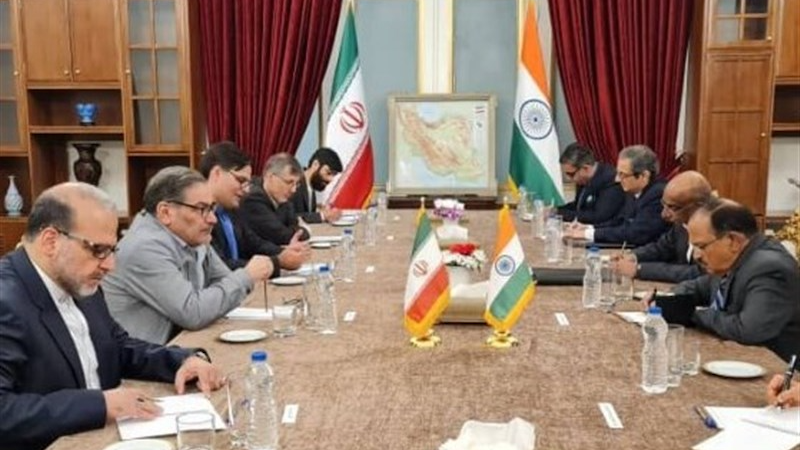
There is enormous appreciation among Iranian intellectuals, diplomats and politicians regarding Prime Minister Narendra Modi’s stellar support for their country’s membership of the BRICS grouping. Modi;played a key role;to navigate Iran’s membership purposively at the BRICS Summit in Johannesburg last August.
The Russian President Vladimir Putin couldn’t be present at Johannesburg. But Prime Minister Narendra Modi attended the summit in person, rubbishing the malicious rumours and canards to the contrary orchestrated by the western media. The Anglo-Saxon game plan was ;to somehow get Iran’s membership question deferred to an indefinite future. ;;
The defining moment was a;phone call;from the Iranian President late Ibrahim Raisi to Modi in the week before the summit meeting. However, the ground for the last-minute flurry of diplomatic activity was prepared in the preceding weeks by the National Security Advisor Ajit Doval when he attended the meeting of BRICS national security advisors in Johannesburg in late July, just weeks prior to the summit to review security and economic cooperation.
Doval held;separate “working meetings”;with his Russian and Iranian counterparts — Nikolai Patrushev and;;Ali-Akbar Ahmadian respectively.;The NSAs discussed Iran’s BRICS membership issue as a core vector of the Johannesburg summit.
Ahmadian and Doval’s talking points covered the whole spectrum of Iran-India relations ;and an ambitious agenda to deepen the ties across the board in fields ranging from transportation, energy and banking to counter-terrorism.;
The two NSAs agreed that the Chabahar Port project, which is the anchor sheet of Modi’s hugely ambitious vision for India’s regional policies,;stands to gain from Iran’s BRICS membership, even as the Moscow-led International North-South Transportation Corridor is steadily coming into operation.;

Tehran visualises that in the downstream of Chabahar Port, Indian trade and industry can and should enter the hinterland in a big way via trade, investments and project exports. The Iranian side feels that Chabahar has the potential to elevate India’s partnership with Iran to an altogether higher strategic level.;;
Significantly, the makeover in India-Iran ties also dovetails into a paradigm shift under way in the two countries’ respective relations with Russia. Iran and Russia;signed a memorandum;this week in Tehran to turn Iran into “a regional gas hub.” Gazprom CEO Alexey Miller personally attended the signing ceremony, testifying to the highest importance the Kremlin attaches to the futuristic project.;
The Russian intention is to enter the Iranian market in the northern Caspian region through Soviet era pipelines from the Caucasus and Central Asia and to participate in the development of the Iranian gas industry, the construction of gas pipelines, LNG projects and mining projects. Gazprom is interested in organising swap supplies to third countries and a number of LNG projects in the south of Iran are being considered, according to a;report in Kommersant newspaper, for tapping the South Asian market.;
Now, the big picture is not complete without factoring in that Moscow and Tehran are also in the cusp of a historic transformative breakthrough in their relationship with the;Russia-Iran comprehensive cooperation treaty;that has been under negotiation since 2022 ready for signature no sooner than the new government in Tehran settles down. Setting aside protocol, Putin had a;telephone conversation on Wednesday with Iran’s Acting President Mohammad Mokhber — their second such conversation in the past fortnight. (here;and;here)
At any rate, Doval at his meeting with his Iranian counterpart at Johannesburg assured him that Iran’s accession to BRICS;would expand the grouping’s economic and political capacities. Doval was quoted as saying that New Delhi would use “every means and opportunity at its disposal to facilitate Iran’s accession” to the BRICS grouping.;
The Indian readout of the;phone conversation;between Modi and Raisi just four days before the Johannesburg summit highlighted that “The two leaders reiterated their commitment to further strengthen bilateral cooperation including to realise the full potential of Chabahar Port as a connectivity hub. The two leaders also discussed cooperation at multilateral forums including expansion of BRICS and looked forward to their meeting on the margins of forthcoming BRICS summit in South Africa.”
How far these positive impulses will be carried forward at Modi’s one-on-one discussions with Putin during his forthcoming two-day visit to Moscow on July 8 remains to be seen. Russia and Iran together own more than 60 percent of global gas reserves, and the expectation in Tehran is that the two countries’ energy deal in the making will facilitate the formation of “an energy balance in the region” — as Iran’s Oil Minister Javad Owji put it. Without doubt, Russia and Iran can be the most reliable suppliers of natural gas for the Indian market over the next several decades and strengthen India’s energy security through this century.
A holistic picture will be incomplete without casting an eye on the upcoming BRICS Summit as well. After all, Russia and Iran are under US sanctions. The crux of the matter is that the BRICS Summit in October in Kazan under Putin’s chairmanship will be focused on the creation of a new payment system for the member countries. Different variants are under consideration — the use of stablecoins (cryptocurrency tokens pegged to assets like gold), a platform to link the central banks’ digital currency systems, and the integration of national systems for financial messaging.;
At a;media briefing in Moscow;on Thursday, Deputy Foreign Minister Sergey Ryabkov said BRICS countries are “actively and evenly pursuing initiatives” in all the 3 above-mentioned areas.;;Ryabkov said the political momentum is “crucial here,” and added, “Perhaps there won’t be any decisions (at the Kazan summit) that completely revolutionise everything, and that may not be necessary in such a sensitive area where gradual progress is often best. However, there will be tangible outcomes and I’m pleased that all member states, including those who recently joined on January 1 share our common understanding and vision of the steps needed to move forward.”;
Modi had built a good rapport with Raisi who was due to visit India later this year. The importance of picking up the threads with Raisi’s successor cannot but be stressed. Perhaps, an early visit by Doval to Tehran is timely.;
By the way, Afghan situation is also causing concern to Iran and Russia as there are growing signs of a consolidation of Islamic State-Khorasan in the northern regions of Afghanistan with the active support of the CIA. In response, Moscow intends to remove the Taliban from its list of terrorist organisations and strengthen cooperation in counter-terrorism with the authorities in Kabul.; ; ;
By Can Kasapoğlui
1.;Battlefield Assessment
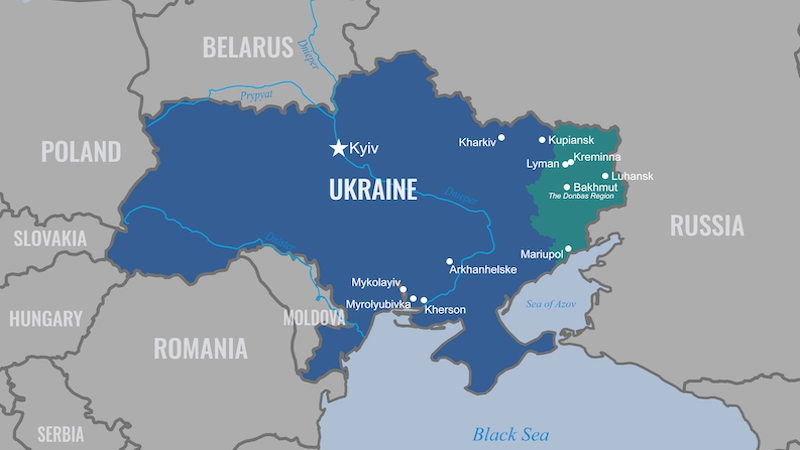
Russian forces maintained offensive combat operations along multiple axes. In eastern and northeastern Ukraine, Russian units assaulted areas near Bakhmut and in the outer rings of Kharkiv, and;secured;marginal advances in ground attacks around Chasiv Yar and Avdiivka. In southern Ukraine, the Kremlin’s forces scaled up offensive action around;Kamianske;in Zaporizhzhia Oblast.
Fierce battles raged on the Kharkiv axis, particularly near Vovchansk.;Moscow continued to send;inadequately equipped troops to their death in large numbers in northeastern Ukraine, where the Ukrainian Armed Forces are enveloping and isolating the invading servicemen. Several sources confirm that Ukrainian units;trapped;and captured hundreds of Russian soldiers attempting a river crossing near the PJSC Volchansky Chemical Plant.
Moscow has increased its use of glide bombs to advance its multifront push. This tactic has allowed Russian forces to conduct more expansive ground operations and accelerate the destruction and depopulation of critical;urban combat zones, a long-standing Kremlin strategy since its wars in Chechnya in the 1990s. Last week Moscow targeted a three-story building in Kharkiv with;a FAB-3000;glide bomb from a Sukhoi-34 fighter-bomber, the first documented employment of the munition in Ukraine. This giant weapon, which;weighs over;three tons, lacks the aerodynamics and precision of smaller smart munitions but has a massive kill radius that makes it a formidable asset.
Last, the Ukrainian military continued to unleash Army Tactical Missile System (ATACMS) salvos upon occupied Crimea.
2.;Kim Jong Un and Vladimir Putin Cement a Strategic Partnership Framework
Last week Russian President Vladimir Putin flew to Pyongyang to ink a strategic partnership treaty with his North Korean counterpart, Kim Jong Un. News outlets reported that the agreement committed both parties to;providing military assistance;to the other in the event either country is attacked.
While the medium- to long-term implications of this defense pact are still unclear, it has undoubtedly strengthened relations between Russia and North Korea at a time when Pyongyang is already providing Moscow with millions of artillery shells and a number of tactical ballistic missiles. Some have suggested that Putin used his visit to North Korea to;renew orders;for critical materiel, including ammunition and 152mm artillery shells.
3.;Ukraine’s Western Allies Boost Aid to Kyiv and Consider Further Increases
Western countries are increasing assistance to Kyiv to bolster Ukraine’s ability to fight Russian aggression. The Summit on Peace in Ukraine, held last week in Switzerland, focused on laying out a roadmap to end;the Russian invasion.
An increasing number of Western allies are also taking more concrete steps and ramping up military assistance to Ukraine. Several allied countries, including;the Netherlands;and;Romania, agreed to transfer Patriot strategic air and missile defense systems to Kyiv to bolster its air defenses.
Ukrainian news outlets also reported that the United States is;considering closing;all open orders for Patriots and redirecting its available systems to Kyiv. At the recent Eurosatory defense exhibition in Paris, several manufacturers of ammunition and artillery shells;called on the European Union to rapidly boost its industrial capacity so that it can meet the target set by the Act Supporting Ammunition Production (ASAP), which aims to provide Ukraine with two million shells per year by the end of 2025.
The burgeoning defense ties between Russia and North Korea have also encouraged South Korea to consider revising its restrictions on military aid to Ukraine, which thus far has been;limited to;nonlethal equipment. A change of perspective in Seoul could help turn the tide in Ukraine. South Korea has resources, such as 105mm howitzer rounds, that Kyiv desperately needs. According to its own assessments, South Korea has a reserve of approximately;3.5 million;105mm howitzer rounds; releasing even a fraction of this stockpile would greatly assist Ukraine.
4.;Iran’s Arash Loitering Munitions Enter the Fight
Citing;posts;on Russian social media and Iranian announcements, several news outlets claimed this week that the Kremlin has ordered Arash kamikaze drones from Tehran. Ukrainian reports confirm that Iranian instructors have previously trained Russian operators in Iran on how to use these drones. Russia’s mixed strike packages will;now include;advanced Arash loitering munitions, developed by Tehran to;target cities in Israel, in addition to Shahed drones.
Visual evidence suggests that Russia used the Arash-1 or Arash-2 in a recent aerial attack around the Ukrainian city of;Mykolaiv. The Arash-2 is the more sophisticated variant of the drone, with a reported range of 1,200 miles and a destructive warhead. Along with carrying out high-precision strike missions, the Arash-2 can conduct reconnaissance operations to help long-range ballistic missiles locate targets. Its active guidance qualities, including a secure communications link with its operator, make the Arash-2 a dangerous precision strike asset.
- About the author: Can Kasapoğlui is a Senior Fellow at Hudson Institute
- Source: This article was published by the Hudson Institute