President of Azerbaijan Breaks Ground on Masdar 1GW Solar and Wind Projects Yahoo Canada Finance
Month: June 2024
Epstein Accuser Files Lawsuit Alleging Famed Psychiatrist Henry Jarecki Facilitated Sexual Abuse – WSJ https://t.co/xa9iOvOf3t
— Michael Novakhov (@mikenov) June 4, 2024
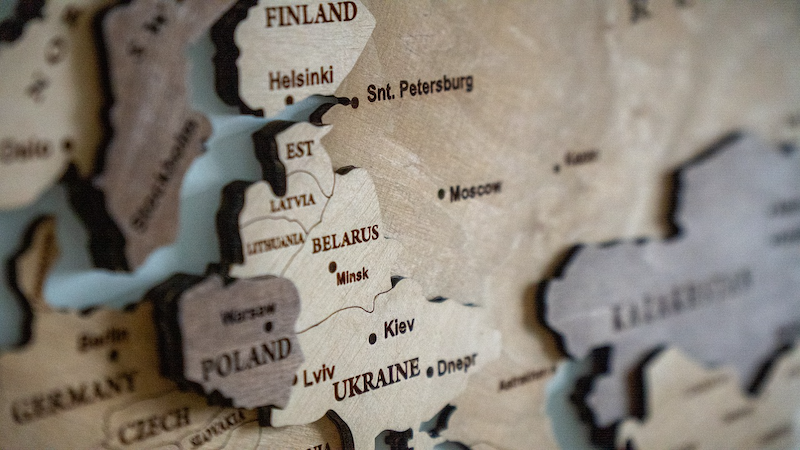
If you are a foreign official visiting Prague, the capital of the Czech Republic, Prime Minister Petr Fiala will undoubtedly urge you to praise and contribute to his munition’s initiative. While many praise it, few are willing to back their words with financial support, and perhaps for good reason.
The controversy began when President Petr Pavel announced at the Munich Security Conference that Czechia had identified 500,000 155 mm and 300,000 122 mm caliber artillery shells for Ukraine from producers outside the European Union (EU). According to Pavel, these shells could be delivered within weeks if funding was secured.
In March, President Pavel further claimed that with Norway’s contribution, all necessary funds had been raised and that the shells would be delivered soon. However, Tomáš Pojar, the official responsible for the munitions initiative, clarified, “I assume that the President meant the coverage of the first batch, not the entire initiative. We definitely haven’t raised funds for the entire initiative yet.”
President Volodymyr Zelensky of Ukraine remained skeptical, stating, “We can talk about a positive result only when the shells will be in Ukraine.”
A few days later in March, Prime Minister Fiala announced on social media, “So far, we have managed to raise enough money for the purchase of the first delivery of 300,000 artillery shells to aid Ukraine. However, the Czech initiative aims to send much more support. The search for partners continues.”
At the end of May, Fiala reported, “Fifteen European Union and North Atlantic Alliance countries have already contributed over 1.6 billion euros (39.5 billion Czech korunas) to the Czech munitions initiative. The first tens of thousands of 155 mm caliber ammunition rounds will arrive in Ukraine in June. The country can expect the first shipment in the coming days.”
However, Defense Minister Jana Černochová contradicted Fiala, stating, “Eighteen countries have so far joined the Czech initiative to purchase ammunition for Ukraine, but only four—Canada, Denmark, the Netherlands, and Portugal—have actually provided funds.”
In the same month, the Czech opposition began questioning the pricing and contracting beneficiaries of the munition’s initiative, suspecting impropriety. Instead of addressing these concerns transparently, Minister Černochová responded defensively, without disclosing the pricing and the beneficiaries.
The lack of transparency is troubling.
Czech officials readily disclose quantities and timelines but refuse to reveal prices. There is no national security reason for keeping prices secret; the only plausible reason is to avoid potential scandal due to corruption and waste. Moreover, the concentration of contracts with a single private arms trader could expose the initiative to significant risks.
Diversifying supply sources is critical to ensuring reliable delivery, especially in wartime, and opposition leader Andrej Babiš is right to question the lack of involvement of government entities. Large purchases of sensitive items – like munitions – are usually executed on a government-to-government basis, such as the American Foreign Military Sales program.
The Czech government’s opacity is a serious concern, given past scandals involving the ruling ODS party, such as the 2013 police raid on former Prime Minister Petr Nečas’s office. Prime Minister Fiala was a member of Nečas’s cabinet, where allegations included the abuse of power at the military intelligence agency. Recently, the sudden dismissal of Jan Beroun, Director of the republics military intelligence service, following his return from Washington D.C. with the Prime Minister, raises further more questions.
Should a scandal involving the misuse of allied funds erupt, implicating key figures like Fiala, Pojar, and Beroun, it would severely undermine allied trust in Czechia’s attempt to support Ukraine — a win for Russian leader Vladimir Putin.
Transparency by the Czech government is essential to maintaining trust and cooperation among allies in this critical time.
- This article was published at Defense.Info

The April jobs report showed the economy added just 175,000 jobs, the slowest pace in more than a year, while the unemployment rate ticked up to 3.9 percent. Many viewed these numbers as evidence of a slowing economy. That case was seriously overstated.
The March job growth number was only slightly below the 179,000 average for the three years prior to the pandemic. It is roughly in line, or above, the pace of labor force growth that is generally considered sustainable. Also, the February number was revised up to 315,000, putting the two-month rate at a very rapid 240,000.
On the household side, the uptick was even smaller than the 0.1 percentage point reported. The unemployment rate stood at 3.83 percent in March and rose to 3.86 percent in April, a rise of 0.03 percentage points. This is well within the survey’s margin of error.
Passing the 1960s Low Unemployment Streak
The economy matched the 1960s run of 27 consecutive months of below 4.0 percent unemployment in April. If we don’t see a rise in May, we will have surpassed this extraordinary streak. Given the extent of job loss in the pandemic, few would have envisioned this stretch of sustained low unemployment. This has given workers, especially those at the bottom end of the wage ladder, more bargaining power, allowing them to get higher pay and seek out better jobs.
Wage Growth Remains Moderate
The annual rate of growth in the average hourly wage for the three months ending in April was just 3.6 percent. The three-month rate of wage growth had been edging lower since peaking at an annual rate of 6.4 percent in late 2021. It did jump up in January, but it now seems as though that was a problem of the seasonal adjustment not correcting adequately for start-of-year pay increases.
If the slowdown continues, we are looking at wage growth that is only slightly higher than the pace in 2018–2019. The increase over the last year was 3.9 percent. That compares to a rate of 3.3 percent in the two years prior to the pandemic. If wage growth continues at the pace of the last three months, that would seem to be consistent with the Fed’s 2.0 percent target, even assuming no uptick in productivity growth.
Hours Growth and Productivity
Productivity growth slowed to near zero in the first quarter after three quarters in which it averaged more than 3.8 percent. The data are erratic, so this sort of slowing should not be especially surprising. It still left the growth over the last year at 2.8 percent.
The index of aggregate weekly hours edged down slightly from March to April. It looks like we will see a bounce back in GDP growth from the first quarter since that figure was held down by factors that are not likely to be repeated. If hours growth remains moderate through the rest of the quarter, it will translate into another good quarter for productivity growth.
The Gap Between the Establishment Survey and the Household May Narrow
The gap between job growth in the establishment survey and employment growth in the household survey increased in April, as the 175,000 new jobs reported in the establishment survey exceeded the 25,000 gain in employment reported in the household survey. The gap now stands at almost 2.3 million.
The establishment survey is generally more accurate since it is far larger and has a much higher response rate. However, the fourth quarter data from the Quarterly Census on Employment and Wages (QCEW), which was released last month, does support the case that there could be a substantial overstatement of employment in the establishment survey. The QCEW often does show a sharply different picture in a specific quarter, only to have it reversed in subsequent quarters.
It is again worth remembering that a slower pace of job creation than currently reported by the CES would translate directly into a more rapid rate of productivity growth. This would mean that the economy could support a more rapid pace of wage growth without leading to inflation.
Employment to Population Ratio for Prime Age Workers Should Edge Up
In April, the employment to population rate (EPOP) for prime-age women (ages 25 to 54) rose to 75.5 percent, a record high. For prime-age men it fell by 0.3 percentage points to 86.1 percent, 0.3 percentage points below its average for 2019. It is likely this drop was an aberration and that it will be reversed in the May report. Any rise in the overall EPOP will take us to at least the 80.9 percent level hit last summer, the highest since 2001.
Incorporated Self-Employment Remains High
There was a large jump in both incorporated and unincorporated self-employment in 2021 and 2022, compared to pre-pandemic levels. While unincorporated self-employment has fallen back roughly to pre-pandemic levels, incorporated self-employment is still more than 10 percent above its pre-pandemic level. This fits with the data from the Census Bureau that shows a large uptick in new businesses with a high propensity to employ workers.
Health Care Sector Likely to Again Lead Job Growth
The health care sector added 56,200 jobs in April, somewhat below its 63,000 average for the prior year. It is likely this sector will again lead job growth in May, but the pace of growth is likely to slow further. Restaurants and construction are also likely to again show strong growth.
The government sector, which had shown rapid growth through 2023, after lagging earlier in the recovery, added just 8,000 jobs in April. It is likely that its period of rapid catchup is over. Retail and manufacturing are also likely to show weak, if any, job growth.
The Share of Unemployment Due to Quits Likely to Rise
One anomaly in recent job reports has been the relatively small share of unemployment due to voluntary quits. It fell to 12.0 percent in April, it averaged 13.6 percent in 2019. This is a measure of people’s confidence in the labor market since it indicates that they are willing to leave a job before they have a new one lined up.
More Good News?
The labor market has been an overwhelmingly positive story for the last three years. If unemployment stays below 4.0 percent for the 28th consecutive month it will be cause for celebration. If the other data in the jobs report looks like they did in April, then it should help the Fed feel more comfortable about lowering interest rates.
Wage pressures did not cause inflation, but they could in principle sustain it. However, wage growth of under 4.0 percent should not be seen as a problem.
- This article was published by CEPR

By David Vergun
Secretary of Defense Lloyd J. Austin III traveled Tuesday to Phnom Penh, Cambodia, where he met with Prime Minister Hun Manet; Defense Minister Tea Seiha; and Hun Sen, president of the senate.
In their meetings, the officials discussed opportunities to strengthen the U.S.-Cambodia defense relationship in support of regional peace and security, including through the resumption of military training exchanges on disaster assistance and United Nations peacekeeping, training and exchanges on unexploded ordnance clearance, and Cambodia’s access to U.S. professional military education programs, said Pentagon Press Secretary Air Force Maj. Gen. Pat Ryder, who is traveling with the secretary.
They also welcomed continued discussions about these issues between their respective defense establishments, and Austin engaged with Cambodian alumni of U.S. professional military education programs, as well as cadets from the U.S. Military Academy and the U.S. Air Force Academy visiting Cambodia for educational opportunities, Ryder said.
“The secretary often talks about the importance of meeting face-to-face, especially in this part of the world. That was true again today as he engaged Cambodia’s new leadership. And these were candid, concrete discussions,” said a senior defense official traveling with the secretary.
“This kind of engagement matters for the future. Cambodia is a young country in a young region. Our defense relationship has a lot of potential and room for growth. That’s why it’s so important to stay engaged here,” the official said.
“We’re encouraged about the possibility of resuming our military training and exchanges, including on humanitarian assistance, de-mining and unexploded ordnance clearance, and U.N. peacekeeping. There’s a lot our two countries can do together,” the official said.
Austin’s second trip to Cambodia follows his November 2022 trip here for the 9th ASEAN Defense Ministers’ Meeting-Plus in Siem Reap, Cambodia.
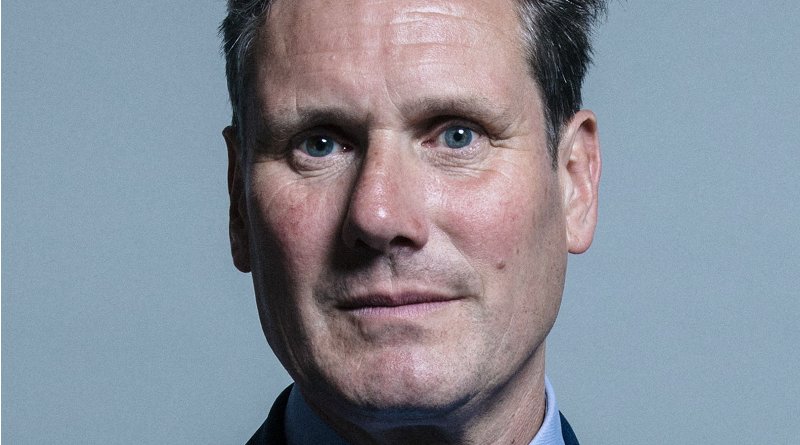
By any reckoning, this was the move of a fool. A fool, it should be said, motivated by spite larded with caution. Evidently playing safe, adopting what has been called a “Ming Vase strategy” (hold it with scrupulous care; avoid danger), the British Labour Party under Sir Keir Starmer is already laying its own boobytraps to step onto. This is some feat, given that Labour currently leads the incumbent Tories by such a margin it is projected to win a majority of 194 seats, giving them 422 in all.
With the election campaign still salad green, Starmer has made it clear that a number of the progressive faithful will no longer be expected to keep him company on his way into government – assuming he doesn’t cock matters up before July 4. A cull is being made of the old Labour guard, and they are not going away quietly.
One is a former leader of the party, an unabashed progressive who has been hugging the left side of politics since he was a callow teenager. Jeremy Corbyn, a member for London’s Islington North for over four decades and party leader for five years, is running as an independent. In March, the National Executive Committee (NEC) voted by 22 to 12 to approve a motion proposed by Starmer insisting that it was “not in the best interests of the Labour Party for it to endorse Mr Corbyn as a Labour Party candidate at the next general election.”
The response from Corbyn was resoundingly biting. The move was a “shameful attack on the party of democracy”, showing “contempt” for those who had voted for the party at the 2017 and 2019 elections. “If you start shutting down dissent and preventing people from speaking out, it’s not a sign of strength, it’s a sign of weakness. A sign of strength is when you can absorb and listen to the other person’s arguments,” says Corbyn on the YouTube outlet, Double Down News.
Things were also further muddied by the near juvenile incompetence regarding the future of the MP for Hackney North and Stoke Newington, Dianne Abbott, a figure who has been an enduring feature of Labour politics for decades. She was the first black woman to be elected to Parliament, reliably Left, admirably innumerate and always reliable in having a moment of indiscretion. (She had been suspended over comments made in a letter to The Observer claiming that Jews, the Irish and Travellers suffered “prejudice” rather than the “racism” suffered by blacks.) The question here was whether her readmission to the party would qualify her to run again or enable her to journey into a veteran politician’s sunset.
Here was a moment of genuine danger for Labour. Confusion, always fatal for any party seeking government, ignited. Was Abbott banned by her party from running at the next election because of her recently spotty record? Some Labour functionaries thought not, but felt that the NEC should have the last say. Whispers and rumours suggested the opposite.
Laura Kuenssberg of the BBC bored her readers senseless with a slew of anonymous sources that did little to clear things up. “She was looking for a way to stand down with dignity when it was blown all up,” one source claimed. Another is quoted as a “senior ally” of Starmer, suggesting that things had come to a pass. “Everyone was aware of the symbolism. We had to draw the line, it couldn’t just go on and on.”
A strategy is certainly afoot to stay, remove or frustrate candidates of a certain left leaning disposition who fail to fit Starmer’s ultra cautious strategy. They are memory’s heavy burden, a reminder of the roistering, scuffling legacy of the party. Distilled to its essence, it is a crude and clumsy effort to purge the Corbynistas. As Katy Balls of The Spectator appropriately describes it, the Labour leader has been selecting “candidates they trust to have a low risk of scandal or rebellion”.
Economist Faiza Shaheen, for instance, has found herself blocked for taking issue with her party’s Middle East policy, though, as she put it, it entailed “14 tweets over 10 years, including me liking a colleague’s tweet saying she was running as a Green councillor, and a retweet containing a list of companies to boycott to support Palestine, both from 2014.”
In an article for The Guardian, Shaheen describes how she was “removed, via email, from being a Labour parliamentary candidate from Chingford and Woodford Green.” She faced the dreaded NEC regarding her deselection. “More than four years’ work thrown in the bin. Any connection to my community brushed aside.”
Shaheen proceeds to make a fundamental, if obvious political point. “The irony is that taking me off the ballot and replacing me with someone no one in my community knows will jeopardise Labour’s ability to win this seat and finally unseat the Tory grandee Iaian Duncan Smith.”
These instances may not be enough to derail the Labour train that is destined, at this point, of storming into the House of Commons and Number 10 with tearing effect. But Starmer’s culling program is already taking the shine off the effort. Abbott has a loyal following. Those of Corbyn’s are the stuff of legend. Riling, obstructing and barring such figures serves to cloud the message, impairing an electoral effort that may, ironically enough, see the Ming Vase slip out of Starmer’s desperate hands.

On May 24, 2024, President of Ukraine Volodymyr Zelensky met with a group of journalists from Central Asian countries, namely from Kazakhstan, Kyrgyzstan, and Uzbekistan, and answered their questions. The meeting reportedly took place on the premises of the Factor-druk publishing house in Kharkiv that had been bombed the previous day. Speaking to Central Asian journalists, Ukrainian President Volodymyr Zelenskiy suggested some Central Asian countries are frightened of Moscow and urged them to join a Kyiv-backed peace initiative.
“Your leaders’ balance is a bit off. I think they are tilting towards Russia out of fear of the Kremlin”, he said. “Tell me what those who don’t join [the Ukraine peace summit] are afraid of? They are afraid of losing something, afraid of losing even their relationship with today’s Kremlin. That doesn’t help end the war. Imagine that one of your countries finds itself in – God Forbid – our situation. How would your people look at the countries that do not support [peace]? Or, they kind of support it, but do not join [peace initiatives]? Sanctions may be a government policy issue, but a peace summit is about nothing, but peace, and dialogue. Imagine that you are alone in the war against any aggressor at all. I think it is weakness, a sign of weakness [to just stand by]. We [Ukrainians] would certainly like Central Asian leaders to be present [at the summit] to show their support for the very event”.
The President of Ukraine also noted that “today, none of your countries can have either a military or strategic alliance with Putin”.
His words about the Central Asian nations ‘tilting towards Russia out of fear of the Kremlin’ apparently could not have been left unanswered by governmental officials of Kazakhstan which, according to Vladimir Putin, is ‘the closest ally of Russia’, especially in conditions where Uzbekistan and Kyrgyzstan seem to have chosen to ignore them. The response by official Astana, though not immediately, came. On June 3, ten days after President Zelensky had met with that group of journalists from Central Asian countries, the Kazakh MFA made an official comment on that interview by the President of Ukraine to Central Asian journalists. What is remarkable is the way it was worded. In Monday’s briefing, the official representative of the Kazakh Ministry of Foreign Affairs Aibek Smadiyarov said: “Representing Kazakhstan’s MFA, I wouldn’t like to comment on that interview of the President of Ukraine. But we can not leave it overlooked. As far as we know, the Ukrainian side initiated this project independently and invited some private media in Kazakhstan. This information did not pass through the Ministry of Foreign Affairs of Kazakhstan. I would like to say that this whole idea of organizing an interview seems very doubtful to us. The material [the content of the interview] turned out to be more emotional than rational”. This seems like a short passage. But it raises several questions at once.
First. Does the words ‘the Ukrainian side initiated this project independently and invited some private media in Kazakhstan’ mean that because in advance official Astana hadn’t been informed of that meeting, it has taken a critical view of it? Freedom of the press, as one form of freedom of expression, implies the prohibition of prior authorization. The Ukrainian side has had every right to independently initiate such a project and invite private media representatives from any country that does not deny the right to liberty of journalists. The latter, in turn, were not obliged to coordinate their actions with the authorities of their home countries.
Second. How acceptable for one country’s MFA is it to describe an event hosted by top authorities of some other country as ‘very doubtful’ given that it is not directed squarely against the former’s interests?
Third. How appropriate is a reaction to the speech by Volodymyr Zelensky, leader of a country in the war that has brought strenuous hardships to its people, expressed by the official representative of the Kazakh Ministry of Foreign Affairs in the following terms “The material [the contents of his interview] turned out to be more emotional than rational”? As the Kazakhs say in such cases, a hungry child doesn’t play with a full child, and the latter doesn’t expect he will be hungry.
In the specific context of the present case, the Ukrainian side deserves to be treated with more respect. During the above meeting, Volodymyr Zelensky said he did not consider the Central Asian states enemies due to their neutral position. According to him, he is ready to meet with the Presidents of Central Asian countries.
He made it clear that he understood everything and judged no one. He just gave that warning: “Everyone found a balance with the Russians, with their policies – economic, military, and so on, so as not to awaken the beast. But the fact is that the beast does not ask anyone: it wakes up when it wants”.
The Turkish national television channel TRT entitled its report on the Kharkiv meeting “Zelensky: Kazakhstan will be next after Ukraine”. Eadaily.com, a Russian pro-Kremlin outlet, said: “In his interview, Zelensky said that if Russia wins over Ukraine, Kazakhstan will be next”.
So, to paraphrase those words by the Ukrainian President, they can be read as “We Ukrainians are now fighting for our freedom and yours”.
By the way, on the same day that Mr. Zelensky met with a group of journalists from Central Asian countries, namely from Kazakhstan, Kyrgyzstan, May 24, in an interview with Komsomol’skaya Pravda-Radio, Pyotr Tolstoy, the Deputy Speaker of Russia’s Parliament, claimed Kazakhstan could become the ‘next problem’ for Russia after Ukraine. Currenttime.tv commented on the speeches of the Russian MP as follows: “Russian politicians go on to look for enemies in neighboring countries. And once again, they are turning their attention to Kazakhstan”. And try to say after that the Ukrainian President overstates the threat posed to the security of Kazakhstan.

NATO plans to offer Ukraine a security package when the alliance convenes its annual summit this summer in Washington, though it’s expected to stop short of accepting the nation’s long-standing request for membership amid Russia’s invasion.
In addition to unveiling the package in July, an estimated 32 countries are finalizing a series of bilateral agreements to support Ukraine ahead of the summit, with 13 finalized so far, according to Julianne Smith, the U.S. ambassador to NATO.
“Allies will be putting forward a whole package of deliverables that will serve as a bridge to their membership inside the alliance,” Smith said at a Defense Writers Group roundtable on Monday. “Part of the package will be the language we use to describe Ukraine’s membership aspirations in the declaration itself.”
“Part of it will be an institutionalization of some of the bilateral support that’s currently being provided [to] Ukraine, and tucking it under NATO command. Part of it will be working to identify new resources for our friends in Ukraine, and ensuring that we send a signal to Moscow that the NATO alliance isn’t going anywhere,” Smith added.
Ukrainian President Volodymyr Zelenskyy asked for fast-tracked accession into the alliance shortly after Russia’s full-scale invasion in 2022 — a request NATO rebuffed at last year’s summit in Lithuania. Instead, NATO offered Ukraine a multiyear assistance package meant to bolster its defenses and help it transition away from Soviet-era equipment.
Ukrainian entry into NATO would allow Kyiv to invoke the alliance’s collective defense clause, potentially triggering a broader regional conflict with Russia. U.S. President Joe Biden said last year that the war with Russia would have to end before Ukraine enters the alliance.
Still, during an April visit to Kyiv, NATO Secretary General Jens Stoltenberg vowed that “Ukraine will become a member of NATO.”
“The work we are undertaking now puts you on an irreversible path towards NATO membership, so that when the time is right, Ukraine can become a NATO member straightaway,” Stoltenberg said.
Some defense companies from the NATO bloc have expressed interest in co-producing certain military capabilities like unmanned systems. The U.S. in May announced a $2 billion Foreign Military Financing package largely geared toward helping Ukraine grow its defense-industrial base.
“This is coming from, in large part, European or Canadian or American companies that are looking at co-production opportunities,” Smith told Defense News.
Smith noted the July summit, which marks NATO’s 75th anniversary, will also focus on the regional defense and deterrence plans for northern, central and southern Europe, which the alliance formally agreed to during last year’s summit.
“It’s going to mean a major shift across the alliance in how countries invest, procure, work together to implement and execute those regional plans,” the diplomat said.
The plans are partially aimed at guiding NATO members when they make military procurement decisions to ensure they’re buying the right capabilities. For instance, a country could be responsible for three core tasks within a regional plan and would be expected to make procurement decisions accordingly.
“It’s ultimately up to them on how to spend the resources, but they have to answer to the regional plans,” Smith said.
She argued that the regional plans will also help reassure defense manufacturers that NATO intends to keep procuring larger amounts of ammunition and other materiel over the long term, encouraging them to ramp up production.
“It’s not a signed contract, but helping them see what the requirements will be across the alliance that’s tagged to these regional plans will certainly assure them that the demand signals will not just be over the next 12 months, but the demand signals to industry will be for the better part of a decade,” she said.
The summit will also focus on burden-sharing. Smith expects that slightly more than 20 countries will spend at least 2% of their respective gross domestic product on defense — a goal set by the alliance.
“We have to make sure that we keep pushing and get every member of the alliance to lay out a plan to get to the 2% within the next few years,” Smith said. “And I think 99% of the allies have a plan in place.”
Bryant Harris is the Congress reporter for Defense News. He has covered U.S. foreign policy, national security, international affairs and politics in Washington since 2014. He has also written for Foreign Policy, Al-Monitor, Al Jazeera English and IPS News.
NATO to unveil Ukraine security package as ‘bridge’ to membership https://t.co/YVveez8yrV
— Michael Novakhov (@mikenov) June 4, 2024