Day: June 28, 2024
По информации «Голоса Америки», министр иностранных дел Грузии Илья Заградашвили приглашен на саммит НАТО в Вашингтоне. Саммит пройдет в Вашингтоне 9-11 июля. Информацию об этом распространяет грузинская редакция «Голоса Америки». Издание обратилось с вопросом к пресс-спикеру Госдепартамента Мэтью Миллеру о том, приглашены ли в Вашингтон для участия в саммите премьер-министр Грузии Ираклий Кобахидзе и министр […]
Сегодня, 28 июня, на слушаниях доклада премьер-министра Ираклия Кобахидзе в парламенте практически никто из оппозиции не присутствует. После принятия парламентским большинством «российского закона» об иноагнетах, большинство представителей парламентской оппозиции не присутствуют на заседаниях парламента. На слушаниях доклада Ираклия Кобахидзе в сессионном зале парламента присутствуют только члены «Европейских социалистов» и «Гирчи» от парламентской оппозиции. Как заявил […]
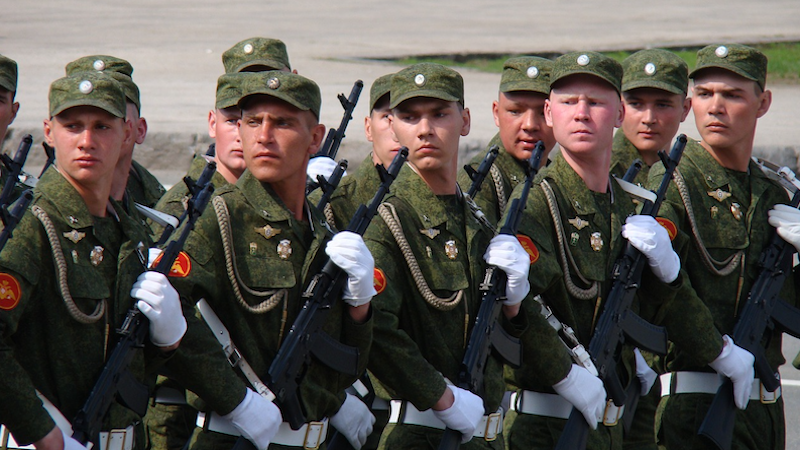
According to Russian President Vladimir Putin and his entourage, the Russians fighting in Ukraine are an army of heroes who enjoy almost unanimous domestic support. Neither of those claims is true (see EDM, April 1). The Russian forces in Ukraine are now riddled with fragging, desertions, and corruption—all signs of the kind of degradation that threatens unit cohesion as well as command and control.
Russians at home, despite government polls claiming overwhelming popular support for the invasion forces, are in fact increasingly skeptical of the Kremlin’s compulsion to scrape the bottom of the barrel to fill the depleted army ranks and pay increasingly larger bonuses to convince Russian military-age men to sign up. (For background, see EDM, July 13, 2023.)
In another sign of trouble, the Putin regime has been forced to ask Russians to turn in their privately owned guns to help the invasion forces. Furthermore, and perhaps even more significant as far as the future is concerned, Russians are increasingly alarmed by serious crimes committed by veterans of the war against Ukraine, many of whom were recruited out of prison (see EDM, October 25, 2023, January 19). More Russians are demanding that the government take action against them despite Putin’s insistence that these veterans will form the future Russian elite (see EDM, March 13).
The most dramatic of these problems is the rise of “fragging” among the Russian occupation forces. The term, which refers to attacks on officers by soldiers under their command, became notorious first among US military units in Vietnam and then within Soviet forces in Afghanistan. Novaya Gazeta Europa, a Russian media outlet based in Latvia, has now collected data that indicates fragging is taking place in Russian military units in Ukraine (Novaya Gazeta Europa, June 14).
The outlet examined military court records in the occupied territories from February to October 2023 and identified more than 135 cases in which Russian soldiers were charged with killing either civilians or other Russian military personnel. These figures are necessarily incomplete due to the limited time and territory they governed. Additionally, not all crimes of this kind are brought to the courts or correctly categorized, and the data is not disaggregated between the murder of civilians and the murder of Russians in uniform. Even so, such crimes must be of concern to Moscow because they point to breakdowns in command and control as well as unit cohesion, which threaten the Russian military’s ability to carry out its mission. Most immediately, increased fragging is likely prompting officers to avoid giving orders that might lead to their own deaths at the hands of their own soldiers.
Desertion from the ranks is also an increasing problem. Earlier this year,;Novaya Gazeta Europa;and other independent Russian media outlets reported that the number of such crimes has grown tenfold since 2023 and continues to rise every month (Novaya Gazeta Europa, February 29;;Zona.media, April 12). Many of these cases are being tried in regions where most assume patriotism is high and where men had earlier joined up to receive large bonuses and escape poverty. In Buryatia, for example, which famously sent large numbers of men to fight in Ukraine, charges of desertion in court have now tripled (Baikal-journal.ru, May 6). This phenomenon, of course, is being actively encouraged by opponents of the war and, at the same time, is being increasingly fought by the Russian military police and the Federal Security Service (FSB) (Zona.media;;Nemoskva.net, February 29).
Independent investigations have found that corruption within the Russian ranks is even more widespread. Some of the increase between 2021 and now reflects the growing number of men in uniform. It may even be the case that the rate of such crimes per 100,000 soldiers has not gone up. Instead, independent news outlet;Vyorstka;reports that corruption has taken new forms, with soldiers paying off commanders to use their cell phones, take drugs, or even get away with murder. More seriously as far as command and control are concerned, the outlet reports that soldiers are paying enormous bribes to be certified wounded and sent home, go AWOL, or avoid being sent to the front (Verstka.media, January 30).
Meanwhile, the Russian home front displays three additional signs of trouble for the units fighting in Ukraine. First, Russian officials are being forced to draft men they would earlier have excused from service and are having to pay higher bonuses to convince others to sign up. This shift in recruiting practices is placing additional burdens on the regions that are being forced to cover most of the additional costs. (For a detailed survey of this problem, see;Nemoskva.net, June 20.)
Second, some regional officials are now calling on Russians to turn in their privately owned guns to help the army in Ukraine and to defend against drone attacks. These actions signal to the country that the military is far more desperate than the Kremlin admits. These officials say that they very much hope other regions will copy their initiatives (Nemoskva.net, June 21).
Third, the Russian people are increasingly alarmed by the crimes of returning veterans and by the fact that Russian courts are often letting some off with mere slaps on the wrist (see EDM,;April 14, 2022,;January 19). That prompted one Communist Party deputy in the State Duma, Nina Ostanina, to declare that such veterans “represent a danger for society.” She also called for draconian new laws to prevent this “cancer” on Russian life from metastasizing (Gazeta.ru;;Meduza, June 19). The Kremlin is unlikely to allow such legal measures to be considered. However, it will be unable to ignore what calls for such a measure indicate about the true attitudes of the Russian people.
These problems, both individually and collectively, are not yet so serious that they can prevent Russian forces from continuing to fight and even advance in Ukraine, given their current advantages in numbers and arms. They are, nevertheless, signs that the picture the Kremlin and its media paints of the Russian military in Ukraine and of Russians at home is increasingly at odds with reality and that Moscow faces far more problems in this war than it is prepared to acknowledge. At the same time, these problems deserve more attention from both Ukraine and its Western supporters to amplify Russia’s weak points while crafting their own propaganda and policies.
- Source: This article was published at The Jamestown Foundation’s Eurasia Daily Monitor Volume: 21 Issue: 98
By Kabir Taneja
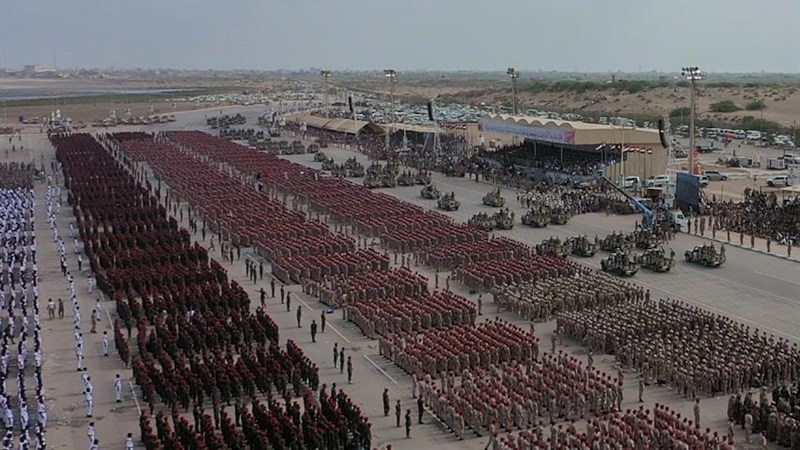
In 2015, as war ravaged Yemen, the poorest country in the Arab world, India launched Operation Rahat aimed to evacuate its citizens as the country’s capital Sana’a and its airport came under Houthi control. The Houthis back then, were comparatively ragtag when it came to actual military and militant capacities. Today, nine months since Hamas’s terror attack and Israel’s retaliatory war in Gaza, the Houthis have arguably become one of the biggest beneficiaries.
The Houthi movement, formerly officially known as Ansarallah, has its roots in an armed and political ideation which champions Yemen’s ethnic Shia Muslim minorities, the Zaidis. The ideology was founded by Hussein al-Houthi (assassinated in 2004) and is currently led by his brother, Abdul-Malik-al-Houthi. The histography of Ansarallah is similar to other Shia minority groups around the region. Al-Houthi fought against the long-standing government of Yemeni leader Ali Abdullah Saleh (who was killed in a Houthi ambush in 2017).;
The war in Gaza
The Houthis officially recognise themselves as part of Iran’s ‘Axis of Resistance’, a constellation of groups aided by Iran, largely working against Israel and the United States (US). However, the Houthis also fought a war against Saudi Arabia which technically is still ongoing since 2015. The Saudi air campaign against the Houthis was in a way to make sure that the Iran-backed group did not cement power on the Kingdom’s doorstep, and have influence over the critical Red Sea waterways, which not only feed into the Suez Canal but also play host to Crown Prince Mohammed bin Salman (MbS)’s grand ambitions for Saudi;economic diversification. Some;reports;have also highlighted the Houthis aligning with Al-Qaeda in the Arabian Peninsula (AQAP) in another marriage of convenience to push back against what is perceived as external interference in Yemen’s polity and its;internationally recognised government;based out of Aden.;
The Saudi campaign, which did not include ‘boots on the ground’ remains a quagmire, forcing Riyadh to open;diplomacy channels,;further aided by Saudi–Iran diplomatic normalisation in 2023 that was;brokeredby China. These moves have distanced Saudi from any direct conflicts for the moment, including taking up any unilateral military response in favour of the Palestinian cause even as Israel uses disproportionate military power to attain its aims of ‘ending Hamas’. Even Egypt, an Arab state much more closely involved with Gazan affairs as a neighbouring state, refuses to help Palestinians directly. It fears that engaging in the conflict might entangle it in Israel’s war efforts and cause a potential collapse of the Israel–Egypt Peace Treaty, the Camp David Accords, which have been in place since 1978.;
All these intricacies of regional geopolitics have given space to Houthis to take on Israel much more directly, in a way most Arab states are refusing to do. This position has pushed the Houthis from a localised militia to an outfit that at least behaves more like an official military unit on the surface. It now has a big presence on social media and even some support within the Arab populations. While the group benefits from its patronage provided by Iran, which has clearly increased many folds since October 2023, Tehran also benefits from the deniability it can claim.
“The resistance (Houthis) has its own tools…and acts in accordance with its own decisions and capabilities,” Ali Bagheri, then Iran’s deputy foreign minister and currently the acting foreign minister, had said in December. These tactical capabilities being highlighted have since been deployed by the Houthis in the Red Sea, so much so, that even the Indian Navy had to station itself in the region to protect Indian interests in global trade, supply chains, and energy security. Even politically, the Houthis have tried to build depth with states like Iraq where a tussle between Iran-backed and US-backed influence is almost a permanent fixture, giving their kind some space to manoeuvre.
Presence in the Red Sea
The US Central Command (CENTCOM) recently announced that its assets in the region had destroyed three Iran-backed Houthi “uncrewed surface vessels” in the Red Sea. This meant either sophisticated or makeshift sea-borne drones were being deployed by the group to target both US military assets and commercial vessels that are involved in trade with Israel. Small manned gunboats operating in certain numbers is a strategy previously employed by Iran in the Strait of Hormuz.
Before these, the Houthis have also operationalised ballistic missiles to attack targets in the Red Sea. On June 20, the Houthis sank a second ship, raising alarm by commercial shippers. The missiles in question are in all likeliness supplied by Iran’s Islamic Revolutionary Guard Corps, and particularly its external wing, the Quds Force over the past few years. According to scholar Fabian Hinz, the missiles in question include Iranian designs and older Soviet and Chinese ones that may have been re-adapted for easier use by the Houthi’s limited technical know-how.
There, however, remains a clear distinction on how some of these groups are being honed as part of the resistance. The Houthis capacities are being strengthened largely by way of;prioritising;sea-based warfare. On another front, thousands of miles from Gaza, the Ukrainians are using unmanned boats, or ‘naval drones’, to counter Russia in the Black Sea. While Iranian money and know-how are fuelling the Houthis basic technological capacities in the Red Sea, American and European aid is similarly bolstering Ukraine’s. Although politics and geopolitics differ, tactics and operational thinking are on a similar wavelength. Both are led by low-cost automation of weapons with an aim to minimise human losses and protect high-cost weapon systems such as combat jets, naval ships, and missiles, amongst others.;
Along with politics and tactical military strategies, the Houthi’s design also upends the ‘cost of war’ debate. In January, the French Navy’s commander for the Indian Ocean, Vice Admiral Emmanuel Slaars had to;publicly defend;his frigate’s use of Aster 15 missiles, with each costing upwards of US$1 million, to take down Houthi drones which may have cost only a few thousand dollars to build. Similar costs have been subsumed by other navies such as the United States (US) and the United Kingdom (UK). However, for the likes of India, for example, such capacity deployment is unpalatable. Not to mention, an Indian vessel using just a few missiles to repel a drone attack, would have to head back to port in India to re-stock its ammunitions. This ironic weaponisation of the ‘cost of war’ itself plays well into the hands of some militias.;
Conclusion
The Houthis are prioritising supporting Gaza and Hamas at a time when few Arab states in the region are. The decision to do so could go a long way in cementing the group as a more formalised and formidable political force in the region. The war in Gaza and the decision to be a part of Iran’s axis has benefitted the Houthis tremendously, who have gone from sharing a single Kalashnikov between fighters to a more trained, funded, armed, and experienced fighting force. Even if Gaza gains minimally from their patronage, and the group’s direct targeting of Israel remains a long shot, ‘Ansarallah’ has successfully used the war to force multiply its own placement as an ideology with a military.;
- About the author: Kabir Taneja is a Fellow with the Strategic Studies Programme at the Observer Research Foundation.
- Source: This article was published at the Observer Research Foundation.