
Azerbaijani-Armenian peace to create unprecedented stability in region – US ambassador Trend News Agency
Day: June 28, 2024
Undecided voters say they now support Joe Biden after debate https://t.co/3v3cCDfDVO pic.twitter.com/wVXMuvrLtw
— Newsweek (@Newsweek) June 28, 2024
Full Debate: Biden and Trump in the First 2024 Presidential Debate | WSJ https://t.co/XQdigROiPy via @YouTube
— Michael Novakhov (@mikenov) June 28, 2024
The WikiLeaks project was always going to put various noses out of joint in the journalistic profession.; Soaked and blighted by sloth, easily bought, perennially envious, a good number of the Fourth Estate have always preferred to remain uncritical of power and sympathetic to its brutal exercise.; For those reasons, the views of Thomas Carlyle, quoting the opinion of Edward Burke in his May 1840 lecture that “there were Three Estates in Parliament; but in the Reporters’ Gallery yonder, there sat a Fourth Estate more important far than they all” seem quaintly misplaced, certainly in a modern context.
The media response to the release of WikiLeaks founder Julian Assange from his scandalous captivity after pleading guilty to one count of conspiracy to obtain and disclose national defence information under the US Espionage Act of 1917 provides a fascinating insight into a ghastly, craven and sycophantic tendency all too common among the plodding hacks.
Take, for instance, any number of journalists working for the Australian Broadcasting Corporation, official national broadcaster and devotee of the safe middle line.; One, a breakfast news anchor for the network’s meandering twenty-four-hour service, has a rather blotted record of glee regarding the mistreatment of Assange over the years. ;
Michael Rowland, torturously insipid and ponderously humourless, had expressed his inexpressible joy when the Ecuadorian government cut off Assange’s access to the Internet while confined to the country’s London embassy.; “A big gold star to Ecuador,” he chirped on March 28, 2018.; Andrew Fowler, another journalist and far more seasoned on the rise of WikiLeaks, reproached Rowland on Twitter, as the X platform was then called. “Why would silencing a fellow journalist be supported?”; For Rowland, the matter was as clear as day.; “That remains a disputed opinion, Andrew.; Publisher and activist yes. But you put yourself in a small camp calling him a journalist.”
These points matter, because they go to the central libelling strategy of the US government’s prosecution so casually embraced by mainstream outlets.; In such a generated smokescreen, crimes can be concealed, and the revealers shown to be those of bad faith.; Labels can be used to partition truth, if not obscure it altogether: a publisher-activist is to be regarded more dimly than the establishment approved journalist.
The point was rather well made by Antony Loewenstein, himself an independent journalist keen to ferret out the grainier details of abusive power.; When interviewed by none other than Rowland himself, he explained, with unflagging patience, the reasons why Assange and Wikileaks are so reviled by the orthodox scribblers of the Fourth Estate.; WikiLeaks, he stated with salience, had confronted power, not succumbed to it. ;
Rowland could only reiterate the standard line that Assange had admitted guilt for a “very serious offence”, refusing to examine the reasons for doing so, or the implications of it.; Again, the vulgar line that Assange had “put US lives at risk” with the WikiLeaks disclosures was trotted out like an ill-fed nag. Again, Loewenstein had to remind Rowland that there was no evidence that any lives had been exposed to harm, a point made in several studies on the subject from the Pentagon to the Australian Defence Department.
The tendency is pestilential.; While more guarded in his current iteration as a professor of journalism, Peter Greste, formerly a journalist for Al Jazeera, was previously dismissive in the Sydney Morning Herald of Assange’s contributions as he was brutally evicted from the Ecuadorian Embassy in London.; “To be clear, Julian Assange is no journalist, and WikiLeaks is not a news organisation.”; An organisation boasting “the libertarian idea of radical transparency” was “a separate issue altogether from press freedom.”
While approving the publishing activities centred on the release of the Collateral Murder video showing the killing of civilians including two Reuters journalists by Apache helicopters, and the release of the Afghanistan War Logs, the Iraq War Logs and “Cablegate”, Greste fell for the canard that the publisher did not redact names in documents to “protect the innocent” by dumping “them all onto his website, free for anybody to go through, regardless of their contents or their impact they might have had.” ;
There is no mention of the decrypting key carelessly included in WikiLeaks: Inside Julian Assange’s War on Secrecy by its bumbling authors David Leigh and Luke Harding, or the fact that the website Cryptome was the first to publish the unredacted files ahead of WikiLeaks.; There is certainly no discussion of the extensive redacting efforts Assange had made, as many of his collaborators testify to, prior to the release in November 2010.; ;
Writing on June 25 in The Conversation, Greste displays the emetic plumage of someone who has done an about face.; “It is worth pausing for a moment to consider all Assange has been through, and to pop a bottle of champagne to celebrate his release,” he writes distastefully, also reflecting on his own carceral experiences in an Egyptian prison cell.; He also claims that the role of WikiLeaks, in checking “the awesome power that governments wield”, should be celebrated, while stating, weakly, that he never believed that Assange should “have been charged with espionage.”
In such shifting views, we see wounded egos, cravenness, and the concerns about an estate whose walls had been breached by a usurping, industrious publisher.; By all means use the spoils from Assange and his leakers, even while snorting about how they were obtained.; Publish and write about them in the hope of getting a press award.; Never, however, admit that Assange is himself a journalist with more journalism awards than many have had hot dinners.; In this grotesque reality, we are now saddled with a terrifying precedent: the global application of a US espionage statute endangering journalists and publishers who would dare discuss and run material on Washington’s national security.
The federal budget of Pakistan for the financial year 2024-2025 holds much detail that keen observers can analyze about the country’s strategic priorities. A critical point in this budget is allocating a significant amount toward defence—approximately 2.12 trillion rupees. This is an increase of 17.6% from the previous financial year and amounts to 1.7% of the GDP. On the other hand, national defence accounts for 12.33% of the total expenditures, clearly indicating that national security is a highly valued commodity in the country.
This massive defence investment explains Pakistan’s complex geopolitical reality with neighbors like India and Afghanistan, justifying the need for a very elaborate defence strategy. Perennial tensions and old rivalries with India, along with security concerns due to turmoil in Afghanistan, have compelled Pakistan to strengthen its defence further. This is strategic allocation in consonance with immediate concerns for security and maintaining proper military presence in the region.
In contrast, minimal allocation is made to the education sector. Despite the large-scale public demand for better education infrastructure and reform, it never backs any demands in the education budget. In this constant tussle in Pakistan between priorities for education and several other critical needs, the road toward socioeconomic improvement lies for many countries in today’s world. In any case, the implications of an underfinanced education sector are very far-reaching concerning the socioeconomic development of a country, and this is one of the reasons a well-educated population is required for any country’s long-term growth and innovation. There is no doubt that this, yet again, is another area where the budget is revealingly under considerable colossal challenge.
Most health services are lowly funded, hence acting as an indicator pointing towards the struggle to channel much money into public health. Concerning existing and emerging public health problems, this underfunding is growing since much money will be needed to equip the healthcare system in the coming days. This low level of resource allocation to health indicates the dilemma policymakers must encounter to strike a balance among the country’s needs.
Some of the difficulties are those that the budget, through the use of subsidies and social welfare programs, tries to address. The allocations promise to help protect the vulnerable members of society during the difficult financial period. Social welfare is, therefore, critical as it offers short-term relief during high inflation and unemployment. Attention to social welfare, therefore, is an endeavor to balance the immediate security needs against the long-term goal of social equity. With the support of vulnerable populations, the government can reduce socioeconomic discrepancies that are a solid factor for further destabilization.
Therefore, budgetary allocations unambiguously represent Pakistan’s current priorities and reflect the balancing act that has been taking place to date. Massive investments in defence illustrate the importance of urgent security concerns. At the same time, though, expenditures on education and health are much lower and show areas that need much more attention and resources. This is a discrepancy between the immediate and strategic priorities and the imperfect economic landscape the government has to work in.
It is an essential barometer of national values: it draws a positive light on Pakistan’s concern for defence and social welfare. However, it reflects the imperious urgency of gaining investment in education and healthcare. This is an illustrative hard choice or trade-off with which any developing country must urgently cater to the diverging needs. It is a monumental attempt at balancing security with socioeconomic development; hence, such an attempt is full of challenges.
A closer budget review would find the apparent strategic purpose for defending spending. It is an investment in the augmentation of military power and an extremely potent signal for both home and abroad audiences. This signals Pakistan’s commitment to defend its sovereignty at all costs, ensuring regional stability. Such an investment in defence is like an insurance policy: the country would be prepared for a surprise attack if conflict were to break out.
However, underfunding in education and healthcare points to any country’s structural crisis. The realization that these two need long-term investments and reforms often gets on rocky trails with how the constraints of immediate fiscal policy should be considered in setting priorities. Unwise funding for education is the base of developing a country’s workforce and, therefore, can be left without vitality for economic growth and competitiveness. However, under-investment in healthcare makes a population more vulnerable to diseases and health crises, heavily impeding their productivity and quality of life. The third reason indicates that social welfare programs may signal an understanding of what the most vulnerable populations in society go through. This lays the foundation for social stability, reduction in poverty levels, and lessening inequality. The welfare support works as a cushion; thus, the government can prepare a stage where people and their families can adapt themselves to these challenging economic situations.
Finally, the Pakistan FY 2024-25 budget reflects the country’s priorities. It indicates a strong urge to allocate gigantic amounts of spending to defence in the context of national security and, simultaneously, a struggle to try and finance education and healthcare. The inclusion of subsidies and social welfare programs is an attempt to balance immediate security needs with the long-term goal of social equity. These demanding economic times capture this budget and the difficult decisions the government has to make in trying to balance the various national interests. It, therefore, emphasizes the strategic allocation of resources to carve out a future course for Pakistan that ensures the country’s security and socioeconomic development in the context of a composite, complex world imbued with its dynamism.
NEET Exam Scandal
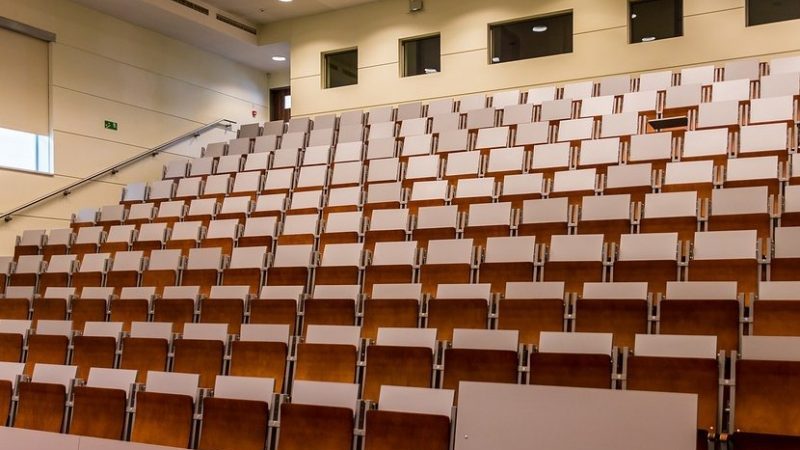
In the sweltering heat of New Delhi, a seismic scandal has erupted, threatening the futures of millions of Indian students. The National Eligibility cum Entrance Test (NEET), crucial for medical education, has been exposed as a cesspool of corruption and mismanagement, with revelations of paper leaks and systemic fraud. Announced amidst election fervour on June 4, the NEET results sparked outrage and disillusionment, as the National Testing Agency (NTA) now stands at the epicentre of a scandal that has shattered dreams and eroded trust, uncovering deep-seated corruption within India’s education system.
Statistical Anomalies and Institutional Failures
The NEET results this year defy the bounds of credibility. A staggering sixty-seven students achieved a perfect 720 out of 720, a meteoric rise from just two the previous year. Such an astronomical increase is not merely improbable; it is a statistical anomaly that reeks of malfeasance. The NTA’s feeble justification that grace marks were awarded due to external disruptions only deepens the suspicion, particularly when the criteria for these marks remain shrouded in opacity.
The NTA’s bungling of the situation has only served to inflame the already simmering distrust. Their decision to re-test the 1,563 students who received grace marks is a superficial band-aid that fails to address the systemic rot at the heart of the issue. The agency’s attempts to downplay the scale of the problem reveal a disturbing level of denial and ineptitude.
A Corruption Network Unveiled
This scandal is far from an isolated incident confined to a single state. In Bihar, police have secured confessions indicating that NEET papers were accessed and sold the night before the exam for exorbitant sums. In Gujarat, a nefarious scheme involving private coaching centers and exam supervisors facilitated widespread cheating, leading to multiple arrests. These revelations expose a vast and insidious network of corruption that permeates the entire country.
Education Minister Dharmendra Pradhan’s dismissive response to these incidents as “isolated” is not just disingenuous; it is perilous. His refusal to call for a comprehensive re-examination, despite the overwhelming evidence of systemic failure, underscores the government’s complicity in this debacle.
The Human Cost of Corruption
The NEET scandal has inflicted a profound and far-reaching impact on millions of aspiring medical students across India. These young examinees, who have dedicated countless hours, immense effort, and unwavering dedication to their studies, now find themselves grappling with a deep sense of betrayal and despair. For these students, the promise of a future in medicine, a dream they have nurtured with tireless dedication, has been cruelly snatched away by the systemic corruption and inefficiency that plague the National Testing Agency (NTA).
Imagine the collective heartbreak of millions of students, who, despite their best efforts, find their futures jeopardized by the fraudulent practices of those entrusted with safeguarding their dreams. The statistical anomalies in the results, with an unprecedented number of perfect scores, have rendered their genuine achievements meaningless. The psychological toll is immense, exacerbated by the realization that their years of hard work and sacrifice might be in vain.
For these students, the NEET scandal represents a catastrophic “Paradise Lost.” Their dreams of donning the white coat, of serving as doctors in their communities, now seem like distant and unattainable fantasies. The promise of a meritocratic system that rewards talent and diligence has been shattered, replaced by a stark reality where corruption and deceit dictate success. The future they envisioned, a future of healing and helping others, has been compromised by a system that has failed them at every turn.
The impact extends beyond the immediate emotional and psychological distress. The scandal has practical and long-term consequences for these students and their families. The high cost of private medical education is prohibitive for many, and the hope of securing a seat in a government-run institution, with its affordable fees, was their only viable path to becoming doctors. The inflated scores and fraudulent practices have skewed the competition, making it even more difficult for deserving candidates to secure these coveted seats.
Moreover, the pervasive uncertainty surrounding the examination process has left students in a state of limbo. The decision to re-test a small fraction of candidates who received grace marks is a superficial remedy that fails to address the broader systemic issues. The lack of clarity and transparency in the NTA’s handling of the situation has eroded trust in the entire examination system. Students are now questioning the integrity of their results and the fairness of the re-evaluation process.
The human cost of the NEET scandal is immeasurable. It is a loss not only of dreams but also of trust in a system that was supposed to be fair and just. The NEET scandal is a stark reminder of the urgent need for accountability, transparency, and reform in India’s education system. The futures of millions of young Indians hang in the balance, and the government must act swiftly to restore faith and ensure that such a betrayal is never repeated.
The psychological toll is immense, exacerbated by the intense pressure of a system that prioritizes rote learning and high-stakes testing over genuine intellectual development.
The Flawed Vision of ‘One Nation, One Examination’
The NEET scandal underscores the fundamental flaws in India’s approach to standardized testing. The centralization of exams like NEET was intended to streamline admissions and curb corruption. The reality, however, is starkly different. The pressure-cooker environment engendered by such high-stakes exams has precipitated a tragic rise in student suicides and widespread disillusionment.
In cities like New Delhi, Mumbai, Bengaluru,; Kota, renowned for their coaching centers, the pressure to succeed is intolerable. The alarming rise in student suicides underscores the human cost of an education system that values scores over well-being. The NEET scandal is symptomatic of this larger malaise, reflecting an education policy that is disastrously out of touch with the needs and realities of India’s youth.
Demanding Accountability and Reform
The NEET scandal demands immediate and decisive action. The government must initiate a thorough, independent investigation into the allegations of paper leaks and corruption. The NTA’s role in this scandal must be rigorously scrutinized, and those responsible must be held to account. Empty promises of reform are woefully inadequate; concrete steps must be taken to restore trust in the examination system.
The NEET scandal has highlighted the urgent need for systemic reform in India’s education sector. The centralized examination model, which was intended to streamline admissions and eliminate corruption, has instead exacerbated the pressure on students and exposed them to greater risks of malpractice. The government must take decisive action to overhaul this flawed system, ensuring that future generations of students are not subjected to the same ordeal.
There is an urgent need to reevaluate the centralized examination model. India’s diverse educational landscape necessitates a more flexible and nuanced approach. Decentralizing exams and empowering state boards could help alleviate the immense pressure on students and foster a more equitable system. The government must move beyond empty rhetoric and take concrete steps to address the root causes of this crisis. The future of the nation depends on it. ;
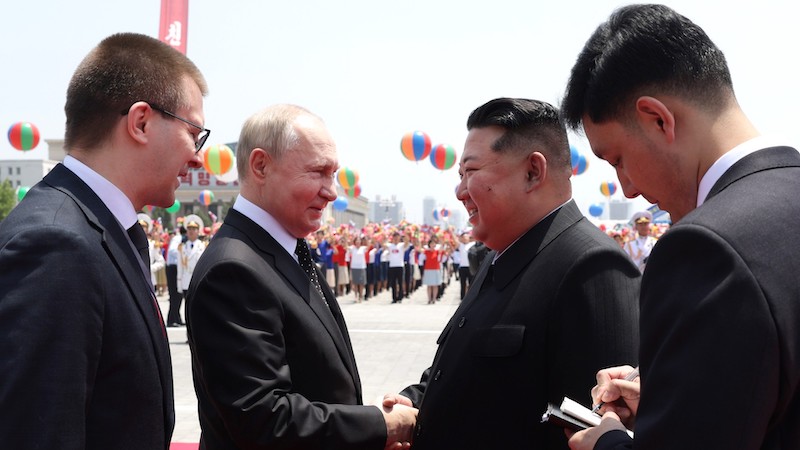
In a recent and alarming development, Russian President Vladimir Putin and North Korean leader Kim Jong Un signed a mutual defence pact, solidifying their alliance against perceived Western aggression. This agreement, which includes the potential use of nuclear weapons, signifies a new level of cooperation between these two nations. This paper delves into the implications of this pact for the international community and offers recommendations on how global leaders should respond. The best approach involves a blend of diplomacy and firm negotiation, aiming to engage rather than isolate these countries.
The agreement between Russia and North Korea encompasses several key components, including military cooperation, economic support, and technological exchanges. Both countries pledged mutual assistance in case of aggression, with a significant emphasis on nuclear capabilities. This pact marks a strategic shift, as both nations face increasing isolation and sanctions from the international community.
The inclusion of nuclear weapon use in the agreement raises significant concerns. North Korea’s ongoing development and testing of ballistic missiles and nuclear weapons have already heightened tensions in the Asia-Pacific region. The potential for Russia to enhance North Korea’s nuclear arsenal in exchange for munitions and other military support for its war in Ukraine presents a dire threat to global security.
The alliance between Russia and North Korea could destabilize global security in several ways Enhanced cooperation could lead to the transfer of advanced nuclear technology from Russia to North Korea, accelerating the latter’s nuclear capabilities and posing a significant threat to regional stability The agreement increases the risk of military confrontations, especially if either country perceives an imminent threat. The promise of mutual defence might embolden both nations to take more aggressive stances against their adversaries.; ;
As both countries are already heavily sanctioned, their alliance could lead to more flagrant violations of international sanctions. This could undermine the effectiveness of global efforts to curb their aggressive behaviours.
Given the potential dangers of this alliance, the international community must respond strategically. A nuanced approach combining firm diplomacy and engagement is essential.
The international community, particularly Western democracies, should reinforce their alliances. This includes bolstering NATO’s presence in Eastern Europe and enhancing partnerships with countries in the Asia-Pacific region, such as South Korea and Japan.;
Isolating Russia and North Korea further may only push them closer together. Instead, diplomatic channels should be kept open to negotiate terms that could potentially de-escalate tensions. Engaging in dialogue about arms control and non-proliferation can provide a platform for mitigating some of the risks posed by this agreement. While maintaining broad sanctions, the international community should consider more targeted measures that limit the capacity of both nations to support each other militarily. Sanctions should focus on preventing the transfer of specific technologies and materials that could enhance North Korea’s nuclear capabilities
Offering conditional economic incentives and humanitarian aid could persuade North Korea to adhere to international norms. This approach might also help to create internal pressure within North Korea for more open and cooperative foreign policies.
Addressing the challenges posed by the Putin-Kim agreement requires a balanced and comprehensive strategy. The international community must work together to implement measures that deter aggressive actions while encouraging cooperation and compliance with global norms.
Enhanced intelligence-sharing among allies is crucial to monitor and counteract any military developments stemming from this agreement. This includes tracking the movement of weapons and technology that could indicate an escalation in either country’s military capabilities.
Multilateral forums such as the United Nations should play a central role in addressing this issue. Resolutions condemning the agreement and reaffirming the commitment to global security can help to galvanize international support against the potential threats posed by this alliance.
Engaging in public diplomacy to inform global citizens about the dangers of this alliance can build international pressure against both countries. Highlighting the risks and advocating for peaceful resolutions can also garner widespread support for diplomatic efforts.
In conclusion, the agreement between Putin and Kim represents a significant challenge to global security. By adopting a strategic approach that blends diplomacy with firm actions, the international community can mitigate the risks and work towards a more stable and secure world. Maintaining open channels for negotiation, strengthening alliances, and implementing targeted sanctions are critical steps in addressing this complex issue.
The opinions expressed in this article are the author’s own.
References
- AP News. “Putin and Kim Jong Un Sign Mutual Defense Pact.” AP News, 2024. [Link](https://apnews.com/article/vladimir-putin-kim-jong-un-russia-north-korea-summit-ukraine-a6b8d2c12de7ee2ab6716d4747c9850e).
- BBC News. “Putin and Kim’s Dangerous Alliance.” BBC News, 2024. [Link](https://www.bbc.com/news/world-asia-56828368).
- Politico. “Putin and Kim Pledge Mutual Assistance Against Aggression.” Politico, 2024. [Link](https://www.politico.eu/article/putin-kim-jong-un-agreement).
- Yahoo News. “Kim Jong Un and Putin Sign Mutual Defense Pact.” Yahoo News, 2024. [Link](https://www.yahoo.com/news/kim-jong-un-putin-agreement).
- NBC News. “Putin’s Visit to North Korea: New Levels of Cooperation.” NBC News, 2024. [Link](https://www.nbcnews.com/news/world/putin-north-korea-summit).