
Categories
South Caucasus News

Let Not The World Conscience Remain Silent Anymore On Plight Of Tibetans – OpEd


Let Not The World Conscience Remain Silent Anymore On Plight Of Tibetans – OpEd

Around 60 years back, China forcibly entered Tibet and occupied the region. Until then, Tibet was a peaceful country and Tibetans were living with high value systems and devoted to Buddhist philosophy with ill will for none. Tibet had no army worth its name and when China carried out the aggression and its troops entered Tibet, all that the Tibetans could do was to peacefully protest against the invasion. The merciless Chinese troops massacred the protesting Tibetans in thousands. In such grim situation, the respected spiritual leader the Dalai Lama had no alternative other than leaving Tibet and entering the neighbouring country India with around 85000 Tibetan followers.

During this period of stress and strain, Tibet was almost left alone to suffer by the rest of the world. Government of neighbouring country India ought to have protested against Chinese invasion but it did not do so and to add insult to injury, recognised the occupation of Tibet by the Chinese aggressors. At that time, there were many sane voices in India which urged the Government of India to register its protest but the Government of India did not do so.

All that the Government of India did was to allow the respected the Dalai Lama and his followers to stay in India as refugees. Over the last sixty years, the third generation Tibetans now are mostly living as refugees in India.

After occupying Tibet over the last sixty years, China has been systematically plundering the several mineral wealth such as lithium and water resources in Tibet . In a methodical way , Chinese government have been sending native Chinese to settle in Tibet, to destroy the Tibetan culture and traditions. Several monasteries in Tibet have been destroyed.

The story of injustice to Tibet done by China continues today.

In the last six decades, China has not concealed its territorial greed and has entered into war with India and have now occupied thousands of kilometres of Indian territory. Obviously, occupation of Tibet by China was the first step in achieving its territorial greed. This practice of claiming the territory of other countries by China continue till today and China seems to be having the last laugh.

In such circumstances, it is now gratifying that the US House of Representatives have passed the” Resolve Tibet Act”, that called upon the Chinese government to engage with the respected the Dalai Lama, to ensure that the independence of Tibet would be restored back to Tibetans.

Subsequently, an influential group of US law makers have met the respected the Dalai Lama in Himachal Pradesh in India and exchanged views and offered support to the cause of Tibet. They have further clearly warned Chinese government that they would take steps to safeguard the sovereignty of Tibet in the coming period.

Of course, as expected, Chinese government has protested against the observations of the US lawmakers and said that Tibet is an internal matter for China.

Now, what would be the further developments?

While US lawmakers have taken the initiative to support the Tibetan cause, even though after so many decades, it can be said that it is better late than never. The question is whether other countries in the world, particularly western democracies and the discerning thinkers in these regions would voice their support to the initiative taken by the US lawmakers.

The ball is now clearly in the court of Government of India to seize the initiative and take it forward by extending support to the Tibetan cause. The question is whether the Government of India would do so or fail in its responsibility towards independent Tibet. In this connection, it may be noted that Indian Prime Minister Modi has not met the respected the Dalai Lama even once during the last ten years, when he has been the Prime Minister of India and he remains so now.

In recent times, China has acted against India’s interest in several international forums and obviously, view India as its first enemy.;

Possibly, Indian government does not want to antagonise Chinese government to avoid a military confrontation. If this is the attitude of Government of India, it is a defeatist attitude and lacking courage of conviction. Millions of Indians today are sympathetic towards Tibetan cause and want government fo India to speak for Tibet in the world forums.

Many Tibetans have now gone to different countries as refuges and later on becoming citizens of those countries. They all seem to be pre occupied with the business of getting their living and are unable to do anything substantially to help the cause of their motherland.

The initiative of US lawmakers should get further vigour and India can certainly play a catalytic role in espousing and strengthening the Tibetan cause and stir the world conscience, which has been silent for all practical purposes so far with regard to the plight of Tibetans.
Categories
South Caucasus News

Mobilizing For Morocco’s Future: The Significance Of The 7th General Census – OpEd


Mobilizing For Morocco’s Future: The Significance Of The 7th General Census – OpEd

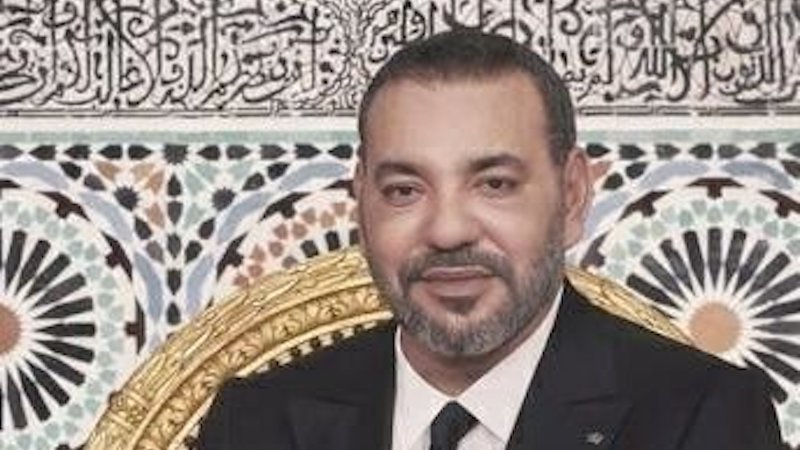
Morocco's King Mohammed VI. Photo Credit: Morocco government

As Morocco approaches the end of this summer, an event of profound national importance is set to unfold: the 7th General Census of Population and Housing. His Majesty King Mohammed VI, in a letter to the Head of Government, Mr. Aziz Akhannouch, has underscored the critical role this decennial event plays in shaping the future of Morocco. The census is not merely a statistical exercise; it is a cornerstone for Morocco development, democracy, and societal well-being.

Since ascending to the throne, King Mohammed VI has prioritized the regular organization of the general census, recognizing it as a vital tool for understanding and addressing the dynamic needs of our population. This upcoming census is particularly noteworthy as it promises to be both innovative and ambitious, integrating advanced technological means for data collection and processing, and expanding its scope to include crucial themes such as social protection.

The value of this operation lies in the comprehensive data and indicators it provides, which are indispensable for the effective implementation of Morocco’s development model. Built on the principles of political democracy, economic efficiency, human development, and social and territorial cohesion, this model requires precise and up-to-date information to guide policy-making and resource allocation. By renewing this operation every ten years, Morocco ensures that it remains equipped to accurately track demographic and socio-economic trends, anticipate the evolving needs of its citizens, and formulate relevant policies accordingly.

King Mohammed VI’s directive to organize this census with an emphasis on innovation and ambition is a clear signal of the importance placed on robust and forward-thinking governance. The use of advanced technology will enhance the accuracy and efficiency of data collection, while the inclusion of new areas of inquiry, such as social protection, reflects a deep commitment to addressing the pressing issues facing ;the Moroccan society.

Mr. Aziz Akhannouch, as Head of Government, faces the significant task of overseeing this national endeavor. The strategic importance of the census cannot be overstated—it concerns not just national and international institutions, but also political, trade union, and economic actors, civil society, Moroccan families, and foreign residents alike. Ensuring its success requires meticulous planning, extensive mobilization of human and logistical resources, and seamless coordination among public administrations, institutions, and authorities at all levels.

The King’s call to the Minister of the Interior, the High Commissioner for Planning, and all walis and governors to ensure the optimal organization of the census highlights the collaborative effort needed. This is a moment that demands the full participation and cooperation of all sectors of society. The success of the census will depend on the active engagement of Moroccan citizens, who are urged to provide reliable and precise information. Such cooperation will enable the generation of valuable insights that can drive effective decision-making and policy development.

Once data collection is complete, the prompt processing and analysis of the information will be crucial. The High Commission for Planning is tasked with ensuring that the results are swiftly made accessible to decision-makers and stakeholders. This timely dissemination of data will facilitate the rapid identification of emerging trends, allowing for the formulation of pertinent public policies and the adaptation of programs that serve the nation’s interests and enhance the well-being of our people.

As Morocco approaches the implementation of the 7th General Census, it is essential to recognize its significance as more than a bureaucratic procedure. It is a collective national endeavor that embodies Morocco’s commitment to progress and development. By participating actively and providing accurate information, every citizen contributes to a clearer, more comprehensive picture of Morocco to build a brighter future.;

In celebrating this initiative, Morocco reaffirms its unity and shared purpose under the visionary leadership of His Majesty King Mohammed VI. This census is a testament to Morocco’s dedication to the principles of democracy, efficiency, and social cohesion.;


Categories
South Caucasus News

Taiwan’s New President Lai Must Unify A Divided Population – Analysis


Taiwan’s New President Lai Must Unify A Divided Population – Analysis

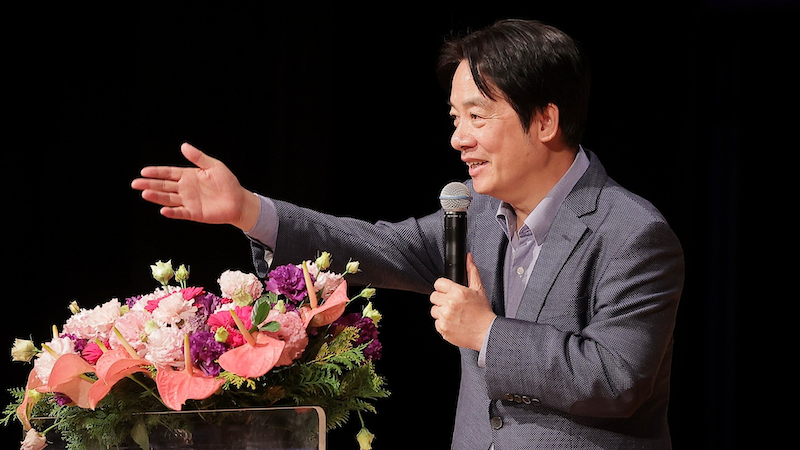
Taiwan's William Lai Ching-te. Photo Credit: Chien Chih-Hung / Office of the President, Republic of China (Taiwan), Wikipedia Commons

By James Wu and Dennis LC Weng

As Taiwan welcomed its new president Lai Ching-te on 20 May 2024, the political atmosphere was charged with both;anticipation and apprehension. Taiwan stands at a crucial juncture, with its future hinging on how the relationship evolves between the newly elected administration and the Legislative Yuan — Taiwan’s highest legislative organ.

Recent;brawls among lawmakers;over parliamentary reform underscore the role this executive–legislative dynamic will play in determining whether Taiwan advances its democratic governance or goes backward. Taiwan will also need to to explain to its democratic allies what its parliamentary reform entails and why it matters to Taiwan’s democracy.

As President Lai takes office, he;confronts a legislature;where his party, the Democratic Progressive Party (DPP), does not hold a majority — a stark contrast to the situations faced by his predecessors;Tsai Ing-wen;and;Ma Ying-jeou. Since the Legislative Yuan convened in February 2024, the dynamics between the opposition-led legislature and the Executive Yuan, now headed by Lai’s DPP, have been challenging. The central question is whether Lai will address these challenges and propose a framework for cooperation with the opposition.

At the heart of the dispute in the Legislative Yuan are the proposed reforms to its powers. The Kuomintang (KMT) and Taiwan People’s Party (TPP) have joined forces, proposing that the Legislative Yuan needs stronger oversight powers over the Executive Branch. The DPP proposed a similar bill in 2012, a fact;well-documented in the Legislative Yuan, before gaining a legislative majority. But now that the DPP has held executive power for eight years and is poised for another four year term, it is reluctant to see these powers restricted by an opposition-led legislature.

The opposition majority in the Legislative Yuan is intent on scrutinising the actions of the Lai administration. The resolution of disputes within the Legislative Yuan will largely depend on President Lai’s approach to governance. He can rebuild trust by extending an olive branch through power-sharing with the opposition, or he could choose to continue the ideological contest.

The Legislative Yuan has;passed opposition-backed amendments;to the Act Governing the Legislative Yuan’s Powers and the Criminal Code, that aim to criminalise acts deemed as contempt of the legislature. These acts include refusing to answer questions from lawmakers, providing indefinite responses or openly questioning the authority or integrity of the legislature. These measures are intended to uphold the dignity and authority of the legislature by holding government officials accountable.

While;some scholars criticise;these reforms as;unconstitutional;and a threat pushing Taiwan towards authoritarianism, similar reforms were proposed and supported by the same people and the DPP in 2012. The differences between the 2012;DPP reform proposal;and the 2024;opposition-proposed;bill are almost negligible. The new bill states that contempt of legislative power can only be confirmed by the general assembly of the Legislative Yuan, with a majority registered vote replacing a secret ballot, increasing accountability. A convicted individual can appeal to the judicial system, with the final decision resting with the judiciary.

Some in Taiwan have;protested against the reform, though other democracies have similar frameworks that allow legislative bodies to oversee the executive. These systems ensure diffusion of power, with each branch holding the authority and responsibility to check the other, maintaining a balanced democratic state. Enhancing the Legislative Yuan’s powers to check the Executive Branch could align Taiwan with practices in long-standing democracies;like the United States. Dialogue about legislative oversight is not just about legal reform — it’s about reinforcing trust in Taiwan’s political system.

Polarisation over China in Taiwan has led to the manipulation of anti-China sentiment in the debate about governance, with protests outside the Legislative Yuan portrayed by;Western media;as a dispute between pro-China and anti-China factions. Western media has failed to see the issue in the history of Taiwan’s democracy, focusing instead on connecting the reform to the perceived threat from China. This;selective perception;overlooks the internal political dynamics and historical context that shape Taiwan’s legislative reforms. The unwillingness to work across party lines is seen as a propaganda race, misleading outsiders about the true nature of the reforms.

As Taiwan contemplates these changes, it has to consider carefully not just the immediate effects of the new laws, but their long-term impact on the island’s democratic fabric. Any actions perceived as suppressing dissent could be exploited by external actors,;notably Beijing, to criticise or undermine Taiwan’s democracy. The stakes are high, and impact not only domestic affairs but also Taiwan’s international relations and diplomatic posture.

The future of Taiwan’s domestic politics and international identity will be shaped by how President Lai manages the relationship between the executive and legislative branches of government. The opposition must focus on executive accountability and support policies that benefit the country.

Taiwanese citizens, including the opposition, share the same hope — that the new president will serve with utmost dedication, abide by the Constitution and faithfully fulfil his duties to protect Taiwan. As Taiwan faces the challenge;posed by China, Taiwan united will stand strong, while divided, it is weakened.

About the authors:

  • James Wu is a KMT legislator-at-large for the Republic of China and serves as the co-chair of the Judiciary and Organic Laws Committee of the Legislative Yuan. He is a former prosecutor and lawyer.
  • Dennis LC Weng is Associate Professor of Political Science at Sam Houston State University, Foreign Policy Consultant and Founding Chief Executive Officer of the Asia Pacific Peace Research Institute.

Source: This article was published by East Asia Forum


Categories
South Caucasus News

Armenia mulls procuring IAI missiles – report – Globes


Armenia mulls procuring IAI missiles – report  Globes

Categories
South Caucasus News

Ararat Mirzoyan: “Azerbaijan reveals new problems” – Radar Armenia


Ararat Mirzoyan: “Azerbaijan reveals new problems”  Radar Armenia

Categories
South Caucasus News

Current situation | Locust Watch in Caucasus and Central Asia | Organisation des Nations Unies pour l’alimentation et l … – Food and Agriculture Organization of the United Nations


Current situation | Locust Watch in Caucasus and Central Asia | Organisation des Nations Unies pour l’alimentation et l …  Food and Agriculture Organization of the United Nations

Categories
South Caucasus News

Romania to purchase South Korean self-propelled guns


Romania will purchase self-propelled howitzers made in South Korea, Azernews reports.

Categories
South Caucasus News

Minister Uraloglu says country becomes hub for transfers in field of aviation


According to measurements by the European Organisation for the Safety of Air Navigation (EUROCONTROL) Performance Review Unit on June 15, Türkiye became the third country with the busiest airspace among the 41 member countries, providing navigation services for 5,573 flights.

Categories
South Caucasus News

Azerbaijan’s Deputy Minister of Defence visits Italy


Deputy Minister of Defence of the Republic of Azerbaijan – General Director Agil Gurbanov, visited the Republic of Italy, Azernews reports.

Categories
South Caucasus News

Yatskin: Interparliamentary cooperation between Russia and Azerbaijan is actively developing


Interparliamentary cooperation between Russia and Azerbaijan is actively developing, First Deputy Chairman of the Russian Federation Council Andrey Yatskin said at the 21st meeting of the Inter-Parliamentary Commission on cooperation between the Federal A