
Germany hopes to boost its tourism revenue as it will host the UEFA European Football Championship this year, Azernews reports citing Anadolu Agency.
Day: June 14, 2024
💬 В.В.#Путин: Опасность для Европы исходит не от России.
Главная угроза для европейцев – в критической и всевозрастающей, уже практически тотальной зависимости от США: в военной, политической, технологической, идеологической и информационной сферах.
🔗 https://t.co/6hk3qjDmq0 pic.twitter.com/MNFhtMcBQc
— МИД России 🇷🇺 (@MID_RF) June 14, 2024
💬 В.В.#Путин: Мир стремительно меняется. <…> На авансцену выходят страны глобального Юга, Востока, растёт роль Африки и Латинской Америки. Заметно ускорились и темпы трансформации в Евразии.
🔗 https://t.co/6hk3qjDmq0 pic.twitter.com/7bYbWNMpDv
— МИД России 🇷🇺 (@MID_RF) June 14, 2024
💬 В.В.#Путин: Президентский срок избранного ранее главы Украины истёк вместе с его легитимностью, которую не восстановить никакими ухищрениями.
🔗 https://t.co/6hk3qjDmq0 pic.twitter.com/S99Y5xJHYs
— МИД России 🇷🇺 (@MID_RF) June 14, 2024
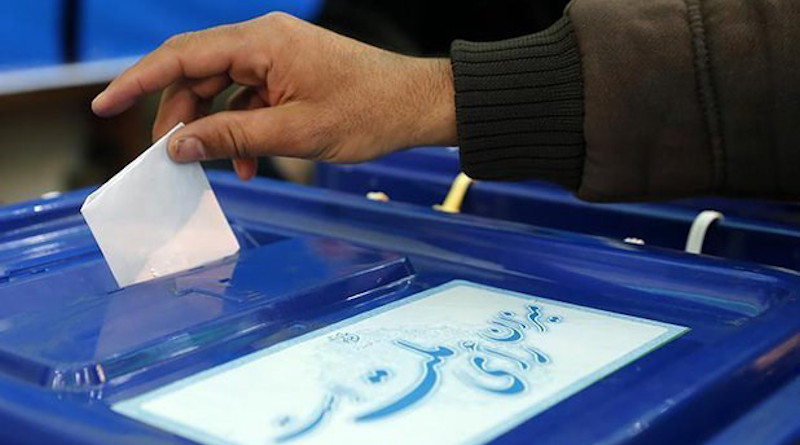
In the wake of President Ebrahim Raisi’s tragic death in a helicopter crash, Iran is heading to extraordinary presidential elections. The Interior Ministry has announced the final list of six candidates approved by the Guardian Council, a decision that comes at a critical juncture for the nation.
Candidates and political landscape
On June 9, the Guardian Council, tasked with vetting election candidates per Iran’s constitution, announced its approval of six candidates out of a pool of 80 hopefuls, including four women.
The approved candidates include:
- Mohammad Baqer Qalibaf – current Parliament Speaker
- Saeed Jalili – former secretary of the Supreme National Security Council
- Alireza Zakani – current Tehran mayor
- Amirhossein Qazizadeh Hashemi – current Vice-President and Head of Martyrs and Veterans Foundation
- Mostafa Pourmohammadi – former justice minister
- Masoud Pezeshkian – Iranian reformist politician currently representing Tabriz, Osku, and Azarshahr electoral district in the parliament of Iran, and also served as its First Deputy Speaker from May 29, 2016, to May 26, 2020.
Election context & challenges
This election occurs against a backdrop of significant internal and external challenges. Iran has been grappling with widespread protests fueled by economic hardship, exacerbated by international sanctions. The sanctions, primarily imposed by the United States, have crippled the economy, leading to high inflation, unemployment, and a decline in living standards. These economic woes have sparked protests demanding better governance and economic reforms.
Iran’s human rights record is another critical issue. The government has been accused of severe repression against ethnic minorities, such as Kurds, Arabs, Turks, Balochs, and others, who demand greater autonomy and rights within the country. These groups have faced systemic discrimination, and their activists are often subject to harsh crackdowns by the state. The international community has repeatedly criticized Iran for its lack of political freedoms and human rights abuses.
The sudden death of President Raisi has added a layer of uncertainty to an already volatile political environment. First Vice President Mohammad Mokhber has stepped in as acting president, but the power vacuum has intensified the political maneuvering within the country. Raisi was a controversial figure known for his hard-line stance, and his death has led to speculation about potential shifts in Iran’s domestic and foreign policies.
As Iran prepares for the elections on June 28, the campaign period will be crucial for candidates to outline their visions for the future. The new administration, the 14th since the 1979 Islamic Revolution, will face the daunting task of addressing the nation’s economic struggles, human rights issues, and international relations.
The election’s outcome will determine whether Iran continues on its current path or takes a different direction. Regardless of who wins, the new president will need to address the widespread discontent and work towards stabilizing the country amidst internal and external pressures. The international community’s response to the new leadership will also play a critical role in shaping Iran’s future.
Disqualification from Iran’s presidential elections
Ali Larijani, a significant figure in Iranian politics, has encountered another setback in his bid to contest the presidential elections. On June 9, the Guardian Council (GC), Iran’s election vetting body, announced the list of approved candidates for the upcoming presidential elections, omitting Larijani and several other notable current and former officials, including Mahmoud Ahmadinejad. This rejection continues a pattern for Larijani, who was similarly barred from the 2021 elections despite an intervention from Supreme Leader Ali Khamenei.
In the wake of his disqualification, Larijani, 66, expressed his discontent in a post on X, criticizing the Guardian Council for operating through a “non-transparent mechanism”. He emphasized that previous allegations against him had been dismissed by the judiciary and that other official bodies had supported his candidacy. Addressing his supporters, Larijani lamented, “I was hoping to pave the way for Iran’s national development with your company… but the respected Guardian Council hindered this path.”
Larijani’s political career has seen a significant shift over the past decade. Initially a conservative politician, he has moved towards a centrist position, aligning more closely with moderates during Hassan Rouhani’s presidency (2013-2021). This transition has placed him at odds with Iran’s hard-line factions, complicating his political aspirations. His exclusion from the 2021 elections, attributed speculatively to his daughter’s British-Iranian dual nationality, highlights the political intricacies and factionalism within Iran’s electoral process.
The disqualification of Larijani and other prominent figures has sparked criticism and controversy. Ali Motahari, a former MP and Larijani’s brother-in-law criticized the GC’s decision, questioning whether it is the council’s role to decide a candidate’s potential political trajectory, particularly in continuing Rouhani’s path. Abbas Akhoundi, a former minister under Rouhani, described Larijani’s exclusion as an “injustice” and called for a meeting with the Council to present his case. Similarly, Eshaq Jahangiri, another prominent moderate who was also banned, demanded clarity and justification for his disqualification.
The upcoming presidential elections, scheduled for June 28, follow the unexpected death of President Ebrahim Raisi in a helicopter crash on May 19. This sudden development has intensified the political landscape in Iran, with the Guardian Council’s decisions reflecting broader tensions and power struggles within the Iranian political system.
The exclusion of key moderate and centrist figures like Larijani and Jahangiri may indicate a strategic move by hard-line elements to consolidate power and influence the direction of the country’s political future.
Ali Larijani’s disqualification from the upcoming presidential elections underscores the complexities and contentious nature of Iran’s political environment. The Guardian Council’s opaque decision-making process and the exclusion of prominent moderate figures raise critical questions about political representation and the future trajectory of Iran’s governance. As the election approaches, these developments will undoubtedly shape the political discourse and the broader dynamics of power within the country.
International implications
The outcome of this election is likely to have significant international implications. The new president will inherit the challenging task of navigating Iran’s foreign relations, particularly with the West. The nuclear deal remains a contentious issue, and the international community will be closely watching how the new administration approaches it. A hardliner victory could further strain relations, while a more moderate president might seek to engage in diplomatic negotiations.
By Mushfig Bayram
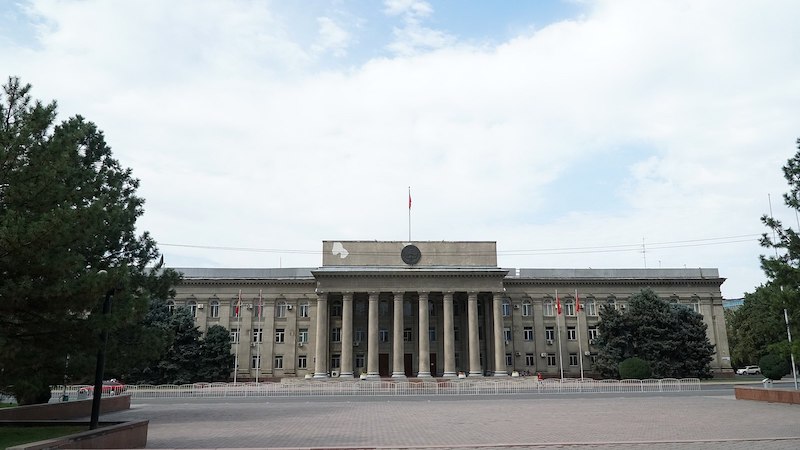
On 6 June Parliament, the Jogorku Kenesh, rejected an amendment to the Religion Law that would have imposed tighter financial reporting by registered religious organisations. Despite this, a separate amendment to achieve the same aim is now being prepared. “The Budget and Constitutional Issues Committee will prepare the draft,” the Assistant to Deputy Ulan Primov – who is promoting such tighter controls – told Forum 18.
The rejected amendment would have required registered religious organisations to submit reports to the tax authorities by 1 April each year “about the sources of funds, the directions of their expenditure, as well as information about property they have acquired, use or have disposed of”. Amendments also covered political parties, cooperatives and trade unions (see below).
Members of two religious communities complained to Forum 18 that they have not been informed or consulted about these proposed new financial reporting requirements (see below).
Forum 18 asked Deputy Primov:
– Why he believes such a draft Law on financial control of religious communities is needed;
– Whether such a new Law would not create an open door for the authorities’ arbitrary punishment of religious communities, particularly if they receive financial assistance from abroad;
– Whether such a new Law would not potentially jeopardise the safety of members of non-Muslim communities if their contact details are published;
– Whether the authorities and the Jogorku Kenesh will allow members of religious communities actively to participate in discussion of the draft Law.
Forum 18 has received no response (see below).
Kanatbek Midin uuly, Press Secretary of the State Commission for Religious Affairs in Bishkek, told Forum 18 he is not aware of any such proposals since the Jorgorku Kenesh rejected the amendments on 6 June. Asked whether this means there will be no new Law in the near future to increase religious communities’ financial reporting requirements, he said: “I cannot guarantee that” (see below).
“Religious organisations are already under the strict control of the State Commission for Religious Affairs, law-enforcement agencies such as the Interior Ministry, National Security Committee (NSC) secret police, and the Justice Ministry,” a human rights defender who asked not to be identified told Forum 18. “If any new Law is adopted, they will also be subjected to the control of the Finance Ministry” (see below).
Gulshayir Abdirasulova of the human rights organisation Kylym Shamy warned religious communities to watch out for new financial reporting requirements. “Financial control measures for non-commercial organisations in general were incorporated into the Law in 2022,” she told Forum 18. “Now the authorities want to adopt such measures for religious organisations” (see below).
Abdirasulova pointed out that information on the financial sources of non-commercial organisations, as well as their individual members’ names and addresses, is already published on the website of the tax authority. She warned that if religious organisations have to do likewise, members – particularly of non-Muslim religious communities – would be at risk “for them to be persecuted by radically-minded individuals”. The problem of unpunished violent attacks against non-Muslims in regions outside Bishkek is long-standing (see below).
Although the controversial Foreign Agents Law signed into law in April does not ostensibly apply to religious organisations, members of some religious communities expressed their fears. “The government can twist any law to use against us arbitrarily,” one told Forum 18 (see below).
“I would not be surprised if the authorities in the near future also propose measures to control the international ties of religious communities, since such measures were adopted for non-commercial organisations in general in April,” Abdirasulova told Forum 18 (see below).
Midin uuly of the State Commission for Religious Affairs told Forum 18 that work is continuing on a draft new Religion Law. When the text was published in November 2023, human rights defenders and religious communities criticised the many violations of international human rights law. Four United Nations Special Rapporteurs wrote to the government with concerns about the draft. No reply from the government has been published (see below).
On 13 May, Osh Regional Court halved on appeal the jail terms handed to Asadullo Madraimov and Mamirzhan Tashmatov. The two Muslims had been arrested in October 2023 after protesting against the regime’s closure of their mosque in Kara-Suu. Tashmatov was freed in the court room on 13 May. Madraimov will remain in prison in Osh until 25 August, his lawyer told Forum 18 (see below).
A Bishkek Protestant church whose place of worship is under threat of confiscation is pinning hopes on Ombudsperson Jamilya Jamanbayeva, who has promised to help them (see below).
Parliament rejects tighter financial reporting – for now
The Jogorku Kenesh (Parliament) on 6 June considered in the first reading an amendment to the 2008 Religion Law to impose tighter financial reporting by registered religious organisations. The proposal came in a draft Law on Amendments to the Law on Financial Reporting by Certain Non-Commercial Organisations. The Amendments also covered political parties, cooperatives and trade unions.
The amendment would have required registered religious organisations to submit reports to the tax authorities by 1 April each year “about the sources of funds, the directions of their expenditure, as well as information about property they have acquired, use or have disposed of”.
Akylbek Japarov, Chair of the Cabinet of Ministers, submitted the proposal to Parliament on 3 March.
Members of several religious communities, which did not want Forum 18 to identify them for fear of state reprisals, expressed concern about the proposed new Law. “We already give financial reports to the government, which are openly published on the internet,” one community member told Forum 18. “What any new Law will bring we need to see. We were not asked for our opinion on the draft Law recently discussed in Parliament.”
“The authorities did not seek our opinion in the past when they adopted the Religion Law or other Laws concerning religious organisations,” a leader of another community lamented to Forum 18. “Nor did they ask us about this proposed new Law. We always hear the news of these Laws from third sources like you.”
However, on 6 June the Jogorku Kenesh rejected the draft Law on Amendments to the Law on Financial Reporting by Certain Non-Commercial Organisations, the Jogorku Kenesh website noted the same day.
Deputy Ulan Primov, a member of the Ata Jurt Kyrgyzstan (Fatherland Kyrgyzstan) faction who sits on the Jogorku Kenesh International Relations, Defence, Security and Migration Committee, spoke in the debate to support tighter financial reporting requirements for registered religious organisations.
Greater financial controls expected?
Jazgul Nazirbayeva, Deputy Ulan Primov’s Assistant, said that a separate draft Law to increase financial controls on registered religious organisations is being prepared. “It is not the Ata Jurt faction’s proposal but the personal proposal of Deputy Primov,” she told Forum 18 from Bishkek on 11 June. “The [Jogorku Kenesh] Budget and Constitutional Issues Committee will prepare the draft.”
Nazirbayeva could not answer Forum 18’s questions on the proposed new Law or put it through to Primov. She claimed that he is on a business trip abroad. She asked Forum 18 to send its questions in writing.
Forum 18 asked Deputy Primov on 11 June in writing:
– Why he believes such a draft Law on financial control of religious communities is needed;
– Whether such a new Law would not create an open door for the authorities’ arbitrary punishment of religious communities, particularly if they receive financial assistance from abroad;
– Whether such a new Law would not potentially jeopardise the safety of members of non-Muslim communities if their contact details are published;
– Whether the authorities and the Jogorku Kenesh will allow members of religious communities actively to participate in discussion of the draft Law.
Forum 18 had received no response by the end of the working day in Bishkek of 13 June.
Kanatbek Midin uuly, Press Secretary of the State Commission for Religious Affairs in Bishkek, adamantly denied that a new proposal was made to prepare a separate draft Law to increase religious communities’ financial reporting requirements. “I participated in that session of the Parliament, and no one made such a new proposal,” he told Forum 18 on 11 June.
Told that a parliamentary official has confirmed to Forum 18 that a separate new Law is being drafted, Midin uuly responded: “I do not know, I do not remember that.” Asked whether this means there will be no new Law in the near future to increase religious communities’ financial reporting requirements, he said: “I cannot guarantee that.”
Asked why religious communities are not made aware of new Laws concerning them and have not been invited to participate in the discussions of a potential new Law on religious communities’ financial reporting requirements, Midin uuly responded: “Well, the draft proposed in March was rejected by Parliament at the first reading anyway, and if it went through to the second reading we would at that stage have asked religious communities for their opinions.”
Religious communities urged to participate in discussion of proposed Law
Gulshayir Abdirasulova of the Bishkek-based human rights organisation Kylym Shamy warned religious communities to watch out for new financial reporting requirements. “Financial control measures for non-commercial organisations in general were incorporated into the Law in 2022,” she told Forum 18. “Now the authorities want to adopt such measures for religious organisations.”
(A 22 March 2022 Cabinet of Ministers Decree implementing provisions of the Non-Commercial Organisations Law specified detailed information such organisations must file on themselves and their donors.)
“I strongly urge religious communities to pay attention to any new draft Law on financial reporting,” Abdirasulova added, “and actively participate in the discussions and submit proposals to the authorities to reduce the possible future negative effects of it on their activity.”
Abdirasulova pointed out that information on the financial sources of non-commercial organisations, as well as their individual members’ names and addresses, is already published on the website of the tax authority.
“Everyone has access to this information without needing to register on the website,” Abdirasulova pointed out. “It is therefore important for each religious community to take part in the discussions of any proposed new draft Law and help develop an acceptable form for the authorities to collect and retain such information.”
Abdirasulova pointed out that after the adoption of requirements on financial reporting of non-commercial organisations in 2022 and their financial information and addresses were openly published, some of their employees were subjected to public ostracism and blackmail in the government-sponsored news and social media. “The media portrayed them as working for the United States and Western European grants and promoting Western values, including LGBTQ.”
“If in future names and addresses of individual religious community members – particularly of non-Muslim religious communities – are published in an open public domain, it will also make it possible for them to be persecuted by radically-minded individuals,” Abdirasulova warned.
The problem of unpunished violent attacks against non-Muslims in regions outside Bishkek is long-standing. Mobs;have attacked individuals and places of worship. Such attacks have taken place with the complicity of the authorities, and include refusals to allow the family and friends of the dead to conduct funeral ceremonies in the way the dead would wish. Some non-Muslims have been forced to convert to Islam to bury their dead.
“Authorities’ intention is total control of civil society and religious communities, including their finances”
Another human rights defender, who asked not to be identified for fear of state reprisals, described proposals to increase religious communities’ reporting requirements as “very bad”.
“In a few years time, we will perhaps have no civil society and no independent religious communities left in Kyrgyzstan,” the human rights defender complained to Forum 18 on 6 June. “Everything will follow the Russian scenario.”
Elaborating on a possible new Law’s effects on religious communities and their members, the human rights defender told Forum 18: “Religious organisations are already under the strict control of the State Commission for Religious Affairs, law-enforcement agencies such as the Interior Ministry, National Security Committee (NSC) secret police, and the Justice Ministry. If any new Law is adopted, they will also be subjected to the control of the Finance Ministry.”;
“Religious communities, especially those which have international ties and receive financial aid from abroad, will be particularly targeted, I am afraid,” the human rights defender noted.
Future greater controls on religious communities’ international ties?
On 2 April, President Sadyr Japarov signed into law;controversial amendments to the Non-Commercial Organisations Law. The amendments were widely dubbed the Foreign Agents Law and were similar to legal provisions adopted in Russia in 2012.
The new amendments require non-commercial organisations that receive foreign funding and engage in what it defines as political activities to register as “foreign representatives”. Such organisations must also submit to costly financial reporting requirements and extensive state oversight.
Gulshayir Abdirasulova of human rights organisation Kylym Shamy told Forum 18 that the Foreign Agents Law does not specifically apply to religious organisations.
Elaborating on the 2022 financial reporting requirements for non-commercial organisations as well as the new proposals for religious communities, the human rights defender who did not want to be identified complained that “Without a doubt, members of civil society and religious communities can be critical of the state authorities’ activity. The authoritarian rulers do not like such members of society, thanks to whom their formula of ‘carrot and stick’ is failing.”
The human rights defender added: “It has become very difficult for the authoritarian rulers of Kyrgyzstan to manipulate public opinion in the age of information technologies. Therefore, the authorities’ intention is the total control of civil society and religious communities, including their finances.”
Although the Foreign Agents Law does not ostensibly apply to religious organisations, members of some religious communities expressed their fears to Forum 18. “The government can twist any law to use against us arbitrarily,” one told Forum 18. “They can tell us that we are also a non-commercial organisation and that this Law applies to us as well.”
Controlling religious communities’ international ties?
Gulshayir Abdirasulova of human rights organisation Kylym Shamy believes the government’s controls on religious communities will go further than the current plans to tighten controls over their finances. She points to the adoption of the Foreign Agents Law in April.
“I would not be surprised if the authorities in the near future also propose measures to control the international ties of religious communities, since such measures were adopted for non-commercial organisations in general in April,” Abdirasulova told Forum 18.
When will proposed new Religion Law return?
On 10 November 2023, the government’s draft legislation website;posted the texts of two proposed new laws;which would have continued to restrict freedom of religion or belief. Both drafts were prepared by the State Commission for Religious Affairs.
A proposed new Religion Law would have replaced the 2008 Religion Law and subsequent amendments. An associated proposed new Amending Law in the Area of Religion would have introduced amendments to the 2021 Violations Code, as well as the laws on political parties, on elections to and deputies of local keneshes (administrations), and on parliamentary deputies.
The;proposed new Religion Law;would, among other provisions, have: continued to require all religious communities to gain state registration before they are allowed to exist or exercise freedom of religion or belief; continued to make illegal and punishable any exercise of freedom of religion or belief by religious communities without state registration; imposed compulsory re-registration of religious communities every five years; imposed multiple burdensome registration requirements, including high thresholds for the numbers of founders required for a religious community.
A number of individuals submitted comments on the draft legislation website. Gulshayir Abdirasulova of human rights organisation Kylym Shamy submitted a 10-page analysis of the proposed new Law via the draft legislation website on 9 December 2023. She called for numerous provisions which violate international human rights commitments to be deleted.
A representative of the Baha’i community criticised the high proposed number of adult citizens needed to register a religious community: 100 for a local, 500 for a regional and 3,000 for a national community. “From the wording it follows that 99 believers at the local level do not have the right to register their organisation and practice their religion,” the representative wrote. They suggested a local community should need 10 founders.
On 18 December 2023, four United Nations Special Rapporteurs – including Nazila Ghanea, Special Rapporteur on freedom of religion or belief – wrote to the authorities (KGZ 6/2023) expressing concern about provisions in the draft new Religion Law. They asked the authorities to explain how the contentions provisions “are compatible with international human rights standards regarding the right to freedom of religion or belief, and the rights to freedom of peaceful assembly and freedom of association”.
The Special Rapporteurs asked the government to inform them of measures it had taken or was planning to take to ensure the proposed Law’s compliance with the country’s obligations under international human rights law. As of 13 June 2024, the United Nations website does not list any response from the Kyrgyz government to their letter.
Kanatbek Midin uuly, Press Secretary of the State Commission for Religious Affairs, told Forum 18 that the State Commission in December 2023 withdrew the proposed new Religion Law from the draft legislation website. “It did not even reach the Parliament,” he told Forum 18 on 12 June 2024.
Abdirasulova welcomed the State Commission decision in December 2023 to withdraw the proposed Law “because we submitted very many negative observations”, she told Forum 18 on 12 June 2024.
However, Midin uuly indicated that officials still intend to draw up a new version of the Religion Law. “We are at the moment working on a new draft taking into account the comments we received from the public,” he told Forum 18.
A member of one religious community told Forum 18 in mid-May 2024 that it remains concerned about the proposed new Religion Law. “It was discussed in November 2023 but, after the protest of many religious organisations (including our own), it was submitted for correction.”
Jailed for protesting against closure of their mosque
Police in Kara-Suu in Osh Region arrested Asadullo Madraimov, Mamirzhan Tashmatov and another man on 18 October 2023 for protesting against the regime’s closure of their mosque, Kara-Suu District’s Al-Sarakhsi Mosque, and placed them in detention. The third was fined and freed in January 2024.
On 26 February, Judge Syrgak Zhumadylov of Kara-Suu District Court;jailed prisoners of conscience Madraimov and Tashmatov;for three years and two years respectively.
The Court convicted the men under;Criminal Code Article 330, Part 1(“Incitement of racial, ethnic, national, religious or inter-regional enmity (discord), as well as propaganda of the exclusivity, superiority or inferiority of citizens on the basis of their attitude to religion, nationality or race, committed publicly or with the use of the mass media as well as the internet”),
The Court dropped the Prosecutor’s charges under Criminal Code Article 278, Part 3 (“Calling for active disobedience of the lawful demands of state officials and for riots”).
Madraimov and Tashmatov;appealed against their conviction and jail terms.
Osh court upheld convictions, but reduced jail terms
On 13 May, Osh Regional Court heard Asadullo Madraimov and Mamirzhan Tashmatov’s appeal against their convictions and jail terms. Appeal Board Judges Mirlan Borombayev, who is also Chair of the Court, and Azizbek Dosmambetov reduced the men’s prison terms by half, their lawyer Khusanbai Saliyev told Forum 18 on 10 June.
Court Chair Borombayev’s phones were not answered on 11 June. Judge Dosmambetov refused to talk to Forum 18 about the case on 11 June. “We will not discuss with you our decisions,” he told Forum 18 and declined to talk further.
“Because every day in pre-trial detention prison is counted as two days of the actual sentence, Tashmatov was freed in the court room on 13 May, since he had served in full the sentence given to him,” Saliyev explained. “Madraimov will be in prison until 25 August taking into account the remainder of his sentence after it was reduced.”
Kanatbek Midin uuly, Press Secretary of the State Commission for Religious Affairs, declined to discuss the two men’s case with Forum 18.
It is not clear whether the authorities will transfer Madraimov to a prison because of the shortness of the remainder of the prison term, Saliyev noted. “Madraimov all this time has been in the same detention prison. The chances are that he will remain in the same place.”
Madraimov is being held in Investigation Prison No. 5 (Prison No. 25) in Osh. The address is:
Osh oblusu
Osh shaari
Bayalinov kochosu 20
Prison No. 25
Too afraid to appeal further now?
Asadullo Madraimov and Mamirzhan Tashmatov’s lawyer, Khusanbai Saliyev, insists that the two men are innocent. “They need to be cleared from their criminal record,” he told Forum 18.
“Relatives have asked me not to make a cassation appeal against the court decisions since the Prosecutor’s Office has the right to challenge the Court’s reduction of the sentence,” Saliyev told Forum 18. “Relatives are afraid that if I make the appeal now the Prosecutor can act and punish them for this.”
However, Saliyev told Forum 18 he will, with the agreement of Madraimov and his relatives, make the appeal after Madraimov has completed his jail term and is out of prison.
Will Ombudsperson help threatened Bishkek church?
Forum 18 is aware that the authorities want to confiscate the building of a Protestant Church in Bishkek. Church members did not wish to discuss the issue at present since the Ombudsperson Jamilya Jamanbayeva has promised to help them.

Well, it seems to be a mixed bag of gains and losses. While there are reasons to celebrate, significant gaps remain to be plugged. The latest Global Health Sector Strategies Report of the World Health Organization (WHO) shows that while there has been a substantial increase in expanding service access for HIV, viral hepatitis and sexually transmitted infections (STIs), 2.5 million people are still dying every year due to these three infections. Thus, these illnesses continue to pose a major global health challenge.
In lead up to the world’s largest AIDS conference this year – 25th International AIDS Conference or AIDS 2024, there is a growing call to #PutPeopleFirst. People-centred responses grounded in human rights can help accelerate progress towards ending AIDS, viral hepatitis and STIs.
Are we keeping the promise?
If a person living with HIV is virally suppressed, then undetectable equals untransmittable (#UequalsU) becomes a reality – as there is zero risk of transmission while the person remains healthy and productive (comparable to others without the infection).
On the positive side, globally, 86% of people living with HIV know their status, 76% of them are on lifesaving antiretroviral treatment, and 71% of them are virally suppressed.
– 5 countries have already met the 2025 targets of 95-95-95 (95% of people with HIV should know their status, 95% of them be on antiretroviral therapy, and 95% of them be virally suppressed by 2025).
– 16 other countries are likely to reach these targets by 2025.
– 19 countries have eliminated vertical (mother to child) transmission of HIV and/or syphilis. Also, dual HIV/syphilis rapid diagnostic tests are being rolled out for pregnant women in antenatal care and for key populations.
Infection rates are declining but are they declining fast enough?
Yet many indicators remain off-track to achieve the 2025 and 2030 global targets. While HIV incidence and HIV-related deaths are declining, the rates of decline are not fast enough. There were 1.3 million new HIV infections and 630,000 HIV-related deaths in 2022 -many of them due to late engagement in care and structural barriers to service access.
By the end of 2022, only 13% of people living with chronic hepatitis-B infection had been diagnosed and 3% had received antiviral therapy, while only 36% of people living with hepatitis-C infection had been diagnosed and 20% had received curative treatment. Despite having a vaccine for preventing hepatitis-B, it resulted in an estimated 1.1 million deaths in 2022.
More than 1 million new cases of STIs occur every day
In an exclusive interview given to CNS (Citizen News Service), Dr Meg Doherty, WHO Director of the Department of Global HIV, Hepatitis and Sexually Transmitted Infections Programmes, said: “We have the tools to be on the pathway to reach our 2025 targets and our 2030 goals. For HIV, we have done very well in terms of increasing service coverage, access to testing, treatment and viral load testing. But we are off the mark on our impact targets- the number of people dying from these infections, the number of people getting new infections. Even in countries reaching the 95-95-95 service targets, new cases are occurring among young girls or women in subsaharan Africa. We have to do much more work with key populations- men who have sex with men, transgender persons, people who inject drugs, people in prisons, people who sell sex – because they often get left behind in the response. There needs to be extra political commitment and community involvement to ensure that they have the same approach to having equitable access to testing, access to treatment, access to viral load testing and being virally suppressed.”
Why are sexually transmitted infections on the blindspot?
Globally every year 374 million people (183.4 million of them being women) get infected with a range of sexually transmitted infections (STIs) such as trichomoniasis, chlamydia, gonorrhoea or syphilis, even though these infections are treatable, curable and preventable.
There were 8 million syphilis cases in 2022. Moreover, an estimated 220,000 deaths every year are attributed to syphilis alone. The report also shows that more women suffer from chlamydia than men and almost the same number from syphilis.
Dr Doherty agrees that, “We have been ignoring STIs for a long time. Our public health programmes for STIs have somehow not got the attention that they need. Also, as compared to HIV, there is even greater stigma and discrimination when it comes to STIs. People like to keep their sexually transmitted infections quiet; they like to maybe go to the private sector, to take their antibiotics on their own and not have to share that – because often many STIs are self-limiting or can be treated in a few days to a week. But there are some STI with major consequences affecting many people around the world- like the human papilloma virus (HPV) and the associated cervical cancer, anal cancer; and we also have the herpes viruses. We are seeing a rise in congenital syphilis that can be fatal for the newborn infant. This is really a breakdown of public health programmes. Perhaps testing may not be happening for syphilis for pregnant women. There are also problems with accessing penicillin for treatment of syphilis in some places.”
Person centeredness in healthcare
Dr Meg Doherty stressed on having more people-centred, rights-based and gender transformative responses for controlling STIs, just as there are for HIV control programmes.
“It is important for people to feel that they are in control of their health. In our technical guidelines we have self-testing, self-care, and self-collection of samples for STI testing. We want to instill ownership in people- not only over their choice but also to become aware of STIs and their treatment. It is the person centeredness we have to have in healthcare facilities. Primary health centres should be able to offer multiple testing in one area- test for HIV, syphilis, other STIs, viral hepatitis- for people at risk.”
Need to do more on addressing viral hepatitis
Currently, 50 million people are infected with hepatitis-C virus (HCV) and 254 million with chronic hepatitis-B virus (HBV) around the world, with 1.2 million new hepatitis-B infections each year. As per latest data, only 13% of people with hepatitis-B infection had been diagnosed and only 3% (7 million) were on treatment. Only 36% of people with HCV had been diagnosed and 20% had received curative treatment, even though antiviral medicines can cure more than 95% of persons with HCV infection.
“We have had a vaccine for hepatitis B for so many years,” reminds Dr Doherty.
Hepatitis-B vaccine is a 3 dose vaccine given at 0, 1 and 6 months. But for the kids, the 1st dose must be given within 24 hours of birth.
If the mother is an active carrier of chronic hepatitis-B the birth dose has the strongest influence on reducing the acquisition of hepatitis-B for the infant. But many countries are not fully implementing the birth dose vaccine. The problem is again of linkage to care. People are not accessing treatment. Also, countries are not purchasing the lowest cost or the best access price for the treatment or for the diagnostic tests. Just like we did for HIV, we have to get access price for hepatitis diagnostics and treatments to scale them up. Otherwise we are only serving a small proportion of the infected population. The message has to be spread and people have to start demanding, and unless they know how they would demand,” says Dr Doherty.
Protecting the medicines that protect us
A cause of concern is that multi-antibiotic resistant gonorrhea cases are being reported in parts of the world, and we also have cases of resistance to dolutegravir – the wonder drug used in HIV treatment.
“Knowing about antimicrobial resistance (AMR) allows us to have a good public health response to it. We have good surveillance systems for multi-resistant gonorrhea with 87 different sites around the world reporting on it. But apart from setting up surveillance systems for STIs, we are also changing the guidelines- advocating for good communication and knowledge sharing, ensuring good stewardship of antibiotics, and also working for better regimens to come forward. There are at least two new medicines that are coming up to address drug-resistant gonorrhea,” said Dr Doherty.
She added: “In hepatitis we have not seen a lot of resistance yet but we are doing surveillance to keep an eye on it. For HIV we have been doing surveillance for many years and right now we are reassured that dolutegravir-based regimens are still the working horse of HIV treatment. WHO recommended combination of Dolutegravir, Tenofovir and Lamivudine-based regimen is working well for most people living with HIV. But we have seen in certain settings that if not used properly or if used in people who have had a lot of different regimens in the past, there could be resistance developing [in the virus] against dolutegravir. So we have to be very careful as we want to protect that regimen. That also means we need to have a second-line regimen ready that might be able to be an alternative in the future. But right now dolutegravir is working very well for the majority of the people.”
Connect, reconnect and recommit to end AIDS at #AIDS2024
Dr Doherty shares her message for the upcoming 25th International AIDS Conference (AIDS 2024): “My message is to connect, reconnect, and recommit to ending AIDS by 2030 – and – do it by bringing along other disease areas as well. We will only get there in this new world of multiple problems – whether it is climate change, or new infections, or NCDs or emergencies – if we work collaboratively with others. Also, do not lose energy. We need to work harder now because it is the last mile for HIV. HIV is not going to go away, people will be living their lives with HIV for years to come. But getting to a place where countries are in control of the number of new infections and they own their programmes. That is an awful lot of hard work that we need to do in the next six years. I hope that we can get ourselves to a point by 2030 where we have a significant number of countries that are able to manage their HIV epidemic and other diseases in their country and that people are living happy and long lives- not just with HIV but also with their NCDs, and with other infections.”
Why did Prophet Jesus state: “I was sent only to the lost sheep of Israel.”? (New Testament, Matthew 15:24) Because Prophet Jesus only unintentionally, after he was no longer living among us, became a Jewish Prophet for the non-Jewish world.;
This was the result of Paul and those of Prophet Jesus’ disciples who began to teach that Jesus was the Son of God; and not just a human son of man. Jesus clearly thought of himself not as the “Son of God”, but as the “Son of Man”, a Messianic term.;
The Aramaic phrase Bar ‘ěnosh’ “son of man” is a Semitic expression denoting a single member of humanity, a certain human being. This Aramaic phrase is used by Daniel (7:13-14) to describe a Messianic figure riding with the clouds of the sky. In the four Gospels, “the Son of Man” is Jesus’ favorite self-designation. Prophet Ezekiel is addressed by God as “Son of Man” 93 times in the Biblical book of Ezekiel.;
The term “Son of Man” appears 81 times in the Greek text of the four Gospels: thirty times in Matthew, twenty five times in Luke, 14 times in Mark (the shortest of the Gospels), and 12 times in John (the latest and least historical of the Gospels). Yet in Paul’s epistles, the term “Son of Man” is never used for Jesus. In fact, the term “Son of Man” appears in the whole New Testament only 4 times outside of the four Gospels
Only Prophet Muhammad, the ‘unlettered prophet,’ was an intentional non-Jewish descendant of Prophets Abraham and Ishmael, sent to the non-Jewish world with a long lasting scripture.
“Those who follow the Messenger, the unlettered prophet, whom they find written in what they have of the Torah and the Gospel, who enjoins upon them what is right and forbids them what is wrong, and makes lawful for them the good things and prohibits for them the evil [things], and relieves them of their burden and the shackles which were upon them. So they who have believed in him, honored him, supported him and followed the light which was sent down with him [even if they did not convert to Islam];– it is those who will be the successful.” [Sûrah Al-A’râf, 7:157]
As the Qur’an states: “Indeed, the believers, Jews, Christians, and Sabians—whoever truly believes in God and the Last Day and does good (deeds) will have their reward with their Lord.; And there will be no fear for them, nor will they grieve.” [Sûrah Al-Baqarah, 2:62]
The Qur’an uses the metaphor of a rope that links us to God and also links us to one another: “And hold fast, all together, to the bond with God, and do not draw apart from one another” [Sûrah Âli-‘Imrân, 3:103]This is good advice for the individual members of each of the three Abrahamic religions; as well as for the three Abrahamic religions themselves.
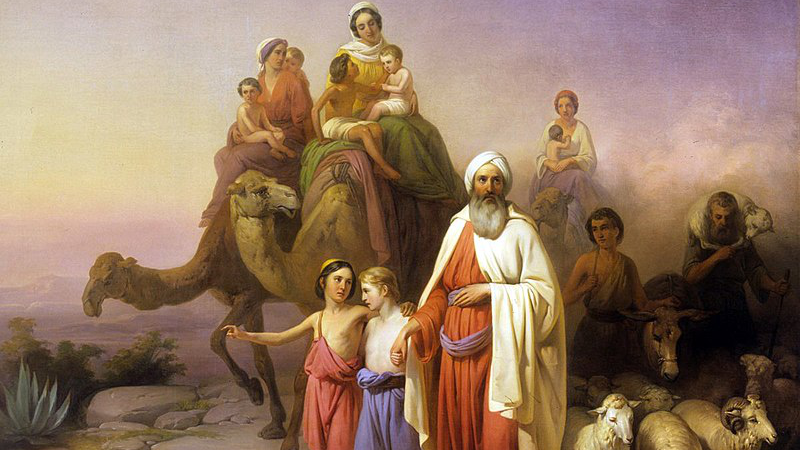
The scholar Roger Boase writes: “Abraham is the key (first) ecumenical figure in the Qur’an, mentioned by name more frequently than any other (person except Prophet Moses), because he is regarded as the common tribal ancestor of both Jews and Arabs; as well as the spiritual ancestor of the three basic world wide monotheistic faiths. When Prophet Abraham was ninety-nine years of age, the Lord made a covenant with him and told him that he would be the father of many nations.
“According to the (Torah) Book of Genesis (15:5), Prophet Abraham’s descendants would be as numerous as the stars. For this reason, his name was changed from Abram, “father of exaltation,” to Abraham, “father of a multitude.” When one considers that;today;the total; population of Jews, Christians and Muslims exceeds 3.5 billion, this prophecy is not an exaggeration.
“When (Prophet) Abraham heard this prophecy, he had only one son Ishmael, who was then thirteen years old. Ishmael fathered “twelve princes according to their tribes” (Genesis 25:12-16). From these princes the Northern Arabs are reportedly descended, known by Arab genealogists as the Musta’ribah (Arabianized), or Aramite tribes.
“Ishmael married a daughter of a Jorhamite prince named Mudad and his son Kedar (Arabic Qaydar), settled in the wilderness of Paran (Arabia) (Genesis 25:13-15; I Chronicles 1:29-31). Keder was an ancestor of Adnan (or Qays), from whom the Quraysh, Prophet Muhammad’s tribe, claim descent.
“Therefore, when God addressed Moses and foretold: ‘I will raise up for them a prophet from among their brethren, like you [Moses], and I will put my words into his mouth; he shall convey all my commands to them’ (Deuteronomy 18:18), Muslims take this to refer to Prophet Muhammad, a descendant of Ishmael (and Abraham the Hebrew)…” (The Qur’anic Model of Religious Pluralism: Its Relevance for Muslim-Jewish Relations;Today, pp. 6-7)
In Genesis 14:13, Abraham is described as Avram Ha-Ivri (‘Abram the Hebrew’), which translates literally as ‘Abram, the one who crossed over [the river Jordan or the river Euphrates] from the other side,’ i.e. a migrant:
“But We delivered him [Prophet Abraham] and [his nephew Prophet] Lûṭ [and directed them] to the land [of Israel] which We have blessed for [all] the nations.;We bestowed on him [Abraham] Isaac. And, as an additional gift [a grandson] Jacob, and We made righteous men of every one [of them]. We made them leaders, guiding [men] by Our Command, and We sent them inspiration to do good deeds, to establish regular prayers, and to practice regular charity; and they constantly served Us [only].; [Sûrah Al-Anbiyâ’,; 21:71-73)]
So Prophet Abraham was the first ‘Islamic Hebrew as the Qur’an 3:67 states: “He (Abraham) was not Yahûdiyyân, ‘a Jew,’ nor Nasrâniyyân, ‘a Christian,’ but rather a Hanîfân, a Muslimân…, i.e. a monotheistic Hebrew believer submitting (islam) to the one imageless God who created all space and time; and who made the descendants; of Prophet Abraham the Hebrew; —through Prophets Isaac and Jacob (Isra’el)— into a great multitude of monotheists called the ‘People of Israel’/ Banu Isra’îl.
In the Hebrew Bible, Abraham is the first person to be called a Prophet;(Genesis 20:7); and the first to be described as a “Hebrew”;(Genesis 14:13). The term Hebrew comes from the verb;’to go over a boundary’—;like the Euphrates or Jordan river—;or;’to be an immigrant.’
The first thing God told Abraham the Hebrew was: “Leave your country, your kindred, and your father’s household, and go to the land I will show you. I will make you into a great nation, and I will bless you; I will make your name great, so that you will be a blessing.”;(Genesis 12:1-2)
Thus;Prophet Abraham-the-Hebrew’s descendants through Prophets Isaac and Jacob (Israel);became, as God had promised, a great multitude of ongoing and abiding to this day, monotheists called the Children of Israel —B’nai Israel in Hebrew and Banu Israel in Arabic.
In addition to the test of offering up his two sons, Abraham is unique among the numerous prophets whom God chose from among his descendants, whose names are recorded in the Bible and in the Qur’an. With the exception of the non-Jewish prophet Balaam (Bible, Numbers chapters 22-24) and Melchizedek in Genesis 914:18), all 55 Biblical named prophets (48 male and 7 female) and most of the 25 prophets named in the Qur’an, are descendants of Abraham.
“We did grant the Family of Abraham the Book, the Wisdom and a mighty (spiritual) kingdom.” [Sûrah Al-Nisâ’, 4:54]
And as Prophet Isaiah said: “Listen to me, you who pursue righteousness, you who seek the Lord: look to the rock from which you were hewn, and to the quarry from which you were dug. Look to Abraham your father and to Sarah who bore you; for he [Abraham] was only one when I called him, that I might bless him and multiply him. (Isaiah 51:1-2) and the Qur’an states: “You have an excellent example to follow in Abraham.” [Sûrah Al-Mumtaḥinah, 60:4]
The Qur’an also states: “Follow the way of Abraham as people of pure (monotheistic) faith.” [Sûrah ‘Âli-‘Imrân, 3:95] The Hebrew nation did not acquire the better known name. the ‘Children (Descendants) of Israel (in Hebrew B’nai Israel, in Arabic Banu Isra’il) until a few centuries after Prophet Abraham the Hebrew, when they were oppressed in Egypt.;
In the Qur’an, God calls upon people to “follow the religion of Abraham” [Sûrah ‘Âli-‘Imrân, 3:95] The religion of Prophet Abraham was not yet Judaism; that did not come until the generation of Prophets Moses and Aaron. ‘Hebrew’ refers to (1) a language and (2) a nation who looked back to their original ancestors Abraham, Isaac and Jacob.
Prophet Ishmael was a half-brother of Prophet Isaac, long separated from him, but always related, as can be seen from the Qur’an: “Say: we believe in God and in what has been revealed to us, and what was revealed to Abraham, Ishma’il, Isaac, Jacob and The Tribes; and in (the Books) given to Moses, Jesus and the Prophets, from their Lord: We make no distinction between one and another, among the; and to God do we bow our will.” [Sûrah ‘Âli-‘Imrân, 3:84)
For 1200+ years after Prophet Moses, the Banu Israel was the only ongoing monotheistic community in the world. As the Qur’an states: “The people of Noah denied before them, and the Companions of the Well, and the People of Thamûd and ʿÂd, and Pharaoh, and the brethren /neighbors of Lot; and the Companions of the Forest, and the People of Tubba’. All denied the messengers [Allah sent to them] so My threat was justly fulfilled.” [Sûrah Qâf, 50:12-14]
“Similarly, no Messenger came to the People before them, buxt that they said (of him): ‘a sorcerer’, or ‘one possessed’ ” [Sûrah Al-Dhârîyyât, 51:52]
Unlike the other monotheistic communities that rose and then fell during those centuries, most but not all of Banu Israel remained loyal to the covenant God made with them at Mount Sinai.
Then in the generations following two major revolts against Roman rule (66-70 CE and 132-135 CE) thousands of Jews moved south from the Land of Israel all the way across the Arabian peninsula as far south as the Yemen.
After the Roman Empire became a Christian ruled society and persecutions of Jews became normative, the polytheistic Arabs in Arabia looked better and better to Jews as potential neighbors, so the rabbis saw them more favorably. Many Arabs married Jews and became Jewish to the point that Yathrib was often called ‘the City of the Jews,’ much as New York City is;today.
According to the Arab historian al-Samhudi, more than twenty Jewish tribes [and Jewish clans within Arab tribes] were settled in Medina.;;
One of Prophet Muhammad’s early biographers Ibn Hisham states: “Allah had set them [the polytheistic Arabs] on the road to Islam, for there were Jews with them in their country, people who had scriptures, and were endowed with knowledge, while they [the Arabs] themselves were polytheists and idolaters.”
Moreover, it was a time of messianic expectation: prophecies were circulating among the Jews of Yathrib that a new prophet would shortly appear. (The Life of Muhammad: A Translation of Ibn Ishaq’s Sirat Rasul Allah, translation by A. Guillaume (Karachi: Oxford University Press,;1967,; pp. 93-94).
So God’s promise to Prophet Abraham, that the other families of humankind will ultimately bless themselves, and one another, thus aspiring to be like Abraham’s descendants (Genesis 12:3; 18:18; 22:18; 26:4; 28:14), has been fulfilled in the three Abrahamic religions of Christianity, Islam and Judaism.
This is why Prophet Abraham was the first Messenger whose Holy Hebrew Scripture are still venerated by its original descendants; and Prophet Jesus had the most wide spread Greek Scriptures which are still venerated by its original descendants; and Prophet Muhammad was the Last of Abrahamic Religions whose Arabic Qur’an believers still are venerating its original holy words.
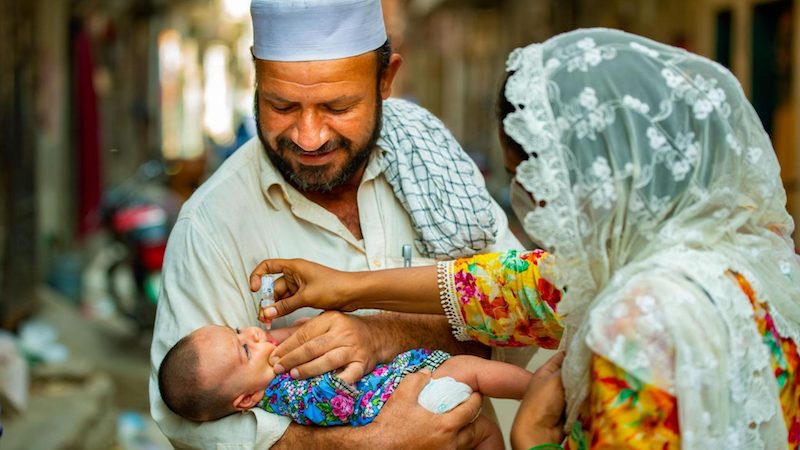
In a concerning development, the first case of polio virus in Sindh this year has been reported, raising the total number of children affected by polio in Pakistan to four. Previously, three cases were identified in Balochistan. Polio, an infectious disease that primarily affects children, can cause lifelong paralysis. The only effective prevention is the vaccination of children under five years of age.
The detection of the polio virus in Sindh, particularly in Shikarpur UC, is alarming. This is not the first instance of polio in this area; a similar case was recorded four years ago. The recurring presence of the virus in sewage samples highlights the urgent need for continuous public awareness and robust vaccination campaigns. The resurgence of polio in Sindh highlights several challenges in the fight against the disease. One of the significant issues is the movement of populations between provinces and across borders, which can facilitate the spread of the virus. Additionally, misinformation and distrust in vaccinations contribute to lower immunization rates in some areas. These challenges underscore the need for a multi-faceted approach to polio eradication, combining vaccination efforts with public education and robust healthcare infrastructure.
In response to the recent cases, the National Emergency Center has launched a special anti-polio campaign across 66 districts from June 3. This nationwide effort aims to administer polio drops to children in various regions, including Sindh and Karachi, from June 3 to 9. A massive mobilization of resources has been planned for this campaign, involving 45,000 polio workers who will go door-to-door to ensure every child is vaccinated. To ensure the safety of these workers, 44,000 security personnel will provide protection during the campaign. This large-scale mobilization is a testament to the government’s commitment to eradicating polio. The door-to-door strategy is particularly effective in reaching children who might otherwise be missed due to logistical challenges or parental hesitancy. The inclusion of security personnel addresses another critical challenge: ensuring the safety of healthcare workers, who have sometimes faced threats and violence in the course of their duties.
Provincial Health Minister Dr. Azra Afzal Pechuho has emphasized the need for comprehensive measures. In a recent meeting, directives were issued to administer polio drops to children arriving from other provinces and Afghanistan at railway stations and bus stops. This proactive approach is crucial to prevent the spread of the virus across provincial and national borders. The coordinated efforts at provincial levels highlight the importance of a unified approach to public health challenges. By ensuring that children traveling between provinces and from neighboring countries are vaccinated, authorities can create a buffer against the reintroduction of the virus into areas that have been polio-free. This strategy also helps in addressing the gaps in immunization coverage that might occur due to population movements.
Community engagement and public awareness are vital components of the anti-polio campaign. Effective communication strategies are necessary to combat misinformation and build trust in the vaccination process. Public health officials must work closely with community leaders, religious figures, and local influencers to promote the importance of vaccination and dispel myths that hinder immunization efforts. Public awareness campaigns can leverage various media platforms, including social media, radio, television, and print media, to reach diverse audiences. These campaigns should focus on educating parents about the safety and efficacy of the polio vaccine, the risks of not vaccinating children, and the benefits of a polio-free community. Personal stories of polio survivors and testimonials from parents who have vaccinated their children can be powerful tools in these campaigns.
Polio eradication is not just a national issue; it is a global imperative. Pakistan is one of the few countries where polio remains endemic. The international community, including organizations like the World Health Organization (WHO) and UNICEF, plays a crucial role in supporting Pakistan’s polio eradication efforts. These organizations provide technical assistance, funding, and logistical support to enhance the effectiveness of vaccination campaigns. International collaboration also involves monitoring and responding to polio outbreaks in other parts of the world to prevent the reintroduction of the virus into polio-free regions. The global polio eradication initiative is a testament to what can be achieved when nations come together to tackle a common enemy. By learning from successful eradication efforts in other countries, Pakistan can refine its strategies and accelerate progress towards a polio-free future.
The resurgence of polio cases underscores the necessity of sustained and coordinated efforts to combat this debilitating disease. The current campaign is a vital step in protecting children and eradicating polio from Pakistan. However, it is equally important to maintain high levels of public awareness and vigilance. The government, health workers, and communities must work together to ensure that every child receives the polio vaccine. The fight against polio is far from over, but with continued dedication and comprehensive strategies, Pakistan can achieve a polio-free future. The success of the current campaign will depend on the collective effort of all stakeholders involved, from health officials to security personnel, and most importantly, the cooperation of the public in ensuring their children are vaccinated.;
💬 В.В.#Путин: Президентский срок избранного ранее главы Украины истёк вместе с его легитимностью, которую не восстановить никакими ухищрениями.
🔗 https://t.co/6hk3qjDmq0 pic.twitter.com/S99Y5xJHYs
— МИД России 🇷🇺 (@MID_RF) June 14, 2024