
Eurasia Review
 The South Caucasus News - SouthCaucasusNews.com
Iran is constructing the largest space center of the Middle East in its southeastern port city of Chabahar, Minister of Communications and Information Technology (ICT) Issa Zarepoor said.;
During a visit to Sistan and Balouchestan Province on Thursday, the ICT minister said the Chabahar Space Center, currently under construction, will become the largest space center in the Middle East.
The first phase of the center, 56% of which has been completed, will come into operation in early February 2025, he said.
Zarepoor also unveiled plans for the first launch from the new base in the current Persian year, which will end on March 20, 2025.
The space facility, planned to cater to Iranian satellite launches, will also promote the country’s cooperation with international partners and increase its revenue.
Iran’s pursuit of space exploration and its associated advantages has prompted the nation to take significant strides in satellite technology.
The Imam Khomeini National Space Center, Iran’s inaugural fixed launch site, has played a pivotal role in the country’s space endeavors since its inauguration in 2017. This facility encompasses all stages of space missions, from satellite preparation to launch, control, and guidance.
Situated in the northern province of Semnan, the Imam Khomeini National Space Center effectively fulfills Iran’s requirements in Low Earth Orbit (LEO) during its final phase.
The Chabahar Space Center is explicitly designated as a non-military launch center, intended for live payload launches, as well as the deployment of Earth observation and communication satellites into geosynchronous orbit. These operations necessitate specific conditions, ideally close to the equatorial region, to minimize launch costs and orbital adjustments.
The Chabahar Space Center is poised to unlock new possibilities in the realm of space exploration, enhancing both Iranian capabilities and international collaboration.
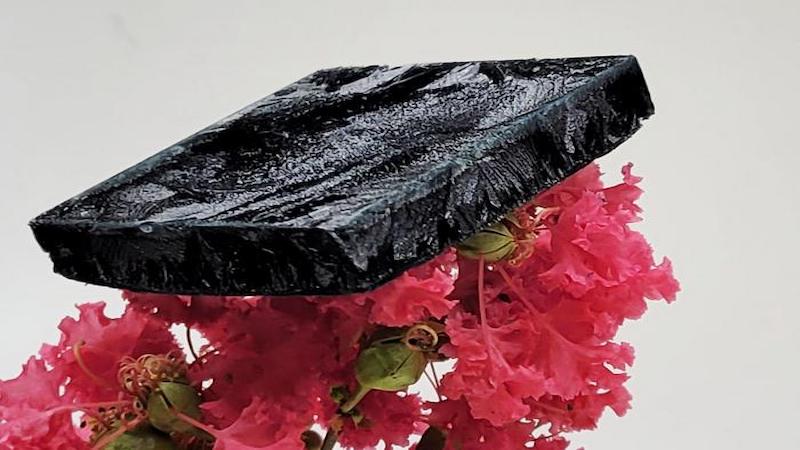
Engineers at the University of Maryland (UMD) have;developed a model that combines machine learning and collaborative robotics to overcome;challenges in the design of materials used in wearable green tech.
Led by Po-Yen Chen, assistant professor in UMD’s Department of Chemical and Biomolecular Engineering, the accelerated method to create aerogel materials used in wearable heating applications – published in the journal Nature Communications– could automate design processes for new materials.
Similar to water-based gels, but instead made using air, aerogels are lightweight;and porous materials used in thermal insulation and wearable technologies, due to their mechanical strength and flexibility. But despite their seemingly simplistic nature, the aerogel assembly line is;complex; researchers rely on time-intensive experiments and experience-based approaches to explore a;vast design space;and design the;materials.
To overcome these challenges, the;research team combined robotics, machine learning algorithms, and materials science expertise to enable the accelerated design of aerogels;with programmable mechanical and electrical properties. Their;prediction model is built to generate sustainable products with a 95 percent;accuracy rate.
“Materials science engineers often struggle to adopt machine learning design due to the scarcity of high-quality experimental data. Our workflow, which combines robotics and machine learning, not only enhances data quality and collection rates, but also assists researchers in navigating the complex design space,” said Chen.
The team’s strong and flexible aerogels were made using conductive titanium nanosheets, as well as naturally occurring components such as cellulose (an organic compound found in plant cells) and gelatin (a collagen-derived protein found in animal tissue and bones).
The team says their tool can also be expanded to meet other applications in aerogel design – such as green technologies used in oil spill cleanup, sustainable energy storage, and thermal energy products like insulating windows.
“The blending of these approaches is putting us at the frontier of materials design with tailorable complex properties. We foresee leveraging this new scaleup production platform to design aerogels with unique mechanical, thermal, and electrical properties for harsh working environments,” said Eleonora Tubaldi, an assistant professor in mechanical engineering and collaborator in the study.
Looking ahead, Chen’s group will conduct studies to understand the microstructures responsible for aerogel flexibility and strength properties. His work has been supported by a UMD Grand Challenges Team Project Grant for the programmable design of natural plastic substitutes, jointly awarded to UMD Mechanical Engineering Professor Teng Li.

A strong belief in the Protestant Work Ethic might underpin the decision-making of many people choosing ‘natural’ approaches to healthcare, new research suggests.
Academics say their paper, published in the;Journal of Consumer Research, identifies the role of psychological factors in health choices ranging from a preference for vaginal birth – over caesarean sections – to ‘natural’ cold and flu remedies. In the latter case, the preference holds even if the chemical composition of natural remedies may be identical to compounds synthesised in the laboratory.
Their work has implications for governments, global health organisations and clinicians around birth choices, the academics say. It could also reshape the marketing strategies and approaches of healthcare product manufacturers.
Anirban Mukhopadhyay, Professor of Marketing and Behavioural Science at Bayes Business School (formerly Cass), City, University of London, and Dr Yimin Cheng, Associate Professor of Marketing at Melbourne’s Monash University, analysed country level data for caesarean sections across 41 nations and conducted five lab-based and online studies.
They identified a link between a strong belief in the Protestant Work Ethic and a preference for vaginal birth and natural over synthetic medicines.
German sociologist Max Weber developed the influential concept of the Protestant Work Ethic (PWE) to explain the rise of modern capitalism, suggesting that the belief system instils virtues of hard work, self-reliance, frugality and asceticism. Later research from psychology suggests that these values may be held independent of religious beliefs, retaining their power in diverse communities and nations. Indeed, the;latest;studies found no link between belief in PWE values and religious belief.
The researchers assessed the strength of participants’ PWE beliefs by using 13 questions from the;World Values Survey;and;European;Values;Study, including a belief that success comes from hard work and that society would have fewer problems if people had less leisure time.
Professor Mukhopadhyay and Dr Cheng tested whether some of those values – particularly self-reliance and hard work – embed a suspicion of external intervention and therefore a preference for ‘natural’ health products and services.
Key findings include:
Professor Mukhopadhyay said: “Medical experts caution about the rising prevalence of caesarean sections. Our finding around birthing choices raises the question of whether a short PWE assessment should be part of maternal health screening to help identify and caution low-PWE mothers about the potential risks of elective C-sections, where not medically necessary. It also suggests that at a global level, governments and international healthcare organisations could invest more effort in promoting natural deliveries in low-PWE countries.
“In the business sector, pharmaceutical companies and other health product suppliers could redirect and reshape their marketing to different population groups depending on how ‘natural’ the drug or other treatment is.”
Dr Cheng said: “Healthcare spending in the US alone passed $4 trillion in 2020 and is projected to grow at more than 5 per cent annually. Consumers have been empowered to make their own healthcare decisions by the availability of over-the-counter drugs and private healthcare providers.
“Often that choice includes the option of a more ‘natural’ treatment. Our work suggests that even when there is no chemical difference between treatments, such decisions may be influenced by complex belief systems – including the pervasive impact of what Weber called the Protestant Work Ethic, even in secular societies.”
In a final online study, 601 Americans were asked to imagine they had stomach flu. The researchers tested whether it was the extent of external intervention (e.g. adapting a wild plant for human use) or the intrusiveness of the intervention (e.g. gene editing), that drove people with high PWE scores to choose the most ‘natural’ over-the-counter treatment option.
Those who identified strongly with PWE values were less likely to choose the option involving intrusive synthesis, such as gene editing. They appeared more willing to trust treatments which involved more visible but less intrusive human intervention – such as extensive processing of a wild plant for human consumption. This suggests, the authors say, that the preference for ‘natural’ treatments and approaches is not simply linked to a conservative world view expressed through respect for tradition. If such a yearning was in play, they suggest, the participants with high PWE scores would not differentiate between the two ‘unnatural’ products.

Swimming through turbulent water is easier for schooling fish compared to solitary swimmers, according to a study published in the open-access journal PLOS Biology by Yangfan Zhang of Harvard University, Massachusetts, US, and colleagues.
Locomotion is key to many aspects of animal behavior, from reproduction to feeding to migration, and so many species have developed adaptations to make moving around more efficient. In this study, Zhang and colleagues propose the “turbulent sheltering hypothesis,” which suggests that traveling in schools allows fish to shield each other from disruptive water currents, thus making it easier to swim through rough waters.
To test this hypothesis, the researchers ran trials with giant danios (Devario aeqipinnatus), observing these fish swimming alone or in groups of eight in both turbulent and steadily flowing water. High-speed cameras allowed researchers to observe the movements of the fish as they swam, and a respirometer allowed for measurements of fish respiration rates and energy expenditure.
These trials revealed that schooling fish expended up to 79% less energy while swimming in turbulent water compared to solitary fish. Schooling fish also clustered more closely together in turbulent water compared to steady water, while solitary fish had to beat their tails much more vigorously to maintain the same speed in more turbulent currents.
These results lend support to the “turbulence sheltering hypothesis,” indicating that locomotion efficiency might be a driving factor behind the evolution of schooling behavior. This information is valuable for understanding fish ecology, fundamentals of hydrodynamics and it might also be applied to the design and maintenance of habitats meant to harbor protected fish species or to hinder invasive ones. The authors note that future studies might build off of these findings to explore energy dynamics of group movements in further aquatic or aerial animals.
The authors add, “What is the function of schooling behaviour in fishes?; We show that being in a school substantially reduces the energetic cost for fish swimming in a turbulent environment, compared to swimming alone, providing support for the hypothesis that schooling behaviour protects individual fish from the increased energetic cost associated with swimming in turbulence.”