
How Putin’s Kharkiv gamble backfired https://t.co/cuKEZ3T4jO
— Michael Novakhov (@mikenov) June 4, 2024
Day: June 4, 2024
Ex-Standard Chartered exec: 2019 resolution overlooked other Iran payments Global Investigations Review
Categories
Armenia News – NEWS.am
#Georgia’s Great Gamble: Will the Venice Commission’s Verdict Steer Us Back to Democracy? A Tumultuous Saga of Transparency, Democracy, and Absurdity. By Amberi @Amberi195898 https://t.co/y5QStWY6l6 via @Medium
— Notes from Georgia/South Caucasus (Hälbig, Ralph) (@SouthCaucasus) June 4, 2024
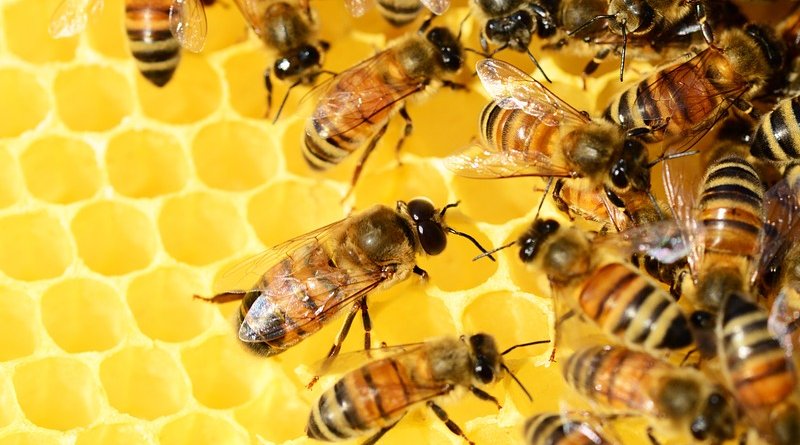
Winters can be tough on managed honey bee colonies, with beekeepers in the United States reporting that one-third of their colonies die each winter. A new study by Penn State researchers has found that using not one but multiple pest treatments may help bees make it to spring.
The researchers found that beekeepers who used a combination of treatments for Varroa mites — tiny parasites that can weaken and spread diseases to honey bees — had higher winter colony survival than those who used only one type of treatment. The findings were published in the Journal of Insect Science.
Additionally, while weather significantly impacted winter colony survival, beekeepers using these integrated pest management strategies — where multiple methods are used to control Varroa mites — had higher colony survival rates even in harsh weather conditions.
Darcy Gray, a global remote sensing manager at the One Acre Fund who led the study while completing her master’s degree at Penn State in the intercollege Ecology Graduate Program administered by the Huck Institutes of the Life Sciences, said she conducted this study to help provide beekeepers with the locally specific information they need to make decisions about how to best manage their colonies to combat these high colony losses during the winter.
“Honey bees pollinate various crops across North America, so it’s important to understand how they’re influenced by beekeeping strategies and their environment, particularly under increasing weather variability,” said Gray, who did her graduate research in the lab of Christina Grozinger, Publius Vergilius Maro Professor of Entomology in the College of Agricultural Sciences. “Understanding honey bees’ relationship to the environment can also shed light on and introduce new questions about native bees, which are also threatened by habitat loss and climate change.”
For the study, the researchers used data from an annual survey on winter honey bee colony loss and beekeeping management that has been sent to Pennsylvania beekeepers each spring for more than 15 years.
Data included information on pre- and post-winter colony numbers, how many years of experience the beekeeper had, whether and how they treated for Varroa mites, and whether and what they provided for supplemental feed. Beekeepers also had an option to submit their apiary coordinates, which allowed the researchers to precisely calculate the habitat quality of the landscape surrounding each beekeeper’s hives — including the availability of floral resources in the spring, summer and fall — and to obtain information on the weather conditions that the bees experienced over the previous year.
Grozinger, who also directs the Penn State Center for Pollinator Research, noted that because habitat and weather are complex factors, a lot of data is needed to build statistical models for understanding exactly how they are impacting bees.
“We are so fortunate to be able to work with the Pennsylvania beekeepers, who every year answer a survey on their management practices, their bees’ winter survival and their apiary locations,” Grozinger said. “This provides a truly unique and valuable long term data set for this research.”
The study revealed that beekeepers who used treatments against Varroa mites in their apiaries had significantly higher bee survival than those who did not, and those who used multiple types of treatments had better survival than those who used a single treatment type.
The researchers also found no significant difference between “soft” and “hard” chemical treatments. Soft chemicals — naturally derived, organic compounds — were as effective at increasing winter survival as hard chemicals, which are synthetic chemicals that have been shown to leave long-term residue in colonies and may promote populations of Varroa mites that are resistant to treatment.
These results are consistent with previous studies conducted by Penn State researchers demonstrating that organic beekeeping methods were just as effective as more conventional methods.
Additionally, the researchers found that while spring, fall and winter precipitation was associated with increased bee survival, summer precipitation was associated with decreased colony survival. The researchers suggested this could be because many consecutive days of rain in the summer may reduce the amount of time bees spend foraging, leading to less food stored for the winter and lower brood production.
“This study, along with others from Penn State, shows that the weather conditions during the growing season are really important for honey bee survival and honey production, as well as wild bee species abundance,” Grozinger said. “This suggests that what we are seeing is an effect of weather on the flowering plants that bees depend on for pollen and nectar, and this in turn affects the bees.”
Gray said she hopes the findings will be useful to beekeepers while planning their apiary management strategies, as well as be a springboard for future studies.
“Our work introduces new questions about how colonies treated with an integrated pest management may be buffered from the worst effects of weather, which would have implications for climate change adaptation in beekeeping,” Gray said.
Beekeepers and others interested in exploring the land use and weather conditions and predicting flowering resources at their locations can use the Beescape tool on the Center for Pollinator Research website, which also offers resources on how to improve local habitats for bees, including the Penn State Master Gardener’s Pollinator Garden Certification Program.
The data used in this study can be accessed via the Bee Winterwise tool, and beekeepers also can obtain resources on managing Varroa mites and organic beekeeping practices from Penn State Extension.

A 15-year period ending in 2020 that included a marine heat wave and a sea star wasting disease epidemic saw major changes in the groups of organisms that live along the rocky shores of the Pacific Northwest.
The study by Oregon State University scientists, involving four capes in Oregon and California, suggests these communities of species may have low resilience to climate change. Findings were published in Nature Ecology & Evolution and.
Researchers learned that sessile invertebrates – those that stay in one place, such as mussels and barnacles – became more abundant during the study period, while seaweed species like kelps declined.
“These changes occurred after the loss of adult ochre sea stars due to an epidemic of sea star wasting disease and during a three-year marine heatwave when water temperatures were extremely warm,” said Zechariah Meunier, a doctoral graduate of the OSU College of Science and the lead author on the paper. “Sea stars are like the wolves of rocky shores because they normally eat enough mussels and barnacles to prevent these invertebrates from dominating the lower elevation areas. And many kelps did not survive the thermal stress during the heat wave.”
Of further concern to the scientists: When the epidemic ended and ocean temperatures cooled, the rocky shore communities did not return to their baseline conditions. That suggests the communities have low resilience to changes in both temperature and predator numbers.
“Diminishing resilience may lead to degraded rocky shore communities under future climate conditions,” said Meunier, who along with OSU professors Sally Hacker and Bruce Menge looked at 13 sites spread among Oregon’s Cape Foulweather, Cape Perpetua and Cape Blanco and California’s Cape Mendocino. “And a warming climate will make restoring baseline conditions more difficult – regime shifts to degraded states are likely to last longer and put community structure and ecosystem function at risk.”
Hacker and Menge have been studying Northwest coastal ecosystems for decades. Healthy marine ecosystems are important because the ocean, and the species that live in it, are critical to the proper functioning of the planet. For example, the ocean supplies half of the oxygen humans breathe and annually absorbs one-quarter of the carbon dioxide people emit into the atmosphere.
The scientists note that climate change and pollution are combining to force marine ecosystems to experience unprecedented stressors including harmful algal blooms, ocean acidification and hypoxia. The stressors often work in concert and exacerbate one another, resulting in damage to marine habitats or species diversity loss.
When stressors are especially severe, they can lead to habitat transitions from one state to another in what’s known as a regime shift.
“A classic example of multiple stressors causing a regime shift is the transition from kelp forests to urchin barrens in the Pacific Ocean off the west coast of North America,” Meunier said. “That transition is attributed to a marine heat wave, urchin overgrazing, historical extirpation of the sea otter and recent mass mortality of the sunflower star. Digging even deeper, the sunflower star demise was itself driven by two stressors: a sea star wasting disease epidemic and a marine heat wave.”
While sunflower stars have not recovered, adult ochre sea stars on rocky shores are growing in size and number to what was measured before the disease epidemic. Thus, there is hope that the sea stars will be able to limit the expansion of barnacles and mussels in the future, the researchers say.

Researchers from Indian Institute of Management Calcutta, University of Chicago, and Management Development Institute, Gurgaon published a new Journal of Marketing study that examines the unintended consequences of an Indian government healthcare policy.
The study, forthcoming in the Journal of Marketing, is titled “Do No Harm? Unintended Consequences of Pharmaceutical Price Regulation in India” and is authored by Saravana Jaikumar, Pradeep K. Chintagunta, and Arvind Sahay.
In countries without universal health insurance or developed health care systems, governments try to make drugs affordable and accessible. For instance, in India, where around 80% of healthcare expenses are borne privately with the majority paid out-of-pocket, the ostensible reason for price regulation is to increase the affordability of essential drugs. However, there is a general lack of empirical evidence assessing the impact of regulation on the availability, accessibility, and sales of prescription drugs in emerging economies, such as India.
This new Journal of Marketing study examines the unintended consequences of India’s Drug Price Control Order in 2013 (DPCO 2013) that was instituted to make essential medicines more affordable. Because of the lower prices intended to increase drug accessibility, the researchers find that pharmaceutical firms curtailed marketing efforts for regulated drugs due to diminished profit margins and shifted their focus to unregulated (but related) drugs. This shift disproportionately affected prescriptions issued by less formally educated physicians—those who often serve the most economically disadvantaged populations, and the very groups DPCO 2013 aimed to benefit.
The process began in September 2011 when the Indian government prepared a National List of Essential Medicines (NLEM). In May 2013, the government announced price regulations for these drugs, capping their prices. Brands priced above the cap were required to reduce their prices to at or below the price cap, while brands already priced below the cap were required to retain current prices.
The government implemented several measures to mitigate potential negative reactions from firms. The order required firms to maintain current production volumes of regulated drugs. While firms may apply to exit a category with a six-month notice, the order reserved the right to mandate production for up to 12 months. Furthermore, price increases for regulated drugs were limited to inflation levels. Additionally, it capped annual price hikes for unregulated drugs at 10% to prevent firms from offsetting lost margins on regulated drugs by raising prices on unregulated ones.
The Marketing Curveball
The researchers look at 179 oral solid drugs (pills) included in DPCO 2013. By comparing data from India to the Philippines—a country without similar regulations—and find that, on average, the sales volumes of these regulated drugs declined in India.
The strategic shift in marketing efforts of firms is identified as a main contributing factor. In India, where direct-to-consumer advertising is prohibited for prescription drugs, the main vehicle for promotion is detailing; that is, providing information about drugs and their efficacy to physicians, usually by medical representatives from pharmaceutical firms. Jaikumar says that “using detailing data from a large pharmaceutical firm, we find that due to the lowered margins of regulated drugs, firms shifted their detailing focus to unregulated but related drugs. For example, a firm could have shifted its marketing focus from atorvastatin, which is a regulated drug for cholesterol issues, to rosuvastatin, an unregulated drug prescribed for similar issues.”
The study further examines this shift’s impact on prescriptions from physicians without formal medical degrees (termed as non-MBBS Physicians). Large parts of India lack access to highly qualified doctors, and physicians without formal medical degrees usually provide healthcare and actively prescribe allopathic medicines. “Due to the shift in detailing focus, the percentage of prescriptions for regulated drugs from these non-MBBS physicians declined. Further, our surveys show that compared to formally trained medical professionals, non-MBBS physicians relied heavily on pharmaceutical detailing to inform their prescribing practices,” explains Chintagunta.
The research rules out other potential explanations for the declining sales volumes of regulated drugs. The prevalence of diseases like acute respiratory infections, circulatory system diseases, diabetes, HIV/AIDS, malaria, and pneumonia has increased, which does not explain the sales decline. Also, new drug approvals have dropped significantly since 2013 and AYUSH (traditional Indian medicine) has also declined. “Our findings strongly support a detailing-led explanation for the reduced sales volumes,” says Sahay.
Lessons for Regulators, Marketing Officers, and Advocacy Groups
This study serves as a reminder of the interconnectedness of policies and market dynamics.
- Regulators must understand the full spectrum of a policy’s impact before implementing it. This includes considering how pharmaceutical firms might react to price caps, including marketing strategies, and the downstream effects on healthcare providers and patients.
- Pharmaceutical companies need to maintain a balance between profitability and social responsibility, particularly in markets heavily reliant on out-of-pocket spending for healthcare.
- Patient advocacy groups must amplify their role in policy discussions, ensuring that the voices of the most vulnerable populations are heard and that their needs are prioritized in healthcare regulations.

Adolescents with an internet addiction undergo changes in the brain that could lead to additional addictive behaviour and tendencies, finds a new study by UCL researchers.
The findings, published in PLOS Mental Health, reviewed 12 articles involving 237 young people aged 10-19 with a formal diagnosis of internet addiction between 2013 and 2023.
Internet addiction has been defined as a person’s inability to resist the urge to use the internet, negatively impacting their psychological wellbeing, as well as their social, academic and professional lives.
The studies used functional magnetic resonance imaging (fMRI) to inspect the functional connectivity (how regions of the brain interact with each other) of participants with internet addiction, both while resting and completing a task.
The effects of internet addiction were seen throughout multiple neural networks in the brains of adolescents. There was a mixture of increased and decreased activity in the parts of the brain that are activated when resting (the default mode network).
Meanwhile, there was an overall decrease in the functional connectivity in the parts of the brain involved in active thinking (the executive control network).
These changes were found to lead to addictive behaviours and tendencies in adolescents, as well as behaviour changes associated with intellectual ability, physical coordination, mental health and development.
Lead author, MSc student, Max Chang (UCL Great Ormond Street Institute for Child Health) said: “Adolescence is a crucial developmental stage during which people go through significant changes in their biology, cognition, and personalities. As a result, the brain is particularly vulnerable to internet addiction related urges during this time, such as compulsive internet usage, cravings towards usage of the mouse or keyboard and consuming media.
“The findings from our study show that this can lead to potentially negative behavioural and developmental changes that could impact the lives of adolescents. For example, they may struggle to maintain relationships and social activities, lie about online activity and experience irregular eating and disrupted sleep.”
With smartphones and laptops being ever more accessible, internet addiction is a growing problem across the globe. Previous research has shown that people in the UK spend over 24 hours every week online and, of those surveyed, more than half self-reported being addicted to the internet.
Meanwhile, Ofcom found that of the 50 million internet users in the UK, over 60% said their internet usage had a negative effect on their lives – such as being late or neglecting chores.
Senior author, Irene Lee (UCL Great Ormond Street Institute of Child Health), said: “There is no doubt that the internet has certain advantages. However, when it begins to affect our day-to-day lives, it is a problem.
“We would advise that young people enforce sensible time limits for their daily internet usage and ensure that they are aware of the psychological and social implications of spending too much time online.”
Mr Chang added: “We hope our findings will demonstrate how internet addiction alters the connection between the brain networks in adolescence, allowing physicians to screen and treat the onset of internet addiction more effectively.
“Clinicians could potentially prescribe treatment to aim at certain brain regions or suggest psychotherapy or family therapy targeting key symptoms of internet addiction.
“Importantly, parental education on internet addiction is another possible avenue of prevention from a public health standpoint. Parents who are aware of the early signs and onset of internet addiction will more effectively handle screen time, impulsivity, and minimise the risk factors surrounding internet addiction.”