Categories
South Caucasus News

Will Gen Z Change America’s Foreign Policy Towards Israel? – OpEd


Will Gen Z Change America’s Foreign Policy Towards Israel? – OpEd

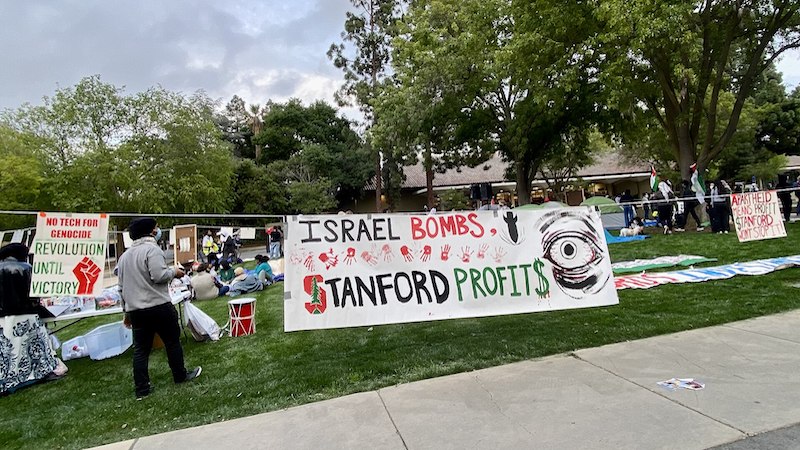
Pro-Palestine protest and encampment in White Memorial Plaza in Stanford University in late April 2024. Photo Credit: Suiren2022, Wikipedia Commons.

That Gen Z Americans have unique foreign policy views isn’t news, but the recent student-led protests over the Israel-Hamas war has highlighted the generational differences in this country and may portend a future political distancing of the U.S. from its long-time client in Tel Aviv.

Some of the indicators may be concerning. Aside from displaying more support for ceasefire than their older cohorts, a majority of 18-24 year-olds in a December Harvard/Harris poll — 67% — said they believe Jews “as a class” are oppressors, and that the 10/7 attack was justified by Palestinians’ grievances (60%). But then, the poll also found 78% of Americans aged 18-34 believe Israel has a right to exist. The majority of this cohort also called what Hamas did on Oct. 7 terrorism and said anti-Semitism is on the rise on college campuses. 

Meanwhile, an April POLITICO-Morning Consult poll found only “15 percent of Gen Zers said they’re more sympathetic toward the Israelis, compared to 4o percent of Baby Boomers,” and 24% of Gen Zers said it was a top issue that would affect their vote vs. 11% for over-65 voters. Some 20% of Gen Zers support providing weapons to the Palestinians vs. 2% of over-65 voters.

And in April, Pew Research reported, “A third of adults under 30 say their sympathies lie either entirely or mostly with the Palestinian people, while 14% say their sympathies lie entirely or mostly with the Israeli people” and “older Americans, by comparison, are more likely to sympathize with Israelis than Palestinians.” 

In November, the Brookings Institution reported, “Even before the Hamas invasion, there were distinct generational differences in Americans’ attitudes towards Israel,” adding, “only 41% of those aged 18-29 had a favorable view of Israel, compared to 69% of those aged 65 or older.” 

To say this generation was primed for a shift is an understatement. New media has certainly taken advantage and is, at the same time, being fueled by these young voices and their consumption habits. Israel can no longer control the flow of information and messages. Networked tribalism, according to John Robb at City Journal, “bypasses traditional media by directly delivering information and moral framing to people using social networks.”. On TikTok, #freepalestine has 31 billion posts compared to 590 million for #standwithisrael, which led The New Arab to claim, “Palestinian solidarity won the internet.” 

By the way, the U.S. has the most TikTok users — 116.5 million; a Pew survey late last year reported that about one-third of young Americans get their news from TikTok

Recently, Senator Mitt Romney (R-Utah) and Secretary of State Tony Blinken commiserated over the negative effect of social media on the sustainability of the pro-Israel narrative. Romney volunteered that was the reason Congress voted to ban TikTok

They don’t like that 50% of young Americans trust news from social medianearly as much as they do legacy media, and that more student protesters are relying on foreign media like Al Jazeera, which had been covering the conditions on the ground in graphic and persistent measure until Israel banned the network from operating there in early May. 

Gen Z cannot be seen as a monolith but put the polling together and it would seem that younger Americnas are more questioning about why there is an unconditional relationship with Israel. Growing up in the shadow of the Iraq and Afghanistan Wars they may be more skeptical about the prospect of another counterinsurgency at the expense of civilians, or collateral damage, which became the term of art during the years of the Global War on Terror.

Young Americans are rightly dubious when they see retired military officers — the same guys who led to the failures of Iraq and Afghanistan — on television supporting $175 billion to Ukraine for its role as a U.S. proxy in the NATO-Russia war, and over $300 billion to Israel — money that young Americans may think should be spent on “nation building here at home.” 

And given the availability of information today, young Americans cannot be ignorant of the fact that far from being an underdog with persistent vulnerabilities in the region, Israel has nuclear weapons, is the most modern military in the region, and gets carte blanche from Washington via nearly $4 billion in military aid each year.

Add this to their social and economic challenges at home: Gen Z suffers from high levels of depression and anxiety. They sense their job prospects are limited, and that the American Dream is out of reach. 

But there’s more grim news: America is almost $35 Trillion in debt, over $100,000 per citizen; its bond rating was recently cut to AA+; borrowing costs are climbing and interest costs on debt have nearly doubled to $659 billion over the course of two years. In addition, Social Security has an unfunded liability of almost $66 trillion and is approaching insolvency, probably depleting its reserves by 2033. Things are looking bleak for the U.S. economy as a whole.

Then there’s student loan debt of $1.75 trillion (including federal and private loans), $28,950 owed per borrower on average. 

Both Republicans and Democrats would be wise to rethink their unconditional support for Israel as this demographic’s support for it is no longer a given. Much of it too is the obvious gap between Israel’s professed ideals and the “facts on the ground.” According to Columbia University’sRashid Khalidi, many of the students feel a “moral imperative” to support Palestinians and they may not easily be deterred. And their left flank is protected as more American Jews are protesting and calling for a ceasefire in Gaza.When the Zs start running for political office and vote more in force, they may embark on a mission to rejuvenate America by first heeding the warning ofGeorge Washington and shaking off the “passionate attachment” to another nation that “produces a variety of evils” and could hazard America by creating “the illusion of a common interest … where no common interest exists.”


Categories
South Caucasus News

EU Mulls Rafah Mission, Next Diplomatic Steps After Talks With Arab Counterparts


EU Mulls Rafah Mission, Next Diplomatic Steps After Talks With Arab Counterparts

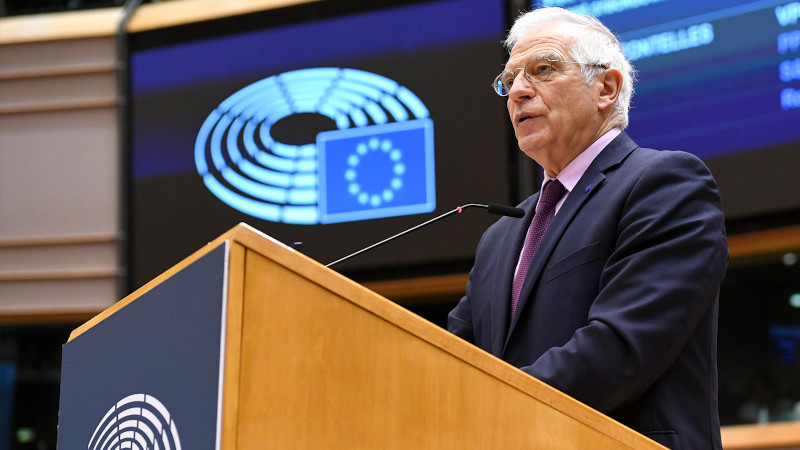
EU Foreign Policy Chief Josep Borrell. Photo Credit: European Union

By Alexandra Brzozowski

(EurActiv) — The EU is ready to reactivate its border mission around the besieged southern Gaza city of Rafah. The EU’s foreign ministers on Monday (27 May) agreed on this as part of stepping up their diplomatic and humanitarian efforts in the region.

The European Union Border Assistance Mission (EUBAM) Rafah could be used to monitor the humanitarian aid crossing point from Egypt. The mission has been dormant since the Palestinian Islamist militant group Hamas seized full control of Gaza in 2007.

“I have the green light from EU [foreign] ministers to reactivate the Rafah border mission,” the EU’s chief diplomat Josep Borrell said in Brussels on Monday after the meeting. However, he cautioned such a deployment would need the support of Egypt, Israel and the Palestinian Authority (PA).

“We are not going to be doing this alone – we are not a security company – and we will do that with a clear political understanding [what its] role is,” Borrell said.

The Rafah crossing over the past weeks has been largely inaccessible after Israeli forces seized the Palestinian side of it earlier this month.

While Israel’s government has said it allowed hundreds of trucks with humanitarian aid to enter Gaza, United Nations agencies have said there has been a significant bottleneck for aid to enter.

Continuing military action

Earlier on Monday, Israeli airstrikes killed at least 35 Palestinians in Rafah. “Israel continues the military action it has been asked to stop,” Borrell told reporters.

He referred to the International Court of Justice (ICJ), the UN’s top legal body, which ordered Israel on Friday (24 May) “to immediately halt its military offensive, and any other action in the Rafah Governorate, which may inflict on the Palestinian group in Gaza conditions of life that could bring about its physical destruction in whole or in part.”

Israeli officials have so far insisted they consider the ICJ order to allow room for some ground operations in Rafah, while both the Palestinian Authority (PA) and Egypt on Monday accused Tel Aviv of deliberately targeting the centre for displaced people.

“Both sides don’t respect the rules,” Borrel said, in reference to Palestinian militant group Hamas who also fired rockets on Tel Aviv.

According to the bloc’s chief diplomat, EU foreign ministers also agreed to call for the EU-Israel Association Council “to discuss the situation in Gaza and respect human rights under the obligations Israel has assumed”.

This comes after Spain and Ireland earlier this year issued a joint call, seeking an “urgent review” of whether Israel is complying with human rights obligations under its trade agreement with the bloc.

Borrell did not provide any details as to when such a meeting could take place.

Two-state solution conference

Earlier on Monday, the EU foreign ministers met in Brussels with their Arab counterparts from Saudi Arabia, Egypt, Jordan, Qatar, and the UAE. Borrell said the meeting represented a “real political discussion I have [not] seen in the last four years”.

Arab ministers presented their peace plan proposal for the Middle East conflict, which according to Borrell included as one of the suggestions to consider the possibility of an international conference on how to implement the two-state solution.

Such a step could be potentially merged with an earlier proposal made by EU leaders last October, he added.

The EU’s Middle East peace plan, pitched in January, also foresees preparing for an international peace conference to broker a deal, aiming to provide security assurances for both Israel and a future Palestinian state.


Categories
South Caucasus News

India Elections (Part VII): The Punjab Saga – OpEd


India Elections (Part VII): The Punjab Saga – OpEd

drone

Drone-assisted ‘Narco Terrorism’ devastates youth, public holds ruling AAP responsible. Illicit drug trade, weapons trafficking, terrorism & political assassinations potpourri in Punjab politics

Punjab votes on June 1 in the last and final phase of general elections currently underway in India to constitute a new national government. However, the most significant issue confronting voters in this border state is not unemployment, inflation or corruption, but a drugs epidemic that is sweeping the state and destroying its youth.

Narco terrorism, Pakistan, Punjab, banned Khalistani terror outfits using high-tech drones and Punjab’s ruling Aam Admi Party – The unholy nexus is devastating the youth and endangering the future of this once-most-prosperous northern state of India.

Pakistan, abetted by China, is actively sponsoring agents of the banned Khalistan Liberation Force (KLF) to spread ‘Narco Terrorism’ in Punjab through utilization of unmanned aerial systems, called UASs or drones. These high-tech drones are engaged in the cross-border delivery of weapons and narcotics for anti-India activities.

The usage of drones by drug trafficking cartels, moving narcotics via drones, first started along the US-Mexican border but this nefarious activity is now being imitated along the India-Pakistan international border, and is devastating the socio-economic structure of Punjab.

There is a fine line that divides illicit drug trade, weapons trafficking, assassinations and terrorism. Drugs that get delivered through the drone method across the porous international borders are sold by local youth generating cash that hybridizes all these anti-national activities.

Top sources in military intelligence (MI) said that drone-assisted cross-border delivery of drugs and weapons along the northern border areas has escalated manifold in recent years. Along with paramilitary officials, we visited the remote villages in the otherwise-sleepy looking Tarn Taran district touching the Pak border. Villagers here admitted that drone intrusions have become a part and parcel of their daily lives. The most affected areas are along Gurdaspur, Ferozepur, Tarn Taran and Amritsar.

There is little or no doubt that this high-tech delivery of drugs in massive quantities has turned Punjab politics on its head. Earlier, this ‘free money’ coming from illicit drug cartels was being siphoned out by political parties and misused to increase political influence in the state. However, now it is working to the disadvantage of the perpetrators of this trade (mainly political parties and their leaders) as the public has realized how it is killing their youth and destroying the economic advantage that Punjab once had over other states. 

MI and BSF sources said the drone operations are orchestrated by Pakistan-based cartels which are using mainly Chinese origin drones. The most commonly used drones are the DJI Matrice 300 RTK, DJI Matrix 350 RTK or DJI Mavic. These are the three classic variants. The Matrix is a ‘next-generation drone’ with a live video transmission system visible from as far as 20 km. 

Interestingly, the flight data of captured drones reveals that they had not only been operational within Pakistan but had also flown in China. The confiscated machines had embedded chips containing coordinates that pointed to their presence of having been airborne in provinces of China as well as Pakistan.

The macabre plot in these drone-assisted deliveries also touches human lives, as weapons dropped in these deliveries are often used to assassinate high-profile persons who are working against the interest of these international cartels.

In fact, the Khalistani terrorists who are operating from the soils of Canada and Pakistan have actually been using this method to eliminate their enemies on Indian soil. Local political leaders as well as Army officers involved in anti-terror operations have been killed by these terror outfits.

India’s premier central counter terrorism law enforcement agency, the National Investigation Agency, which has been working on this unholy nexus, has charged hundreds of gangsters and terrorists of smuggling drugs, arms and explosives from across the border using drones. These gangs are indulging in ‘target killings’ using consignments of firearms, IEDs and AK47 rifles from across the border. They have attacked and bombed several army establishments, state police stations and killed local leaders especially during election times to create a fear psychosis amongst the common masses in order the derail the democratic process.

NIA sources told us that they still do not have a foolproof system to track the exact coordinates of those individuals and agencies that are dispatching these drones. The drone emergency response system has been launched in some areas, but more comprehensive counter measures are required to meet the challenge.

Central agencies admit that the spread of this “narco terror network” cannot happen without the connivance of the local police and powerful state politicians. In the last few years that AAP has captured power in the state, this nexus has grown deeper roots. 

The central agencies in India are worried about this narco terror for other reasons as well. Not only does this challenge the solvency of the state, but it has also begun to affect the moral fabric of society and has made drug addiction an epidemic, especially in Punjab.

‘Narco Terrorism’ is intimidating the common man in Punjab and destroying the state by pulling the youth into these illegal activities. The youth are then being used by international cartels to destabilize governments and societies. Illegal drugs, including heroin and marijuana, are grown and produced in neighboring countries and smuggled into India. Drug money is used to fund separatist and militant groups, contributing to ongoing terror and violent activities.

Drug trafficking is flourishing particularly in the state of Punjab for several reasons. The first of course is terrain difficulties as the riverine stretches along Punjab’s border are difficult to police effectively. The second is the ethnic and economic ties across the Radcliffe Line, contributing to smuggling activities. The third and most significant factor of course is that the nexus is too vast and spreading at an incredible pace using high technology which helps them to evade seizures.

Pakistan has accelerated its efforts to push narcotics, especially heroin. The objective is to create instability in the region, brainwash the youth, and weaken their cognitive behavior.

It is first targeting the youth with drugs and then using the drug-addicted youth to spread terror. The cognitive impairment caused by drug abuse makes these individuals vulnerable to manipulation and radicalization.

Narco-trade serves as a source of funding for terrorist activities. The proceeds from drug trafficking are used to finance militant groups operating in the region.

It is unfortunate that India’s proximity to the “Golden Crescent” (Afghanistan, Iran and Pakistan), provides easy access to narcotics.

It is also an admitted fact that corruption within law enforcement agencies, especially at the state level, is facilitating the operations of drug trafficking networks in Punjab. The lucrative nature of the illegal drug trade makes it an attractive source of revenue for terrorist organizations and political parties like the ruling AAP in the state.

There are serious security issues associated with this narcotics trade and criminalization of youth. The linkages between drug trafficking networks and terrorist organizations create a complex security environment with civilian-military conflict. It also leads to a drain in resources as security forces, intelligence agencies, and law enforcement entities need to dedicate substantial human resources, equipment, and funding to effectively counter narco-terrorism.

Pakistan utilizes drones to transport narcotics. There is a need to enhance anti-drone technology along the Line of Control (LOC) and the international border.

What is required is advanced technology integration. We need to invest in advanced technologies to enhance detection and interception of drug shipments, monitor financial transactions, and secure border areas.

With elections in Punjab barely four days away, it is anyone’s guess as to how free and fair the democratic process would possibly be. The state’s public exasperated by losing its youth to the drug epidemic will definitely not want to vote for those responsible. 

AAP’s Khalistan connections have been exposed again and again. Banned International Sikh Youth Federation’s chief operative head had worked for AAP during the last state elections. Many other hardliner terrorists were also seen actively campaigning for AAP candidates. Political insiders say that connivance of the state police with Khalistani elements ensures that a portion of this illegal drugs money flows into the coffers of the AAP.


Categories
South Caucasus News

NPR News: 05-27-2024 8PM EDT


NPR News: 05-27-2024 8PM EDT

Learn more about sponsor message choices: podcastchoices.com/adchoices

NPR Privacy Policy


Categories
South Caucasus News

Armenia News – NEWS.am


Armenia News  NEWS.am

Categories
South Caucasus News

Protests in Georgia as MPs set to override veto on ‘foreign influence’ law – Grand Junction Daily Sentinel


Protests in Georgia as MPs set to override veto on ‘foreign influence’ law  Grand Junction Daily Sentinel

Categories
South Caucasus News

Thousands protest in Tbilisi as Georgia faces ‘Russia-style’ law on media freedom – PBS NewsHour


Thousands protest in Tbilisi as Georgia faces ‘Russia-style’ law on media freedom  PBS NewsHour

Categories
South Caucasus News

UN nuclear watchdog says Iran expanding stockpile of near-weapons grade uranium – The Times of Israel


UN nuclear watchdog says Iran expanding stockpile of near-weapons grade uranium  The Times of Israel

Categories
South Caucasus News

The “Crossroads of Peace” project initiated by RA Government has a crucial potential for regional stability – Iñárritu – ARMENPRESS


The “Crossroads of Peace” project initiated by RA Government has a crucial potential for regional stability – Iñárritu  ARMENPRESS

Categories
South Caucasus News

AP Headline News – May 27 2024 20:00 (EDT)


28013281