
Turkish President Recep Tayyip Erdogan on Wednesday expressed hope Ankara and Berlin would not encounter obstacles and focus on discussing joint production projects, particularly in the defense sector, Azernews reports, citing Anadolu Agency.
Day: April 24, 2024
On April 24, Archbishop Zenon Iarajuli of Dmanisi and Agarak-Tashiri issued a statement on the reintroduced Foreign Agents Bill, emphasizing that if the bill is passed, the non-commercial organizations of the Georgian Church will also be considered foreign agents, and adding that the bill threatens to stigmatize individuals and organizations, which is not only a violation of the Constitution but also of Christian values.
The statement notes that the Foreign Agents draft-aw applies to all non-governmental sectors, including non-commercial legal entities established by the Georgian Orthodox Church, which does not constitute an administrative body under the General Administrative Code of Georgia.
The Archbishop stresses that a Georgian Church cannot be called an “organization that carries out the interests of a foreign power”, because: “It is emphasized in the constitutional agreement that the Church, as a legal entity under public law, must protect its legal obligations to the state and its population. It is not allowed that the church itself creates a condition against the security of society and the state. The Church cannot by itself create a legal entity that poses a danger to the state, especially since it is recognized by the state as the creator of the national world view and values.”
The statement emphasizes that the law, if passed, will violate the Constitution of Georgia and “poses a threat of institutional stigmatization of the Church. Just as the state cannot be the founder of an organization “carrying the interests of a foreign power”, the Church cannot be the founder of an organization “carrying the interests of a foreign power”.
The Archbishop of Georgia questions the necessity of the proposed law, arguing that there are already existing institutions that monitor the financial activities of organizations. He emphasizes the threat posed by Russia, which occupies 20% of Georgian territory, and suggests that the preamble of the law should explicitly address this threat and the countries that recognize the self-proclaimed states in the occupied territories of Georgia. He insists that Georgian laws must distinguish between countries that support Georgian sovereignty and those that recognize the occupied territories as independent.
“The prolonged strongly negative reaction of the society, the unambiguously negative assessment of the relevant institutions of the European Union should be a sufficient argument for the state legislative body to answer the question: what benefits does ignoring the European calls for unity bring to Georgia’s statehood and security?” – reads the statement.
In addition, Archbishop Zenon condemns the proposed legislation’s potential for social stigmatization and argues that it’s unacceptable, especially at the state legislative level. He explains how stigma leads to social rejection and discrimination of individuals and organizations, which can have serious socio-psychological consequences, even life-threatening. It emphasizes that stigmatization is incompatible with a developed society and contrary to Christian teachings and universal human values, and concludes by stating that the law should uphold freedom and civilized principles, in accordance with the understanding of freedom outlined in the Constitution.
“The content of the draft law “On Transparency of Foreign Influence” and the proposed wording of the registration create the danger of stigmatizing citizens, non-governmental organizations, and institutions (including the Church),” – concludes the statement.
Archbishop Zenon has played an important role in negotiating the Constitutional Agreement between the state and the GoC in the early 2000s. However, he has lately been marginalized in Church politics.
On April 3, the parliamentary majority leader of the ruling Georgian Dream party, Mamuka Mdinaradze, announced the reintroduction of the draft law on foreign agents, which was dropped last year after the massive rallies on March 7-9. According to Mdinaradze, the content of the bill remains the same, the only change is in the title: the word “agent” in it has been removed and the title has been replaced with “Organization Pursuing the Interests of a Foreign Power”. The decision has drawn sharp criticism from the civil society and opposition within the country and from Georgia’s international partners. The bill has already been passed in the first hearing.
Also Read:
On April 24, Archbishop Zenon Iarajuli of Dmanisi and Agarak-Tashiri issued a statement on the reintroduced Foreign Agents Bill, emphasizing that if the bill is passed, the non-commercial organizations of the Georgian Church will also be considered foreign agents, and adding that the bill threatens to stigmatize individuals and organizations, which is not only a violation of the Constitution but also of Christian values.
The statement notes that the Foreign Agents draft-aw applies to all non-governmental sectors, including non-commercial legal entities established by the Georgian Orthodox Church, which does not constitute an administrative body under the General Administrative Code of Georgia.
The Archbishop stresses that a Georgian Church cannot be called an “organization that carries out the interests of a foreign power”, because: “It is emphasized in the constitutional agreement that the Church, as a legal entity under public law, must protect its legal obligations to the state and its population. It is not allowed that the church itself creates a condition against the security of society and the state. The Church cannot by itself create a legal entity that poses a danger to the state, especially since it is recognized by the state as the creator of the national world view and values.”
The statement emphasizes that the law, if passed, will violate the Constitution of Georgia and “poses a threat of institutional stigmatization of the Church. Just as the state cannot be the founder of an organization “carrying the interests of a foreign power”, the Church cannot be the founder of an organization “carrying the interests of a foreign power”.
The Archbishop of Georgia questions the necessity of the proposed law, arguing that there are already existing institutions that monitor the financial activities of organizations. He emphasizes the threat posed by Russia, which occupies 20% of Georgian territory, and suggests that the preamble of the law should explicitly address this threat and the countries that recognize the self-proclaimed states in the occupied territories of Georgia. He insists that Georgian laws must distinguish between countries that support Georgian sovereignty and those that recognize the occupied territories as independent.
“The prolonged strongly negative reaction of the society, the unambiguously negative assessment of the relevant institutions of the European Union should be a sufficient argument for the state legislative body to answer the question: what benefits does ignoring the European calls for unity bring to Georgia’s statehood and security?” – reads the statement.
In addition, Archbishop Zenon condemns the proposed legislation’s potential for social stigmatization and argues that it’s unacceptable, especially at the state legislative level. He explains how stigma leads to social rejection and discrimination of individuals and organizations, which can have serious socio-psychological consequences, even life-threatening. It emphasizes that stigmatization is incompatible with a developed society and contrary to Christian teachings and universal human values, and concludes by stating that the law should uphold freedom and civilized principles, in accordance with the understanding of freedom outlined in the Constitution.
“The content of the draft law “On Transparency of Foreign Influence” and the proposed wording of the registration create the danger of stigmatizing citizens, non-governmental organizations, and institutions (including the Church),” – concludes the statement.
Archbishop Zenon has played an important role in negotiating the Constitutional Agreement between the state and the GoC in the early 2000s. However, he has lately been marginalized in Church politics.
On April 3, the parliamentary majority leader of the ruling Georgian Dream party, Mamuka Mdinaradze, announced the reintroduction of the draft law on foreign agents, which was dropped last year after the massive rallies on March 7-9. According to Mdinaradze, the content of the bill remains the same, the only change is in the title: the word “agent” in it has been removed and the title has been replaced with “Organization Pursuing the Interests of a Foreign Power”. The decision has drawn sharp criticism from the civil society and opposition within the country and from Georgia’s international partners. The bill has already been passed in the first hearing.
Also Read:
U.S. sanctions against Azerbaijani officials
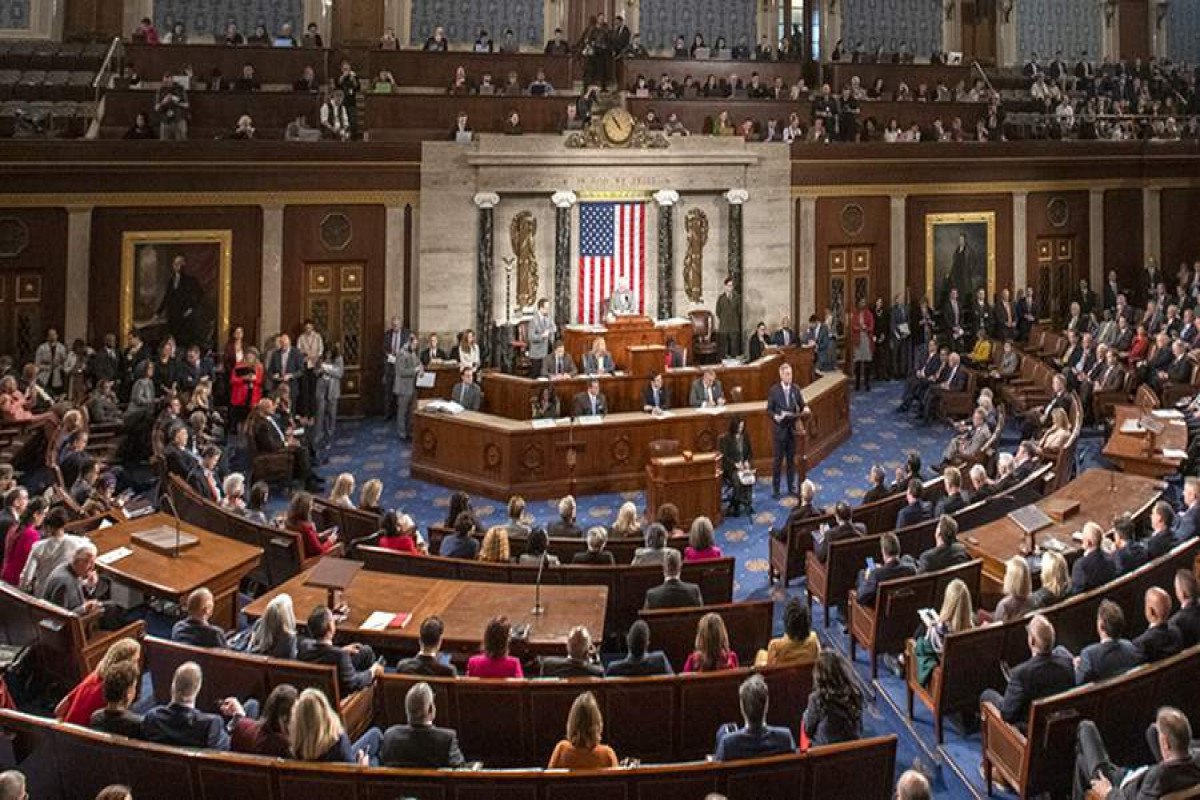
A group of American congressmen led by Dina Titus plans to introduce a bill to Congress this week proposing sanctions against Azerbaijan. This information was obtained by a correspondent of the Turan news agency in Washington from sources within Congress.
- European parliamentarians demand sanctions against Ivanishvili and the ruling party MPs
- “Armenia did not decide to align itself with the West just today,” – Pashinyan to British media
- Another editor detained in Azerbaijan was arrested at the airport and is now in pretrial detention
The bill provides for sanctions against more than 40 Azerbaijani officials — military personnel, judges, investigators, and high-ranking officials, “who have played an active role in undermining the rule of law and human rights in the country.” Among them are representatives of the Ministry of Defense, the Prosecutor General’s Office, the Baku Court for Serious Crimes, the Ministry of Internal Affairs, the State Security Service, the Penitentiary Service, the State Border Service, and the presidential administration.
The bill will urge the Biden administration to make a decision on sanctions against this group of individuals within 180 days in accordance with U.S. law, including the Global Magnitsky Act.
The adoption of such a bill is explained by “the government’s harsh repression against the opposition and serious concerns about human rights violations in Azerbaijan.”
In particular, the arrests of opposition leaders, activists, and individuals critical of the authorities are mentioned, including Gubad Ibadoglu.

The bill also mentions violations of the rights of Armenian prisoners of war. This “seriously questions the commitment of the Azerbaijani government to human rights and its ability to negotiate a fair and lasting peace,” the document says.
Sanctions are expected for several reasons, according to political commentator Arastun Orujlu. However, the main reason is the critical state of human rights in Azerbaijan.
“This is a fact that no one can deny. But this is not a new phenomenon. That is, they should not have been introduced solely because of events that happened this year, and I hope this will not happen. We know that in Azerbaijan, at least over the past seven years, starting with the massacre in Terter, mass crimes have been committed against Azerbaijani citizens,” said Orujlu.
However, he said attention should be paid to the list of individuals targeted by the bill for sanctions. Among them are figures highly respected among the people, such as lieutenant general Hikmet Izzet oglu Mirzayev, a hero of the Second Karabakh War commanding special forces, lieutenant general Enver Efendiyev commanding the ground forces, and colonel Elshan Sanaev, commander of the 218th Commando Brigade.
“These people liberated the Motherland from occupation, and applying sanctions against them is a hostile action against the Azerbaijani people,” the expert said, adding that if ethnic cleansing is mentioned, civilian casualties during operations, both during the Second Karabakh War and the one-day war, were the lowest in the last 80 years since World War II.
Orujlu noted that no state will tolerate armed separatism, and the Azerbaijani government was obliged to put an end to it, as it is its constitutional duty.
As for the prosecutors, they, according to the commentator, found themselves on the “blacklist” not because of persecution of the opposition and dissenters, but because the overwhelming majority of them were investigating the case of prisoners of war of the Armenian armed forces and separatists.
He pointed out that Dina Titus’s mother is of Greek origin and she is a member of the Greek caucus in Congress, which closely collaborates with the ANCA (Armenian National Committee of America) — the largest and most influential Armenian-American organization in the United States. According to him, Titus’s list was presented by ANCA, one of the initiators of the bill.
According to Orujlu, the issue of human rights, as well as the issue of sanctions for human rights violations, unfortunately, is mostly used as a tool of political pressure. They are remembered when there are any problems in the relations between states.
“The linking of the policies pursued by the Azerbaijani authorities against the Azerbaijani people, against their rights and freedoms, with the issue of ethnic cleansing of Armenians in Karabakh creates a negative opinion in Azerbaijani society against this act. This is doing a disservice to Azerbaijani society,” the expert notes.
Categories