Categories
South Caucasus News

Analysis: 6 months into Gaza war, Israel faces deepening isolation


JERUSALEM/CAIRO — Six months into the war in Gaza, the killing of a group of aid workers by an Israeli air strike summed up both the dire humanitarian crisis and the lack of a clear way out of a conflict that is leaving Israel increasingly isolated.

The attack on Monday night that killed seven staff of the World Central Kitchen (WCK) aid group, including six foreigners, has angered even some of Israel’s closest allies, adding to growing pressure for an end to the fighting.

Israel’s military has acknowledged the strike was conducted mistakenly by its forces and apologized for the “unintentional” deaths of the seven, who included citizens of Britain, Australia and Poland, a dual U.S-Canadian citizen and a Palestinian colleague.

But that has done little to ease growing alarm abroad, where public opinion even in traditionally friendly countries like Britain, Germany or Australia has swung against the Israeli campaign in Gaza, launched after the Hamas-led attack on Israel on October 7.

U.S. President Joe Biden, who has come under growing pressure from his own supporters to end the fighting, said he was outraged by the convoy attack. On Thursday, following a call with Netanyahu, the White House demanded “concrete and measurable steps to reduce civilian harm” and said future U.S. support would be determined by Israel’s actions.

Increased aid access

On Friday, Netanyahu ordered the reopening of the Erez crossing into northern Gaza and the temporary use of Ashdod port in southern Israel as well as increased access for Jordanian aid through the Kermen Shalom crossing in southern Gaza.

With Gaza in ruins, most of the 2.3 million population have been forced from their homes and now depend on aid for survival, a bitter humiliation during the holy month of Ramadan when Muslims around the world consume traditional Ramadan meals and desserts to break their fast after sunset.

“We had some hopes before Ramadan, but that hope vanished the night before the fasting month began,” said 33-year-old Um Nasser Dahman, now living with her family of five in a tent camp in the southern city of Rafah, where more than half of Gaza’s population is now sheltering.

“We used to be well enough off before the war, but we’ve become dependent on what limited aid there is and our relatives,” she said, via messaging.

Even before the attack on the convoy, Israel had been isolated diplomatically, with the U.N. General Assembly calling repeatedly for humanitarian cease-fires, and under heavy pressure to step up aid deliveries in Gaza, where aid groups say famine is imminent.

While Israel says its forces have killed thousands of Hamas fighters and destroyed most of its fighting units, months into the war, Israeli troops are still battling groups of fighters in northern and central Gaza, in areas that had apparently been cleared in the early stages of the war.

Prime Minister Benjamin Netanyahu has so far resisted pressure to change course, insisting that Hamas remains an existential threat to Israel that must be destroyed before lasting peace can return.

“Victory is within reach. It’s very close, and there is no substitute for victory,” he told a delegation of Republican Congress members in Jerusalem on Thursday, appealing for more budget support, hours before the call with Biden.

Cycle is repeated

The Israeli public has largely continued to support the war aims of destroying Hamas and bringing home 134 hostages still held in Gaza. But Netanyahu himself faces a growing protest movement and demands for new elections that opinion polls indicate he would lose heavily.

“I feel strongly that all those outside of Israel calling for a cease-fire do not understand the situation here,” said Wendy Carol, a 73-year-old writer and start-up founder from Jerusalem. “We’ve had so many incursions and invasions and we will stand as a democratic Jewish country.”

Nevertheless, she said: “I do not trust the prime minister. He is a divisive force in this nation and many, many people feel that way, of all backgrounds.”

While peace talks have been going on, hopes of a breakthrough that could secure a pause in the fighting and enable the return of the hostages have been repeatedly dashed and Hamas leaders say they can keep fighting for much longer.

“Six months have passed and Al-Qassam Brigades is still able to keep up the fight against the Zionist occupation army,” said senior Hamas official Sami Abu Zuhri.

The war was launched after a Hames-led attack in which more than 250 hostages were seized and some 1,200 people killed, by Israeli tallies, in the worst single day loss of life in  Israel’s history. The campaign has been the bloodiest ever for the Palestinians, with more than 33,000 killed so far, according to Gaza health authorities.

More than 250 Israeli soldiers have been killed since the start of the ground invasion, in addition to almost 350 who were killed on October 7.

Palestinian casualty figures do not generally distinguish between fighters and civilians, and Israel says more than 10,000 fighters have been killed, a figure not confirmed by the militant groups. But more than a third of the dead have been children, according to United Nations figures.

The scale of the casualties has caused mounting global alarm and demands for a halt but for people in Gaza, the wait continues.

“I believe everything has an end, the war will end,” said Um Nasser Dahman in Gaza. “But when?” 


Categories
South Caucasus News

Israel says it will open new aid routes into Gaza


Categories
South Caucasus News

US senators urge Biden administration to secure release of Karabakh ex-leaders in Azerbaijan custody – news.am


US senators urge Biden administration to secure release of Karabakh ex-leaders in Azerbaijan custody  news.am

Categories
South Caucasus News

US senators urge Biden administration to secure release of Karabakh ex-leaders in Azerbaijan custody


default.jpg


Categories
South Caucasus News

Ursula von der Leyen: We discussed with Aliyev important EU-Azerbaijan relations within stable South Caucasus


default.jpg


Categories
South Caucasus News

Ucom continues to support green energy expansion in Armenia


default.jpg


Categories
South Caucasus News

Azerbaijan’s State Service reviews issues on preparing Competition Code – AzerNews.Az


Azerbaijan’s State Service reviews issues on preparing Competition Code  AzerNews.Az

Categories
South Caucasus News

Azerbaijan plans to launch another satellite into orbit – News.Az


Azerbaijan plans to launch another satellite into orbit  News.Az

Categories
South Caucasus News

Azerbaijan establishes guidelines for micropayment instruments – Trend News Agency


Azerbaijan establishes guidelines for micropayment instruments  Trend News Agency

Categories
South Caucasus News

Labor migration from Armenia to Russia: Causes and consequences


Labor migration from Armenia to Russia

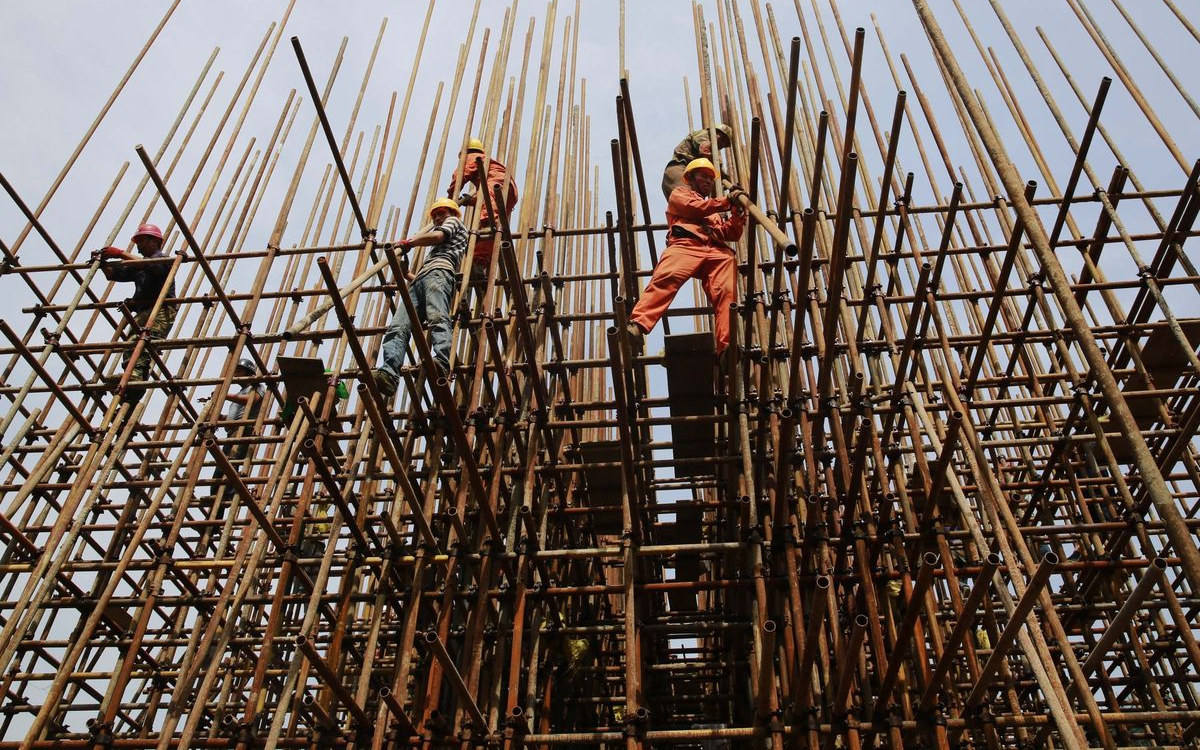
Every spring, thousands of citizens of Armenia leave to work abroad. They only return home by winter. For a while, labor migration ceased due to the COVID-19 pandemic. However, when borders reopened, many resumed going abroad for work, primarily to Russia. People leave despite stricter migration requirements in Russia, the low exchange rate of the ruble, and the Russo-Ukrainian war.

Expert explanations on the reasons behind this, insights from the head of one of the communities in Armenia from where a large number of people constantly migrate for work, as well as input from an Armenian craftsman with years of experience in labor migration.


Those who cannot find alternatives in Armenia are going abroad for work

Since early March, Hamlet Sagatelian has left for work in Khabarovsk, one of the most distant and coldest cities in Russia. We reached him by phone. Hamlet said that this time he is there with a group of thirty people. They are all from different villages in the Shirak region of Armenia.

“We lose about half of what we earn due to the low exchange rate of the ruble. We are forced to work more at the expense of our health to earn more. But how are we supposed to provide for our children if we stay at home? How are we supposed to pay off our loans? Each of us has a thousand problems,” says Hamlet Sagatelian.

He is 51 years old and has three children. He has been going abroad for work in Russia for 15 years. He returns home late in the autumn or on the eve of New Year.

Russia – the dominant destination for labor migration

An expert from the migration program of the NGO “Armenian Caritas” states that the leading regions in terms of the number of labor migrants are three regions of Armenia – Shirak, Tavush, and Gegharkunik:

“Russia remains the dominant destination where our compatriots go to work. According to official data from the Russian Federation, 138 thousand citizens of Armenia officially registered as labor migrants over the past six months. And more than 300 thousand people have been put on migration records.”

Bezhanyan attributes the slight decline in this year’s figures to several reasons. Many have found jobs in Armenia, some migrants have been banned from entering Russia due to tightening migration laws. There are also those who chose not to go due to the low exchange rate of the ruble.

“However, no matter how much the indicators of labor migration decrease, Russia remains the dominant destination,” the expert emphasizes.

“Every other family’s man is in Russia”

More than 200 men from the village of Nor Kyank in the Shirak region leave for work each year. From a village with a population of over 1500 people, every other family’s man is in Russia.

According to the head of the community, Gevorg Petrosyan, in recent years, especially after the pandemic, the number of migrants has decreased.

“Those who found jobs in Yerevan stay. Fifty more people do not leave, but the rest go to Russia. Mostly those who find direct employment go. The employer contacts them directly.”

Gevorg Petrosyan says that even the construction boom in Yerevan does not keep people in the country.

Last year, the volume of construction work in Armenia increased by 36%. According to the Statistical Committee, almost 95 billion drams ($237,500,000) were spent on construction work only in January-April 2023.

“It is profitable to work for skilled craftsmen in Yerevan. And it is unprofitable for ordinary workers. They cannot commute to Yerevan every day. Consequently, they need to rent accommodation. And the rent in Yerevan has now risen to 300-400 thousand drams ($750-1000). You have to pay for the apartment, utilities, spend money on food, cigarettes, transportation. As a result, only a negligible amount remains. That’s why they prefer to work in Russia. In Armenia, they can earn 8-10 thousand drams a day ($20-25). They earn more in Russia,” explains Gevorg Petrosyan.

Hamlet Sagatelyan, who went to work in Khabarovsk, confirms his words and talks about working in Russia:

“The employer provides us with accommodation and food, which are significant expenses. We work as a team. One person builds the walls of the house, another does the interior finishing. We receive a certain amount for the work done collectively, which we divide among the members of the team. We don’t earn as much in Armenia.”

Tatevik Bezhanyan, an expert from the migration program of the NGO “Armenian Caritas,” explains:

“Due to the military situation in Russia, housing prices have sharply decreased. Including in Khabarovsk. The exchange rate of the ruble in Armenia has fallen, but the purchasing power of the ruble in Russia for local goods has hardly changed. In Armenia, when rubles are converted into drams, the amount is very small. But they spend less on living in Russia than in Armenia.

In Russia, they set up small houses directly on construction sites, and the houses receive addresses. Workers are registered at this address. They live here for free. It turns out that they only pay taxes from their income.”

The labor market is not protected

If Russia is the main destination for labor migration from Armenia, then for Indians it is Armenia. In the list of foreigners residing in Armenia, they rank second in number after Russian citizens. As of December last year, the Ministry of Economy reported that 20-30 thousand Indians had settled here.

In 2017, the Armenian government simplified the process of obtaining entry visas for Indian citizens. And with each passing year, the number of migrants from this country increased.

Tatevik Bezhanyan explains that the labor market in Armenia is not protected, and employers engage in dumping:

“I understand the employers. A person in any business always seeks to pay less and have more income. But here the issue of regulations from the state arises. For it, the interests of its citizens should be paramount. The state should protect the interests of its citizens in the labor market. And under these circumstances, our citizens simply leave the country.”

According to the expert, the government should also create a safe and reliable environment for workers. She reminds that after the 2020 Karabakh war, all regions of Armenia except the Kotayk region became border areas. And this created difficulties for rural residents:

“Large areas of Gegharkunik, Vayots Dzor, and Syunik regions became border areas. Unfortunately, in most villages, especially in Gegharkunik and Syunik regions, people cannot cultivate or work their land. As soon as the tractor goes out to the field, they [Azerbaijani Armed Forces] shoot. People have an obvious problem. I myself witnessed such incidents during trips to the regions.

What should these people do? As a rule, they do not have high professional qualifications. And they are left to either move to Yerevan and work on construction sites or go to Russia.”

Labor migrants will not be subject to additional taxation for some time

In February, thousands of citizens who had gone abroad to work received letters from the Armenian Tax Committee regarding unpaid taxes, ranging from 100,000 drams to one million ($250-2,500). Notices were sent to 1,005 individuals, with a total expected tax payment of 187 million drams ($467,500).

However, nobody was informed in a timely manner by the committee about this new decision. Consequently, penalties and fines for overdue tax obligations were also imposed.

According to this decision, labor migrants were required to pay income tax in Armenia in addition to the income tax paid in the country of employment. Armenian citizens working in Russia, who paid a 13% income tax there, were required to pay an additional 8% income tax upon their return to Armenia. This meant paying the difference between the income tax rates in Armenia and Russia.

However, due to a strong wave of protests and criticism from experts, the Tax Committee announced that Armenian citizens working abroad would not be taxed in Armenia for the time being.

Now, legislative changes are being developed regarding the taxation of incomes earned by Armenian citizens outside the country’s territory.

“We simply realized that it’s hopeless. Why tax these people who have already paid income tax in the country where they work? It should be noted that our migrants pay 46% of their salary in taxes in Russia. This amount includes income tax, as well as personal income tax and mandatory health insurance. So it’s not like they only pay income tax, yet we’re still trying to collect the difference in income tax from them.

I consider additional taxation extremely unfair and dishonest towards these individuals, especially considering that they send their hard-earned money to Armenia. Ultimately, these funds contribute to the Armenian economy,” says Tatevik Bezhanyan.