
bridge collapse baltimore – Google Search https://t.co/pGz1pd2UXF – Francis Scott Key bridge collapse – THIS IS A TELLING PHRASE – figure it out yourselves. pic.twitter.com/hUHe3XeWKB
— Michael Novakhov (@mikenov) March 26, 2024
Day: March 26, 2024
President Biden always says: Look at a person’s budget, and you’ll see what they value.
The Republican Party values: cutting working people’s benefits, making us pay more for health care, and sticking their noses into our most personal life choices. pic.twitter.com/HiKR7wCC6D
— Hillary Clinton (@HillaryClinton) March 26, 2024
Senior U.S. Officials have now Denied any involvement of the United States or Coalition in tonight’s Airstrikes on the Positions of the Islamic Revolutionary Guard Corps (IRGC) in the Cities of Deir ez-Zor, Mayadin, and Al-Bukamal in Eastern Syria; this likely means that the… pic.twitter.com/dxA2mUQ5cp
— OSINTdefender (@sentdefender) March 26, 2024
Speculation in Russia that one of the people present in the Crocus City Hall concert venue during the attack may be the same person seen “detaining” and torturing one of the suspects the next day near the Belarus border.
Significant sentiment in Russia that FSB involved in attack https://t.co/4LOy7FXd4y pic.twitter.com/JxjfDDM7kv— Igor Sushko (@igorsushko) March 26, 2024
bridge collapse baltimore – Google Search https://t.co/pGz1pd2UXF – Francis Scott Key bridge collapse – THIS IS A TELLING PHRASE – figure it out yourselves. pic.twitter.com/hUHe3XeWKB
— Michael Novakhov (@mikenov) March 26, 2024

Azerbaijan demands return of enclave villages
Tension between Baku and Yerevan is growing over four of the eight village enclaves located in Armenia. Azerbaijan demands their return as a first step, and the fate of the remaining four villages to be determined within the process of delimitation and demarcation of the state border. “Baku, unwilling to wait years again for the Armenian side to move from words to action, makes it clear it could resolve the problem by force,” comments Azerbaijani political analyst Gadzhi Namazov.
- Russia-Armenia conflict: Impact on Azerbaijan. Opinion from Baku
- “Armenia has retreated from its own principles in negotiations with Baku.” Opinion
What happened?
The day before, a post appeared in the Telegram channel of the Azerbaijani outlet Caliber with the following content:
“Almost a week has passed since Nikol Pashinyan, in a meeting with Armenians living in the border Tavush region of modern Armenia, declared the necessity of returning four Azerbaijani villages occupied by Armenia.
Currently, there is a delay in moving from words to action. We, being an ordinary Telegram channel not affiliated with any authorities, simply report that Baku is not willing to wait long. Failure to return the villages promptly will be seen as Yerevan’s intention to continue their occupation, which, in turn, will be a reason to start military actions against the Republic of Armenia, including asymmetric actions by the Azerbaijani Armed Forces.”
A few hours later, the European Union special representative for the South Caucasus, Toivo Klaar, wrote on social media:
“Threats towards Armenia in Azerbaijani media are unacceptable. Genuine negotiations on border demarcation are necessary, and all territorial disputes should be resolved peacefully and within an agreed process.”
In response to Klaar’s post, the spokesperson for the Azerbaijani Foreign Ministry, Aikhan Hajizade, replied:
“Toivo Klaar cannot rid himself of biases and sees evil only in the legitimate discourse about the return of Azerbaijani villages. He completely ignores calls in Armenian media to fight for the continuation of illegal occupation. For your information, the villages are not a subject of territorial dispute.”
JAMnews asked political analyst Gadzhi Namazov to comment on the situation.

Expert comment
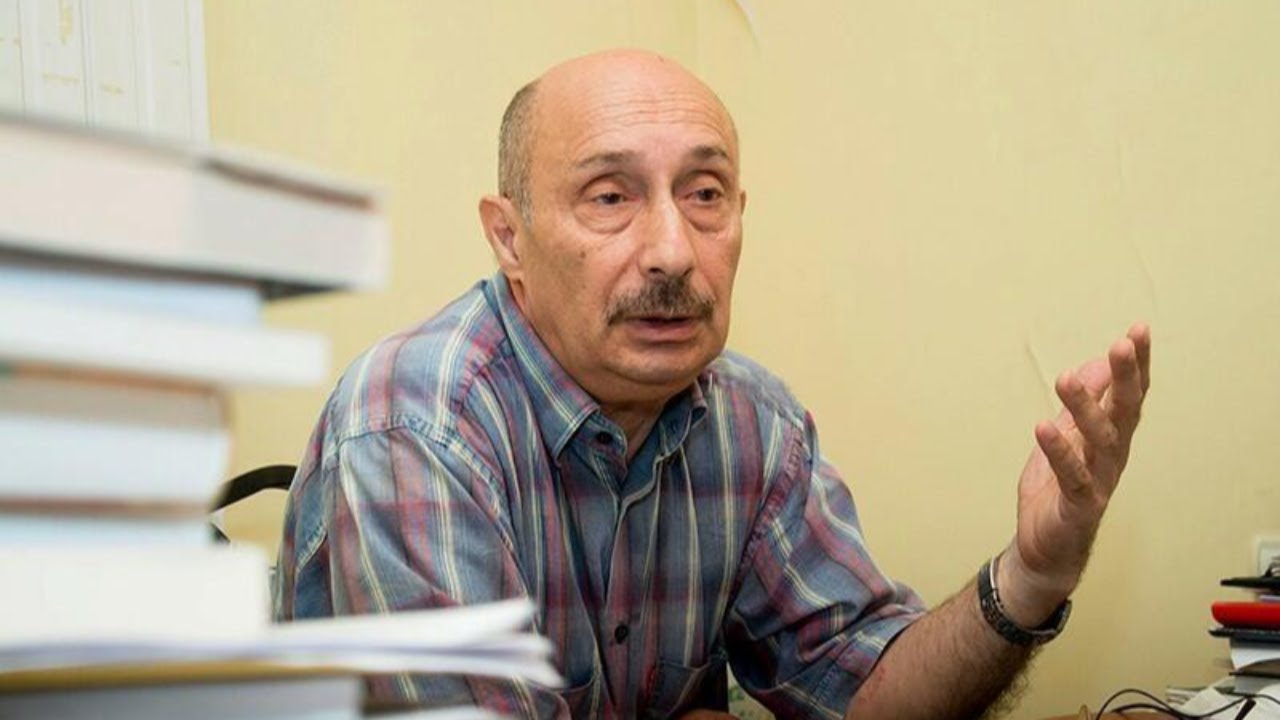
“If you think about and analyze the events around the Azerbaijani-Armenian conflict, you inevitably come to the conclusion that all armed clashes in recent years were initiated by the Armenian side’s desire to delay and do nothing.
In this, they were almost always actively assisted by so-called mediators. The West prefers to leave things as they are, hiding behind the slogan ‘anything but war’, but by doing so, they always brought the ‘war’ closer. Because to prevent combat encounters, one must take action, not just sit idly.
Years of ‘hide and seek’ by the OSCE Minsk Group led Azerbaijan to resolve many of its problems militarily. After the 44-day war, official Baku repeatedly called on Yerevan to withdraw its troops from Karabakh – sovereign Azerbaijani territory, and not to arm the separatists. But again, it encountered an ambiguous stance, where Armenia says one thing but does another.
Pashinyan personally acknowledged the territorial integrity of the neighboring country and the belonging of Karabakh to Azerbaijan. But at the same time, his government continued to support the armed separatist regime in the territory of the country whose territorial integrity he recognized. All this led to an anti-terrorist operation in September 2023.
Now we are experiencing another stage of the conflict following the same script. At least, the scenario repeats. Azerbaijan demands the return of four village enclaves bordering the state line as a first step. The prime minister of Armenia acknowledges that these villages are not part of Armenia. And that’s it. The matter does not progress further.
Moreover, Armenian military leaders in media interviews deny any plans to return the villages to Azerbaijan.
Baku, unwilling to wait years again for the Armenian side to move from words to action, hints that it could once again resolve this problem by force. And here, Europe rushes to Armenia’s aid like Chip and Dale from the famous cartoon. The EU Special Representative for the South Caucasus, instead of calling on Yerevan to move to practical steps to resolve the conflict, urges the Azerbaijani side to refrain from aggressive rhetoric and continue negotiations. Which, actually, are still not moving from a standstill.
Armenia’s behavior is similar regarding the issues of opening regional communications. Loud words like ‘Peace Junction’ are not supported by anything. Azerbaijan is almost finished constructing its part of the Zangezur Corridor. Simultaneously, Baku is building another road to the Nakhchivan Autonomous Republic through Iran, in case this corridor does not function.
How about Armenia? Again, no action beyond words. Yet, the Armenian part of the road will not just appear by itself; construction will take a significant amount of time. And to offer something, one must have something.
One can only hope that Yerevan also understands all this and will try to avoid another escalation at the border.”
Ruling party lawmakers have announced changes to Georgia’s electoral code that Georgian Dream claims will improve the efficiency of the country’s electoral system and make elected officials more responsive to local constituencies. However, the proposed amendments have triggered concerns among their critics that the ruling party is clinging to the ousted majoritarian system and are seen as yet another tactical ploy by the GD to tweak the system to its advantage.
What Are Draft Amendments?
On March 20, three GD MPs from the party list: Givi Mikanadze, Rati Ionatamishvili and Davit Matikashvili – introduced amendments to the Electoral Code of Georgia. The draft amendments consist of two parts:
Firstly, a new Par. 61 will be added to the Article 115 of the Electoral Code of Georgia, according to which, “a [political] party, when forming the party list, is allowed to designate its candidate deputy of parliament as a delegate for the voters registered in an electoral district…”
The candidate MP can only be nominated as a delegate from one constituency, according to the draft amendment. In the party list, the name of the candidate MP will be accompanied by a specific number representing the constituency in which that candidate MP is nominated as a delegate.
Secondly, the Par. 1 of the Article 149 is proposed to be changed in the following way: “The candidate who receives the highest number of real votes of the voters who participated in the elections within the respective majoritarian electoral district, according to the majoritarian electoral system, shall be considered elected as a member of the City Council…” [According to the current law, the candidates must receive more than 40 percent of the votes to win. If not, they participate in the second rounds of elections].
In the event that two or more candidates receive the same highest number of real votes, the candidate who was the first to complete the election registration process will be the winner.
PARTY “DELEGATES”: What Could They Be For ?
Under Georgia’s current electoral system, 30 out of 150 MPs are majoritarians, meaning they were elected through the majoritarian election system. However, in the upcoming October parliamentary elections, for the first time in the country’s history, all 150 members of the legislature will be elected through a fully proportional system. Amendments to the country’s main law for this change were passed in 2020.
The majoritarian MPs have traditionally been viewed as local feudals who were always the backbone of the ruling party in the regions, with the de-facto power to control the local budget and help the ruling party maintain power.
A new term has been introduced in the draft amendments to the Electoral Code, that of a “delegate”, a future MP who will be officially elected from the party list by the party itself and not by the people, but who will be assigned the very similar functions as the majoritarian MP.
The explanatory note to the draft amendments says that in the next convocation of Parliament, “the representative established with the regional principle,” referring to the majoritarian MPs, will no longer exist. Therefore, according to the note, the political parties should be allowed to designate the delegates in order to have “immediate and adequate competence to respond to the needs of the [local] populations.” This is despite frequent criticism in the past that majority MPs tend to forget their local constituencies once elected.
“People need to know who their delegates will be, and to whom they should turn to resolve specific issues, and not to the [general] 150 deputies,” says Bezhan Tsakadze, a ruling GD majoritarian MP. Based on his statement, the parties will be allowed to designate their majoritarian-style “delegates” before and not after the elections, thus indirectly hinting to the people who their representative, yet officially from the party list, might be in Parliament. Although the essence of the system is clearly majoritarian, Tsakadze is adamant that the elections will be fully proportional.
Leader of the Georgian Dream parliamentary majority, Mamuka Mdinaradze, also welcomed the initiative. He noted that parties will not be obliged to designate their candidate MPs as delegates. “They may choose not to designate [as delegates] and argue that it is a proportional election,” he said, emphasizing that the initiative advocates for freedom of choice.
Meanwhile, opposition representatives see the idea of delegates as another deceptive tactic by the ruling party to maintain elements of majoritarianism. “They [GD] are lying to the citizens, because since the majoritarian system was abolished, they now have the local feudals to put on the list, as if these people will have any special powers in relation to other members of Parliament,” said Beka Liluashvili, a member of the For Georgia political party of ex-Prime Minister Giorgi Gakharia.
Paata Manjgaladze of the Strategy Aghmashenebeli party also denounced the initiative. “Thank God that the majoritarian system has been abolished, Georgian Dream will not have moneybags, but it is trying to give a function to those moneybags who stole the money, a record about the delegate is nothing more than that,” he said.
Another opposition MP, Khatia Dekanoidze of the parliamentary faction Reforms Group, noted that the majoritarians have power in their regions, “but in those regions where there were majoritarians, nothing special has been done.”
CITY COUNCILS: Abolition of Thresholds
Concurrently, the draft amendments to the Electoral Code also provide for the abolition of the existing 40 percent threshold in local elections for majoritarian candidates for municipal councils [Sakrebulos]. The 40 percent threshold was set in 2021. If the majoritarian candidates in the local elections do not receive at least 40 percent of the votes, second rounds will be held.
The explanatory note to the draft amendments emphasizes that holding second rounds of local elections “delays the speedy completion of a council as a representative body and thus its immediate effective functioning”. Therefore, it is proposed that the candidate with the highest number of votes be declared the winner immediately. In this case, the second rounds of elections will not be held and “the Sakrebulos [City Councils] will be given the opportunity to exercise their authority in a timely and effective manner as determined by the legislature.”
Davit Matikashvili of the GD said that “there is no need for the rule, which has not been tested in any of the leading EU member countries”. He added: “The opposition may not like democracy, but democracy means that the winner is the one who gets more votes.”
Meanwhile, Mamuka Mdinaradze, a leader of the GD parliamentary majority, said that the party agreed with the general principle of the amendments, although it did not rule out possible future changes to them.
CITY COUNCILS: Reactions
Transparency International- Georgia, a local watchdog, said the abolition of the 40 percent threshold is another step backward for the country. In its statement, it noted that the change “increases the risk of losing votes and misses the opportunity for supporters of opposition parties to support the united opposition candidate in the second round.”
In addition, the watchdog stresses that without a 40 percent or any threshold, the majoritarian of a city council can become a person for whom more people voted against than for. “There is a growing danger that the will of the voters will not be adequately reflected in the mandates.”
According to TI, “the Government is more and more often trying to worsen the electoral legislation and adjust it to itself.”
Meanwhile, opposition politicians believe that GD’s intention to remove the 40 percent threshold is related to the ruling party’s fear of losing in the municipalities. “[Georgian Dream] is afraid of losing and is trying to calm down the internal party turbulence with such changes,” said Beka Liluashvili of For Georgia.
Some also suggest that support for the ruling party has decreased especially in large cities. “Georgian Dream knows very well that support for them has decreased significantly, especially in the big cities, and this is the reason for the changes with which it is once again trying to prepare for the local elections and somehow change the system in such a way as to eliminate this serious flaw.”,” said Beka Buadze of the Lelo for Georgia party.
“[The abolition] of this 40 percent threshold means that Georgian Dream is afraid of a single [opposition] candidate in the second round of local elections,” noted Khatia Dekanoidze of the parliamentary Reforms Group faction.
“It is clear to everyone that “Georgian Dream” adopts the laws that they need in a concrete period of time, all legislative changes serve to adjust them to themselves and the desire to remain in power for a long time,” said Giorgi Kirtadze of Ahali.
Also Read:
Ruling party lawmakers have announced changes to Georgia’s electoral code that Georgian Dream claims will improve the efficiency of the country’s electoral system and make elected officials more responsive to local constituencies. However, the proposed amendments have triggered concerns among their critics that the ruling party is clinging to the ousted majoritarian system and are seen as yet another tactical ploy by the GD to tweak the system to its advantage.
What Are Draft Amendments?
On March 20, three GD MPs from the party list: Givi Mikanadze, Rati Ionatamishvili and Davit Matikashvili – introduced amendments to the Electoral Code of Georgia. The draft amendments consist of two parts:
Firstly, a new Par. 61 will be added to the Article 115 of the Electoral Code of Georgia, according to which, “a [political] party, when forming the party list, is allowed to designate its candidate deputy of parliament as a delegate for the voters registered in an electoral district…”
The candidate MP can only be nominated as a delegate from one constituency, according to the draft amendment. In the party list, the name of the candidate MP will be accompanied by a specific number representing the constituency in which that candidate MP is nominated as a delegate.
Secondly, the Par. 1 of the Article 149 is proposed to be changed in the following way: “The candidate who receives the highest number of real votes of the voters who participated in the elections within the respective majoritarian electoral district, according to the majoritarian electoral system, shall be considered elected as a member of the City Council…” [According to the current law, the candidates must receive more than 40 percent of the votes to win. If not, they participate in the second rounds of elections].
In the event that two or more candidates receive the same highest number of real votes, the candidate who was the first to complete the election registration process will be the winner.
PARTY “DELEGATES”: What Could They Be For ?
Under Georgia’s current electoral system, 30 out of 150 MPs are majoritarians, meaning they were elected through the majoritarian election system. However, in the upcoming October parliamentary elections, for the first time in the country’s history, all 150 members of the legislature will be elected through a fully proportional system. Amendments to the country’s main law for this change were passed in 2020.
The majoritarian MPs have traditionally been viewed as local feudals who were always the backbone of the ruling party in the regions, with the de-facto power to control the local budget and help the ruling party maintain power.
A new term has been introduced in the draft amendments to the Electoral Code, that of a “delegate”, a future MP who will be officially elected from the party list by the party itself and not by the people, but who will be assigned the very similar functions as the majoritarian MP.
The explanatory note to the draft amendments says that in the next convocation of Parliament, “the representative established with the regional principle,” referring to the majoritarian MPs, will no longer exist. Therefore, according to the note, the political parties should be allowed to designate the delegates in order to have “immediate and adequate competence to respond to the needs of the [local] populations.” This is despite frequent criticism in the past that majority MPs tend to forget their local constituencies once elected.
“People need to know who their delegates will be, and to whom they should turn to resolve specific issues, and not to the [general] 150 deputies,” says Bezhan Tsakadze, a ruling GD majoritarian MP. Based on his statement, the parties will be allowed to designate their majoritarian-style “delegates” before and not after the elections, thus indirectly hinting to the people who their representative, yet officially from the party list, might be in Parliament. Although the essence of the system is clearly majoritarian, Tsakadze is adamant that the elections will be fully proportional.
Leader of the Georgian Dream parliamentary majority, Mamuka Mdinaradze, also welcomed the initiative. He noted that parties will not be obliged to designate their candidate MPs as delegates. “They may choose not to designate [as delegates] and argue that it is a proportional election,” he said, emphasizing that the initiative advocates for freedom of choice.
Meanwhile, opposition representatives see the idea of delegates as another deceptive tactic by the ruling party to maintain elements of majoritarianism. “They [GD] are lying to the citizens, because since the majoritarian system was abolished, they now have the local feudals to put on the list, as if these people will have any special powers in relation to other members of Parliament,” said Beka Liluashvili, a member of the For Georgia political party of ex-Prime Minister Giorgi Gakharia.
Paata Manjgaladze of the Strategy Aghmashenebeli party also denounced the initiative. “Thank God that the majoritarian system has been abolished, Georgian Dream will not have moneybags, but it is trying to give a function to those moneybags who stole the money, a record about the delegate is nothing more than that,” he said.
Another opposition MP, Khatia Dekanoidze of the parliamentary faction Reforms Group, noted that the majoritarians have power in their regions, “but in those regions where there were majoritarians, nothing special has been done.”
CITY COUNCILS: Abolition of Thresholds
Concurrently, the draft amendments to the Electoral Code also provide for the abolition of the existing 40 percent threshold in local elections for majoritarian candidates for municipal councils [Sakrebulos]. The 40 percent threshold was set in 2021. If the majoritarian candidates in the local elections do not receive at least 40 percent of the votes, second rounds will be held.
The explanatory note to the draft amendments emphasizes that holding second rounds of local elections “delays the speedy completion of a council as a representative body and thus its immediate effective functioning”. Therefore, it is proposed that the candidate with the highest number of votes be declared the winner immediately. In this case, the second rounds of elections will not be held and “the Sakrebulos [City Councils] will be given the opportunity to exercise their authority in a timely and effective manner as determined by the legislature.”
Davit Matikashvili of the GD said that “there is no need for the rule, which has not been tested in any of the leading EU member countries”. He added: “The opposition may not like democracy, but democracy means that the winner is the one who gets more votes.”
Meanwhile, Mamuka Mdinaradze, a leader of the GD parliamentary majority, said that the party agreed with the general principle of the amendments, although it did not rule out possible future changes to them.
CITY COUNCILS: Reactions
Transparency International- Georgia, a local watchdog, said the abolition of the 40 percent threshold is another step backward for the country. In its statement, it noted that the change “increases the risk of losing votes and misses the opportunity for supporters of opposition parties to support the united opposition candidate in the second round.”
In addition, the watchdog stresses that without a 40 percent or any threshold, the majoritarian of a city council can become a person for whom more people voted against than for. “There is a growing danger that the will of the voters will not be adequately reflected in the mandates.”
According to TI, “the Government is more and more often trying to worsen the electoral legislation and adjust it to itself.”
Meanwhile, opposition politicians believe that GD’s intention to remove the 40 percent threshold is related to the ruling party’s fear of losing in the municipalities. “[Georgian Dream] is afraid of losing and is trying to calm down the internal party turbulence with such changes,” said Beka Liluashvili of For Georgia.
Some also suggest that support for the ruling party has decreased especially in large cities. “Georgian Dream knows very well that support for them has decreased significantly, especially in the big cities, and this is the reason for the changes with which it is once again trying to prepare for the local elections and somehow change the system in such a way as to eliminate this serious flaw.”,” said Beka Buadze of the Lelo for Georgia party.
“[The abolition] of this 40 percent threshold means that Georgian Dream is afraid of a single [opposition] candidate in the second round of local elections,” noted Khatia Dekanoidze of the parliamentary Reforms Group faction.
“It is clear to everyone that “Georgian Dream” adopts the laws that they need in a concrete period of time, all legislative changes serve to adjust them to themselves and the desire to remain in power for a long time,” said Giorgi Kirtadze of Ahali.
Also Read: