
Historian Says Putin Has Slipped Up Geostrategically, Geoeconomically, And Geopolitically https://t.co/bins3tkACO pic.twitter.com/z3uNtxIa5N
— Michael Novakhov (@mikenov) March 20, 2024
Day: March 20, 2024
Historian Says Putin Has Slipped Up Geostrategically, Geoeconomically, And Geopolitically https://t.co/bins3tkACO pic.twitter.com/z3uNtxIa5N
— Michael Novakhov (@mikenov) March 20, 2024
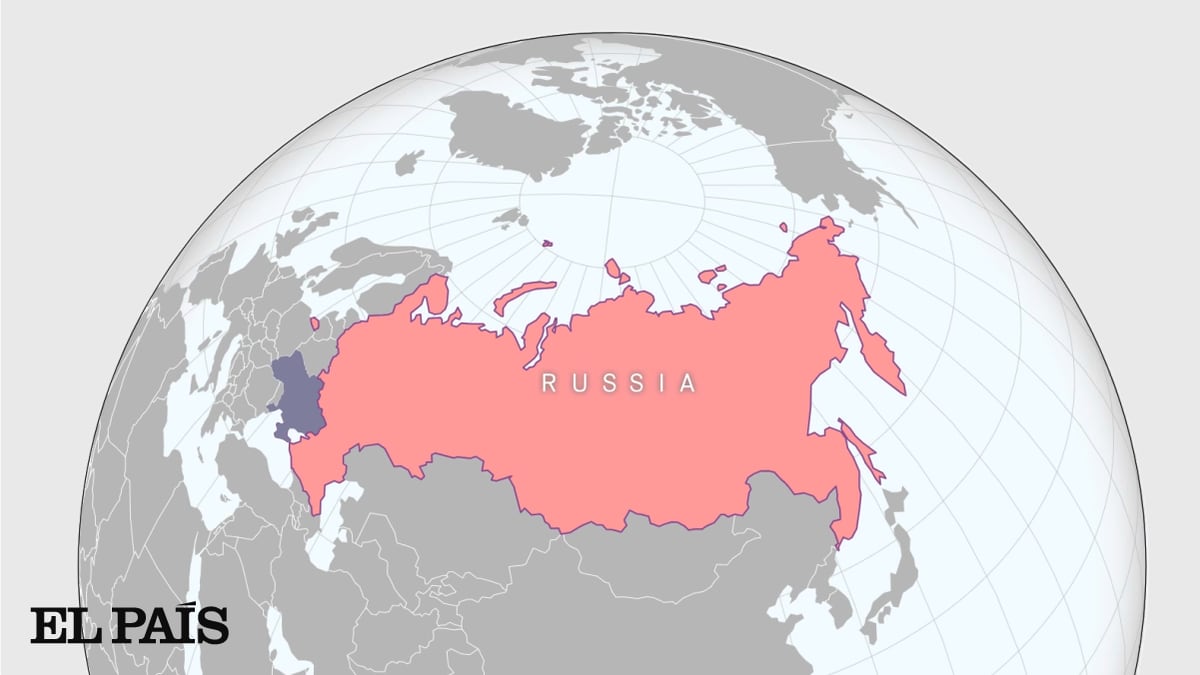
In his war against Ukraine and his brutal challenge to the world order, Vladimir Putin has a vast network of international support. The countries within his web engage in varying levels of complicity, from explicit political backing for the invasion of Ukraine from states such as North Korea, Belarus, and Syria, to an implicit desire for the invasion to succeed or a mere willingness to take advantage of the situation in a way that just happens to benefit the Kremlin. All together, this network has pumped indispensable economic and military oxygen into Moscow’s ambitions.
China provides essential commercial support, with a notable increase in both the sale of products to Russia and the purchase of Russian fossil fuels, thereby helping the Kremlin to survive Western sanctions. Iran and North Korea deliver key weapons to sustain the offensive in Ukraine. Belarus affords the Kremlin strategic depth by allowing it to use its territory for multiple purposes.
This core network of cooperation has a political relevance that places it on a prominent plane with respect to other dynamics that favor Putin. Time will tell whether these countries converging in a pulse against the West, yet without a formal alliance, will come to form a highly cohesive partnership. For the time being, they offer Russia significant help.
On another level, there is the role of countries which, lacking any political intention comparable to those above and with varying degrees of empathy, or a simple disinterest in Russian abuses, shore up the Kremlin via trade, minimizing the impact of Western sanctions. “The West’s sanctions policy has failed to deter Russia and is currently struggling to succeed in containing it. The main loopholes are centered around oil and battlefield goods. The successful circumvention of the oil price cap and the re-export of critical items allow Russia to defy restrictions. In both cases the role of third countries is pivotal”, says Maria Shagina, from the International Institute for Strategic Studies.
Beyond the fundamental role of China, several Central Asian and Caucasian countries are emerging as useful black markets for the Kremlin, though many other nations play important roles. Shagina sums up the map as follows: “China, India and Turkey buy 90% of Russian crude oil. China and Hong Kong are the key hubs for sourcing dual-use goods like semiconductors. The UAE has become a critical node in Russia’s circumvention strategy – either as a transshipment hub or a financial hub”.
There is also a third tier, which has political significance. Countries such as Syria and Eritrea support the Kremlin’s cause; there are others that are very empathetic, such as Venezuela, several African states that receive security aid from Moscow, and Hungary, which has tried to obstruct EU policy regarding the successive rounds of sanctions, though with little success. There are also politicians and political parties that, within many Western societies, express an empathy towards Putin and his approach. An obvious case is that of Donald Trump who, without even having yet won this year’s presidential elections, has already succeeded in getting the Republicans to stall U.S. aid to Ukraine for the past seven months. It remains to be seen what he will do if he returns to the White House.
It is a broad, complex and nuanced picture. Here is a look at some of its key features.
China
Beijing has refused to provide military support to Moscow, but significant growth in bilateral trade is what is mainly fuelling Russia’s economy and its ability to sustain the war effort in Ukraine. In 2023, there was trade worth $240 billion, up 26% from the previous year, a figure that equals EU-Russia trade in 2021 prior to the invasion.
As well as microchips — perhaps the most essential item — smartphones, computers, industrial and construction machinery and automobiles are some of the main Chinese products that have allowed the Russian economy to continue to function with some normality despite Western sanctions. Conversely, China has bought large quantities of oil, and also coal, copper, and nickel, guaranteeing important sources of revenue for the Kremlin. Half of Russian oil exports went to China in 2023, according to Russia’s deputy prime minister, Alexander Novak.
Beijing is cultivating the most strategic of all its international relations with Moscow. In the current context, China has a clear interest in avoiding a Ukrainian victory that would strengthen the West and increase the risk of Putin’s downfall. Beijing does not want a collapse of the Russian regime, which might open up an opportunity, however small, for the democratization of Russia, as this would entail the risk of a Kremlin on better terms with the West and a scenario that Beijing considers a nightmare — one in which it would be surrounded by unfriendly nations, including India, South Korea, Japan, etc.
“What we are seeing is basically a realignment of Russia which, after the break with Europe, embraces the call from Eurasia,” says Jorge Heine, professor at the Pardee School of Global Studies at Boston University and former Chilean ambassador to China and India. “It is boosting relations with China, and also with India and Iran; for example it has come up with a project to relaunch a railway connection from St. Petersburg to Iran.”
According to Heine, author of Xi-na in the Century of the Dragon, “although publicly there is talk of a relationship without limits, that is rhetorical. Of course, there are limits. China doesn’t trade arms and drives a hard bargain on Russian gas. There is some rivalry between the two over the Central Asian space. The relationship is not based on charity, but on interests. But both show signs of wanting to manage the rivalry, because it is in their interest to agree and face what they understand as the challenge from the West and NATO together.”
The two countries have announced plans to redouble Russia’s piped gas supply capacity to China. Implementation, however, is slow, and experts agree that China is exerting the full weight of its superiority by seeking to obtain extremely advantageous prices.
China’s limited support is also evident on a purely political level. Beijing has never criticized and thereby weakened Moscow’s position, but neither has it voiced explicit support for the invasion and has instead issued clear warnings against the use of nuclear weapons when Putin issued the threat. China does not want Russia to lose and therefore supports it, but at the same time fears that excesses by Russia — or North Korea — could end up galvanizing the West’s support for Ukraine and its strategic preparedness.
Beijing provides Russia with indispensable support, so much so that the latter now finds itself in a position of absolute inferiority and dependence on China, which cultivates the relationship within a millimetric calculation of their interests — interests which are not balanced as China’s huge economy extracts a much greater benefit from the stability of the global system. “China and Russia have always had some converging and some diverging interests. But now, unlike in the not too distant past, the former predominate,” Heine says.
Iran
The Iranian regime provides Putin with critical backing militarily by delivering drones that have boosted Russian airstrike capabilities against Ukraine. Reuters recently published information that also points to the supply of hundreds of Iranian ballistic missiles to the Kremlin.
“Although relations between Iran and Russia deepened notably from the support they both gave to [Syrian President Bashar el] Assad, it has paradoxically been the sanctions that the West has imposed upon the two that have brought them much closer together,” explains Luciano Zaccara, a professor at Qatar University specializing in Persian Gulf studies.
“The Iranian political class has always been divided over the level of closeness it wants to have with Moscow, with conservatives more interested in using the Russian card to offset the impossibility of restoring ties with European countries, especially since the arrival of [Ebrahim] Raisi as president.” Zaccara adds.
That there are mutual interests is obvious. Moscow is in dire need of the war materiel that Tehran can supply as a prolific producer of drones and missiles. There is speculation that Iran has even helped in setting up new drone production lines in Russia. Swarms of cheap drones wear down Ukraine’s expensive anti-aircraft defenses.
Iran, in turn, has multiple interests, especially in terms of the supply of advanced technologies in Russian hands. Zaccara notes Iranian interest, for example, in Su-35 fighter jets to upgrade their aging air fleet.
Iran is also interested in a greater commercial overlap. Tehran “has been trying for years to enter the automobile market in Russia with its Iran Khodro and Saipa plants, whose chances have improved as a result of Russian sanctions on European companies,” Zaccara notes. At the end of 2023, Iran sealed a free trade agreement with the Russian-led Eurasian Economic Union.
According to Zaccara, “moving between the two emerging powers — Russia and China — seems to be the most pragmatic and effective non-exclusive strategic option a Tehran in need of weighty allies could take.”
North Korea
The North Korean capital of Pyongyang is another important military cornerstone for Putin. The North Korean regime is supplying huge quantities of ammunition, an essential element in a war in which the production of sufficient material is a serious challenge. Ukrainian authorities have reported that Russia has used at least 50 North Korea-produced missiles against its territory.
The rapprochement between the two countries has been framed by a summit between Kim Jong-un and Putin, in which the former promised the latter to “always be together” in the “sacred war” against the West. Like Iran, North Korea has an interest in certain Russian technological capabilities. Although diminished by war, sanctions and brain drain, Russian society obviously has technical-scientific know-how of great interest to other countries in strategic areas. In the case of North Korea, an impoverished country, food exports on favorable terms are also of interest.
Extremely dependent on China, Pyongyang has undoubtedly calculated that it is in its interest to earn credits from Russia, which allows for a useful strategic triangle. The supply of weapons for use in Ukraine, on the other hand, allows for a test of their quality on the battlefield.
Central Asian and Caucasian countries
Several former Central Asian and Caucasian Soviet republics have recorded considerable increases in trade with Russia after EU sanctions were imposed.
“Many ex-Soviet countries used the opportunity to capitalise on Moscow’s isolation and became intermediaries between the West and Russia. Lax regulatory policy and lack of capacity-building made evasion thrive”, observes Shagina of the International Institute for Strategic Studies.
Some of these countries are more in tune with Moscow than others. Collectively — and not necessarily with much strategic calculation — they function as black markets that help the Russian economy circumvent restrictions.
Belarus
Belarus is a quasi-vassal state of Russia, and lends Putin’s ambitions significant support, offering strategic depth by merely making its territory available for multiple uses. Part of the February 2022 invasion was launched from Belarus, which today hosts Russian nuclear warheads and whose leader, Aleksandr Lukashenko, acted as a mediator between Putin and the deceased Russian mercenary leader of the Wagner group, Yevgeny Prigozhin, with an agreement to relocate Wagner mercenaries to Belarus.
Other countries
There are, of course, other countries that, in different ways, have aided Putin’s Russia amid its ongoing aggression in Ukraine. India, for example, has sharply increased its purchase of Russian crude, from virtually zero before the February 2022 invasion to two million barrels per day in July 2023, taking advantage of the low cost. This figure has fallen, however, hovering around 1.3 million at the beginning of the year, probably due to improvements in the design of Western restrictions. Also in the energy sector, those who have collaborated in transportation, including Greek shipowners, or in providing storage and refining services, such as Singapore, have been of significant help to Russia.
In political terms, a role is being played by figures such as Marine Le Pen, president of France’s far-right National Rally, who propagates ideas in French society that suit Putin. But it is Donald Trump who is the key player in this scenario. He has already warned that, as far as he is concerned, Russia can “do whatever the hell they want” with NATO countries that do not spend the stipulated 2% on defense. These include Italy and Spain. Putin recently said that he would prefer a second Biden term. But then he also said he had no intention of invading Ukraine.
Sign up for our weekly newsletter to get more English-language news coverage from EL PAÍS USA Edition
In his war against Ukraine and his brutal challenge to the world order, Vladimir Putin has a vast network of international support. The countries within his web engage in varying levels of complicity, from explicit political backing for the invasion of Ukraine from states such as North Korea, Belarus, and Syria, to an implicit desire for the invasion to succeed or a mere willingness to take advantage of the situation in a way that just happens to benefit the Kremlin. All together, this network has pumped indispensable economic and military oxygen into Moscow’s ambitions.
China provides essential commercial support, with a notable increase in both the sale of products to Russia and the purchase of Russian fossil fuels, thereby helping the Kremlin to survive Western sanctions. Iran and North Korea deliver key weapons to sustain the offensive in Ukraine. Belarus affords the Kremlin strategic depth by allowing it to use its territory for multiple purposes.
This core network of cooperation has a political relevance that places it on a prominent plane with respect to other dynamics that favor Putin. Time will tell whether these countries converging in a pulse against the West, yet without a formal alliance, will come to form a highly cohesive partnership. For the time being, they offer Russia significant help.
On another level, there is the role of countries which, lacking any political intention comparable to those above and with varying degrees of empathy, or a simple disinterest in Russian abuses, shore up the Kremlin via trade, minimizing the impact of Western sanctions. “The West’s sanctions policy has failed to deter Russia and is currently struggling to succeed in containing it. The main loopholes are centered around oil and battlefield goods. The successful circumvention of the oil price cap and the re-export of critical items allow Russia to defy restrictions. In both cases the role of third countries is pivotal”, says Maria Shagina, from the International Institute for Strategic Studies.
Beyond the fundamental role of China, several Central Asian and Caucasian countries are emerging as useful black markets for the Kremlin, though many other nations play important roles. Shagina sums up the map as follows: “China, India and Turkey buy 90% of Russian crude oil. China and Hong Kong are the key hubs for sourcing dual-use goods like semiconductors. The UAE has become a critical node in Russia’s circumvention strategy – either as a transshipment hub or a financial hub”.
There is also a third tier, which has political significance. Countries such as Syria and Eritrea support the Kremlin’s cause; there are others that are very empathetic, such as Venezuela, several African states that receive security aid from Moscow, and Hungary, which has tried to obstruct EU policy regarding the successive rounds of sanctions, though with little success. There are also politicians and political parties that, within many Western societies, express an empathy towards Putin and his approach. An obvious case is that of Donald Trump who, without even having yet won this year’s presidential elections, has already succeeded in getting the Republicans to stall U.S. aid to Ukraine for the past seven months. It remains to be seen what he will do if he returns to the White House.
It is a broad, complex and nuanced picture. Here is a look at some of its key features.
China
Beijing has refused to provide military support to Moscow, but significant growth in bilateral trade is what is mainly fuelling Russia’s economy and its ability to sustain the war effort in Ukraine. In 2023, there was trade worth $240 billion, up 26% from the previous year, a figure that equals EU-Russia trade in 2021 prior to the invasion.
As well as microchips — perhaps the most essential item — smartphones, computers, industrial and construction machinery and automobiles are some of the main Chinese products that have allowed the Russian economy to continue to function with some normality despite Western sanctions. Conversely, China has bought large quantities of oil, and also coal, copper, and nickel, guaranteeing important sources of revenue for the Kremlin. Half of Russian oil exports went to China in 2023, according to Russia’s deputy prime minister, Alexander Novak.
Beijing is cultivating the most strategic of all its international relations with Moscow. In the current context, China has a clear interest in avoiding a Ukrainian victory that would strengthen the West and increase the risk of Putin’s downfall. Beijing does not want a collapse of the Russian regime, which might open up an opportunity, however small, for the democratization of Russia, as this would entail the risk of a Kremlin on better terms with the West and a scenario that Beijing considers a nightmare — one in which it would be surrounded by unfriendly nations, including India, South Korea, Japan, etc.
“What we are seeing is basically a realignment of Russia which, after the break with Europe, embraces the call from Eurasia,” says Jorge Heine, professor at the Pardee School of Global Studies at Boston University and former Chilean ambassador to China and India. “It is boosting relations with China, and also with India and Iran; for example it has come up with a project to relaunch a railway connection from St. Petersburg to Iran.”
According to Heine, author of Xi-na in the Century of the Dragon, “although publicly there is talk of a relationship without limits, that is rhetorical. Of course, there are limits. China doesn’t trade arms and drives a hard bargain on Russian gas. There is some rivalry between the two over the Central Asian space. The relationship is not based on charity, but on interests. But both show signs of wanting to manage the rivalry, because it is in their interest to agree and face what they understand as the challenge from the West and NATO together.”
The two countries have announced plans to redouble Russia’s piped gas supply capacity to China. Implementation, however, is slow, and experts agree that China is exerting the full weight of its superiority by seeking to obtain extremely advantageous prices.
China’s limited support is also evident on a purely political level. Beijing has never criticized and thereby weakened Moscow’s position, but neither has it voiced explicit support for the invasion and has instead issued clear warnings against the use of nuclear weapons when Putin issued the threat. China does not want Russia to lose and therefore supports it, but at the same time fears that excesses by Russia — or North Korea — could end up galvanizing the West’s support for Ukraine and its strategic preparedness.
Beijing provides Russia with indispensable support, so much so that the latter now finds itself in a position of absolute inferiority and dependence on China, which cultivates the relationship within a millimetric calculation of their interests — interests which are not balanced as China’s huge economy extracts a much greater benefit from the stability of the global system. “China and Russia have always had some converging and some diverging interests. But now, unlike in the not too distant past, the former predominate,” Heine says.
Iran
The Iranian regime provides Putin with critical backing militarily by delivering drones that have boosted Russian airstrike capabilities against Ukraine. Reuters recently published information that also points to the supply of hundreds of Iranian ballistic missiles to the Kremlin.
“Although relations between Iran and Russia deepened notably from the support they both gave to [Syrian President Bashar el] Assad, it has paradoxically been the sanctions that the West has imposed upon the two that have brought them much closer together,” explains Luciano Zaccara, a professor at Qatar University specializing in Persian Gulf studies.
“The Iranian political class has always been divided over the level of closeness it wants to have with Moscow, with conservatives more interested in using the Russian card to offset the impossibility of restoring ties with European countries, especially since the arrival of [Ebrahim] Raisi as president.” Zaccara adds.
That there are mutual interests is obvious. Moscow is in dire need of the war materiel that Tehran can supply as a prolific producer of drones and missiles. There is speculation that Iran has even helped in setting up new drone production lines in Russia. Swarms of cheap drones wear down Ukraine’s expensive anti-aircraft defenses.
Iran, in turn, has multiple interests, especially in terms of the supply of advanced technologies in Russian hands. Zaccara notes Iranian interest, for example, in Su-35 fighter jets to upgrade their aging air fleet.
Iran is also interested in a greater commercial overlap. Tehran “has been trying for years to enter the automobile market in Russia with its Iran Khodro and Saipa plants, whose chances have improved as a result of Russian sanctions on European companies,” Zaccara notes. At the end of 2023, Iran sealed a free trade agreement with the Russian-led Eurasian Economic Union.
According to Zaccara, “moving between the two emerging powers — Russia and China — seems to be the most pragmatic and effective non-exclusive strategic option a Tehran in need of weighty allies could take.”
North Korea
The North Korean capital of Pyongyang is another important military cornerstone for Putin. The North Korean regime is supplying huge quantities of ammunition, an essential element in a war in which the production of sufficient material is a serious challenge. Ukrainian authorities have reported that Russia has used at least 50 North Korea-produced missiles against its territory.
The rapprochement between the two countries has been framed by a summit between Kim Jong-un and Putin, in which the former promised the latter to “always be together” in the “sacred war” against the West. Like Iran, North Korea has an interest in certain Russian technological capabilities. Although diminished by war, sanctions and brain drain, Russian society obviously has technical-scientific know-how of great interest to other countries in strategic areas. In the case of North Korea, an impoverished country, food exports on favorable terms are also of interest.
Extremely dependent on China, Pyongyang has undoubtedly calculated that it is in its interest to earn credits from Russia, which allows for a useful strategic triangle. The supply of weapons for use in Ukraine, on the other hand, allows for a test of their quality on the battlefield.
Central Asian and Caucasian countries
Several former Central Asian and Caucasian Soviet republics have recorded considerable increases in trade with Russia after EU sanctions were imposed.
“Many ex-Soviet countries used the opportunity to capitalise on Moscow’s isolation and became intermediaries between the West and Russia. Lax regulatory policy and lack of capacity-building made evasion thrive”, observes Shagina of the International Institute for Strategic Studies.
Some of these countries are more in tune with Moscow than others. Collectively — and not necessarily with much strategic calculation — they function as black markets that help the Russian economy circumvent restrictions.
Belarus
Belarus is a quasi-vassal state of Russia, and lends Putin’s ambitions significant support, offering strategic depth by merely making its territory available for multiple uses. Part of the February 2022 invasion was launched from Belarus, which today hosts Russian nuclear warheads and whose leader, Aleksandr Lukashenko, acted as a mediator between Putin and the deceased Russian mercenary leader of the Wagner group, Yevgeny Prigozhin, with an agreement to relocate Wagner mercenaries to Belarus.
Other countries
There are, of course, other countries that, in different ways, have aided Putin’s Russia amid its ongoing aggression in Ukraine. India, for example, has sharply increased its purchase of Russian crude, from virtually zero before the February 2022 invasion to two million barrels per day in July 2023, taking advantage of the low cost. This figure has fallen, however, hovering around 1.3 million at the beginning of the year, probably due to improvements in the design of Western restrictions. Also in the energy sector, those who have collaborated in transportation, including Greek shipowners, or in providing storage and refining services, such as Singapore, have been of significant help to Russia.
In political terms, a role is being played by figures such as Marine Le Pen, president of France’s far-right National Rally, who propagates ideas in French society that suit Putin. But it is Donald Trump who is the key player in this scenario. He has already warned that, as far as he is concerned, Russia can “do whatever the hell they want” with NATO countries that do not spend the stipulated 2% on defense. These include Italy and Spain. Putin recently said that he would prefer a second Biden term. But then he also said he had no intention of invading Ukraine.
Sign up for our weekly newsletter to get more English-language news coverage from EL PAÍS USA Edition
Vladimir Putin has just won his fifth term as president of Russia (or his first according to the 2020 referendum). He has been at the helm of the country uninterrupted for 25 years, even while Dmitry Medvedev was nominally head of state, making him one of the longest-serving leaders in Russian history. Like all those leaders, his lengthy tenure includes periods of reform, rapid development, stagnation and war.
What makes Putin’s political longevity increasingly puzzling is the absence of any distinguishing characteristics, personal or political, that defeated his challengers for the Russian throne. The answer lies in how although Russia’s leader was determined by chance, the system rebuilt itself around him.
Putin does not possess any qualities that would distinguish him from other Russian politicians, other than the office he holds. He is an uninspiring speaker, his expressions are formulaic, if not outright primitive. He is slow to absorb new information and struggles to remember names and numbers. He struggles to grasp the mood of his audience, and has a mediocre, thuggish sense of humor at best.
Not surprisingly, he never made an impression on anyone until he gained power. Once he did, his apparent charm was the product of the respect commanded by his office, not his personality. By contrast, Alexei Navalny, the Russian opposition leader murdered on Putin’s orders, made an impression wherever he went whether among seasoned diplomats at an embassy reception or inmates in a prison colony. If Putin were to enter a room unannounced, no one would notice him.
Putin is not the only uninspiring person to have led Russia — look at Nicholas II. But while his supreme power was inherited, Putin’s rise was very different. In 1999, the power obtained through appointment as prime minister had to be earned and defended, not merely inherited.
It is clear what made Putin president. In the absence of a political program that was distinct from his predecessor, he was perceived as a man of the people. Because that is what he was, an average man. After 10 crisis-ridden years, when the elite invariably occupied the top positions, someone who resembled the views, approaches, and mannerisms of the majority appeared attractive.
After a quarter of a century in power, Putin no longer resembles the average Russian. In 2024, his views on most issues align with those of a small minority. The combination of his advanced age (in a country with a relatively low life expectancy) and mental inflexibility which prevents him from adapting to a changing world, led to Putin’s views becoming distant from those of the majority of Russians.
The sharp increase in censorship and repression of people who stray from the official lines about war and peace, authority, gender relations, etc. is a direct result of this divergence. Putin can no longer pretend to be an average man, because he is no longer average. Russia’s citizens changed, but he did not — because he has not had to.
The snap forensic analysis after the March 2024 elections showed that the government had to add tens of millions of votes to Putin’s final tally to make his so-called victory look more decisive. Putin had no chance of winning a competitive election. He had to arrest, force into exile, and — ultimately — kill his political opponents, along with closing newspapers and prohibiting civil organizations, and making sure his only opponents were puppet candidates to make it happen.
As unimpressive as Putin is as a person, he is equally devoid of individuality as a politician. Across his quarter of a century in power, he appointed people to key positions based on personal relationships. Their professional qualities clearly played a secondary role.
Of course, the state is made up of many institutions and many people. A significant share of those in power have made their way through a competitive, albeit undemocratic, selection process. Stalin or Khrushchev appointed the overwhelming majority of their closest associates — quick-minded, resilient, morally flexible people capable of working 20 hours a day — this way. With Putin, for every competent technocrat like Igor Shuvalov or Elvira Nabiullina, there is an Igor Sechin or Vladimir Yakunin, otherwise useless personal friends.
Putin’s inability to work with strong and independent-minded individuals was evident from the very beginning of his rule. By 2022, such people were practically nonexistent among Russia’s leaders.
In theory, the inability to select and promote technocrats, even in his own political interests, should have caused Putin to lose power at an early stage. But it did not. The system operated on the premise that the most competent individuals had the opportunity to become incredibly wealthy if their activities also ensured the prosperity of Putin’s inner circle. For instance, Igor Shuvalov was a competent hand who guided the government’s response to the 2008-2009 financial crisis. He made a staggering billions of dollars in the process.
One can also look at the Russian Railways under Vladimir Yakunin or Rosneft under Igor Sechin. The companies functioned the exact same way as they would have done without them, while their executives raked in incredible salaries without doing anything.
This system, in which the state functions by allowing the most professional individuals to become extraordinarily wealthy compared to others in different countries, may seem like a complex, intricately designed scheme. However, it is not the result of any deliberate plans. Rather, the system gravitated naturally towards that state in the absence of real leadership.
The outcome of Russia sliding into this natural state has been so dismal that it is only natural for commentators to assume it was intentional. It is convenient to believe that the trillions of rubles spent on the military and national security are the result of a cunning, villainous, plan. It is a challenge — and an unpleasant one at that — to understand that military spending is always profitable for the elites, and that theft is easiest to justify under the guise of security concerns.
The militarization and corruption of the Putin-led state not only complemented each other but also depended on each other’s existence. They are the default towards which the system gravitates in the absence of conscious, deliberate, costly efforts aimed at preventing them.
The triumph of archaic, statist ideology in the late Putin years is not an extension of his personality. The internal war against modernity, reforms, and contemporary social relations, is not simply the result of Putin’s many years in power and his inability to keep pace with a changing world. Following an archaic ideology demands minimal effort and helps justify the repression necessary to maintain power.
The war against the LGBTQ+ community comes, of course, from backwardness and ignorance. But it is also a war against a younger, growing majority in defense of one’s own power. Likewise, the war against abortion rights and women’s autonomy is classic ideological conservatism. But it is also politically conservative — a pregnant woman is less likely to join a protest, and a man tied to a single job to support his large family is more likely to remain loyal. Though Putinism seems unique, turns out to be just the most primitive ideology that ensures the continuation of his power.
The origin of the “Putin phenomenon” lies in the fact that the Russian state was built and solidified around this average individual. The result could never be effective, and turned out to be tragic.
A decade and a half of stagnation, during which the country fell further behind the world each year, culminated in a war that has already claimed tens of thousands of lives, a wave of repression that led to hundreds of thousands of refugees, the destruction of science and education, and the creation of a new economic model that sets the stage for a crisis after the war ends.
But whether this story will convince the country that it needs a different model to live and thrive is yet unclear.
As you may have heard, The Moscow Times, an independent news source for over 30 years, has been unjustly branded as a “foreign agent” by the Russian government. This blatant attempt to silence our voice is a direct assault on the integrity of journalism and the values we hold dear.
We, the journalists of The Moscow Times, refuse to be silenced. Our commitment to providing accurate and unbiased reporting on Russia remains unshaken. But we need your help to continue our critical mission.
Your support, no matter how small, makes a world of difference. If you can, please support us monthly starting from just 2. It’s quick to set up, and you can be confident that you’re making a significant impact every month by supporting open, independent journalism. Thank you.
Double Mockery: Iran’s Regime Presidency at UN Disarmament Conference Amidst Human Rights Violations National Council of Resistance of Iran (NCRI)
Historian Says Putin Has Slipped Up Geostrategically, Geoeconomically, And Geopolitically https://t.co/bins3tkACO pic.twitter.com/z3uNtxIa5N
— Michael Novakhov (@mikenov) March 20, 2024
Categories