
Day: March 3, 2024
Categories
NPR News: 03-03-2024 5PM EST
By Mauricio D. Aceves
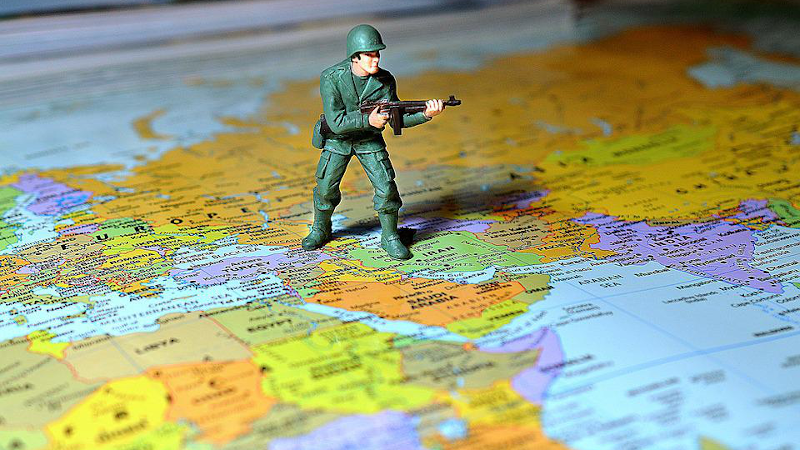
Recent developments and the humanitarian situation in Gaza are refocusing the world’s attention on a conflict doomed for decades to loiter on the second page of international newspapers and to stagnation in multilateral fora. The situation in Gaza is not an isolated development; the war in Sudan, the conflict in Ethiopia, and the chronicles of clashes in Syria, Iraq, Jordan, Lebanon and Yemen are alarms that started to ring years ago and have not found an end.[1] So, how do we overcome the liability of the moment? So far, profound variations of geopolitical trends have introduced a new stage for vanguard diplomacy, military calculations, and the spread of factual powers.
The occupation of Gaza became a veil for armed groups or political opposition forces across the region to reinforce or reestablish their operations in a belt that begins in the Syrian Mediterranean and touches the Afghan ridges, even when they were not linked with Hamas, Israel, or Palestine.[2] The Non-state actors opportunistically insert their agenda and narratives wherever instability becomes visible. They act as the temperature control of conflicts, raising and lowering tensions against or in favour of the influencers to get concessions, legitimacy, and power. Hamas’s operation in southern Israel activated a new stage of crisis in the history of the conflict in Gaza; meanwhile, the intervention of Hezbollah will be the determinant in regulating tensions in the coming weeks buffering the direct involvement of third nations.
To paraphrase author Tom Clancy, ‘the world is too small for secrets.’ Protests regarding the humanitarian crisis have been widely spread across social media, in art, and on the streets. However, displays of support or the human and material debris of the war have had limited effect on official postures. On the other hand, discussions and controversies over the Palestinian issue can become part of political narratives as never before, beyond the frontiers of the Arab World.[3] [4] Outside the Middle East, the current situation in Gaza is causing divisions in internal affairs with political implications, particularly in a year full of democratic elections and when polarizing narratives are gaining ground on many fronts, impacting the social and societal anatomies.[5] Sensitive images of the self-immolation of Aaron Bushnell, at the doors of the Embassy of Israel in Washington, D. C. recall stories of emotional protests regarding the Vietnam War, the 1868 movements, or the Arab Spring.[6]
An adjustment of the understanding of asymmetric warfare is crucial. The war in Ukraine has shown that the projections of hybrid warfare also underline the importance of the military-industrial complex, strategies to counter disadvantages, and managing the momentum. The panorama of the Middle East opens new pages in the manual of asymmetric conflict. The Houthis’ reactivation in Yemen has provoked a naval blockade compromising global trade and supply chains without deploying a navy—even though it has eroded opportunities to relieve Yemen’s humanitarian situation. It shows the vulnerability of presumed stable maritime routes regarding food and energy security, among other strategic goods. As an outcome, Egypt’s income from the Suez Canal has decreased by 40% to 50% this year, and the Red Sea traffic has fallen similarly.[7]
Diplomatic milestones that were expected to generate more stable conditions are being repositioned differently from the time when they were initially established. The Abraham Accords, the Joint Trilateral Declaration, the talks between Yemeni Houthis and Saudi Arabia, and even tenuous acts of understanding between the U.S. and Iran through exchanges of detainees and concessions on economic sanctions – these diplomatic achievements are being reevaluated, compromising their progress due to the emergence of new tensions and the recalibration of priorities.[8] The oscillation teach significant diplomatic lessons: no success is permanent, nor are the losses. The bets have changed, and the new ones must be made whilst rethinking the future and ongoing negotiations.
The mediation capabilities of Middle Eastern countries have increased significantly, and they could be critical in the following months. Lately, Saudi Arabia, the UAE and Türkiye have been accepted as facilitators at different moments of the war in Ukraine. Still, the outlooks of Gaza and other regional tremors are tests in their own region, especially when the Security Council continues without resolutions.[9] Egypt and Qatar have been capable of mediating the crisis in Gaza, but so far, the results have been limited to sporadic ceasefires or humanitarian supplies relief. The diplomatic pressure of Saudi Arabia is incorporated in the statement from the Ministry of Foreign Affairs regarding the discussions between Saudi Arabia and the U.S. on the Arab-Israeli peace process.[10] It names the 1967 borders and can be the determinant in proceeding with or cancelling their path to the Abraham Accords. Pragmatic agreements reached in the past will be reviewed and questioned, and diplomatic wires may be reconnected, as was the case of Türkiye and Egypt ties.[11]
Finally, a triad of vital goals is shared by all in the current landscape: ending the hostilities and warding off a genocide, as the International Court of Justice provisional measures stated to relieve a humanitarian catastrophe that can put further pressure on human displacement; avoiding a regional escalation that can severely disrupt a region pivotal for global stability and energy security; and, managing strategic relations with external powers, such as Europe and the U.S., especially when the NATO and the European continental security paradigm is in a process of redefinition.[12] In parallel, military spending and the need for deterrence capabilities will define the region’s policies. Just as Scheherazade begins to tell the second story as the first nears its end, geopolitics does not reach its an end without making new settings.
- About the author: Mauricio D. Aceves is an advisor for security and border issues at STRATOP Risk Consulting and an author in Foreign Affairs Latin America on the contemporary Middle East and Central Asia issues.
- Source: This article was written for Gateway House: Indian Council on Global Relations.
References
[1] The Armed Conflict Location & Event Data Project (ACLED), “Regional Overview Middle East January 2024”, ACLED, February 8, 2024. https://acleddata.com/2024/02/08/regional-overview-middle-east-january-2024/
[2] Idem.
[3] Rabinovitch, Ari and Lubell, Maayan, “Brazil’s Lula unwelcome in Israel until he retracts Holocaust remarks, minister says”, Reuters, February 19, 2024. https://www.reuters.com/world/middle-east/brazils-lula-not-welcome-israel-israels-foreign-minister-says-2024-02-19/
[4] Irish John, “France’s Macron opens door to recognising Palestinian state”, Reuters, February 16, 2024. https://www.reuters.com/world/frances-macron-opens-door-recognising-palestinian-state-2024-02-17/
[5] The Economist, “2024 is the biggest election year in history”, The ECONOMIST, November 13, 2023. https://www.economist.com/interactive/the-world-ahead/2023/11/13/2024-is-the-biggest-election-year-in-history
[6] De Guzman, Chad, “U.S. Serviceman Dies After Setting Self on Fire Outside Israeli Embassy to Protest War in Gaza”, TIME, February 26, 2024. https://time.com/6821425/israel-embassy-air-force-protest-fire-self-immolation-aaron-bushnell-latest-updates/
[7] AFP, “Egypt: Houthi attacks cut Suez Canal revenue by half”, The Africa Report, February 19, 2024. https://www.theafricareport.com/337581/egypt-houthi-attacks-cut-suez-canal-revenue-by-half/
[8] Munich Security Conference, “Munich Security Report 2024: Chapter 4 – Middle East: Abraham Discord”, Munich Security Conference, February 2024. https://securityconference.org/en/publications/munich-security-report-2024/middle-east/
[9] UN News, “US vetoes Algerian resolution demanding immediate ceasefire in Gaza”, UN News, February 20, 2024. https://news.un.org/en/story/2024/02/1146697
[10] Ministry of Foreign Affairs of the Kingdom of Saudi Arabia, “A Statement from the Ministry of Foreign Affairs regarding the discussions between the Kingdom of Saudi Arabia and the United States of America on the Arab-Israeli peace process”, X Account of the Ministry of Foreign Affairs, February 6, 2024. https://twitter.com/ksamofaen/status/1755020860836962666?s=48&t=rJFC-4OSaRNCDLrPl5luRg
[11] Tekin, Esra, “Turkish president arrives in Egypt for official visit”, Anadolu Agency, February 14, 2024. https://www.aa.com.tr/en/middle-east/turkish-president-arrives-in-egypt-for-official-visit/3137407
[12] International Court of Justice (ICJ), “Application of the Convention on the Prevention and Punishment of the Crime of Genocide In The Gaza Strip. South Africa v. Israel; Request for the indication of provisional measures”, ICJ, January 26, 2024. https://www.icj-cij.org/sites/default/files/case-related/192/192-20240126-ord-01-00-en.pdf
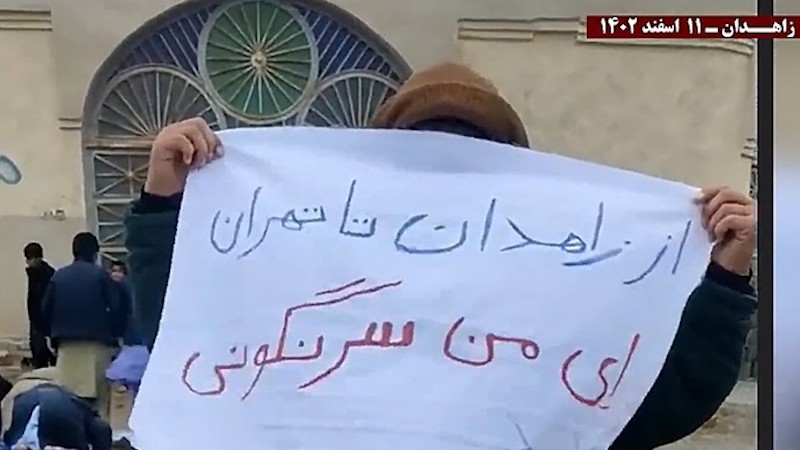
What Iran’s regime feared the most and tried to prevent for months finally came to pass on Friday, March 1, when its sham parliamentary elections was met with an unprecedented boycott by the Iranian people. The people of Iran dealt a severe blow to the regime’s political masquerade and once again underscored their desire to overthrow the rule of the mullahs.
In recent months, regime supreme leader Ali Khamenei had taken steps to consolidate power and solidify his regime against the inevitable waves of anti-regime protests. In the weeks leading up to the election, Khamenei personally made comments to underline the importance of the parliamentary elections. In a speech on February 28, two days before the elections, he stressed that participation in the election is a matter of “national security,” by which he means preserving his regime in power. This is also his justification for the vote-rigging and results engineering that his regime will engage in after the polls close.
The regime adopted several measures to pave the way for rigging the results, including the acceptance of identification documents that have no pictures, not stamping the documents of voters, and accepting five different types of documents for voting, and bribing people to vote.
In military bases, soldiers were forced to vote and were promised a four-day break if they cast their votes. According to the regime’s media, Moussa Kamali, the senior advisor of the training garrison of the armed forces, said, “Today, according to reports from education centers and garrisons, the presence and participation of our dear soldiers was unprecedented.” Kamali then asked soldiers to compel their families and friends to vote in the sham elections. Prisoners and workers of state-run factories were pressurized to vote.
On election day, Khamenei once again pleaded with his loyalists to vote and said, “Use this opportunity and vote on the first hours.”
On the other hand, the regime’s so-called religious authorities tried to compel the people to vote by saying that participation in the elections is a “religious duty” and not participating is a sin. But despite all these measures, the turnout was a disaster for the regime. Thousands of reports from citizen journalists and PMOI supporters across Iran show that polling stations were empty and very few people went to cast their vote.
But as before, the regime will resort to different tactics to rig the results and declare high turnouts and the results that had been determined before the voting took place. But the boycott was so widespread that the regime’s reports are being mocked by the people. Even the regime’s media could not deny the boycott.
The few foreign media that were allowed to cover the news also acknowledged the low turnout and the regime’s anxiety. “While state-controlled television broadcast images of lines of voters, others across the capital of Tehran saw largely empty polling stations,” Associated Press reported. “Meanwhile, a heavy security presence could be seen across the capital, with ordinary and anti-riot police officers visible in main squares and junctions. Some 200,000 security forces have been deployed across the country as over 59,000 polling stations opened.”
Reuters described the election as “a test of the clerical establishment’s legitimacy at a time of growing frustration over economic woes and restrictions on political and social freedoms.”
The situation has become so critical for the regime that Mohammad Bagher Farzaneh, the temporary Friday prayer leader of Mashhad, said on election day, “Brothers and sisters, if this situation continues… it will be dangerous. We are here to give people faith. If they don’t have bread, they will lose their faith.”
Indeed, the situation is very dangerous for the regime. As Mrs. Maryam Rajavi, the president-elect of the National Council of Resistance of Iran (NCRI), said, “No doubt, Khamenei and the Velayat-e Faqih regime will come out of this theatrics, much weaker and more fragile than ever, which will expedite their overthrow. The Iranian people’s decisive ‘No’ is indicative of burgeoning uprisings, the echoes of which have already resonated across the nation, heralding the impending downfall of the clerical regime.”
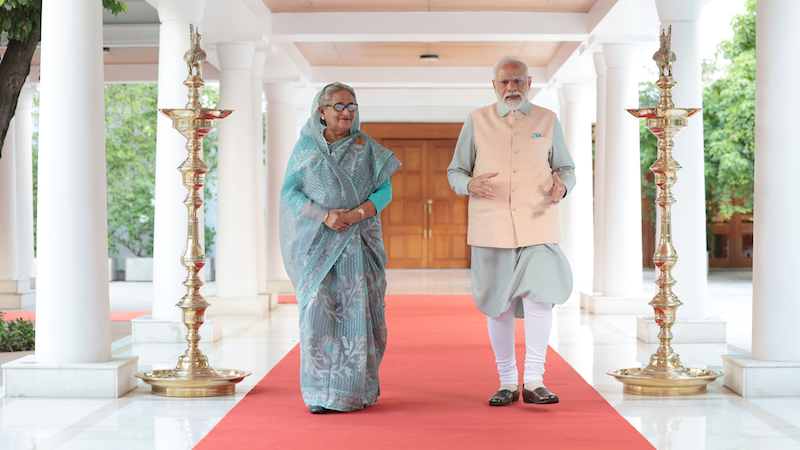
Sri Lanka’s relations with India are expected to deepen in 2024. Following crucial assistance provided by India during Sri Lanka’s 2022 crisis, there is greater engagement in investment and tourism. With the upcoming presidential elections, all key political actors in Colombo recognise the importance of maintaining close relations with its largest neighbour.
By Rajni Gamage
Sri Lanka-India Relations at All-time High
India’s relations with Sri Lanka are entering a distinct phase following the 2022 economic crisis in the island state. In a recent statement, India’s Minister of External Affairs S Jaishankar said that during the crisis, India provided Sri Lanka with economic and humanitarian assistance of over US$4.5 billion (S$6 billion) and supported Sri Lanka’s debt restructuring efforts.
Over the last two years, Colombo has been deepening relations with New Delhi on several fronts. Among the most significant of these are development and investment initiatives by India, such as the Trincomalee energy-hub development, port development and oil refinery. In 2022, Sri Lanka granted provisional approval to Adani Green Energy for two wind projects to be constructed in Northwest Mannar and Pooneryn. In October 2023, Sri Lanka’s state-owned dairy companies run by the National Livestock Development Board entered a joint venture with India’s Amul Dairy company. There are also discussions on Sri Lanka’s government engaging India’s Adani Group to oversee the management of key international airports in Sri Lanka.
In February 2024, Phase-IV of the Indian Housing Project, ‘Bharat-Lanka’, was virtually launched by Sri Lanka’s President Ranil Wickremesinghe. The project is aimed at constructing 10,000 houses with Indian grant assistance for plantation sector workers in Sri Lanka. In the same month, India introduced its Unified Payment Interface in Sri Lanka. This is yet another step-in attempt to deepen financial connectivity between the two countries, with the authorisation of the Indian Rupee as a designated currency in 2023.
Sri Lanka as India’s Regional Tourist Destination
Following a diplomatic row between India and the Maldives on Prime Minister Narendra Modi’s visit to Lakshadweep in January 2024, Sri Lanka has been promoted as a tourist destination for Indians. Earlier this month, Jaishankar encouraged Indian tourists to travel to Sri Lanka.
These developments are seen by Sri Lanka as providing a significant boost to its tourism industry. It is projected to earn a revenue of US$348 million (S$468 million) in 2024 and have an annual growth rate of 5.16 per cent, following the catastrophic impact on the industry by the COVID-19 pandemic and the 2022 economic crisis.
In February 2024, Wickremesinghe, addressing concerns about China’s increased presence in the Indian Ocean, said that Sri Lanka would not allow anything to threaten India’s security. Since January 2024, Sri Lanka imposed a one-year moratorium on the operation of any foreign research vessel in its Exclusive Economic Zone. Chinese counterparts are reported to have expressed its dissatisfaction to Sri Lanka over this decision. During a recent visit to New Delhi, Sri Lanka’s foreign minister, Tharaka Balasuriya, also stressed the civilisational link and historical connection between India and Sri Lanka. The minister clarified that China was an “important trading partner”, but that this was also the case with many of its other trading partners.
Responding to Jaishankar’s call to Indians to visit Sri Lanka, Sri Lanka’s Minister of Tourism Harin Fernando reinforced the invitation, stating that “Sri Lanka is a part of India”. This triggered domestic criticism of the minister’s statement and a protest staged in front of the Ministry of Tourism, calling for his resignation. The minister subsequently clarified that such attacks were politically motivated and that he had attempted to say that the two countries were similar to one another and that he was not attempting to “sell Sri Lanka to India”.
Domestic Opposition to India
Sri Lanka’s relations with India have been strained in the past. Bilateral relations were at an all-time low following the intervention of Indian Peacekeeping Forces in Sri Lanka in 1987 and bilateral tensions over the civil war and human rights situation in Sri Lanka, especially relating to the rights of Sri Lankan Tamils. India’s economic relations with Sri Lanka too have received opposition, due to concerns that India’s larger economic power would exploit a much smaller economy such as that of Sri Lanka. Despite a free trade agreement (FTA) reached between the two countries in 1998, subsequent bilateral economic agreements such as the Economic and Technology Cooperation Agreement were stalled due to domestic political opposition.
In June 2022, an Adani project in Sri Lanka was at the centre of domestic controversy after a government official told a parliamentary panel that a renewable energy project in Mannar was given to the Adani Group after “pressured” then-president, Gotabaya Rajapaksa. India’s Adani has also been mired in local controversies over its renewable wind energy project. The leader of the National People’s Power (NPP), Anura Kumara Dissanayake, criticised the governmentfor not awarding the renewable energy projects through a tender process.
The NPP’s India Visit
The NPP – a political alliance – has been growing in popularity in Sri Lanka, especially since the 2022 crisis. Its main constituent party is the Marxist-Leninist Janatha Vimukthi Peramuna (JVP), which has so far been at best a third electoral force in Sri Lanka. However, following the economic crisis and widespread rejection of the establishment of political parties and politicians, the NPP is perceived as the most popular political force at present.
The JVP has traditionally been opposed to India’s interference in the civil war and internal affairs of Sri Lanka. The JVP, along with other Sinhala Buddhist nationalist movements, led an anti-India campaign in 1987-90 against the Indo-Lanka Accord which it opposed as part of its political discourse against “Indian expansionism”. However, in February 2024, an NPP party delegation led by Anura Kumara Dissanayake spent three days in India, where meetings with Indian external affairs minister S. Jaishankar and other government officials and business leaders were held. Dissanayake stated that India is Sri Lanka’s closest neighbour and has become a major political and economic centre. This meant that when making economic and political decisions, the NPP would “care about how it will impact India”.
The NPP’s India visit and its more diplomatic stance have reinforced perceptions of it being a major political force, moving forward, particularly in light of the elections this year. It was also reported that the Indian government has responded favourably to the main opposition party, the Samagi Jana Balawegaya, seeking a visit to India. It appears that regardless of the political alliance in power in Colombo, Sri Lanka’s relations with India are likely to further deepen following the elections in the island state.
- About the author: Dr Rajni Gamage is a Postdoctoral Fellow at the Institute of South Asian Studies (ISAS), an autonomous research institute at the National University of Singapore (NUS). She can be contacted at r.gamage@nus.edu.sg. The author bears full responsibility for the facts cited and opinions expressed in this paper.
- Source: This article was published by the Institute of South Asian Studies (ISAS)
By Daungyewa (Hong) Utarasint
INTRODUCTION
Tensions in the Middle East continue to escalate. On October 7, Hamas launched a surprise attack on Israel, resulting in 1,200 deaths, and Israel has retaliated with bombing of Gaza, an action that critics have described as ‘collective punishment’. Israel asserts that its sole intention is to eliminate Hamas. However, the sustained bombing has led to widespread destruction of homes, mosques, churches, schools, universities, and hospitals. This outcome raises suspicions that the initial expressed targeting of Hamas was meant to mislead. To date, Israeli military action has killed more than 26,000 Palestinians.
Meanwhile, world opinion has polarised into two camps: pro-Palestine and pro-Israel. The Israel-Palestine conflict has long been a complex issue, and many mistakenly perceive the conflict as a clash between two religions, Islam and Judaism, fanning both Islamophobia and anti-Semitism around the globe. It reveals widespread ignorance of the history and complexities of the Israel-Palestine conflict. The shockwave from the war spread as far as Chicago, where a 6-year-old Palestinian American boy was stabbed to death for being a Muslim. At the same time, anti-Semitic incidents have also intensified after October 7.
The rising death toll of Palestinians has sparked global protests against the Israeli government for continuing the air strikes in Gaza. Like much of the world, Thailand grapples with divergent views on the Israeli-Palestinian conflict. More significantly, there is a marked difference in opinion between the broader Thai population and Thai Muslims, especially Malay Muslims from the southernmost provinces.
One particular factor affecting public opinion in Thailand as a whole is the fact that Thai workers were among the victims of the Hamas attack on October 7. According to the Thai Ministry of Labour website, as of October 21, 31 Thai workers had died, 16 sustained injuries, and 19 remained captives by Hamas. This situation has significantly heightened awareness in Thailand about the large number of Thai workers stationed in Israel.
This article highlights the distinct political identities and divisions between Muslim communities—particularly the Malay Muslims from Thailand’s southernmost provinces—and the mainstream Thai population, and discusses how these divisions contribute to a spectrum of political ideologies that carried significant domestic and international implications.
We can take the May 2023 general election as a point of departure. Voting patterns then show a significant divergence: a majority of voters supported the progressive-liberal Move Forward Party, while the Malay Muslim community primarily cast their ballots for the Prachachart Party, an ethno-religious party with a strong base in the southern provinces of Yala, Pattani, and Narathiwat. This outcome underscores the distinct political views among these communities.
Similarly, perspectives on international issues, such as the Israel-Palestine conflict, vary markedly— and that is the focus of this article. We explore these differing viewpoints and responses to see how such divisions contribute to the diverse ideologies that influence Thailand’s domestic and international strategies.
THE THAI GOVERNMENT AND THE THAI PRIME MINISTER’S STANCE ON THE ISRAEL-PALESTINE CONFLICT
Thailand’s foreign policy has consistently followed a ‘Bamboo Diplomacy’ approach, characterised by flexibility and adaptability to changing international dynamics. As a member of the United Nations, Thailand has recognised both the State of Palestine and the State of Israel, and maintains strong diplomatic relations with Iran. This approach enables Thailand to navigate the current crisis with a malleable strategy towards Israel, Palestine, and Iran. Despite pressure from both Pro-Palestine and Pro-Israel advocates for the Thai government to take sides, it has chosen to remain neutral and silent in order to preserve its positive diplomatic relationships with all involved parties.
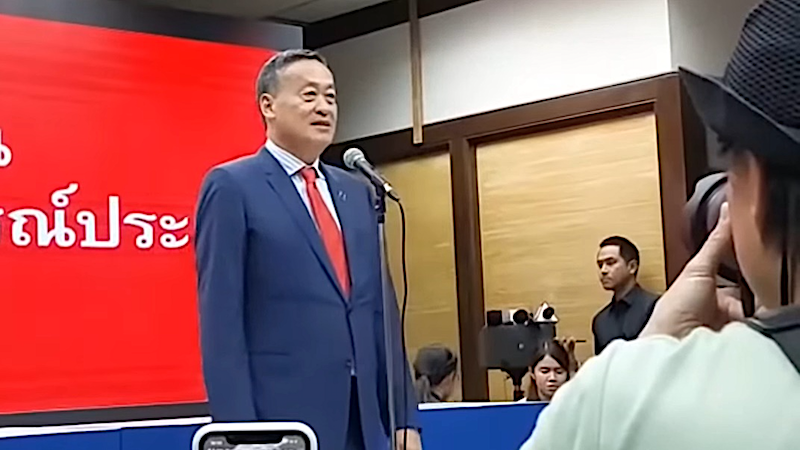
However, immediately after the news broke that Hamas had captured Thai migrant workers in Israel, Thai Prime Minister Srettha Thavisin publicly denounced Hamas for its atrocious acts.[1] In response, Thai scholars criticised Srettha for this, arguing that caution was necessary since Thai hostages remained in custody. Given the delicate situation, the complexities of foreign policy in the Middle East and the involvement of major world powers, Srettha’s hasty actions may have plunged Thailand into a complex diplomatic situation.
Although the Thai government voted in favour of an immediate humanitarian ceasefire at the United Nations General Assembly meeting on December 12, some Thai netizens have expressed contrary views on social media. Conversations with officials from international organizations based in Thailand reveal that a significant number of Thai authorities collaborating with them demonstrate solidarity with the Israeli Defense Forces (IDF). Remarkably, some supporters of the Move Forward Party, who are typically advocates for democracy and human rights, openly support the Israeli government’s collective punishment in Gaza, which has been labelled by some as genocide. Furthermore, many Thai social media influencers derive their news and analytical perspectives from the Israel Defense Forces’ X and Instagram profiles.[2]
THAI PUBLIC AND MUSLIM COMMUNITY: CONTRASTING OPINIONS ON ISRAEL-PALESTINE
Scholars and experts who have shared their insights and views on the Israel-Palestine conflict have encountered a strong backlash, including slurs and derogatory comments on social media. Thai Muslim scholars and experts, in particular, have been subjected to prejudiced remarks, been labelled as supporters of a specific side or been called spokespersons for Hamas. Some comments have been extreme and offensive, such as “Of course, you are Muslim, so you support them”; “You sound like a spokesperson for Hamas.”; “We should throw pigs at people in Palestine as a retaliation”, and many more. The term khaek is often used in these comments, a derogatory term for Muslims in Thai. Many comments further alleged that these scholars and experts were betraying Thailand. These commenters reasoned that if Hamas killed Thais, those who expressed sympathy for Palestinians should no longer be considered Thais.[3]
Amidst growing tensions in the region, on October 21, over 300 Thai Muslims and Palestinians gathered at the Israeli Embassy in Bangkok.[4] The assembly was a peaceful demonstration of support intended to express solidarity with the Palestinians in Gaza, with participants calling for a ceasefire. On November 4, more than 4,000 Malay Muslims gathered to perform Salat-ul-Hajat prayer (the prayer of need) in front of Pattani’s Central Mosque.[5] On December 17, Malay Muslims in Pattani Province held a second rally under the banner “I Promise”.[6] Demonstrators pledged to continue advocating for peace for the Palestinians in Gaza. Despite global rallies, in Thailand, only a small number of Thai and Malay Muslims mobilised to protest against the war in Gaza.
THAI WORKERS IN ISRAEL
The motive behind Hamas’ strategy of kidnapping remains unclear. From a tactical standpoint, taking hostages in a conflict zone is often seen as a means to gain bargaining power. Consequently, Hamas’ hostage-taking may be less about nationality than it is about enhancing their negotiation capabilities. Thus, it is conceivable that Hamas indiscriminately kidnapped any individual present to increase their leverage. Media analysts and speculators have been diligently examining Hamas’s reasons for kidnapping Thai nationals. Some of them posit that Hamas disapproves of Thai workers occupying jobs in the Kibbutz that Palestinians could fill. Others suggest that Hamas views Thai workers in Israeli agriculture as indirectly supporting Israeli policies towards Palestinians. Hamas may perceive Thais working in Israel as collaborators with the Israeli authorities. Besides, speculation has been rife that some Thai paramilitaries, previously active in the conflict-ridden southernmost provinces of Thailand, have joined the Israeli Defense Forces, potentially sparking retaliation from Hamas. However, Thai netizens discovered that at least one of the Thais who enlisted in the Israeli Defense Forces was raised in Israel, debunking rumours that he was a mercenary, as social media had suggested without substantiation.
The presence of Thai workers in Israel is not a recent development. Following the first Intifada in 1987, the Israeli state began replacing Palestinian workers with workers from Asia and Africa, primarily for roles in the agricultural sectors. Many Thai workers poured into Israel in the 1990s, the majority of them employed at the cooperative agricultural communities of Moshav and Kibbutz.
Although Israel and Thailand formalised a labour welfare agreement in 2011, a Human Rights Watch report found that Thai agricultural workers still faced labour rights abuses. A BBC investigation also revealed that many Thai workers lived under squalid conditions, suffering exploitation and abuse. Between 2012 and 2018, reports indicated that 172 Thai workers had died in Israel.[7] One such worker, Mr. Praiwan Seesukha, tragically died in his sleep in 2013. Human Rights Watch stated that Praiwan had been working an exhausting 17 hours a day, seven days a week, with no days off.[8] Israel refuted the claims, arguing that the BBC report distorted the reality.[9] The Israel Ministry of Health stated deaths during sleep were attributed to Brugada syndrome, a genetic condition prevalent among certain tribes from the northeastern region of Thailand.
While many Thais and media outlets focus on the death of Thai workers on October 7, it is crucial for the Thais and the Thai government to examine the 172 deaths of Thai workers in Moshav and Kibbutz over the years as well.
PRACHACHART PARTY NEGOTIATE FOR THE RELEASE OF THAI HOSTAGES
Since the 14 May general election, the spotlight has been directed at the turmoil in the heart of the nation; the political atmosphere in Thailand’s three southernmost provinces was equally tense. The stakes became particularly pronounced when Pita Limjaroenrat, the leader of the Move Forward Party—who secured the most votes—was barred by parliament from becoming Prime Minister of Thailand. The emotions in Thailand’s Deep South have run as intensely as in Bangkok, albeit with a different connotation; it melds elements of ethno-religious identity politics with pro-democracy ideals, and stands apart from the rest of Thailand.
From July 19 to August 22, the parliamentary process for nominating, selecting and voting for the Prime Minister was in disarray. On July 19, Wan Muhammad Noor Mata (Wan Nor), the House Speaker and Prachachart Party leader, rejected MP Rangsiman Rome’s urgent motion to reconsider the nomination of Pita Limjaroenrat for the position of Prime Minister. In response, the Move Forward Party’s supporters expressed their discontent with Wan Nor. Following Wan Nor’s ambivalent role as House Speaker, and in light of the Prachachart Party’s decision to align with the Pheu Thai Party and with pro-military groups such as the Palang Pracharath Party and the United Thai Nation Party, many Malay Muslim pro-democracy advocates have expressed their discontent. A considerable number have pledged to withhold their support in subsequent elections.
Amidst this domestic unrest, Prime Minister Srettha’s harsh denouncement of Hamas marked a sharp turn in foreign affairs. Wan Nor, the House Speaker, alongside his team, initiated outreach within their closed-circle networks, particularly among the Thai-Shia community, to establish contact with senior authorities in Iran and Hamas to negotiate the release of Thai hostages. Simultaneously, a distinct group of mediators, consisting of Thai officials from the Foreign Ministry and the military, actively sought to broaden their diplomatic channels through nations such as Turkey, Malaysia, Qatar, Egypt, and Saudi Arabia. Their objective was to secure the most favourable terms for the hostages’ release.
While the Srettha administration’s prompt diplomatic actions to secure the release of Thai hostages are acknowledged, the efforts are perceived by many, particularly the hostages’ relatives, as tardy. To be sure, prominent figures such as Wan Nor, the House Speaker; Areepen Utarasint, his advisor; Syed Sulaiman Husaini, the leader of Thailand’s Shia community; and Lerpong Sayed, a lecturer at Iran’s Al-Mustafa International University and the head of the Thai-Iran alumni association, who is also Syed Sulaiman Husaini’s younger brother, have been instrumental in the negotiation process. These negotiators hail from Thailand’s three southernmost provinces and share the Muslim faith, and therefore, they exert a pivotal influence behind the scenes. In an interview with VOA Thai, Lerpong asserted, “I think Thailand was the most successful in the world in helping the hostages.”[10]
On October 30, when 17 Thai hostages were returned to Thailand, each returnee wore a T-shirt featuring both Israeli and Thai flags, signifying that the Thai government had sent ambiguous messages to the public. Furthermore, each returnee also donned a necklace inscribed in Hebrew and English with the phrase, ‘Release them (hostages) back home now!’ While the government attempts to maintain a neutral stance, the T-shirts emblazoned with the Israeli flag suggest otherwise. Syed Sulaiman Husaini, a key negotiator for the release of hostages from Hamas and the leader of Thailand’s Shia community, told an interviewer that during negotiations, he had assured Hamas that Thailand did not support Israel. However, the presence of both Israeli and Thai flags on the t-shirts worn by the released Thai hostages may have contradicted his statement. Syed expressed feelings of betrayal after witnessing the return of the hostages via the media, feeling that the Thai government disregarded him and his team’s efforts.[11] The Thai government has faced severe criticism from both Thai and Malay Muslim communities for its perceived insensitivity and lack of foresight regarding potential adverse consequences for the remaining Thai hostages still in captivity.
CONCLUSION
Even if all of the hostages have been freed, this action alone is unlikely to mend the longstanding division between the Thai state and the predominantly Muslim region of Southern Thailand. While the people in Southern Thailand undoubtedly welcome the release, this does not resolve or lessen the existing tensions. The reason is that most Thai hostages are from Northeastern Thailand (Esan). The election results and the local response to the Israeli-Palestinian conflict, which this article mainly focuses on, underscore the disconnect between Thailand’s three southernmost provinces and the rest of the country. This situation highlights a division in political leanings between Muslim communities and the mainstream Thai population, leading to fissures in both the domestic and international domains.
While Srettha’s government endeavours to repatriate Thais wishing to return home, the aftermath has compelled the government to reassess and enhance its protocols for similar future situations. This scrutiny has highlighted deficiencies in the Thai government’s bureaucratic processes, especially within the Ministry of Labour, which has been criticised for not fully informing workers about the risks of working in conflict zones and for failing to safeguard the welfare of its citizens abroad consistently. Furthermore, the Thai government needs to exercise greater sensitivity in its foreign policy towards Israel, bearing in mind the ongoing unrest in the southernmost provinces of Thailand. It is crucial that it avoids actions that can incite resentment among the Malay Muslims.
Finally, and above all, nationalist Thais must recognize that expressing sympathy for Palestine does not equate to disloyalty to Thailand. It is a misrepresentation to equate all Palestinians with Hamas. Moreover, it is not the case that all Jewish individuals support Israel’s stance towards Gaza. It is essential to refrain from generalizing about religions, ethnicities, and nations when discussing conflicts and violence.
TIMELINE OF THE RELEASE OF THAI HOSTAGES:
- The October 7 incident resulted in 39 Thai fatalities and 4 injuries, with 25 Thai individuals being taken as hostages.
- A ceasefire agreement, spanning four days, commenced on November 24 (Friday), which included terms for an exchange involving 50 members from Hamas and 150 from Israel.
- On the evening of November 24, the first day of the hostage swap, Israel and Palestine conducted an exchange involving 13 Israelis and 39 Palestinians.
- Between November 24 and 25, Hamas released 14 Thai hostages.
- On November 26, an additional 3 Thai hostages were released.
- On November 29, 2023, Thai Foreign Minister Parnpree Bahiddha-Nukara travelled to Israel to welcome the released hostages.
- On November 30, Hamas released 14 hostages, including 4 Thais, in exchange for Israel releasing 30 Palestinian hostages. The released individuals travelled through Egypt on their way back to Israel.
- Israeli officials stated that the Qatari government brokered the ceasefire agreement between Israel and Palestine. However, a different set of mediator actors orchestrated the agreement concerning the 25 Thai hostages and 2 Russians.
- However, as of December 4, 8 (or 9) Thai hostages remained in captivity.
ENDNOTES: For endnotes, please refer to the original pdf document.
- About the author: Daungyewa (Hong) Utarasint is a former Visiting Fellow at ISEAS – Yusof Ishak Institute. She is Visiting Assistant Professor of Arts and Humanities at NYU Abu Dhabi (NYUAD). Her current research investigates women and voting behaviour amid conflict in the southernmost provinces of Thailand, and examines obstacles to women’s political participation and how religion and cultural norms affect women’s political mobility.
- Source: This article was published by ISEAS – Yusof Ishak Institute
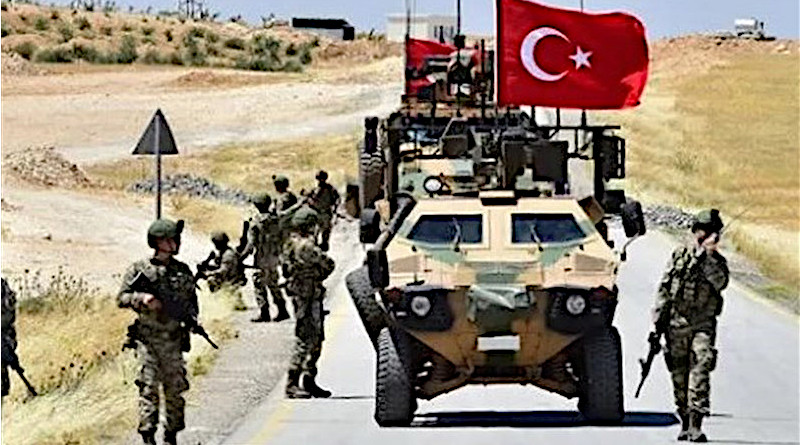
Türkiye bears responsibility for the serious abuses and potential war crimes committed by members of its own forces and local armed groups it supports in Turkish-occupied territories of northern Syria, Human Rights Watch said in a report released today. Kurdish residents have borne the brunt of the abuses due to their perceived ties to Kurdish-led forces that control vast swathes of northeast Syria.
The 74-page report, “Everything is by the Power of the Weapon: Abuses and Impunity in Turkish-Occupied Northern Syria,” documents abductions, arbitrary arrests, unlawful detention, sexual violence, and torture by the various factions of a loose coalition of armed groups, the Türkiye-backed Syrian National Army (SNA), as well as the Military Police, a force established by the Syrian Interim Government (SIG) and Turkish authorities in 2018, ostensibly to curb abuses. Human Rights Watch also found that Turkish Armed Forces and intelligence agencies were involved in carrying out and overseeing abuses. Human Rights Watch also documented violations of housing, land, and property rights, including widespread looting and pillaging as well as property seizures and extortion, and the failure of attempted accountability measures to curb abuses or to provide restitution to victims.
“Ongoing abuses including torture and enforced disappearances of those who live under Turkish authority in northern Syria will continue unless Türkiye itself takes responsibility and acts to stop them,” said Adam Coogle, deputy Middle East director at Human Rights Watch. “Turkish officials are not merely bystanders to abuses, but bear responsibility as the occupying power, and in some cases have been directly involved in apparent war crimes.”
Human Rights Watch interviewed 58 former detainees, survivors of sexual violence, relatives, and witnesses of violations, as well as representatives of nongovernmental organizations, journalists, activists, and researchers. Human Rights Watch researchers also spoke to an informed source who directly engages with the Military Police, and a Syrian source previously close to Turkish intelligence officials who had access to and oversight of various factions’ conduct in Afrin between July 2019 and June 2020, and who has since left Syria.
Türkiye’s military operations in northern Syria since 2016 resulted in its control of the predominantly Arab region north of Aleppo that includes Azaz, al-Bab, and Jarablus, the previously Kurdish-majority Afrin, and a narrow strip of land along Syria’s northern border between the ethnically diverse towns of Tel Abyad and Ras al-Ain.
Through its armed forces and its intelligence agencies, Türkiye exerts control and directly oversees the Syrian National Army, providing it with weapons, salaries, training, and logistical support. Türkiye also exercises administrative control over occupied regions via governorates in provinces of Türkiye bordering Syria.
The Turkish government has declared its intention to establish “safe zones” in the areas under its occupation, contending that the Kurdish-led forces in northeast Syria are affiliates of the Kurdistan Workers’ Party (PKK), which Türkiye, the United States, and the European Union regard as a terrorist group, and with which Türkiye has been engaged in a decades long conflict. The Turkish government also sees the “safe zones” as facilitating the return of Syrian refugees from Türkiye.
However, Türkiye has failed to ensure the safety and well-being of the civilian population, and life for the 1.4 million residents of the region is marked by lawlessness and insecurity. “Everything is by the power of the weapon,” said one former resident who lived under SNA rule for just under three years.
SNA factions and the Military Police have arbitrarily arrested and detained, forcibly disappeared, tortured and otherwise ill-treated, and subjected to unfair military trials scores of people with impunity. Kurdish women detainees have reported sexual violence, including rape. Children as young as six months old have been detained alongside their mothers.
In cases documented by Human Rights Watch, the UN Commission of Inquiry, and other human rights organizations, Kurds have overwhelmingly borne the brunt of these abuses. Arabs and others perceived to have close ties with Syrian Democratic Forces have also been targeted.
Factions of the Turkish-backed Syrian National Army and Military Police committed abuses in detention centers where Turkish military and intelligence officials were sometimes present, according to former detainees, who also said Turkish officials were sometimes directly involved in their torture and ill treatment.
Human Rights Watch interviewed 36 people who experienced housing, land, and property rights violations.
Since Türkiye’s Operation Olive Branch in Afrin in 2018 and Operation Peace Spring in the Tel Abyad – Ras al-Ain strip in 2019, hundreds of thousands of residents in the area have been displaced from their homes. Subsequently, SNA factions engaged in widespread looting, pillaging, and seizure of properties. The majority of those affected remain without proper restitution or compensation. “The hardest thing for me was standing in front of my house and not being able to enter it,” said a displaced Yezidi man from Ras al-Ain. The cycle of looting, pillaging, and property seizures persists, leaving those who challenge these actions vulnerable to arbitrary arrest, detention, torture, kidnapping, and enforced disappearance.
Accountability for serious human rights abuses and possible war crimes in Turkish-occupied territories remains elusive. Human Rights Watch investigated the cases of four high-ranking people alleged to be involved in serious abuses. None have been prosecuted, and three currently hold high-ranking positions within the SNA structure, according to informed sources.
Neither the SNA’s military courts, lacking independence, nor Türkiye, as the occupying power and primary backer of the SNA, have adequately addressed the serious crimes by those in power in Turkish-occupied territories. Human Rights Watch attempted to engage Türkiye in dialogue on these matters and shared detailed research findings in a letter sent twice by email to Foreign Minister Hakan Fidan on November 21, 2023 and on January 4, 2024, but the letterhas been met with silence. A letter to the SIG Defense Ministry on November 20, 2023 and January 8, 2024, inquiring among other things about any judicial proceedings related to four publicly reported deaths in detention, has also received no reply.
Türkiye is obliged to ensure its forces strictly observe international human rights and international humanitarian law, including the law governing its duties as the occupying power and the de facto government in these areas of northern Syria. This includes restoring and maintaining public order and safety in territories it occupies, protecting inhabitants from violence, holding those responsible for abuses accountable, providing reparations for all victims of serious human rights abuses at the hands of its forces and local forces it controls, and guaranteeing the rights of property owners and returnees, including compensating them for the unlawful confiscation and use of their property and any damage caused. Türkiye and the Syrian Interim Government should grant independent investigative bodies immediate and unhindered access to territories under their control.
“Turkey’s occupation of parts of northern Syria has facilitated a lawless climate of abuse and impunity – it’s the furthest possible thing from a ‘safe zone,’” Coogle said.