
Categories
South Caucasus News

Myanmar: Women And Children Suffer Amid Civil War – Analysis


Myanmar: Women And Children Suffer Amid Civil War – Analysis

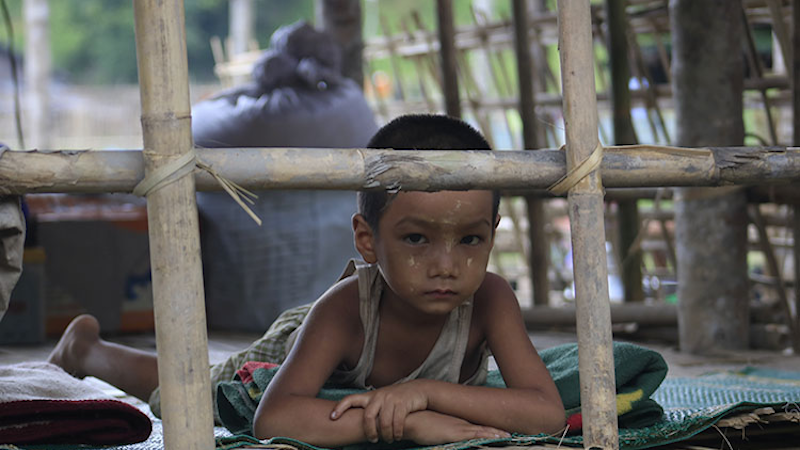
A young boy in Myanmar. Photo Credit: DMG

By Khin Khin Ei and Khet Mar 

As Myanmar’s civil war approaches its third year, intensified fighting across the country this year between ruling junta forces and resistance fighters has destroyed villages and parts of towns, displacing hundreds of thousands of civilians, most of whom are women and children. 

The number of internally displaced persons, or IDPs, reached more than 1 million this year, nearly 11,000 of whom fled to neighboring India and Thailand, according to a United Nations report.

“The lives and properties of our people were destroyed,” said Zin Mar Aung, foreign affairs minister under the parallel National Unity Government, noting the junta’s burning of villages, air strikes targeting civilians and mass killings.

At least 330 women died this year as a result of attacks by junta forces amid the escalation of armed conflict, said Tin Tin Nyo, general secretary of the Women’s League of Burma.

“The number of civilian casualties increased due to artillery attacks and air strikes,” she told Radio Free Asia. “Most of the victims were women, children and the elderly.”

Since the end of October, the number of internally displaced persons also increased, with most being women and children, Tin Tin Nyo said. 

“After a country falls under the rule of dictators, it loses the rule of law and justice,” she said, adding that her organization has seen an uptick in gender-based violence, abuse by husbands amid economic decline, and a growing number sex workers. 

“These are both visible and invisible challenges,” said the women’s rights advocate. “2023 was full of severe hardship for women.”

‘Lost hope’

Yu Yu, a woman who fled amid armed clashes in eastern Myanmar’s Kayah state, said she has suffered trauma as an IDP.

“We are surviving on the food of donors as we have no jobs,” she said. “We have lost hope.”

Women who left their jobs to join the Civil Disobedience Movement, or CDM, to resist the military rule following the February 2021 coup say they’ve had difficulties making ends meet while caring for children or aging parents.

“My father is 80 years old, my mother is also elderly, [and] they are not in good health,” said Khin May, who used to teach at a private high school in Bago region but quit to join the CDM.

“It is very difficult for us while I have no job,” she said, adding that she believes the resistance forces will triumph over the junta in 2024. 

Children have suffered amid the civil war as well, and more than 560 have died since the military seized control from the civilian-led government in the February 2021 coup, according to Aung Myo Min, the NUG’s human rights minister.

Since Dec. 21, four children between the ages of 8 and 11 were killed in Rakhine state’s Mrauk-U township, a 9-year-old child was killed in Namtu in northern Shan state, and a seven-year-old girl died in an attack by junta troops in Sagaing region’s Paungbyin township, according to figures compiled by RFA.

“This is a war crime,” said Aung Myo Min. “It’s everyone’s responsibility to protect children at all times, but we have seen almost every day that killings are taking place where there are children as they sleep alongside their families, as well as the deaths of pregnant mothers.”

Utter despair

The death of children are often directly linked to women dying mid the fighting, said Thandar, head of gender equality and women’s development under the NUG’s Ministry of Women, Youth and Children’s Affairs.

“For example, in Sagaing and Magway regions, grown men are performing revolutionary duties, while the women, the elderly and vulnerable groups like children are fleeing together,” she said. “So, if women are hit, children are hit, too.”

According to Shan Human Rights Foundation based in Thailand, 28 children were killed due to the junta’s attacks from Oct. 27 to Dec. 27 during the the Three Brotherhood Alliance rebel offensive that has put junta forces back on their heels.

Air- and land-based artillery strikes are the most common cause of death, and children are among the mass casualties when such attacks occur, death counts indicate.

On Apr. 19, nearly 20 children under the age of 18 were killed in an air strike during a gathering in Pa Zi Gyi village in Sagaing region’s Kanbalu township. Eleven others died during an attack on Mon Laik IDP camp near the headquarters of an ethnic army in the town of Laiza in Kachin state on Oct. 9. 

And eight more children were killed during an aerial bombardment of Vuilu village in Matupi township in western Myanmar’s Chin state on Nov. 15.

Roi Ji, 40, told RFA that she was in utter despair because all five of her children died in the attack on the Mon Laik IDP camp.

“I can’t think about anything anymore,” she said. “I’m in a state of derangement.”

Precarious futures

Children who live in war-torn areas no longer have access to schools or adequate nutrition, and face bleak futures.

Nwe Nwe Moe, a former teacher at Shwebo Technical College who joined the Civil Disobedience Movement and has since become a member of Yinmarbin-Salingyi multi-village strike committee in Sagaing region, said she dare not think about the future of the children living among the chaos of war.

“I’m concerned about whether the children will be able to develop into capable young people because there is no safety, no access to study, health care, or nutritious food for them,” she said. “I have a sinking feeling about those who are in life-threatening and emotionally insecure situations.”

As the bloodshed continues, Aung Myo Min said the NUG is making efforts to protect civilian survivors of attacks and to seek justice for them.

“Since there are air and artillery strikes against the civilians, the NUG’s Ministry of Humanitarian Affairs and Disaster Management is working with administrative organizations on creating bomb shelters for emergencies and providing guidance about not harming children,” he said. 

Categories
South Caucasus News

Iran’s Regime Fails To Counter Growing Wave Of Protests Across The Country – OpEd


Iran’s Regime Fails To Counter Growing Wave Of Protests Across The Country – OpEd

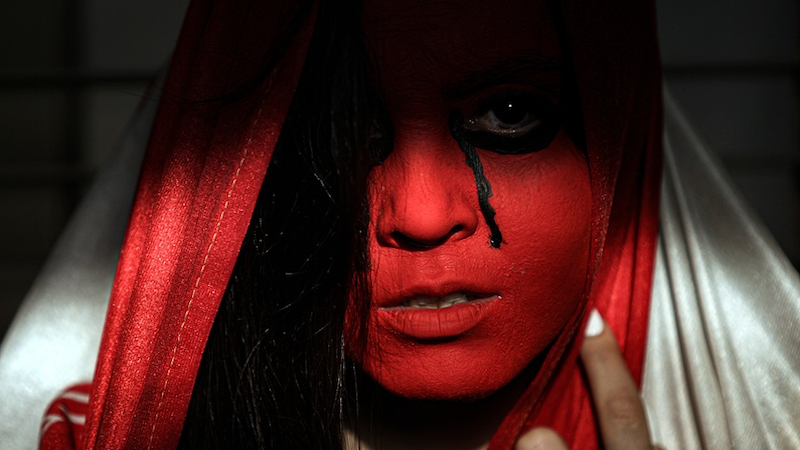
Woman Hijab Protest Revolution Iran Women

Despite efforts by Ali Khamenei, the Iranian regime supreme leader, to use his warmongering tactics in the region to silence the voice of social protests, the cries of the hungry against the oppressors resonate in the streets of Iran.

On December 27, the strike of the workers of the National Steel Industrial Group in Ahvaz continued for the fifth consecutive day. This week, the workers marched from the company’s premises to Baghaei Square, disregarding the regime’s threats. They chanted, “Threats and prison no longer have any effect,” and “Death to the oppressors, hail to the workers.”

On the same day, the gold traders’ guild also held the fifth day of strike in protest against coercion and unfair taxation. Furthermore, the people of Ardakan, in their third day of protest against air pollution and the expansion of polluting industries that endanger their health, dressed their children in shrouds and continued their demonstrations with anti-regime slogans.

On December 25, retirees of the Telecommunications Company of Iran in Shiraz, Sanandaj, Shahrekord, Khorramabad, Ardabil, Isfahan, Marivan, Tabriz, Arak, Ahvaz, Hamedan, Bijar, Rasht, Sari, Zanjan, Kermanshah, and others gathered once again in front of the local offices of the TCI to protest the lack of attention to their demands. Additionally, nurses in Tehran, Ahvaz, and Qazvin joined the retirees in their protest gatherings.

The intensity of the opposition to tax pressures and the increased exploitation of retirees and workers has caused concern among some officials and government-affiliated media.

On December 24, Mohsen Hashemi Rafsanjani, an Iranian politician, warned about the uprising of the hungry and said, “Today, half of the society and people are living below the poverty line, struggling with economic problems. A prominent example of this is the budget that has been allocated this year.”

Yousef Davoudi, a member of the Majlis (Parliament), expressed his fear of the growing discontent and protest gatherings of the people during the approval of the budget bill of the Raisi government. He said, “With this budget, the value of the national currency will further decline, and the purchasing power of the people will decrease, exacerbating social crises in the country.”

On December 20, another member of Majlis, in protest against Raisi and his budget bill, said, “We came up with a one percent adjustment and homogenization, meaning we take from the pockets of the son and grandson and put it in the pocket of the retiree, which is unacceptable. Now, no financial allocation has been made for any project other than the presidential travel projects.”

The reality is that each provincial trip by Raisi is an expensive project to the tune of billions of rials.  According to Rahmatollah Norouzi, members of the Majlis during their visits to various regions of the country, are accompanied by a 500-member security guard, so that “the people keep their distance.”

On December 25, Iran newspaper, which is run by the executive branch, also justified this issue by confirming that “in every trip or presence of the president in different regions, security forces from various divisions of the Islamic Revolutionary Guard Corps (IRGC), law enforcement, emergency services, or IRGC Basij forces are present to ensure the security of the ceremony.”

On December 26, the fourth day of the steel workers’ strike and the outcry of retirees and various segments of society, Mrs. Maryam Rajavi, the President-elect of the National Council of Resistane (NCRI), said, ” Various sectors of Iranian society, including workers, retirees, nurses, and bazaar merchants are incessantly staging strikes and protests against Khamenei and his predatory faction. These incessant protests display the Iranian people’s irreconcilable opposition to the mullahs’ criminal regime.

“As Isfahan’s steel workers cry out, We fight against oppression and injustice,’ these protests coupled with the activities of the Resistance Units will sweep away Khamenei’s bloodthirsty regime.”


Categories
South Caucasus News

Azerbaijan amends law on operation of electrical installations


From January 1 of this year, the operation of electrical installations with a capacity of more than 200 kW in Azerbaijan will be carried out based on a permit issued in accordance with the Law “On Electric Power” and the Law “On Licenses and Permits”, Azernews reports.

Categories
South Caucasus News

Georgian Parliament Speaker highlights country’s “elevated, festive” mood in New Year’s Eve message – Agenda.ge


Georgian Parliament Speaker highlights country’s “elevated, festive” mood in New Year’s Eve message  Agenda.ge

Categories
South Caucasus News

Azerbaijan, France Row Poses No Risk to Caspian Gas Project: Baku Official – Rigzone News


Azerbaijan, France Row Poses No Risk to Caspian Gas Project: Baku Official  Rigzone News

Categories
South Caucasus News

Georgian Parliament Speaker highlights country’s “elevated, festive” mood in New Year’s Eve message


papuashvili-4.jpeg


Categories
South Caucasus News

Sudan’s army chief demands paramilitary forces’ withdrawal to achieve ceasefire


Chairman of Sudan‘s Transitional Sovereign Council and General Commander of the Sudanese Armed Forces (SAF), Abdel Fattah Al-Burhan, on Sunday said that stopping the war in Sudan would not be achieved except by withdrawal of the paramilitary Rapid Support Forces (RSF) from all cities, citizens’ homes and government headquarters.

“There is only one way to stop the war, which is the withdrawal of the rebel militia from Gezira State and from the rest of the cities of Sudan, besides returning all looted money and property of citizens and government movables and withdrawing from citizens’ homes and government headquarters,” Al-Burhan said in a speech to the Sudanese people on the occasion of the 68th anniversary of Sudan’s independence, which was broadcast by Sudan’s official TV.

“Any ceasefire that does not guarantee the above-mentioned will be of no value, whereas the Sudanese people will not accept to live among these murderers, criminals, and those supporting them,” he said.

Al-Burhan also warned Sudan’s neighboring countries against supporting the RSF. “I am sending a message to the countries which welcome these killers to stop interfering in our affairs, because providing any support to the leadership of the rebel group is considered partnership in crime and in killing and destroying the people of Sudan,” he said.

Sudan has been witnessing deadly clashes between the SAF and the RSF since April 15. More than 12,000 people have been killed in the fighting, according to a statement by the UN Office for the Coordination of Humanitarian Affairs in early December.


Categories
South Caucasus News

Strong quake prompts tsunami warning for Japan’s western coast


Japan was rocked Monday by a powerful earthquake measuring a 7 on Japan’s shindo scale — the strongest rating — prompting tsunami warnings for the length of the country’s western coast, Report informs, citing The Japan Times.

Categories
South Caucasus News

Israeli army withdraws 5 brigades from Gaza


The Israeli army withdrew five brigades from the Gaza Strip on Sunday, in a move that indicated lengthy fighting throughout 2024, Report informs, citing Anadolu Agency.

Categories
South Caucasus News

Russian officer killed in shelling of Belgorod


As a result of the strike on military facilities of occupiers in Belgorod on December 30, Russian Federation Investigative Committee officer Mikhail Konopitsin was eliminated, Report informs, citing RBC Ukraine.