
Day: January 17, 2024
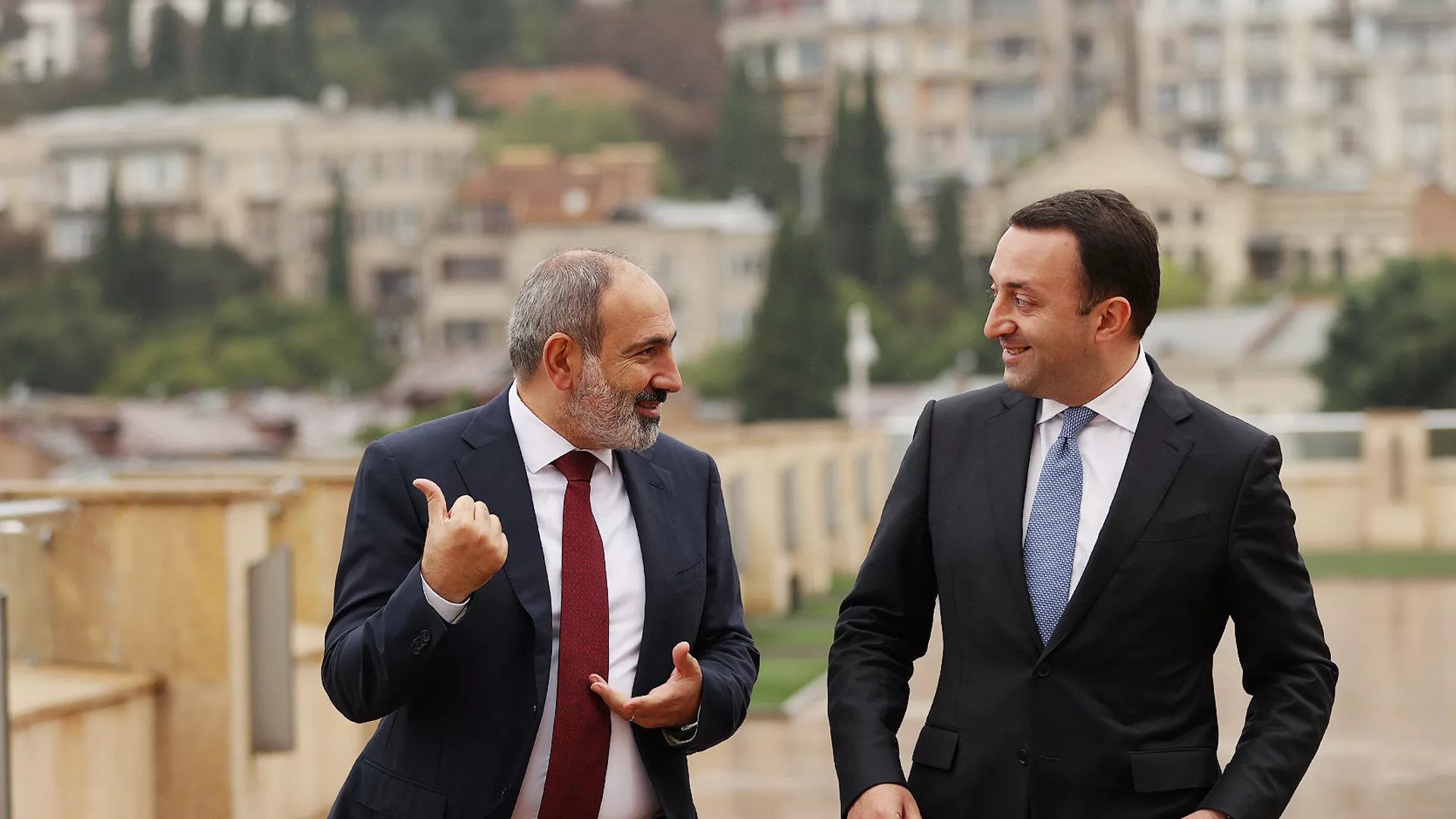
Ivanishvili’s comeback
“The growing influence and power of oligarchic circles in Georgia is a problem for Armenia as well,” Armenian political scientist Areg Kochinyan said, commenting on Bidzina Ivanishvili’s decision to return to politics. He believes that strengthening of democracy in Georgia should be important for Armenia as well, as “without Georgia Armenia cannot count on integration with the West”.
At the request of JAMnews, political scientist Areg Kochinyan and Georgian affairs expert Johnny Melikyan commented on the impact Ivanishvili’s return could have on Armenian-Georgian relations, and the aspirations of both countries to move closer to the EU.
Bidzina Ivanishvili, who is considered the shadow ruler of Georgia, announced on December 30, 2023 that he has decided to return to politics. The founder of the ruling Georgian Dream party is now its honorary chairman and has announced his return to active politics for the third time. This time – on the eve of the 2024 parliamentary elections. “The opposition has collapsed and the overly strong ruling party needs to be kept from human error. I will become the new center of gravity,” the billionaire declared.
Areg Kochinyan, political scientist
“What is happening in Georgia. Real, functional power becomes official. The person in whose hands, in fact, the power was concentrated, publicly takes over its realization. This is a more honest approach towards the voters and partners, the international community.
As for the Armenian-Georgian relations, they have reached a certain quality and depth, have a certain layer, which will not change its content regardless of the international conjuncture, quality and form of international relations. Besides, only Georgia and Armenia are democratic countries not only in the South Caucasus, but in the entire region. This is also a fact that cannot be ignored, especially by our Western partners.
Of course, the quality of democracy in Georgia, its depth is very important for us. Active political activity of an oligarch, especially one who has accumulated his wealth in the Russian Federation, who seeks to occupy important positions of power, cannot be considered an achievement of democracy. This is a problem that we must try to work with.
In the work of the West, the main approach will be to rely on Armenia and Georgia at the same time. Therefore, as much as we value and consider important the development of democratic institutions and deepening of democracy in Armenia, we should treat these processes in Georgia as well. Armenia cannot count on integration with the West without Georgia.”
Johnny Melikyan, expert on Georgian issues
“I link Ivanishvili’s return to the internal political processes taking place in Georgia. The goal is to form or strengthen the ranks of the ruling party.
Moreover, the position [of honorary chairman of Georgian Dream] is not symbolic. After the recent changes, Ivanishvili can also nominate a candidate for prime minister. He has the decisive vote and will continue to be the deciding factor.
I don’t expect any drastic changes in Armenian-Georgian relations. There is a team, a policy that has not changed since 2012. During the rule of the Georgian Dream and after the change of power in Armenia in 2018, relations between the elites of the two countries have become even warmer. The basis for deepening relations are the trends in both countries. These are the strengthening of democracy, human rights, freedom of speech.
Perhaps in 2024-25 we will see the formation of a new, renewed agenda of deepening relations, and the countries will consolidate the level of their relations as strategic – as Georgia’s relations with Turkey and Azerbaijan are. If earlier Armenian officials were talking about this, now the Prime Minister of Georgia is already talking about the establishment of strategic relations with Armenia.”
Follow us – Twitter | Facebook | Instagram
Ivanishvili’s comeback
On relations between the West and Azerbaijan
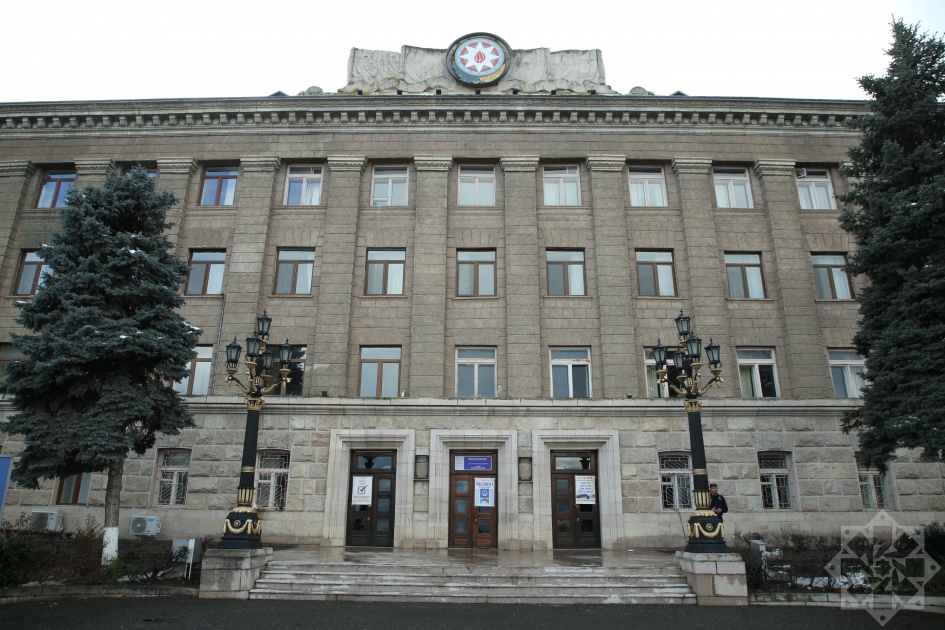
The relations of the collective West with Azerbaijan have recently been characterized by tension, with the United States and France are prominent among the leading Western countries. At the root of this tension is the West’s reaction to the restoration of territorial integrity by Azerbaijan.
“The recognition of Karabakh as an integral part of Azerbaijan, emanating from international law and verdicts of the UN governing structures, on the part of the collective West has almost always been more declarative than practical,” political observer Haji Namazov argues.
- Ilham Aliyev: “People and cargo from Azerbaijan to Azerbaijan should pass without inspection”
- Georgia’s foreign debt rises to $8.9 billion
- Honorary titles will no longer be awarded in Armenia
Political observer Haji Namazov commented for JAMnews on the current situation in the West’s relations with Azerbaijan and the reasons behind them.
About the causes of tension
“Regarding the attitude of the West to the restoration of Azerbaijan’s sovereignty over the entire territory of Karabakh, it is necessary to look back and remember whether anything has changed over the past three and a half years, i.e. since the end of the second Karabakh war?
Let me emphasize at once that the recognition of Karabakh as an integral part of Azerbaijan, coming from international law and the verdicts of the UN governing structures, on the part of the collective West has almost always been more declarative than practical.
This became clear immediately after the end of the second Karabakh war. It is enough to recall the visits of the diplomatic corps accredited in Baku to the liberated territories. Everyone knows that diplomats of the United States and leading EU countries visited territories that were not once part of the NKAO, but refused to go, for example, to Shusha. It is quite difficult to understand the logic here. One can assume that Western politicians still perceive former Nagorno-Karabakh as a disputed territory, which in no way corresponds to the same international law.
Strange things became stranger after the armed forces of Azerbaijan took control of the entire border with Armenia and official Baku set up a checkpoint in the Lachin district in April 2023.
It would seem that everything is normal to the extent that it cannot be more normal – the state controls its own borders, and there is a checkpoint on the border. And, note that this checkpoint is located on the territory of the Lachin region, the occupation of which by the Armenian armed forces was not in doubt for anyone in the world, of course, except for Armenia itself. In other words, we are not even talking about the territory of the former NKAO.
Here the West began to appeal to the paragraph of the trilateral statement of November 10, 2020, which has not been ratified by the Azerbaijani parliament, i.e. does not have the attributes of an international binding document. At the same time, the West did not hesitate to ignore Armenia’s violations of other clauses of the same statement, from the failure to withdraw Armenian armed forces from Karabakh to the failure to provide Azerbaijan with a road linking its western regions with Nakhichevan.
Further, when the entire territory of Karabakh was already under Azerbaijani control, given the activity of the Lachin checkpoint, except for the part where Russian peacekeepers were stationed, the West continued to link communication with Khankendi exclusively through Armenian territory. Everyone remembers the trucks sent by France under the guise of humanitarian aid, but got stuck at the border without reaching Karabakh. Even the formally neutral Red Cross acted in Khankendi until the last day as a subdivision of the organization in Armenia.
Conventional logic dictates the opposite: if you recognize Karabakh as Azerbaijani territory, and you should, as all international laws require it, then you should travel to Karabakh through the territory of Azerbaijan, not through a neighboring state. The same applies to the Red Cross, which should have been subordinated to its structure in Baku, not in Yerevan.”
Second spiral
“Azerbaijan’s reaction to this attitude towards its internationally recognized territory was initially restrained. Baku was content with statements and appeals to respect international law. But after the counter-terrorist operation of September 19-20, 2023, Azerbaijan’s position towards the West became adequate.
And the situation in Azerbaijan’s relations with the West, especially with the U.S. and France at the moment, leaves much to be desired.
Everything is clear with France. This country, abandoning all diplomatic etiquette, its former long-standing, though fruitless mediation in the region, began to openly support Armenia. One can forget about Paris’ neutrality and appeals for peace coming from it.
The U.S. is no less surprised. Washington does not abandon its attempts to continue mediation between Baku and Yerevan, there are calls for peace and continuation of negotiations, but at the same time the U.S. demonstrates an unfriendly attitude towards one of the parties. Thus, Washington unilaterally announced the impossibility of visits of high-ranking officials to Azerbaijan (however, later it asked for a visit itself) and recalled the long-forgotten 907th Amendment. Official Baku was not in debt and responded with adequate countermeasures.
Today an unprecedented situation has been created in Baku: the new U.S. ambassador has been in the capital of Azerbaijan for more than a month, but still has not been received by President Ilham Aliyev. The Ambassador managed to present copies of his credentials to the country’s Foreign Minister, but he has still not been received at the highest level.”
On solving the problem
“The logic of normalization of Baku’s relations with the West is clear: like the entire civilized world, Western states must come to terms with objective reality and declare recognition of Azerbaijan’s territorial integrity. There is no other way and there can be no other way. This is required by international law, on which the existing world order is based today.”