
Florida Gov. Ron DeSantis offered the clearest indication yet that he would pardon former President Donald Trump if he were to be convicted on the multiple criminal charges he faces
Day: December 31, 2023
The Cabinet of Ministers in Azerbaijan has greenlit the General Plan for the comprehensive development of Baku until 2040, marking a significant milestone in the nation’s urban planning agenda. The official document, now available on the government’s website, outlines the strategic vision for the capital’s growth and transformation over the…
By Maram Mahdi, Moussa Soumahoro and Hubert Kinkoh
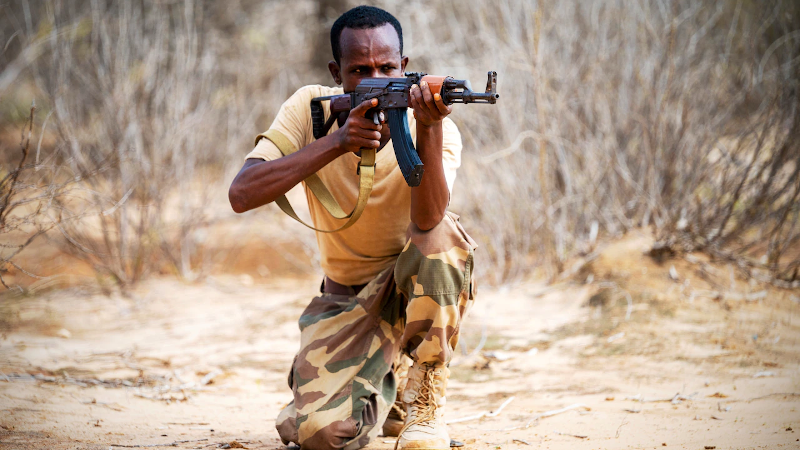
In September, a call was made for a technical pause to the African troop drawdown from Somalia, following the initial withdrawal of 2 000 troops in June. The country’s national security adviser, Hussein Sheikh Ali, put the request for a pause to the UN Security Council (UNSC) citing continued terror attacks in the country’s south-central regions.
In May, 54 Ugandan peacekeepers from the African Union (AU) Transitional Mission in Somalia (ATMIS) were killed. In July, 30 Somali forces soldiers died in a Mogadishu military academy suicide attack. The failure of the Somali National Army and ATMIS to retain key villages in the south prompted the call for a pause.
Somalia’s government approached the UNSC without consulting the AU Peace and Security Council (PSC). Despite ATMIS being a UN-authorised and -mandated mission, it is an AU-led mission with command and control from five African troop-contributing countries. The move questions Somalia’s regard for the PSC’s role in ATMIS decision-making. Some regard it as a snub.
However, PSC insiders say only a few members raised the issue during discussions. The PSC in fact strongly supported Somalia’s bid in its 1177th meeting communiqué, endorsing the technical pause.
This PSC decision in turn raised several concerns. Chief among these was the council’s ability to impose itself as a pivotal and respected actor in managing African peace and security. Secondly, it exposed a lack of coordination and cohesion on the drawdown among PSC members, especially as some troop-contributing countries also had already supported Somalia without first tabling the extension at the PSC.
The Somali government’s request indicates doubts in its army’s ability to provide stability
Such a move by troop-contributing countries and members of the Council reflected a longstanding dismissal of the PSC and its role by member states. States have often opted to pursue their interests over PSC’s preference, indicating diverging positions among the AU Commission, troop-contributing countries, PSC and Somali government. This raises concern about the future of peace support operations in the country and region.
ATMIS drawdown is planned in four phases, with a full mission handover to Somali security forces in December 2024. However, two extensions threaten the timeline’s achievement. In the initial phase, the Somali government sought a review of ATMIS operational timelines, leading to a technical pause for the drawdown of 2 000 troops from December 2022 to June 2023.
The PSC supported this while reconfirming the commitment to maintain the 2024 exit date. Despite authorising the reconfiguration of the AU Mission to Somalia into ATMIS, the Council continues to support delays of the mission’s withdrawal, pointing to several issues.
The PSC supported technical pauses while acknowledging the financial limitations to sustain the extension. By April, the financial deficit of ATMIS was around US$10.6 million due to the first technical pause in the mission’s drawdown. Communiqué 1177 noted the financial shortfalls that could impede the technical pause. The AU failed to financially support the first extension despite committing to it.
Inadequate finance, exacerbated by the second extension request, prompted the AU to allocate US$2 million from its Peace Fund to ATMIS. These challenges and a failure to commit authoritatively to decisions may have led to the sidelining of the PSC by Somali authorities, revealing inconsistencies in PSC interventions and ongoing fragmentations among its members.
Insufficient support for the army makes a drawdown in December 2024 unnecessary
The funding challenges indicate rising tensions on ATMIS between the PSC and the AU Commission (AUC). The Council continues to direct the AUC to mobilise resources for the requested extension, acknowledging the regional and continental funding shortfalls in peace support operations. UN approval for the extensions partly depends on the agreement that delays are on a no-cost basis, relieving the UN from financial responsibility to troop-contributing countries during that period.
Nonetheless, the PSC has asked the AUC to secure funds for the Somali government and AU member states. It’s been directed to liaise with African UNSC members to finalise the draft resolution on financing AU-led operations and access to the UN-assessed contributions.
The Somali request reveals a lack of confidence that its army can provide stabilisation. ATMIS forces have staged various capacity-building initiatives to enable the military to assume full responsibility for the country’s safety and security. However, repeated extensions of the mission’s mandate and revision of the operational timeline for initial 2 000 troops drawdown reinforce this skepticism.
ATMIS commander Lieutenant Colonel Philippe Butoyi says the army demonstrated increasing capability to secure the country. However, the government’s acknowledgement of several setbacks in the fight against al-Shabaab casts doubt over its readiness to take over this security role.
Ongoing al-Shabaab offensives against the Somali army and police, coupled with forces’ retreat from areas previously captured, exposed vulnerabilities in the military’s capabilities. Insufficient funding and al-Shabaab’s relative strength has left ATMIS forces strategically overstretched and hindered by limited equipment, such as helicopters, for decisive operations.
The AU must call out attempts to diminish its role in addressing peace and security concerns
Nevertheless, ATMIS continues to degrade al-Shabaab through joint targeted and routine operations. It also securespopulation centres, key government institutions, major supply routes, seaports, airports and airfields. It ensures safety for delivering humanitarian aid to remote areas and communities in need.
Despite challenges, the extended mission gives the Somali government optimism about the security of key government installations and major populations. It will allow the government to implement the Somali transitional plan while continuously reassessing and reevaluating ATMIS’ exit.
Support for the army through firepower and training, among others, is insufficient to necessitate a drawdown in December 2024. The mission should draw down only if the military meets its requirement to generate force in numbers and capacity to sustain troops to degrade al-Shabaab. The AU should also facilitate the role of neighbouring countries in this.
Short of this, the drawdown according to set timelines will reverse gains of recent years with detrimental implications for Somalia and the broader Horn of Africa. It will also cast continued doubt over the AU’s role in managing peace and security in Africa.
To prevent future sidelining and bolster its position, the AU must call out such attempts to diminish its role and project capacity in addressing peace and security concerns. It should also enhance its ability to address emerging weaknesses and avoid perpetuating inconsistencies in decisions, particularly in obvious situations like Somali request. This necessitates closer cooperation among the Somali government, troop-contributing countries, the AU, and other partners.
- About the author: Maram Mahdi, Moussa Soumahoro and Hubert Kinkoh, Researchers, Africa Peace and Security Governance, ISS Addis Ababa
- Source: This article was published by ISS Today
By C Raja Mohan
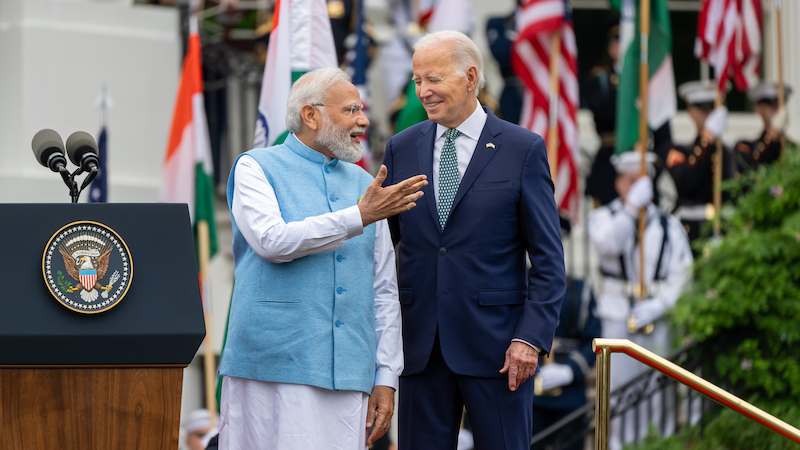
United States (US) President Joe Biden’s decision to decline Indian Prime Minister Narendra Modi’s invitation to attend the annual Republic Day celebrations in January 2024 has been interpreted as a ‘snub’ to India amidst the US’ allegations of official Indian involvement in the effort to assassinate a Sikh separatist leader and an American citizen, Gurpatwant Singh Pannu, earlier this year.
Biden’s participation in the prestigious Republic Day was to be followed by a summit of the Quadrilateral Security Dialogue (Quad) forum with the prime ministers of Australia and Japan. It is India’s turn in 2024 to host a Quad summit – in the series that began in Washington in September 2021. Biden’s presence at the Republic Day and the Quad summit would have capped a triumphal season of diplomacy at the end of Modi’s second term as prime minister. His campaign for a third term, starting in the summer of 2024, is all set to roll forward in the coming weeks.
Senior officials from the US have insisted that there was no political motivation in the Biden’s decision not to travel to India in January 2024 and that there was no connection with the Pannu case. Yet, the idea of an American ‘put down’ of Modi has gained much currency in Indian and western media.
The US National Security Adviser, Jake Sullivan, told the media the problem was the tight demand on the president’s time, stating, “Due to scheduling demands, we notified Indian officials that the president would be unable to visit India in late January”. Sullivan, however, made it clear that the visit to India and a Quad summit could take place later in the year.
Sullivan added that he had “witnessed first-hand” the “close personal bond” between Biden and Modi, as well as their “shared commitment to advancing the aspirations of their people for a prosperous future”. “The president remains personally committed to carrying forward this partnership, which he has often described as the most consequential partnership for the US over the century unfolding”, Sullivan said.
On the Indian side, Modi, in an interview with the Financial Times, put the speculation on the setback to India-US relations at rest. He declared that the partnership between India and the US is “broader in engagement, deeper in understanding, warmer in friendship than ever before.”
The perception of a crisis in India-US relations was more about the public discourse than an objective reality. Seen from the perspective of the 21st century, the India-US relationship has continued to defy the persistent pessimism about its prospects. Since the visit of US President Bill Clinton to India in March 2000, there has been a steady forward movement in the bilateral relationship.
Successive governments in the two capitals have devoted significant political and diplomatic energy to elevate the bilateral partnership to higher levels. The last three decades have seen the two sides overcome some long-standing problems in the relationship. These included the Kashmir question and the US activism on the issue that rocked bilateral ties in the 1990s.
The US also ended an ‘even-handed’ policy towards Pakistan and India by de-hyphenating the two relationships and facilitating the construction of an independent relationship with India. If the US’ policy towards Asia was focused on building a strong relationship with China from the 1980s to the early 2000s, India has emerged as an important new partner for the US in constructing a new regional order in Asia.
Delhi and Washington resolved the intractable non-proliferation dispute through the historic civil nuclear initiative during 2005-08. The US has eased a range of export controls on sensitive civilian and military technology transfer to India under the new bilateral initiative on Critical and Emerging Technologies, signed in 2023. India-US bilateral trade (including goods and services) crossed US$190 billion (S$251 billion) in 2022, making Washington the largest trading partner for Delhi.
Compared to the difficulties that have been overcome in the last two decades, the Pannu case appears less challenging. However, there is no question that the case has arrested Washington’s growing trust in India. That Indian officials might undertake an assassination attempt on the soil of its most important strategic partner clearly grates on the nerves of many US supporters of a strong partnership with India.
Questions have been raised in the US Congress on India’s extra-territorial actions on American soil. The Modi government, on its part, has begun to investigate the matter. All the five Indian-American members of the US Congress welcomed the enquiry by Delhi. Still, they warned that “it is critical that India fully investigates, hold those responsible, including Indian government officials, accountable, and provide assurances that this will not happen again.”
Although much of the commentary focused on the negative dynamic arising from the Pannu episode, there is no missing the fact that the two sides have taken great care to address the issues at hand with considerable sensitivity. Reports from Washington suggest that “The US is banking on India to institute correctives and will sustain and deepen ties. India knows this action was reckless and will have to take steps to recover trust.”
Given the high stakes in the bilateral relationship, neither side is interested in letting the Pannu case undermine the hard-won partnership over the last quarter of a century. It would be reasonable to assume that Delhi and Washington will find ways to limit the damage from the Pannu case in 2024 while building on the many new initiatives for bilateral cooperation unveiled in 2023.
- About the author: Professor C Raja Mohan is a Visiting Research Professor at the Institute of South Asian Studies (ISAS), an autonomous research institute at the National University of Singapore (NUS). He can be contacted at crmohan@nus.edu.sg. The author bears full responsibility for the facts cited and opinions expressed in this paper.
- Source: This article was published by the Institute of South Asian Studies (ISAS)
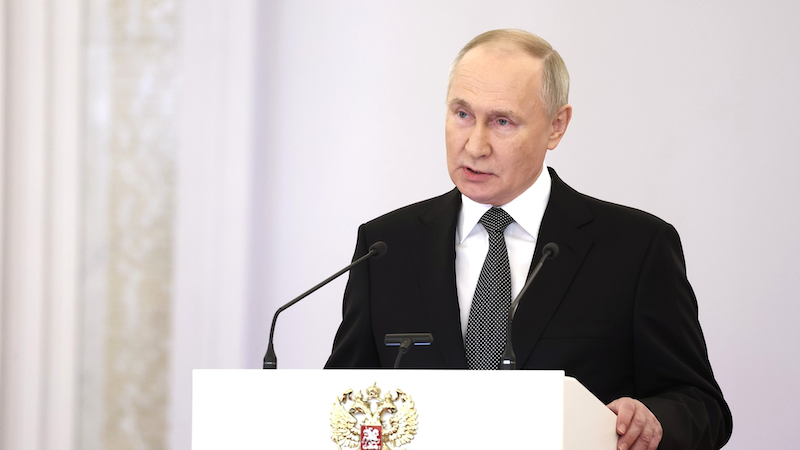
Russia’s special military operation in Ukraine is entering a new phase. President Vladimir Putin lifted the fog of war and hinted at what can be expected going forward in a landmark speech at the National Defence Control Centre while addressing a meeting of the Russian Defence Ministry Board on December 19.
Russia has gained the upper hand in the proxy war while the United States is struggling to recreate a new narrative. For Putin, this is a moment of triumph where he has no reason to take advantage of the fog of war in Ukraine, whereas, for President Biden, the fog of war continues to serve a useful purpose of dissimulation in the crucial election ahead where he seeks a second term.
Putin’s speech exuded a buoyant mood. The Russian economy has not only regained its pre-2022 momentum but is accelerating toward a 3.5% growth rate by the yearend, marked by rising incomes and purchasing power for millions of its citizens and an increase in living standards. Unemployment is at an all-time low and Russia has beaten back the Western sanctions and the attempts to isolate it in the international arena.
The leitmotif of Putin’s speech is that this is a war that Russia never sought but was imposed on it by the US. Putin had listed last year in February five clear-cut objectives of the Russian military operation — security of the Russian population; de-nazification of Ukraine; demilitarisation of Ukraine; striving for a friendly regime in Kiev; and, non-admission of Ukraine into NATO. These are of course interlocked objectives. The US and its allies know it but continue to pretend otherwise with their focus in the proxy war has been a military victory and regime change in Russia.
Putin’s message is that any new Western narrative on the war is doomed to meet with the same fate as the previous one unless there is realism that Russia cannot be militarily defeated and its legitimate interests are recognised.
The heart of the matter is that the West all along perceived Ukraine as a geopolitical project targeting Russia. Today, even with defeat staring at its face, the West’s priority lies in forcing Russia to agree to a ceasefire on the basis of the existing line of contact without any geopolitical or strategic obligations on the part of Washington or the transatlantic alliance — which, de facto, would mean leaving the door for the rearmament of the battered Ukrainian military and for Kiev’s accession to NATO through the back door.
Suffice to say, the discredited agenda of using Ukraine as a pawn to pursue the West’s anti-Russian policy is still very much around. But Moscow will not fall for the US’ trap a second time, risking another war that may erupt at a time that suits NATO.
Unsurprisingly, Putin’s speech paid great attention to revving up Russia’s defence industry to meet any military exigencies that might arise. But towards the end of his speech, Putin also dwelt on Russia’s politico-military options under the circumstances.
On the military side, clearly, Russia will press forward the attritional war to its logical end of pushing the Ukrainian military into a strategic dead-end, which would mean seeking tactical improvements along the frontline, undermining Ukraine’s economic potential, inflicting military losses, and boosting Russia’s own defence industry on a scale that tips the balance of forces to weigh against any military adventures by the NATO.
In the final analysis, Putin asserted, Russia is determined to reclaim the “vast historical territories, Russian territories, along with the population” that the Bolsheviks transferred to Ukraine during the Soviet era. However, he drew an important distinction as regards the “western lands” of Ukraine (west of Dnieper) that are a legacy of World War II over which there could be territorial claims from Poland, Hungary and Romania, which at least in the case of Poland is also linked to the transfer of “eastern German lands, the Danzig Corridor, and Danzig itself” following the defeat of the Third Reich.
Putin took note that “people who live there (western Ukraine) – many of them, at least, I know this for sure, 100 percent – they want to return to their historical homeland. The countries that lost these territories, primarily Poland, dream of having them back.”
That said, interestingly, Putin simply washed his hands off any territorial disputes that may arise between Ukraine and its eastern neighbours(all of whom are NATO countries.) Looking ahead, this is going to be a can of worms for the US. Recently, Russia’s intelligence chief Sergey Naryshkin used a powerful metaphor, warning that the US may face a “second Vietnam” in Ukraine that will come to haunt it for a long time.
The bottom line, as Putin framed it, is as follows: “History will put everything in its place. We (Moscow) will not interfere, but we will not give up what is ours. Everyone should be aware of this –- those in Ukraine who are aggressively disposed towards Russia, and in Europe, and in the United States. If they want to negotiate, let them do so. But we will do it only based on our interests.”
Putin concluded saying that if the final arbiter is military prowess, that explains why Russia is focusing on a “strong, reliable, well-equipped, and properly motivated Armed Forces” backed by a strong economy and “the support of the multi-ethnic people of Russia.”
There is a strong likelihood of Russian military operations moving further westward toward the Dnieper in the coming months, well beyond the four new territories that joined the Russian Federation last year — Luhansk, Donetsk, Zaporozhia, and Kherson. In the absence of any negotiated settlement, Russia may choose to unilaterally “liberate” those southern regions of Ukraine that were historically part of Russia, which would presumably include Odessa and the entire Black Sea coast, or Kharkov to the north of the Donbass region.
Russia is expecting that the combat capabilities of the Ukrainian forces will sharply diminish in the near future and the army faces difficulty already to get new recruits. That is to say, through the year ahead, the balance of forces at the front will shift due to the Ukrainian military’s heavy losses and the drop in Western aid, and, at some point, Ukraine’s defences will begin to crumble.
Russia’s recent gains in military operations — eg., Soledar, Artyomovsk (Bakhmut), Avdeevka, Maryinka, etc. — already testify to a shift in the balance of forces between the two armies. This shift will further accelerate as Russia’s military-industrial complex is functioning optimally and Russia is massively deploying new types of weapons, such as gliding aviation bombs, which have altered the role of the Russian Air Force in the conflict.
Dozens of heavy aerial bombs are dropped every single day and similarly, there is increase in the use of modern barrage ammunition and some other systems, including precision-guided munitions. T-90M tanks and new types of light armoured vehicles have also appeared on the battlefield.
In comparison, Ukraine faces a decrease in arms supplies due to limited production capacities in the West where sustainable production growth on an industrial scale is not attainable in the near term. Meanwhile, the Middle East crisis and the tensions around Taiwan become major distractions for the US.
All these factors taken into account, a decisive shift in the balance of forces against Ukraine is entirely conceivable by the end of next year, leading to an end of the conflict on Russia’s terms.
This article was published by Indian Punchline

By Daniel Lacalle
Although the Federal Reserve and the European Central Bank’s message regarding interest rate cuts seems clear, reiterating their commitment to reducing inflation, the market is expecting between five and six interest rate cuts, between 125 and 150 basis points, in the next twelve months.
This shows us the bubble bias of many investors. We live in a world where two generations of market participants have only seen rate cuts and massive liquidity injections. Central banks have created huge perverse incentives in markets that should have been prevented if they truly followed their mandate of stable prices. On top of it, the ECB faces another risk. It must avoid following the siren calls of interventionists if it wants the euro project to survive.
The euro is the biggest monetary success of the last 100 years, and the ECB’s excessively loose policy may destroy its position as a world reserve currency. The interventionist hordes of European socialism want the central bank to become an instrument in the hands of governments to nationalize the economy and destroy the currency’s purchasing power.
Don’t be mistaken; for those who come up with soft words demanding “expansive-looking monetary policy,” what they are looking for is exactly what they have supported in Argentina, Venezuela, and Cuba: the expropriation of wealth through the dissolution of the purchasing power of the currency.
It would be completely irresponsible to implement massive rate cuts for several reasons.
Central banks are placing all the focus on the price and not the quantity of money. Ignoring monetary aggregates is very dangerous, and centering decisions only on rates may create a larger problem: a market bubble and a real economy contraction.
By ignoring monetary aggregates, central banks may cut rates with no real effect on the productive economy and solve nothing. There may be a significant contraction in economic activity even if rates decline, as credit availability worsens even with declining rates, but markets keep inflating the financial bubble.
Inflation has not declined persistently. Since the consumer price index is a year-on-year calculation from a very high figure, the base effect accounts for up to 85% of the decline in inflation. The same base effect could adversely affect inflation in the coming months if the annual path of price rises remains.
The greatest economic aberration of our time, negative interest rates, actually made the structural weakness in the economy worse, causing it to slow down.
The economy has been accumulating poor and indebted growth data for years in which misguided so-called “expansive” monetary policies have been implemented. Negative rates and extreme liquidity injection have not generated greater or better growth but have left states with enormous imbalances.
Consumers are still suffering from the monetary disaster created in 2020. We are talking about a cumulative inflation rate of more than 22% since 2018 and a price rise that continues to be worrying, particularly in non-replaceable goods.
Monetary aggregates show that there is a private sector recession disguised by accumulated debt. Between January 2020 and July 2022, the money supply (M2) soared by an insane $6.3 trillion, according to FRED. It has declined almost a trillion dollars from its peak. The impact of this decline in money supply on the availability of credit and the broad economy will not be evident until 2024, when it coincides with an enormous wall of debt maturities. Central banks went from excess money to overlooking the money slump. Both are equally negative. One created the inflation burst, and the second is driving a private sector recession disguised by debt.
Inflation is a monetary effect. What some call cost inflation, commodity inflation, or supply shock is nothing more than more units of issued currency than real economic growth going to relatively scarce assets. Unit prices may rise for exogenous reasons, but they do not generate a sustained and cumulative rise in aggregate prices, which is what measures inflation. If a price soars due to an exogenous factor, the rest of the price does not rise at once if the currency issued remains constant relative to economic growth.
Of course, the system creates a whole series of experts who blame inflation on everything and anyone except for the only thing that can make aggregate prices rise at once, consolidate that annual burst, and continue to rise: the decrease in the purchasing power of the currency.
Those who understand money predict inflation and warn of the current risk. From Steve Hanke’s articles and the Inflation Dashboard that accurately predicted the inflation eruption of 2021–22, Richard Burdekin, “The U.S. Money Explosion of 2020: Monetarism and Inflation” (2020), to Claudio Borio, “Does money growth help explain the recent inflation surge?” (2023), or Juan Castañeda and Tim Congdon, “Inflation, The Next Threat?” (2020), dozens of studies warned of the arrival of inflation by excess monetary and explained the empirically monetary cause. Some argue that in 2009–2019 there was no inflation and money was also printed massively, but they do not understand the quantitative theory of money and ignore that the monetary expansion of 2020–22 was up to five times greater than that of the previous period of stimulus plans, as well as fully dedicated to government spending programs.
If we look at the contraction of monetary aggregates, inflation should have dropped faster, and the economy would be in a recession. However, the accumulated effect of massive money growth added to an unstoppable debt-fueled government deficit makes the impact of the 2020–21 liquidity explosion disguise the risks.
Inflation was created by the wrong monetary policy, and incorrect central bank measures may have lasting negative impacts on the economy. The first effect is evident: governments continue to crowd out the real economy, and families and businesses suffer the entire burden of rate hikes. Maybe the objective was always to increase the size of the public sector at any cost and implement a gradual nationalization of the economy.
Market participants should stop encouraging bubble-generating policies, and central banks should focus on monetary aggregates to avoid boom and bust cycles. The negative effects of the current money slump may arrive at once with the wall of maturities. Even if we avoid a recession, it will likely be a false way out with a debt-bloated government consumption figure, weak productivity, and private sector growth.
- About the author: Daniel Lacalle, PhD, economist and fund manager, is the author of the bestselling books Freedom or Equality (2020), Escape from the Central Bank Trap(2017), The Energy World Is Flat (2015), and Life in the Financial Markets(2014).
- Source: This article was published by the Mises Institute
The Israel government is directly causing thousands of deaths in Gaza. But, the biggest contributor to inflicting death in Gaza will likely be the Israel government causing the loss of necessities for health, including nutrition, sanitation, shelter, and medical aid. The deaths total could reach within a year up to a quarter of the Gaza population. That is around half a million people, the vast majority of whom are noncombatants.
Devi Sridhar laid out in a Friday The Guardian editorial how the continuation of current Israel government actions will keep causing living conditions of people in Gaza to be dismal. She wrote:
“Tragically, the nearly unprecedented death and injury we have seen so far is likely to only be the beginning. From looking at similar conflicts across the world, public health experts know that we are likely to see more children dying from preventable disease than from bullets and bombs. While the Israeli government has spoken about safe zones for families to flee to, these aren’t anywhere near what we would consider safe public health zones. They don’t have clean water, functional sanitation and toilets, enough food, or trained medical staff with medicine and equipment. These are the basic needs that any human, especially babies and children, need to stay healthy and alive.“
A result of the continuation of this situation for a year, suggests Sridhar is deaths at a monumental scale:
“Ultimately, unless something changes, the world faces the prospect of almost a quarter of Gaza’s 2 million population – close to half- a million human beings – dying within a year. These would be largely deaths from preventable health causes and the collapse of the medical system. It’s a crude estimate, but one that is data-driven, using the terrifyingly real numbers of deaths in previous and comparable conflicts.“
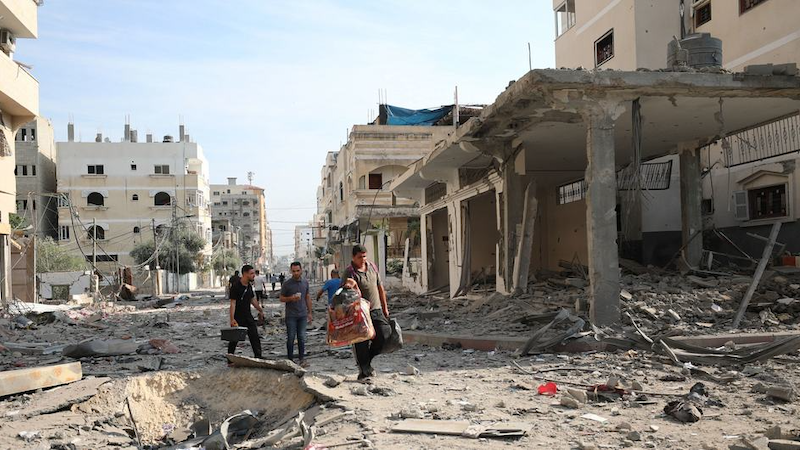
The clearly visible extreme destruction brought by the Israel military in Gaza has been directly producing a death toll that is shocking in its size. Yet, this death toll can be expected to be dwarfed by the deaths of people who suffer in the terrible conditions that are being created by the Israel government for those who survive the direct military action.
This extreme situation in Gaza is not just an unfortunate and unavoidable consequence of war. Rather, as documented by many observers — John Mearsheimer for example — its existence is a key goal of the Israel government, both proclaimed by government officials and pursued conspicuously.
This article was published by RonPaul Institute