
Day: December 25, 2023
NGOs in Abkhazia under threat
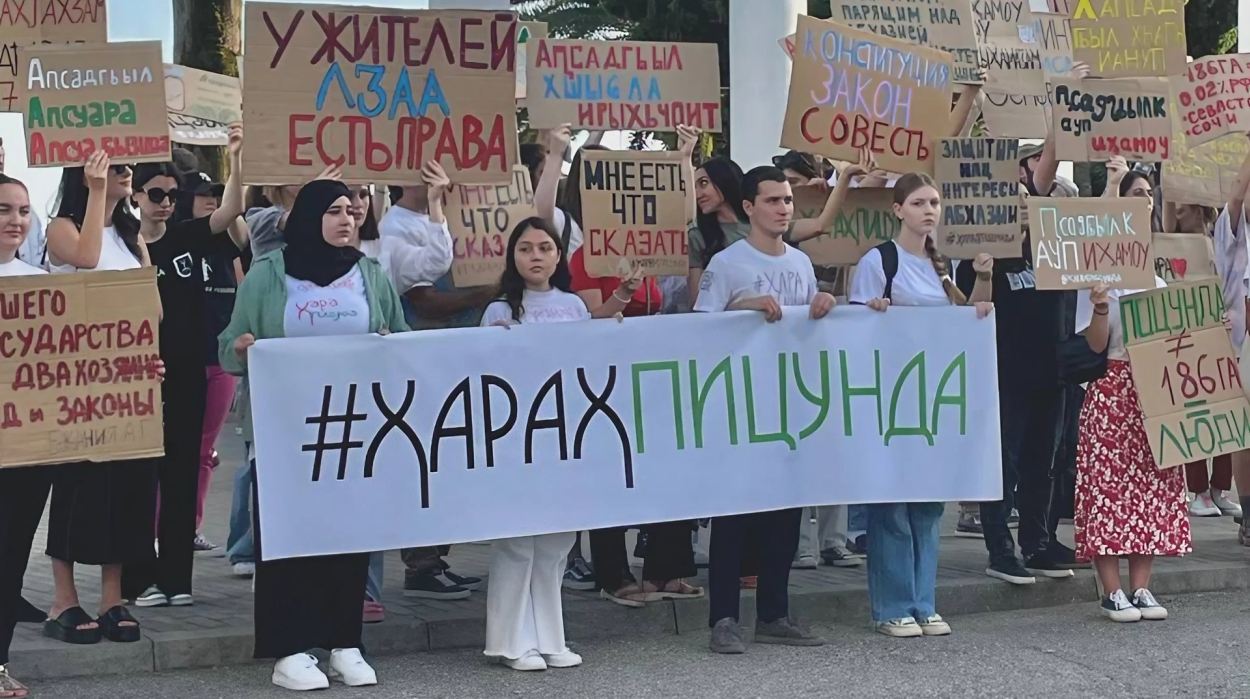
The Abkhazian government accuses local NGOs of engaging in subversive activities. Civil society representatives argue that authorities are attempting to discredit the protest movement, which opposes the transfer of the famous state dacha in Pitsunda to Russia.
The Abkhazian parliament is scheduled to convene on December 28 to discuss the ratification of the Russian-Abkhazian agreement on the state house. The united opposition and civil sector representatives oppose ratification, claiming that certain clauses of the agreement contradict the current constitution of the republic. If president Aslan Bzhania does not withdraw the document, the opposition threatens to bring its supporters to the walls of parliament.

In response, the authorities initiated a campaign to discredit particular participants of the protest movement, specifically targeting non-governmental organizations.
Deputy chairman of the state security service, Zaal Khvartskia, asserted that all projects implemented by NGOs in Abkhazia are coordinated “in strict accordance with the national interests of Georgia.”
He also identified grant recipients, including well-known figures in the republic such as the co-directors of the Center for Humanitarian Programs, Arda Inal-ipa and Liana Kvarchelia; historian and former assistant to the first president of Abkhazia, Vladislav Ardzinba, Astamur Tania; lawyer and member of the presidential commission on reforming the constitution, Said Gezerdava; and several activists from the youth organization “ҲARAҲPITSUNDA” (“Our Pitsunda”).
Following the state security service, foreign minister Inal Ardzinba also leveled accusations against NGOs.
According to him, many non-governmental organizations employ humanitarian projects as a cover to conceal the tasks and goals of the USAID, whose activities were prohibited by the Abkhazian foreign ministry a month earlier.
“The primary goal of USAID is to restore the so-called territorial integrity of Georgia through the so-called reintegration of Abkhazia into Georgia. This task is entirely unacceptable, and we will not allow it to be realized. The second task is to counteract the so-called harmful influence of the Kremlin,” stated Inal Ardzinba.
- Abkhaz opposition threatens to “overthrow” president if Pitsunda state dacha is given to Russia
- USAID activities have been prohibited in Abkhazia
“The struggle between good and evi”
In response, members of the youth movement “ҲaraҲPitsunda” stated that, during the organization’s existence, they have encountered “meanness in its various forms,” but such “brazen, disgusting, and easily refutable slander” for the first time.
“We demand public proof of the facts he cited because we are ready to be accountable for every action he mentioned. We view this as a struggle between two ideologies: moral and immoral, good and evil. In this situation, good has fists. And we demand a public apology today,” stated “ҲaraҲPitsunda” in a statement.
According to activist Alexandra Barganjia of ҲaraҲPitsunda, “the methods of pressure chosen by the authorities are not capable of breaking, intimidating, vilifying, or silencing the members of the organization.”
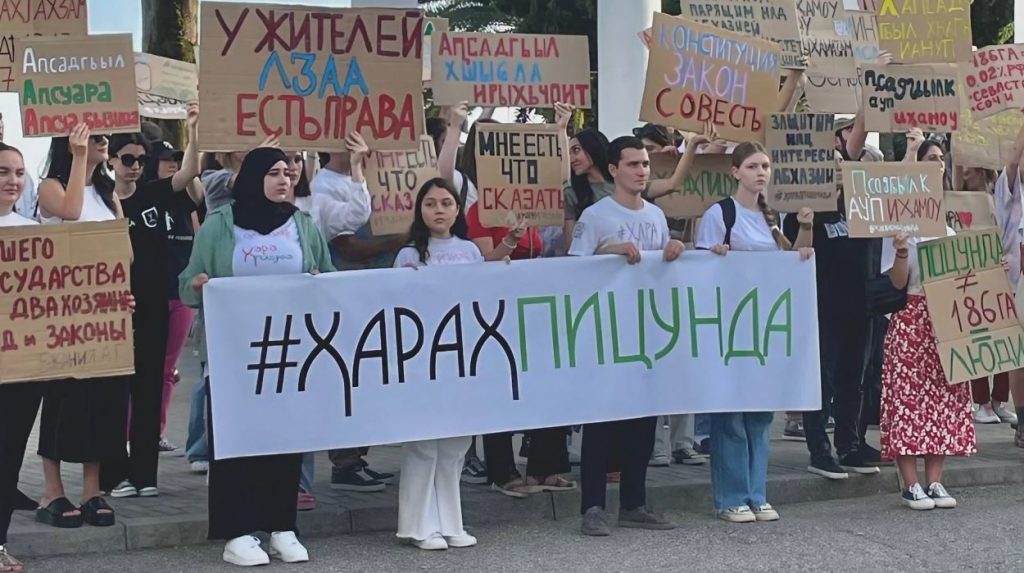 A protest action by ҲARAҲPICUNDA
“Labeling others won’t aid the authorities”
The public response did not favor the authorities either, with social networks filled with outraged posts.
Economist Akhra Aristava believes that by choosing the method of labeling with the intention to question the reputation of their opponents, the authorities are attempting to manipulate public opinion.
“For Abkhazia and our citizens, this approach is a dead end, dangerous, and will lead to nothing good. The state dacha in Pitsunda is in perpetual use by the Russian Federation. No one in Abkhazia has declared an intention to take the state dacha away from Russia. Everyone says only that the new agreement should be mutually beneficial and reflect the interests of the Abkhazian side,” he explains.
Psychologist Elana Kortua compares the current situation with the repressions of the 1930s when the Abkhazian nation’s identity was destroyed by the hands of their own compatriots.
Journalist Eleonora Giloyan sees it as a dispute where “the one on whose side there are no arguments, neither truth nor conscience slides into personal insults“:
“Your every next move drowns you. Every throw-in you make shows your weakness. Every new move proves that you know it all yourself.“
Toponyms, terminology, views and opinions expressed by the author are theirs alone and do not necessarily reflect the views and opinions of JAMnews or any employees thereof. JAMnews reserves the right to delete comments it considers to be offensive, inflammatory, threatening or otherwise unacceptable
On December 25 the Government of Georgia has published a document entitled “The measures for the implementation of steps defined for Georgia in the European Commission’s Communication on the 2023 Enlargement Policy”. The plan was endorsed by the State Commission for European Integration on November 27, 2023.
The document reflects the nine conditions defined by the European Commission, while also describing the steps to be taken, the time-frames and the responsible government body.
1. Countering the disinformation targeting EU and its values; countering external information manipulation and interference.
Measures to be taken: Elaboration of the action plan of government’s communication campaign on to promote EU and its values; implementation of the action plan in 2024.
2. Improvement of alignment with EU’s Common Foreign and Security Policy
Measures to be taken: Active cooperation with EU structures to ensure that Georgian territory is not used for avoiding the EU sanctions, including Georgian Ministry of Finance accountability before relevant bodies of European Commission, U.S. UK on compliance with sanctioned and sensitive customs code operations
3. Decreasing polarization, including through engaging parliamentary opposition in legislative process, especially on EU-related legislation
Measures to be taken: Inclusion all parliamentary parties into the working process regarding the key reforms and reforms related to EU integration; continuation of cooperation with civil society (in the framework of Memorandum of Understanding signed with Georgian National Platform).
4. Ensuring free, legitimate, and competitive election process, especially in 2024, and implementation of OSCE/ODIHR recommendations. Completion of reforms long before the election day, including the adequate representation of the voters.
Measures to be taken: Inviting OSCE/ODIHR long-term observation mission for 2024 elections; creation of effective cooperation formats between relevant government bodies and observer organizations; amendments to the election legislation regarding the political party financing.
5. Further improvement in implementation of the parliamentary oversight, especially on security sector. Ensuing institutional independence and neutrality of key institutions, especially Central Elections Commission, National Bank and Communications Commission.
Measures to be taken: Facilitation of regular dialogue among the parliamentary political parties and civil society organizations with a view to improve the oversight practice; filling out of the Group of Trust
6. Completion of a holistic and effective judicial reform, including the comprehensive reform of High Council of Justice and the Prosecutor’s Office, through the implementation of Venice Commission recommendations and a transparent and inclusive process.
Measures to be taken: Creation of a working format, with participation of all parliamentary political parties and non-governmental organizations, on judiciary and Public Prosecutor Office’s reforms; adoption of relevant legislative amendments.
7. Further ensuring the effectiveness, institutional independents and neutrality of Anti-corruption bureau, Special Investigative Commission and Personal Data Protection Service. Implementation of the recommendations by Venice Commission through the inclusive process; creation of strong track-record of fighting corruption and investigation of organized crime.
Measures to be taken: Initiation of the legislative amendments in accordance with Venice Commission’s recommendation on December 15; conducting meetings with all parliamentary parties and NGOs to discuss annual reports of the mentioned agencies
8. Improvement of the existing action plan of de-oligarchization through the multi sector systemic approach, in accordance to the Venice Commission recommendations and through the transparent and inclusive process, in which opposition parties and civil society will be engaged.
Measures to be taken: Adoption of the de-oligarachization plan following the consultations with parliamentary political parties and non-governmental organizations; conducting meetings with the parliamentary opposition parties and non-governmental organizations with a view to monitor the implementation of the de-oligarchization plan.
9. Improvement of human rights protection, including through the implementation of the ambitious Strategy implementation and through ensuring the freedom of freedom of assembly and expression. Initiation of neutral, effective and timely investigations into the cases of incidents related to breach of security and violence against vulnerable groups, media and civil society activists, and prosecution of individuals and organization responsible for violence. Conducting consultations and cooperation with civil society, which will allow them to meaningfully engage in legislative and policy-making processes; ensuring their unhindered work.
Measures to be taken: Organizing joint meeting of civil society, international organizations and state agencies to discuss the 2024-2026 Human Rights Strategy Draft National Action Pan; adoption of the National Action Plan by the Parliament following the consultations with parliamentary political parties and civil society organizations; meetings with civil society organizations on the ongoing investigations; provision of comprehensive information to the EU regarding the investigations; regular meetings with NGOs in order to facilitate their engagement in policy making and legislative process.
Also Read:
On December 25 the Government of Georgia has published a document entitled “The measures for the implementation of steps defined for Georgia in the European Commission’s Communication on the 2023 Enlargement Policy”. The plan was endorsed by the State Commission for European Integration on November 27, 2023.
The document reflects the nine conditions defined by the European Commission, while also describing the steps to be taken, the time-frames and the responsible government body.
1. Countering the disinformation targeting EU and its values; countering external information manipulation and interference.
Measures to be taken: Elaboration of the action plan of government’s communication campaign on to promote EU and its values; implementation of the action plan in 2024.
2. Improvement of alignment with EU’s Common Foreign and Security Policy
Measures to be taken: Active cooperation with EU structures to ensure that Georgian territory is not used for avoiding the EU sanctions, including Georgian Ministry of Finance accountability before relevant bodies of European Commission, U.S. UK on compliance with sanctioned and sensitive customs code operations
3. Decreasing polarization, including through engaging parliamentary opposition in legislative process, especially on EU-related legislation
Measures to be taken: Inclusion all parliamentary parties into the working process regarding the key reforms and reforms related to EU integration; continuation of cooperation with civil society (in the framework of Memorandum of Understanding signed with Georgian National Platform).
4. Ensuring free, legitimate, and competitive election process, especially in 2024, and implementation of OSCE/ODIHR recommendations. Completion of reforms long before the election day, including the adequate representation of the voters.
Measures to be taken: Inviting OSCE/ODIHR long-term observation mission for 2024 elections; creation of effective cooperation formats between relevant government bodies and observer organizations; amendments to the election legislation regarding the political party financing.
5. Further improvement in implementation of the parliamentary oversight, especially on security sector. Ensuing institutional independence and neutrality of key institutions, especially Central Elections Commission, National Bank and Communications Commission.
Measures to be taken: Facilitation of regular dialogue among the parliamentary political parties and civil society organizations with a view to improve the oversight practice; filling out of the Group of Trust
6. Completion of a holistic and effective judicial reform, including the comprehensive reform of High Council of Justice and the Prosecutor’s Office, through the implementation of Venice Commission recommendations and a transparent and inclusive process.
Measures to be taken: Creation of a working format, with participation of all parliamentary political parties and non-governmental organizations, on judiciary and Public Prosecutor Office’s reforms; adoption of relevant legislative amendments.
7. Further ensuring the effectiveness, institutional independents and neutrality of Anti-corruption bureau, Special Investigative Commission and Personal Data Protection Service. Implementation of the recommendations by Venice Commission through the inclusive process; creation of strong track-record of fighting corruption and investigation of organized crime.
Measures to be taken: Initiation of the legislative amendments in accordance with Venice Commission’s recommendation on December 15; conducting meetings with all parliamentary parties and NGOs to discuss annual reports of the mentioned agencies
8. Improvement of the existing action plan of de-oligarchization through the multi sector systemic approach, in accordance to the Venice Commission recommendations and through the transparent and inclusive process, in which opposition parties and civil society will be engaged.
Measures to be taken: Adoption of the de-oligarachization plan following the consultations with parliamentary political parties and non-governmental organizations; conducting meetings with the parliamentary opposition parties and non-governmental organizations with a view to monitor the implementation of the de-oligarchization plan.
9. Improvement of human rights protection, including through the implementation of the ambitious Strategy implementation and through ensuring the freedom of freedom of assembly and expression. Initiation of neutral, effective and timely investigations into the cases of incidents related to breach of security and violence against vulnerable groups, media and civil society activists, and prosecution of individuals and organization responsible for violence. Conducting consultations and cooperation with civil society, which will allow them to meaningfully engage in legislative and policy-making processes; ensuring their unhindered work.
Measures to be taken: Organizing joint meeting of civil society, international organizations and state agencies to discuss the 2024-2026 Human Rights Strategy Draft National Action Pan; adoption of the National Action Plan by the Parliament following the consultations with parliamentary political parties and civil society organizations; meetings with civil society organizations on the ongoing investigations; provision of comprehensive information to the EU regarding the investigations; regular meetings with NGOs in order to facilitate their engagement in policy making and legislative process.
Also Read:
Ученые обнаружили в британском Кембриджшире останки человека, предположительно жившего во втором веке нашей эры, чьи предки были сарматами и жили на Кавказе. Об этом говорится в статье, опубликованной в рецензируемом научном журнале Current Biology в декабре.
Читайте ИноСМИ в нашем канале в Telegram
Археологи обнаружили эти человеческие останки в захоронении недалеко от Оффорд-Клуни – английской деревни, расположенной примерно в 100 километрах к северу от Лондона. В результате этот человек, оказавшийся мужчиной, был назван Offord Cluny 203645.
Останки были обнаружены в процессе строительства участка национальной автомагистрали H14 в Кембриджшире.
В статье под названием “Человек сарматского происхождения в Римской Британии” (“An individual with Sarmatian-related ancestry in Roman Britain”) говорится, что сарматы – это древний народ, состоявший из кочевых ираноязычных племен, которые жили на Причерноморско-Каспийской степи и в Карпатах.
Причерноморско-Каспийская степь охватывает огромную территорию от современной Румынии на западе до Каспийского моря на юге и северо-западной части современного Казахстана на востоке.
Воины в составе римской армии
После того, как римляне разгромили сарматов в Маркоманских войнах в 175 году нашей эры, император Марк Аврелий включил сарматскую конницу в состав римских легионов и отправил 5,5 тысячи солдат-сарматов в Британию.
Исследователи полагают, что в Кембриджшире были найдены останки одного из тех сарматов, которых послали в Римскую Британию.
Проведя анализ генома, извлеченного из фрагмента улитки внутреннего уха Offord Cluny, и установив методом радиоуглеродного датирования, что этот человек жил примерно в 126–228 годы нашей эры, исследователи пришли к выводу, что, вполне вероятно, он был одним из этих сарматов, которые были переброшены в Римскую Британию.
Эти останки уникальны тем, что в них ученые обнаружили такие генетические характеристики, которые не встречались у римлян, чьи останки исследователи находили в Великобритании. По своим генетическим характеристикам этот человек имел гораздо больше сходств с людьми из Анатолии и с Кавказа.
Более того, как показывают результаты исследования методом стабильных изотопов, будучи еще ребенком, Offord Cluny переехал жить очень далеко от мест, где он родился. Уникальная история жизни этого сарматского мужчины указывает на то, что он путешествовал всю свою жизнь и завершил ее на территории современной Великобритании.
Данные, полученные в результате анализа фрагментов его останков, указывают на то, что на момент смерти мужчине было 18–25 лет. Ученые также утверждают, что, судя по результатам генетического анализа и анализа методом стабильных изотопов, вполне вероятно, он прибыл в Британию в составе римских войск – либо как солдат, либо как член семьи солдата.