

Categories
South Caucasus News

Midnight Mass In Bethlehem: Patriarch Addresses Gazan Christians, Calls For End To War


Midnight Mass In Bethlehem: Patriarch Addresses Gazan Christians, Calls For End To War

The Latin Patriarch of Jerusalem, Cardinal Pierbattista Pizzaballa, prays the Our Father together with the priests and the faithful, during the Midnight Mass of Christmas at the Church of St. Catherine, in Bethlehem. Dec. 25, 2023. Credit: Marinella Bandini

By Marinella Bandini

The Latin patriarch of Jerusalem, Cardinal Pierbattista Pizzaballa, presided over midnight Mass for Christmas at the Church of St. Catherine in Bethlehem, addressing the impact of the Israel-Hamas war on Gazans and sharing the news that on Christmas Eve the local Church was able to deliver supplies to the people taking refuge at Holy Family Parish in Gaza. 

Concelebrating at the Mass were papal almoner Cardinal Konrad Krajewski, apostolic delegate to Jerusalem and Palestine Archbishop Adolfo Tito Yllana, and the bishops of the Latin Patriarchate of Jerusalem.

Representatives of the diplomatic corps and civil society were present at the Mass in the front rows.

Applause from the faithful in attendance greeted the patriarch’s words directly addressed to the Christians of Gaza: 

“I used to spend some days with you before Christmas every year. Only God knows how many attempts we tried to be there this year. We are ready to do whatever we can for you. All our lives are at your service. You’re not alone. We’ll never abandon you. You are experiencing fear, death, and tragedies, but you’re a light in this moment, for your courageous presence there. From Bethlehem, we are hugging you. May you feel the warmth of our closeness and affection as much as possible.” 

The patriarch announced that thanks to collaboration with Jordan, the Church of Jerusalem succeeded in delivering supplies to the Latin parish in Gaza on Christmas Eve. He did not elaborate on details. 

Pizzaballa also called for a definitive solution for Gaza. 

“It is not enough to talk about a cease-fire; we don’t want a cease-fire, we want the hostilities to end,” he said. “We have to stop this nonsense.” 

He also said of the Gazan people: “Though living on their own land, they continually hear ‘there is no place for them.’ For decades they have been waiting for the international community to find solutions to end the occupation under which they are forced to live, and its consequences.”

The patriarch spoke in his homily of the need to make a place for all people. 

“It seems for us today that there is no room for Christmas,” Pizzaballa said in his homily. “The noise of weapons, the children’s tears, the suffering of the refugees, the cry of the poor, the grief of so many mourning families, seem to make our songs lose harmony.”

But it is in the darkness of this world that the Church proclaims Christmas anew, he said.

“Every night, God always finds room for his Christmas. Even for us, here, today: God can make room even in the hardest of hearts,” Pizzaballa said.

Pizzaballa invited all “to increase our actions that speak of brotherhood, peace, acceptance, forgiveness, and reconciliation. Saying yes to what is good, yes to peace, yes to dialogue, and yes to others. It should not be a rhetorical exercise but a responsible commitment. It should make room, not occupy it; find a place for others and not deny them one.”

The church was filled with local Christians taking the place this year of pilgrims who can’t be in Bethlehem at this time because of the Israel-Hamas war.

“Thank you for being here,” the patriarch said to the faithful in attendance. 

After his homily, he sang a song in Arabic called “Jesus Is Born, Alleluia” and invited the congregation to join with him. Because even in the darkness “we are children of the Light,” he said. “Jesus is with us; he’s our joy. That’s why we are not afraid! We’re never afraid!”

At the end of the Mass, the patriarch processed to the Grotto of the Nativity, cradling the statue of the Baby Jesus, which was unveiled by the Franciscan friars of the Custody of the Holy Land during the singing of the Gloria. Pizzaballa placed it on the silver star that marks the birthplace of Jesus. 

From there, the Gospel of the Nativity according to Luke was proclaimed, and the statue of Baby Jesus was placed in the niche, traditionally identified as the manger.

Categories
South Caucasus News

Genomic Analysis Of Seized Pangolin Scales Illuminates Pathways Of Illegal Trade From Africa To Asia


Genomic Analysis Of Seized Pangolin Scales Illuminates Pathways Of Illegal Trade From Africa To Asia

A selection of White-bellied pangolin (Phataginus tricuspis) from a seizure in Hong Kong (Credit: Tracey-Leigh Prigge)

All pangolin species are now endangered due to the illegal trade of their scales across the world. Efforts to understand the trade and conserve the species have been hampered by a lack of knowledge about the source of scales seized in the trade – where did they come from?

By applying a genomic analysis to scales seized in Hong Kong, and comparing the results to a reference database, we now know that pangolins for Asian markets have been sourced across West and Central Africa. The international team, spanning four continents and several countries, was co-led by Professor Timothy BONEBRAKE of The University of Hong Kong (HKU), Dr Jen TINSMAN, and Professor Thomas SMITH of University of California, Los Angeles (UCLA). The findings have been published in the journal Science.

The endangered white-bellied pangolin (Phataginus tricuspis) has a distribution across Central and West Africa that spans over 6 million km2. It is one of the most trafficked mammals on Earth, as its scales are used in traditional medicine in Asia. However, when authorities manage to intercept and seize scales being traded illegally, we are only able to know the location of transit, without knowledge of where the animal was killed or which ecosystem is being impacted by this exploitation. Several years ago, Professors Bonebrake and Smith were working on research in Cameroon and began discussing the possibility of applying genomic tools to change this and better understand the impact of illegal trade for white-bellied pangolins. Nevertheless, they faced two big challenges that needed to be overcome for their plan to succeed. First, the team needed a reference database of white-bellied pangolin genomic data across its vast distribution in Africa, and second, they required access to seized scales in Asia.

To overcome the first challenge, the team assembled collaborators from Cameroon, Nigeria, Gabon, and other countries to find samples for the reference database. In all, 111 samples were used to construct the reference database. For the second obstacle, the researchers teamed up with Kadoorie Farm & Botanic Garden and the Agriculture, Fisheries, and Conservation Department of the Hong Kong SAR Government. These organisations had the foresight to see the long-term scientific value of preserving samples of scales from seizures. In total, 643 seized scales were analysed from these samples. Using a genomic analysis based on four million Single Nucleotide Polymorphisms (SNPs) of white-bellied pangolins, the team was then able to find the locations where pangolins were sourced from by matching the genetic signatures between the seizure samples and the reference database. Interestingly, there was little correspondence between the transit sources and the sources of pangolins themselves, indicating high levels of movement of scales prior to shipping to Asia. In addition, the results demonstrated dynamic changes in the sourcing of white pangolins for Asian markets – in 2012 pangolins were largely sourced from West Africa, but over time the origin of pangolins shifted towards Central Africa by 2018.

The study highlights the utility of genomic tools in illuminating the complex spatial and temporal dynamics that underlie illegal wildlife trade. Knowledge of these patterns can assist authorities in increasing enforcement efforts at both the source and destination points of the trade. The findings can also direct conservation resources towards the locations where the impacts of trade for exploited species (white-bellied pangolin in this case) are the highest. By tracking the origin-to-destination pathway of scales, scientists and authorities can map out how best to support pangolins.

The international nature of illegal wildlife trade necessitates international cooperation in scientific investigation and conservation. Professor Timothy Bonebrake from the HKU School of Biological Sciences noted, “I’m proud of what we’ve accomplished here, but it was only possible thanks to our dedicated and knowledgeable partners all over the world. Also, the work isn’t over. Now we need to focus on supporting organisations, governments, and communities to continue these types of international collaborations and applications of scientific tools in order to ensure the persistence of white-bellied pangolins and other endangered species globally.”

“Developments over the past couple of years have been encouraging,” said Dr Jen Tinsman of UCLA’s Center for Tropical Research. “If we can get our tracking methods into the hands of enforcement officers in those countries where pangolins are most threatened, it would allow near real-time monitoring of illegal trade and help shut it down.”

The journal paper can be accessed at Science website.


Categories
South Caucasus News

Same And Different: A New Species Of Pit Viper From Myanmar


Same And Different: A New Species Of Pit Viper From Myanmar

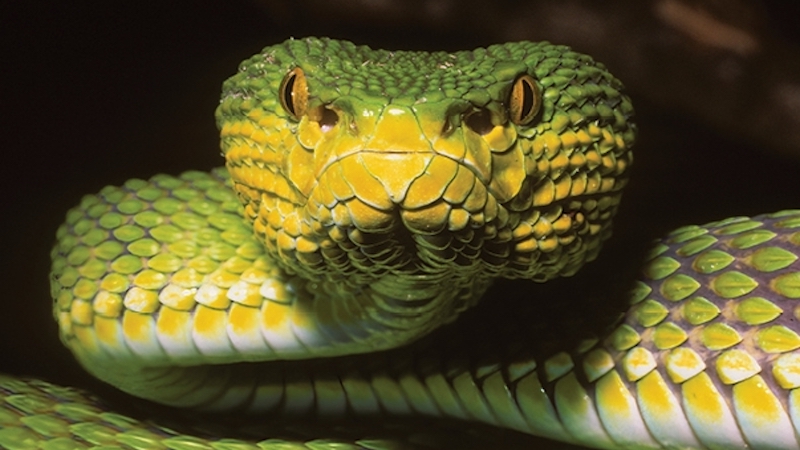
A specimen of Trimeresurus ayeyarwadyensis from the Yangon Region, Myanmar. Credit Wolfgang Wüster

Finding and describing new species can be a tricky endeavor. Scientists typically look for distinctive characters that can differentiate one species from another. However, variation is a continuum that is not always easy to quantify. At one extreme, multiple species can look alike even though they are different species—these are known as cryptic species. At the other extreme, a single species can be highly variable, creating an illusion of being different species. But what happens when you encounter both extremes simultaneously?

Herpetologist Dr Chan Kin Onn (previously at the Lee Kong Chian Natural History Museum, Singapore, now with the University of Kansas Biodiversity Institute and Natural History Museum, USA) led a study describing a new species of pit viper from Myanmar that is both similar and different from its sister species. The discovery is published in the open-access journal ZooKeys.

“Asian pit vipers of the genus Trimeresurus are notoriously difficult to tell apart, because they run the gamut of morphological variation. Some groups contain multiple species that look alike, while others may look very different but are actually the same species,” they say.

The redtail pit viper (Trimeresurus erythrurus) occurs along the northern coast of Myanmar and is invariably green with no markings on its body. A different species called the mangrove pit viper (Trimeresurus purpureomaculatus) occurs in southern Myanmar. This species typically has distinct dorsal blotches, and incredibly variable dorsal coloration including gray, yellow, brown, and black, but never green. Interestingly, in central Myanmar, sandwiched between the distribution of the redtail pit viper and the mangrove pit viper, a unique population exists that is green with varying degrees of blotchiness, which appears to be a blend between the redtail pit viper and the mangrove pit viper.

“This mysterious population in central Myanmar baffled us and we initially thought that it could be a hybrid population,” the researchers said. In a separate paper, Dr Chan used modern genomic techniques and determined that the population in central Myanmar was actually a distinct species and not a hybrid population.

But this was not the end of the story. The researchers discovered another surprise when they examined the snake’s morphological features: they found that the new species was also highly variable. Certain populations are dark green with distinct blotches, easily distinguishable from its closest relative, the redtail pit viper, which is bright green with no blotches. However, some populations of the new species are bright green with no blotches and look virtually identical to the redtail pit viper.

“This is an interesting phenomenon, where one species is simultaneously similar and different from its closest relative (the redtail pit viper). We think that at some point in the past, the new species may have exchanged genes with the redtail pit viper from the north and the mangrove pit viper from the south,” says Dr Chan.

The new species is called the Ayeyarwady pit viper (Trimeresurus ayeyarwadyensis) in reference to the Ayeyarwady River, which is the largest and one of the most important rivers in Myanmar. The river forms an expansive delta that is bounded by the Pathein River to the west and the Yangon River to the east. These rivers and their associated basins also mark the westernmost and easternmost distribution boundaries of the Ayeyarwady pit viper.


Categories
South Caucasus News

NPR News: 12-25-2023 6PM EST


NPR News: 12-25-2023 6PM EST

Categories
South Caucasus News

AP Headline News – Dec 25 2023 18:00 (EST)


28013281


Categories
South Caucasus News

Azerbaijan to fine local branch of foreign e-money organization if security of funds violated – decree – News.Az


Azerbaijan to fine local branch of foreign e-money organization if security of funds violated – decree  News.Az

Categories
Audio Review - South Caucasus News

Russian-Backed Union Signs Free Trade Pact With Iran


MOSCOW — Members of the Russian-led Eurasian Economic Union (EEU) have signed a fully-fledged free trade agreement with Iran, Russia’s economy ministry and the EEU said Monday.

The agreement will become permanent and replace a similar temporary pact in force since 2019. The previous deal facilitated mutual trade with Iran and increased it to $6.2 billion in 2022 from $2.4 billion in 2019.

The Eurasian Economic Union comprises Armenia, Belarus, Kazakhstan, Kyrgyzstan and Russia.

Both the region and Iran have taken on additional significance for the Kremlin after Western sanctions over Moscow’s conflict in Ukraine limited Russia’s foreign trade routes and forced it to look for markets outside Europe.

The new deal will eliminate customs duties on almost 90% of goods, while the agreement establishes a preferential regime for almost all trade between Russia and Iran.

Russian Economy Minister Maxim Reshetnikov said the deal would allow Russian business to save around 27 billion rubles ($294 million) each year.


Categories
South Caucasus News

Russian-Backed Union Signs Free Trade Pact With Iran


MOSCOW — Members of the Russian-led Eurasian Economic Union (EEU) have signed a fully-fledged free trade agreement with Iran, Russia’s economy ministry and the EEU said Monday.

The agreement will become permanent and replace a similar temporary pact in force since 2019. The previous deal facilitated mutual trade with Iran and increased it to $6.2 billion in 2022 from $2.4 billion in 2019.

The Eurasian Economic Union comprises Armenia, Belarus, Kazakhstan, Kyrgyzstan and Russia.

Both the region and Iran have taken on additional significance for the Kremlin after Western sanctions over Moscow’s conflict in Ukraine limited Russia’s foreign trade routes and forced it to look for markets outside Europe.

The new deal will eliminate customs duties on almost 90% of goods, while the agreement establishes a preferential regime for almost all trade between Russia and Iran.

Russian Economy Minister Maxim Reshetnikov said the deal would allow Russian business to save around 27 billion rubles ($294 million) each year.


Categories
South Caucasus News

Putin-Pashinyan Dialogue: Key to Armenia’s Geopolitical Future – BNN Breaking


Putin-Pashinyan Dialogue: Key to Armenia’s Geopolitical Future  BNN Breaking

Categories
South Caucasus News

Armenian Prime Minister, Russian President may talk on sidelines of St. Petersburg summit – Kremlin – ARMENPRESS


Armenian Prime Minister, Russian President may talk on sidelines of St. Petersburg summit – Kremlin  ARMENPRESS