
Categories
South Caucasus News

Southeast Asia Appears Stuck In A History Trap – Analysis


Southeast Asia Appears Stuck In A History Trap – Analysis

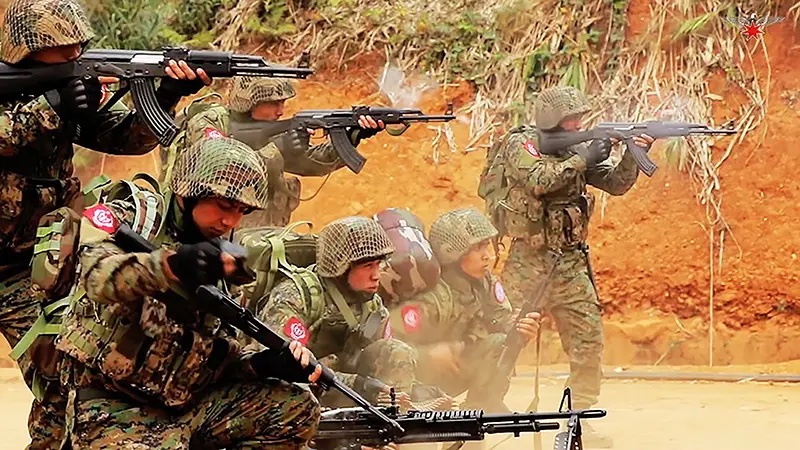
File photo of Arakan Army soldiers in Myanmar. Photo Credit: Arakan Army

By David Hutt

The story Southeast Asia likes to tell itself is that, by the late 1990s, it had something like its “end of history” moment.

By 1999, the region was free of colonialism, with the last push made by Timor-Leste, which that year held a referendum to throw off Indonesian imperialism. With that development, the region’s national borders appeared to be finally decided and revanchism, although it was still voiced on the fringes, had ended. 

All Southeast Asian countries, except Timor-Leste, were members of ASEAN. Communist Vietnam and Laos were stable and internationally accepted. Anti-communist tyrants like Indonesia’s Suharto, Burma’s Ne Win and Ferdinand Marcos in the Philippines had either resigned or been ousted. 

And the worst crimes of the Cold War-era, including the Khmer Rouge genocide in Cambodia, were not just over but there was to finally be some sort of justice. In 1999, the holdout Khmer Rouge leaders finally surrendered and Ta Mok, its former army chief, was symbolically arrested by the local authorities. 

Today, however, Southeast Asia finds itself trapped by history. 

On the one hand, it became evident in February 2021 that not all of 20th-century history was over. The military coup in Myanmar that month awakened many to the reality that some elements of the pre-Cold War period had not been solved. 

Indeed, Myanmar has been trapped in the early 20th century since independence from Britain in 1948. Whereas all other Southeast Asian threw off their colonial powers and then resolved their internal battles over what form of government would follow, Myanmar did not. 

Myanmar as outlier

Anti-colonial struggles are conflicts against a foreign aggressor and civil wars at the same time. It is not enough to claim self-determination; it must be determined what sort of self you want once free. 

The partition of Vietnam was both things at once. Many historians date the Cambodian Civil War as beginning in either 1967 (with the Samlaut Uprising) or 1979 (with the Lon Nol “coup”) but those same political schisms were latent, though blanketed, under Nordom Sihanouk’s regime that ruled after independence. 

The People’s Power uprising in the Philippines in 1986 was essentially the answer to the question — constitutional or personalist rule — that was posed when the country gained independence from Spain in 1898, and, indeed, was the internal debate within almost all of José Rizal’s writings. 

But Myanmar never went through this process — or, rather, successive military juntas never allowed the question to be seriously explored. The 1962 coup effectively froze in time the question of self-determination of Myanmar’s myriad ethnic minorities, a remnant of colonial rule.

In two ways, Myanmar under the military remained a colonial holdout: The Bamar center colonized the ethnic periphery and the anti-colonial struggle was never allowed to fully run its course. The cataclysm of the 2021 military coup appears to be the event that will finally bring this historical question to a proper solution. 

The answer offered by the anti-junta movement, centered on the National Unity Government, is a revolutionary federal state, in which Myanmar maintains its same territorial borders but vastly more power and autonomy is given to the ethnic areas, while at the same time the national army, a product of anti-colonialism, will be dissolved and something (perhaps a network of militias) will take its place. 

The junta’s answer, the same that its predecessors offered, is devolution based on the permission of a central authority, implemented through peace talks. The problem with this answer, as has been the case in the past, is that it is dependent not upon rules or laws but the whims of whichever general is sitting in Naypyidaw, so essentially yet another delay in answering the post-colonial civil war question.

Yet, for now at least, according to some hopeful observers, the forces of revolution are prevailing over the forces of reaction in Myanmar.

Baked-in crisis

Alas, the rest of Southeast Asia seems unwilling to accept that a historical reckoning must happen in Myanmar for there to be any progress. 

One can put aside the fatuousness of permitting Myanmar entrance into ASEAN in 1997 before those civil-war conflicts were solved, yet ASEAN still doesn’t accept that by doing so it institutionalized those conflicts into the regional system.

In other words, by accepting Myanmar into the ASEAN bloc, the rest of the region (perhaps) unwittingly accepted a share of responsibility for solving those historical conflicts. This point is still not appreciated by ASEAN in its continued insistence that the solution to the current crisis is to return to a point in time: the status quo ante

Yet, even if that return was feasible, which it isn’t, ASEAN would still be left with the situation of Myanmar’s 20th-century conflicts sparking another similar crisis at some point in the future. 

ASEAN is, therefore, trapped in apparently thinking that Myanmar is unique in that it won’t have to go through the same bloody processes that the rest of the region did — a final reckoning of post-colonial civil wars — and clearly thinks that the region’s responsibility is to forestall, not assist, this process.

On the other hand, Southeast Asia is also in a history trap of believing that the post-Cold War era is still alive. 

It can be fairly said that the region, aside from China, was the biggest beneficiary of the world order left after the collapse of communism in Europe. A cursory look at how the region has developed economically, culturally and socially since 1989 is enough to make that argument. 

But what should we call the period between 1989 and, roughly, 2019? The “Chimerica Era”, that chimera when the United States and China thought they could get along and when the West thought that Beijing was playing by the same rules? Or, perhaps, the “Inter-Cold War Era?”

Nostalgia not enough

In any case, that period is now over. Yet, Southeast Asia’s leaders still think that they can deny its disappearance by repeatedly stating their opposition to what has come after – a “New Cold War” – as if denying something’s existence makes it not exist.

They hold onto the hope that Washington and Beijing will finally see sense and agree that because things were much better for all in the 2000s that should be their shared vision for the future. 

If there is a purpose to “hedging”, it is presumably to play both superpowers off against one another to extract the most benefits. Yet the downside is that you make yourself dependent on both sides, as has been the case: As a share of overall ASEAN trade, the United States and China have taken on a larger, not smaller, percentage in recent years. 

Hedging, as manifested today, is to take both sides, rather than to take neither side. That is problematic, to say the least, if there is a possibility of both sides going to war, when you will be forced by events outside your control and at a time not of your choosing to decide which side to take.

None of this is unreasonable from an emotional level; it’s only natural for Southeast Asian leaders, by 1999, to have been jubilant that the horrors of the 20th century were over and that their societies could finally have the stability to become prosperous – thanks to the Inter-Cold War Era. 

It’s only natural to want the good times to continue. Sadly, they’re over and the world is once again a far more unstable and unpredictable place, including in ASEAN’s northwest. Nostalgia for times past will only get you so far. 

David Hutt is a research fellow at the Central European Institute of Asian Studies (CEIAS) and the Southeast Asia Columnist at the Diplomat. As a journalist, he has covered Southeast Asian politics since 2014. The views expressed here are his own and do not reflect the position of Radio Free Asia and RFA sister organization BenarNews
Categories
South Caucasus News

Armenia Considers Possible Future Outside Russia-Led Military Bloc – Analysis


Armenia Considers Possible Future Outside Russia-Led Military Bloc – Analysis

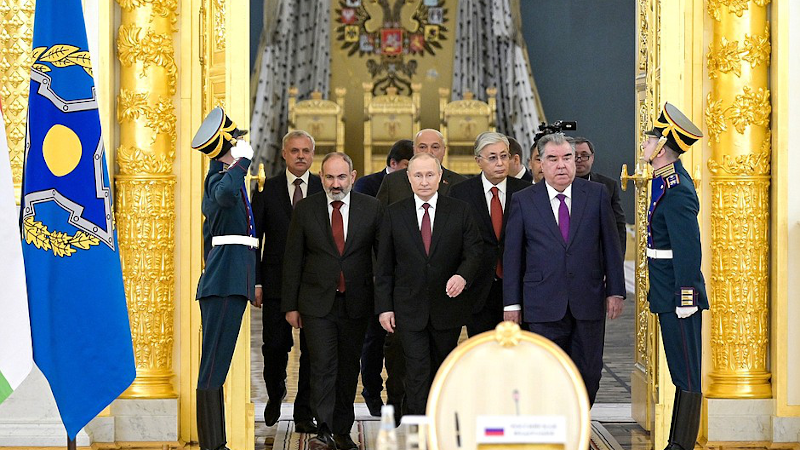
Before the meeting of the leaders of the member states of the Collective Security Treaty Organisation. From left to right: CSTO Secretary General Stanislav Zas, Prime Minister of Armenia Nikol Pashinyan, President of Belarus Alexander Lukashenko, President of Kazakhstan Kassym-Jomart Tokayev and President of Tajikistan Emomali Rahmon with Russian President Vladimir Putin. Photo Credit: Kremlin.ru

By Arshaluis Mgdesyan

(Eurasianet) — Armenia’s possible exit from the Russia-led Collective Security Treaty Organization (CSTO) is being discussed more and more actively as differences grow between Yerevan and Moscow.

Many in Armenia are wondering what the point is of remaining in a military alliance that has demonstrated its unwillingness to protect the country. 

Prime Minister Nikol Pashinyan has repeatedly denied claims, including by Russian officials, of an imminent change in Armenia’s foreign policy vector, but that has not stopped speculation as to how the country might leave the CSTO and what would come next. Representatives of the authorities are themselves musing about this prospect. 

 “There is of course the idea of Euro-integration in Armenia, but there is also the idea of becoming a country with non-bloc status, so there’s a wide range of options. We are listening to civil society and trying to figure out what the best tools are for ensuring Armenia’s security and development,” Security Council Secretary Armen Grigoryan said at a forum in Brussels on November 10 titled, The Strategic Future of Armenia: Armenia-Europe.

Fifteen Armenian public organizations recently released a statement criticizing Russia for, as they put it, interfering in Armenia’s internal affairs. The statement demands that the Armenian government expel Russia’s 102nd military base, ban Russian broadcast media, and begin the process of ending the country’s membership in the CSTO. 

Growing dissatisfaction with Russia

The CSTO, which also includes Kazakhstan, Kyrgyzstan, Tajikistan, and Belarus, is one of the main causes of the growing Armenian resentment toward Russia. 

The bloc, which is, theoretically, bound to come to the aid of a member state when it is attacked, took practically no action in September last year when Azerbaijani troops invaded border areas and took up positions on strategic heights inside Armenia.   

Since then, Armenia’s approach to the CSTO, and to Russia, has been increasingly confrontational. Yerevan has reduced its participation in the bloc to an absolute minimum. Over the past year, it has snubbed CSTO meetings at practically every level and has reassigned its representative in the organization to other work and left his post vacant.

At the same time, Armenia has welcomed more intensive cooperation with the EU, which at the start of this year deployed a civilian monitoring mission to the Azerbaijani border with the aim of supporting stability there. 

This step elicited a sharply negative reaction from the Russian authorities, who claimed the mission’s purpose was to “confront Russia geopolitically” in the South Caucasus region.

Such rhetoric from Moscow has done nothing to stop the growing cooperation between Yerevan and Brussels, including in the military sphere. 

At the summit of EU foreign ministers on December 11, it was announced that the EU would review the possibility of rendering military aid to Armenia through the European Peace Fund.

It was also announced that the EU mission in Armenia would increase the number of its monitors from 138 to 209. 

Another sore spot for Armenia is Russia’s alleged failure to deliver weapons that Yerevan says it paid millions of dollars for.  

The Armenian authorities have no plans to sue Russia and instead seek to solve the matter in an “atmosphere of partnership,” Deputy Defence Minister Hrachya Sargsyan told a briefingon December 4. 

Prime Minister Nikol Pashinyan recently proposed resolving the dispute through Russia canceling part of Yerevan’s overall debt to Moscow. That total debt amounts to about $280 million, according to the Armenian Finance Ministry’s latest calculations. (Armenia has not released precise figures on how much money Russia owes it for undelivered weapons.) 

Scenarios for leaving the CSTO

Most of the analysts Eurasianet spoke to see Armenia exiting the CSTO as a logical possible outcome of the current strained relations between Armenia and Russia. 

The head of the Research Center on Security Policy in Yerevan, Areg Kochinyan, says that Armenia could withdraw from the CSTO after approving a national security strategy that stipulates “non-bloc status” for the country. A new national security strategy is currently being drafted, and it’s unknown now whether it will contain such a provision. 

If the national security strategy were amended so, “It would mean that Armenia has decided not to participate in any military bloc or alliance and therefore it would have to leave the CSTO. But at the same time it would mean that the country would not seek to become part of any other collective defense bloc,” Kochinyan told Eurasianet. “I think this position would be more acceptable for Russia and the other regional powers, Iran and Turkey.”

Yerevan-based political analyst David Arutyunov doesn’t find it difficult to imagine Armenia leaving the CSTO.  

“In the context of the whole scope of Armenia’s close relations with Russia, including in the economic sphere and the presence of the Russian military base here, leaving the CSTO is a relatively easy matter,” Arutyunov told Eurasianet, adding that another crisis could provide the final impetus for quitting the bloc. 

He said the Armenian authorities have deftly managed to achieve domestic political aims by directing public discontent over the country’s security problems towards Russia and the CSTO. 

“If something like the crisis of September 2022 happens again and causes internal political ructions in Armenia, it’s possible that the Armenian government will resort to leaving the CSTO” in a bid to deflect criticism. 

What might Armenia’s “non-bloc status” mean?  

Areg Kochinyan, of the Research Center on Security Policy, believes that a “non-bloc status” could open up opportunities for expanding Armenia’s defense and military-industrial cooperation with various countries.

“We’re talking not just about the West, but also other countries like India, that produce weapons. Armenia can enhance its relations with them even to the level of strategic partnership,” he said. 

David Arutyunov believes that it’s too early to speak about any real prospect of Armenia being outside of any military-political alliances.

“For now all this talk is theoretical. There are no real discussions on realizing this in practice. And even so, the talk pertains to the CSTO specifically, while bilateral relations with Russia will remain in any case – alongside contacts with the West,” Arutyunov said.

The head of the Armenian Institute for Resilience and Statecraft, Gevorg Melikyan, is doubtful that the Armenian authorities really intend to leave the CSTO and declare non-bloc status.

“I don’t see any such clear policy or strategy. For now, it’s a matter of the Armenian government’s desire to make an impression on Western partners to extract some kind of security guarantees. Since there are none [such guarantees], the Armenian government will try to convince Western partners to treat Armenia like they would treat any other anti-Russian country and not accuse it of maintaining contacts with Russia in the security sphere because it remains in the CSTO,” Melikyan told Eurasianet. 

Arshaluis Mgdesyan is a journalist based in Yerevan.


Categories
South Caucasus News

The Strategic And Military-Technological Significance Of Israel – Analysis


The Strategic And Military-Technological Significance Of Israel – Analysis

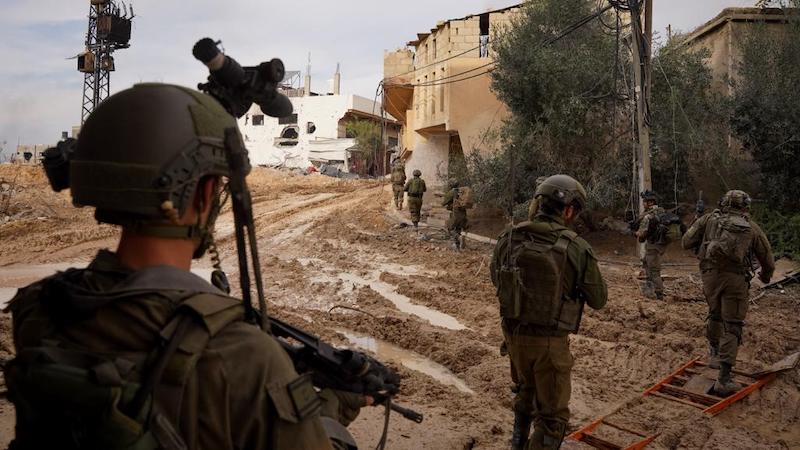
Israeli soldiers in Gaza. Photo Credit: IDF

By Kartik Bommakanti 

Why does Israel wield such importance, especially for its primary patron—the United States (US)? This is a vital question to address particularly as we witness the ongoing war between Israel and the Palestinian terrorist sub-state group–Hamas. Yet, Israel’s significance extends to several states beyond the US. The steadfast support extended to Israel by Washington during the ongoing Israel-Hamas war requires an assessment from a strategic and military-technological standpoint.

Strategic importance of Israel

Firstly, the Israelis have proved to be extraordinarily successful in their military campaigns against their Arab enemies, especially in the Six-day War of 1967 and the 1973 Yom Kippur War. These two successful military campaigns were not the only major accomplishments of the Jewish state—its reputation also extends to high-profile hostage rescue missions such as the Entebbe rescue operation in 1976 and several other successful rescue and covert missions. Notwithstanding the catastrophic failure of Israeli intelligence to prevent Hamas’ brutal and ghastly terrorist assault against defenceless Israeli civilians on 7 October 2023, in actual wars, past and present, despite initial fumbles, including the ongoing war against Hamas, the Israeli Defence Forces (IDF) significantly redeemed and redressed their intelligence community’s failures by way of very effective combat performance on the battlefield.

Generally, Israel’s military performance has augmented its standing regionally for the world’s major powers such as the US. During the latter half of the Cold War, Tel Aviv’s success in the Arab-Israeli wars of 1967 and 1973 not only cemented its reputation as a formidable military power regionally, but the outcome of these wars also eliminated Soviet influence in the region. Thanks to Israel, Washington’s influence continues to loom large in West Asia even today, irrespective of another major power—the People’s Republic of China (PRC) witnessing its influence rise. Reinforcing the operational performance of the IDF in wars past and ongoing is that the IDF, which is one of the most successful conscript fighting forces in the military history of the human race, also contributes to the regional balance of power. The latter is buttressed by Israel’s achievements as a key military-technological power. There is a deep military-technical synergy between Israel and several Western countries, especially its primary patron—the US. Collaboration comes in the form of crucial Israeli technological inputs to American, Western, and non-Western weapons platforms.

Military technology: Israel’ great strength 

For a country as small as Israel, it packs a significant punch in the global defence market. Since Israel’s own market is too small to absorb all the military products it develops, exporting them becomes an imperative. Data drawn from the Stockholm International Peace Research Institute (SIPRI) reveals that Tel Aviv accounted for 2.3 percent of global exports during the period 2018-2022, making it the tenth-largest exporter of defence equipment in the world. During the same period, India did not even make it to the list of SIRPI’s top 25 military exporters. This piece of data, albeit crucial, reveals only a snapshot of the significance of Tel Aviv as a major exporter of advanced military systems. Consider the world’s foremost and most advanced military-industrial power—the US, it is the recipient of several critical subsystems developed by the Israeli armament industry for its weapons platforms. Israel’s Active Protection System (APS) called ‘Trophy’ developed by the country’ Rafael Advanced Defence Systems (RADS) not only equips the IDF’s indigenously developed Merkava IV Main Battle Tank (MBT), it is also now integrated into the US Army’s M1 Abrams MBTs as part of a deal worth US$200 million reached in 2018.

The British Army’ (BA) challenger 3 MBTs are also being equipped with the same Trophy APS as part of a contract struck between the Ministry of Defence (MoD) of the United Kingdom (UK) and RADS in 2021. The Trophy’s capabilities include an interception system, computerised capability, a radar and four radar antennas. Another Israeli active defence system developed in parallel with the Trophy APS is the Iron Fist system. The latter was built by Israel Military Industries (IMI). In contrast to the Trophy APS, which releases metal pellets as the method of interception, the Iron Fist system uses an antimissile projectile as the way of interception. Today, the US Army’s light- and medium-weight armoured vehicles are equipped with the light-weight variant of the Iron Fist system due to three key factors: its light weight, low shock generation when its interceptors are launched, and affordability. These defence technologies, which have enhanced the capabilities of other countries are only a limited sample; there are several more from Israel.

Beyond making important technological contributions to Anglo-American ground combat capabilities, the Israelis have also generated technological inputs in the form of the Helmet Mounted Display (HMD) used by aviators for the Lockheed-built F-35 Lightning III or the Joint Strike Fighter (JSF) through a joint venture between America’s Rockwell Collins and Israel’s Elbit Systems. Take India’s own relationship with Israel, New Delhi has benefitted from Israeli military assistance during the India-Pakistan wars of 1965, 1971 and 1999. Notwithstanding the fact that the Indian Air Force (IAF) is retiring the Soviet-origin MiG-21 Bison fighter jets from its fleet, their service life was prolonged for many years due to the cost-effective upgrades provided by the Israelis at a time when successive Indian governments for austerity-related reasons, including the current, have resisted spending huge sums of money buying advanced fighter jets to replace the IAF’s obsolete Bisons. All three Indian armed services, ranging from Unmanned Aerial Vehicles (UAVs) to missile systems, have gained from cooperation with Israel reflecting the intrinsic dynamism of the Israeli defence industry.

Conclusion

Finally, neither Washington D.C. nor New Delhi can wash their hands of Israel by demonstrating a binary preference for “…oil to Jews” to borrow the words of one of the finest contemporary military historians, Martin Van Creveld. India and the US need both Jews and oil and need to balance Israeli security with Palestinian dignity. In the long run, oil will become dispensable as some other resource replaces it or renders the use of hydrocarbons minuscule, but the Jewish people of Israel and beyond will remain indispensable for eternity. Above all, the formidable strength of Israel’s military forces is essential not just for the survival of Israel, but equally for the balance of power in the Middle East.


  • About the author: Kartik Bommakanti is a Senior Fellow at the Observer Research Foundation
  • Source: This article was published by the Observer Research Foundation

Categories
South Caucasus News

Iran’s nuclear breakout: ‘Twas the night before Armageddon – New York Post


Iran’s nuclear breakout: ‘Twas the night before Armageddon  New York Post

Categories
South Caucasus News

NPR News: 12-24-2023 9PM EST


NPR News: 12-24-2023 9PM EST

Categories
South Caucasus News

AIWA Coordinates ‘One Cause, Many Faiths – Uniting Voices for Armenians in Captivity’ – The Armenian Mirror-Spectator


AIWA Coordinates ‘One Cause, Many Faiths – Uniting Voices for Armenians in Captivity’  The Armenian Mirror-Spectator

Categories
South Caucasus News

NPR News: 12-24-2023 8PM EST


NPR News: 12-24-2023 8PM EST

Categories
South Caucasus News

President Erdoğan Extends Warm Birthday Wishes to Azerbaijani Counterpart Ilham Aliyev – BNN Breaking


President Erdoğan Extends Warm Birthday Wishes to Azerbaijani Counterpart Ilham Aliyev  BNN Breaking

Categories
South Caucasus News

Ilham Aliyev has laid the foundation stone for the village of Salahli Kangarli in the Aghdam district – EIN News


president-administration-cd9d828859c9131

  EIN News


Categories
South Caucasus News

Ilham Aliyev laid foundation stone for village of Giyasli in Aghdam district – EIN News


president-administration-cd9d828859c9131

  EIN News