Categories
Audio Review - South Caucasus News

Tagesschau: Georgian Government Uninterested in Germany’s Offer to Easy Labor Market Access


A publication by Tagesschau, a German national and international television news service, says that the Georgian Government rejected the initial proposal from Germany to expand the Western Balkans Regulation and to include Georgia in this regulation, “which would have made it easier for Georgians to access the German labor marker”. The article notes that this was Joachim Stamp’s [German government’s Special Representative for migration agreements] initial offer to the Georgian government. “From the German perspective, a sensible move – but for Georgia this idea was completely uninteresting,” – the article reads.

The Western Balkan Regulation is a German migration regulation enacted in 2015 that allows people from Albania, Bosnia and Herzegovina, Kosovo, Macedonia, Montenegro, and Serbia to obtain temporary work visas as long as they have a job offer from a German employer.

Prior to the publication of the Tagesschau article, Nancy Feaser, Germany’s Minister of the Interior and Community, was on a visit to Georgia. During the visit, she met with the Georgian counterpart, Vakhtang Gomelauri, and signed an Agreement on Migration and Mobility, which, according to the Georgian MIA, aims “to bolster collaboration between Georgia and the Federal Republic of Germany in the field of labor migration and education, with an emphasis on expanding educational and internship initiatives for Georgian students and researchers,” but also “to intensify efforts against illegal migration, which includes strengthening cooperation on the readmission and reintegration of Georgian citizens of who have violated visa-free travel regulations.”

Tagesschau writes that about 8,000 asylum applications come from Georgia every year, but 99% of them are rejected, yet the applicants receive financial support for several months while their applications are still being processed. “If these applications were to be eliminated in the future, this would relieve the burden on the Federal Office for Migration and Refugees (BAMF).”

In light of the above, Tagesschau says that Germany had two goals with regard to Georgia; the first was outlined as follows: “Fewer Georgians should apply for asylum in Germany because they usually don’t get it and the procedures still burden the German bureaucracy”. The second was formulated as follows: “Georgians should immigrate to the regular labor market because there is a lack of skilled workers in Germany.”

Tagesschau quotes Joachim Stamp, as saying that the current agreement “primarily concerns those Georgians who have already left their homeland and are now traveling in the EU.”

Following the coverage of the issue in the Georgian media, the Georgian MIA issued a statement On December 21, saying that “the misinformation is being disseminated in some media as if the Georgian side had rejected the offer of the “Balkan model,” which contradicts reality”.

The Georgian MIA stated that during the lengthy process of negotiating the Agreement on Migration and Mobility between the Georgian and German sides “the so-called “Balkan model” was not a subject of discussion”.

Note: This news was updated on December 21 at 16:55 to include the statement of the Georgian Ministry of Internal Affairs.

Also Read:


Categories
Audio Review - South Caucasus News

Russian-Ukrainian War Impacts Georgian General Education System: Report Highlights Challenges and Opportunities


An extensive research titled “The Dynamics of the Development of Russian-Language Education in Georgia in the Context of the Russian-Ukrainian War,” carried out by the Centre for Civil Integration and Inter-Ethnic Relations (CCIIR) with the support of the Open Society Georgia Foundation, comprehensively examines the shifts in Georgia’s general education system. The study delves into the transformation of Russian and Ukrainian-language general education in Georgia amidst the Russian-Ukrainian war.

It examines changes in institutional maps and demographics from 2020 onwards, exploring educational opportunities for Russian-speaking immigrants and the alternatives they use outside the Georgian national system. It also assesses the challenges faced by Russian-speaking schools in adapting to the Georgian mainstream education system and examines the responsiveness of the system. Finally, the study reflects on the expectations, perceptions and attitudes of immigrant students and parents towards general education in Georgia, providing a holistic view of the dynamic landscape shaped by geopolitical events and immigration trends.

According to the research, the influx of foreign students in the Georgian education system has soared since 2016, reaching 10,934 in the 2022-2023 academic year, compared to 5044 in 2016-2017. The specific share of foreign students/students without citizenship has also risen from 0.9% to 1.7%. According to the study, there has been a decrease in the number of foreign students in Georgia, with the notable exception of Russian, Belarusian, and Ukrainian citizens, whose numbers have risen.

Moreover, specifically focusing on Russian-language education opportunities, the study reveals a reduction of Russian-language schools or sectors in the 2022-2023 academic year by 13 entities, primarily in Tbilisi, Rustavi, and Batumi, cities with high immigrant concentrations.

In response to challenges faced by Russian-speaking immigrants in accessing education, the report highlights the emergence of “family schools” and “educational centers” operating outside the mainstream Georgian system. These alternative institutions offer diverse programs, varying in size, infrastructure, curriculum focus, tuition fees and ways of affiliation with the educational system of the Russian Federation.

In this context, the report highlights the necessity to integrate unauthorized Russian-language schools into the Georgian educational framework, accompanied by the formulation of the comprehensive monitoring. This includes the establishment of specific requirements and standards for institutions engaged in educational activities, ensuring their alignment with the Georgian national education system. This would also serve to prevent the presence of anti-state or nationalist programs on the territory of Georgia.

The study also highlights challenges in Russian-language schools, including adapting to Georgian educational innovations and teaching the mother tongue effectively. Tensions between students of different ethnic groups, particularly Russians and Ukrainians, are noted, exacerbated by the ongoing Russian invasion of Ukraine.

In terms of parental involvement, the research suggests that parents of migrant pupils are more involved in school life, driven by a desire to facilitate their children’s adaptation, different cultural experiences, a high sense of responsibility and higher expectations.

The report concludes with a series of recommendations. It underlines the need for systematic improvement in the teaching of Georgian as a second language and advocates a nuanced examination of the challenges faced by Russian-language schools.

Also Read:


Categories
South Caucasus News

Venice Commission Opinion on Electoral Reform Provokes Mixed Reactions


In response to the Venice Commission’s opinion on amendments to Georgia’s electoral code, the ruling Georgian Dream party criticized the findings, citing a lack of legal arguments. The opposition, in turn, expressed dissatisfaction with the government’s efforts and criticized it for failing to embrace European values. Following this exchange, the Central Election Commission (CEC) issued a statement denying the opposition’s allegations.

CEC Statement

The Central Election Commission issued a statement saying that after the Venice Commission published its opinion on the electoral reform, “another discrediting campaign against the election administration has started”. The CEC points out that the representatives of various political parties are using the conclusions of the Venice Commission “for another attack against the election administration” and “are interpreting the conclusions of the Commission in their own way”.

“The discussion on the legitimacy of the electoral administration started again, while there is no mention of similar content in the VC conclusion. At the same time, they [opposition] don’t talk about the important issue mentioned in the conclusion, such as the need for clear criteria for dismissal of the members of the election administration appointed by the parties, which should ensure their real independence and impartiality” reads the statement.

CEC notes that all professional members of the administration, including the Chairman, exercise their powers in accordance with the law and “the most important process of modernization of elections is successfully underway”, adding that the election administration is doing everything to conduct elections in the country in accordance with international standards, to successfully implement electronic voting technologies in this process.

“Once again we would like to remind the political entities, other parties involved in the election process, to evaluate the activity of the election administration only on the basis of the actions taken by it, and not to damage the election process due to their political agenda, because the elections are a common endeavor and the successful implementation of the election process is a shared interest,” the statement concludes.

Ruling Party Reactions on VC Opinion

According to Givi Mikanadze, Georgian Dream MP: “The Venice Commission says without any legal arguments that we should return to the situation regarding the election of the election administration, as stated in the April 19 agreement. We have a lot of questions about this conclusion, because we explained the process in detail and with arguments. We explained to them in detail why we made the decision to transfer the selection process of the election administration representatives from the President to the Parliament. … A new electoral system is being introduced, which provides for voting by electronic devices, and for this reason the CEC must have a proper administration.”

According to Rati Ionatamishvili, Georgian Dream MP: “We have received such recommendations where the legal analysis has not really been carried out. There are political contexts and the content, which are already in the past, and relying on it today does not ensure progress, development and a vision for the future”.

Mikheil Sarjveladze, “Georgian Dream”, MP said: “The practice has shown that a deadlock emerged due to the rules that we had… The legal framework that existed before the amendments could not ensure the creation of adequate guarantees, including for the activities of the Central Election Commission. I think that these amendments are the amendments that we can rely on with this approach.”

Opposition Reactions

Following the Venice Commission’s opinion, Levan Khabeishvili, the Chairman of the United National Movement, said: “The Venice Commission has dealt another blow to the Russian party and directly said that the Chairman of the CEC who is present today should resign, he/she should be nominated by the President, should be elected with high legitimacy, and… not to be appointed by the Russian party. This was written in black and white by the Venice Commission”.

According to Giorgi Vashadze, the leader of “Strategy Aghmashenebeli”: “Even the conclusion of the Venice Commission shows that “Georgian Dream” does not want the European Union, it does not want the candidate status. That’s why it conducts such bogus reforms”.


Categories
South Caucasus News

Tagesschau: Georgian Government Uninterested in Germany’s Offer to Easy Labor Market Access


A publication by Tagesschau, a German national and international television news service, says that the Georgian Government rejected the initial proposal from Germany to expand the Western Balkans Regulation and to include Georgia in this regulation, “which would have made it easier for Georgians to access the German labor marker”. The article notes that this was Joachim Stamp’s [German government’s Special Representative for migration agreements] initial offer to the Georgian government. “From the German perspective, a sensible move – but for Georgia this idea was completely uninteresting,” – the article reads.

The Western Balkan Regulation is a German migration regulation enacted in 2015 that allows people from Albania, Bosnia and Herzegovina, Kosovo, Macedonia, Montenegro, and Serbia to obtain temporary work visas as long as they have a job offer from a German employer.

Prior to the publication of the Tagesschau article, Nancy Feaser, Germany’s Minister of the Interior and Community, was on a visit to Georgia. During the visit, she met with the Georgian counterpart, Vakhtang Gomelauri, and signed an Agreement on Migration and Mobility, which, according to the Georgian MIA, aims “to bolster collaboration between Georgia and the Federal Republic of Germany in the field of labor migration and education, with an emphasis on expanding educational and internship initiatives for Georgian students and researchers,” but also “to intensify efforts against illegal migration, which includes strengthening cooperation on the readmission and reintegration of Georgian citizens of who have violated visa-free travel regulations.”

Tagesschau writes that about 8,000 asylum applications come from Georgia every year, but 99% of them are rejected, yet the applicants receive financial support for several months while their applications are still being processed. “If these applications were to be eliminated in the future, this would relieve the burden on the Federal Office for Migration and Refugees (BAMF).”

In light of the above, Tagesschau says that Germany had two goals with regard to Georgia; the first was outlined as follows: “Fewer Georgians should apply for asylum in Germany because they usually don’t get it and the procedures still burden the German bureaucracy”. The second was formulated as follows: “Georgians should immigrate to the regular labor market because there is a lack of skilled workers in Germany.”

Tagesschau quotes Joachim Stamp, as saying that the current agreement “primarily concerns those Georgians who have already left their homeland and are now traveling in the EU.”

Following the coverage of the issue in the Georgian media, the Georgian MIA issued a statement On December 21, saying that “the misinformation is being disseminated in some media as if the Georgian side had rejected the offer of the “Balkan model,” which contradicts reality”.

The Georgian MIA stated that during the lengthy process of negotiating the Agreement on Migration and Mobility between the Georgian and German sides “the so-called “Balkan model” was not a subject of discussion”.

Note: This news was updated on December 21 at 16:55 to include the statement of the Georgian Ministry of Internal Affairs.

Also Read:


Categories
South Caucasus News

Iran Indicts Father Of Slain Protester Over ‘Security’ Charges – ایران اینترنشنال


Iran Indicts Father Of Slain Protester Over ‘Security’ Charges  ایران اینترنشنال

Categories
South Caucasus News

Shin Bet says Iran trying to recruit Israeli spies on social media – The Times of Israel


Shin Bet says Iran trying to recruit Israeli spies on social media  The Times of Israel

Categories
South Caucasus News

The influence of sea power in Iran’s proxy war, Part 1: Houthi aggression in the Red Sea – JNS.org


The influence of sea power in Iran’s proxy war, Part 1: Houthi aggression in the Red Sea  JNS.org

Categories
South Caucasus News

The conflict with Armenia is over – Hikmet Hajiyev … Former FBI spy hunter gets prison time for giving information to Russian oligarch … Blinken Says, West Will Prove Putin ‘Wrong Again’


Michael Novakhov’s favorite articles 

The conflict with Armenia is over - Hikmet Hajiyev

The conflict with Armenia is over – Hikmet Hajiyev

The news agency Turan

Baku/21.12.23/Turan: Azerbaijan sees no serious obstacles to concluding a lasting peace treaty with Armenia and believes that the issue of defining their borders can be resolved separately, Hikmet Hajiyev, Assistant to the President for Foreign Policy, said this on December 19 in London.

“The 35-year conflict is over,” Hajiyev told reporters in London. “Azerbaijan’s strategy now is to achieve peace and this requires steps from both sides.  There are no more obstacles on the way to a peace agreement for Azerbaijan,” he said.

Hikmet Hajiyev visited London this week, where he held meetings at the British Foreign Ministry and gave interviews to British media. -02D-

3090.jpg?width=1200&height=630&quality=8

A former FBI special agent who led a counterintelligence division was sentenced to more than four years in prison on Thursday for providing information to a Russian oligarch, in violation of US sanctions.

Charles McGonigal, 55, is one of the highest-ranking FBI officials to ever be convicted of a crime. He spent 22 years at the FBI before retiring in September 2018, leading investigations into the 2010 release of state department classified cables by WikiLeaks, and a hunt for a suspected Chinese spy working as a mole in the CIA.

But in 2021, after he had retired, McGonigal supplied information to the Russian oligarch Oleg Deripaska to help him sink a business rival. Deripaska had been placed on a US sanctions list in 2018, and was attempting to gather information to get a competitor placed on the sanctions list as well.

McGonigal received a payment of $17,500 for doing so, laundered from a Russian bank to Cyprus to a business bank account in New Jersey and then to McGonigal’s private account.

McGonigal was arrested in January 2023 and indicted on nine charges. In August, he pleaded guilty to one charge to avoid the other eight – namely, conspiring to violate US sanctions and laundering payments.

On Thursday he was sentenced to 50 months in prison and fined $40,000. The judge for the southern district of New York, Jennifer H Rearden, said her sentence was meant to balance McGonigal’s 22 years of FBI service with the “extremely serious” nature of his crimes, which she said imperiled national security.

“Charles McGonigal violated the trust his country placed in him by using his high-level position at the FBI to prepare for his future in business. Once he left public service, he jeopardized our national security by providing services to Oleg Deripaska, a Russian tycoon who acts as Vladimir Putin’s agent,” said Damian Williams, a US attorney, in a statement on the sentencing.

“Today’s sentence is a reminder that anyone who violates United States sanctions – particularly those in whom this country has placed its trust – will pay a heavy penalty.”

McGonigal also faces a second sentencing in Washington DC early next year, after he also pleaded guilty to hiding $225,000 in payments from a former Albanian intelligence officer.

Blinken Says, West Will Prove Putin 'Wrong Again'

Blinken Says, West Will Prove Putin ‘Wrong Again’

The United States said on Wednesday it will continue to unite countries around the world to support Ukraine’s freedom and independence, and ensure that Russian aggression remains a strategic failure, as the top U.S. diplomat put it, TURAN’s Washington correspondent reports from the State Department.

“Putin is betting that our divisions will prevent us from coming through for Ukraine. We have proven him wrong before; we will prove him wrong again,” Secretary of State Antony Blinken told reporters at a year-end press conference.

Putin, he explained, “thinks his strategy of waiting us out while sending wave after wave of young Russians into a meat grinder of his own making will pay off.”

“On one and only one point, I agree with Putin: America’s ongoing support is critical to enabling Ukraine’s brave soldiers and citizens to keep up their fight, to ensure that Russia’s war remains a strategic failure, and to continue helping Ukraine move toward standing strongly on its own two feet militarily, economically, and democratically,” Blinken added.

As the world heads into 2024, Blinken said the U.S. will continue to stand shoulder-to-shoulder with “those who share our vision” for a free, open, prosperous and secure world, “because that’s what delivering for the American people demands.”

He went on to elaborate: “Putin has already failed to achieve his principal objective in Ukraine: erasing it from the map, subsuming it into Russia… It’s been a hard year on the battlefield, but, once again, Ukrainians have done what no one thought was possible: They stood toe to toe with one of the world’s biggest militaries, they conceded no territory despite multiple Russian offensives, and they pushed Russia’s navy back in the Black Sea and opened a corridor to allow them to export their grain and other products to the world.”

Russia, Blinken said, is weaker militarily, economically, diplomatically.  NATO is bigger and stronger and more united than at any point in its nearly 75-year history.

“This year, we added our 31st member of NATO – Finland.  And Sweden will join soon, bringing even greater potency and capability to our defensive alliance,” he reminded.

Blinken devoted much of his time on the podium to rallying the Congress and countries around the world to continue supporting Ukraine’s freedom and independence, and underscoring the importance of ending the Israel-Hamas war as quickly as possible.

“Here’s who benefits if Congress passes this supplemental: our fellow citizens, our businesses, our workers, our allies and partners, people around the world who are looking to the United States to lead.  Here’s who cheers if we fail: Moscow, Tehran, Beijing.  If we come up short, it won’t be our adversaries and competitors who stopped us.  It will be ourselves,” he said.

On the war in the Middle East that erupted in October. Blinken said, “We continue to believe that Israel does not have to choose between removing the threat of Hamas and minimizing the toll on civilians in Gaza.”

default.jpg

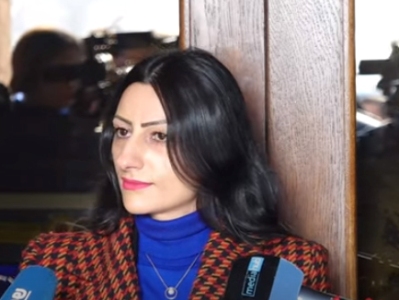
When this information was disseminated in the press, I immediately contacted the law enforcement agencies, focusing on human rights related issues. Anahit Manasyan, the Human Rights Defender (ombudsperson) of Armenia, told this to reporters after Thursday’s Cabinet meeting of the government—and regarding the incident that happened a day ago, when, according to human rights organizations, the military police of the Russian 102nd Military Base in Gyumri, Armenia arrested  Russian citizen Dmitry Setrakov and then transferred him to Russia.

To the question whether these Russian policemen’s arresting of people in Armenia is a violation of human rights, Manasyan responded: “At the moment, I have not yet received complete information regarding the matter. For example, was the person transferred to Russia? Under what process did this happen? But if a matter related to human rights is recorded, in a specific context, we will certainly intervene.”

The Vanadzor office of the Helsinki Civil Assembly had reported on December 8 that the representatives of the Russian 102nd Military Base had arrested Russian citizen Dmitri Setrakov, living in Gyumri, on a street. And later it became known that he was transferred to Russia, where he is accused of desertion.

In turn, the Prosecutor General’s Office of Armenia had stated that it did not receive, discuss, and ranted a petition to detain, arrest, and hand over Setrakov to the respective authorities of Russia. It added that it does not have information regarding the search for Dmitry Setrakov by the relevant authorities of Russia, as well as his detection in Armenia.

!

This text available in   Հայերեն

Print

3725.jpg?width=1200&height=630&quality=8

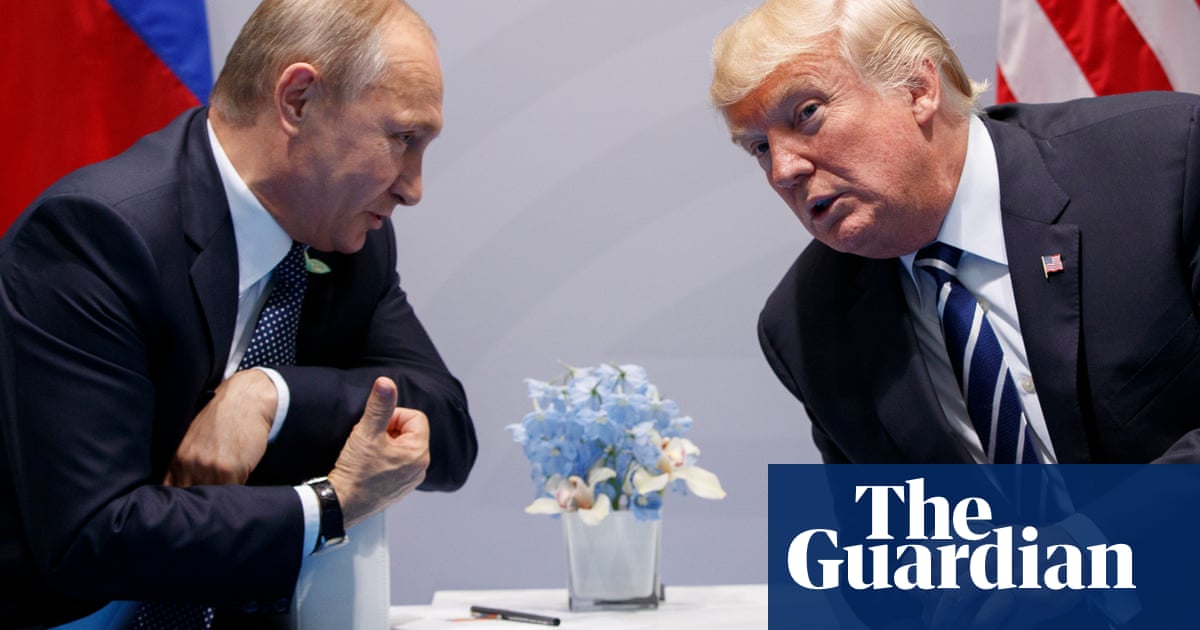
Vladimir Putin has had Donald Trump’s “number for some time … knows how to manipulate him” and still sees him “as an asset”, the former White House Russia expert Fiona Hill said, discussing the Russian leader and the Republican presidential frontrunner.

“That’s literally [Putin’s] trump card,” Hill told the One Decision Podcast, hosted by the reporter Jane Ferguson and Sir Richard Dearlove, a former head of MI6, when asked if she thought the Russian president, bogged down in war in Ukraine, was betting on Trump beating Joe Biden next year and returning to power.

Hill added: “The anticipation that Trump’s going to come back is something for Putin of a boon … he can play with that. He can use it as kind of a warning … scare the Ukrainians, the Europeans, the rest of the world. Putin is pretty confident, given his experiences with Trump in the past, that Trump will be quick to try to resolve the … war in Ukraine in his favor.

“And, you know, obviously, Putin has had Trump’s number for some time, he knows how to manipulate him … he has been very good at the art of flattery with Trump. He sees Trump as an asset in many respects.”

From 2017 to 2019 Hill was a senior national security aide in the Trump White House, eventually coming under the spotlight as a witness in Trump’s first impeachment, for seeking to blackmail Ukraine for dirt on political rivals. In 2013, she published Mr Putin: Operative in the Kremlin, a widely praised study.

Though Hill made her name in Washington foreign policy circles she was born and raised in the north-east of England, attending St Andrews University in Scotland before studying at Harvard.

Joe Biden has led a global coalition in support of Ukraine but US funding for Kyiv is currently held up in Congress, Republicans loyal to Trump demanding hardline immigration measures in return for more aid. On Wednesday Punchbowl News, which reports on Capitol Hill, noted the “growing isolationist wing” of the Republican party, notably including the installation of a Trump ally, Mike Johnson, as House speaker.

“Washington has cooled on Ukraine,” it said.

Hill said Putin increasingly sensed a chance to end the war in his favour.

“Myself and many other colleagues are already getting little feelers being sent out to see whether the United States and the west are ready to negotiate,” Hill said, adding that this “suggests that Russia would like to see this ended, but … completely on Putin’s terms: no return of territory, the opportunity to put pressure on Ukraine over the longer term and certainly no reparations.”

Now chancellor of Durham University, Hill is also a member of the board of overseers at Harvard and a senior fellow at the Brookings Institution in Washington. On the One Decision Podcast, she also discussed her well-received memoir, There Is Nothing For You Here, which was published two years ago, famously prompting Trump to call her “a deep state stiff with a nice accent”.

Trump and Putin have been entangled on the world stage ever since Trump entered US politics in 2015, amid warnings of Russian interference in American elections. In 2018, Trump was widely criticised for a subservient display at a summit with Putin in Helsinki. In 2019 a special counsel investigation of Russian election interference and links between Trump and Moscow ended with multiple indictments and extensive evidence of attempted obstruction by Trump but no proof of collusion.

Widely seen as an aspiring autocrat, Trump regularly praises Putin and other authoritarian leaders.

In New Hampshire last week, Trump told supporters: “Putin of Russia says that Biden’s … ‘politically motivated persecution of his political rival’ is very good for Russia because it shows the rottenness of the American political system, which cannot pretend to teach others about democracy.’ So we talk about democracy, but the whole world is watching the persecution of a political opponent that’s kicking [Biden’s] ass.”

Trump has pleaded not guilty to 91 criminal charges under four indictments and also faces assorted civil cases and a ruling in Colorado kicking him off the ballot for inciting the January 6 insurrection. Regardless, he leads Republican polling by vast margins and is competitive or leads Biden in general election polls.

Hill told One Decision that because Trump “can be extraordinary, unpredictable … Putin probably has to tread very carefully, in fact, not to insult him, and not to kind of cross lines [because] Trump … lives for himself”.

But, she said, “Putin is pretty confident that he can stoke up the culture wars here, there and everywhere. And just with a little bit of deft use of political influence operations and propaganda, he can keep things that are moving in his direction already, moving in his direction.

“In any case, everything that Trump surrogates or Trump himself says about Nato [he has threatened to withdraw the US], about Europe and European security, about world and global affairs, about Ukraine, everything that’s happening on Capitol Hill … for Putin, this is just for him a sign that again, everything is going to rapidly switch in in his direction, his favor.”

Press play to listen to this article

Voiced by artificial intelligence.

KYIV — Ukraine’s spies aim to intensify intelligence operations and conduct sabotage strikes deep in Russian-controlled territory next year to bring the war as close to the Kremlin as possible, the head of Ukraine’s SBU security service told POLITICO.

“We cannot disclose our plans. They should remain a shocker for the enemy. We prepare surprises,” Major General Vasyl Malyuk said in written responses to questions. “The occupiers must understand that it will not be possible to hide. We will find the enemy everywhere.”

While he dodged specifics, Malyuk did give some hints. Logistics targets and military assets in occupied Ukrainian territory are likely to continue to be a focus. And then there are strikes that hit the enemy across the border.

“We are always looking for new solutions. So, cotton will continue to burn,” Malyuk joked.

Ukrainians use the word “cotton” to describe explosions in Russia and the occupied territories of Ukraine organized by Ukrainian special services. It came from Russian media and officials describing the growing number of such incidents with the word khlopok, which means both “blast” and “cotton” in Russian.

With combat along hundreds of kilometers of front lines essentially stalled for much of this year, the exploits of the SBU both boost Ukrainian morale and also hurt Russia’s war fighting abilities.

“The SBU carries out targeted point strikes. We stab the enemy with a needle right in the heart. Each of our special operations pursues a specific goal and gives its result. All this in a complex complicates the capabilities of the Russian Federation for waging war and brings our victory closer,” Malyuk said.

One area of focus will be Crimea and the Black Sea, building on this year’s operations.

Malyuk’s pet project is the Sea Baby drone, called malyuk in Ukrainian, which means “little guy.” The drone carries about 850 kilograms of explosives and is able to operate in stormy conditions, making it difficult to detect.

“With the help of those little guys we are gradually pushing the Black Sea Fleet of the Russian Federation out of Crimea,” Malyuk said.

It’s been used to attack the Kerch Bridge that links occupied Crimea to mainland Russia in July as well as to hammer Russian ships.

In October 2022 the SBU’s marine drones attacked Sevastopol Bay damaging four Russian warships. This year, the drones hit two missile carriers, a tanker, an amphibious assault ship and also damaged a large military tugboat and Russia’s newest reconnaissance and hydrographic ship.

Malyuk’s pet project is the Sea Baby drone, called malyuk in Ukrainian, which means “little guy.” The drone carries about 850 kilograms of explosives and is able to operate in stormy conditions, making it difficult to detect | Courtesy of the Security Service of Ukraine

That forced Moscow to shift much of the fleet away from its base in occupied Sevastopol in Crimea, leaving the west of the sea free of Russian vessels and allowing Ukraine to resume use of its ports for shipping.

The Kerch Bridge is still standing after a 2022 truck bomb attack and this year’s strike, but is only partially open, Malyuk said.

“It is a legitimate target for us, according to international law and the rules of war. Ukrainian law also allows us to attack this object. And we have to destroy the logistics of our enemy,” Malyuk added.

Malyuk said that Kyiv carefully considers its targets before striking — an effort to stay within the rules of war in contrast with Russia, which has fired missiles, artillery and drones at both military and civilian targets.

“When planning and preparing its special operations, the SBU carefully selects its targets. We work on military facilities or on those that the enemy uses to carry out their military tasks. We act fully by the norms of international law,” Malyuk said.

The SBU conducts most of its operations on Ukraine’s territory — in Donbas, Crimea and the Black Sea.

“This is our land and we will use all possible methods to free it from the occupiers,” Malyuk said.

When it comes to planning something in Russia, SBU says it focuses only on targets used for military purposes like logistical corridors for supplying weapons — like the rail tunnel in Siberia hit with two explosions (the SBU hasn’t claimed responsibility) as well as warships, military bases and similar targets.

“All SBU operations you hear about are exclusively our work and our unique technical development,” Malyuk said. “These operations became possible, in particular, because we develop and implement our technical solutions.”

Russia should prepare to be hit.

Trump supporters at a rally in New Hampshire this weekImage source, Reuters

Image caption,

Trump supporters at a rally in New Hampshire this week

One of the court challenges to Donald Trump’s eligibility to run for president in 2024 has finally struck gold.

The Colorado Supreme Court’s ruling to disqualify the former president from the Republican Party’s upcoming primary ballot is yet another unprecedented moment in US politics.


The South Caucasus News from Michael Novakhov

Azerbaijan is one of important countries of Middle Corridor – says Turkish minister  AZERTAC News

Baku/21.12.23/Turan: Azerbaijan sees no serious obstacles to concluding a lasting peace treaty with Armenia and believes that the issue of defining their borders can be resolved separately, Hikmet Hajiyev, Assistant to the President for Foreign Policy, said this on December 19 in London. “The 35-year conflict is over,” Hajiyev told…
 
The News And Times Information Network – Blogs By Michael Novakhov – thenewsandtimes.blogspot.com

Categories
South Caucasus News

2024 Signing Day – Georgia Tech Yellow Jackets – Georgia Tech


2024 Signing Day – Georgia Tech Yellow Jackets  Georgia Tech

Categories
South Caucasus News

President Ilham Aliyev visited village of Daghdaghan in Khojaly district


President of the Republic of Azerbaijan Ilham Aliyev has visited the village of Daghdaghan in the Khojaly district, according to Azerbaijan in Focus, reporting AzerTac.

The head of state examined the territory of the village.

Situated at the foot of the Karabakh mountain range, the village of Daghdaghan was occupied by the Armenian armed forces in 1992. On September 19-20 of this year, the village was cleared of separatists as a result of the anti-terrorist measures carried out by the Azerbaijani Army in Karabakh.

The post President Ilham Aliyev visited village of Daghdaghan in Khojaly district appeared first on Azerbaijan In Focus.