
U.S. enters 2024 with its smallest military in over 80 years as active-duty troop numbers sink to less than 1.3 million and all branches except Space Force MISS recruiting goals and Pentagon issue ‘national call of service’ to Gen Z https://t.co/ByEaegf8ED pic.twitter.com/yJEMn1BwVU
— Daily Mail Online (@MailOnline) December 16, 2023
Day: December 16, 2023
Categories
The Specter of 2016
We are on the edge of a spy scandal with major implications for how we understand the Trump administration, our national security, and ourselves.
On 23 January, we learned that a former FBI special agent, Charles McGonigal, was arrested on charges involving taking money to serve foreign interests. One accusation is that in 2017 he took $225,000 from a foreign actor while in charge of counterintelligence at the FBI’s New York office. Another charge is that McGonigal took money from Oleg Deripaska, a sanctioned Russian oligarch, after McGonigal’s 2018 retirement from the FBI. Deripaska, a hugely wealthy metals tycoon close to the Kremlin, “Putin’s favorite industrialist,” was a figure in a Russian influence operation that McGonigal had investigated in 2016. Deripaska has been under American sanctions since 2018. Deripaska is also the former employer, and the creditor, of Trump’s 2016 campaign manager, Paul Manafort.
The reporting on this so far seems to miss the larger implications. One of them is that Trump’s historical position looks far cloudier. In 2016, Trump’s campaign manager (Manafort) was a former employee of a Russian oligarch (Deripaska), and owed money to that same Russian oligarch. And the FBI special agent (McGonigal) who was charged with investigating the Trump campaign’s Russian connections then went to work (according to the indictment) for that very same Russian oligarch (Deripaska). This is obviously very bad for Trump personally. But it is also very bad for FBI New York, for the FBI generally, and for the United States of America.
Another is that we must revisit the Russian influence operation on Trump’s behalf in 2016, and the strangely weak American response. Moscow’s goal was to move minds and institutions such that Hillary Clinton would lose and Donald Trump would win. We might like to think that any FBI special agent would resist, oppose, or at least be immune to such an operation. Now we are reliably informed that a trusted FBI actor, one who was responsible for dealing with just this sort of operation, was corrupt. And again, the issue is not just the particular person. If someone as important as McGonigal could take money from foreigners while on the job at FBI New York, and then go to work for a sanctioned Russian oligarch he was once investigating, what is at stake, at a bare minimum, is the culture of the FBI’s New York office. The larger issue is the health of our national discussions of politics and the integrity of our election process.
For me personally, McGonigal’s arrest brought back an unsettling memory. In 2016, McGonigal was in charge of cyber counter-intelligence for the FBI, and was put in charge of counterintelligence at the FBI’s New York office. That April, I broke the story of the connection between Trump’s campaign and Putin’s regime, on the basis of Russian open sources. At the time, almost no one wanted to take this connection seriously. American journalists wanted an American source, but the people who had experienced similar Russian operations were in Russia, Ukraine, or Estonia. Too few people took Trump seriously; too few people took Russia seriously; too few people took cyber seriously; the Venn diagram overlap of people who took all three seriously felt very small. Yet there was also specific, nagging worry that my own country was not only unprepared, but something worse. After I wrote that piece and another, I heard intimations that something was odd about the FBI office in New York. This was no secret at the time. One did not need to be close to such matters to get that drift. And given that FBI New York was the office dealing with cyber counterintelligence, this was worrying
.
The reason I was thinking about Trump and Putin back in 2016 was a pattern that I had noticed in eastern Europe, which is my area of expertise. Between 2010 and 2013, Russia sought to control Ukraine using the same methods which were on display in 2016 in its influence operation in the United States: social media, money, and a pliable candidate for head of state. When that failed, Russia had invaded Ukraine, under the cover of some very successful influence operations. (If you find that you do not remember the Russian invasion of Ukraine in 2014, it is very possibly because you were caught in the froth of Russian propaganda, spread through the internet, targeted to vulnerabilities.) The success of that propaganda encouraged Russia to intervene in the United States, using the same methods and institutions. This is what I was working on in 2016, when a similar operation was clearly underway in the United States.
To this observer of Ukraine, it was apparent that Russia was backing Trump in much the way that it had once backed Ukrainian president Viktor Yanukovych, in the hopes of soft control. Trump and Yanukovych were similar figures: nihilistic, venal, seeking power to make or shield money. This made them vulnerably eager partners for Putin. And they had the same chief advisor: the American political consultant Paul Manafort. Russian soft control of Trump did not require endless personal meetings between the two principals. It just required mutual understanding, which was abundantly on display during the Trump presidency: think of the meeting between Putin and Trump in Helsinki in 2018, when the American president said that he trusted the Russian one and the Russian president said that he had supported the American one as a candidate. The acknowledgement of mutual debts was obvious already in 2016: Russian media talked up Trump, and Trump talked up Putin.
During Trump’s 2016 presidential campaign, the rapprochement between Trump and Putin could be effected through intermediaries. An obvious intermediary was Paul Manafort: first he worked for the Russian oligarch Deripaska as a consultant to teach the Kremlin how to influence Americans. Then he worked for Russia’s man in Ukraine Yanukovych, helping to get him elected. Finally Manafort worked for Trump, in the same capacity. You might remember Manafort’s ties to Russia as revealed by the press in 2016. He (and Jared Kushner, and Donald Trump, Jr.) met with Russians in June 2016 in Trump Tower. Manafort had to resign as Trump’s campaign manager that August after it become public he had received $12.7 million in cash while he was working Yanukovych and had not reported it.
By 2016, when he was Trump’s campaign manager, Manafort owed Deripaska millions of dollars. At the end of their political collaboration, they had entered into a murky investment, at the end of which Deripaska was pursuing Manafort in court. Manafort acknowledged the debt to Deripaska, in the sense that he treated his work for Trump as a way to pay it off. As Trump’s campaign manager, and as Deripaska’s debtor, Manafort wrote to offer Deripaska “private briefings” on Trump’s campaign. Through an intermediary, Manafort sent the Russians data from the Trump campaign, including campaign polling data about Americans that would be useful for influence operations. Manafort was asked to communicate a Russian plan for the partition of Ukraine to Trump. Manafort was hoping to pay Deripaska back in a currency other than money — in Manafort’s own words, “to get whole.” (These and other details are in Road to Unfreedom.)
Thinking our way back to 2016, keeping in mind Russia’s pattern of seeking soft control, recalling what we know now, let’s now reconsider how the FBI treated the Trump-Putin connection that year. After Trump became president, he and some other Republicans claimed that the FBI had overreached by carrying out any sort of investigation at all. Now that McGonigal has been arrested, Trump has claimed that this somehow helps his case. Common sense suggests the opposite. The man who was supposed to investigate Russian support of Trump then took money from a Russian oligarch close to Putin, who was at one remove from the Trump campaign at the time? That is not at all a constellation that supports Trump’s version of events. If the FBI special agent (McGonigal) who was investigating Trump’s connection to Russia was on the payroll of the Russian oligarch (Deripaska) to whom Trump’s campaign manager (Manafort) owed millions of dollars and provided information, that does not look good for Trump. It looks hideous —but not just for Trump.
Anne Applebaum once put the question the right way: why didn’t the FBI investigate Trump’s connections to Putin much earlier? In retrospect, it seems as though the FBI investigation of Trump’s campaign and its Russian connections in 2016 was not only late, but weirdly understated. Known as “Cross-Fire Hurricane,” it defined the issue of Russian influence narrowly, as a matter of personal contact between Trump campaign officials and Russians. Meanwhile, as that investigation was going on, Russia was in the middle of a major social media campaign which, according to the leading scholar of presidential communications, made it possible for Trump to be elected. And that larger influence campaign was not investigated by the FBI, let alone countered.
If anything, it looks as though the New York office of the FBI, wittingly or unwittingly, rather pushed in the same direction than resisted Russia’s pro-Trump influence operation. As no doubt everyone remembers, Russia was able to phish for emails from institutions and people around Clinton, and used some of them, out of context, to create harmful fictional narratives about her. Simultaneously, there was a concern about Clinton’s use of a private email server. In the popular mind, these two issues blurred together, with Trump’s help. Trump asked the Russians to break into Clinton’s email account, which they immediately tried to do. Nothing about Clinton’s emails proved to be of interest. The FBI closed an investigation in July 2016, saying that there was no basis for criminal charges against Clinton.
Then, weirdly, FBI director James Comey announced on 28 October 2016, just ten days before the election, that the investigation into Clinton’s emails had been reopened. This created a huge brouhaha that (as polls showed) harmed Clinton and helped Trump. The investigation was closed again after only eight days, on 6 November, with no charges against Clinton. But that was just two days before the election, and the damage was done. As I recall it, in the fury of those last forty-eight hours, no one noticed Comey’s second announcement, closing the investigation and clearing Clinton. I was canvassing at the time, and the people I spoke to were still quite excited about the emails. Why would the FBI publicly reveal an investigation on a hot issue involving a presidential candidate right before an election? It now appears that Comey made the public announcement because of an illicit kind of pressure from special agents in the FBI New York office. Comey believed that they would leak the investigation if he did not announce it.
In office, Trump knew that Russia had worked to get him elected, but the standard of guilt was placed so high that he could defend himself by saying that he personally had not colluded. The Mueller Report, which I still don’t believe many people have actually read, demonstrated that there was a multidimensional Russian influence campaign on behalf of Trump. The Trump administration countered by claiming that there was no evidence that Trump personally had been in contact with Putin personally. That defense was certainly misleading; but it was available in part because of the narrow scope of FBI investigations in 2016.
To be fair, FBI, along with Homeland Security, did investigate cyber. But this was after the election when it could make no difference; and in the report, cyber was defined narrowly, limited to phishing and the breach of systems. These are important issues, but they were not the main issue. What the phishing and breach of systems enabled was the main issue: a social media campaign that exploited emotions, including misogyny, to mobilize and demobilize voters.
Russia used the raw email in specific operations on Trump’s behalf, for example by rescuing him from the Access Hollywood tapes scandal. Right after it emerged that Trump advocated sexual assault, Russia released a fictional scandal connecting Clinton to the abuse of children. That allowed Trump’s followers to believe that whatever he did, she was worse; and the scandal was blunted. It verges on inconceivable that McGonigal was unaware of Russia’s 2016 influence campaign on behalf of Trump. He knew the players; he is now alleged to have been employed by one of them. Even I was aware of the Russia’s 2016 influence campaign. It became one of the subjects of my book Road to Unfreedom, which I finished the following year.
The Russian influence campaign was an issue for American counterintelligence. It is worth pausing to understand why, since it helps us to see the centrality of McGonigal and the meaning of this scandal. Intelligence is about trying to understand. Counterintelligence is about making that hard for others. Branching out from counterintelligence are the more exotic operations designed to make an enemy not only misunderstand the situation, but also act on the basis of misunderstandings, against the enemy’s own interests. Such operations, which have been a Russian (or Soviet) specialty for more than a century, go under the name of “provocation,” or “active measures,” or “maskirovka.” It is the task of counterintelligence to understand active measures, and prevent them from working. The Russian influence operation on behalf of Trump was an active measure that the United States failed to halt. The cyber element, the use of social media, is what McGonigal personally, with his background and in his position, should have been making everyone aware of. In 2016, McGonigal was section chief of the FBI’s Cyber-Counterintelligence Coordination Section. That October, he was put in charge of the Counterintelligence Division of the FBI’s New York office.
And it was just then, in October 2016, that matters began to spin out of control. There were two moments, late in the presidential campaign, that decided the matter for Donald Trump. The first was when Russian rescued him from the Access Hollywood scandal (7 October). The second was FBI director James Comey’s public announcement that he was reopening the investigation of Hillary Clinton’s emails (28 October). The reason Comey made that public announcement at that highly sensitive time, ten days before the election, was not that he believed the public needed to know, nor that the matter was likely of great consequence. On his account, it was that he believed that FBI New York office was going to leak it anyway. Rudolph Giuliani had apparently already been the beneficiary of leaks; claimed to know in advance of what he called a “surprise” that would help Donald Trump, namely Comey’s public announcement of the email investigation.
It looked at the time like Comey had been played by people in FBI New York who wanted Trump to win. Comey has now confirmed this, although his word choice might be different. And I did wonder, back then, if those special agents in New York, in turn, were being played. It was no secret at the time that FBI special agents in New York did not like Hillary Clinton. Making emotional commitments public is asking to be exploited. For people working in counterintelligence, this is a particularly unwise thing to do. The nature of working in counterintelligence is that, if you are not very good, you will find yourself in the vortex of someone else’s active measure. Someone else will take advantage of your known vulnerabilities – your misogyny, perhaps, or your hatred of a specific female politician, or your entirely unjustified belief that a male politician is a patriotic messiah — and get you to do something that feels like your own decision.
Now that we are informed that a central figure in the New York FBI office was willing to take money from foreign actors while on the job, this line of analysis bears some reconsideration. Objectively, FBI New York was acting in concert with Russia, ignoring or defining narrowly Russia’s actions, and helping deliver the one-two punch to Clinton in October that very likely saved Trump. When people act in the interest of a foreign power, it is sometimes for money, it is sometimes because the foreign power knows something about them, it is sometimes for ideals, and it is sometimes for no conscious motive at all — what one thinks of as one’s own motives have been curated, manipulated, and directed. It seems quite possible — I raise it as a hypothesis that reasonable people would consider — that some mixture of these factors was at work at FBI New York in 2016.
All of these pieces of recent history must hang together in one way or another, and the fresh and shocking revelation of McGonigal’s arrest is a chance for us to try to see how. Again, if these allegations are true, they will soon be surrounded by other heretofore unknown facts, which should lead us to consider the problem of election integrity in a general way. As of right now, the circumstantial evidence suggests that we consider the possibility that the FBI’s reporting work in 2016, which resulted in a framing of the issue which was convenient for Trump and Russia, might have had something to do with the fact (per the indictments) that one of its lead agents was willing to take money from foreign actors while on the job. In connection with the leaks from FBI New York late in the 2016 campaign, which had the obvious effect of harming Clinton and helping Trump, McGonigal’s arrest also demands a broader rethink of the scale of the 2016 disaster. How much was FBI New York, wittingly and unwittingly, caught up in a Russian active measure?
The charges have not been proven. If they are, it would be a bit surprising if the two offenses with which McGonigal is now charged were isolated events. There is a certain danger, apparently, in seeing them this way, and letting bygones be bygones. A U.S. attorney presenting the case said that McGonigal “should have known better”; that is the kind of thing one says when a child gets a bellyache after eating too much cotton candy at the county fair; it hardly seems to correspond to the gravity of the situation.
Failing to understand the Russian threat in the 2010s was a prelude to failing to understand the Russian threat in 2020s. And today Americans who support Russia in its war of atrocity tend to be members of the Trump family or people closely aligned with Trump, such as Giuliani. The people who helped Trump then take part in the war on Ukraine now. Consider one of the main architects of Russia’s 2016 campaign to support Trump, Yevgeny Prigozhin. In 2016, his relevant position was as the head of the Internet Research Agency; they were the very people who (for example) helped spread the story about Clinton that rescued Trump from the Access Hollywood scandal. Without the Internet Research Agency covering his back, Trump would have had a much harder time in the 2016 election. Today, during the war in Ukraine, Prigozhin is now better known as the owner of Wagner, sending tens of thousands of Russian prisoners to kill and die.
The implications of the arrest go further. McGonigal had authority in sensitive investigations where the specific concern was that there was an American giving away other Americans to foreign governments. Untangling what that means will require a concern for the United States that goes beyond party loyalty. Unfortunately, some key political figures seem to be reacting to the news in the opposite spirit: suppressing the past, thereby destabilizing the future. Immediately after the McGonigal story broke, House Speaker Kevin McCarthy ejected Adam Schiff from the House intelligence committee, in a grand exhibition of indifference to national security. A veteran of that committee, Schiff has has taken the time to learn about Russia. It is grotesque to exclude him at this particular moment, in the middle of a war, and at the beginning of a spy scandal
McCarthy’s recent move against Schiff also recalls 2016, sadly. Much as I did, House Speaker Kevin McCarthy had an inkling, back then, that something was wrong with Trump and Russia. He expressed his view that June that Donald Trump was the Republican most likely to be taking money from Vladimir Putin. This showed a fine political instinct, sadly unmatched by any ethical follow-through. McCarthy did not share his suspicion with his constituents, nor do anything to follow through. He made the remark it in a conversation with other Republican House members, who did not disagree with him, and who apparently came to the conclusion the the risk of an embarrassment to their party was more important than American national security. Republicans in the Senate, sadly, took a similar view. They deliberately marginalized a CIA investigation that did address the Russian influence campaign for Trump. In September 2016, Mitch McConnell made it clear to the Obama administration that the CIA’s findings would be treated as political if they were discussed in public. The Obama administration bowed to this pressure.
The Russian operation to get Trump elected in 2016 was real. We are still living under the specter of 2016, and we are closer to the beginning of the process or learning about it than we are to the end. Denying that it happened, or acting as though it did not happen, makes the United States vulnerable to Russian influence operations that are still ongoing, sometimes organized by the same people. It is easy to forget about 2016, and human to want to do so. But democracy is about learning from mistakes, and this arrest makes it very clear that we still have much to learn.
26 January 2023
In the course of writing two books on Donald Trump’s ties to Russia, the same question occurred to me again and again: How is it possible that I knew all sorts of stuff about Donald Trump, and the FBI didn’t seem to have a clue? Or if they did, why weren’t they doing anything with it?
Specifically, I knew that:
- Starting in 1980, an alleged “spotter agent” for the KGB began cultivating Trump as a new asset for Soviet intelligence.
- The Russian mafia laundered millions of dollars through Donald Trump’s real estate by purchasing condos in all-cash transactions through anonymous corporations that did not disclose real ownership.
- Trump Tower was a home away from home for Vyacheslav Ivankov, one of the most brutal leaders of the Russian mafia, and at least 13 people with known or alleged links to the mafia held the deeds to, lived in, or ran alleged criminal operations out of Trump Tower in New York or other Trump properties.
- Trump was some $4 billion in debt when the Russians came to bail him out via the Bayrock Group, a real estate firm that was largely staffed, owned, and financed by Soviet émigrés who had ties to Russian intelligence and/or organized crime.
Much of my material came from FBI documents. A lot came from open-source databases. It made no sense. There was an astounding amount of data on the public record. The FBI had launched enormous investigations of the Russian mafia in the 1980s. They had staked out a New York electronics store that was a haven for KGB officers. They knew that’s where the Trump Organization bought hundreds of TV sets. They had their eyes on Ivankov and other Russian mobsters who were denizens of Trump’s casinos and bought and sold his condos through shell companies. They had to know that Trump laundered money for and provided a base of operations for the Russian mafia, which was, after all, a de facto state actor tied to Russian intelligence. They had to know that the Russians repeatedly bailed Trump out when he was bankrupt. They had to know that Russia owned him.
I’m well aware of the strict secrecy that accompanies ongoing investigations as a matter of procedure. But once the Mueller Report was finally released, it became crystal clear that Robert Mueller’s investigation dealt only with criminal matters, not counterintelligence. Trump had been thoroughly compromised by Russia and was a grave threat to national security. But the FBI wasn’t doing anything about it!
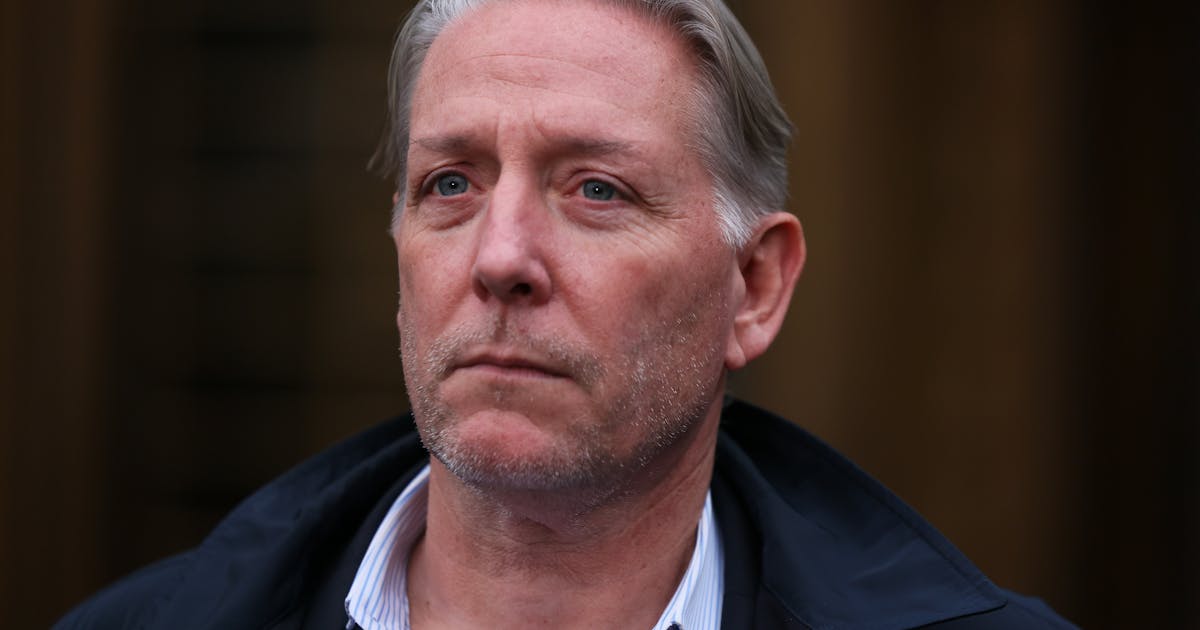
One reason for that may have been that on far too many occasions, FBI men in sensitive positions ended up on the take from the very people they were supposed to be investigating. And on January 23, a bomb dropped: We learned that the latest of these is Charles McGonigal, the former head of counterintelligence for the FBI in New York, who ended up working for billionaire oligarch Oleg Deripaska, a major target in the Trump Russia investigation. McGonigal was indicted in Manhattan on charges of money laundering, violating U.S. sanctions, and other counts relating to his alleged ties to Deripaska. He was also indicted in Washington, where he was accused of concealing $225,000 he allegedly received from a New Jersey man employed long ago by Albanian intelligence.
McGonigal has pleaded not guilty to all charges.
McGonigal’s troubles began in late 2018, after his wife found out about his girlfriend, Allison Guerriero, who did not know that he was still married. “I was shocked,” Guerriero said, in an interview with Mattathias Schwartz for Business Insider. “I was very much in love with him, and I was so hurt.”
A few months later, Guerriero wrote an angry email about McGonigal to the man who had introduced them as a couple—William Sweeney, who just happened to be assistant director in charge of the FBI’s New York City office. On a number of occasions, Guerriero had seen McGonigal leave huge amounts of cash around the house. At first, she thought it must be “buy money” for a sting operation or some other FBI procedure. Then she became suspicious. Among other things, she told Sweeney to look into McGonigal’s dealings in Albania, where McGonigal had traveled extensively and participated in transactions that later appeared in his indictments.
McGonigal had a stellar resume, including working on the Chelsea Manning–WikiLeaks investigation and on Operation Crossfire Hurricane, the bureau’s probe into the Trump campaign’s contacts with Russia.* Though he was not assigned to that operation when he moved to New York, running FBI counterintelligence in New York is a very special, highly sensitive position that affords unquestioned access to a spectacular array of international elites as well as highly sought-after information.
Similarly, Oleg Deripaska is not just another oligarch. Having emerged victorious from the brutal Aluminum Wars as a vital functionary of the Kremlin, he played a key role in financing Putin’s efforts to take over Ukraine from within via a political operation directed by Paul Manafort that put Putin surrogate Viktor Yanukovych in the Ukraine presidency in 2010. Manafort is alleged to have funneled $75 million into offshore accounts in return for his efforts.
What could be more perfect? Having installed a Putin surrogate in the Ukrainian presidency, in 2016, Manafort repeated that feat on a much bigger stage, as campaign manager guiding Trump into the White House. As Yale professor Timothy Snyder, a close observer of Ukraine, points out, “Russia was backing Trump in much the way that it had once backed Ukrainian president Viktor Yanukovych.”
Which brings us back to McGonigal. After assuming his new job in October 2016, just a month before the election, he would have been in a position to undermine the bureau’s investigation into Deripaska and Manafort and to sabotage those investigations with disinformation. Similarly, he would have been in a position to leak the information about Anthony Weiner’s laptop that led to the reopening of the FBI probe into Hillary Clinton’s emails 11 days before the election. Finally, he was in a position to have been a source behind the false exculpatory news published by The New York Times on October 31, 2016, a week before the election, with the headline that seemed give to Trump a clean bill of health: “Investigating Donald Trump, F.B.I. Sees No Clear Link to Russia.”
Of course, McGonigal wasn’t the only FBI official who went over to the dark side. In 1997, four years after he had retired and returned to private practice, FBI Director William Sessions traveled to Moscow and alerted the world to the horrifying dangers of the brutal Russian mafia. A decade later, however, Sessions had no qualms about taking on as a client Ukrainian-born Semion Mogilevich, the so-called “Brainy Don” behind the Russian mafia, whom the FBI had put on its “Ten Most Wanted” list.
Sessions’s successor as FBI director, Louis Freeh, followed a similar path. His pro-Putin benefactor was Prevezon Holdings, the giant real estate firm that won international attention in 2008 when Russian tax lawyer Sergei Magnitsky investigated a tax fraud case involving Prevezon. For his efforts on behalf of Bill Browder’s Hermitage Capital Management, Magnitsky was arrested, imprisoned, assaulted repeatedly, and beaten to death.
As FBI director, Freeh had warned that Russian organized crime posed a grave threat to the United States that far transcended mere criminality. It is not clear how much he was paid by Prevezon after he switched sides, but Freeh later bought a $9.38 million mansion in Palm Beach, Florida, just a 10-minute drive from Trump’s Mar-a-Lago.
Then there was the late James Kallstrom, who ran the FBI’s New York office in the mid-’90s and oversaw successful investigations into both the Italian Mafia and later the Russian mob. Kallstrom had developed close friendships with two key players in the Trump-Russia saga. He worked closely with then–U.S. Attorney for the Southern District of New York Rudy Giuliani in the investigation of the Cosa Nostra network that led to the famed Mafia Commission Trial of 1985–1986. Going even further back, Kallstrom had also been friends with Donald Trump since around 1973, when Kallstrom was putting together a Trump-funded parade in New York to honor Vietnam veterans.
“We just got to be friends,” said Kallstrom in a 2020 interview as the Trump reelection campaign was gearing up. (The interview was done for a 2020 documentary by David Carr-Brown about Trump and the FBI called An American Affair: Donald Trump and the FBI.)
“I went to a few dinners with him, we talked quite often. He was very, very supportive of the bureau. We lose an agent, or somebody gets shot up, he was always there to pay for the food or whatever it took.”
According to The New York Times, Kallstrom had founded the Marine Corps–Law Enforcement Foundation, a nonprofit that got more than $1.3 million from Trump, a strikingly generous offering from the usually parsimonious real estate magnate. Under Kallstrom’s aegis, the New York office became known as Trumpland. “I would say we were associates who liked each other,” Kallstrom added in the film. “He [Trump] would call me periodically and try to boost my morale, and then I’d call him when he was in the news and try to boost his morale. But he’s basically a very, very good person and with a big heart that does a lot of things, 90 percent of which nobody knows about. I mean, we stay in touch even today.”
But Trump being Trump, loyalty and generosity came with strings attached. “He [Trump] cultivated FBI people,” says Jeff Stein, editor of the intelligence newsletter SpyTalk, in An American Affair. “And that’s well-known behavior by people who swim in dangerous waters. They want to have a get-out-of-jail card, and that get-out-of-jail is having friendships or being a good source for the FBI.”
Kallstrom insisted that Trump was not an FBI informant, but another agent told Stein that Trump was known within the bureau as a “hip pocket” source—that is, someone who was not officially a source and therefore not in the FBI’s files.
Nevertheless, Trump appears to have gotten exactly what he sought. As it happens, Kallstrom worked closely with McGonigal and cultivated friendships not just with Trump but also with Rudy Giuliani. Together, they are suspected of being party to an internal campaign just before the 2016 election that spurred FBI Director James Comey to publicly announce he was reopening his investigation into Clinton’s emails.
Ultimately, of course, America found out that none of Hillary’s emails were classified. The Times story on the subject was misleading at best. The “reopened” investigation was short-lived and appeared to reflect the wishful thinking of the pro-Trump leaker in the bureau, whether it was McGonigal or someone else. Likewise, the Times headline declaring “no link” between Trump and Russia seemed to reflect wishful thinking on the parts of Kallstrom, Giuliani, and McGonigal—not reality.
But the damage had already been done. When voters cast their ballots on November 8, they thought that the FBI had given Trump a clean bill of health but was still investigating Hillary. McGonigal and company may well have made the difference in tipping the election to Trump.
So in the end, the FBI failed miserably at documenting Trump’s four-decade relationship with the Russian mafia and Russian intelligence, and all the financial transactions between them. The bureau failed miserably when it came to assessing how the former president might be compromised.
As Adam Schiff, then chairman of the House Intelligence Committee, told The Washington Post in 2019, “Just as a reminder, this all began as an FBI counterintelligence investigation into whether people around then-candidate Trump were acting as witting or unwitting agents of a foreign power. So it began as a counterintelligence investigation, not as a criminal investigation.”
Which is a vital distinction. “It may not be a crime for a candidate for president to seek to make money from a hostile foreign power during an election and mislead the country about it,” Schiff added. “But the counterintelligence concerns go beyond mere violation of criminal law.
“They’re at one time not necessarily a criminal activity and at the same time potentially far more serious than criminal activity because you have the capacity to warp U.S. policy owing to some form of compromise.”
In other words, as the KGB and its successor agencies know all too well, intelligence operations are designed to operate within the law while exploiting the latitude afforded by lax regulations and lax enforcement.
A serious counterintelligence investigation, then, would presumably have asked how the KGB began its relationship with Trump and whether Trump had been compromised first by the Soviets and later by Russia. It would have asked how deeply Trump was indebted to the Russian mafia, because he had made a fortune by at the very least turning a blind eye as former Soviet officials laundered millions of dollars through his real estate. How much business had he done with operatives of Russian intelligence and/or the Russian mafia? Did Russia have kompromat on Trump? Was he a Russian asset? How far back did his relationship go? How much did he make laundering money for them? What about other members of his family, the Trump administration and campaign, other politicians?
All unanswered questions, leading to perhaps the biggest question of all: If the FBI won’t ask those questions, who will? It will be interesting to see whether they are answered when McGonigal come to trial or, perhaps, if he is the string that, when pulled, will unravel all sorts of unimaginable secrets.
* This article has been updated.
Categories