Putin as NAZI – Google Search https://t.co/Q2NXD6DCu0
— Michael Novakhov (@mikenov) December 15, 2023
Categories
 The South Caucasus News - SouthCaucasusNews.com
Putin as NAZI – Google Search https://t.co/Q2NXD6DCu0
— Michael Novakhov (@mikenov) December 15, 2023
https://t.co/FzXHfw2Cea#News #Times #NewsAndTimes #NT #TNT #Israel Israel #World World #USA USA #POTUS POTUS #DOJ DOJ #FBI FBI #CIA CIA #DIA DIA #ODNI ODNI Mossad #Mossad Putin #Putin Russia #Russia #GRU GRU Ukraine #Ukraine #SouthCaucasus #NewAbwehr Caucasus New Abwehr – 9:17…
— Michael Novakhov (@mikenov) December 15, 2023
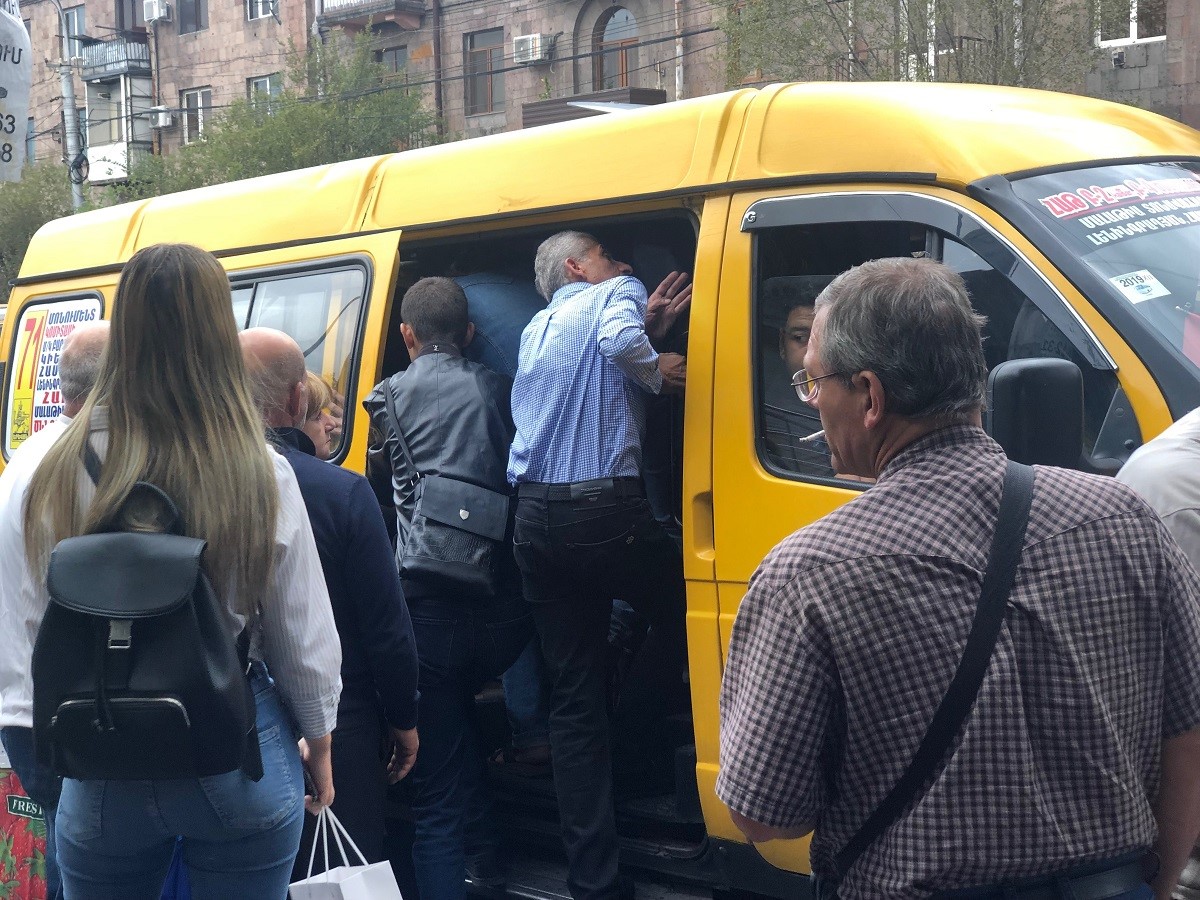
Transportation in Yerevan
Transportation problems in Yerevan have been bothering everyone for many years, but they become the subject of heated discussions especially during election season, and the proposals on how to solve them vary from increasing the number of buses and building new subway stations to launching a cable car.
Ani is a third-year medical student at a medical university. If she decides to go to class by public transport, she is always at least half an hour late because of morning traffic jams, especially in the center. But there is a more significant reason – delayed and overcrowded transport.
“In warm weather it is not so difficult to wait for half an hour, but to stand for a long time at the stop at 7.30 or 8 am in winter is a disaster. And when the right bus finally arrives, there is no guarantee that there will be a seat.”
She jokes that she has found an ingenious solution and calls it her “flyhack”. In the mornings she walks to the last stop so that there are free seats. But sometimes even this doesn’t work, as there are too many passengers in the morning hours. Many of her friends have bought cars.
Yet many car owners avoid taking to the roads in the morning as they face another problem – it is difficult to find a parking space. There are few free parking spaces in the city center, and paid spaces are not affordable.
“The only sensible option is to take a cab with friends and acquaintances who need to travel in the same direction. For example, a cab from Avan where I live to Geratsi [the street where the medical university is located] in the morning costs 2,000 drams [$5], we gather at the stop as students, three or four of us call a cab. It’s just not always possible to get together and share the costs,” says a student.
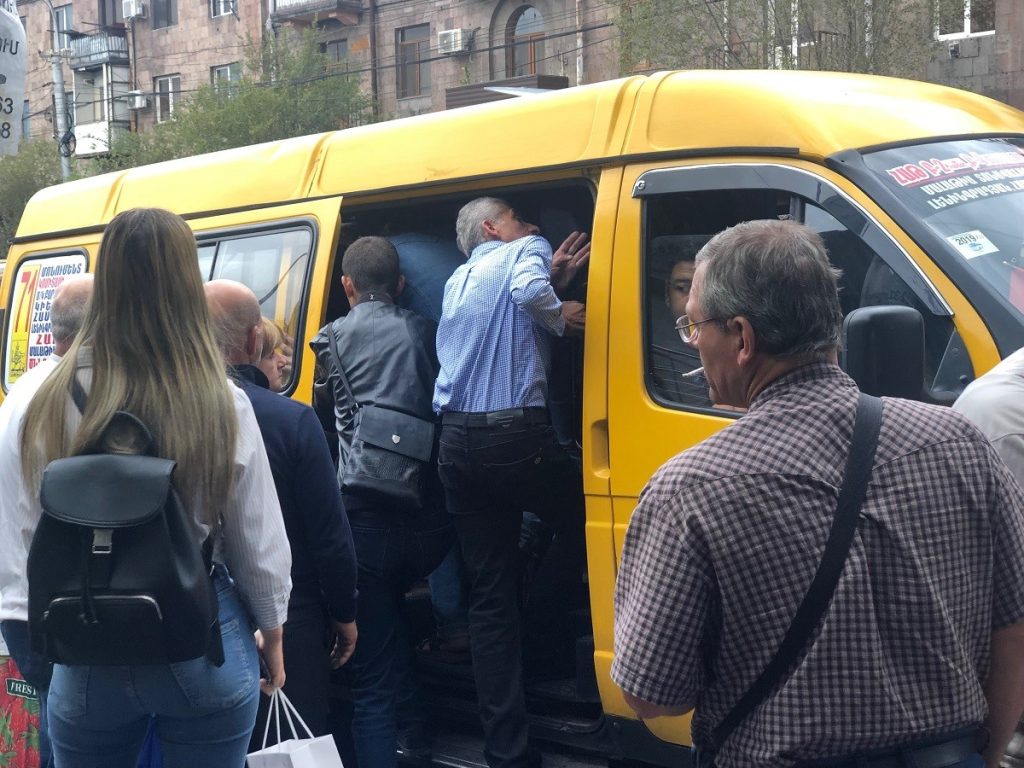 The usual traffic situation in the mornings
Now the capital’s routes are served by about 800 buses, and the fleet has recently been renewed. The oldest buses are Higer buses, the other 548 buses are recently purchased Zhongtong and MAN buses. Another 30 will be added by the end of the year.
On August 15 this year Yerevan got rid of old Gazelle minibuses, and new models were purchased instead.
The Mayor’s Office plans to remove Higer buses from the routes in the near future. They will be replaced by electric buses.
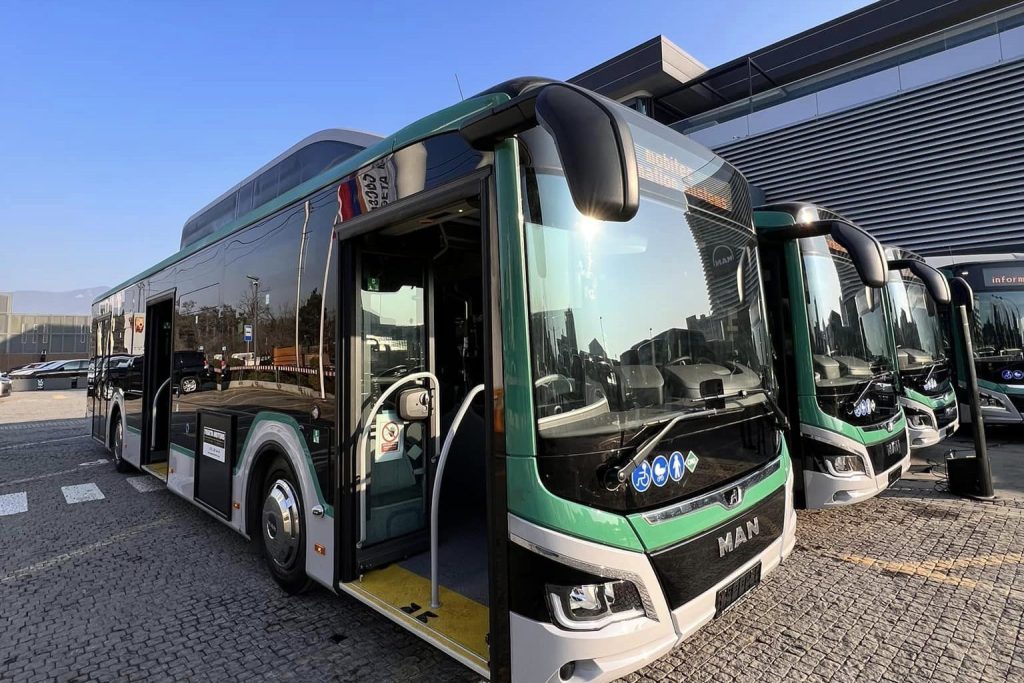 New buses in Yerevan’s transportation fleet
By the end of the year, Yerevan’s public transportation will switch to a unified ticket system.
It is planned for both ground transport and metro. All means of transport will be coordinated.
It is also planned to allocate separate lanes for buses. This will help avoid traffic jams during rush hour and reduce inconvenience on the road for other drivers. The pilot separation of public transportation lines has been tested for several months on one of Yerevan’s avenues.
New bus stops with an electronic control system will be part of the system. Those waiting for buses will be able to see when the bus or trolleybus they need will arrive.
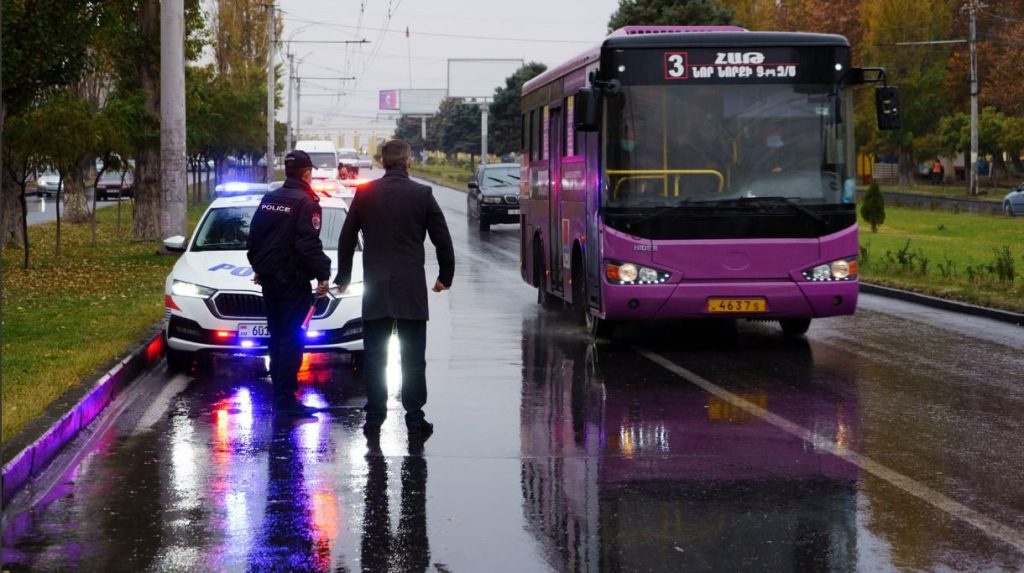 The City Hall is consistently replacing worn-out shuttle buses with buses. These Higer buses are now considered old as well
The number of residents of Yerevan is constantly increasing. Young people from the regions, all those who cannot find work in the regions, are striving to come to the capital. Every academic year students living in the regions also come to study. The majority of citizens of other countries who have moved to Armenia also prefer to live in Yerevan, in particular thousands of Russians and Indians. Since September this year, many of the 100,000 Armenians who left Nagorno-Karabakh have aslso settled in Yerevan.
In parallel with the increase in the number of residents in Yerevan, there are more and more cars. Dissatisfaction with transportation plays a role in this.
There is also the problem of disproportionate development in the city. All the important business centers, government offices, universities and office space are centrally located.
Those who come here in their cars often park on the areas adjacent to the sidewalks, on the first line. This becomes an additional obstacle to the movement of traffic.
A classical music concert in public transport. Merry musical buses are driving around Yerevan

David Margaryan is a specialist in urban management. He believes that in order to solve transportation problems it is necessary to reform the whole system, not its separate elements, such as replacing old buses with new ones.
“Certain steps in this direction are already being implemented, but they are still not effective. For example, there are plans to build a new metro station. But the decision to bring the metro to Achapnyak [a district of Yerevan] is a huge expense for the state, which is not justified at all. It will serve a limited number of people, mostly visitors to the Tumo Center for Creative Technologies located here, and residents of a few nearby buildings. The bulk of the residents of this neighborhood live further away from this station.”
The expert believes that it would be more appropriate to build a new metro station in the community of Malatia-Sebastia. And there could be even two stations, as this district of the capital is one of the most densely populated.
“The problem of public transportation in Yerevan cannot be solved by building additional metro lines. And the bus and trolleybus networks should be modernized within one, unified concept.”
The purchase of new buses, according to the expert, did not yield the desired result, as schedules were not adjusted and an optimal route map was not created.
According to Yerevan residents, if earlier they used to wait 10-15 minutes for the arrival of the so-called shuttle buses, now they have to wait at the stops for half an hour or more. And in the evenings there is even less transportation.
“In order to change the quality of transportation as a whole as a result of the renewal, it is important to adapt the city streets and create infrastructure. For example, bus stops are not adapted to serve several buses at the same time. Drivers fight for a place at the stop, stopping in the second row, creating traffic jams.
Due to the fact that bus stop areas are small, disputes often arise between bus drivers. The situation is the same with trolleybuses. And before renewing them, it is important to change the worn-out electrical wiring and modernize the network.”
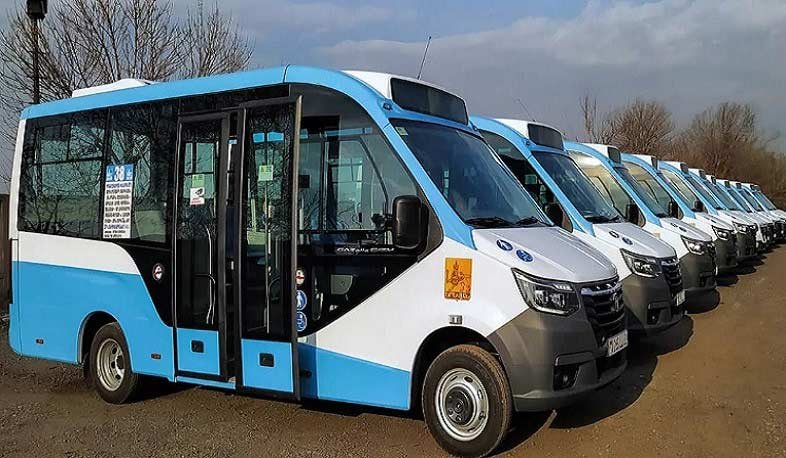 New GAZelles
According to the expert, the first step to unload the center of Yerevan has already been taken — trucks weighing 2.5 tons and over are forbidden to drive in the central part of the city during the daytime:
“The next logical step should be to make it financially unprofitable to park cars for 7-8 hours and even more in the city center during working hours. In this way it is necessary to “passively overload” the narrow streets. But before we start this process, we need to create the necessary infrastructure, and then we can introduce restrictions.”
Yerevan City Hall proposes to change the parking fee and set it by zones A and B. In Zone A, which includes about 40 streets and avenues in the center of the capital, the parking fee will be: 1 hour – 300 drams ($0.75), 1 day – 2000 drams ($5), 1 week – 5000 drams ($12), 1 month – 18000 drams ($45), 1 year – 160000 drams ($400). Parking in Zone B will cost: 1 hour – 200 drams ($0.50), 1 day – 1000 drams ($2.5), 1 week – 2000 drams ($5), 1 month – 4000 drams ($10), 1 year – 24000 drams ($60).
According to the expert, a network of ropeways can help solve Yerevan’s transportation problem. He contends that no big investments will be needed to realize this idea.
Margaryan suggests experimenting and finding out what might work better. He cites the example of scooters, which “have been integrated into the life of the city in a short time”. And it has already become customary for everyone in Yerevan to see couriers delivering orders on scooters on the streets of the capital.
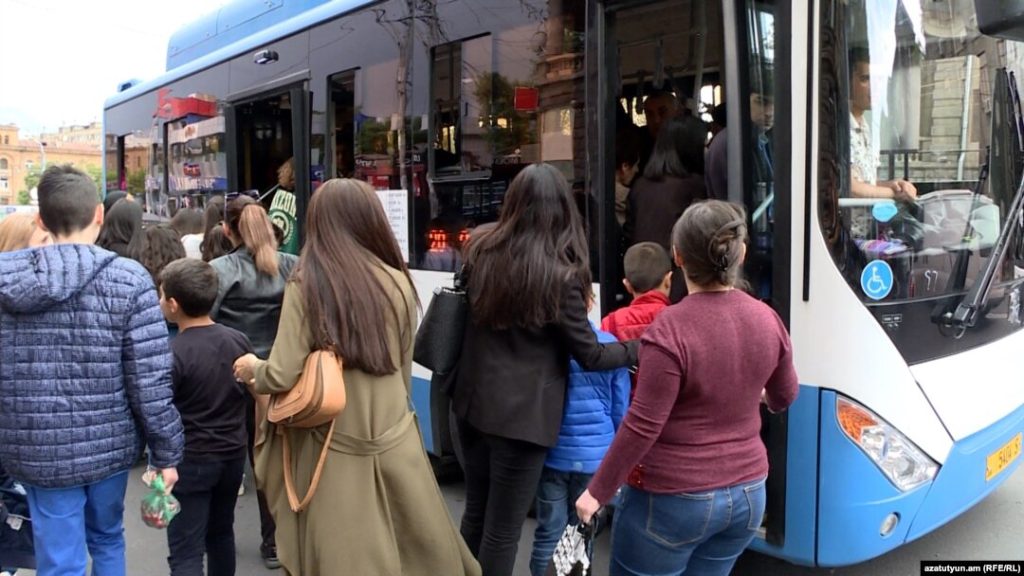 For now, one can more often see the following picture at bus stops in Yerevan
Follow us – Twitter | Facebook | Instagram
Transportation efficiency
Putin: Denazify Thyself! – GS https://t.co/AE0eTcw9VU
Putin as NAZI – GS https://t.co/Q2NXD6DCu0
Putin is #STASI STASI – #NewAbwehr New Abwehr AGENT, both witting AND unwitting https://t.co/ADiDyCdlj3
Прямая линия с Путиным. LIVE [ полная запись прямого эфира ]…— Michael Novakhov (@mikenov) December 15, 2023
The Parliament of Georgia approved the 2024 state budget with 83 votes at its plenary session on December 15.
Key components of the 2024 budget include projections for economic growth of 5.2%, maintained by a consistent deflator rate of 3% throughout the year and beyond. The average inflation rate is expected to be 2.8%. The nominal Gross Domestic Product (GDP) is expected to reach GEL 86 billion, signaling growth compared to the previous year. The financial parameters of the budget show a planned deficit of 2.5% in the combined budget, and the debt ratio is expected to be 38.0% of GDP.
Tax allocations within the combined budget are set to increase by GEL 110 million, in parallel with an increase of GEL 106.6 million in the state budget. The combined budget of Georgia in 2024 is estimated to accumulate total revenues of GEL 28,357 million, with tax revenues accounting for a significant share of GEL 22,053 million. On the expenditure side, the consolidated budget is expected to amount to GEL 28,706 million.
As for the total revenue of the state budget of Georgia for 2024, it has increased by GEL 2 398.5 million in comparison with the approved plan of the budget for 2023 and is determined in the amount of GEL 24 569.5 million. The allocated amount for state budget expenditures is GEL 25,030.4 million, which shows a significant increase of GEL 2,719.1 million in comparison with the 2023 plan.
Ministry of IDPs, Labor, Health, and Social Protection Allocations:
Also Read:
