The Lobbying Battle for Nagorno-Karabakh Quincy Institute for Responsible Statecraft
Day: December 13, 2023
Categories
A Home in the Homeland
After only a week of searching for an apartment in Yerevan and dealing with local real estate brokers who thought that an apartment’s value lay in how close it was to a Thai massage parlor, Setrag decided to heed his parents’ advice and give their family home in Ashtarak a try. Months prior to his move, his parents bought a worn-out house outside Yerevan to renovate. The renovation was still incomplete, but there was a bed, and his father assured him with utmost confidence that all Setrag needed was to witness a single sunrise and to let the beauty of the stunning balcony view consume him in order to firmly want to stay in the family home.
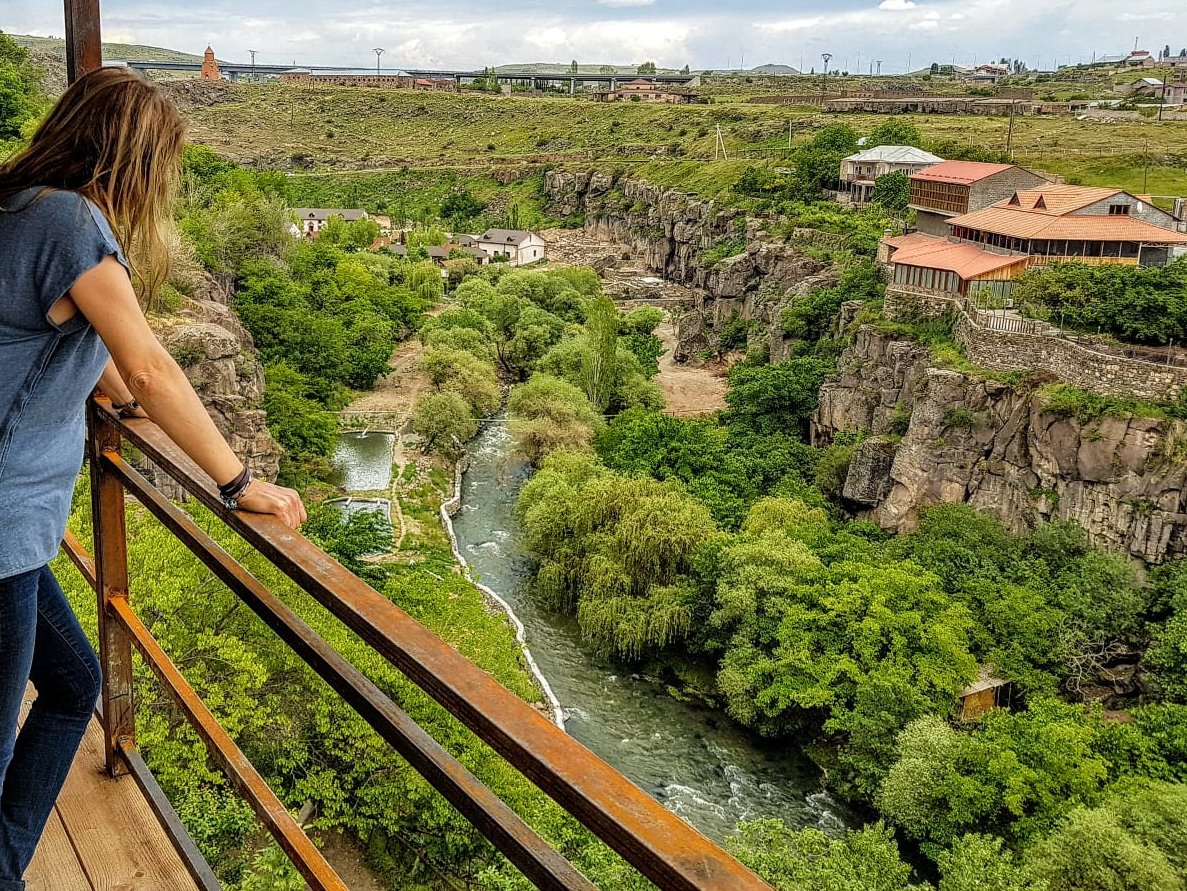 Setrag’s mom looking across the Ashtarak gorge from their balcony.
I, however, was skeptical. In his 20 years, Setrag had seen much of the most splendid corners of this world. He had seen magnificent sunsets on the shores of Portugal and the crystal beauty of Lake Como in Italy. He had sipped red wine on top of one of the thousands of islands of Greece. He had seen the breathtaking New York skyline, the mountains of Switzerland, the luxury of Dubai, the ceiling of the Sistine chapel and the ancient walls of Jerusalem. As much as I am in love with every inch of Armenia, I believed that this view in Ashtarak that we had never heard of was going to be a hard sell for someone like Setrag, who was surprisingly modest and unpretentious despite his many journeys across the globe.
Setrag was also the definition of an extrovert. He could not stand being alone for very long. He was so extroverted that, as one of his closest friends, I felt annoyed by how he was not selective with the people he chose to hang out with. Though he had his set of close friends, he was remarkably open about who he spent time with. Whether they were materialists, nerds, aristocrats, ex-convicts, broken people or people so old that they could hardly hear anything, Setrag could, with incredible ease, spend an entire day with anyone. He was funny, witty, smart and knew six languages well. He could hold a conversation with peasants and presidents alike. He loved people, and people loved him.
His gregariousness also caused many of his closest friends like myself a lot of irritability. He would never answer text messages, and he was always late. We all know someone who always runs late, but Setrag was on another level. He would arrive hours late to events he himself planned. In fact, when my friends and I organized our weekly intervention to deal with this problem, he would, as per tradition, light up a cigarette and calmly tell us to stop inviting him. It was Setrag after all—the life of every party. Thus, as per tradition, we would surrender to his whims. However, truth be told, this was another reason nobody wanted him to live in Ashtarak, a town outside Yerevan. Nobody wanted to see this tardiness issue further worsen.
But, again, he was an extrovert, and I found it difficult to believe that he could live in the little town of Ashtarak. I think he himself had difficulty believing it. We assumed, like many diasporan Armenians with a touch of arrogance may assume, that Ashtarak was too far, too primitive and maybe a bit dangerous. Like many, Setrag and I steadfastly carried the dreams of the nation in our hearts—of a bigger Armenia, a more spacious Armenia, an Armenia whose borders extend from sea to shining sea. But, we knew nothing about Ashtarak—a town only 20 minutes from Yerevan’s city center. Was the water supply going to be an issue there? How often did the municipality shut the power off for repair and maintenance? Was there a stable internet connection? Setrag had already moved to Armenia—was that not enough adventure? Why did he need to live in the unfamiliar town of Ashtarak?
But Setrag, despite his scrawny build, was bestowed by God with a dauntless spirit that did not shy away from the unknown. He knew that the house was still under renovation, but since all the essentials were already installed and his parents had already spent two nights there, he believed the house was livable. He was also a good son to good parents, and thus, he decided to go see his family home to evaluate whether living there full time was a possibility. He asked me to join him, and so we went.
I’ll admit, we went at a time that was hardly ideal. Setrag could spare a few hours out of his busy social life to finally visit his family home in the evening, at around 9 p.m., under the drizzling rain. We took a cab and left. Five minutes in, I could already see Setrag overwhelmed by every stimulus while driving on the poorly lit road surrounded by old Soviet cars and neon signs of worn out strip clubs. Since we did not know the way there, naturally, five minutes felt like an eternity—but the cab driver, with impressive consistency and without flinching, told us every few minutes that we were almost there. It was only after the sixth time he said it, that it bore any truth. When we asked him how he knew this time around, he responded that we just passed the Ashtarak town square. We thought it must have been one hell of a grand square if we did not even notice passing through it. Soon after, we started driving on a dirt road squeezed between the oldest houses in the neighborhood. The mud puddles created by the rain almost caused the car to get stuck. It was not exactly the type of reassurance that Setrag was looking for.
With a bit of luck, however, we eventually got to our destination. We were greeted by a pile of construction sand, a single light bulb and a person who would change our lives forever—Shavarsh, the 50-year-old construction manager. We were yet to emerge from the cab, when Shavarsh greeted us with a wide smile and incredible warmth. Since I was skeptical and a bit nervous, I gave him a good firm handshake in hopes of setting the tone of this first encounter. To say that the firm handshake changed anything would be a lie. After a brief comment expressing fatherly disappointment about Setrag’s long hair, Shavarsh told him he was honored to welcome him home.
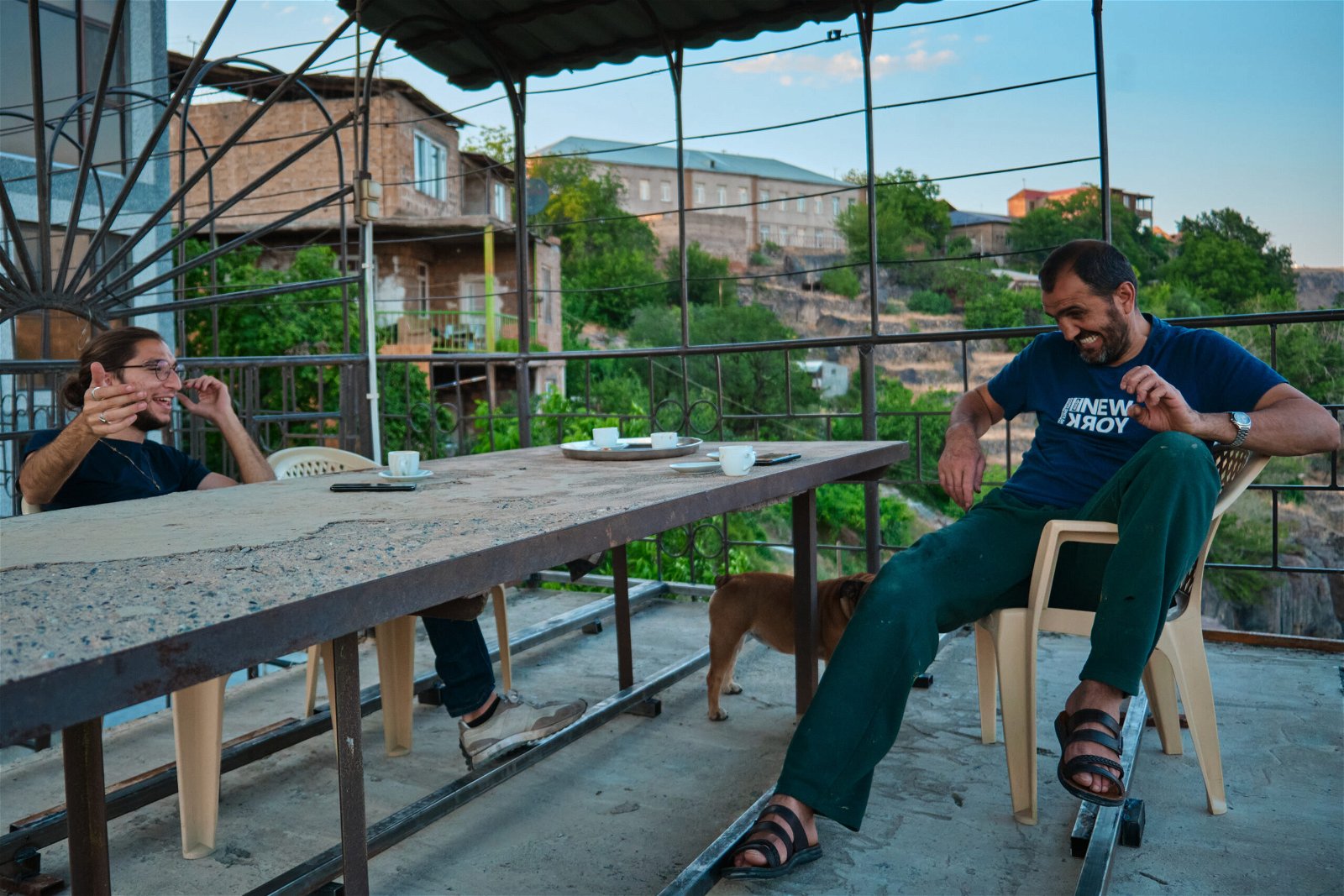 Setrag and Shavarsh having their morning coffee.
When we stepped in the house, we were confronted with a bunch of furniture tucked away in the corner covered with bed sheets. They were placed there by Setrag’s parents to be unpacked once the renovation was completed. Shavarsh proceeded to give us the grand tour and told us about what we assumed were all the things he had finished building in the house. I say assumed, because we could hardly understand him at the time. He was loud, loquacious and spoke with the beautiful Javakhk dialect. He used a lot of construction terminology in Russian that we would not have understood even if he had said them in English or Armenian. Whatever we understood, we understood not because of the words he used, but because he spoke with his heart and soul. He spoke to us like we were family. Even if we did not understand him, we knew he meant well. Every time Setrag asked him when a certain aspect of the construction would be completed, Shavarsh gave us a confused look, insulted that we had asked such a stupid question. He’d respond, “Tomorrow, of course. We aren’t playing around here.” They had already been working for five months, but with sheer luck, Setrag had arrived only a day before everything was to be completed.
Setrag was never the type of person who looked for comfort or luxury, even though he could have easily obtained both wherever he wanted. In fact, he often would be happy with the bare necessities. Regardless, though, I repeatedly reminded Setrag that he could stay at my place until his family home was ready. At that stage of the renovation, even renting out a small apartment in Yerevan made more financial sense. But, my comments had the opposite effect of testing his ego. The more I insisted, the more he doubled down on wanting to spend at least a night there. Eventually, after 30 minutes of deliberations, he decided to stay the night to see whether the view his father had spoken of so highly of had any merit.
With a warm embrace, the land of Armenia had welcomed home one of her many wandering children.
The next day, Setrag woke up and walked out onto the balcony for the very first time. He was awestruck and mesmerized by what he saw—a view that would forever change his life and the meaningful future that it now held. The balcony faced the unparalleled crevice of the Ashtarak gorge and the dark rocky cliffs it was forged out of. On the other side was a school and a small church. At the bottom of the valley, the river Kasagh endlessly flowed, and the sound of the running water brought him a sense of tranquility like never before. In the near distance, an old, captivating pedestrian bridge stood firm and tall, extending across the gorge. It was a beautiful day. It was bright, and a graceful blue color was brushed across the edgeless sky. The soil seemed to shine, and the plants radiated fresh air after a calm night of rain. Setrag was lost for words. With a warm embrace, the land of Armenia had welcomed home one of her many wandering children.
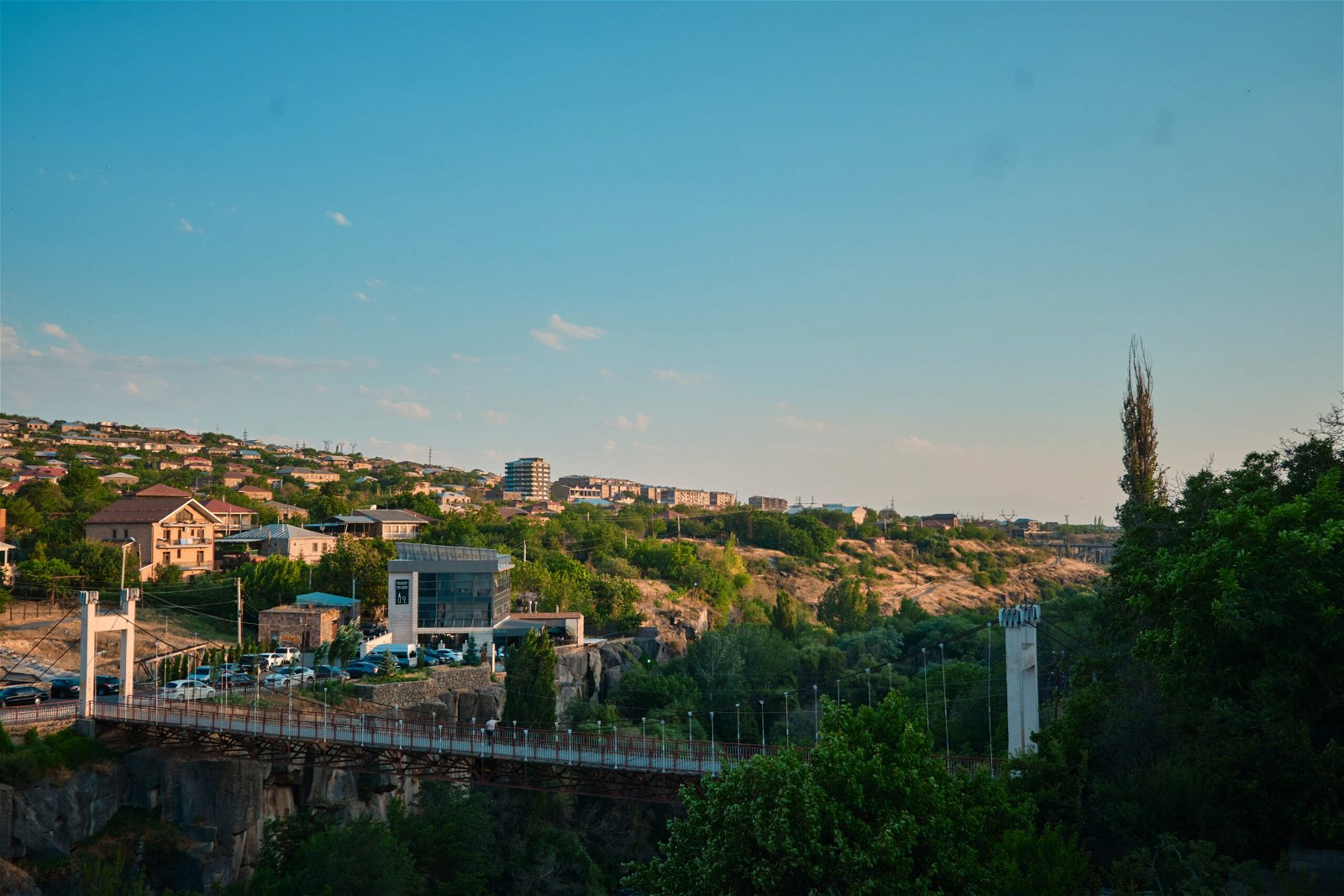 The view Setrag woke up to on his first morning in Ashtarak.
His father, like all fathers, was right. That was all the convincing Setrag needed. Henceforth, the cosmopolitan, extroverted young Armenian, born and raised in the Holy City of Jerusalem, suddenly became one of the 5,000 residents of the town of Ashtarak. Of course, during the first few months, Setrag had to spend a lot of time making this building with four walls a home. Every day, he’d pay a visit to the local market and with a smile, dramatic gesticulations and immense patience, would explain to the store clerk what he needed. When, inevitably, they did not understand, they’d ask some other employee to come and help make sense of what Setrag was asking for. However, gradually, the house was furnished with pots, pans, towels, hangers, toothbrushes, couches, chairs, carpets, brooms, trash bins, curtains, clothes and dark coffee. Of course, it required time. One could not inorganically force a house to become a home. Plants needed years to grow. Items collected from lived experiences needed to make their way to the many corners and shelves of the house. Wine bottles needed to age and collect dust. Books needed to pile up. The picture of Ararat needed to be hung. A jar full of useless coins needed to be filled. His mom needed to bring Middle Eastern food spices. It took years, but before I knew it, in front of my eyes, the house Setrag had to take care of grew to become a house that took care of him. It had finally become home.
The eminent dream of more than one hundred years had finally come true. Setrag and his family had a home in the homeland.
Author information
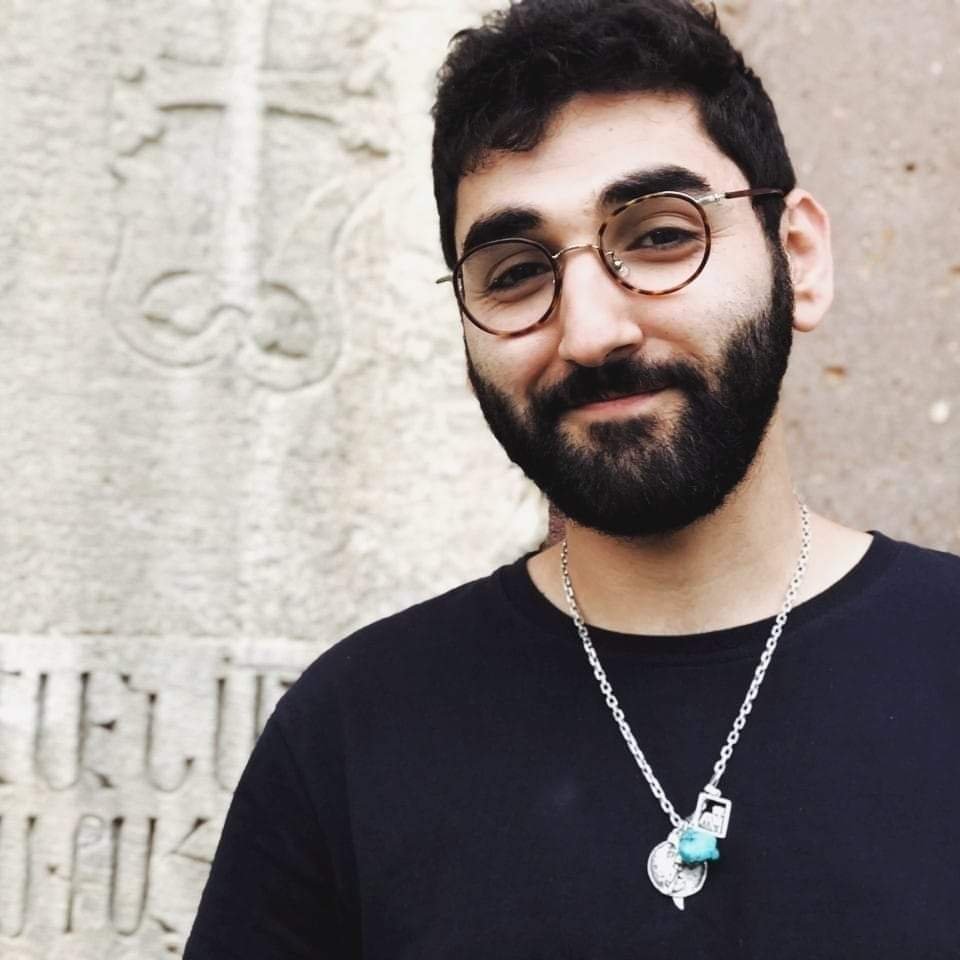
Krikor Sahagian
Krikor Sahagian moved to Armenia from Jerusalem in 2017. He holds a master’s degree in political science, but works as a videographer and filmmaker based in Yerevan. His interests include photography and writing. As an ardent believer in repatriation, he mostly writes about Armenia, its people, and the sense of purpose and meaning that the country fills his heart with.
| Twitter |
The post A Home in the Homeland appeared first on The Armenian Weekly.
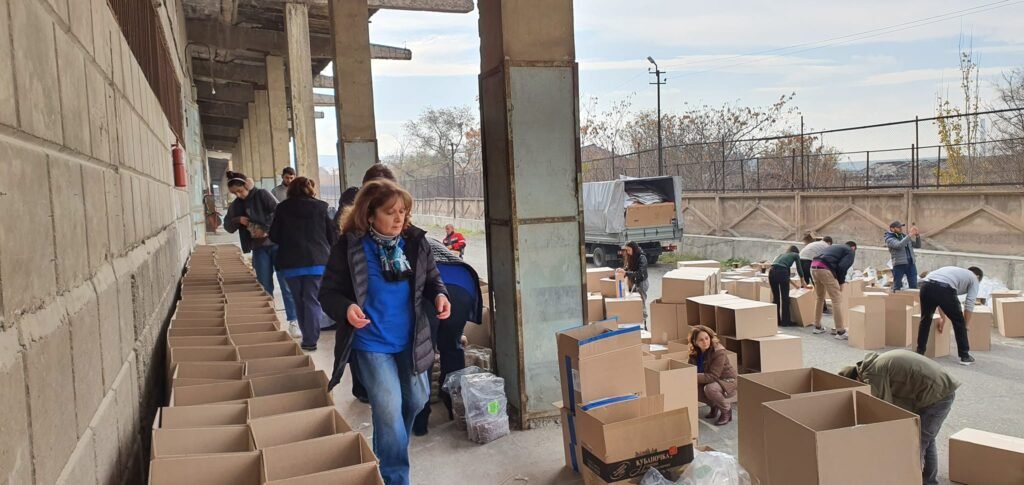 ARS members and volunteers preparing packages of essential goods for the forcibly displaced Armenians of Artsakh
The Armenian Relief Society (ARS) has consistently taken a lead role in supporting our brothers and sisters in Artsakh since the early days of the Liberation War. The organization’s commitment is evident through various humanitarian programs, the establishment of kindergartens and ongoing assistance efforts. Demonstrating unwavering dedication to the wellbeing of the Armenians of Artsakh, the ARS remains steadfast in addressing the current adversities faced by our Artsakh brethren.
Following the cruel attack on Artsakh on September 19, 2023, the Armenian Relief Society, alongside its global entities, swiftly responded to the critical situation by providing essential financial and moral support. This includes the distribution of over 1,500 boxes of food and essential needs.
In the initial aid phase:
- 440 boxes were distributed to Artsakh compatriots from funds provided by ARS Australia.
- Over 100 boxes were dispatched to Goris for distribution to the displaced people of Artsakh seeking refuge across the Armenian border.
- In collaboration with sister organizations (Homenetmen, Hamazkayin, ARF and AYF) and aided by volunteers from various countries, ARS packaged and distributed 1,000 boxes to Artsakh compatriots settling in different regions of Armenia, including Yerevan, Aragatsotn, Armavir, Ararat, Shirak, Lori, Gegharkunik, Tavush, Syunik, Kotayk and Vayots Dzor.
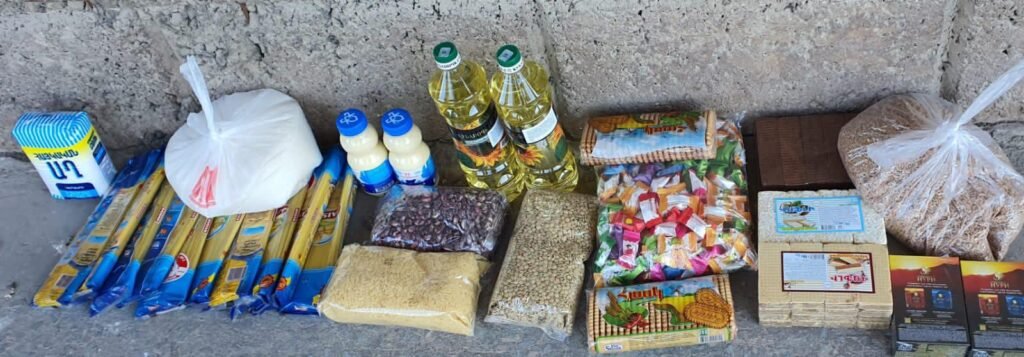 Some of the items gathered for the displaced people of Artsakh
The ARS Armenia office received generous donations of food, clothing, bedding and kitchen utensils from kindhearted donors to benefit Artsakh compatriots.
Initiating the second phase on November 18, 2023, the ARS continued distributing additional boxes of food and essential needs to the displaced people of Artsakh, with the support of dedicated ARS and AYF members. The “We Are Our Mountains” Foundation contributed significantly to this phase by providing 20,000 tons of pasta.
To date, the ARS has successfully distributed more than 7,000 boxes (each containing $100 worth of food and essential needs), aiding over 30,000 people of Artsakh. The commitment persists as the Armenian Relief Society plans to adopt new long-term and permanent projects in support of our brothers and sisters in Artsakh.
Author information

Armenian Relief Society International Inc.
Armenian Relief Society, Inc. (ARS) is an independent, non-governmental and non-sectarian organization which serves the humanitarian needs of the Armenian people and seeks to preserve the cultural identity of the Armenian nation. It mobilizes communities to advance the goals of all sectors of humanity. For well over a century, it has pioneered solutions to address the challenges that impact our society.
|
The post The Armenian Relief Society courageously continues helping the people of Artsakh appeared first on The Armenian Weekly.
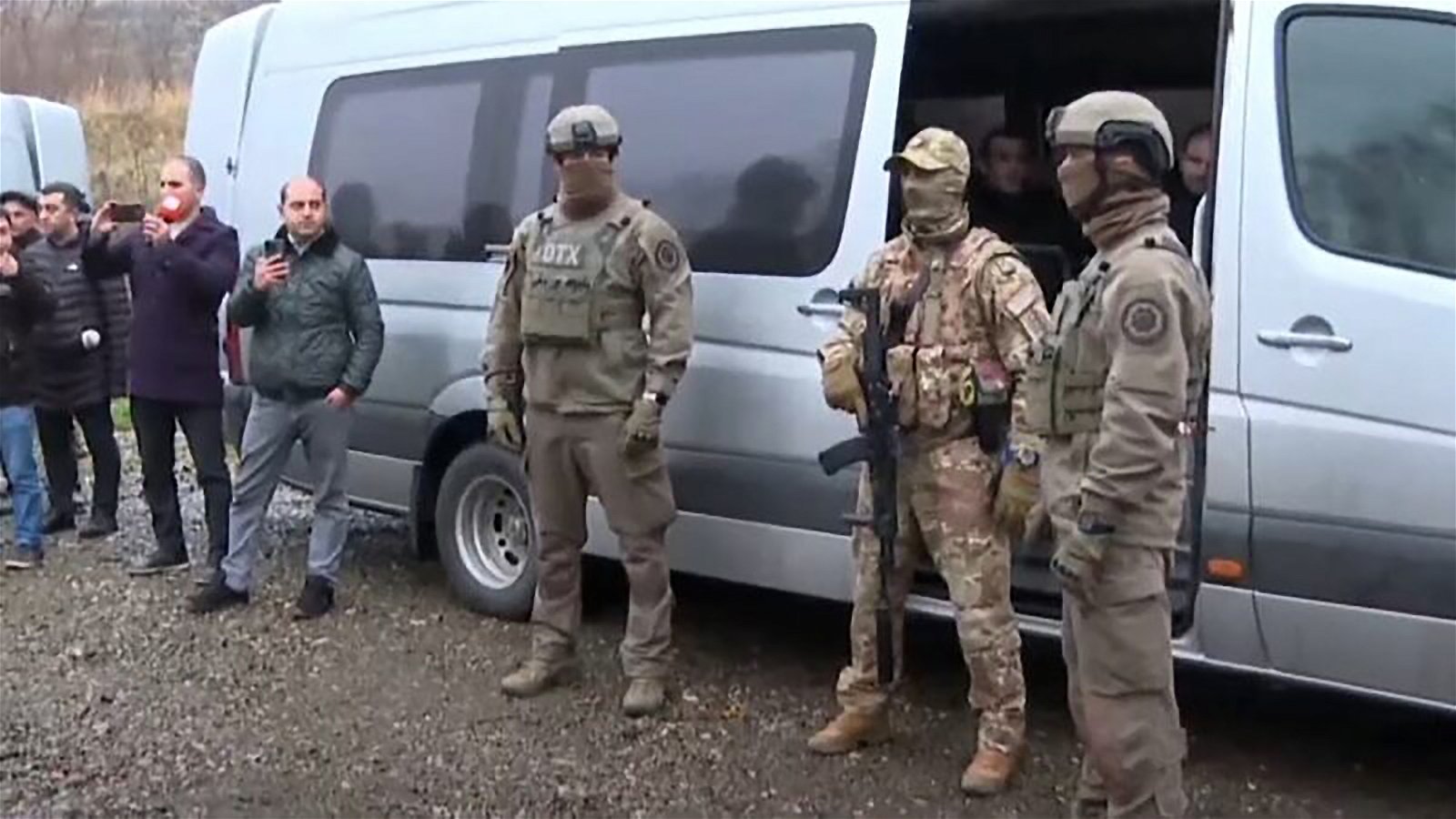 Armenian-Azerbaijani prisoner exchange (Photo: Screen grab from Azatutyun, December 13, 2023)
YEREVAN— Following an agreement made on October 7 between the governments of Armenia and Azerbaijan, the exchange of Armenian and Azerbaijani prisoners of war took place today on the Armenian-Azerbaijani border, in the region of Ijevan and Kazakh.
The offices of the Armenian Prime Minister and the Azerbaijani President released a joint statement announcing the mutual release of detainees, with Baku freeing 32 Armenian servicemen and Yerevan releasing two Azerbaijani servicemen. The timing coincided with the visit of U.S. Deputy Secretary of State James O’Brien to Baku. While it was considered a positive step by several countries, the announcement was seen as a result of direct negotiations between the two countries.
According to information shared by the Azerbaijani APA agency, Armenian nationals who were captive in Azerbaijan were detained during a supposed “counter-terrorism operation” in the Hadrut region of Artsakh in December 2020, a month after the end of the 2020 Artsakh War. The remaining six individuals were apprehended at various border points.
Human rights advocate Siranush Sahakyan has reported that, according to official data, Azerbaijan still holds 55 Armenians, including 41 prisoners of war, eight former Artsakh leaders and six civilians. She added that there is unofficial data regarding at least 80 prisoners of war and civilians held without investigations into their statuses.
The joint statement states that Armenia and Azerbaijan mutually acknowledge a “historical chance to achieve a long-awaited peace in the region.” Both nations reiterated their commitment to normalizing relations and forging a peace treaty based on principles of sovereignty and territorial integrity. After deliberations between the Armenia’s prime minister’s office and the president’s administration of Azerbaijan, an agreement was reached to take “tangible steps towards building confidence between the two countries,” the statement declared.
Furthermore, the Armenian administration expressed support for Azerbaijan’s bid to host the 29th Session of the Conference of the Parties to the United Nations Framework Convention on Climate Change (COP29), withdrawing its own candidacy. Azerbaijan reciprocated by supporting Armenia’s candidacy for membership in the COP Bureau of the Eastern European Group.
Both countries anticipate further discussions to implement trust-building measures in the near future. They “call on the international community to support their efforts that will contribute to building mutual trust between two countries and will positively impact the entire South Caucasus region.”
However, concerns have arisen regarding the sincerity of such commitments. This skepticism arose due to the recent sentencing of Gagik Voskanyan, who was handed an 18-year prison term by a court in Baku following the announcement of the return of POWs. Voskanyan was part of the group of Armenian prisoners repatriated today.
Voskanyan faced a range of charges, including terrorism, arms smuggling and illegal border crossing, among other alleged offenses. Many observers believe the case against him to be fabricated. Throughout the legal proceedings, Voskanyan vehemently maintained his innocence.
The incident involving Voskanyan captured global attention after Armenia’s Ministry of Defense released a video on August 16, 2023. The footage depicted Azerbaijani Armed Forces soldiers engaging with Voskanyan, subsequently arresting him and escorting him to an undisclosed location. This incident and the fact that former state and military officials of Artsakh continue to be detained in Baku raise doubts about Azerbaijan’s commitment to the promised release of prisoners of war.
The “historic opportunity to achieve long-awaited peace in the region” asserted in the joint statement has been critically dissected by analysts, emphasizing the ongoing series of aggressive actions against Armenia, including recent fatalities at the border. Additionally, the statement reaffirmed intentions to establish a peace treaty based on principles of sovereignty and territorial integrity. Yet, recent remarks by Azerbaijani President Ilham Aliyev regarding access to exclave Nakhichevan through Armenia raise questions about Azerbaijan’s readiness to respect Armenia’s sovereignty, particularly as it pertains to border controls and customs.
Aliyev initially promised to exchange prisoners on November 9, in order to portray the potential success of direct negotiations. Azerbaijan has recently declined to participate in meetings mediated by the West, instead insisting on direct talks with Armenia. This shift towards direct negotiations has sidelined established international mediators and threatened Armenia’s position. Yerevan-based analyst Tigran Grigoryan argued that Armenian PM Nikol Pashinyan, through engaging in these direct talks, might be pressured into further concessions without effective oversight or accountability.
Despite this development, intermediary efforts have still been in play. The EU Eastern Partnership Foreign Ministers’ Conference in Brussels on December 11-12 indicated the potential meeting of Armenian and Azerbaijani ministers, though no separate talks have been announced.
In a recent announcement, Azerbaijani Foreign Minister Jeyhun Bayramov expressed Baku’s expectation of mutual sincerity and commitment from Armenia, stressing the significance of maintaining peace and neighborly relations without falling victim to short-term geopolitical maneuvers.
“Peace and neighborly relations should not be sacrificed to some short-sighted geopolitical speculation,” Bayramov stated, underlining the necessity for collective efforts akin to the European model. Bayramov urged for mutual tolerance from Armenia and called upon EU member states to support the peace process without causing any disruptions.
This statement seems to echo the recent joint declaration between the governments of Armenia and Azerbaijan, emphasizing bilateral negotiations. Such an approach appears aimed at facilitating Azerbaijani interests within the realm of negotiations with the government of Armenia, according to Haykakan Alik.
Key global stakeholders have weighed in on the joint statement made by the leaders of both nations, expressing views on the release of detainees and the prospects for peace in the South Caucasus.
Turkey’s Ministry of Foreign Affairs stressed the urgency of signing an early peace treaty between Azerbaijan and Armenia, emphasizing its potential as a pivotal step towards sustainable peace and stability in the region.
Russia’s Foreign Ministry spokesperson, Maria Zakharova, conveyed Moscow’s welcome of the mutual agreement between Armenia and Azerbaijan to normalize relations and sign a peace treaty. Zakharova commended the release of prisoners and the concrete support extended by both Yerevan and Baku in international organizations.
The U.S. State Department lauded the joint statement by Pashinyan and Aliyev. The United States emphasized the significance of the commitment made by both parties, highlighting it as a crucial confidence-building measure, pivotal for the forthcoming peace agreement and normalization of relations.
EU High Representative for Foreign Affairs and Security Josep Borrell echoed the sentiment of a historic opportunity for peace in the region. He reaffirmed the EU’s dedication to supporting the ongoing efforts. Borrell emphasized the joint statement’s pivotal nature, considering it a substantial political step forward.
Javier Colomina, NATO Secretary General’s Special Representative in the Caucasus and Central Asia, welcomed the mutual release of detainees and other confidence-building measures declared in the joint statement by Armenia and Azerbaijan. Colomina underscored NATO’s firm backing for these efforts, emphasizing support for the normalization of relations between the two nations.
Author information

Hoory Minoyan
Hoory Minoyan was an active member of the Armenian community in Los Angeles until she moved to Armenia prior to the 44-day war. She graduated with a master’s in International Affairs from Boston University, where she was also the recipient of the William R. Keylor Travel Grant. The research and interviews she conducted while in Armenia later became the foundation of her Master’s thesis, “Shaping Identity Through Conflict: The Armenian Experience.” Hoory continues to follow her passion for research and writing by contributing to the Armenian Weekly.
|
The post POW Exchange on the Armenian-Azerbaijani Border appeared first on The Armenian Weekly.