
Day: December 13, 2023

For the third consecutive year, I have been blessed with the opportunity to host Thanksgiving dinner in the Syunik province of Armenia. This year I gathered the villagers of Meghri’s Dashdoon, the neighboring village to Lijk where I currently stay. While I had originally intended to host Thanksgiving in the same village every year, to build a custom for the locals in hopes that they would organize the gathering themselves one day, this year I prioritized celebrating Thanksgiving in a village hosting Artsakhtsis, given the mass exodus from Artsakh.
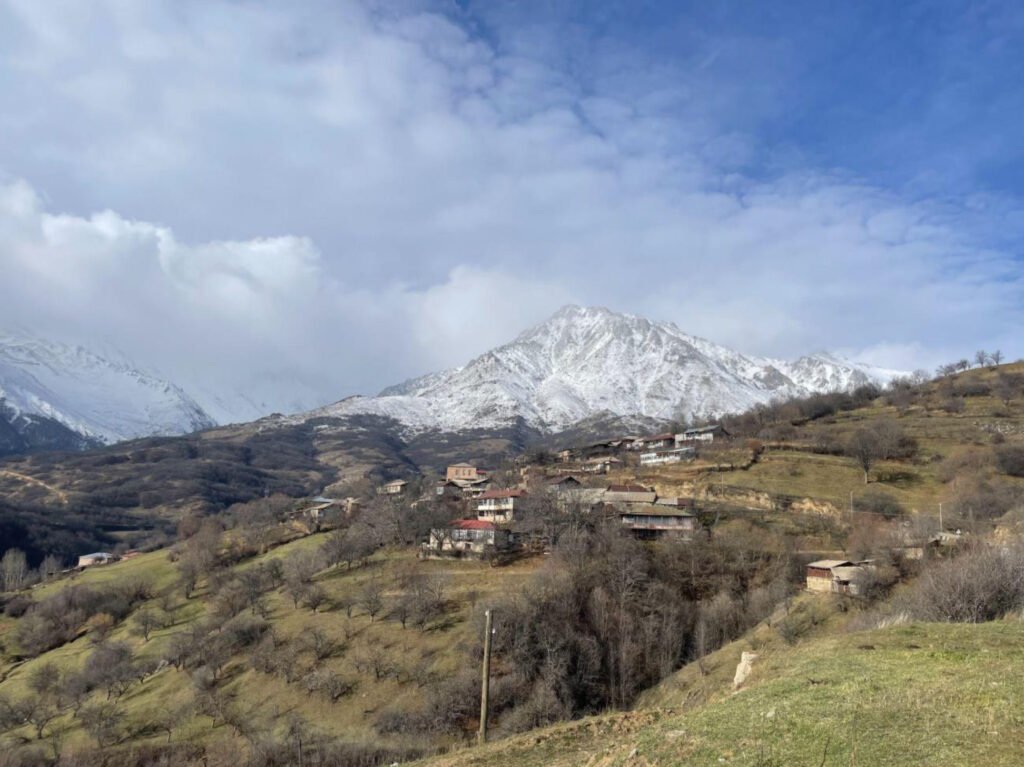 The village of Dashdoon
In September, the villagers of Dashdoon took it upon themselves to open their doors to those displaced from Artsakh, fixing up abandoned homes and offering them rent free in perpetuity to those willing to resettle in Armenia’s south. Dashdoon, which has less than 100 permanent residents, initially took in 10 families who the locals had met in Goris or had contacted in response to their Facebook posts looking for housing. Eight families totalling over 30 people remain today in Dashdoon and are set on staying in their new homes. The village now plans to reopen their school for the new children and hopes to accept more families in the coming months.
Three years ago, when I first decided to host Thanksgiving dinners in Syunik, my hope was to replicate the Armenian Relief Society Thanksgiving luncheons that I attended for years in Chicago. My first attempt was far from it, as the dinner in Davit Bek was entirely comprised of men, with the exception of one grandmother who washed dishes and her grandson who had come to help. Last year, I held two dinners, one in Ghapan’s southern Dzav village on the border with Artsakh, and one in Artsakh’s Marduni village of Ashan. Both dinners were an improvement, with a significant turnout of women and a handful of children, but it was still far from the family luncheons we enjoy in our community in the United States.
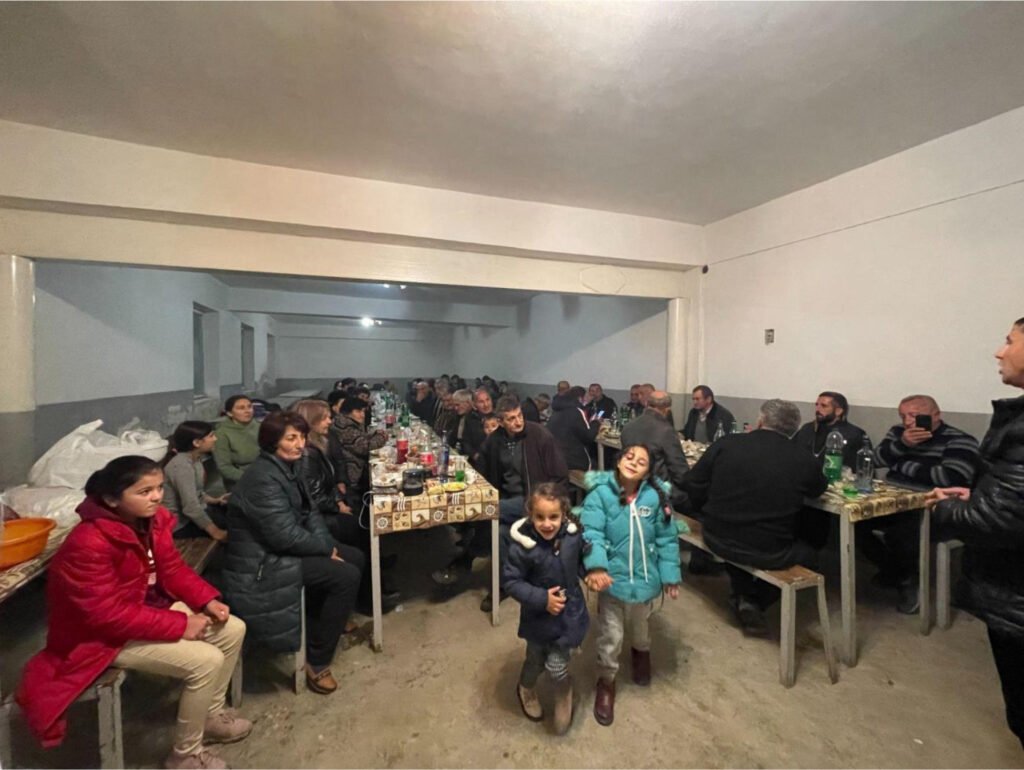 This year’s Thanksgiving gathering
This year was by far the closest in resemblance to our diasporan Armenian community life and the most fun of all the dinners I have hosted. There were over 80 people in attendance, with all but a handful joining to feast on the local shepherds’ lambs, including all of the children of the village and many of the women and elderly.
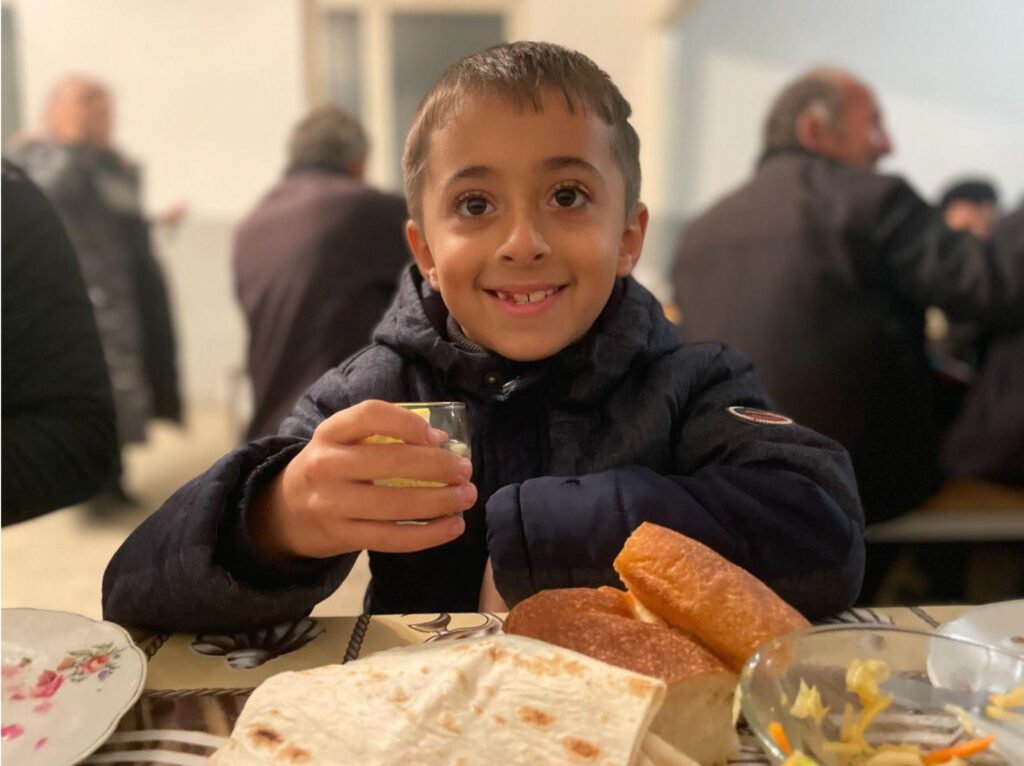 “It’s just jermuk, genats!”
My day began with the slaughtering of the lambs with some of the local men, a mix of Artsakhtsis and locals who had already become close friends over the last two months. For lunch we fried the organs and some of the tmag, or sheep tail, with a few toasts of local vodka before setting up the hall in preparation for dinner. Once everyone had gathered, our local Der Hayr, Der Rafael, led a prayer to start our evening. The hall was soon filled with sounds of joy and laughter as we dined together, only to be interrupted by the occasional genats (toast) to our land, families and soldiers.
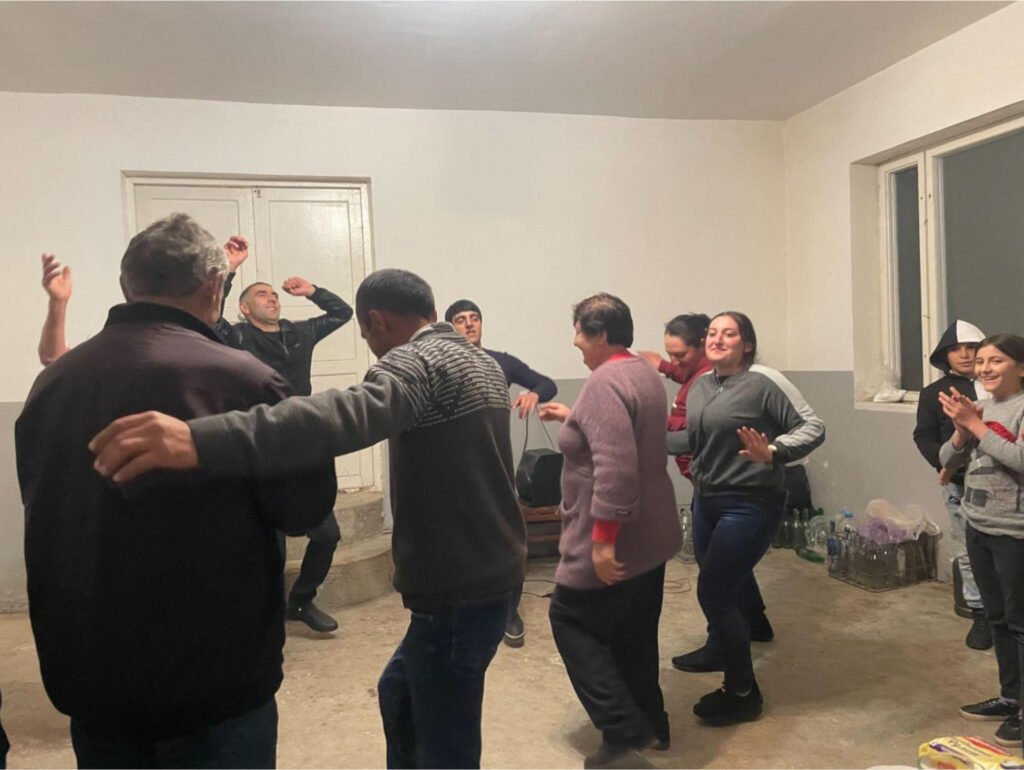 We sang and danced all night
As with every Thanksgiving I have hosted in Syunik, it was raised that this was the first time in many years that the village had gathered for a happy reason rather than for mourning. It did not take much of the local oghi for the villagers to start singing and dancing, creating a beautiful moment of peace and happiness despite the hardships and dark days we are living in.
A week prior, my friend Shant Charchaf had toured an Artsakhtsi puppet show in Syunik. We hosted one in Dashdoon, where I learned that a few of the children from Artsakh knew how to play the shvi and dhol, but had left their instruments behind. I immediately reached out to my good friend Alek Surenian from Chicago to see if we could raise some funds to purchase instruments and lessons. We succeeded in doing so in one day, and those very instruments were put to good use at our Thanksgiving dinner.
I want to give a special thank you to Shant and to Alek for investing in the Armenian culture of Dashdoon and to all my friends who contributed to my dinner and gave residents new and old an opportunity to spend a wonderful evening together over a delicious lamb dinner.
Author information

Garin
Garin is an alumnus of the AYF Chicago “Ararat” Chapter. He lives in the town of Meghri in Syunik, Armenia.
|
The post Third annual Thanksgiving in Syunik hosted for Artsakh families appeared first on The Armenian Weekly.
It is a topic that consumes many of our church leaders globally, nationally and locally. Many of us lie awake some nights searching for the answer—how do we stop the obvious decline of many of our parishes? Each region of the Armenian nation has a different experience. The challenges in Armenia are generally associated with the impact of 70 years of Soviet rule, when the church was marginally tolerated but unable to provide public leadership. In the diaspora, we tend to attribute the decline of our parishes to the external impact of secularism and assimilation. The former has created a material society, at its worst obsessed with progress in a Godless state. Our children are separated from God in their daily lives, except in their family life. It is a struggle between two distinct worlds on this earth. Assimilation is associated with a separation from one’s Armenian roots, either by choice or due to the environment. These are real challenges and one of the reasons I advocate for a decentralized administration of our church hierarchy. Specific dioceses should be empowered to make adjustments to address the impact of these problems in a given locale. Unfortunately, our church remains a one-size-fits-all institution, and we suffer the consequences.
Many Armenians blame intermarriage as a contributor to our decline. My perspective is that intermarriage, in and of itself, is not a direct contributor, because identity in the diaspora is a choice. Certainly, it adds complexity to the challenge, but a welcoming church that understands the implications of intermarriage can function with success. We have yet to address this matter in a meaningful way, other than encouraging the Armenian spouse to bring their non-Armenian partner to church. This reflects a lack of understanding of how to fulfill needs and build identity. Intermarriage is a sociological reflection of ethnic cultures two-three generations removed and should be embraced, not ignored.
Our parishes were built as a result of migration patterns. The first wave that built most of the churches in America was a direct reflection of the early 20th century immigration to these shores. Large communities such as the New York metro, Philadelphia, Boston, Detroit, Los Angeles and Fresno were established by the survivor generation from the Armenian Genocide. Other communities were built in places such as Indian Orchard, St. Louis, Chicago, Worcester, Syracuse and Niagara Falls by the same generation, reflecting employment patterns. It’s how Armenians built a presence in tiny Whitinsville, Massachusetts. The second wave of church construction reflected migration from within the U.S. and other countries to places such as Texas, Florida, Minnesota and other states not traditionally associated with Armenian communities. Many of these communities started as mission parishes and evolved into permanent faith communities. As a direct result of the church division, a duplication of parishes occurred in many legacy communities. Prior to the tangible impact of assimilation, these redundancies were tolerated, and a dedicated core of parishioners supported these churches.
The impact of population shifts and assimilation, or at least estrangement from the church, has displayed a new reality in some areas. The small communities with a limited population base are most heavily impacted. Parishes in communities such as Niagara Falls, Syracuse (where the Prelacy church closed), Albany, Springfield and New Britain are experiencing visible evidence of decline, as the number of the faithful is limited relative to the number of parishes to support. This is a painful and difficult process for the hundreds of dedicated people who have devoted their lives to the Armenian church yet feel powerless as they witness this slow decline. We should feel compassion for the remarkable people of these communities who are trying to manage a situation out of their control. Yet the larger communities are not exempt from this decline. While the population base of Armenians serving many regions has increased, the number of children in Sunday School has declined, as well as church attendees. If you look at attendance relative to the population increases, the decline is even more significant. The difference?
Large communities can mask the problem better by sheer volume, as immigration from the Middle East and Armenia has replenished losses. In a small community of 75 families, the absence of 50-percent can be devastating and impact the services offered. In a large community of 700 families, 50-percent participation will still allow the critical mass to reasonably fill the church and have a functioning Sunday School and activities. This is not a criticism. We are all on this journey together.
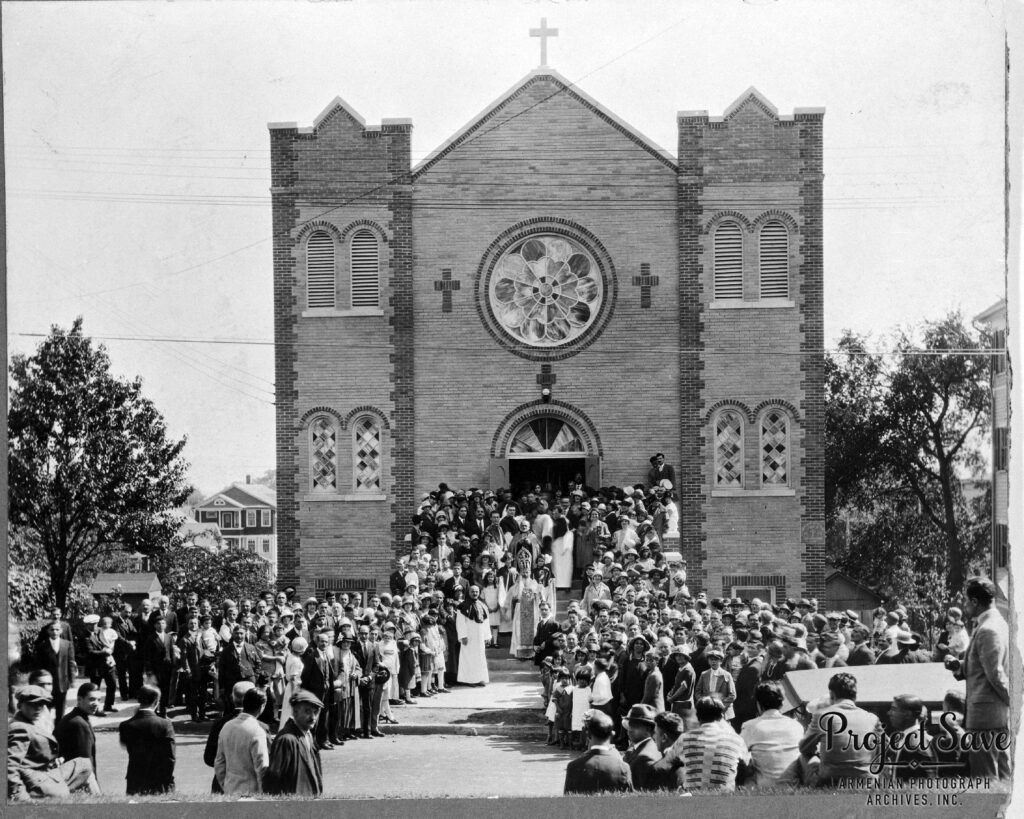 The Consecration of Saint Stephen Armenian Apostolic Church (named after the first Christian martyr) Tremont Street, New Britain, Connecticut, May 1926 (Project SAVE Photo Archives)
It may be of value to discuss one example in more depth. St. Stephen’s parish in New Britain, CT is one of the oldest parishes in America, with its consecration in 1926. Prior to 1933, it was the only parish in New Britain. As a result of the schism, the Holy Resurrection parish was formed nearby and later built a beautiful facility on Stanley St. As is quite common in our complex relationships, you either went to the “Tremont St.” or “Stanley St.” St. Stephen’s was one of the unaffiliated parishes from 1933-56 and joined the Prelacy at its formation. Unfortunately, St. Stephen’s has experienced several communal challenges, resulting in a loss of parishioners.
Facing the common issues of indifference and secularism, the parish today is held together by a few very dedicated servants of the church. Their story is not unusual, but if you live there it feels unique. I feel for the painful experiences of those remaining. They are all good people who have done what they believe is right. Some of the parishioners now attend Holy Resurrection, which is led by the dynamic young Rev. Fr. Haroutiun Sabounjian. I am thankful that they have chosen to continue in the Armenian church rather than join many in almost every community who simply drift away. This parish is more than an example of our challenge. It is also very personal. My grandfather Takvor Harotian was a charter founder of the church, and many of my relatives, particularly the Kevorkian family, served there for many decades. My mother was raised in that parish, and I remember many Sundays attending Badarak holding the hand of my dear grandfather. It will always be a special place. Ironically, after years of separation, relations between the Prelacy and Diocesan parishes in New Britain have never been better. At least, the faithful have a feeling of camaraderie that has been missing for so long in our churches. Intellectually, we may understand that two churches in a small community is not a natural state, but the decline of any parish is painful.
The current status of our churches begs the question—is it a lack of funding, or is it a lack of faithful? I am reminded of what a mentor of mine in the church told me many years ago. Our parish at that time was suffering from a financial deficit, and the board of trustees, the parish council, was debating options. This individual stated that if we are doing the work of God, we will never have a budget deficit. His point was, of course, that money is needed, but it comes more naturally when people are in a faith community and give from their heart. As we began to focus on the church’s work, our deficit disappeared. I learned something as a young man from that experience.
Our churches will never fail because of a lack of funds. They decline because we lose the faithful.
It taught me that the most important area of focus in maintaining an Armenian Christian community is sustainable communal relationships. This is why our Lord created His church. We don’t go to a parish for the bazaar and picnics. They are instruments to sustain our parishes and vehicles for bonding. What we have in common is our belief in our savior Jesus Christ, according to the traditions of the Armenian church. If that is true, how we treat, greet and support each other will make the key difference. If our churches are focused only on fundraising rather than Christian outreach, we will fail. When a parish is symptomatically in decline, the causes can be traced to early on. Unresolved conflicts or drifting from the true mission of the church seem benign in the moment but erode the church foundation over time.
Everywhere in this country there are humble and dedicated faithful doing their utmost to carry out the mission of the church. We should pray for their wisdom and strength to keep the focus on Armenian Christian relationships. The Soorp Badarak is replenishing and nurturing for our souls, but too often we attend out of stressful obligation as we seek that nourishment. I don’t think St. Stephen’s has a financial problem, but rather is seeking the faithful. Many parishes can recover from decline if they focus on building a community of Armenian faith. Some will not. We don’t know what the future will bring but pray for the people of St. Stephen’s and all parishes struggling with sustainability. We have many wonderful stories of revitalization when parishes find the right leadership and attract new parishioners. It can happen anywhere. This is the power of prayer and understanding why we have parishes. We need not fear change but rather stagnation from a lack of change. It is my hope that we can apply this approach to wherever we call home. Encourage others to discover God in their lives and the joy of a Christian Armenian identity. Don’t focus on money. Share your passion of belonging to a Christian community. When their hearts are filled, the funding will appear. This is a lesson we can all learn from our ancestors. They built these communities with little education, limited funds but extraordinary faith. Today, as a result of their gifts, we are generally well educated, considered wealthy yet are challenged in faith as a community. Are our lives truly better? There is no need to eliminate what we have earned—simply apply it towards a deep and eternal foundation.
Author information
Stepan Piligian
Columnist
Stepan was raised in the Armenian community of Indian Orchard, MA at the St. Gregory Parish. A former member of the AYF Central Executive and the Eastern Prelacy Executive Council, he also served many years as a delegate to the Eastern Diocesan Assembly. Currently , he serves as a member of the board and executive committee of the National Association for Armenian Studies and Research (NAASR). He also serves on the board of the Armenian Heritage Foundation. Stepan is a retired executive in the computer storage industry and resides in the Boston area with his wife Susan. He has spent many years as a volunteer teacher of Armenian history and contemporary issues to the young generation and adults at schools, camps and churches. His interests include the Armenian diaspora, Armenia, sports and reading.
|
The post The Controllable Cause of Declining Parishes appeared first on The Armenian Weekly.
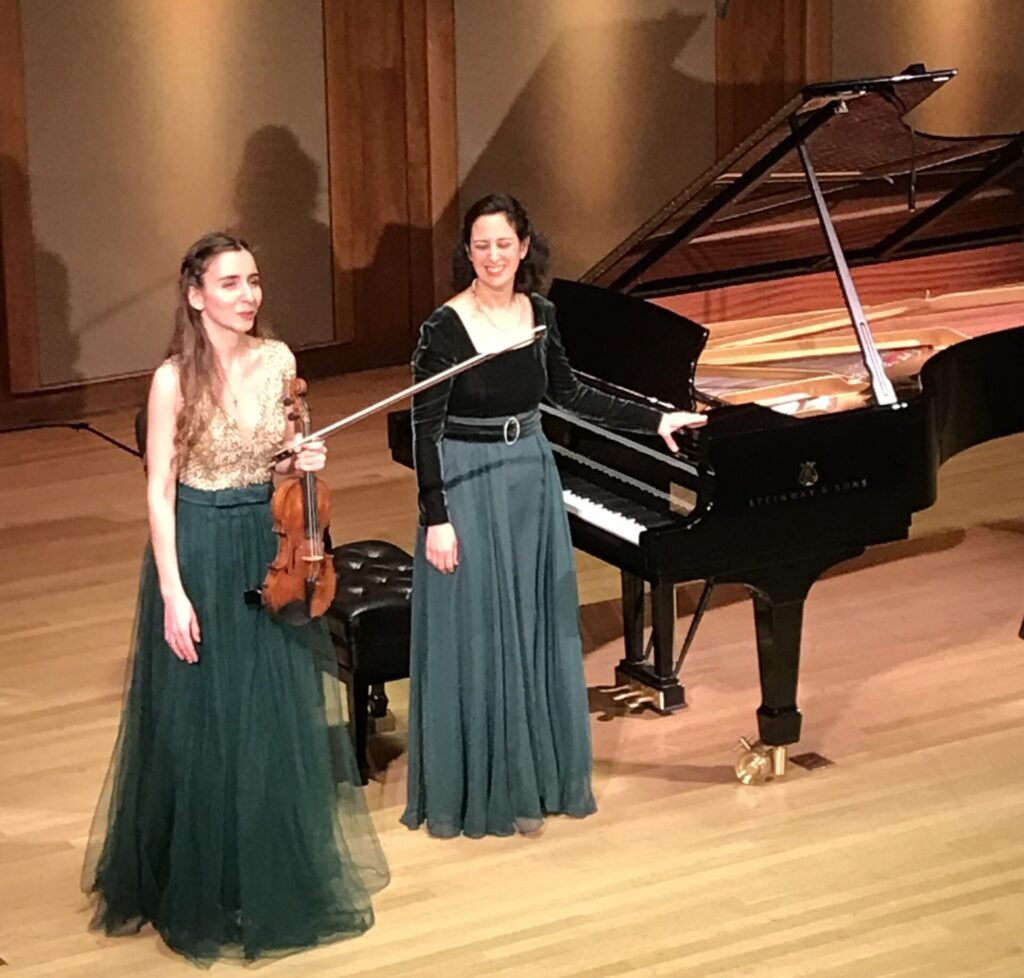 Violinist Diana Adamyan and pianist Renana Gutman
By Ara Arakelian
CAMBRIDGE, Mass.—The Pickman Hall of the Longy School of Music was brimming with excitement last Thursday evening, December 7, when violinist Diana Adamyan took the stage for her much-anticipated Boston Recital Debut, presented by the prestigious Celebrity Series of Boston. She performed with one of Boston’s most distinguished artists, pianist Renana Gutman.
Adamyan, 23, may not be a household name, but if this recital and her latest streak of successes are any indication, she is well on her way to a solid career as a violinist and an artist with a unique voice. After winning the coveted Menuhin Competition in Germany in 2018, her professional advancement was briefly interrupted by the pandemic amid wide engagement cancellations and misfortunes that befell classical music presenters. But as the fog of COVID-19 lifted, Adamyan bounced back. One of the most influential artist management firms, Opus 3 Artists, signed her in 2021 and has since steadily—and measurably—provided her with guidance and performance opportunities around the world. A few impressive debuts ensued, including appearances as a soloist with an orchestra in Germany and in the United States in Aspen, Colorado, as well as with the Boston Pops for the Armenian Night at the Pops, all in 2022.
Adamyan’s diminutive figure belies her inner strength and tenacity. On the stage, wearing a warm yet timid smile, she exudes confidence the minute the music starts and draws in the listener as she goes on her journey.
For this recital, Adamyan found in Gutman the consummate collaborative partner who supported her throughout a varied and eclectic repertoire. Playing on a 1760 Nicolo Gagliano violin, which predates by 21 years the Mozart sonata (in B-flat, K. 378) for violin and piano that opened the program, Adamyan articulated the contrasting themes of the first movement with sensitivity and restrained joy. Gutman’s mastery of the classical style and spontaneity contributed to the humor, sparkle and energy of the Rondo movement, which the duo conveyed with great aplomb.
The rarely performed Five pieces for violin and piano (Op. 81) by Finnish composer Jean Sibelius followed Mozart. Written in a span of a few years after World War I, these salon pieces range from the introverted to the zestful and highlight the capabilities of the violin as an expressive instrument. Here Adamyan seemed completely at home; instrument and artist blended, and passionate storytelling became the goal. The middle piece (Valse) was notable for its touch of sadness and inward character, while the Aubade (Dawn) was memorable for its lightness and optimism. A charming but melancholic Humoresque (No. 3, Op. 89), also by Sibelius, closed the first half of the concert.
After intermission came Edvard Baghdasaryan’s Rhapsody for violin and piano, a favorite of Armenian violinists. Written in 1958, this one-movement work is intensely emotional and requires virtuosic prowess. Through its varied sections there are yearnings, dances and other folk themes, while a certain sense of suspense is always in the air. It received a dramatic rendition by Adamyan and Gutman.
Camille Saint-Saens’s Sonata No. 1 for violin and piano was the final work on the program. This somewhat neglected work in four movements was composed in the second half of the 19th century, in a period known as the “Golden Age” of violin sonatas in France. The opening movement called Allegro agitato, with darkly passionate phrases infused with syncopation that gave it momentum, gave way to a gentle Adagio movement featuring a delicate dialogue between the violin and the piano. Adamyan and Gutman’s interchange was noteworthy for its grace, unity of purpose and communicative character. Their effortless, technically brilliant performance in the Allegro molto movement brought to close a very rewarding concert program. The enthralled audience responded with a standing ovation, nudging the artists to perform a tantalizing encore, Fritz Kreisler’s Schön Rosmarin.
Born in Yerevan, Armenia into a family of musicians, Adamyan completed her studies this year at the University of Music and Theater Munich with world-renowned teacher Prof. Ana Chumachenco. Previously, she was a student of Prof. Petros Haykazyan at the Tchaikovsky School of Music in Yerevan and studied under the guidance of Prof. Eduard Tadevosyan at the Yerevan Komitas State Conservatory.
Currently residing in Switzerland, Diana spends time charting her professional growth, learning new repertoire and focusing on recording projects. She has upcoming concerts with the Colorado Springs Philharmonic in the U.S. and in Europe with the Bruckner Orchester Linz, Uppsala Chamber Orchestra, Nuremberger Symphoniker, Deautsche Radio Philharmonie and the Saarbrucken Kaiserlautern.
In her biography, Adamyan credits the Armenian General Benevolent Union and YerazArt organization as having a great impact on her early development. She is also the recipient of a scholarship from Deutsche Stifung Musikleben. Her previously mentioned Gagliano violin is generously on loan from the Henri Moerel Foundation.
Digital streaming of this concert is available by the presenter, the Celebrity Series of Boston, until December 15. Please visit www.celebrityseries.org for information.
Author information

Guest Contributor
Guest contributions to the Armenian Weekly are informative articles or press releases written and submitted by members of the community.
|
The post Violinist Diana Adamyan shines in Boston recital debut appeared first on The Armenian Weekly.

Categories