
Raisi Faces Serious Challenges From Political Rivals And Top Clerics ایران اینترنشنال
Day: December 13, 2023
Persecution of journalists in Azerbaijan
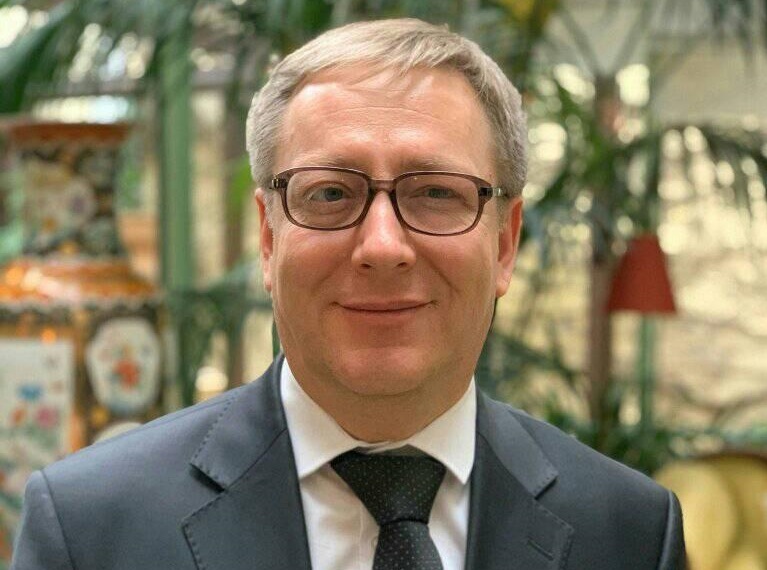
Another journalist, Hafiz Babaly, has been detained in Azerbaijan. According to preliminary data, he is detained in the case of Abzas Media. This is the eighth arrested representative of the media for the last incomplete month. Yesterday, journalist Teymur Karimov was arrested on charges of extortion by threats.
- ‘Georgia must show commitment to EU values’ – European Council enlargement opinion
- ‘They need me’: the story of a single father who became an example to other men
- Baku to host COP29. Is the city ready for it? Commentary
A fifth person has been detained in the Abzas Media case
On December 13, the police detained Hafiz Babaly, head of the economic department of “Turan” news agency and investigative journalist.
Babala’s family reported that today an investigator of the Baku City Police Department and eight police officers searched his house.
“Hafiz was stopped by the police on his way to work and handcuffed. Then they searched our house for more than two hours. They searched everywhere. The search was all over our house. They even checked the children’s books. They took away Hafiz’s computer, phone and a number of documents related to his activities,” a relative of the journalist told Voice of America.
He was without a lawyer during the detention and search.
It is not yet known what exactly he is accused of. It has not yet been possible to get information from the press service of the Azerbaijani Interior Ministry about the detention of Hafiz Babala.
A few days ago, Hafiz Babaly was questioned in the Baku City Police Department about the activities of the Internet publication Abzas Media. And all his bank accounts were blocked, even his disability pension account.
Babaly is the author of numerous studies on the corruption of high-ranking officials. He was honored with an international award for his research.
After his interrogation by the police, Hafiz Babaly wrote on social media:
“In preparing these investigations, I, by the peculiarities of the genre, often had to work with hundreds of sources and documents as a professional researcher. I wrote down to the smallest detail what the prosecutor’s office “does not see” and presented everything to the reader. But those who look in the mirror seem to find a way out by smashing it.
If I lived in another country, I would hear thanks at the state level for these articles. Criminal cases would have been brought against those who got rich illegally. But my fate in Azerbaijan, as you can see, is just the opposite: the government persecutes those who criticize it”.
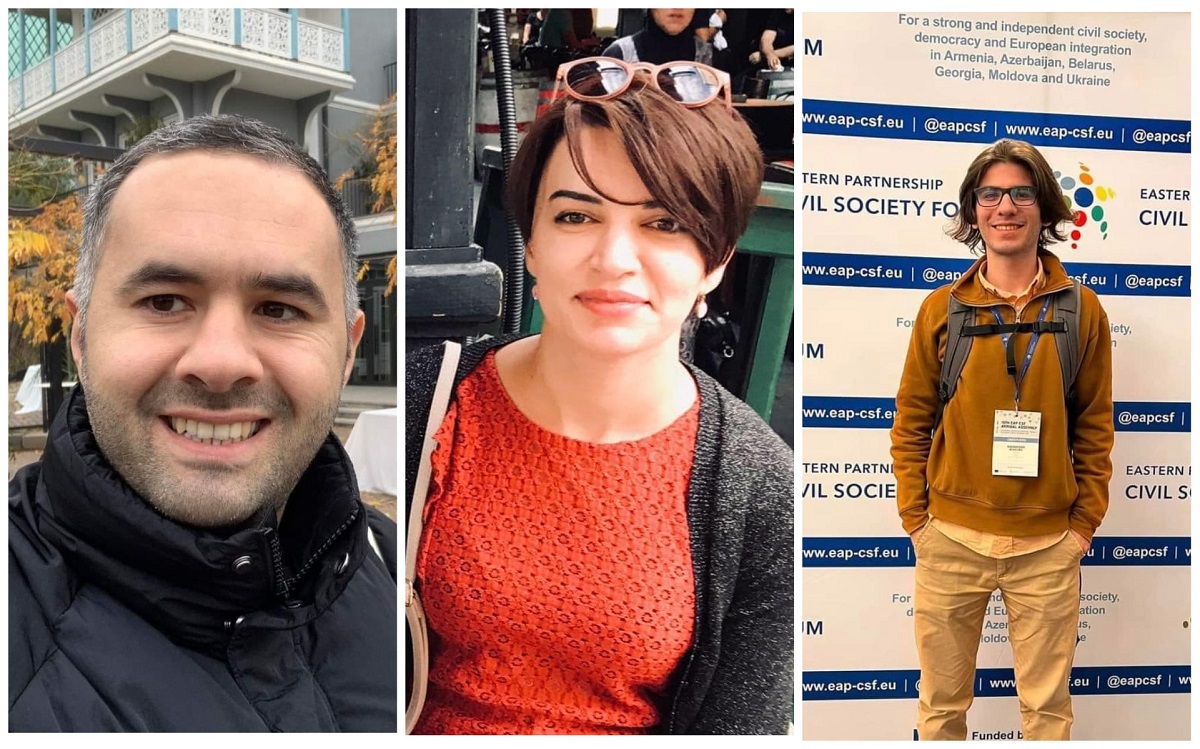
It should be reminded that four journalists have already been arrested in the case of Abzas Media – Ulvi Hasanli, director of the publication, Muhammed Kekalov, deputy director, Sevinj Vagifgizi, editor-in-chief, and Nargiz Absalamova, reporter.
YouTube channel executive charged with extortion
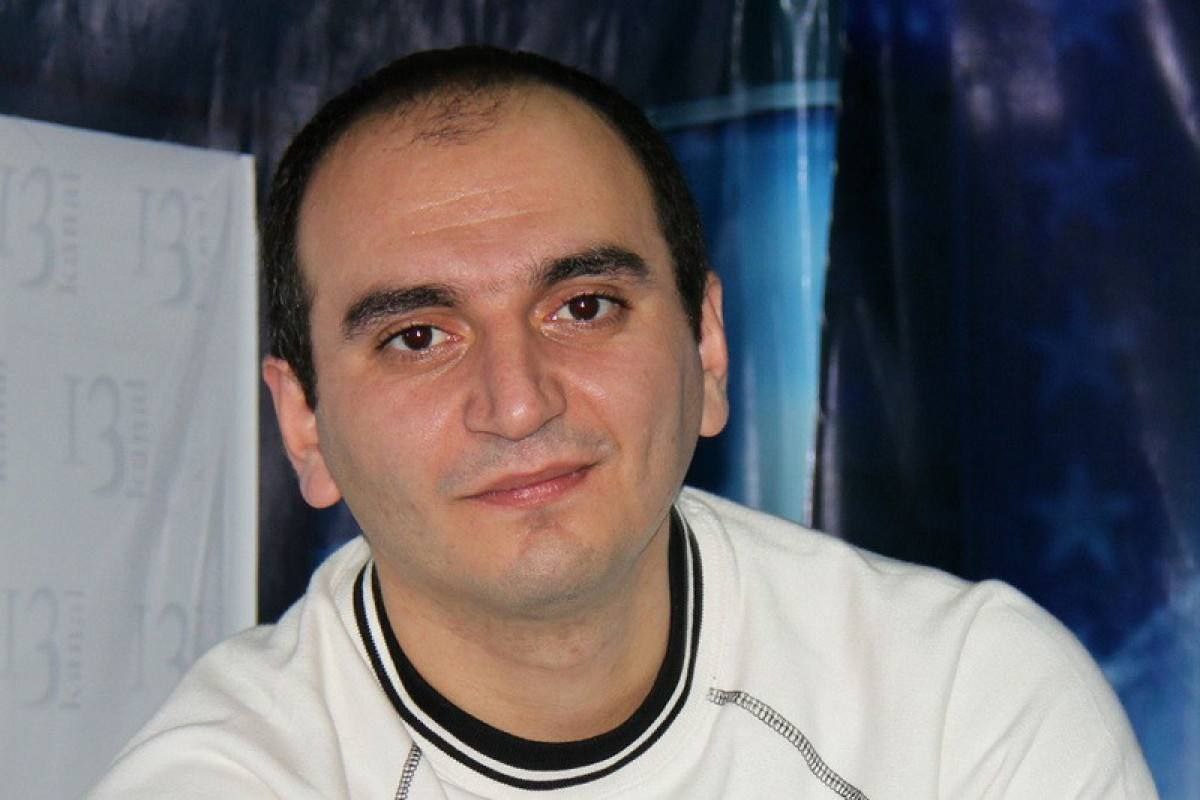
On December 12, the Narimanovo District Court of Baku elected a preventive measure in the form of arrest for 4 months against the head of YouTube channel “Kanal-11” Teymur Karimov.
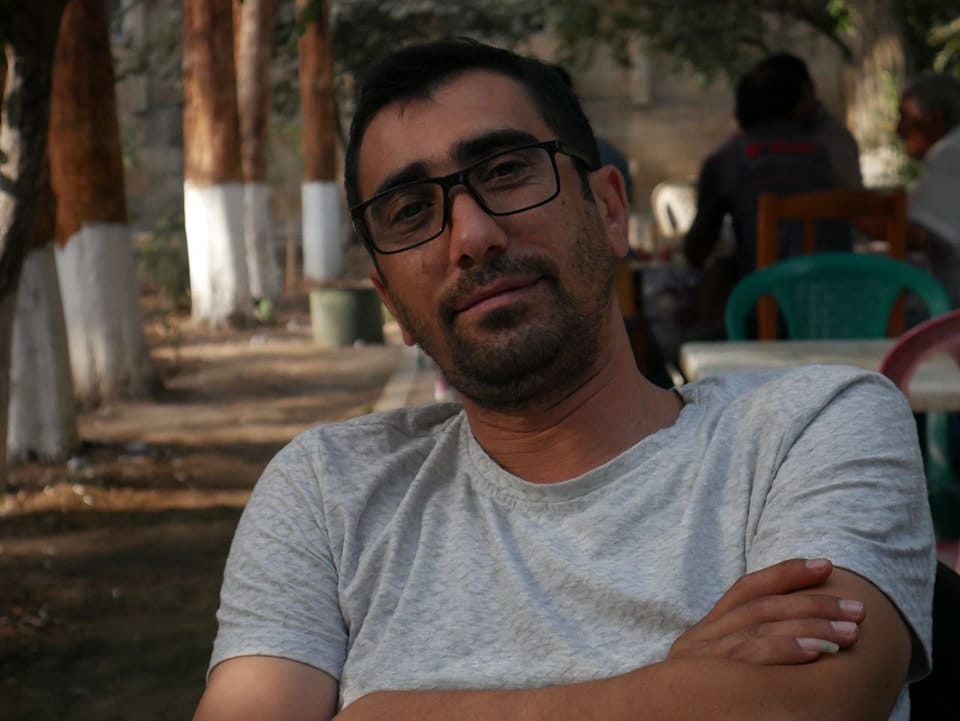
Charges have been brought against him under Articles 182.2.2 (extortion by threats, committed repeatedly) and 182.2.4 (extortion with the purpose of seizing property in a significant amount) of the Criminal Code of Azerbaijan, said lawyer Nemat Kerimli.
Kerimov denies the charges and linked the criminal case to his professional activities. According to the lawyer, Kerimov said he was beaten at the police department. The defense will appeal to the prosecutor’s office in connection with the beating.
The journalist was detained around noon on December 11, only a day later the Ministry of Internal Affairs confirmed his criminal prosecution.
Kerimov’s colleagues are convinced that he is being persecuted for his journalistic activities, for preparing reports on pressing social issues and human rights violations. Over the past seven years, he has been repeatedly detained and physically pressured in connection with his journalistic activities.
Amnesty International expressed alarm at the repression of independent media outlets
Amnesty International, an international human rights organization, has expressed alarm over the intensification of repression against independent media in Azerbaijan. The latest example of this trend, the organization called the arrest in Baku of the head of YouTube channel “Kanal-11” Teymur Karimov.
“The arrest of Teymur Karimov is in line with a disturbing trend of false accusations against journalists and other critical voices in Azerbaijan. We are witnessing an escalation of repression against independent media, which began with the arrest of the management of independent resources Abzas Media and Kanal-13 in late November,” said Amnesty International’s South Caucasus researcher Natalia Nozadze.
She compared what is happening to the repression against civil society and independent media in 2012-2015.
“What is happening is alarmingly reminiscent of the repression against independent media and non-governmental organizations observed in 2012-2015, which destroyed civil society in Azerbaijan, led to the closure of critical media and public associations, as well as the persecution and arbitrary arrests of dozens of people – human rights defenders and activists,” Nozadze said.
“Every piece of this place is Armenian. You will never build happiness on our blood, pain and tears. If I don’t come back, then my son will. If not my son, then my grandson will. Artsakh—this is the name of my revenge.”
Mary Asatryan pasted this note on her fridge on September 27, 2023. Asatryan, the assistant to the Artsakh Ombudsman, left the message for the future Azerbaijani occupiers of her home. “A couple of days before the forced exodus, I had so many thoughts and feelings. Before leaving my home at 6 a.m., I delved deep into my heart and wrote that note. I had to see a light at the end of the tunnel to stay sane. I had to feel that we would return. My revenge could be hope. I don’t have the right to throw my arms up. I will fight till my last breath, and maybe I won’t see it, but my descendants will,” Asatryan told the Weekly.
 Mary Asatryan in front of a sign that reads, “A Free Artsakh Welcomes You”
Asatryan’s roots are from Moush in historic Armenia. She spent her very first paycheck on a trip with her grandmother to her ancestral Moush. She was born in Armenia but grew up in Russia. Asatryan clearly remembers her trips to Armenia and Artsakh growing up and how she would anxiously wait for the summer so she could be in the homeland. She obtained two master’s degrees, one in Belgium and the other in Armenia.
Growing up in the diaspora, Asatrayan was afraid of losing the homeland and made a conscious effort on the path of repatriation. In 2020, Asatryan was in Moscow and remembers feeling survivor’s guilt while sleeping in a warm bed while her brothers and sisters faced a war in Artsakh. When the 2020 Artsakh War ended, Asatryan decided to move to Artsakh. Her family was very concerned since she did not know anyone there. Nevertheless, her family knew that moving to Artsakh was the right thing for her to do, as an Armenian.
Artsakh was her heart’s calling. She wanted to personally experience the homeland and build her knowledge. She knew that Artsakh was in a constant state of war and that the war never ended, but she felt that it was her personal responsibility to assist however she could. “We have this naïve expectation that the world is going to help us, but we are the only formula,” Asatryan said.
Artsakh was her heart’s calling. She wanted to personally experience the homeland and build her knowledge. She knew that Artsakh was in a constant state of war and that the war never ended, but she felt that it was her personal responsibility to assist however she could. “We have this naïve expectation that the world is going to help us, but we are the only formula,” Asatryan said.
Asatryan applied to iGorts, a program that invites diaspora professionals to serve in the public sector in Armenia and Artsakh, and became the assistant to Artsakh Ombudsman Gegham Stepanyan, moving to Artsakh in September 2022. While her contribution felt like a drop in the ocean, she had to do what she could. “If every Armenian did what they could in their sphere, we wouldn’t be where we are today,” Asatryan said.
Shortly after Asatryan moved to Artsakh, Azerbaijan launched a brutal nine-month blockade on the region in December 2022, restricting all movement and trade between Artsakh and the outside world. Asatryan struggled with not seeing her family, living alone and enduring the blockade with immense deprivations. She documented her personal and professional experiences under blockade, sharing daily updates of the challenges on social media in hopes of raising awareness of the severely underreported crisis. “Our life was invisible, with no gas, no electricity, and I had to bring that reality to people. I felt like I was preaching to the choir, since most of my followers already knew about the blockade. But I had to document. I did the best to utilize my pivotal role,” Asatryan said.
While Asatrayan lived far from her family in Artsakh, she was never alone. “The story with the toothpaste: In one of my interviews I said that I no longer had toothpaste, and as there was nothing to be found in the shops of Stepanakert anymore due to the 10-month-long blockade, I was trying to find other solutions to organize my normal life. Apparently, someone watched that interview and decided to surprise me by bringing toothpaste and leaving it at the reception desk of our office with a small candy. I hadn’t had candy for ages! This is the way we survived during the blockade—helping each other, sharing everything we had left,” Asatryan said.
 Toothpaste generosity
On September 19, 2023, Azerbaijan launched a full-scale assault on Artsakh, with the aim to ethnically cleanse its Armenian population and conquer the region. That morning, Asatryan had come home for her lunch break. All of a sudden, there was an explosion. She saw people running down to the shelters and followed them since this was her first experience in a war. Her neighbors had already lived through four wars.
People expected that Armenia would save Artsakh, and when reality hit that it wouldn’t be the case, the situation became even more painful. In their darkest times, the locals prayed and hoped that Armenia would come to their aid, but this ended in disappointment. In the final days in Artsakh before the forced exodus, there was intense fear that the local Armenian population would not be able to enter Armenia.
After the attack, public officials were detained. and journalism was shut down. Asatryan continued to share information on her Instagram page. She believed she wouldn’t be able to post once Azerbaijan installed its own internet towers.
Asatryan believes that Artsakh is not a territorial issue, but rather is deeply rooted in ethnic hatred and the desire to evict the Armenian nation. “We need to take them more seriously. We must be vigilant, because they are arrogant and daring, because they have impunity. We need to mobilize like we did before. We have the spirit, and nothing is impossible. They get away with their blatant aggression, because there is no punishment,” Asatryan said. “We can’t make peace with a side that doesn’t want our existence. The enemy didn’t change, because there was no punishment for 1915, for the Shushi Massacre of 1920, for the Baku, Sumgait, Kirovabad pogroms. We can’t be naive about the enemy’s intent.”
 Forced exodus
Over the week following Azerbaijan’s attack, over 100,000 people, virtually the entire Armenian population of Artsakh, fled to Armenia. Some residents, especially the elderly and people with physical or mental illnesses, could not leave Artsakh. There are no clear numbers as to how many Armenians are still in Artsakh, but Asatryan said a couple of dozen were brought to Armenia with the help of the international Committee of the Red Cross.
Through its attack, Azerbaijan destroyed Artsakh’s infrastructure. Water was not safe to drink, and people could not maintain a normal life. Besides leaving, the only other option was slaughter. “People knew there would be no protection for the Armenians once Azerbaijan took over. Despite our love for the homeland, we knew that we had to save the people so that we could mobilize in the future,” Asatryan said.
Asatryan was one of the last people to leave Artsakh. She was isolated, the only person left in her apartment building, in a ghost town that was now Stepanakert. Asatryan did not want to see her city like that but faced conflicting feelings of not wanting to leave. She decided to stay alive to bring awareness, which built her resolve. “Every day that passed became harder to say goodbye. Our office was one of the last ones to leave, because we had to make sure that the Armenians who were forcibly displaced from the villages were able to get to Armenia,” she said.
 Unbelievable pain
Asatryan believes she must carry the identity of the people of Artsakh, revive her community, preserve the Artsakh dialect, save its cuisine and make sure that the Artsakh Armenians do not leave Armenia. She vividly described Artsakh’s spirit as containing pure Armenian values and the best qualities of the Armenian people. She recalled the spirit of the people and their resolve never to forget their heroes like Vazgen Sarkisyan, Monte Melkonian and Dushman Vartan.
“The melon story: A couple of days before the war of September 19, I was working late in the office, giving an interview on air. As our office had an open-door policy, and generally it was very safe in Artsakh, we never locked our doors. At some point, someone just walked into my room and left a melon on my desk. I couldn’t get distracted from the conversation, and I didn’t manage to see who that was. But then, I searched for that person and figured out it was a young mother, a local journalist, who followed my activities online and decided to thank me for my work this way. Back then, it was almost impossible to find any fruits or vegetables for sale, so she found two small melons for her child, and on her way home she saw that my light was on and I was still working in the office, decided to leave one of them for me, saying, ‘You are a child, too’,” Asatryan said.
 Kindness of Artsakhtsis
Most villagers from Artsakh had never been to Armenia. Armenia was the safe haven, but the hopes of a good reception from the government were quickly snuffed. There was a very warm and caring reception from ordinary people and charity organizations that volunteered during the days of the exodus on the border of Armenia and Artsakh. Artsakh Armenians were surprised by this, because during the 10-month-long blockade and isolation, it seemed that nobody cared about them.
However, people’s expectations vis-à-vis the government were not met. The Armenian government only gave some financial help. Psychological services were very limited. Preserving the communities and keeping the villagers together became a daunting task. Artsakh Armenians did not know if they were refugees or citizens.
“My entire time in Artsakh, I never felt alone or abandoned because of the Artsakh people. I wish Armenians treated Artsakhtsis with the same hospitality and warmth that the Artsakh Armenians deserved. When the Artsakhtsis came to register at the refugee centers, the government was placing the forcibly displaced Armenians near the border villages. This was leading to more trauma, since there would be threats of war again. The forcibly displaced Artsakh people wanted to settle in safer places like Yerevan, but they couldn’t afford it. Half of the people didn’t accept the government’s offer,” Asatryan said.
“We shed so much blood, but justice will prevail, and we will be on the right path,” Asatryan said. “War is the other side of peace, but the price paid for peace has been the highest. We must analyze and reflect on our mistakes so that history doesn’t repeat itself. We have a moral duty to our ancestors and to our coming generations. They have a right to have a homeland.”
“I was in a national dance group called Tnjre. The dance group was named after an Artsakh historical tree. It was established in Shushi. We lost people in the 2020 war. Some left. We held classes during the blockade and danced at the Charles Aznavour hall in darkness, but we used dance as resistance. We even gave a performance at the end of May. Now, we are all in Armenia, but we are logistically so far apart from one another,” she continued.
Every family from Artsakh has lost at least one member. More than 20,000 people have perished over the course of four wars in Artsakh in the past 30 years. People have lost homes, lives and loved ones. They have rebuilt homes and livelihoods, but grief is still evident in every family.
“Speaking, documenting, posting has unlocked thoughts and feelings and has had a therapeutic effect,” Asatryan said. “Artsakh is life and love, never pain. Even losing Artsakh doesn’t change this for me. My love for my homeland was more than anything else. I found my roots. The blockade showed me real values, friends, family and culture. I thought I was strong before in the comforts of the diaspora, where I lived with no deprivation and hadn’t experienced hardships. Artsakh is my happy place, and it’s been the place where I have been the happiest ever,” Asatryan said.
“We shed so much blood, but justice will prevail, and we will be on the right path,” Asatryan said. “War is the other side of peace, but the price paid for peace has been the highest. We must analyze and reflect on our mistakes so that history doesn’t repeat itself. We have a moral duty to our ancestors and to our coming generations. They have a right to have a homeland.”
Asatryan invoked three pillars: Armenia, Artsakh and the diaspora. She said, “One of the pillars is temporarily destroyed, and this should be seen as a threat to all Armenians. An existential threat means we are all threatened. The diaspora has a huge role to play, and the only thing that will save us is human capital. We have done it before, and we can do it again. Our future deserves effort. Our answers and solutions are in our roots.”
Author information
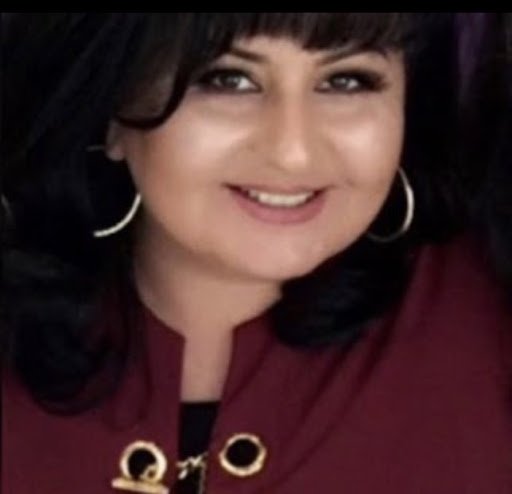
Talar Keoseyan
Talar Keoseyan is a mother, educator and writer. Talar’s books “Mom and Dad, Why Do I Need to Know My Armenian Heritage?”, “Tigran’s Song and “Our Tigran” are available on Amazon. She has been an educator for 26 years and resides in Los Angeles, CA. She can be reached at talar725@gmail.com.
|
The post Mary Asatryan on finding her roots in Artsakh and seeking revenge through hope appeared first on The Armenian Weekly.