
The deaths of six Palestinians in Israeli jails since the war with the Hamas began two months ago is a flashing warning sign | Haaretz Editorialhttps://t.co/ykWEp6AmP6
— Haaretz.com (@haaretzcom) December 9, 2023
Day: December 9, 2023
Hamas as the tool of Russia and Iran – Google Search https://t.co/s1QRvYitMO pic.twitter.com/3ukciDJ8oQ
— Michael Novakhov (@mikenov) December 9, 2023
Cunning, subtle, understated. Israeli policy in the Pacific has seen United Nations votes cast in its favour, the foreign policies of certain countries adjusted, and favours switched. While China may be considered the big, threatening beast competing alongside that large, clumsy figure called the United States, the small state of Israel is directing its expertise, and charm, in very specific ways in the Indo-Pacific.
When it came to voting for a nonbinding resolution in the United Nations General Assembly on the subject of a “humanitarian truce” regarding the conflict in Gaza in October, 14 countries were steadfastly opposed. Of those were six Pacific Island states: Fiji, Papua New Guinea (PNG), Tonga, Nauru, Marshall Islands and the Federated States of Micronesia.
The same pattern could be seen in 2012, when a mere nine nations voted against the issue of recognising Palestinian statehood, among them being Micronesia, the Marshall Islands, Palau and Nauru.
A few theories have been offered on this seemingly anomalous occurrence. Grant Wyeth suggests that the dynamics of power in this context may be less significant than that of faith and religious force. “Much of the Pacific is highly observant in their Christianity, and they have an eschatological understanding of humanity.” Wyeth emphasises those Protestant denominations that took a keen interest in the creation of Israel in 1948.
Much as with the hot fire evangelicals that helped Ronald Reagan win the White House in 1980, Israel’s creation was seen prophetically, the biblical step to religious finality. Eschatologically speaking, the Jewish people needed to return to the Holy Land for the final rites of humanity to be read. (Previously antisemitic bible bashers now had a strategic reason to like Jewry, knowing that, in the Final Judgment, the inhabitants of Israel would be pegged to God’s finishing line.) “Support for Israel is therefore a deeply held spiritual belief, one that sits alongside Pacific Islands’ other considerations of interests and opportunities when forming foreign policies.”
Papua New Guinea offers one such example, having become one of just five countries to formally open an embassy in the contested city of Jerusalem. On the occasion of its opening in September, PNG Prime Minister James Marape effusively declared that, “We are here to give respect to the people of Israel to the fullest.” The embassy’s establishment had taken place “because of our shared heritage, acknowledging the creator God, the Yahweh God of Israel, the Yahweh God of Isaac and Abraham.”
The religious theme throbs throughout Marape’s justifications. “Many nations choose not to open their embassies in Jerusalem but we made a conscious choice. This has been the universal capital of the nation and people of Israel. For us to call ourselves Christians, paying respect to God will not be complete without recognizing that Jerusalem is the universal capital of the people and nation of Israel.”
Never one to avoid an opportunistic flourish, Marape also revealed that Israel will be funding the cost of the embassy for the first three years of its operations. “But going forward, they’ve indicated land available for us & we look forward to proceeding, setting up our permanent mission there.”
He also made it clear that God and matters divine are not taking exclusive billing on the policy slate of Port Moresby. The economic relationship between Israel and PNG is so small as to be barely worth a mention ($1 million per annum), but Israel’s bold prowess in various fields such as agriculture, education, finance and infrastructure is being eyed with relish. That aspect of foreign policy has been vigorously encouraged by Mashav, Israel’s foreign aid department otherwise known as the Centre for International Development and Cooperation.
Former ministerial advisor Sean Jacobs recalls, “as a junior attaché to PNG’s 2011 Commonwealth Heads of Government (CHOGM) delegation, supporting a very brief bilateral with Israeli representatives in the margins” the offer of Israeli assistance “where it matters most – in PNG’s health sector and through in-kind, small-scale on ground medical equipment and expertise.”
PNG’s opposition leader, Joseph Lelang, was less enthusiastic about Marape’s less than balletic manoeuvring. “We have aroused the ire of the Palestinian Authority and Hamas has warned us in the strongest terms that PNG must reconsider that decision and move out.” Lelang’s concern was for diplomatic personnel who could find themselves at risk. “This is a serious warning and I feel for the foreign mission staff and the ambassador who will be based there.”
The Palestinian foreign ministry’s displeasure was also expressed in a statement accusing Port Moresby of being involved in “an aggression against the Palestinian people and their rights.” The move would, it alleged, cause “great harm to the chances of achieving peace on the basis of the two-state solution.”
Other Pacific Island countries have thrown in their lot with the Israeli State, softening the hungrily lethal retaliation in Gaza in favour of the country’s right to self-defence. There are such statements as those from Fiji’s foreign ministry on October 31, a bold, unabashed endorsement of Israel and its policies. “Fiji affirms its solidarity with Israel and commitment to global peace in the midst of the ongoing conflict between Israel and Hamas.”
In explaining why the Pacific country voted against the UN resolution calling for a ceasefire in the Israel-Hamas War, issue was taken with “ground realities and correct factual omissions” regarding the role played by “Hamas for initiating the crisis, holding hostages, and using them and civilians as human shields since [the] October 7 2023 terrorist attack.” Banally and, in any operational sense meaningless, the statement goes on to claim “that Israel’s primary target is Hamas, not the Palestinian population.”
As Israel runs the wells of international empathy dry with its incessantly ruthless destruction of Gaza, it can continue, through a quirk of European colonial history, to rely on a measure of support among various Pacific Island states. History, in that sense, is less cunning than teasingly eccentric.
By C Raja Mohan
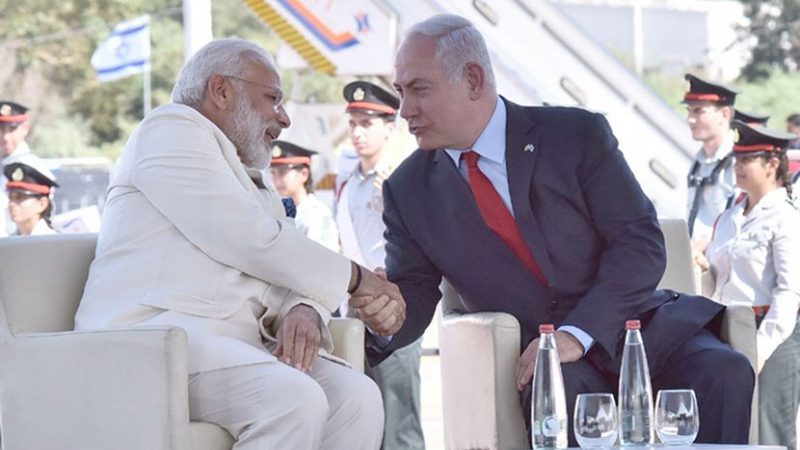
The growing convergence of India and the United States’ (US) perspectives on the Middle East is one of the main signals from the fifth iteration of the ‘two plus two’ meeting on 10 November 2023 in New Delhi. The defence and foreign ministers of the two countries were unambiguous in condemning Hamas terror, emphasising Israel’s right to self-defence while observing the international laws of war, calling for humanitarian pauses, demanding the release of hostages held by Hamas and pressing for durable peace in Palestine.
The affirmation that New Delhi and Washington “stand with Israel against terrorism” underlines how close the two sides have come in the Middle East. India, in the past, was unwilling to condemn Palestinian terror against Israel even as it sought global support against Pakistan’s cross-border terrorism. India has ended that double standard in responding to the current war in Gaza while reaffirming its strong commitment to Palestinian statehood.
India’s external affairs minister, S Jaishankar, underlined the importance of taking a consistent position on international terrorism, stating, “We take a strong position on terrorism because we are big victims of terrorism. We will have no credibility if we say that when terrorism impacts us, it’s very serious; when it happens to somebody else, it’s not serious.”
The annual joint meeting of the defence and foreign ministers from the two sides, which has taken place every year since 2018, except 2021, has become the principal vehicle to review and advance the India-US strategic partnership. Together, the four ministers – nudged by Prime Minister Narendra Modi in New Delhi and Presidents Donald Trump and Joe Biden in Washington – have dramatically expanded the canvas of cooperation and deepened the intensity of engagement on defence industrial collaboration, technology transfer, counter-terrorism and regional security.
Cooperation on Asian security issues has been a new element in the engagement between the two nations and provided a solid regional anchor for bilateral collaboration. In the early years after independence, Indian foreign policy positioned itself in opposition to the US in Asia, especially on regional security issues. This trendline in India’s regional policies endured well into the 21st century.
It is only in recent years that India’s wariness about US dominance in Asia has yielded to greater engagement and cooperation. The principal reason for the change in India has been the assertiveness of a rising China. Even as Beijing sought to replace the US as the dominant leader of Asia, it presented new challenges to Indian security policymakers on its Himalayan frontiers that have seen a series of military crises in 2013, 2014, 2017 and 2020. The 2010s also saw the steady expansion of Chinese naval presence in the Indian Ocean and the special relationships with India’s South Asian neighbours.
The 2017 crisis triggered a major shift in India’s approach to China. Discarding the old preference for non-alignment, New Delhi stepped forward to deepen military ties with Washington. The new Indian steps included the elevation of the ‘two plus two’ dialogue to the ministerial level in 2018, the embrace of the Indo-Pacific geopolitical construct and the revival of the Quad.
As India and the US embarked on a cooperative strategy to address the China challenge, the conventional wisdom in New Delhi insisted India-US joint regional security efforts were limited to the Indo-Pacific region. India and the US might be on the same side to the east of the subcontinent, the argument went, but they will remain far apart to the west of the subcontinent. That proposition was overturned quite quickly as India and the US joined hands with Israel and the United Arab Emirates to form the I2U2 grouping in 2021.
At the G20 summit in September 2023, India, along with the US and Saudi Arabia, unveiled the ambition to build an economic corridor between the subcontinent and Europe. The fifth round of the ‘two plus two’ dialogue saw the further advancement of India-US cooperation in the Middle East. The joint statement, issued at the end of the talk, welcomed “India’s full membership of the multinational Combined Maritime Forces (CMF), headquartered in Bahrain.”
India’s decision to become a full member of the 38-nation CMF that operates in the waters of the Arabian Sea and the Horn of Africa and is headed by an American Admiral. It seeks to protect maritime security across a vast body of water that hosts some of the world’s busiest sea lines of communication. India’s decision to stay apart from the CMF all these years was based on the ingrained impulse to act unilaterally rather than in a coalition. Pakistan’s membership in the CMF, too, was a dampener coalition membership.
The past inhibitions have been discarded amidst the growing comfort level with the US’ presence in India’s neighbourhood. New Delhi no longer sees the Middle East through the Pakistan lens and has begun to appreciate its enormous stakes in regional security. Reflecting some of these changes is India’s participation for the first time in the multinational Exercise Bright Star in Egypt in September 2023. This is a series of biennial military exercises led by Egypt and the US. More than 30 countries, including Pakistan, participated in the 2023 edition of the exercise.
Even as it looks beyond Pakistan and gets closer to the US in the Middle East, India continues to ramp up its independent bilateral partnerships with key countries in the region. New Delhi hopes that its bilateral, minilateral and multilateral engagement will help elevate India’s stature and expand its role in the Middle East.
- About the author: Professor C Raja Mohan is a Visiting Research Professor at the Institute of South Asian Studies (ISAS), an autonomous research institute at the National University of Singapore (NUS). He can be contacted at crmohan@nus.edu.sg. The author bears full responsibility for the facts cited and opinions expressed in this paper.
- Source: This article was published by the Institute of South Asian Studies (ISAS).
By Jeremy Powell
It was an entirely different time when support for Israel was a uniform consensus on the right. Back in the middle of the 2010s, when many liberals and leftists were being “red-pilled,” part of becoming a right-winger included defending Israel against the incoherent woke Left-Muslim alliance. Only Republicans would defend a bastion of freedom and democracy in a place where autocracy is the norm, according to “red pill” conservative outlets like PragerU and the Young America’s Foundation.
As many ex-leftists converted to the Right at the time, the mixture of the opposition and the censorship experienced meant that, at a certain point, the movement would splinter into many competing factions. Nobody foresaw that the mixture of a handful of neocons, libertarians, traditionalists, and self-proclaimed “classical liberals” would break apart. When Big Tech and Section 230 became the story of the day, the implications grew bigger than merely the role of the government in the economy.
Soon, the substance beneath the surface of paleoconservatism emerged. While the disagreement between factions of the political Right became more intense over foreign policy, all of the factions (except the neocons) were against funding Ukraine and cultivated ties with antiwar leftists like Glenn Greenwald and Matt Taibbi until the Hamas attack on Israel on October 7. While disbelief in the current system of governance has been a point with right-wing beliefs or at least part of the rhetoric, it was never to this extent. After Big Tech, Ukraine, covid-19, January 6, and now Israel, right-wingers are growing more tired of the establishment than ever.
Incensed at their taxpayer money being used to fund woke indoctrination at home and wars abroad, many are becoming extremely wary of the government. Devotion to the GOP as the line of defense has declined as the GOP prefers to maintain people who are willing to sacrifice conservatism for more wars. While the Left will never face accountability for almost anything, the spread of critical race theory, constant gaslighting, and absurd government overreach hasn’t ended but gotten worse. Nowadays, it’s not uncommon to hear arguments from parts of the Right that were once derided as “un-American” only a few decades earlier. Some people on the Right have called American foreign policy “imperialist,” and many hate the federal government.
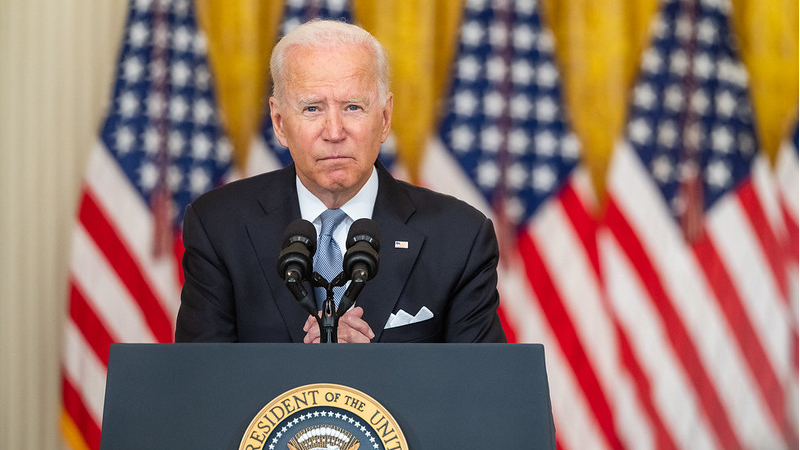
To them, Joe Biden symbolizes everything rotten about the current status quo—an opportunistic, lying, and intrusive politician making his riches at the expense of taxpayers. Others go along the line of Biden being a two-faced opportunist looking to push for greater government control or merely a stooge for the establishment for such a purpose. Two years ago, you were dismissed from the military for not accepting the vaccine. Today, you can challenge the discharge. Two years ago (again), the Army rolled out woke recruitment ads, alienating predominantly conservative patriots. Now, the Army is rolling out ads featuring a nearly all-white male cast with none of the left-wing elements.
Newsflash: the damage can’t be undone by pandering to people when the substance remains the same. No amount of convincing will help the current administration’s reputation when it nominates Soviet sympathizers; enforces far-left diversity, equity, and inclusion training; gives preferential treatment to far-left rioters; and falsifies economic (and apparently crime) data. Institutional trust can’t be rebuilt by making the institution more like China. By moving further to control politically sensitive segments of the economy and society like artificial intelligence, criminal justice, and online communications while continuing to advance government control over traditional topics (guns and cars), this administration is eroding the very trust in the government it wishes to defend.
However, by no means is this a run-of-the-mill right-wing reaction seen during the days of Barack Obama. It’s no longer merely all bark and no bite, as seen with Social Security and Medicare. While these issues won’t be resolved any time soon, contra the unpopularity of wars, matters like immigration and gun ownership have seen a noticeable change in reaction. There is an ongoing battle between Texas and DC at the United States-Mexico border, where DC has been trying to destroy temporary fences erected by Texas. Elsewhere, several Republican states have nullified federal gun laws.
The only response from Biden and the Beltway has been doubling down on regulating their way to a progressive brave new world. Even though many on the Right clamor for the same federal power to regulate their way toward a “conservative” brave new world, the probability of a right-wing takeover is essentially zero. The Democrats and the Far Left will get what they want at home, the neocons will compromise with them just to keep an interventionist foreign policy, and some conservatives prefer expanding government powers (inadvertently for the same Far Left).
More importantly, what will happen after Donald Trump is out of the political arena? Despite being the architect of the vaccination programs and lockdowns during covid-19, compromising with the establishment over Afghanistan, and printing money during the pandemic, many will continue to stump for him in 2024. After Trump, there might be no one who can take his place. However, business won’t be as usual, meaning it can’t pave the way for another George W. Bush.
Undoubtedly, the idea of secession won’t be palatable. However, the chances of reaching out to the conservatives and convincing them about the right approach to foreign policy, economics, and society are greater than ever. More are questioning the efficacy of the old status quo and the “alternative” provided by the original “red pill” organizations. When many of these “red pill” organizations are busy cheering for further involvement in Israel, no one is going to the war-skeptic conference to point out their alignment with the Far Left on how deep and intrusive the government should be.
Some are still hesitant about libertarianism, viewing it as a vacuous, transactional narrative about human nature being willing to tolerate the usage of drugs despite the danger to the user and, more importantly, society. There’s no “collective renunciation” of certain rights—to quote the long-gone Roger Scruton—thereby endangering the fabric of society through vices like prostitution. Yet, those who are hesitant forget that the roads are a “collectively” owned good. In the face of creeping progressivism from DC and Sacramento, it’s within the conservatives’ best interests to advocate for privatization (or, at least, decentralization).
After all, libertarianism isn’t merely about transactional interactions, as voluntary associations include noncommercial activities. When the government taxes people 40 percent of their income—combined with a litany of other taxes and inflation—only to hand out a chewed-up paycheck when you’re retired, why double down on trying for a more “scientific” government (to use the language of the socialists)? Why follow the path of repressive inclusion where a Californian has a say in how you live? We can fix the churches by preventing them from going down the “Kool-Aid” path, but fixing the federal government is utopian fiction.
If Cato Institute adjunct scholar Corey DeAngelis can effectively evangelize for charter schools and let parents control their tax dollars a tad more effectively than being forced to place boundless faith in public schools, then libertarians too can take a step further. We can’t win on a federal level, but we can win on the local level, where the influence of California and DC is minimalized.
- About the author: Jeremy Powell is a blogger on Substack, His X (formerly Twitter) handle is @jpowell145.
- Source: This article was published by the Mises Institute
By M. A. Hossain*
The political milieu in Bangladesh has been fraught with tension, climaxing in weeks of protests and violent clashes, casting a shadow of apprehension as the scheduled general election on 7 January 2024 approaches. The Bangladesh Nationalist Party (BNP), reinvigorated as the main opposition force, has intensified its protests, fervently demanding the resignation of Prime Minister Sheikh Hasina.
The crux of their discontent revolves around the insistence on establishing a neutral interim government before the general election, a demand staunchly rebuffed by the incumbent Awami League (AL)-led government. This singular point of contention has deepened the schism between the AL and the BNP, accentuated by the AL’s pursuit of a fourth consecutive term, further delineating a widening political chasm. Both major parties exhibit reluctance to engage in meaningful dialogue, casting doubt on the prospects for reconciliation before the impending elections.
In a noteworthy display of strength, the BNP and Jamaat-e-Islami orchestrated a “grand rally” on 28 October, advocating their “one-point demand” for a neutral interim election-time government. In response, the AL called for a “peace rally” on the same day.
Regrettably, what began as a peaceful assembly devolved into violence, necessitating police intervention to regain control. BNP activists became embroiled in clashes with both police and AL supporters. The day-long street battle, despite initial police restraint, escalated into violence from the BNP rally. This tumult resulted in significant casualties, with BNP supporters attacking police, journalists, setting fire to a police hospital, and assaulting the Chief Justice’s residence of the Supreme Court.
While the BNP alleges that the violence was either deliberately provoked or part of government sabotage to discredit their protests. But, the undeniable fact remains—the damage and destruction cannot be credibly denied. In response, the government has initiated a crackdown on the BNP’s ranks and files. The move has applauded by the AL as a necessary response to the October atrocities.
Subsequently, the opposition has shifted its political tactics from public demonstrations to nationwide strikes and blockades. As of last week in November, at least 180 public transports were set ablaze. The BNP attempts to portray these incidents as sabotage orchestrated by government agencies or AL supporters. While the AL endeavors to exploit these blockades and strikes as part of their election campaign.
In my opinion, the BNP and its allies have unwittingly fallen into the Awami League’s political stratagem by fomenting violence on 28 October. It would be prudent for the BNP to sidestep this Machiavellian ploy orchestrated by the Awami League, thereby enhancing the visibility of their nonviolent campaign and conveying a resounding message to Western nations through heightened public engagement.
Forthcoming elections and the US-led Western Alliance
Washington’s Indo-Pacific Strategy (IPS) marks the inception of a US-led alliance strategically positioned to counterbalance China. Bangladesh and other South Asian nations find themselves at a crossroads amid this superpower rivalry. After the midpoint of President Biden’s tenure, the United States, the European Union, and predominantly Western governments have been exerting pressure on Bangladesh for enhancements in democratic processes, human rights, and freedom of expression. Notably, the opposition party BNP and its allies have embraced this initiative.
The Sheikh Hasina-led Awami League government has enjoyed unwavering support from India over the past decade. However, following the recent G20 summit in India, the United States has recalibrated its policy towards India, signalling a reluctance to cede full leadership to India in the South Asian context. The 2 + 2 dialogue in India has further revealed a divergence between India and the United States concerning their stance on Bangladesh. Conversely, China and Russia have been critical of the United States, branding its actions as unwarranted “interference” in Bangladesh’s internal affairs. The BNP has denounced Russia and China for their positions on Bangladesh.
Western nations have advocated for a dialogue to resolve Bangladesh’s political impasse. While the AL has occasionally agreed to dialogue, it closed this option after announcing the election schedule on 7 November. Meanwhile, the BNP has remained relatively silent and less interested to sit with the AL.
A backdrop of economic hardship
The political turbulence unfolds against a backdrop of economic hardship, with a significant portion of the population grappling with the escalating cost of living, particularly the rise in food prices. The country’s foreign exchange reserves have halved, dropping from $42 billion to $21 billion by July 2023. Earlier this year, Bangladesh sought assistance from the IMF. Recent concerns expressed by the United States regarding labour law reform in Bangladesh suggest potential dire consequences for the country’s RMG sector in terms of exports and imports.
The BNP’s strategy aims to leverage Western sentiments and capitalize on public discontent regarding economic challenges. Their movement seeks to corner Hasina into either stepping down or resorting to violence, thereby instigating broader political strife. Hasina, within this limited context, faces two options: reinstate an election-time interim government or relinquish power to the military. While the military’s intervention may not immediately favor the BNP, it could eventually level the playing field.
Conversely, the AL advocates upholding the constitutional process, gaining moral strength to counter adversities. They believe that lawful pressure can disrupt BNP’s leader Tarique Rahman’s command and control. If BNP’s chain of command falters, Rahman’s choices would narrow down to either returning to Dhaka for political survival and potential incarceration or accepting political disaster while remaining in exile.
Amid persistent unrest, the imperative to uphold the right to freedom of assembly and safeguard the well-being of peaceful protestors remains paramount but also a gargantuan task. In this broad and acrimonious political context, compromise is perceived as an existential political threat.
The destiny of the nation, inhabited by 180 million people, is not subject to external pressures or internal power plays. True power lies with the common people, and they understand when and how to assert their authority.
*M A Hossain, political and defense analyst based in Bangladesh. He can be reached at: writetomahossain@gmail.com
https://t.co/Tm9Lr52QH8
Elena Gold
Writing a book about Russo-Ukrainian war. Oct 8
Is Iran or Russia behind Hamas’ murderous attack on Israeli civilians on a public holiday?https://t.co/2hyxTpEC83
The connection of Hamas to Iran is obvious, but the link between Hamas and the… pic.twitter.com/djs1qehn0f— Michael Novakhov (@mikenov) December 9, 2023
https://t.co/Tm9Lr52QH8
Elena Gold
Writing a book about Russo-Ukrainian war. Oct 8
Is Iran or Russia behind Hamas’ murderous attack on Israeli civilians on a public holiday?https://t.co/2hyxTpEC83
The connection of Hamas to Iran is obvious, but the link between Hamas and the… pic.twitter.com/g7PYGBuDe4— Michael Novakhov (@mikenov) December 9, 2023