
The Israeli Ministries of Defense and Justice have prepared a temporary order to increase the age of the Israel Defense Forces (IDF) reserves by one year in order to maintain combat readiness during the ongoing military operation in the Gaza Strip, Report
Day: December 7, 2023
Президент Азербайджана Ильхам Алиев назначил внеочередные президентские выборы на седьмое февраля 2024 года. Выборы президента Азербайджана должны были состоятся в 2025 году и на данный момент неизвестно, что послужило причиной проведения выборов раньше установленного срока. Прошлые президентские выборы в Азербайджане прошли в 2018 году. Следующие выборы должны были состояться через 7 лет. Алиев является президентом […]
Categories
Armenia News – NEWS.am
The number of tourists visiting Armenia increased in November, the Tourism Committee informs.
Armenia welcomed 150 thousand tourists in November 2023, the best results compared to previous years (the number of tourists reached 145 thousand in 2022 and 140 thousand in 2019).
This brings the total number of tourist visits to Armenia to 2.2 million so far in 2023.
On December 6, Civil Society Organizations (CSOs) addressed the Ministry of Education with recommendations on how to make the selection process for school principals fairer and more legitimate. The statement was released on the second day of a round-the-clock protest and hunger strike by teachers in front of the ministry.
Around 1,200 public schools are currently run by acting principals. In only 593 cases did the Ministry of Education present a candidate to the school’s board of trustees, which subsequently approved the principal. In 927 schools, only one candidate was nominated by the Ministry, despite the availability of several applicants, causing dissatisfaction among aspiring principals, schools and the education community. CSOs have previously criticized the flawed selection process and subsequent decisions, and have made detailed recommendations that haven’t been acknowledged or acted upon by the Ministry.
The civil society organizations call on the Ministry of Education to hold another round of elections in schools where no candidate has been presented by the Ministry. They also call for a change in the regulations governing the selection of school principals, advising the Ministry to allow eligible candidates to present themselves to the Board of Trustees without having to go through the Ministry’s interview process.
Regarding the 162 candidates who passed the written exam but failed to pass the interview, the CSOs urge the Ministry to hold another round of interviews and allow the successful candidates to participate in the re-elections. The statement also notes that in schools where there are no certified candidates for principal, the Minister should use his discretion to select a certified candidate. In cases where uncertified candidates aren’t selected, the Minister’s use of discretion should be well explained.
The CSOs also urge the Ministry to establish a special commission composed of the Public Defender, representatives of CSOs of high repute, education specialists and other credible people, which will develop the new regulation on the selection and election process for school principals; hold another round of interviews for candidates who passed the written exam and failed the interviews; develop a strategy to create a system of continuous professional development for school principals. The documents developed by the Commission should be implemented by the Government of Georgia, the Parliament and the Ministry of Education.
“We call on the Ministry of Education and Science to take into consideration the above mentioned recommendations as soon as possible and to start taking effective measures in order not to endanger the health of the protesting people and to avoid aggravation of the situation… From our side, we once again express our readiness to participate and mediate in the processes,” – reads the statement.
Signatory organization: Education Coalition; Center for Civil Integration and Inter-Ethnic Relations – CCIIR; International Society for Fair Elections And Democracy – ISFED; Caucasus Open Space – COS; Social Justice Center – SJC; Parents for Education; Sapari; Civic Movement for Freedom; Georgian Democracy Initiative – GDI; Meeting Place – Dmanisi; Free Association; Transparency International – Georgia; Human Rights Center; Democracy Defenders; Civic Education and Rehabilitation Center – CERC; Families Against Discrimination; Georgian Young Lawyers’ Association – GYLA; Georgia’s Future Academy – GFA; Partnership for Human Rights – PHR.
The remains of 23 people missing missing as a result of the 1992–1993 war in Abkhazia were identified and returned to their families on 6 December 2023, the International Committee of the Red Cross (ICRC) reported.
According to the Office of State Minister of Georgia for Reconciliation and Civic Equity, among the 23 people 21 were soldiers, and the remaining two were civilians. The memorial service for the transferred conflict victims is being held at the Holy Trinity Cathedral in Tbilisi for two days. 17 soldiers will later be buried in the Dighomi Brothers’ Cemetery, while the others will be laid to rest in their family graveyards.
“The remains of more than 55 people were identified and returned to their families in 2023. This was possible within the framework of the humanitarian Coordination Mechanism on Persons Unaccounted For in Connection with the Events of the 1992–1993 Armed Conflict and After, involving Abkhaz and Georgian participants, operating with the ICRC’s support since 2010. The remains of the missing people were recovered from different locations in Abkhazia,” the ICRC wrote.
According to the same information, since the launch of this mechanism in 2010 the remains of 273 people have been identified and handed over to their families. In total 1,870 people, including military personnel and civilians, are still reported as missing in connection with the 1992-93 war in Abkhazia.
Also Read:
I want to talk with you about an uncomfortable topic that needs much more open discussion than it’s receiving: America’s extraordinarily high level of anxiety.
A panel of medical experts has recommended that doctors screen all patients under 65, including children and teenagers, for what the panel calls “anxiety disorders.”
Lori Pbert, a clinical psychologist and professor at the University of Massachusetts Chan Medical School, who serves on the panel, calls mental health disorders “a crisis in this country.”
Nearly 50,000 people in the U.S. lost their lives to suicide last year, according to a new provisional tally from the National Center for Health Statistics. (The agency said the final count would likely be higher.)
The suicide rate of 14.3 deaths per 100,000 Americans has reached its highest level since 1941, when America entered World War II.
Men 75 and older had the highest suicide rate last year, at nearly 44 per 100,000 people, double the rate of people 15-24. While women have consistently been found to have suicidal thoughts more commonly, men are four times as likely to die by suicide.
Suicide rates for American Indians and Alaska Natives are almost double the rates for other Americans.
(Some good news: Suicide rates for children 10 to 14 declined by 18 percent, and for those between 15 and 24 by 9 percent, bringing suicide rates in those groups back to pre-pandemic levels.)
What’s going on? Why the
Maybe the widespread anxiety and depression, along with the near record rate of suicide, should not be seen as personal disorders.
Maybe they should be seen — in many cases — as rational responses to a society that’s becoming ever more disordered.
After all, who’s not concerned by the rising costs of housing and the growing insecurity of jobs and incomes?
Who (apart from Trump supporters) isn’t terrified by Trump’s attacks on democracy, and the possibility of another Trump presidency?
Who doesn’t worry about mass shootings at their children’s or grandchildren’s schools?
Who isn’t affected by the climate crisis?
Add in increasingly brutal racism. Mounting misogyny. Anti-abortion laws. Homophobia and transphobia. Attacks on Asian Americans, Hispanic Americans, and Jews. And the growing coarseness and ugliness of what we see and read in social media.
Consider all this and you’d be nuts if you weren’t anxious, stressed, and often depressed.
Studies show that women have nearly double the risk of depression as men. Black people also have higher stress levels — from 2014 to 2019, the suicide rate among Black Americans increased by 30 percent.
Are women and Black people suffering from a “disorder?” Or are they responding to reality? Or both?
White men without college degrees are particularly vulnerable to deaths from suicide, overdoses, and alcoholic liver diseases, with contributions from the cardiovascular effects of rising obesity.
Are they suffering from a “disorder,” or are they responding to a fundamental change in American society? Or both?
In their book Deaths of Despair and the Future of Capitalism, economists Anne Case and Angus Deaton argue that “the deaths of despair among whites would not have happened, or would not have been so severe, without the destruction of the white working class….”
Part of the problem, they say, is that the less educated are often underpaid and disrespected, and feel that the system is rigged against them.
Even if we had far more mental health professionals, what would they do against these formidable foes? Prescribe more pills? If anything, Americans are already overmedicated.
Don’t get me wrong. I’m not arguing against better access to mental health care. In fact, quite the opposite. Increased staffing and improved access to mental health care are very much needed.
Mental health care is harder to find now than before the pandemic. About half of people in the U.S. live in an area without a mental health professional, federal data shows, and some 8,500 more such professionals would be needed to fill the gap. Most people rely on family doctors for mental health care.
Officials are trying to widen familiarity with a national Suicide and Crisis Lifeline that last year received a nationwide number, 988.
But in addition to providing more and better access to mental health care, and a suicide and crisis hotline, shouldn’t we try to make our societyhealthier?
Americans experience the least economic security of the inhabitants of any advanced nation. A healthy society needs more job security and stronger safety nets.
The distribution of income and wealth in America is the most unequal of any other advanced nation. A healthy society ensures that no one working full time is poor, and levies high taxes on the wealthy to help pay for what society needs.
Guns and assault weapons are easier to buy in America than in any other advanced nation. A healthy society bans assault weapons and makes it difficult to buy guns.
A lower percentage of Americans has access to affordable medical care than in any other advanced nation. A healthy society keeps its people healthy.
America puts more carbon dioxide into the air per capita than almost any other advanced nation. A healthy society better protects the environment.
Big money plays a larger role in American politics than it does in almost any other advanced nation. A healthy society does not allow big money to buy politicians.
Some American politicians — like Donald Trump — gain power by stirring up racism, xenophobia, and homophobia. A healthy society does not elect these sorts of people.
The list could be much longer, but you get the point. The anxiety disorders suffered by Americans are real, and they apparently are growing. But instead of regarding them solely as personal disorders maybe we need to understand them at least partly as social disorders — and get to work remedying them as a society.
Granted, it would be difficult to achieve any of these criteria for a healthy society.
But without seeking to achieve them, no number of mental health professionals, and no amount of medications or hotlines, will be enough to substantially reduce the stress, anxiety, depression, and suicidal thoughts that so many Americans are now experiencing.
This article was published at Robert Reich’s Substack
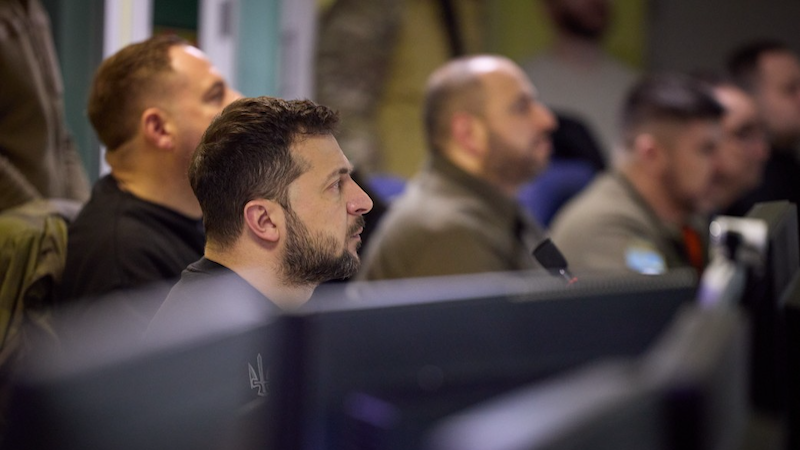
“Ukrainian President Volodymyr Zelensky is becoming an autocrat who is reshaping Ukraine into an authoritarian state no different than Russia”, Kyiv Mayor Vitali Klitschko has shockingly claimed. Klitschko, a former heavyweight boxing champion-turned-politician, took the unprecedented step of publicly attacking Zelensky vehemently for the first time since Russia’s invasion of Ukraine. The mayor sharply criticized President Zelensky for his handling of the war. They have been political foes and such a blistering public condemnation was not expected given the country’s war crisis.
Zelensky is accused of turning into an isolated autocrat and he has clashed with him since the start of the war over the poor state of Kyiv’s emergency shelters. Claimed that they never meet or speak to one another , even though their offices are located only a short distance apart.
The mayor accused Zelensky of:
- Lying to the public about Ukraine’s progress in the Ukraine’s war. Gen Valerii Zaluzhnyi, the Ukrainian military’s commander in chief, said last month that the war had gone “into a stalemate and the war could drag on for years” after a disappointing counteroffensive that failed to deliver a decisive blow to Russia.
- “Sometimes people don’t want to hear the truth. … Of course, we can euphorically lie to our people and our partners. But you can’t do that forever.” “Nobody believes in our victory like I do. Nobody.”
- “People see who’s effective and who’s not. Zelensky is paying for mistakes he has made.”
“The president has an important function today, and we have to support him until the end of the war,” Klitschko said. “But at the end of this war, every politician will pay for his successes or failures.” But despite his grievances, the mayor stopped short of calling for Zelensky’s immediate ouster.
Election was due in March
A presidential election was due in March but elections are barred under the martial law introduced when Russia invaded. The Zelensky administration has argued that the vote would not be fair because so many soldiers are at the front and millions of Ukrainians have been forced to flee the country. Kira Rudik, a Ukrainian opposition leader, told The Independent that she also disagreed with elections despite Zelensky’s waning popularity.
“From a geopolitical perspective, it would be super dangerous if we held elections only in territories that we control,” she said. “It would mean that we appear to acknowledge that Ukraine does not include the occupied territories.” She added that the optics of Ukrainian politicians spending money on political campaigns during a time of war would be “crazy”.
Autocratic Behavioral Warning Signs
Autocratic Behavioral Warning Signswrites Lina Klak of University of Chicago (Feb 5, 2022). Before becoming the President of Ukraine, Zelensky was a famous comedian and an actor who had never been in a political office before. Zelensky starred in a popular Ukrainian sitcom, Sluha Narodu, where he (ironically) played an “ordinary” school teacher who suddenly became the President of Ukraine.
Zelensky campaigned as a “Servant for the People” (also the name of the TV show he starred in, and the name of Zelensky’s political party), and won over the votes of over 13 million Ukrainians. Before he became the President of Ukraine, Zelensky would laugh at and mock corrupt politicians. He promised many things to the Ukrainian people while on the campaign trail, including ending the war between Russia and Ukraine, fighting corruption in political spheres and law enforcement agencies, and buying new equipment for hospitals and schools in Ukraine.
However, it has been almost three years into his presidency: none of these major promises have been fulfilled, and his popularity ratings have decreased to 30%. As a result, it can be argued that Zelensky has not decreased instances of corruption in the Ukrainian government— instead, he has increased corruption through autocratic behaviors such as favoring blind loyalty over competence in appointments and politicizing the executive branch. However, 30 people close to him— friends, previous co-workers have been elected to positions in the Ukrainian government. In Zelensky’s case, while he has delivered on some initial campaign promises but he has also increased corruption and distrust in government through his non-deliverance of campaign promises and shady tactics that can be seen as autocratic and selfish. A worrying sign of autocratic leadership is when a politician rejects, in words or action, the democratic rules of the game, and begins to favour blind loyalty over competence.
All of them follow a similar familiar route: after improbable success as loudmouth entertainers, not taken seriously by the political establishment, they attract a passionate minority and then suddenly with the electoral system or the management of parliaments are in power.
A Dictator in the making
Oleksii Arestovich, Volodymyr Zelensky’s former chief of staff, senior adviser described the Ukrainian president as a “Dictator” who has become “divorced from reality” in relation to the way he has reacted to the Russian special military operation since it began in February 2022. “Someone breeds hatred for any opinion different from their own. And then – a year and a half later – autumn comes, both in relations with the West and with our own people. And no matter how much you deny reality, it doesn’t go away.” Arestovich was forced to resign and since then, he has been in political battles with the ruling elite of Kiev, as demonstrated by his pointing out that Zelensky is a dictator.
He also stated that Kiev is firmly opposed to any ceasefire. This position has been criticized even by Ukrainian military leaders, who admit failure in the much-touted summer counteroffensive. The situation is so desperate for Ukraine that the country can no longer assemble the same well-prepared army it had assembled before launching the counteroffensive at the beginning of the European summer, let alone what it had before the start of the Russian military operation. Overlooked was the revelation that the average age of a soldier in Ukraine is around 43 years, demonstrating just how crippled the Ukrainian Armed Forced are.
Arestovich made his post in response to an article in Time magazine, written by correspondent Simon Shuster, which addresses the isolation of the Ukrainian leader and is entitled, “Nobody believes in our victory like I do. Nobody.” For him, the article reveals an “unpleasant and vaguely familiar image – a dictator abandoned by everyone, wandering through the back streets of the bunker, unwilling to face reality and hysterically exclaiming about a quick victory, which he is unable to achieve.”
“An authoritarian leader to whom those around him are afraid to tell the truth. All dictators who are divorced from reality end up the same way.” Arestovich said that the Times article “condemns Zelensky to loneliness and the judgment of history – to loneliness, for which he has no one to blame but himself.”
“With the connivance of the collective West, the regime of Ukrainian President Zelensky has turned into an Authoritarian Dictator”, Russian Permanent Representative to the UN Vasily Nebenzya has said.