
Four Children, Adult Injured In Pakistan Blast Radio Free Europe / Radio Liberty
Day: December 5, 2023
Categories
NPR News: 12-05-2023 3AM EST
WHO?
RUSSIAN MAFIA > RUSSIAN OLIGARCHS > RUSSIAN WAGNER GROUP (THEY MIX WARS AND PROFITS ROUTINLY.)https://t.co/xm7BaTd1Ku
“The study looked at the Israel Exchange-Traded Fund, a common way for people to make investments in Israel, which on any given day has around 2,000 shares… pic.twitter.com/HQlXnbSXFe— Michael Novakhov (@mikenov) December 5, 2023
https://t.co/cGewMsq2Gy
The News And Times #News #Times #NewsAndTimes #NT #TNT #Israel Israel #World World #USA USA #POTUS POTUS #DOJ DOJ #FBI FBI #CIA CIA #DIA DIA #ODNI ODNI Mossad #Mossad Putin Russia #Putin Russia #Russia #GRU GRU #Ukraine New Abwehr #NewAbwehr
2:56 AM…— Michael Novakhov (@mikenov) December 5, 2023
WHO?
RUSSIAN MAFIA > RUSSIAN OLIGARCHS > RUSSIAN WAGNER GROUP (THEY MIX WARS AND PROFITS ROUTINLY.)https://t.co/xm7BaTd1Ku
“The study looked at the Israel Exchange-Traded Fund, a common way for people to make investments in Israel, which on any given day has around 2,000 shares… pic.twitter.com/HQlXnbSXFe— Michael Novakhov (@mikenov) December 5, 2023
https://t.co/cGewMsq2Gy
The News And Times #News #Times #NewsAndTimes #NT #TNT #Israel Israel #World World #USA USA #POTUS POTUS #DOJ DOJ #FBI FBI #CIA CIA #DIA DIA #ODNI ODNI Mossad #Mossad Putin Russia #Putin Russia #Russia #GRU GRU #Ukraine New Abwehr #NewAbwehr
2:56 AM…— Michael Novakhov (@mikenov) December 5, 2023
By Gabriele Vogt and Sian Qin
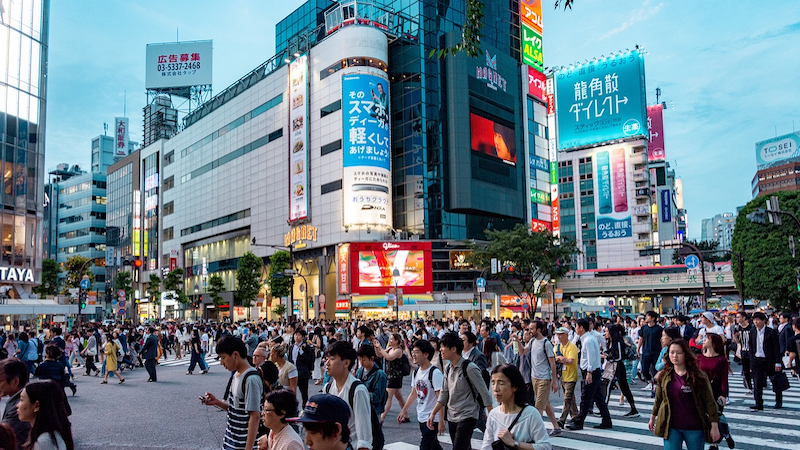
Kyoto is bracing for another influx of tourists. Next to the rollout of the city administration’s ‘mind your manners’ campaign, Kyoto has terminated its popular one-day bus pass to discourage tourists from using the city’s busses.
Extended queueing times and jammed public transport have inconvenienced locals. In 2022, roughly 80 per cent of residents complained about public transport and the streets being overly filled with tourists. Three quarters expressed concern over tourists’ behaviour, such as littering or eating while walking. The rising number of international travellers strains local infrastructure and public manners have been termed ‘sightseeing pollution’.
Kyoto’s relationship with international tourism is complex. The 52 million visitors to Kyoto in 2018 spent 1.3 trillion yen ($US8.7 billion), generating almost a fifth of the city’s nominal GDP. But the sector triggered a dynamic of ‘tourism gentrification’ with locals being pushed out from the housing market since short-term holiday rentals are more lucrative to landlords. Shops and restaurants started catering to travellers rather than locals.
In February 2020, Shoei Murayama, a long-time member of the Kyoto city assembly, ran his mayoral campaign on the main message that ‘overtourism’ was detrimental to the ancient capital city. Though he did not win the race, his campaign highlighted the debate about mass tourism.
The COVID-19 pandemic fundamentally changed the situation. Japan closed its borders to inbound tourists from April 2020 to October 2022, bringing tourism industry to a complete halt. During the prior seven years, from 2013, when Tokyo was selected as the host city for the 2020 Olympic and Paralympic Games, the number of international visitors to Japan had more than tripled to almost 32 million in 2019.
The transport ministry’s 2003 ‘Visit Japan Campaign’ and the 2006 introduction of the basic law to promote tourism firmly established tourism as a pillar for Japan’s economic development. In 2008, the Japan Tourism Agency was created. Tourism’s political dimension can become salient, such as when visa regulations for wealthy Chinese individual travellers were eased in 2009, or when trips to the Tohoku area were promoted internationally to contribute to economic recovery after the 2011 Great Northeast Japan Earthquake.
In 2019, inbound tourists spent 4.8 trillion yen (US$32.1 billion), exceeding the 4 trillion yen (US$26.8 billion) generated by the export of semiconductors. Japan’s border-closure during the pandemic shifted the tourism industry from an economic stronghold to needing a stimulus package, most notably the ‘Go To Travel’ campaign. This campaign was designed to increase domestic travel and mitigate hotel bankruptcies.
Tourism hot spots still suffered from the absence of international travellers. Half of Kyoto residents claimed that the city’s economic situation deteriorated significantly during the COVID-19 pandemic and hoped for tourism to rebound to pre-pandemic levels.
The number of inbound visitors in September 2023 hit 2.2 million — 96 per cent of pre-pandemic levels. The recent depreciation of the Japanese yen against the US dollar, euro and other currencies has supported this quick rebound. In the second quarter of 2023, the total spending of inbound visitors reached 1.23 trillion yen (US$8.2 billion), nearly matching the 2019 spendings of the same period. The travel spending per inbound visitor now stands at an average of 200,000 yen (US$1338), fulfilling the policy goal set for 2025. This goal was formulated in the latest revision of the basic law to promote tourism, which was approved by the Cabinet in March 2023, and states that Japan is to target more inbound tourism of the wealthy to raise the general consumption level of tourists.
Travelers from the United Kingdom, China and Australia are the biggest spenders. In 2023, Chinese tourists were largely absent from Japan during the Chinese October holiday season, despite the Chinese government lifting the ban on outbound group tourism in August. In response to the Japanese government’s approval of disposing wastewater from the Fukushima nuclear power plants into the Pacific Ocean, travel agencies removed Japan from the list of recommended destinations. Though the Chinese government did not officially discourage international travel to Japan, booked group trips were cancelled in bulk.
In Okinawa, which had equalled Hawai’i in terms of incoming tourists in 2017, the absence of Chinese tourists is apparent. During his trip to China in July 2023, Okinawan Governor Denny Tamaki successfully lobbied for direct flights from Beijing and Shanghai to Naha to be resumed. Still, inbound tourism to Okinawa is only picking up slowly, and in September 2023 stood at 50 per cent of pre-pandemic levels.
Many Okinawans are critical of a potential return of mass tourism. Locals complained about tourists trampling over holy sites. Since incidents like these in Kudaka island were on the rise, Keiichiro Nakamura, the owner of a local travel agency, designed a website educating tourists about appropriate behavior while sightseeing on the island. In a recent interview with the authors, Nakamura explained that the happiness of the locals is a crucial precondition for any successful development of the tourism industry.
Japan is likely to remain a popular tourist destination. The metropolitan areas of Tokyo, Osaka and Kyoto draw two thirds of international travellers, leaving a remarkable gap between urban and rural areas. Rather than a general ‘overtourism’, Japan experiences an overconcentration of tourists in certain areas. Tourists who violate rules and manners trigger incite profound backlash among local society. It is high time for the tourism industry to acknowledge these challenges, and transform into a more inclusive business that balances financial gains and societal support.
About the authors:
- Gabriele Vogt is Chair in Japanese Studies at the Ludwig Maximillian University Munich.
- Sian Qin is PhD Candidate in Japanese Studies at the Ludwig Maximillian University Munich.
Source: This article was published by East Asia Forum
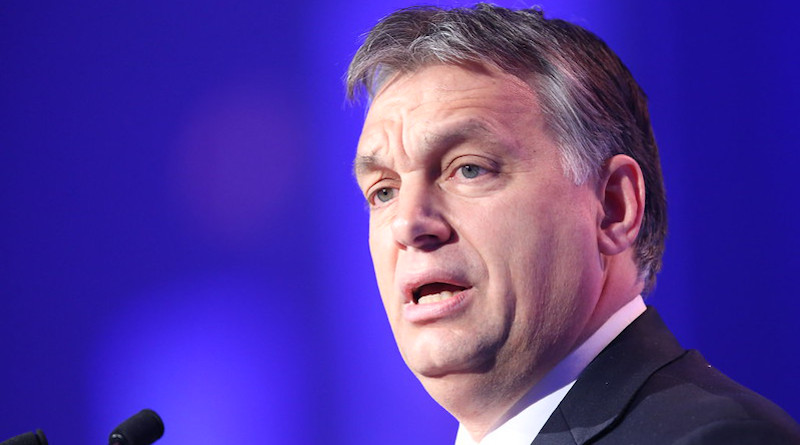
(RFE/RL) — Hungarian Prime Minister Viktor Orban has written European Council President Charles Michel to demand that Ukraine’s membership in the European Union be taken off the agenda at a summit next week.
In a letter to Michel, who will chair the summit in Brussels, Orban also warned against putting a review of billions of dollars in funding for Ukraine on the agenda, saying both topics are doomed to fail.
Orban urged Michel not to push for a decision at the European Council on these matters in December, “as the clear lack of consensus will inevitably lead to failure.”
He insisted that a “strategic discussion” was needed first about Ukraine’s EU membership and warned that forcing a decision could destroy EU unity.
The council “must avoid this counterproductive scenario for the sake of unity, which is our most important asset,” he said in his second letter to Michel in as many weeks about Ukraine’s prospective EU membership. But the letter did not say outright that Hungary would veto any moves to open membership talks with Ukraine.
Decisions on the enlargement of the bloc and a review of its long-term budget, which includes 50 billion euros ($54.1 billion) in aid for Kyiv, must be agreed unanimously by all 27 member countries. Ukraine is counting on the EU funds to help its economy survive in the coming year.
Michel’s office declined to comment on Orban’s letter, according to the AP.
Michel traveled to Budapest last week after Oban’s first letter in which he urged a change in strategy of the European Union’s policy toward Ukraine.
After meeting with Orban on November 27, Michel posted a message on X, formerly Twitter, stressing the importance of EU unity, saying it “requires constant effort and it’s our main strength.”
The European Commission, which supervises the enlargement process, last month recommended that Ukraine be allowed open membership talks once it addresses corruption, lobbying concerns, and restrictions that might prevent its minorities from studying and reading in their own languages.
Orban said allowing accession talks to start even though all preconditions have not been met would mark the end of the European Union’s enlargement policy “as an objective and merit-based instrument.”
Orban discussed his position on opening European Union accession negotiations with Ukraine last week in an interview with Hungarian state radio in which he said it was not currently in Hungary’s interest.
“I would favor the EU reaching a strategic partnership agreement with Ukraine first,” Orban said, adding that such a partnership could take up to 10 years until Ukraine could adapt to the EU’s requirements.
“When we see that we can cooperate, then let’s bring up the issue of membership again, but that will be possible only after many, many years,” he said.
Orban is considered one of Russian President Vladimir Putin’s closest allies in Europe, and his nationalist government has argued against EU sanctions on Russia over its full-scale invasion of Ukraine.
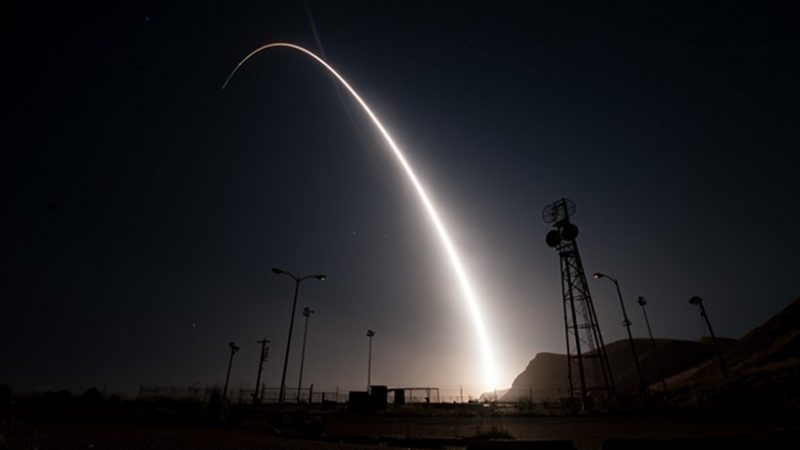
Is it justifiable for a country to go nuclear—on the grounds that it is doing so to protect itself from nuclear attacks?
The argument is based on the concept of “nuclear deterrence”: a widely-challenged theory that nuclear weapons are intended to deter nuclear attacks prompting the question: would the Russians have invaded Ukraine if it was a nuclear power?
The invasion of Afghanistan and Iraq, and the ouster of Libyan leader Muammar el-Qaddafi, were perhaps facilitated by one fact: none of these countries either had nuclear weapons or had given up developing them (as in the case of Libya).
“And that is why we will never give up ours,” a North Korean diplomat was quoted as saying, while pointing out that the invasions by the US and Western nations would not have taken place if those countries were armed with nuclear weapons.
But the 2017 Nobel Peace laureate, the International Campaign to Abolish Nuclear Weapons (ICAN), a coalition of non-governmental organizations in over 100 countries, says “deterrence is an unproven gamble—a theory on which the future of humanity is being risked—that is based on the implicit threat to use nuclear weapons that has brought the world close to nuclear war on a number of occasions.”
The weeklong UN meeting of members of the Treaty on the Prohibition of Nuclear Weapons (TPNW), which concluded December 1, called out the doctrine of nuclear deterrence adhered to by the nuclear-armed states and their allies as a threat to human security and an obstacle to nuclear disarmament, according to ICAN.
The nuclear deterrence doctrine condemned
The Executive Director of ICAN, Melissa Parke, said: “The condemnation of nuclear deterrence doctrine by the members of the TPNW at their meeting at the UN in New York is a highly significant move”.
Never before has a UN treaty laid out the threat that nuclear deterrence poses to the future of life on our planet. Deterrence is unacceptable. It is based on the threat to wage nuclear war, which would kill millions outright and lead to a nuclear winter and mass starvation that recent research shows would kill billions of people, she declared.
Tariq Rauf, former Head of Verification and Security Policy at the International Atomic Energy Agency (IAEA), (and who provided inputs during the drafting of the TPNW in 2017 on verification and other matters), told IDN the second session of TPNW meeting of states parties (MSP2) was noteworthy in that there was a thematic discussion on the humanitarian impact of nuclear weapons, consideration of the status and operation of the Treaty.
This included victim assistance, environmental remediation and international cooperation and assistance, complementarity with the nuclear non-proliferation treaty, and a report of a scientific advisory group (SAG) on verification of nuclear disarmament.
The political declaration adopted at MSP2 was heavy on rhetorical and hortatory statements but light on concrete calls for action, he argued.
TPNW States agreed to set up intersessional working groups in the lead up to MSP3 in 2025, and to consider modalities for an international trust fund for victim assistance and environmental remediation, as well as a consultative process on security concerns of TPNW States.
As regards the international trust fund, he said, “I am concerned that some ardent TPNW opponent States, such as Canada, Germany and Norway, may try to “whitewash” their credentials by offering funds for victim assistance but still resolutely continue to oppose and undermine the TPNW.”
A scientific advisory group set up
One important outcome of MSP1 was the establishment of a Scientific Advisory Group (SAG). It submitted a useful report to MSP2 on the status and developments regarding nuclear weapons, nuclear weapon risks, the humanitarian consequences of nuclear weapons, nuclear disarmament and related issues.
This report using available open source information provided a compilation of data on the status of nuclear forces based on the data and reports published by the Federation American Scientists and the Bulletin of the Atomic Scientists on the inventories of nuclear warheads and related nuclear materials, Rauf pointed out.
The is the second time that a scientific advisory group has been set up in support of multilateral nuclear disarmament negotiations. The first time such a scientific advisory group was set up was in 1976 with the establishment of the Ad Hoc Group of Scientific Experts to conceptualize a verification and international seismic data-exchange system for a nuclear test-ban treaty.
Rauf said existing nuclear disarmament verification exercises such as the US-led International Partnership on Nuclear Disarmament Verification (IPNDV) and the QUAD basically have replicated existing IAEA practices and procedures on verification of the nuclear fuel cycle.
“There is, as yet, no agreement among States on any feasible or practical measures for verification of dismantlement of nuclear warheads. Indeed, the US is on record that it shall never allow any international oversight of nuclear warhead dismantlement,” he pointed out.
As such, for practical reasons, whether it should not be the focus on a variation of TPNW Article 4 (1), pursuant to which a nuclear-armed State divests itself of nuclear weapons and related infrastructure and accedes to the Treaty even though this would now occur after the TPNW entered into force in January 2021? he asked
And further to that, the verification effort be on the nuclear material from the dismantled warheads utilizing attribution verification with information barrier (AVIB). Also, understand that it will not be possible to get an accurate, complete and reliable accounting of weapon-usable nuclear material produced since 1945, he noted.
UN chief lauds successful conclusion of the second TPNW meeting
In a statement released December 1, UN Secretary-General António Guterres congratulated States Parties to the Treaty on the Prohibition of Nuclear Weapons (TPNW) on the successful conclusion of their Second Meeting.
The Secretary-General said he is “encouraged by the work done by States Parties in collaboration with other stakeholders, which showcases what is possible within multilateral nuclear disarmament negotiations and bolsters the global disarmament and non-proliferation architecture”.
He welcomed the adoption of the political declaration, “contributing toward our shared goal of a world free of nuclear weapons”.
Meanwhile, at the meeting, about 700 individuals, representing over 100 nongovernmental organizations (NGOs) took part in an interactive process with the member states. And in what could be viewed as a much broader, week-long nuclear disarmament conference, more than 65 side events, including panel discussions, art exhibitions, concerts, and awards ceremonies were held inside the UN and around New York City. Jackie Cabasso, Executive Director, Western States Legal Foundation, told IDN compared to the rancorous August meeting of the States Parties to the Nuclear Nonproliferation Treaty (NPT), which could not even agree on a Chair’s factual summary report, the TPNW meeting manifested a unified and unambiguous recognition that growing threats of nuclear war are intolerable and that the only solution is the total elimination of nuclear weapons.
“It is evident that even though the TPNW cannot achieve nuclear disarmament without the participation of the nuclear-armed states, its members are energetically using it as a platform to develop and disseminate information and analysis that is valuable in the broader global context’ she pointed out.
Examples of this were the report on gender impacts, including the disproportionate effects of radiation on women and girls’ health, and the first report of the Scientific Advisory Group on developments regarding nuclear weapons, nuclear weapon risks, the humanitarian consequences of nuclear weapons, nuclear disarmament, and related issues.
The Scientific Advisory Group also called for a new UN study on the consequences of nuclear war, given the last comprehensive studies were done in the late 1980s.
“In an important development”, Cabasso said, “States parties, for the first time, mandated member states, the International Committee of the Red Cross (ICRC), ICAN and other stakeholders and experts, to engage in consultations to “challenge the security paradigm based on nuclear deterrence by highlighting and promoting new scientific evidence about the humanitarian consequences and risks of nuclear weapons and juxtaposing this with the risks and assumptions that are inherent in nuclear deterrence,” and to present their findings at the third meeting of States parties in March 2025.”
Nuclear deterrence is the Gordian knot
Over half the world’s population live in countries whose national security postures explicitly depend on nuclear weapons and the doctrine of “nuclear deterrence”- “In my view”, she said, nuclear deterrence is the Gordian knot blocking the path to nuclear disarmament.
The Latin root of the word deterrence means to “frighten away, fill with fear”. In other words, to threaten. Deterrence undergirds entire military-industrial establishments and the national security states and elites they serve, she said.
It is an ideology which has outlived its Cold War origins and is used by nuclear-armed states to justify the perpetual possession and threatened use—including first use—of nuclear weapons.
The hard truth is that neither the NPT nor the TPNW can achieve disarmament until the nuclear-armed states are willing to reimagine a global system that puts universal human security above the narrow interests of “national security” enforced by nuclear coercion — euphemistically called deterrence, declared Cabasso.
Elaborating further, Rauf said: “In my view, chasing modalities for verification of nuclear warhead dismantlement is going down an endless rabbit hole”.
“The uncomfortable truth is that we cannot achieve 100% nuclear warhead dismantlement verification, we can do so for missiles, submarines, and bombers but not for the warheads—period!”
While this might be an interesting intellectual challenge for scientists and universities, it is not a practical option.
Recall, that at the height of the Cold War it was estimated that the global number of deployed nuclear warheads peaked in 1986 at an estimated 70,374. In all, it is estimated that more than 125,000 nuclear warheads were built since 1945.
Today, he said, there are about 12,500, What happened to the difference of nearly 58,000 warheads between 70,374 and 12,500; and the 112,500 from the 125,000? All were unceremoniously dismantled – unilaterally, without direct verification!
“I would recommend that TPNW States set up an International Panel of Scientific and Technical Experts (IPSTE) to advise the SAG on practical relevant aspects of nuclear disarmament verification comprised of experts with nuclear weapons and verification expertise – that is retired weaponeers and inspectors dealing with nuclear weapons matters,” declared Rauf.
Meanwhile, according to ICAN, the meeting also demonstrated that the TPNW is growing in strength. Several observing states announced their intention to join the treaty in the near term, bringing the number of states that have either signed, ratified or acceded to the treaty to more than half of all UN members.
Indonesia announced that its parliament recently approved ratification of the treaty and Brazil, Djibouti, Equatorial Guinea, Mozambique and Nepal announced their intent to ratify soon.
The meeting was also attended by several NATO states and countries that rely on American nuclear weapons in their defence, including Australia, Belgium, Germany and Norway.