
Johnson+was+dean+of+law+school+that+never+opened South Carolina Lawyers Weekly
Day: November 2, 2023
Armenia proposes Japan to join the Crossroads of Peace project, Speaker of the National Assembly Alen Simonyan told Japan’s outgoing Ambassador Fukushima Masanori.
Alen Simonyan emphasized that Japan is the most important partner for Armenia, and Armenia is interested in deepening multi-polar cooperation with Japan.
The Speaker stressed that Armenia highly values Japan’s clear messages regarding the unacceptability of Azerbaijan’s policy of using force in the region, expressing gratitude to the Japanese government for the 2 million funds allocated for the primary needs of more than 100,000 forcibly displaced Armenians as a result of Azerbaijan’s armed attack on Nagorno Karabakh on September 19.
The parties discussed the possibilities of the Crossroads of Peace project. The Speaker of the National Assembly noted that it is proposed that Japan also join the project. He also noted that Armenia will participate in the expo planned in Osaka in 2025.
At the end of the meeting, the Ambassador expressed his gratitude for the close work with the Parliament during his tenure. The Speaker wished the Ambassador success in all future endeavors.
Gift to PM of Georgia
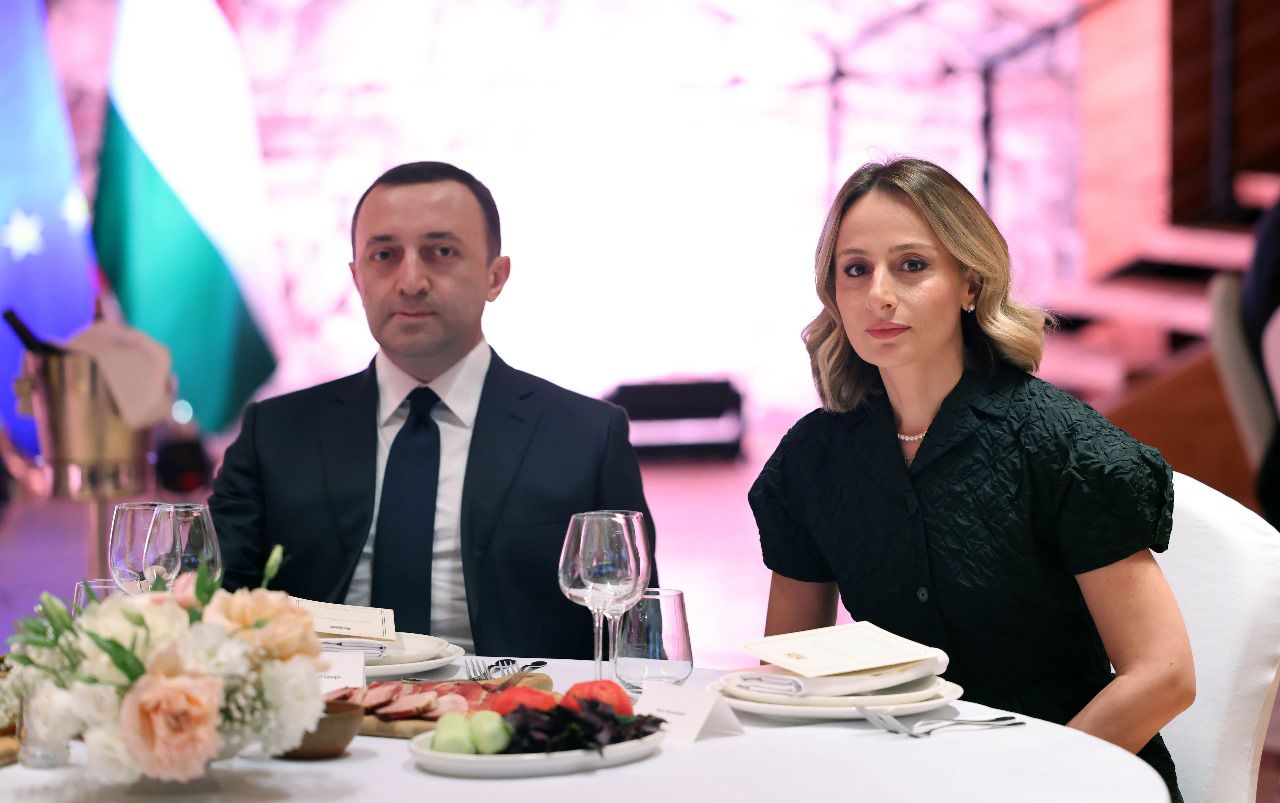
Georgian Prime Minister Irakli Garibashvili has filled out a property declaration, which shows his income and expenses for the past year.
The document shows that last year he received 180 thousand GEL [about $66,5 thousand] as a gift from his parents.
This is not the first time that his retired parents have given him a large sum of money. According to the declarations for 2020 and 2021, during this period Garibashvili’s parents gave him only 150,000 GEL [about $55 thousand].
In total, in the last three years alone, Garibashvili received 480,000 GEL [about $177,000] as a gift from his parents.
- Georgian Prime Minister comments on current situation in the country after US visit
- Transparency International suspects more than 160 Georgian officials of corruption
Who is the Prime Minister’s father and where did he get so much money?
The Prime Minister’s father, Tariel Garibashvili, is an unemployed pensioner who officially has no business, although he has a huge house and a total of 4.5 hectares of land in his native municipality, Dedoplistskaro.
The register shows that Tariel Garibashvili started buying land in 2014 after his son became Prime Minister. Until 2012, Garibashvili’s father held the position of one of the trustees of the village and owned only the family house and a plot of land, a Mtavari TV investigation says.
The only business that is registered in the name of Garibashvili’s father today is a 50% stake in Georgian Roots LLC. The extracts from the public register show that Tariel Garibashvili bought a share of this wine company on February 7, 2023 for 200,000 GEL [about $74,000]. That is, before that, in the years when Tariel Garibashvili gave his son 300,000 GEL [about $111,000], he did not officially own any business.
Tariel Garibashvili gives his son not only large sums of money, but also other gifts. At least, this is the official version. In early September, journalists learned that the Prime Minister used the government plane for personal purposes – for transportation of his family.
The trip from Tbilisi to Munich and from Munich to Tbilisi on a government plane cost 34,000 euros in August 2023. According to the official version, this amount was paid by Tariel Garibashvili.
At the time, the Prime Minister explained to journalists that he was from a well-to-do family that never had financial problems.
However, there is an interview of Tariel Garibashvili from 2013 on the internet, which he gave to ambebi.ge after his son took office as Prime Minister. In this interview, Tariel Garibashvili recalled that he sent his son to study in France with money raised by his friends, and Irakli Garibashvili, who was in France, helped the family financially by working as a waiter.
Tariel Garibashvili said the same thing in an interview with Nino Jgarkava nine years ago.
It is known from the story of “Mtavari” that the area of pensioner Tariel Garibashvili’s estate in his native village of Khornabuja is increasing every year. According to documents, a year ago the Prime Minister’s father bought a neighbor’s house and is now building there.
“The estimated amount that the Garibashvili family has spent on the construction of houses, yard and swimming pool far exceeds not only Tariel Garibashvili’s pension, but also the income that the Prime Minister receives in the form of salary year after year,” the article says.
- Georgian opposition parties and NGOs want to initiate impeachment and investigation against PM
- “Georgia was a leader in reforms, and now it is in the lagging group.” Opinion
Other property of Garibashvili – according to the current declaration
As for the other property of the Prime Minister:
Garibashvili received 41,000 GEL [about $15,000] as a salary. For comparison, this is almost twice as much as the salary that ordinary ministers receive.
In his declaration, the Prime Minister states that he has 40,000 GEL [about $14,700] in cash savings. He also has 23,000 GEL [about $8,500] in his bank accounts. Prime Minister’s wife Nunu Tamazashvili has up to 100,000 GEL [about $37,000] in her bank accounts.
Last year the Prime Minister’s family acquired new real estate – bought a land plot of 1,530 square meters and a 402 square meter house in Borjomi municipality, for which they paid $76,500.
The Prime Minister’s family spent 58,000 GEL [about $21,500] on the education of their children, while Irakli Garibashvili indicates $8,868 as travel expenses.
Obtaining Georgian citizenship simplified
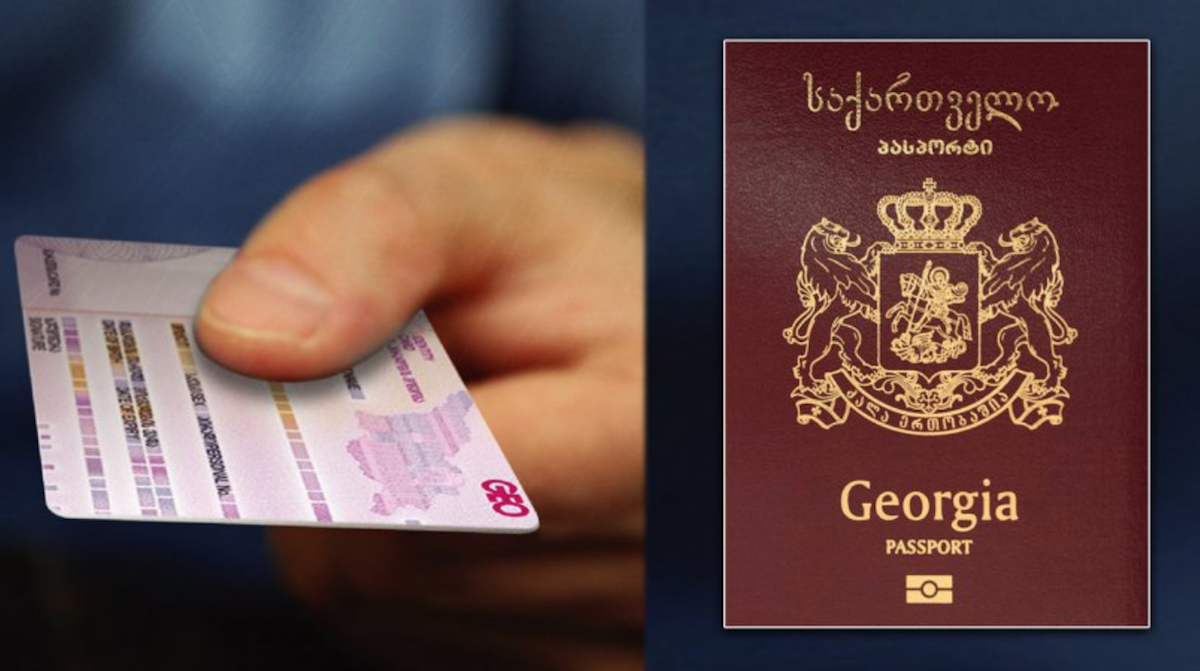
The Georgian parliament has passed amendments aimed at enhancing and simplifying the process of acquiring Georgian citizenship. These amendments received support from 84 members of parliament.
Per the amendments, individuals residing in Georgia for five years or longer, who possess a legal status in the country but are not citizens, will now be eligible to apply for Georgian citizenship, provided they meet other conditions.
What does the term “simplification” mean?
The ministry of justice in Georgia has introduced this bill, with the aim of fostering “concern for the preservation and strengthening of close connections with the homeland for compatriots residing abroad.”
Specifically:
● An individual without Georgian citizenship can acquire it through the standard process after residing legally in Georgia for five years, rather than the previous requirement of 10 years.
● The period for submitting a new application after a rejection of Georgian citizenship has been reduced from one year to six months.
● The requirement for an individual seeking Georgian citizenship to pass exams on Georgian language, history, and basic law knowledge remains in effect.
● Applicants must take a pre-application test at the state services development agency, which, if failed, will prevent the initiation of formal citizenship procedures.
● Under the new law, if a person fails the test, they have the right to retake it an unlimited number of times. Successful exam results will remain valid for one year.
- How to get citizenship in Georgia
- Russians Register an Average of 1,300 Companies per Month in Georgia – Transparency International
- “If they close the border, there will be only one way left – war.” Stories of refugees from Russia
What forms of granting citizenship exist?
Citizenship is a legal bond between an individual and the state. This association grants citizens various rights, including personal freedom, access to education, the ability to participate in elections, and a minimum standard of living.
However, it also comes with certain responsibilities, such as adherence to the country’s laws.
In Georgia, citizenship can be acquired through two primary methods: by birth and through naturalization.
The simplest and most straightforward way is by birth. An individual is automatically recognized as a Georgian citizen from birth:
If a person was born in Georgia through surrogacy and their legal parents do not recognize them as citizens of their country.
If a person was born on the territory of Georgia, and both of their parents are not citizens of Georgia. (This status must be officially granted by the parents).
If a person was born in Georgia, one of their parents is a stateless person, and the identity of the other parent is unknown.
- If a person was born in Georgia and at least one of their parents is a citizen of Georgia;
- he was born in Georgia by surrogacy and his legal parents do not recognize him as a citizen of their country;
- he was born on the territory of Georgia and both of his parents are not citizens of Georgia. (Parents must formally submit an application for this status on behalf of the child);
- he was born in Georgia and one of his parents is a stateless person and the identity of the other parent is unknown.
Granting citizenship by naturalization means that the state confers its citizenship upon a foreigner or stateless individual. In this case, the person must personally apply for citizenship, and the desire to obtain citizenship must be their own.
What do the statistics say?
According to the Freedom of Information Development Institute, in the four years from 2018 to 2022, the Agency for the Development of Government Services sent the president 13,644 positive and 7,360 negative opinions on citizenship. Of these, the president gave affirmation to 13,575, meaning the president made negative decisions on 69 applicants the agency recommended for citizenship.
Of those who received a positive opinion, 5,111 were granted citizenship, while 8,464 were granted Georgian citizenship exceptionally (so-called dual citizenship).
And among the latter 72 percent (more than six thousand people) were citizens of Russia.
Explanation by the minister of justice
Justice minister Rati Bregadze said at a briefing at the government office:
“On our part, we have decided that the state should make every effort to simplify these procedures as much as possible for our compatriots living abroad who wish to acquire Georgian citizenship.
An individual desiring Georgian citizenship will be required to successfully complete a relevant examination before submitting their citizenship application to the State Services Development Agency. In the event of an unsatisfactory result, the agency will not proceed with formal citizenship processing, thus saving time and resources.
In the event of failure, the individual will have the opportunity to retake the exam without limitations. If the exam is passed successfully, the result will remain valid for one year.
Furthermore, if an application for Georgian citizenship is declined, the waiting period to reapply for the citizenship process will be reduced from one year to six months.”