
Categories
South Caucasus News

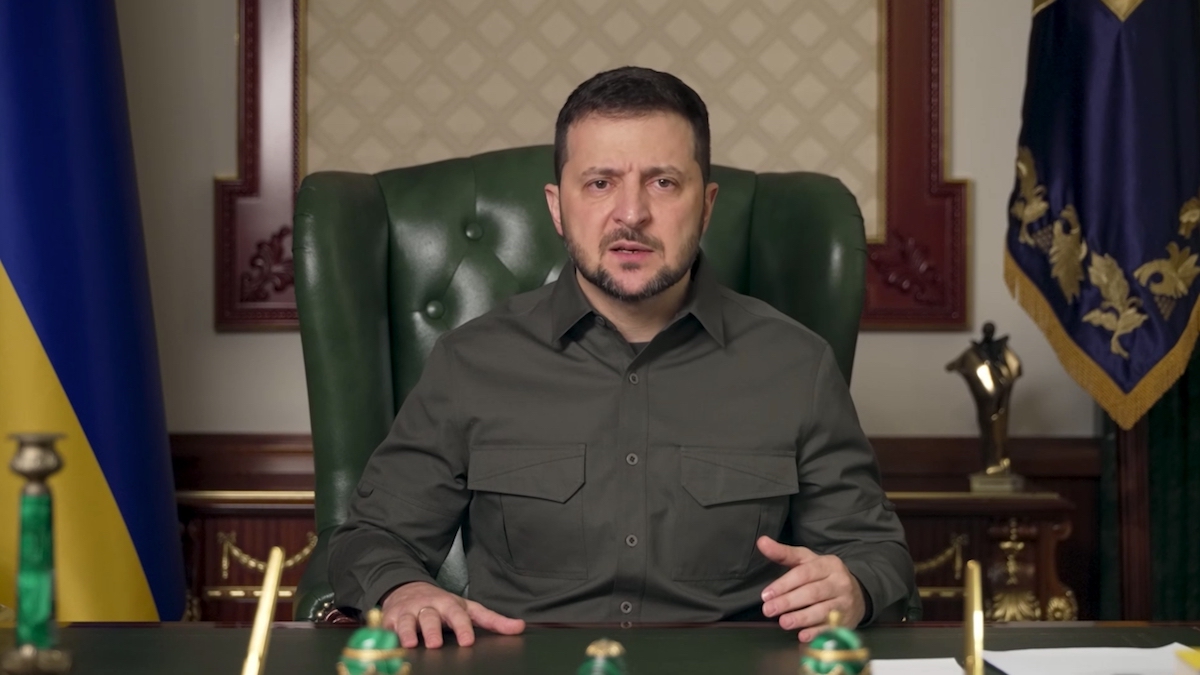
Zelensky confirms Ukraine will attack Russian military vessels in Abkhazia


Russian Navy in Abkhazia

According to President Vladimir Zelensky, Ukraine will not refrain from attacking Russian ships in Abkhazia. Commenting on Russia’s plans to establish a naval base in the Abkhazian suburb of Ochamchira, Zelensky said that Ukraine would catch up with the Black Sea Fleet everywhere.

“The Russian navy can no longer operate in the western part of the Black Sea and is fleeing Crimea. This is an historic achievement. Not so long ago, the Russian commander had to announce the establishment of a new base on the occupied territory of Georgia, that is, in the southeast of the sea, as far as possible from Ukrainian missiles and marine drones, but we will catch up with them everywhere,” Zelensky said at the Crimean Platform parliamentary summit.

On 23 October, the official representative of the Main Intelligence Directorate of the Ukrainian Defense Forces (SDU), Vadym Skibitsky, first made public information about the transfer of some Russian military vessels from Crimea to Abkhazia. He said that Russia “detected a significant military threat” after Ukraine launched a series of special operations in Crimea.

According to him, some of the ships of the Russian Black Sea Fleet were transferred to the port of Novorossiysk, but the latter cannot accommodate all the vessels, and so the Kremlin decided to use Abkhazia.

On October 24, Skibitsky told the TV channel “Apostrophe” about construction carried out by Russia in the port of Ochamchira.

“The Russians have dredged, modernized the infrastructure of the port to ensure the safety of warships standing there. However, it will still be a small base,” Skibitsky said.

Russian Navy in Abkhazia


Russian military base in Ochamchira – what is known?

On October 5, 2023, Abkhazian President Aslan Bzhania told the Russian publication Izvestia that a permanent Russian naval base will be established in Ochamchir.

“We have signed an agreement and a permanent base of the Russian Navy will be established in the Ochamchir region in the near future. This is aimed at improving the defense capabilities of Russia and Abkhazia, and such cooperation will continue because it serves the fundamental interests of Russia and Abkhazia, and security in this regard is the most important factor,” Bzhania said.

Secretary of the Security Council of Abkhazia Sergei Shamba, in turn, added that this agreement was reached quite a long time ago, and for Abkhazia it is an example of realization of alliance agreements with the Russian Federation.

The Georgian Foreign Ministry expresses “concern” about this and notes that such actions are a violation of the sovereignty and territorial integrity of Georgia.

The Georgian opposition is demanding that Parliament pass a resolution against the Russian naval base in Ochamchira. The authors of the draft resolution, registered in the legislature on October 9, are representatives of the opposition, the parliamentary political group For Georgia and independent MP Teona Akubardia.

“The draft resolution strongly condemns Russia’s occupation and militarization of sovereign regions of Georgia, Abkhazia and the Tskhinvali region, as well as aggressive actions aimed at their annexation, a new expression of which is the decision to open a permanent Russian naval base in the port of Ochamchiri in Abkhazia,” they said.

Russian Navy in Abkhazia


NATO Resolution

On October 9, the Parliamentary Assembly of the North Atlantic Alliance (NATO) adopted three resolutions supporting Georgia’s Euro-Atlantic aspirations and territorial integrity and condemning the establishment of a Russian military base in Ochamchire, as they believe this poses a risk of further destabilization in the Black Sea region.

“We support the reaffirmation of the 2008 Bucharest Summit decision that Georgia will become a member of NATO with an Accession Action Plan as an integral part of the accession process.

It is also necessary to quickly implement a customized package that expresses support for Georgia and Moldova, and to actively continue to support Georgia on the path of Euro-Atlantic integration, in addition to supporting the steps taken to join the North Atlantic Alliance, as reflected in the reforms underway,” one of NATO’s resolutions reads.

Russian Navy in Abkhazia


Categories
South Caucasus News

ADEZ hides proceeds from harvest of orchards in liberated territories


102400068464.webp The Agency for Development of Economic Zones (ADEZ) under the Ministry of Economy announced on October 23 the second public procurement contract for the care of vineyards in the territories liberated from the Armenian occupation since 2022. However, the ADEZ still does not disclose information about the areas of vineyards and orchards transferred to its balance sheet, as well as the proceeds from the sale of the harvest.According to the information provided …

Categories
South Caucasus News

Argentina faces a polarized runoff after a surprising election result


Argentina’s presidential election on Sunday ended with no clear winner, as the leftist economy minister Sergio Massa and the far-right populist Javier Milei both failed to secure more than 45% of the votes, the threshold to be elected. The two candidates will now face each other in a runoff vote on November 19, in what is expected to be a highly contested and divisive race.

Massa, who represents the governing Peronist coalition, defied polls and placed first with 38.7% of the votes, according to the official count with 98% of ballots tallied. He was followed by Milei, who leads the Liberty Advances party, with 32.4%. Patricia Bullrich, a former security minister and the candidate from the center-right Together for Change coalition, came in third with 18.5%.

Massa, a pragmatic centrist, has been criticized by the left for cuts in social spending, while conservatives say he is not doing enough to reduce the fiscal deficit. He has also faced internal divisions within his coalition, as some factions have challenged his leadership and accused him of being too soft on corruption. Massa has pledged to continue the negotiations with the International Monetary Fund (IMF) to restructure Argentina’s $45 billion debt, and to implement policies to boost growth and reduce inflation, which reached 138% in September.

Milei, an eccentric figure who sports messy hair and leather jackets, has gained popularity among young and disillusioned voters who are fed up with the traditional political parties and the economic crisis. Milei identifies as an “anarcho-capitalist” and has garnered comparisons to far-right leaders like Donald Trump in the US and Jair Bolsonaro in Brazil. He owns multiple clones of his late dog Conan. Milei’s radical economic policies include abolishing Argentina’s central bank and ditching the Argentine peso in favor of the US dollar, as smaller countries like Ecuador and El Salvador have done. He has also vowed to end all negotiations with the IMF and default on Argentina’s debt.

The election results reflect the deep polarization and dissatisfaction that exist in Argentina, a country that has been struggling with chronic economic problems, social unrest and political scandals for decades. The runoff vote will likely be influenced by factors such as voter turnout, which was unusually high at 74% on Sunday; the endorsement or rejection of the third-place candidate Bullrich; and the performance of the candidates in the upcoming debates.


Categories
South Caucasus News

Mirzoyan-Bayramov meeting took place within ‘3+3’ format framework, Iran FM says


default.jpg


Categories
South Caucasus News

Live blog: Death toll in Gaza surpasses 5,700 as Israel intensifies … – TRT World


Live blog: Death toll in Gaza surpasses 5,700 as Israel intensifies …  TRT World

Categories
Audio Review - South Caucasus News

3+3 Platform Calls for Georgia’s ‘Equal Participation’


According to the Joint Communique of the second meeting of the “3+3” Platform held in Tehran on October 23, the participating countries’ foreign ministers “reaffirmed the openness of this Platform for equal participation of Georgia.” The meeting, themed “Time for peace, cooperation, and progress in the South Caucasus” generally centered around Armenia-Azerbaijan peace talks and other developments in the region.

The format, which brings together three regional powers – Iran, Turkey and Russia – as well as two South Caucasus countries- Azerbaijan and Armenia, was established in 2021 and, despite its name, Georgia is not a member.

Following the ministerial, Russian Foreign Minister Sergey Lavrov expressed “belief” that “full-fledged “3+3” format can work in the near future,” including Georgia, because “the current authorities in Tbilisi, as they have proven more than once, proceed primarily in all their actions according to fundamental national interests.”

The call for Georgia’s participation in the format was reportedly reiterated by Iran as well. “We hope to see Georgia, a friendly country, participate effectively and constructively in future meetings,” Iranian Students News Agency (ISNA) quoted Foreign Minister of the Islamic Republic of Iran, Hossein Amir-Abdollahian, as saying in the opening remarks.

Ironically, the joint communique, adopted by the parties, including Russia, which continues to occupy 20% of Georgia’s territory, emphasized “the importance of peaceful settlement of disputes, respect for sovereignty, political independence, territorial integrity, inviolability of internationally recognized borders, non-interference in internal affairs, prohibition on the threat or use of force and respect for human rights based on all the principles of the United Nations Charter.”

Georgia has refused to be part of the format, whose first meeting of the 3+3 platform was held in Moscow in 2021. The Georgian delegation stayed away, saying it could not attend a meeting hosted by the Russian Federation – the country that does not recognize Georgia’s territorial integrity. Nevertheless, Georgian flags appeared at the format’s 1st meeting in Moscow, prompting official condemnation from Tbilisi, which called it “unacceptable”. In January, Russia’s foreign policy chief, Sergey Lavrov, said that Russian authorities had asked Turkey, Armenia and Azerbaijan to “explain” to Georgia the “benefits of joining the format”.

Also Read:


Categories
Audio Review - South Caucasus News

Ukraine’s Defense Intelligence: Russia Plans to Relocate Black Sea Fleet from Crimea to Abkhazia


Vadym Skibitsky, a spokesman for the Defense Intelligence Service of Ukraine, said that the Russian occupiers in Crimea plan to move their warships from the Bay of Sevastopol to Abkhazia, the occupied region of Georgia. According to him, this strategic move follows a series of strikes and special operations carried out by the Ukrainian Defense Forces in Crimea, which have escalated the military threat on the peninsula.

“There is active work going on in the town of Ochamchire in Abkhazia – the Russians have been dredging there, reconstructing the port infrastructure in some places to ensure that warships can be based there,” he noted.

Skibitsky further revealed that some of the Russian ships had been transferred to Novorossiysk, but the small port there could not accommodate the entire Russian Black Sea Fleet. Consequently, the Kremlin has decided to use the occupied territory of Georgia for this purpose.

During the opening ceremony of the Second Parliamentary Summit of the Crimean Platform, President of Ukraine Volodymyr Zelensky addressed Russia’s plans, stating: “Recently, the Russian leadership was forced to declare the establishment of a new base for the Black Sea Fleet in the occupied territory of Georgia – specifically in the southeastern part of the sea, distant from Ukrainian missiles and naval drones… The Russian military fleet is no longer capable of operating in the western part of the Black Sea and is gradually retreating from Crimea. This is a historic achievement”.

According to the press release of the Crimean Platform, the President of Ukraine assured that this development will not hinder the Defense Forces and expressed his firm belief that Ukraine will undoubtedly regain full control over Crimea and its adjacent waters.

Note: This news was updated at 14:32 on October 24 to include President Zelensky’s statement.

Also Read:


Categories
Audio Review - South Caucasus News

EEAS FIMI Report Explores Disinformation’s Impact on LGBTIQ+ Community and Vulnerabilities


A new report produced by the EU Strategic Communications Task Forces and Information Analysis sheds light on Foreign Information Manipulation and Interference (FIMI), including disinformation with a particular focus on the LGBTIQ+ community, highlighting specific cases of FIMI. The report illustrates for foreign information manipulation and interference, including disinformation, feeds on vulnerabilities and sensitive issues, and then twists them to sow divisions and distrust to polarize societies.

The report aims to help the defender community better understand the nature of FIMI and the Tactics, Techniques, and Procedures (TTPs) used to target the LGBTIQ+ community. It identifies a common theme in many FIMI cases: undermining the LGBTIQ+ community.

Research findings point to significant gaps in tracking, preventing, and combating FIMI targeting the LGBTIQ+ community, primarily due to a lack of coordination, cooperation, and communication between different stakeholders, such as government, academia, non-government organizations, social media platforms, and the media. There is also insufficient utilization of existing networks, limited opportunities to bring experts together, and a lack of funding, causing initiatives to operate in isolation.

According to the report, in recent years, the growing visibility of LGBTIQ+ movements and changes in legislation have been exploited by threat actors aiming to undermine human rights and democratic freedoms. Disinformation, as a weapon, has placed LGBTIQ+ rights at the heart of political and geopolitical debates.

With regard to Georgia, the report mentions the omnipresence of disinformation narratives disseminated by Russian actors, “contributing to the growing antagonism between the EU and Russia regarding their “shared neighborhood” — in which Georgia occupies a strategic position.”

The report refers to one illustrative case of Russia-affiliated sources that have been spreading a misleading video on Georgian social media, combining fragments of Ukrainian army footage with a UK-produced video advocating gay marriage.

These narratives, also driven by local elites, help to crystallize “the idea of a value-based divide between the West/Europe and the East/Russia on LGBT+ issues” even leading to violent conflicts between LGBTIQ+ and conservative activists.

The report notes that the more general literature on disinformation “is replete with references to harmful and misleading narratives about the LGBTQ+ community”, which are a constant target of FIMI and disinformation campaigns.

In 2023, images showing a fabricated document misattributed to the Armed Forces of Ukraine, allegedly prohibiting gay people from having intimate relationships on the battlefield, were disseminated by unattributed websites and Telegram channels, which often amplify or mirror content from the Russian FIMI ecosystem. Additionally, deceptive materials, such as an altered page from an official German booklet addressed to Ukrainian refugee families about gender reassignment in German schools, were widely promoted in Russian, Ukrainian and Polish. Most of the documented incidents took place across platforms and websites.

FIMI campaigns leverage social media platforms effectively, employing tagging, mentioning, and replies to influential figures and institutions. These campaigns demonstrate a well-coordinated approach, from target selection to message crafting and content delivery, often generating organic user engagement and feedback loops.

Some FIMI incidents stand out due to unique tactics, including cyber-attacks against international entities, the development and promotion of a web-based online game, and calls for offline actions and protests.

In the context of the given analysis, 43% of documented incidents took place before, during or after a specific event. Most of these events were LGBTIQ+ related, such as Pride Month, Pride Marches and the International Day Against Homophobia, Biphobia and Transphobia (IDAHOBIT).

The evidence-based analysis provided by the EEAS sheds light on the persistence of discrimination against LGBTIQ+ people as a global problem that needs to be urgently addressed by governments and diplomatic organizations. From a societal point of view, report stresses that this seems to be the best way to ensure that citizens are less inclined to engage with biased information about the LGBTIQ+ community in the future.

Report presents a series of recommendations for policy makers, governments, international organizations, civil society, academia, the private sector and other stakeholders interested in countering or mitigating the impact and harm of FIMI on LGBTIQ+ communities:

General recommendation:

  • To strengthen the fight against FIMI targeting LGBTIQ+ it is necessary to adopt a multi-stakeholder approach encompassing governments, international organizations, media, publishing houses and PR agencies, factchecking organizations and academic research, and always to involve the LGBTIQ+ civil society groups.

Recommendations for policy makers, including governments and international   organizations:

  • Support the development of regulatory frameworks protecting the LGBTIQ+ community, in partnership with civil society, academia and the private sector.
  • Train government officials, policy makers and media professionals on the complexity of issues facing the LGBTIQ+ community in the context of geopolitics, in order to equip them to identify and counter FIMI and disinformation, as well as to respond and communicate about it.
  • Establish dedicated tasking within government departments to monitor FIMI and disinformation campaigns targeting LGBTIQ+ communities.
  • Increase investment in media literacy, with a strong focus on digital media and human rights, including LGBTIQ+ rights and other identity-based rights.
  • Involve LGBTIQ+ communities from the early stages of the planning phase of the awareness-raising campaigns, taking into account specific context and the risks that may result from further exposing LGBTIQ+ communities to attacks and sanctions.

Recommendations to the private sector:

  • Develop a common framework for moderating harmful content, particularly content targeting the LGBTIQ+ community, considering international differences in legislation.
  • Use algorithmic triggers to display educational popups when users encounter potential disinformation, providing quick tips on how to evaluate information.
  • Remove harmful content, and block channels promoting online operations, as quickly as possible, by investing in content moderation and machine learning technologies.

Recommendations for civil society and academia:

  • Develop clearer and harmonized definitions of FIMI, LGBTIQ+ FIMI, disinformation, gendered disinformation, misinformation and malinformation.
  • Collaborate with social media platforms to develop frameworks and other solutions to improve content monitoring.

Categories
South Caucasus News

Ilham Aliyev received Minister of National Defense of Türkiye


President of the Republic of Azerbaijan Ilham Aliyev has received Minister of National Defense of …

Categories
South Caucasus News

Turkmenistan: Homage to Anatolia


og-twitter.png

Turkmenistan’s hopes of getting its gas to Europe depend heavily on the building of a trans-Caspian pipeline. But unless Turkey plays ball, it is all for naught. This and more in this week’s Akhal-Teke Bulletin