
Day: October 24, 2023
Netanyahu’s Deal With Putin Goes Wrong
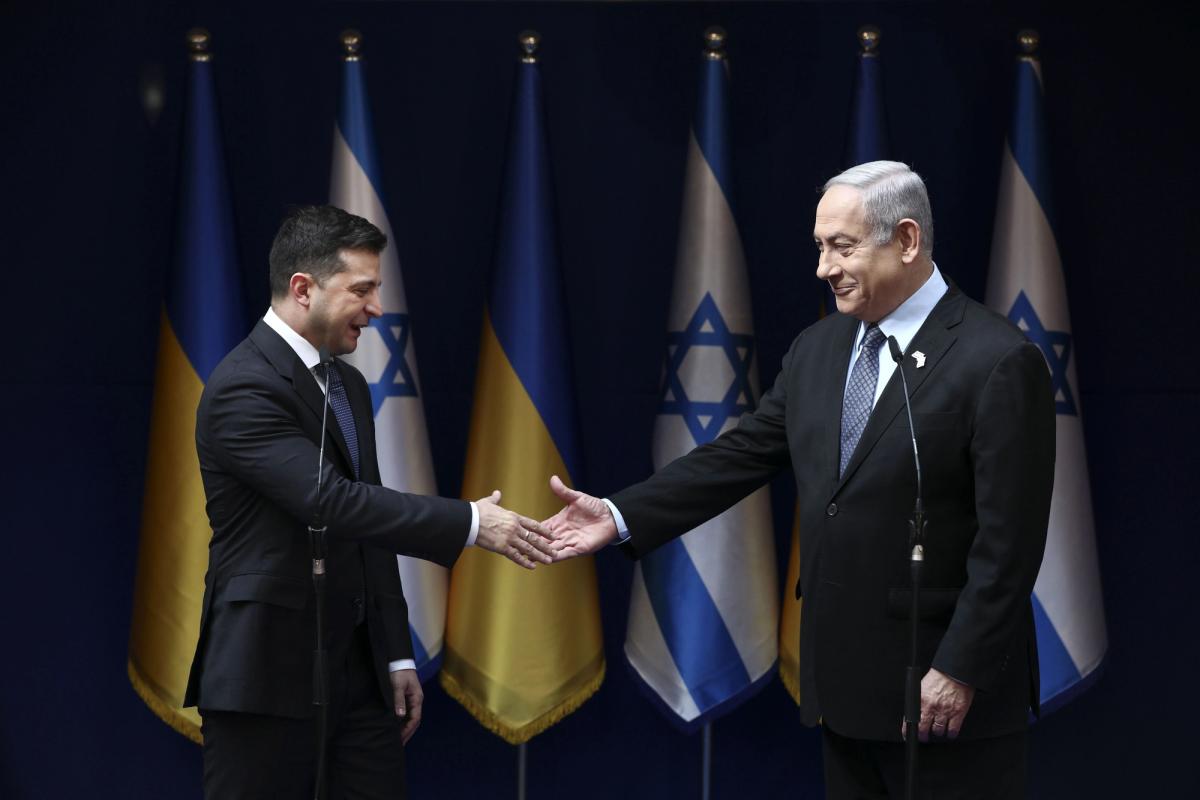
The Hamas massacres in the Israeli south that killed more than 1,400 Israeli civilians and members of the Israeli Defense Forces on October 7th constituted the worst day of violence against Jews since the Holocaust. The terrorist incursion also had the effect of undermining multiple long-standing and delicate balancing acts of regional diplomacy, which rested upon logic, predicates and assumptions that turned out to be delusional. The efficacy and wisdom of the neutrality entente between Moscow and Jerusalem, formerly a pillar of regional security arrangements, suddenly looks a lot less rational or defensible than it did to Israeli leaders before the attack.
Israel’s steadfast commitment to a doctrine of non-intervention in the wars raging in Eastern Europe and the Middle East was a key part of Israeli Prime Minister Benjamin Netenyahu’s regional security policy. The original entente reflected the conflict-averse Netanyahu’s desire to keep the Israelis out of the cauldron of the Syrian civil war. Positioning the advancing Iranian forces and their proxies at a remove from Israel’s northern border was a corollary of the deal, which stipulated that the Iranians would be prevented from operating along the Golan Heights, with the Russians acting as a defacto arbitrer of who controlled the territory adjacent to Israel.
Crucially, Moscow allowed the Israeli air force to carry out air strikes against Iranian proxies that operated in Syria, where the IDF would routinely request that Russian missile and air defence systems in Syria be temporarily powered down. The arrangement allowed Israel to stay out of a war in which saw Tehran’s proxies rampaged across Arab lands, but that augmented the power of the ring of Iranian-backed enemies that surrounds Israel. That encirclement further cemented Jerusalem’s military alliance with the Sunni Arab-bloc.
Netanyahu’s arrangement with the Russians allowed the Israeli leader to portray himself as a masterful geopolitical strategist over multiple election cycles. He had always considered his close personal relationship to Russian president Vladimir Putin to be both a political and national asset, grounded in a symbiosis of mutual respect and transactional necessity.
Yet the Netanyahu-Putin relationship had noticeably cooled over the last year-and-a-half before October 7th, for numerous reasons. While Putin genuinely respects – and somewhat fears – Israel, he has continued to balance his relationship with Netanyahu against Moscow’s commitments and alliances within the Arab world as well as with other Muslim allies. Russia’s relationships in the Middle East with powers hostile to Israel represents a direct continuation of the regional position of the Soviet Union; many of the U.S.S.R’s regional terror assets were inherited either directly or indirectly by Iran.
Nevertheless, the Israeli-Russian neutrality pact has constrained Israel from engaging more closely with or arming the Ukrainians against the Russian invasion. In turn, Israel has paid a substantive diplomatic price with numerous allies because of its neutral stance since the start of Russia’s invasion. Many people around the world (including prominent Israelis like the the ex-refusnik leader and former Israeli Cabinet minister Natan Sharansky) have viewed that arrangement as placing Israel on the wrong side of a historical conflagration. The President of Ukraine has repeatedly and fruitlessly deployed his own Jewish background in order to shame Israel into ramping up military assistance.
Yet as the war against Ukraine, which is now well past its 600th day, turned into a disastrous quagmire for Moscow, Putin has turned to his Iranian allies for assistance. While Russia’s alliance with Iran is inherently transactional, it is of ever-growing importance, sanctions have made it difficult for Moscow to procure weapons systems, munitions and microchips. The Russian-Iranian relationship therefore imposes both a new threat to Israel, and a form of commonality – and even solidarity – with Ukraine.
Ukraine and Israel are now both at war with Iran, either openly or by proxy forces that are being directly supplied, trained and commanded by Tehran. This is a fact that Ukrainian military and diplomatic officials have tried to hammer home to their Israeli counterparts over the last 19 months of the Russian invasion. The Iranian-made Shahed suicide drones that Iran first provided to the Russians in the summer of 2022 have been critically important in the drone arms race between the Ukrainians and Russians. These drones have been responsible for the deaths of many Ukrainian civilians in Odessa, Kyiv, and other cities, as well as for the crippling of numerous Ukrainian armored vehicles. The Israeli military has observed the technical capacity of the Iranian drones in the Ukrainian battle zones with great interest. The Russian-Iranian alliance has already destroyed half of all Ukrainian electrical pylons and infrastructure hubs. As a result, Ukrainian athletes now routinely refuse to shake hands with their Iranian competitors while taking part in international sporting events.
In return for drones and other support, Tehran, which continues clamouring for Russian technical assistance with its nuclear program, was proffered a certain amount of Russian diplomatic support to go with Russian upgrades on their drones. Moscow is also reported to have allowed Iran to build a massive drone factory in Russia. A great deal of discreet cooperation also takes place on the level of bypassing Western sanctions—an art that Tehran has mastered over the past forty years, and which Moscow is now learning.
Last year, Russia also promised to sell Tehran a fleet of modern Russian Su-35 attack fighter jets—a transaction that could have potentially realigned the dynamics of air power in the middle East. However that deal seems to have been halted or scuppered, and the reasons for the deal not taking place have never been publicly explained. Moscow skilfully manages to find a common language between antagonistic Arabs, Iranians and Jews, dealing with each discreetly on their own terms.
Yet because Putin had always been seen as viewing Israeli security concerns with appropriate consideration, his waffling, cagey and diffident response to the Hamas attack took many by surprise. Three days after the assault, Putin proffered his first comments on the war between Israel and Gaza amidst a conversation with the Prime Minister of Iraq. He stated that “it was a clear example of the failure of U.S. policy in the Middle East, in that the Americans had not taken the core interests of the Palestinian people into account (that is working to create an independent Palestinian state).” The statement worked on numerous registers: placating Arab audiences, reassuring the Iranians, restating Russian diplomatic commitments and snubbing the Americans for their lack of skill in executing their chosen policy in the region. In other words, a typical aperçu for the trolling strongman.
It also took the Russian President an entire week-and-a-half to call Netanyahu in order to offer his condolences. Putin reportedly did not even bother to condemn the Hamas assault during the phone call. Ukrainian President Zelensky, meanwhile, was one of the first heads of state to render a call, offering to visit Israel. When that gracious offer of solidarity was declined, Ukrainian media and commentators felt deeply insulted by the rebuff.
Helpfully for Moscow, the Russian invasion of Ukraine has now been relegated to the back pages of the newspapers, sparking arguments within the U.S. Congress about which war to prioritize. Ukrainian elites have privately voiced concern about being isolated in the wake of the attack. Indeed, the Russians have taken the opportunity to embark on a substantial counter-offensive around Avdiivka. It is a counter offensive which is going badly for them, but one which is also succeeding in attriting Ukrainian forces.
While the Russians will doubtless attempt to take full advantage of Hamas’ attack on Israel and have already benefitted greatly from it, that is not apriori evidence of their having had a hand in planning or executing the massacre. The question of who did know about the incipient assault, which surely took months of training and several years of planning, as well as significant outside technical and logistical assistance, remains unanswered.
The technical prowess that would appear to be needed to take down the billion dollar Israeli fence is necessarily either a Russian or Iranian contribution. If the American intelligence services had any early warning of what was about to transpire from active signals intelligence in Lebanon or elsewhere, it seems quite possible that the Russians may have also been offered advance notice by their Iranian allies. Moscow has also not backed Israel in the United Nations over the past weeks. After the Israeli’s destroyed the Damascus and Allepo airports last week, the Russians allowed Iranian military flights – presumably carrying supplies, arms and military advisors – to continue using a Russian military airfield in the north of the country. Yesterday, Russian Foreign Minister Sergei Lavrov arrived in Tehran for talks with his Iranian counterpart.
For the past week and a half, some Ukrainian analysts have been attempting to demonstrate the existence of a direct link between the Russians and the Hamas attack. Proof of Russian involvement in the Hamas incursion would doubtless be a world-historical event. Meanwhile, Ukrainians point to the Hamas attack as proof that Netanyahu and the Israelis badly miscalculated in their relationship with Putin, and must now change course.
“Netanyahu is guilty of expecting Putin to remain loyal to his deal with him,” the British-Ukrainian analyst Taras Kuzio complained to me. “I have always thought that the official Israeli arguments for why Israel was not aiding Ukraine – that is to avoid angering Putin in Syria – were overplayed and I find it bizarre that Netanyahu did not view the emboldening of Iran by Russia as a potential security threat to Russia. If Iran is to achieve its objective of a nuclear bomb, that would be because of Russian support.”
“Netanyahu is guilty of expecting Putin to remain loyal to his deal with him,” the British-Ukrainian analyst Taras Kuzio complained to me. “I have always thought that the official Israeli arguments for why Israel was not aiding Ukraine – that is to avoid angering Putin in Syria – were overplayed, and I find it bizarre that Netanyahu did not view the emboldening of Iran by Russia as a potential security threat to Russia.”
“If Iran is to achieve its objective of a nuclear bomb,” Kuzio continued, “that would be because of Russian support.”
Netanyahu’s Deal With Putin Goes Wrong Tablet Magazine
Tweets and Links – 10.24.23
posted at 15:00:20 UTC (updated on Tue Oct 24, 2023 15:08) by Michael Novakhov (Mike Nova) via The News And Times
Today the Kremlin effectively confirmed, that when Putin dies, Russia & Russia’s forces in #Ukraine, will be thrown into chaos. With rumours yesterday Putin fell over in his bedroom (tripped over his ego) and was knocked unconscious, today the Kremlin’s in full – PUTIN’S NOT DEAD… pic.twitter.com/xqXioQFES3
— Glasnost Gone (@GlasnostGone) October 24, 2023

Selected Articles – The News And Times
The Hamas massacres in the Israeli south that killed more than 1,400 Israeli civilians and members of the Israeli Defense Forces on October 7th constituted the worst day of violence against Jews since the Holocaust. The terrorist incursion also had the effect of undermining multiple long-standing and delicate balancing acts of regional diplomacy, which…
Netanyahu’s Deal With Putin Goes Wrong Tablet Magazine
Gazans forced to drink dirty, salty water as the fuel needed to run water systems runs out CNN
Today the Kremlin effectively confirmed, that when Putin dies, Russia & Russia’s forces in #Ukraine, will be thrown into chaos. With rumours yesterday Putin fell over in his bedroom (tripped over his ego) and was knocked unconscious, today the Kremlin’s in full – PUTIN’S NOT DEAD… pic.twitter.com/xqXioQFES3— Glasnost Gone (@GlasnostGone) October…
Palestinians say three Gaza hospitals out of action, call for safe corridor to Egypt Devdiscourse
Turkish President Erdogan meets with Russian President Putin on … Turkiye
Live updates for Israel-Palestine conflict TRT World
40 Minutes ago By JERUSALEM POST STAFF Israelis are seen seeking shelter as rocket sirens sound in Tel Aviv, October 24, 2023 (photo credit: AVSHALOM SASSONI) Five Israelis were wounded in a massive barrage of rockets fired by Hamas from the Gaza Strip on Tuesday afternoon, Magen David Adom confirmed. The rocket barrage, which…
“If Your Will Is To Live In Peace…”: Israel’s Offer For Info On Hostages NDTV
Netanyahu has seen his already falling approval ratings plunge following the Oct. 7 Hamas attack, which killed some 1,400 people in the deadliest day for Israel in its 75-year history.
“The IDF and the Southern Command are preparing high quality attack plans to achieve the goals of the war,” according to the IDF chief.
Israel-Hamas war: Israelis strike more than 400 terrorist targets in 24 … Fox News
Live updates for Israel-Palestine conflict TRT World
‘Enough is enough’: Qatar emir takes aim at Israel’s backers Yahoo News
As Israel-Hamas war rages, global finance chiefs in Saudi sound gloomy note Reuters
As it happened Hamas-Israel conflict: Israeli hostages in Gaza threatened as fighting continues; PM ‘remains concerned’ over Australians in Israel The Age
France’s Macron warns Hezbollah, Iran ‘not to open new fronts’ in current Mideast conflict Middle East Monitor
Ukraine Calls For Increase In Western Arms Production, Cites Israel … i24NEWS
Scholz garantiza la “inquebrantable solidaridad” de Alemania con Ucrania e Israel Infobae America
The News And Times Information Network – Blogs By Michael Novakhov – thenewsandtimes.blogspot.com
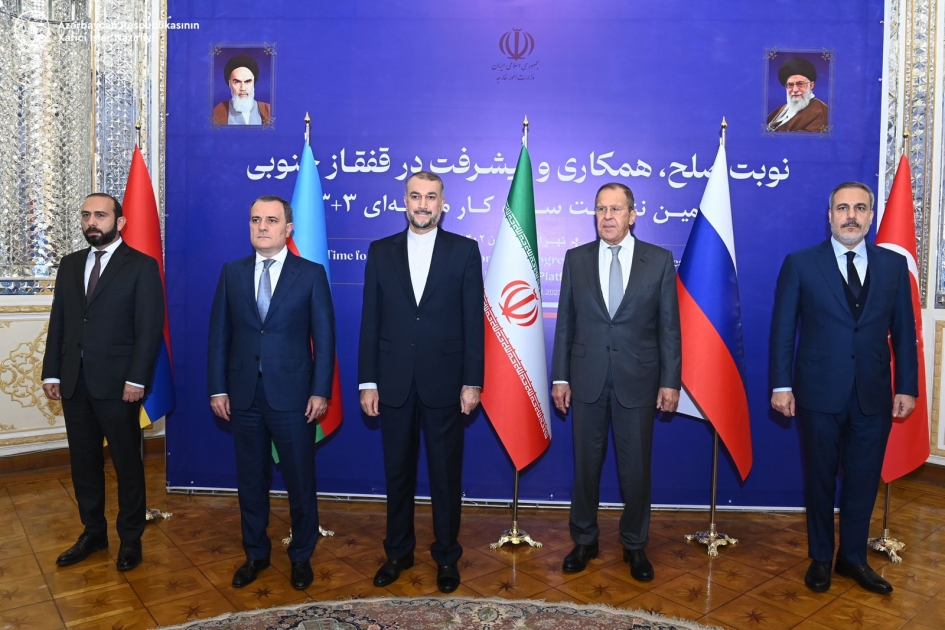
Meeting of the 3+3 platform
The “3+3” regional platform will not discuss conflicts, and the participants of the format will focus on joint agendas in the field of economy and development, as stated by Armenian Foreign Minister Ararat Mirzoyan in Tehran, recalling the agreements reached during the previous meeting at the same platform in December 2021. Both the first and the second meetings were attended by representatives of Turkey, Russia, Iran, Armenia and Azerbaijan, although the format presupposes the presence of Georgia as well. Georgia refuses to discuss in the format in which Russia participates.
Following the October 23 meeting, the sides adopted a joint statement. It claims that the most urgent regional issues were discussed.
In his speech, Ararat Mirzoyan paid much attention to the issue of unblocking regional transport. He reaffirmed Armenia’s readiness to open roads through its territory.
Political scientist Ruben Mehrabyan believes that anything in the “3+3” format, including the issue of unblocking, can move forward only after peace is established in the region. Until then, he says, the platform cannot be effective.
- Economic ties between Georgia and Russia are growing, but Georgia will not participate in 3 + 3 format
- “France to help protect Armenia’s skies”. Signing of documents in Paris
The first meeting in the “3+3” format was held on December 10, 2021 in Moscow, the second in Tehran. However, the idea of creating a “new platform for regional cooperation” belongs to Turkish President Recep Tayyip Erdogan.
Armenia agreed to participate in this format on the condition that the issues already discussed in other negotiating platforms would not be addressed here. In particular, this reservation concerned the settlement of the Karabakh conflict, as well as the demarcation and delimitation of the border with Azerbaijan.
Although Turkey is the initiator of the platform, Armenian experts recall that back in 2020, during the Karabakh war, Iran had already stated that it was preferable to resolve regional issues within the region.
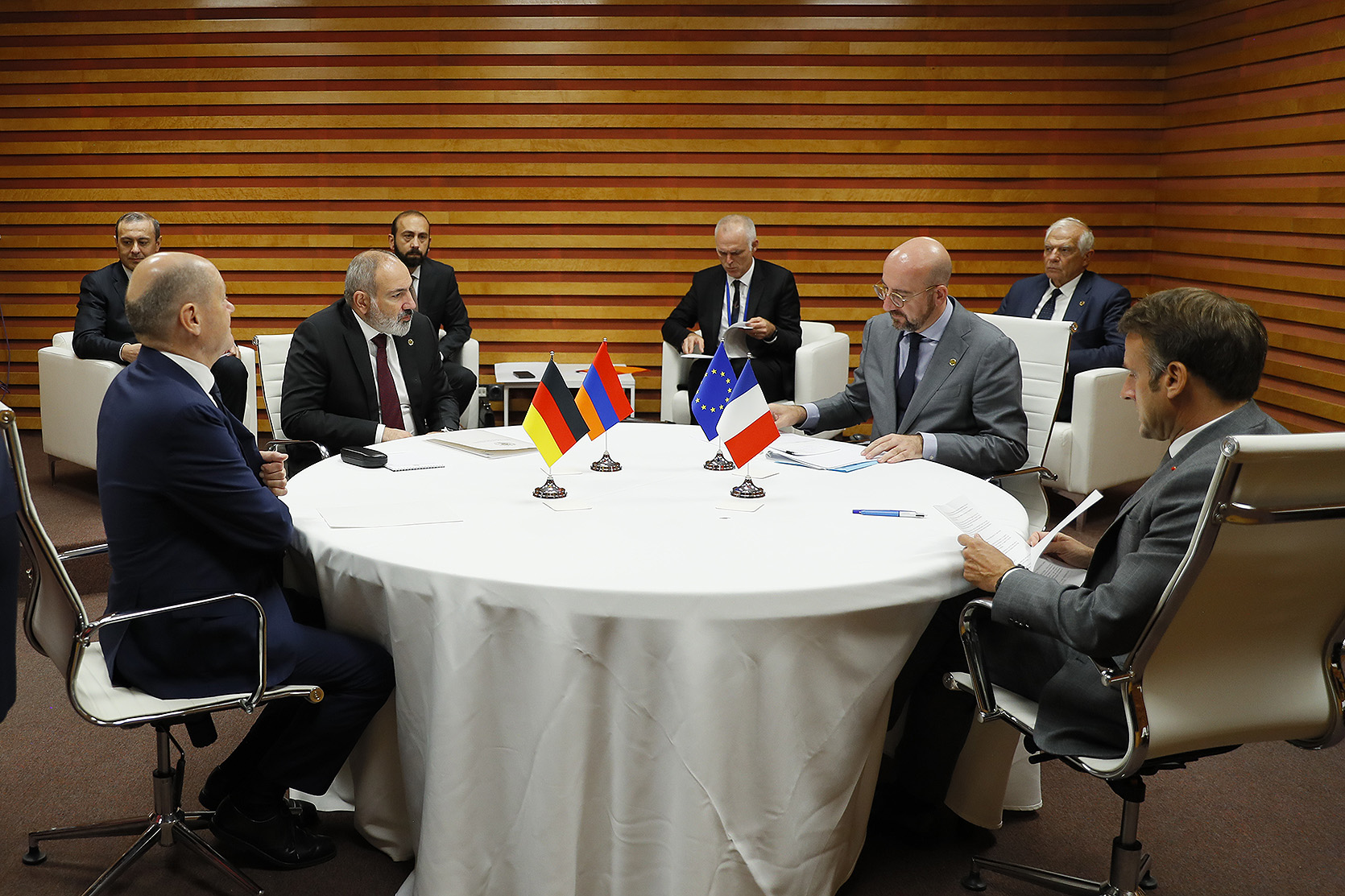
“Armenia is interested in unblocking all infrastructures”
Talking about unblocking regional transport, the Armenian Foreign Minister said the country is ready to become a part of these projects “on the basis of respect for the sovereignty and jurisdiction of states, the principles of reciprocity and equality.”
“We believe that the intersection of North-South and East-West transportation routes in our region, including their passage through Armenia’s sovereign territory, can become a unique crossroads of peace for all of us,” Mirzoyan said.
According to him, Armenia considers the process of mutual integration of railroad infrastructures, including the construction or restarting of necessary lines, important. The minister raised the issue of restarting the Gyumri-Kars railroad, as well as the branch of the North-South road through the territory of Armenia:
“The Republic of Armenia is interested in railroad communication with Iran, Russia and Central Asia through the territory of Azerbaijan and is ready to provide access of the railroad passing through its territory for other countries of the region, as well as for international transits on the principle of reciprocity.”
Mirzoyan emphasized that Armenia attaches importance to regional cooperation in the spheres of economy, logistics, energy, water resources management, and the preservation of cultural heritage.
He recognized the existence of complex problems in the region that need to be solved, “otherwise the region will be doomed to remain forever in the past.”
But the projects of the future, in his opinion, will not be realized if the red lines of regional coexistence defined by international law are not observed. As a benchmark, he cited the goals and principles of the UN Charter, in particular the non-use of force and the threat of force, the principles of territorial integrity, sovereignty, the indivisibility of borders and the protection of basic human rights.
Turkish and Azerbaijani Armed Forces exercises near Armenia’s borders. Is a new escalation possible?
The joint statement refers to “mutually beneficial cooperation”
The joint statement adopted in Tehran consists of 9 points. It affirms the importance of the “3+3” platform for “constructive dialog and establishment of mutually beneficial cooperation between the countries of the region”.
It says the participants in the meeting
- stressed the importance of peaceful settlement of disputes, respect for sovereignty, political independence, territorial integrity, inviolability of internationally recognized borders, non-interference in internal affairs, prohibition of the threat or use of force and respect for human rights based on all principles of the UN Charter,
- recognized the positive impact of economic cooperation on strengthening mutual trust, the well-being of peoples and the stability of the region,
- welcomed the ongoing processes aimed at regulating and developing relations between all countries of the region.
The statement also said that the format remains open “for Georgia’s equal participation” therein.
The Foreign Ministers agreed to hold the next meeting in Turkey in the first half of 2024.
Comment
Political analyst Ruben Mehrabyan says that Armenia considers the “3+3” a consultative platform and is not going to discuss conflicts in this format. He believes that Yerevan will not change its position.
“Armenia does not consider this platform functional to any extent until peace is established in the region. And peace will not be established on this platform at all,” he told JAMnews.
According to the political analyst, the “3+3” platform implies more risks than benefits for Armenia. He does not see any positives in this format yet.
“This platform is focused on solving the problems of the region, as well as Russia, Turkey and Iran among themselves, without the West. Moreover, in those issues where the West is active, the format intends to reduce its presence and fill in with itself,” he said.
According to Mehrabyan, Armenia has serious reservations about cooperation in this platform, Georgia does not recognize it at all. Agreement within the format is between Ankara, Moscow, Tehran and Baku.
“Azerbaijan has done everything to turn this meeting in Tehran into a factor that would allow Baku to avoid traveling to Brussels [for Western-mediated talks scheduled for late October – JAMnews], but it will not succeed.”
He believes that this would be possible if it were possible to “bring Armenia back into Russia’s sphere of influence and convince it that regional issues are solved only in the region”.
The expert believes that the West cannot be forced out of the region, “it is already here, including in the form of the EU observer mission” monitoring Armenia’s border with Azerbaijan.
Mehrabyan insists that the “3+3” format can be effective when all the countries of the region have diplomatic relations with each other.

Follow us – Twitter | Facebook | Instagram
Meeting of the participants of the 3+3 platform